London & Hertfordshire Free Site Visit
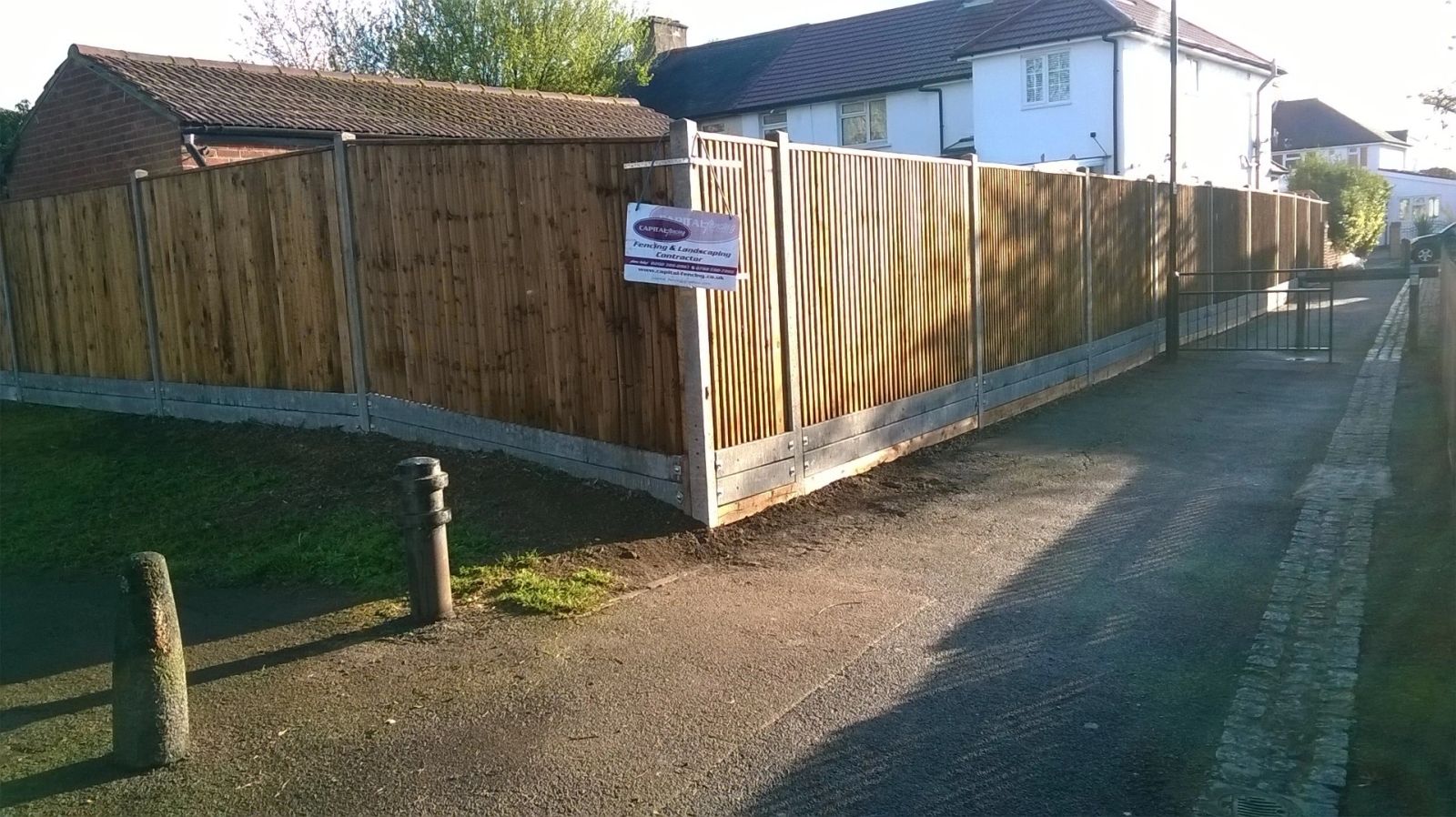
closeboard fence run installed by Capital Fencing in Hatfield (AL9)
Hatfield · AL9 / AL10

Local landlord-grade fencing specialist covering Hatfield & welwyn garden city

We approach landlord-grade fencing in Hatfield from the failure end backwards. Cheapest lap panels racking in wind because posts were shallow — we always concrete to 600mm minimum on landlord work — that's the single most common thing we're called back to fix, and it's the first thing our spec addresses. Roads such as French Horn Lane and St Albans Road West are typical of the local layout. Hatfield House park wall is a useful local reference point. Briars Lane and the surrounding streets follow the regular grid typical of the New Town planning era.

We approach landlord-grade fencing in Hatfield from the failure end backwards. Cheapest lap panels racking in wind because posts were shallow — we always concrete to 600mm minimum on landlord work — that's the single most common thing we're called back to fix, and it's the first thing our spec addresses. Roads such as French Horn Lane and St Albans Road West are typical of the local layout. Hatfield House park wall is a useful local reference point. Briars Lane and the surrounding streets follow the regular grid typical of the New Town planning era.

Typical landlord-grade fencing briefs in Hatfield

  • matched fencing across three or four adjacent rental plots owned by one landlord
  • boundary run replaced between two tenancies inside a single working week
Default spec

How we build landlord-grade fencing in Hatfield

6ft closeboard on concrete posts with gravel boards, mid-rail capped, softwood side gate with padlock hasp. On Hatfield jobs we adjust for uniform new-build estates mean visual consistency across runs is important to keep frontages looking right.

Property mix locally: post-war new-town estates, university accommodation, and Old Hatfield's period cottages. Typical gardens: compact rectangular plots, mostly level, often shared with neighbour-owned fences. Postcodes we regularly service: AL9, AL10.

we bill via one purchase order across a portfolio, provide before/after photos for the inventory clerk, and can be on and off site inside a tenancy void.

Why this spec, for buy-to-let owners and letting agents

  • individual boards or single panels can be swapped without touching the whole run
  • concrete posts and gravel boards keep the ground contact off the timber — that's where landlord fences usually fail
  • one crew, one price sheet across multiple properties — inventory-friendly for portfolio owners
What goes wrong

Common failure modes on landlord-grade fencing

  • cheapest lap panels racking in wind because posts were shallow — we always concrete to 600mm minimum on landlord work
  • using bare softwood posts on ground contact — three winters and they're gone

Landlord Fencing FAQs — Hatfield

Can before-and-after photos be provided for the inventory?

On landlord-grade fencing jobs in Hatfield (AL9), our default answer is: 6ft closeboard on concrete posts with gravel boards, mid-rail capped, softwood side gate with padlock hasp. The honest trade-off is cheapest lap panels racking in wind because posts were shallow — we always concrete to 600mm minimum on landlord work — which is exactly what our default spec designs out.

What's the cheapest defensible spec you'd stand behind for a rental?

Across Hatfield we spec around uniform new-build estates mean visual consistency across runs is important to keep frontages looking right, so on landlord-grade fencing that usually means pressure-treated closeboard on concrete posts. For context: concrete posts and gravel boards keep the ground contact off the timber — that's where landlord fences usually fail. One crew, one price sheet, before-and-after photos as standard.

Can you turn a rental boundary around between tenancies?

Welwyn Hatfield Borough coverage means we can survey most AL9 addresses inside a week — buy-to-let owners and letting agents needing durable boundaries between tenancies. The honest trade-off is cheapest lap panels racking in wind because posts were shallow — we always concrete to 600mm minimum on landlord work — which is exactly what our default spec designs out.

Can you match existing fencing across neighbouring rental plots?

Practically: boundary run replaced between two tenancies inside a single working week. That's the Hatfield version of this job, not a generic one. We bill via one purchase order across a portfolio, provide before/after photos for the inventory clerk, and can be on and off site inside a tenancy void.

Do you invoice per property or per portfolio?

On landlord-grade fencing jobs in Hatfield (AL9), our default answer is: 6ft closeboard on concrete posts with gravel boards, mid-rail capped, softwood side gate with padlock hasp. The honest trade-off is cheapest lap panels racking in wind because posts were shallow — we always concrete to 600mm minimum on landlord work — which is exactly what our default spec designs out.

Recent landlord fencing work
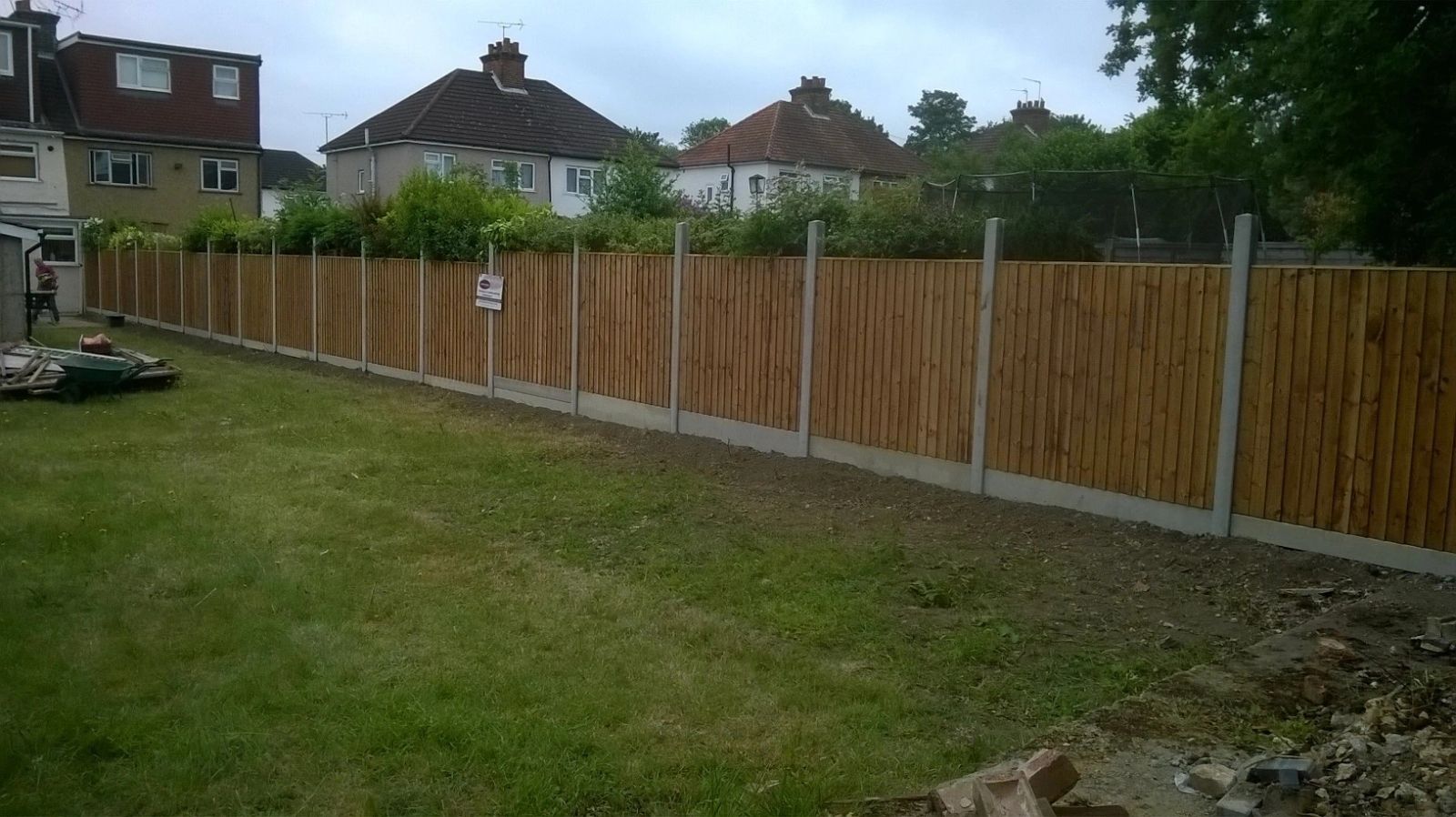
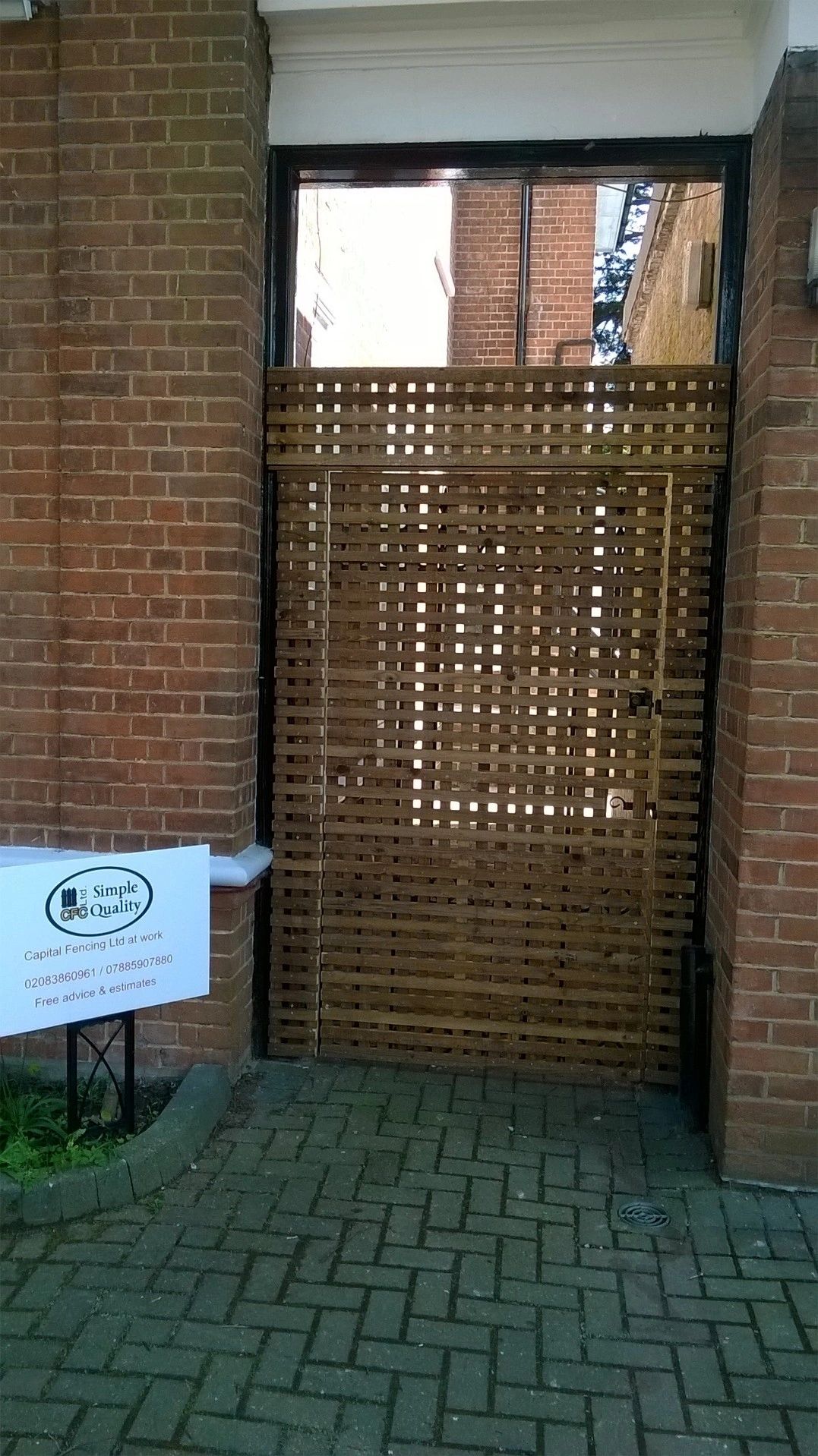
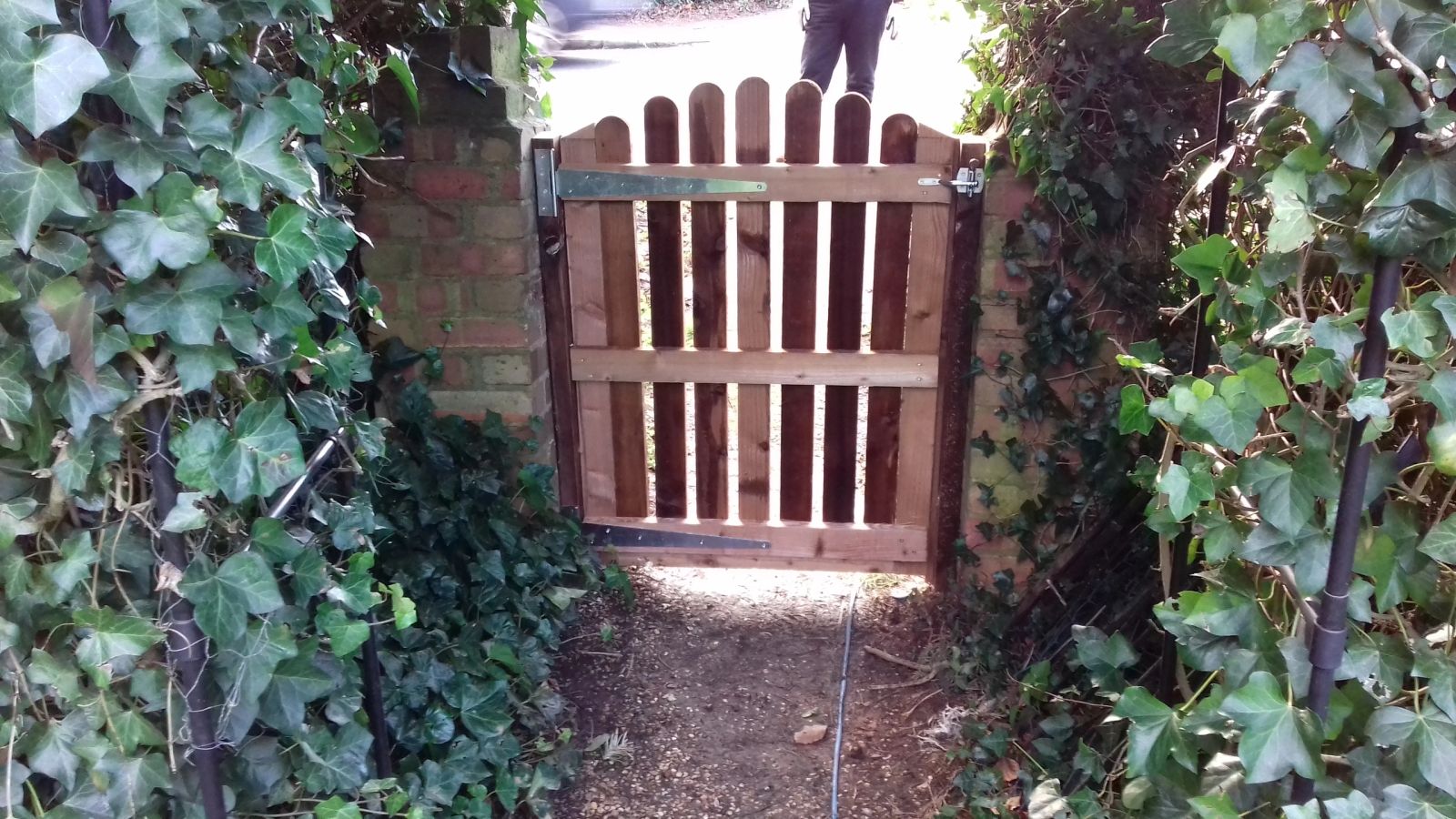
closeboard fence run installed by Capital Fencing in Hatfield (AL9)panel fence install installed by Capital Fencing in Hatfield (AL9)trellis-topped fence installed by Capital Fencing in Hatfield (AL9)bespoke decorative fence installed by Capital Fencing in Hatfield (AL9)

Site notes: landlord fencing in AL9

Trees, roots and protected planting near a secure line

Mature trees on or near a boundary change post positions more than most clients expect — a protected tree's root protection area can rule out a straight post line altogether, and we offset posts around roots rather than cutting through them.

Where a tree is covered by a preservation order, work near it is checked against that restriction before any post hole is dug.

Access and material handling on site

Concrete, posts and panels are heavy, and a site with only a narrow side return or no vehicle access changes how a job is priced and sequenced — materials sometimes have to be carried through rather than dropped at the boundary.

On a commercial yard the opposite problem applies: keeping a working site operational around a delivery of steel palisade or mesh panels needs a delivery and storage plan agreed before the first post goes in.

Obstruction offences under the Highways Act

The Highways Act 1980 makes it an offence to obstruct a public highway, including the footway, without lawful authority, which is the underlying reason fencing, skips or materials on a pavement need proper authorisation.

This applies regardless of whether the obstruction is temporary for a delivery or intended as a permanent boundary feature encroaching onto highway land.

Where any part of planned boundary work might extend onto or over a public footway or verge, checking with the highway authority first avoids a straightforward enforcement issue later.

Cane bolts on double gates

A cane bolt is a long sliding bolt dropped into a separate ground socket some distance below the gate, giving more holding leverage against wind or knock than a short drop bolt on a wide double-gate leaf.

They're common on wider vehicle gates where a standard drop bolt alone doesn't give enough resistance to the leaf swinging in wind.

Overhanging branches crossing a boundary line

A property owner generally has the right to cut back branches or roots that cross the boundary from a neighbour's tree, up to the boundary line, though the cut material technically still belongs to the tree's owner and should be offered back.

This self-help right doesn't apply where the tree is protected by a Tree Preservation Order or sits in a conservation area, in which case permission is needed before cutting.

Where a fence line is being planned near an overhanging tree, checking the tree's protected status first avoids inadvertently carrying out unauthorised work.

Arris rail mortice joints as a water trap

The mortice joint where an arris rail meets a post is a natural place for water to collect, since the joint interrupts the smooth run of both timbers and can hold moisture in the gap even after the surrounding wood has dried.

This is a common early failure point on older featherboard fencing, where the rail can rot through at the joint while the rest of the rail well away from the post remains sound.

Modern galvanised joist-hanger-style brackets used instead of a traditional mortice avoid this trap entirely, which is why many newer close-boarded fences use bracket fixings even where the visual style still resembles a traditional arris rail panel.

Kiln-dried versus green timber movement

Green (wet, unseasoned) timber is cheaper and easier to nail without splitting, but it shrinks noticeably as it dries in situ, which opens gaps between overlapping boards and can loosen fixings within the first year.

Kiln-dried timber has already lost most of that moisture before it reaches site, so it holds its dimensions far better once fixed, at a higher material cost.

Closeboard fencing traditionally tolerates green feather-edge boards reasonably well because the overlap absorbs some shrinkage, but a tight tongue-and-groove or slatted panel is far less forgiving and benefits from kiln-dried stock.

Rechecking a repaired post after the first full seasonal cycle on clay

Clay ground continues to shrink and swell through its first full dry and wet cycle after a footing has been disturbed, so a post reset in clay is worth a follow-up check after roughly a year rather than assumed permanently settled straight away.

This isn't a sign the repair was done poorly; it reflects how clay behaves around any disturbed footing, and a brief seasonal recheck catches any minor movement before it becomes a repeat failure.

A physical boundary survey versus the title plan

A chartered surveyor's physical boundary survey measures the actual position of fences, walls and other features on the ground, which can differ noticeably from the general boundary shown on a Land Registry plan.

These two sources sometimes tell different stories on older plots, particularly where fences have shifted, been rebuilt slightly off-line, or the original conveyance plan was drawn at a small scale.

For a routine fence replacement this rarely matters, but where a genuine discrepancy is suspected, a professional survey carries more evidential weight than either party's assumption.

Checking post plumb tolerance after installation

A post that's slightly off plumb when first set can be adjusted while the concrete is still workable, but once cured the only fix is breaking out and resetting it, so plumb is checked with a spirit level in two directions before the pour rather than assumed from a quick visual check.

A run of posts each slightly off plumb in the same direction is usually a sign of a systematic setting-out error rather than individual mistakes, and is worth catching after the first two or three posts rather than the whole run.

Wheeling barrows over lawn without lasting damage

Repeated barrow runs over the same strip of lawn compact the soil and flatten the grass, and on wet ground a laden barrow can rut the turf enough that it doesn't recover without reseeding.

Laying scaffold boards or trackway matting along the barrow route spreads the load and protects the same strip from repeated single-wheel pressure, which is worth doing on any job running more than a day or two.

Choosing a slightly longer but firmer route — along a path rather than across open lawn — often does less lasting damage than the shortest direct line, even though it takes a little longer per trip.

Protecting a shared alley during material delivery

A shared rear alley used by several households for bin access can't be blocked completely for a full day without agreement, so materials are often moved through in stages between other residents' access needs rather than left stacked across the full width.

Trailing cables, tools and offcuts left in a shared passage are a trip hazard for neighbours as well as the crew, so keeping the alley clear at the end of each working day matters even if the job isn't finished.

Any damage to the alley surface itself — cracked paving, a scraped wall corner from a wide panel — is worth flagging to the client immediately, since a shared area often has joint liability that's harder to unpick after the event.

Matching a railing gate to adjacent railings

A gate set into a run of metal railings needs its bar spacing, finial style and rail heights to match the railings either side, otherwise the opening reads as an obvious later addition rather than part of the original run.

Repro railing gate sections are available in standard spacings, but an older or bespoke railing run sometimes needs a gate made to match rather than bought off the shelf.

Gaps at party walls and stepped brickwork

Where a fence meets a party wall or a stepped brick boundary, an ill-fitting junction leaves a gap that undoes the security of the whole run, so infill panels or a scribed timber closer are cut to follow the step rather than left square.

On an older terrace the brickwork step is rarely uniform along its length, so each junction is measured on site instead of assuming a standard offset.

Visibility splays for vehicle gates onto a road

A driveway gate opening directly onto a road needs to be positioned or set back so that a driver waiting to exit can see approaching traffic clearly, and a solid gate that opens outward across the pavement can obstruct pedestrians as well as sightlines if not set back far enough.

This is a site layout consideration that needs addressing at the design stage, since it's much harder to correct once posts are concreted in a fixed position.

Higher wear on gates serving a shared driveway

A gate serving a driveway shared by more than one household sees substantially more open-close cycles than a private garden gate, which accelerates hinge and latch wear well ahead of the general maintenance interval expected for a single-household gate.

Specifying heavier-duty hinges and a latch mechanism rated for frequent use, rather than standard domestic hardware, is worth the modest extra cost on a shared-access gate given how much more it's actually used.

It's also worth agreeing maintenance responsibility for a shared gate in writing between households, since a gate serving multiple parties doesn't have the same single clear owner a private gate does.

Wheelbarrow routes and lawn protection

Moving concrete, gravel boards and spoil across a lawn on a wet day can leave rutting that lasts the rest of the season, particularly on clay soils that compact easily underfoot.

Boards or trackway laid along the barrow route spread the load and are a cheap precaution compared with reinstating a churned-up lawn afterwards.

Planning the route to cross the lawn at its narrowest point, or using a hard surface where one exists, reduces the area affected without slowing the job down.

Checking for adjacent drainage runs before excavating

A land drain or perimeter drainage run laid to keep a garden from waterlogging is easy to miss during a routine dig, since it's often shallower and less obviously marked than a mains service.

Digging through one doesn't usually cause an immediate problem visible on the day, but it can quietly reintroduce a waterlogging issue the drain was originally installed to solve, sometimes not noticed until the following wet season.

Where a garden has a known history of standing water that was previously addressed with drainage work, it's worth asking the client what's down there before digging rather than finding out by breaking through a pipe.

Matching a new run to an existing style

Matching an extension or repair to an existing fence starts with identifying the actual system in use — panel type, post type, rail count, board profile — rather than assuming any similarly-priced product from a different range will look consistent alongside it.

Weathered timber and faded composite are both difficult to match exactly with new material, so a visible seam between old and new sections is often unavoidable and worth agreeing with the client at quote stage rather than promising an invisible join.

Where a manufacturer has changed a profile or a colour range since the original was fitted, matching sometimes means re-doing a full run rather than extending it, which is worth flagging before ordering a small top-up quantity.

Diagnosing a fence problem before quoting

A repair quote starts with identifying which of the usual failure points is actually responsible — post, panel, gravel board or a full run — because pricing a full replacement for what's actually a single post repair costs the client far more than necessary.

We probe timber at ground level and check the whole run for related stress, not just the section that's obviously failed.

Gravel boards and dig-under prevention

A gravel board closes the gap between ground and fence face that would otherwise let someone lift the bottom of a panel or dig a shallow scrape underneath on soft ground.

On a security-rated run, a concrete gravel board set into the ground line resists both rot and digging better than a timber board sitting on the surface, and it's the standard choice where dig-under is a realistic risk.

Sliding versus swing gate mechanisms

A swing gate needs clear space to open into, whether that's the driveway itself or the street, while a sliding gate runs parallel to the boundary and suits plots where that swing space isn't available.

Sliding gates need a level, unobstructed track run at least as long as the gate itself, plus a foundation for the track and rollers that copes with the gate's full weight — cutting corners here is the most common cause of a sliding gate that jams.

Swing gates are generally simpler to install and service, which is worth weighing against a sliding gate's space-saving advantage on a tight or sloping driveway.

Landlord Fencing across AL9, AL10 is a regular run for us. We'll quote honestly, tell you if landlord-grade fencing isn't the right answer for your site, and book the job in within a week or two of a signed quote. one crew, one price sheet, before-and-after photos as standard. Roads such as St Albans Road West and Briars Lane are typical of the local layout. Galleria is a useful local reference point. Hatfield divides between Old Hatfield, a conservation area around the historic Hatfield House park wall, and the New Town estates built from the 1950s with standardised plot sizes.

Get In Touch

Get My Free Quote — 24h Response

No callout fee · Free site visit · Friendly local team covering London & Hertfordshire.

Call us
07885907880
or 02036484746
Email
capital_fencing@yahoo.com
WhatsApp
Message us anytime
Area
London & Hertfordshire
Payment
Card payments accepted

Pay by debit or credit card, bank transfer or cash once the work and price are agreed. No deposit taken online.

Request a Free Quote

We'll get back to you within 24 hours.

Free Site Visit No Callout Fee
Call WhatsAppQuote