London & Hertfordshire Free Site Visit
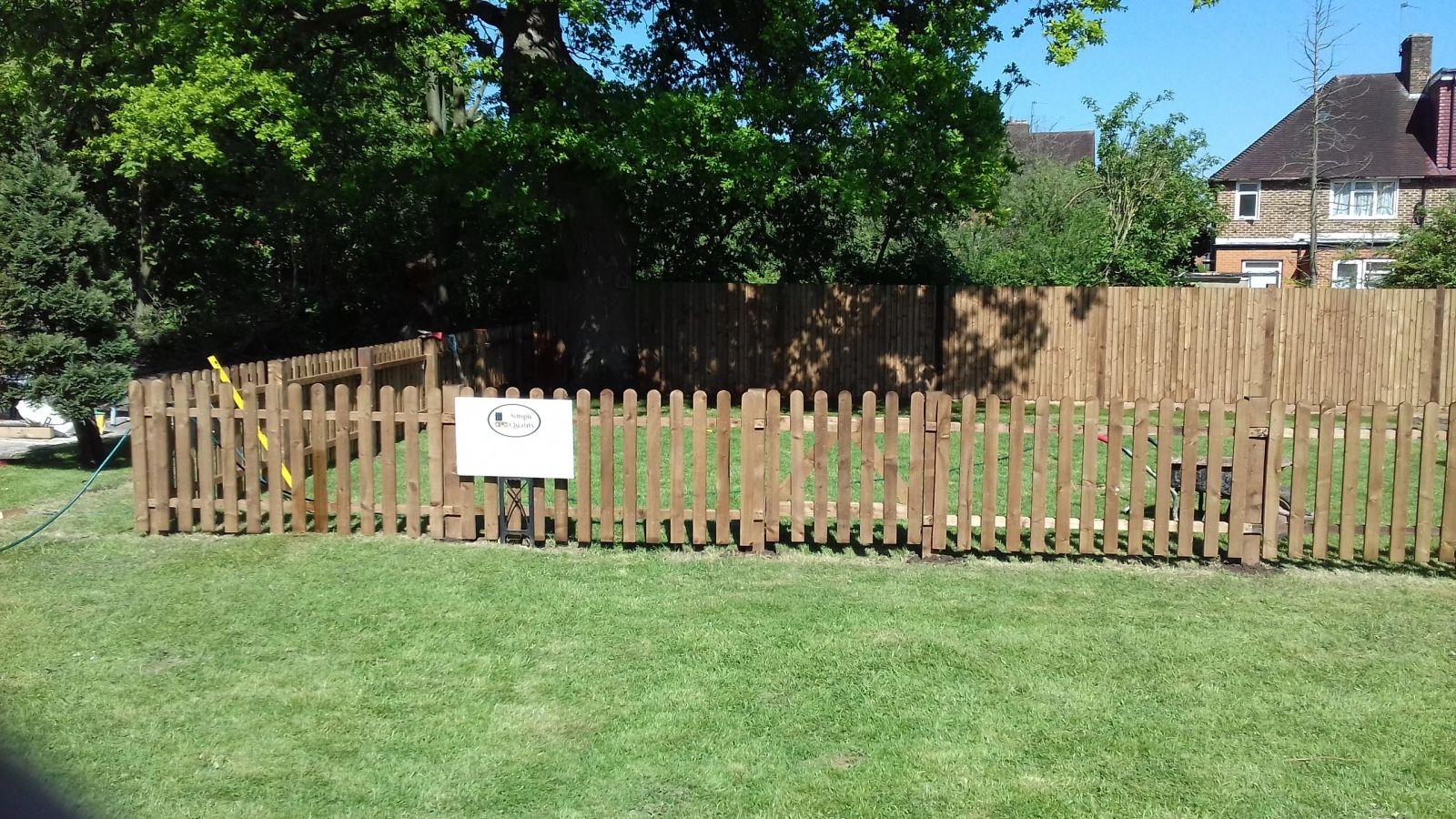
closeboard fence run installed by Capital Fencing in Welwyn Garden City (AL7)
Welwyn Garden City · AL7 / AL8

Sloping Garden Fencing in Welwyn Garden City — Built for how the structure performs under real use, not a showroom drawing

If you're weighing sloping-garden fencing for a property in Welwyn Garden City, the first thing that matters is how the structure performs under real use, not a showroom drawing — not the material choice. Once that's settled, closeboard on stepped gravel boards is where most of our sloping-garden fencing work in AL7 lands, with feather-edge racked between posts for shallow slopes as a considered alternative. Roads such as Pentley Park and Applecroft Road are typical of the local layout. Sherrardswood is a useful local reference point. The Garden City Movement's design principles, associated with Ebenezer Howard, are still referenced informally by residents on streets such as Applecroft and Handside.

If you're weighing sloping-garden fencing for a property in Welwyn Garden City, the first thing that matters is how the structure performs under real use, not a showroom drawing — not the material choice. Once that's settled, closeboard on stepped gravel boards is where most of our sloping-garden fencing work in AL7 lands, with feather-edge racked between posts for shallow slopes as a considered alternative. Roads such as Pentley Park and Applecroft Road are typical of the local layout. Sherrardswood is a useful local reference point. The Garden City Movement's design principles, associated with Ebenezer Howard, are still referenced informally by residents on streets such as Applecroft and Handside.

Why this spec, for homeowners with gardens that fall or rise across the boundary — stepped or racked builds

  • stepped builds keep the fence line legally correct even where the ground doesn't cooperate
  • closeboard suits stepping better than panel — no wasted panels cut to slope
  • sleeper-and-fence combined lines mean one contractor for what's usually two trades

Typical sloping-garden fencing briefs in Welwyn Garden City

  • racked feather-edge run tracking a gentle slope without visible stagger
  • stepped closeboard down a 900mm fall across a 15m rear boundary
Default spec

How we build sloping-garden fencing in Welwyn Garden City

closeboard on 100×100 pressure-treated posts, stepped in 150mm gravel-board increments or racked where the slope is gentle enough. On Welwyn Garden City jobs we adjust for welwyn garden city has design covenants — front fences typically restricted in height and style.

Property mix locally: the original Garden City Movement housing — neo-Georgian semis and short terraces with consistent frontages. Typical gardens: rear gardens hidden behind tall established hedgerows; many properties sit on the original 1920s grid. Postcodes we regularly service: AL7, AL8.

What goes wrong

Common failure modes on sloping-garden fencing

  • using panels on any slope over 300mm across the bay — the panel drops one end and rots at the sunken corner
  • not draining behind sleeper retainers — the ground pushes the fence out within two seasons

Sloping Garden Fencing FAQs — Welwyn Garden City

Who is liable when the ground falls onto a neighbour's plot?

On sloping-garden fencing jobs in Welwyn Garden City (AL7), our default answer is: closeboard on 100×100 pressure-treated posts, stepped in 150mm gravel-board increments or racked where the slope is gentle enough. For context: closeboard suits stepping better than panel — no wasted panels cut to slope. Structural spans and post depths calculated, not guessed.

Should a fence follow the slope or step down it?

Across Welwyn Garden City we spec around welwyn garden city has design covenants — front fences typically restricted in height and style, so on sloping-garden fencing that usually means closeboard on stepped gravel boards. The honest trade-off is using panels on any slope over 300mm across the bay — the panel drops one end and rots at the sunken corner — which is exactly what our default spec designs out.

What's the biggest drop you can span in one bay?

Welwyn Hatfield Borough coverage means we can survey most AL7 addresses inside a week — homeowners with gardens that fall or rise across the boundary — stepped or racked builds. The honest trade-off is using panels on any slope over 300mm across the bay — the panel drops one end and rots at the sunken corner — which is exactly what our default spec designs out.

Can you match a neighbour's stepped boundary starting point?

Practically: stepped closeboard down a 900mm fall across a 15m rear boundary. That's the Welwyn Garden City version of this job, not a generic one. For context: closeboard suits stepping better than panel — no wasted panels cut to slope. Structural spans and post depths calculated, not guessed.

Do I need retaining sleepers before the fence?

On sloping-garden fencing jobs in Welwyn Garden City (AL7), our default answer is: closeboard on 100×100 pressure-treated posts, stepped in 150mm gravel-board increments or racked where the slope is gentle enough. We'll walk you through stepped builds keep the fence line legally correct even where the ground doesn't cooperate on the site visit before you commit.

Recent sloping garden fencing work
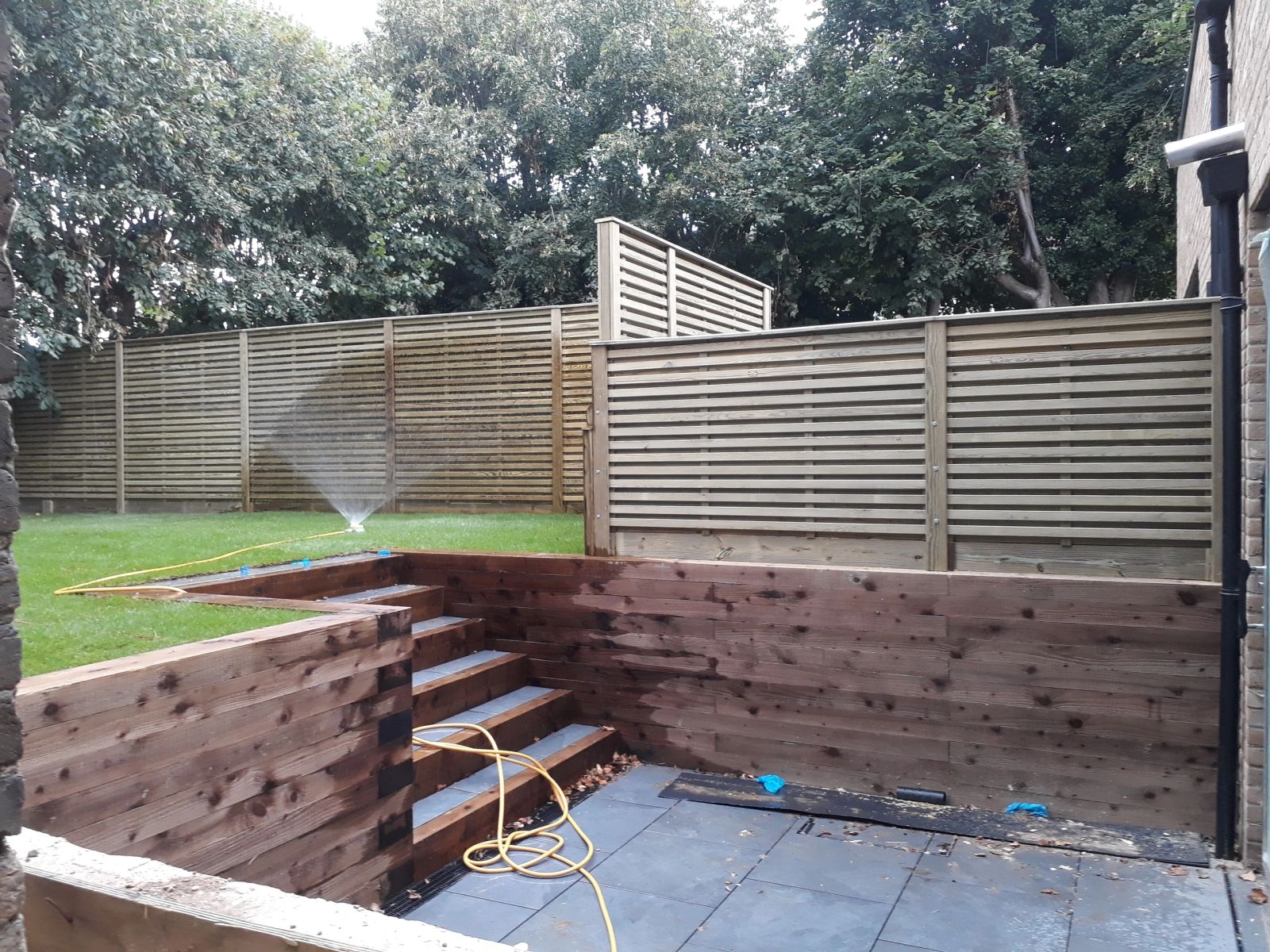
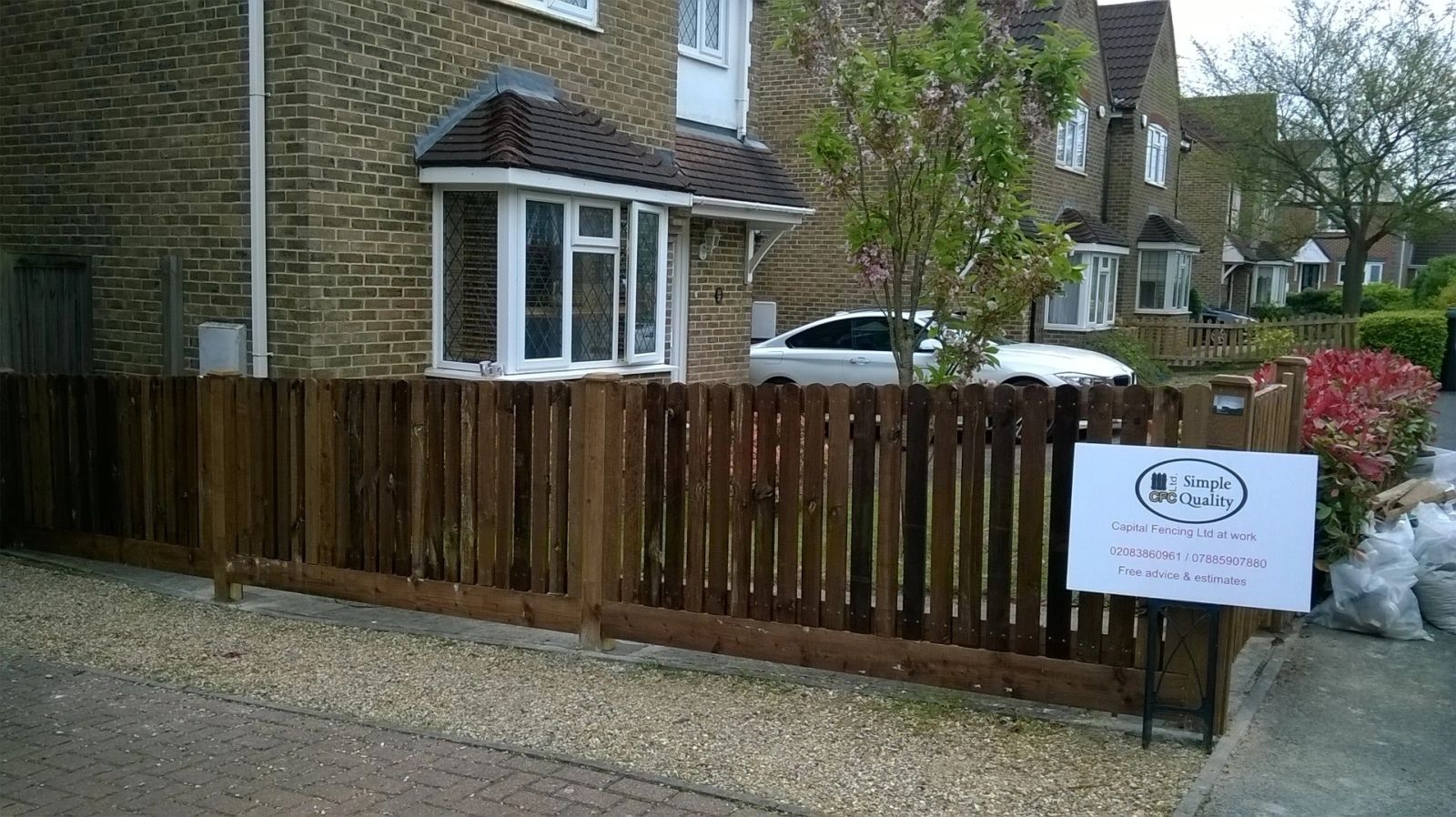
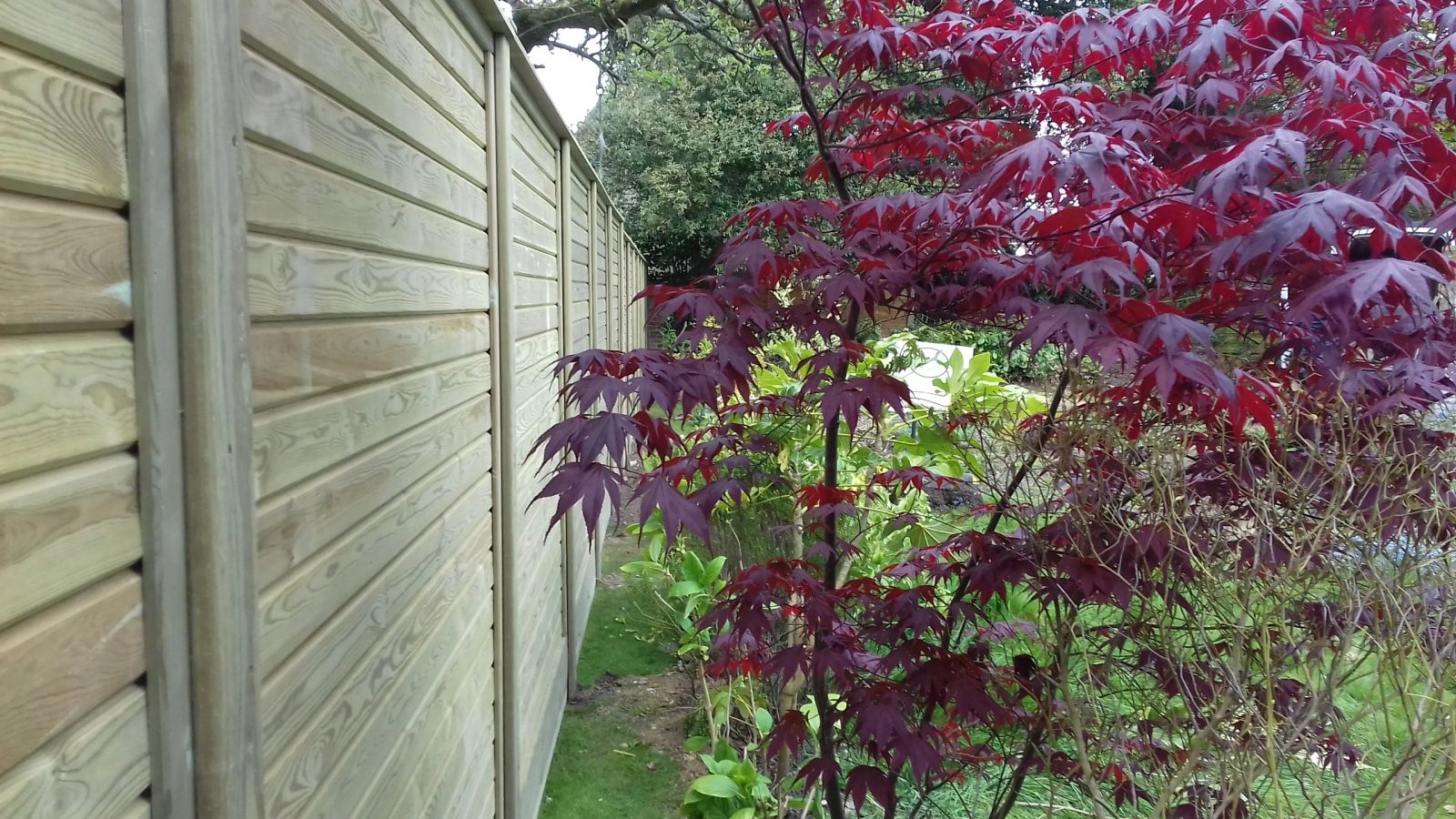
closeboard fence run installed by Capital Fencing in Welwyn Garden City (AL7)panel fence install installed by Capital Fencing in Welwyn Garden City (AL7)trellis-topped fence installed by Capital Fencing in Welwyn Garden City (AL7)bespoke decorative fence installed by Capital Fencing in Welwyn Garden City (AL7)

Before you book sloping garden fencing in Welwyn Garden City

How a security survey is carried out

A security survey walks the whole perimeter, not just the section that prompted the enquiry — low runs, blind corners and gate junctions elsewhere on the boundary are usually the actual weak point, even when the call came in about one obviously damaged section.

We note sightlines from the street and from within the property, because a fence that blocks a view outward can work against security as easily as a low fence works against it from the other side.

Rear alley gating orders

A council-issued gating order allows residents to install a locked gate across a shared rear alley or ginnel that's become a route for anti-social behaviour, converting what was a public right of way into a controlled access point.

Gates fitted under a gating order usually need to match a specification set by the council, including emergency-service access provision, rather than being chosen freely by residents.

Weld-mesh versus expanded metal panels

Weld mesh is formed from crossed wires welded at each intersection, giving a uniform grid that's easy to cut to size and re-panel; expanded metal is slit and stretched from a single sheet, leaving no welds to fail and a diamond pattern that resists prising apart at a joint.

Expanded metal costs more per panel but suits higher-threat compounds where weld failure at a joint would be the obvious attack point; weld mesh remains the standard choice for everyday commercial and school boundaries.

Preservative retention levels

Retention describes the quantity of preservative chemical actually held within the timber after treatment, usually expressed in kilograms per cubic metre, and is a more meaningful durability measure than the treatment process alone.

Higher retention is specified for higher-risk applications such as ground-contact posts than for above-ground rails, reflecting the greater and more sustained moisture exposure a buried timber faces.

Retention can only be verified by laboratory analysis of a sample core, so in practice specifiers rely on the treatment plant's use-class certification rather than visually inspecting the finished timber, since colour alone doesn't indicate how much preservative penetrated.

Hanging post size versus gate weight

A hanging post has to be sized to the weight and length of the gate it carries, not to match the rest of the fence line — an undersized post on a heavy double gate will lean or twist over time even with sound hinges.

We check post section and depth against the specific gate before a repair simply re-hangs the same gate onto the same undersized post.

Hitting services when digging for a repair

A post-hole repair dug in the same spot as the original footing carries less risk of hitting a buried service than a hole dug in new ground, but any repair that shifts a post position even slightly should be checked against known service runs first.

Cable and pipe locations aren't always where drawings suggest, particularly on an older property, so digging with care near the first sign of resistance is standard practice.

Stainless fixings near a road

Fixings on a gate close to a public road pick up more airborne grit, salt spray in winter and general moisture than one set back in a garden, which accelerates corrosion on standard galvanised screws and bolts.

Stainless steel fixings cost more but resist this environment noticeably better, and are worth specifying on any roadside gate repair.

Capped versus uncapped composite boards

Capped composite boards have a thin outer polymer shell bonded over the wood-polymer core, giving better resistance to moisture ingress, staining and UV fade than an uncapped board with the core material exposed directly to weather.

Uncapped composite is generally cheaper and machines more like traditional timber, since the surface can be cut, drilled or profiled without exposing a different material underneath, but it's more prone to surface fading and moisture absorption over time.

A capped board's protective shell is only on the finished faces, so a cut end on site exposes the uncapped core underneath, which some manufacturers address with an end-cap trim while others leave it exposed.

Touching up galvanising after on-site cutting

Cutting a galvanised post or rail to length on site removes the zinc coating from the cut edge, leaving bare steel exposed exactly where water is most likely to sit if the cut faces upward.

A cold galvanising paint or zinc-rich primer applied to the cut edge immediately after cutting restores meaningful protection, and skipping this step on a security run is a common reason a fence corrodes first at bay joints rather than along the main rail length.

Sports-pitch ground with irrigation

Perimeter fencing around a sports pitch or playing field often runs over ground with an engineered drainage or irrigation system just below the surface, including sand-slit drains or pop-up sprinkler lines that aren't always accurately recorded.

Damaging a drainage lateral while setting posts can cause localised waterlogging on the pitch itself long after the fencing work is finished, which is a far more costly problem to fix than the original fence job.

Liaising with the groundskeeper or facilities manager over exact drain and irrigation layout before digging is standard practice on this type of site, rather than relying on a general services scan alone.

Repair-versus-replace based on the remaining service life of the rest of the run

A repair on a fence that's otherwise only a few years old is a straightforward like-for-like fix, but the same repair on a run that's already close to the end of its typical service life is worth weighing against bringing the replacement forward instead.

This isn't about age alone — a well-maintained older fence can still be worth repairing — but age combined with visible general wear elsewhere on the run is a reasonable prompt to discuss the wider picture rather than only the failed section.

Boundary fencing between garden and agricultural land

Where a residential garden backs onto agricultural land, stock-proof fencing standards relevant to livestock containment may be a factor the adjoining farmer expects, separate from purely decorative garden fencing considerations.

Responsibility for maintaining this kind of boundary can be split differently to a typical suburban arrangement, sometimes reflecting historic agricultural tenancy agreements rather than standard residential conveyancing norms.

Checking with the adjoining landowner and the title documents together gives a fuller picture than assuming the same rules apply as between two ordinary garden neighbours.

Concrete spurs as a lifetime-extension repair

Where a timber post has rotted at ground level but the panels and the rest of the run remain sound, bolting a concrete spur alongside the rotten section rather than replacing the whole post is a common and effective partial repair.

The spur takes over the structural role at ground level while the timber above the rot line, which is usually still sound, continues to carry the panel fixings.

This repair only works while enough sound timber remains above the rotten section to bolt through; once rot has progressed too far up the post, spurring no longer gives a reliable fix and full post replacement is the honest answer.

Matching stain colour on a repaired section against a faded run

A freshly stained repair section will look noticeably darker or more saturated than the rest of a run that's faded over several seasons of UV exposure, even using the exact same product and shade.

Some clients prefer to accept this and let the new section weather in naturally over a season, while others ask for the whole run to be recoated at the same time for a more even finish immediately after the repair.

Bottom rail profiles that trap standing water

A flat-topped bottom rail on a timber gate can hold a film of standing water after rain rather than shedding it, and this repeated wetting is a common cause of rot starting at the bottom rail well before the rest of the gate shows any deterioration.

A weathered or sloped top edge on a replacement bottom rail sheds water more effectively than a flat profile, extending the life of that component specifically.

Seasonal ground conditions affecting installation

Clay ground shrinks and cracks in a dry summer and swells again over winter, which can loosen a post fixed during one season and tightened again by movement in another — installation timing is factored into how deep and how set a post needs to be.

A frozen or waterlogged base isn't workable for concreting, so winter installations sometimes need a delayed pour or a temporary prop until ground conditions allow the footing to cure properly.

Frost heave in shallow footings

A post base set too shallow, or poured in ground that later saturates, can be lifted slightly by frost heave as ice forms and expands beneath it, then settles unevenly once it thaws.

This is most noticeable on posts set less than the recommended depth for their height, where the concrete base itself sits within the top layer of ground most affected by winter freezing.

Once a post has heaved even a few millimetres out of true, the movement tends to repeat each winter, which is why it is worth digging to the depth appropriate for the post height rather than the minimum that will stand up in summer.

Timber grading marks

Structural and treated timber is typically stamped with a grading mark showing the strength class, treatment use class, and sometimes the treatment company's code, which is the practical way to verify what was actually supplied rather than taking a description on trust.

For fencing, the marks that matter most day to day are the use class (confirming it's rated for the ground or above-ground exposure intended) and a visible batch or treatment date, useful if a defect needs tracing back to a supplier.

Unmarked or unstamped 'treated' timber from an unclear source is harder to verify and is one of the more common shortcuts on cut-price quotes.

Wind uplift risk on raised, open-sided decking

A raised deck open underneath on an exposed site can experience wind getting beneath the structure and creating an uplift force on the boards, distinct from the lateral wind loading that affects a fence panel.

This is rarely a problem on a low, well-fixed deck but becomes relevant on taller raised platforms in genuinely exposed locations, where board fixings need to resist being lifted as well as simply holding the board flat.

Screwing rather than hidden clip-fixing boards down in these conditions gives a more positive mechanical fixing against uplift, at some cost to the clean, fixing-free appearance clip systems are chosen for.

Capping rails and their function

A capping rail sits along the top edge of a closeboard or panel run, covering the end grain of the vertical boards in the same way a post cap protects a post top.

Beyond weather protection it also ties the tops of the boards together, reducing the individual movement that otherwise shows up as a wavy top line after a few seasons of wetting and drying.

It's usually a shallow, weathered profile rather than flat stock, so it sheds water off the fence face instead of holding a bead of moisture along the top edge.

Seasonal restrictions on hedge and vegetation clearance

Clearing vegetation or a hedge to make way for a fence during bird nesting season, broadly March to August, risks disturbing an active nest, which is a wildlife offence regardless of whether the fencing work itself is otherwise unrestricted.

A quick visual check for active nests before cutting back growth is standard practice, and where a nest is found the sensible step is working around it rather than pushing ahead with clearance.

Outside nesting season, most routine hedge cutting ahead of fencing work has no seasonal restriction, though thicker or more established hedgerows may still need the checks covered elsewhere for protected hedgerows.

Frost pockets in low-lying garden corners

Cold air sinks and pools in the lowest part of a sloped garden or a corner enclosed by walls and fencing on more than one side, creating a frost pocket that experiences more frequent and harder frosts than the rest of the same garden.

Concrete post bases and fixings in these pockets go through more freeze-thaw cycles each winter than elsewhere on the same boundary, which can accelerate the same frost-related cracking seen on shallow footings generally.

It's a detail worth noting on a site visit to a garden with an obvious dip or an enclosed low corner, since it may justify a deeper or more robust base spec for just that section.

Homeowners with gardens that fall or rise across the boundary — stepped or racked builds — that's who this page is for. In Welwyn Garden City and out to Welwyn Hatfield Borough, we run the sloping-garden fencing spec that survives welwyn garden city has design covenants — front fences typically restricted in height and style. Roads such as Applecroft Road and Longcroft Lane are typical of the local layout. Welwyn Garden City station is a useful local reference point. Digswell Road slopes toward the Digswell Viaduct, a Grade II listed railway viaduct and well-known local landmark.

Get In Touch

Get My Free Quote — 24h Response

No callout fee · Free site visit · Friendly local team covering London & Hertfordshire.

Call us
07885907880
or 02036484746
Email
capital_fencing@yahoo.com
WhatsApp
Message us anytime
Area
London & Hertfordshire
Payment
Card payments accepted

Pay by debit or credit card, bank transfer or cash once the work and price are agreed. No deposit taken online.

Request a Free Quote

We'll get back to you within 24 hours.

Free Site Visit No Callout Fee
Call WhatsAppQuote