Access constraints on a repair job
A repair to a single post or panel deep in a rear garden with no side access still needs materials and tools carried through rather than dropped at the boundary, which is worth factoring into the timeline on a tight terraced plot.
On a multi-property repair — several gardens sharing a rear boundary — coordinating access across neighbours can be the more awkward part of the job than the repair itself.
Pale spacing tolerance on a palisade run
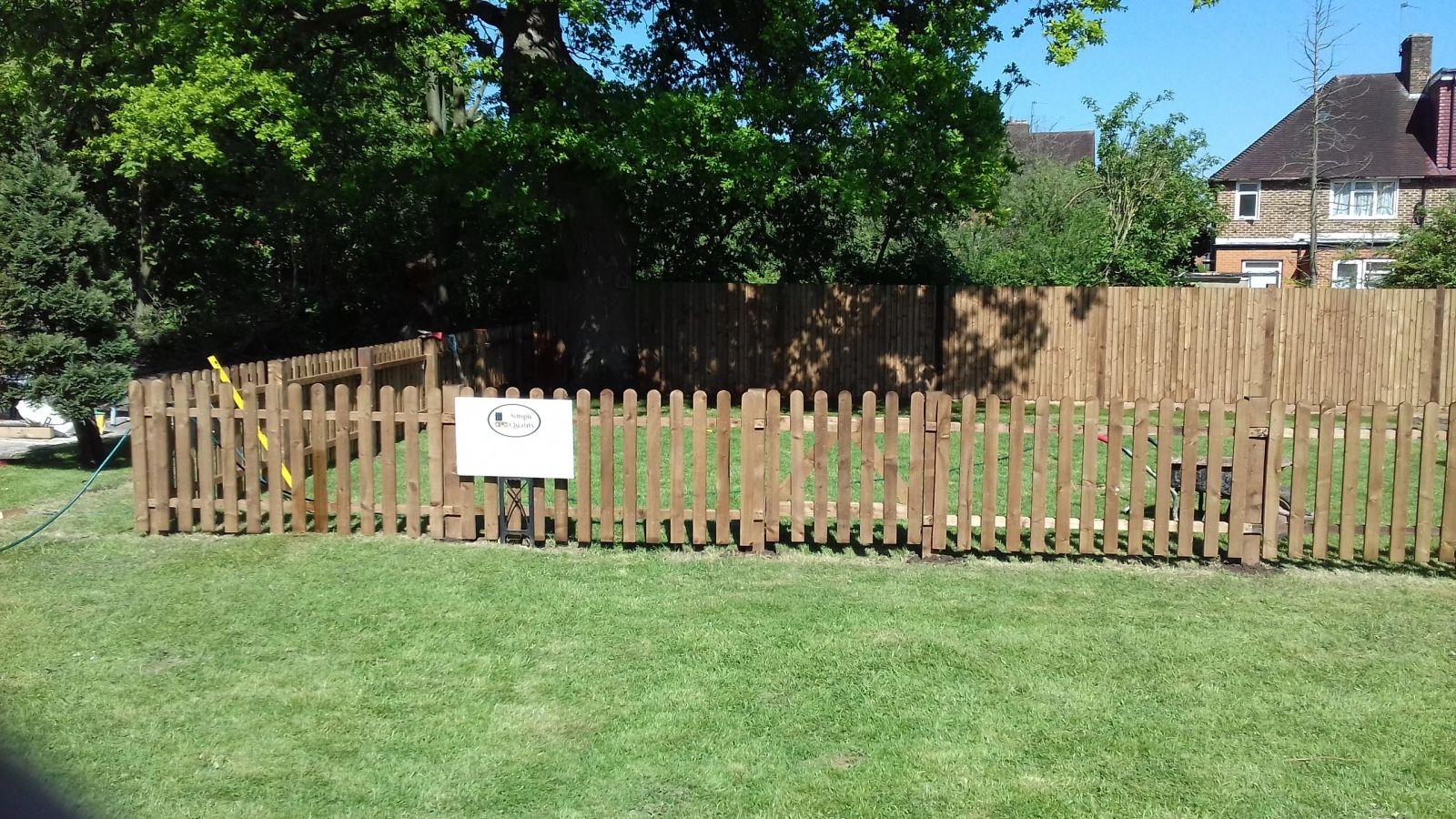
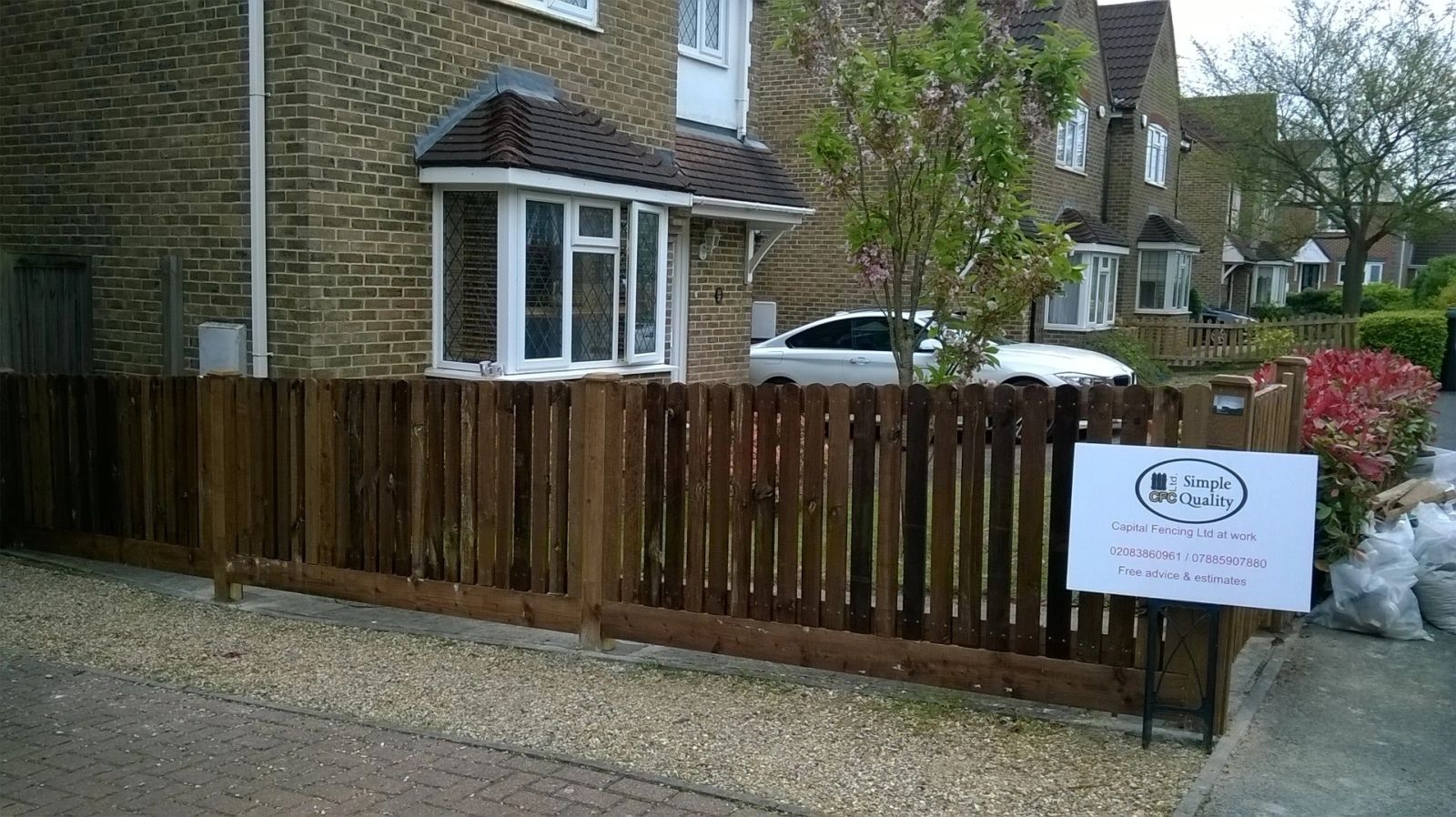
Palisade pale gaps are set to a maximum spacing so a foot or hand can't find purchase between adjacent pales, and drift beyond that tolerance over a long run is usually a sign the pales were fixed by eye rather than gauged off a jig.
A gauge batten cut to the exact centre spacing keeps every bay consistent, which matters more on security runs than on a purely decorative fence because a single wider gap becomes the obvious point of attack.
Working around a soil vent pipe on the boundary
A soil vent pipe running up close to a boundary wall or fence line needs clearance to stay serviceable and to avoid trapping odours or condensation against the timber.
Where a fence panel would otherwise sit directly against the pipe, a narrow gap or a purpose-cut notch in the panel or gravel board keeps the pipe accessible without leaving a large unsightly space either side.
Fixing a post too close to a vent pipe can also make future pipe repairs or clearance rodding awkward, so the post position is usually set slightly back from the pipe run rather than tight against it.
Night latches on garden and side doors
A night latch, more commonly seen on house front doors, is sometimes fitted to a solid garden door or side gate door for self-latching convenience, engaging automatically on closing while still allowing free egress from inside.
It needs a solid, well-fitted frame to work reliably outdoors, since timber movement that would be barely noticeable indoors can be enough to throw an exterior-mounted night latch out of alignment.
When deeds don't say who owns a boundary
It's common for older title deeds to be entirely silent on which side owns a given boundary, especially on properties built before detailed conveyancing plans became standard practice.
In that situation there's no single automatic rule that applies in every case, and long-standing practical evidence — who has always maintained the fence, existing physical features — can carry real weight.
Where ownership genuinely isn't clear, we'd always suggest raising it with the neighbour and, if needed, a conveyancing solicitor, rather than assuming a default answer.
Corner plots and unusual exposure
A corner plot often loses the shelter of a neighbouring garden on one side, leaving a boundary that faces open street or open ground the way an interior garden fence never does.
That side of the plot is worth treating like a rural exposed boundary for post spacing and panel choice even though the rest of the garden is a normal suburban size.
It is also usually the run most visible to passers-by, so the practical answer is often a slightly heavier specification rather than a cheaper standard one to avoid repeat failures on the most conspicuous boundary.
Working safely on a tall or elevated fence repair
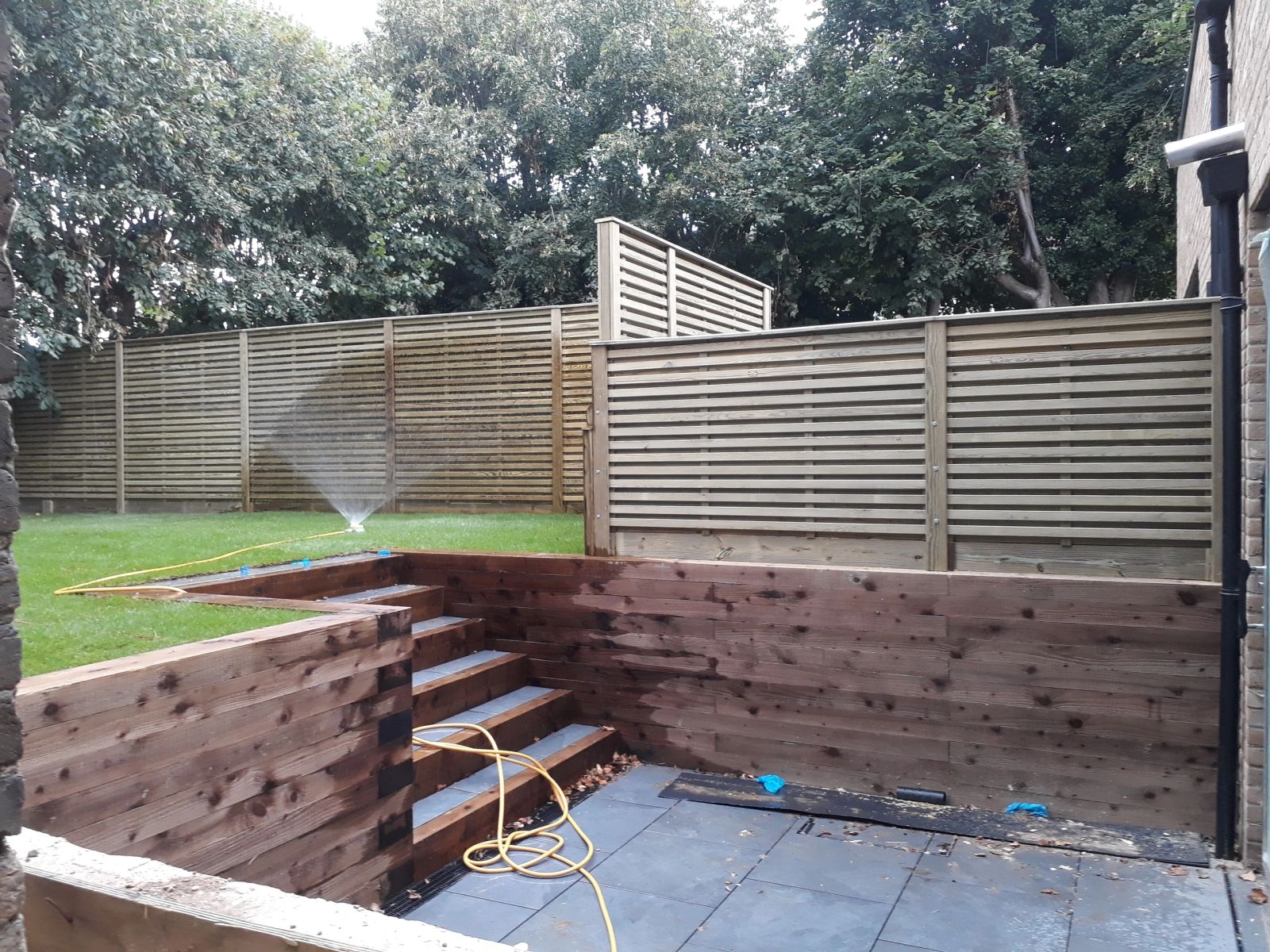
A repair on a taller run, or one set on a retaining wall or raised bank, sometimes needs a working platform or trestles rather than simply working from a stepladder against the fence itself.
Where a repair is above head height along its full length, planning safe access before starting reduces both the time on site and the risk of further damage to the fence being used as a support.
Sealing cut end grain on site-modified gates
Cutting a gate down to fit a narrower opening exposes fresh end grain that takes up water far faster than a factory-sealed edge, and leaving that cut unsealed is one of the quickest ways to start rot in an otherwise sound gate.
Sealing or capping any cut edge before the gate goes back into service is a small step that significantly extends the life of an altered gate.
Sequencing a multi-bay repair
On a repair spanning several bays, work generally runs from the soundest end toward the most damaged, so the newly fixed sections provide a stable reference line for the rest of the work rather than starting from the worst-affected point.
Where a repair is linked to an insurance claim, documentation is completed at each stage rather than only at the end.
Wrought iron versus mild steel gate repairs
Genuine wrought iron on older gates is more corrosion-resistant and easier to work hot than the mild steel used on most modern fabricated gates, but original wrought iron sections are harder to source for a like-for-like weld repair.
We identify which material an older metal gate is actually made from before quoting a repair, since the repair method differs between the two.
Combining a windbreak hedge with a lighter fence
Planting a windbreak hedge or shrub line on the exposed side of a fence reduces the wind load the fence structure has to carry directly, since the vegetation absorbs and diffuses much of the force before it reaches the panels.
This takes several years to become effective as the planting matures, so it's usually specified alongside a fence built to cope with full exposure initially, with the expectation that loads reduce over time rather than the reverse.
It's a useful option where a client wants a lighter, less heavily-specified fence than pure exposure would otherwise demand, provided they accept the interim years before the hedge does its share of the work.
Softwood species used in fencing
Most UK fencing timber is a European redwood or whitewood softwood, chosen for cost and workability rather than natural durability, which is why it's almost always sold pressure-treated rather than untreated.
Redwood (Scots pine) takes preservative more readily than whitewood (spruce) because of its structure, which is part of why it's the more common species specified for treated fencing components.
Species alone isn't a durability guarantee — the treatment class and detailing (post caps, gravel boards, drainage at the base) generally matter more to service life than which softwood was used underneath it.
The difference between an informal and a legal boundary
The 'legal' boundary is whatever the title deeds and any supporting documents actually define, whereas the 'physical' or informal boundary is simply where a fence, hedge or wall happens to stand today.
Over years of incremental replacement, these two things can drift apart without anyone intending it, particularly where each new fence has been built slightly inside the previous one's line for convenience.
Where a discrepancy is suspected, this is worth raising as a documents question rather than assuming the current physical fence line is automatically correct.
Concrete spurs as a lifetime-extension repair
Where a timber post has rotted at ground level but the panels and the rest of the run remain sound, bolting a concrete spur alongside the rotten section rather than replacing the whole post is a common and effective partial repair.
The spur takes over the structural role at ground level while the timber above the rot line, which is usually still sound, continues to carry the panel fixings.
This repair only works while enough sound timber remains above the rotten section to bolt through; once rot has progressed too far up the post, spurring no longer gives a reliable fix and full post replacement is the honest answer.
Wheel load rating on wheeled gates
A wheel fitted to the leading edge of a heavy gate to support its weight as it swings needs a load rating matched to the gate's actual weight, since an undersized wheel flat-spots or seizes under a load it wasn't specified for.
This is separate from a sliding gate's running wheels — a support wheel on a swing gate only touches down near full opening or closing, rather than carrying the gate along its whole travel.
Building for flood-prone gardens
Gardens on a known flood plain or with a history of standing water after heavy rain benefit from fence bases designed to let water pass through rather than dam against a solid panel, which can otherwise add pressure to a fence line during a flood event.
Gravel boards set to allow some drainage, and hardware chosen to resist prolonged wet exposure, both reduce the aftermath clean-up and repair cycle that repeat flooding causes.
It's also worth checking the Environment Agency's flood risk mapping for a specific plot before finalising a spec, since risk varies a great deal even within the same postcode.
Council neighbour consultation schemes for permitted development
Certain categories of permitted development, mainly larger extensions rather than fencing itself, fall under a formal neighbour consultation scheme requiring the council to notify adjoining owners even without a full planning application.
Boundary fencing itself is rarely covered by this specific scheme, but it's sometimes confused with the ordinary neighbour notification that happens during a full planning application for other works.
Where in doubt about which process applies to a specific project, the council's planning department can clarify which consultation route, if any, is relevant.
Tenancy and landlord repair responsibilities
Responsibility for a garden boundary at a rented property depends on the tenancy agreement, but where it's silent, the general position is that a landlord is responsible for structural boundary features while day-to-day garden maintenance often falls to the tenant.
A tenant generally can't authorise permanent alterations like a new fence line or wall without the landlord's consent, even where they're happy to pay for it, since it affects the property the landlord owns.
Storm or accidental damage to a boundary fence at a let property is usually the landlord's repair obligation, arranged directly or through a managing agent, rather than something the tenant is expected to fund unless they caused the damage.
Handling heavy gate posts and large timbers safely
A large hardwood or oversized gate post can be too heavy to lift and position safely by hand, particularly into a deep hole, so a simple lifting aid such as a sack truck, roller bars or a block and tackle reduces the risk of a manual handling injury.
Lowering a heavy post into a hole under control, rather than dropping the last stretch, also protects the hole's sides from collapsing under the impact just as it's being positioned.
Where a post genuinely needs mechanical assistance to move safely, planning that equipment into the job at the outset avoids improvising with inadequate lifting methods on the day.
Part-run replacement and matching heights
Replacing part of a run while leaving the rest standing means matching not just the panel style but the exact height, since even a small step in height between old and new sections is visually obvious along a straight boundary.
Where the original height isn't available in current stock, adjusting the post height or capping detail can sometimes close the gap without replacing the whole run.
Repairing a post snapped clean at the ground line
A post that's sheared off flush at the ground line has usually lost most of its strength to rot just below the surface before the final break, which is often triggered by wind load or someone leaning a ladder against the panel.
The stub left in the ground is dug out or broken free of the old concrete rather than built around, since leaving it in place gives the new post nothing solid to bear against and the repair fails again within a season.
Hedgehog gaps and protected species awareness
A small gap at the base of a fence panel, often around 13cm square, lets hedgehogs and other small wildlife move between gardens, which is increasingly encouraged as gardens become more enclosed.
Separately, some sites may have protected species such as bats, nesting birds or great crested newts present, and disturbing them during certain works can be a legal matter regardless of boundary ownership.
Where there's any reason to suspect protected species on a site, checking with an ecologist or the local authority before groundworks is the sensible route rather than assuming it won't apply.