London & Hertfordshire Free Site Visit
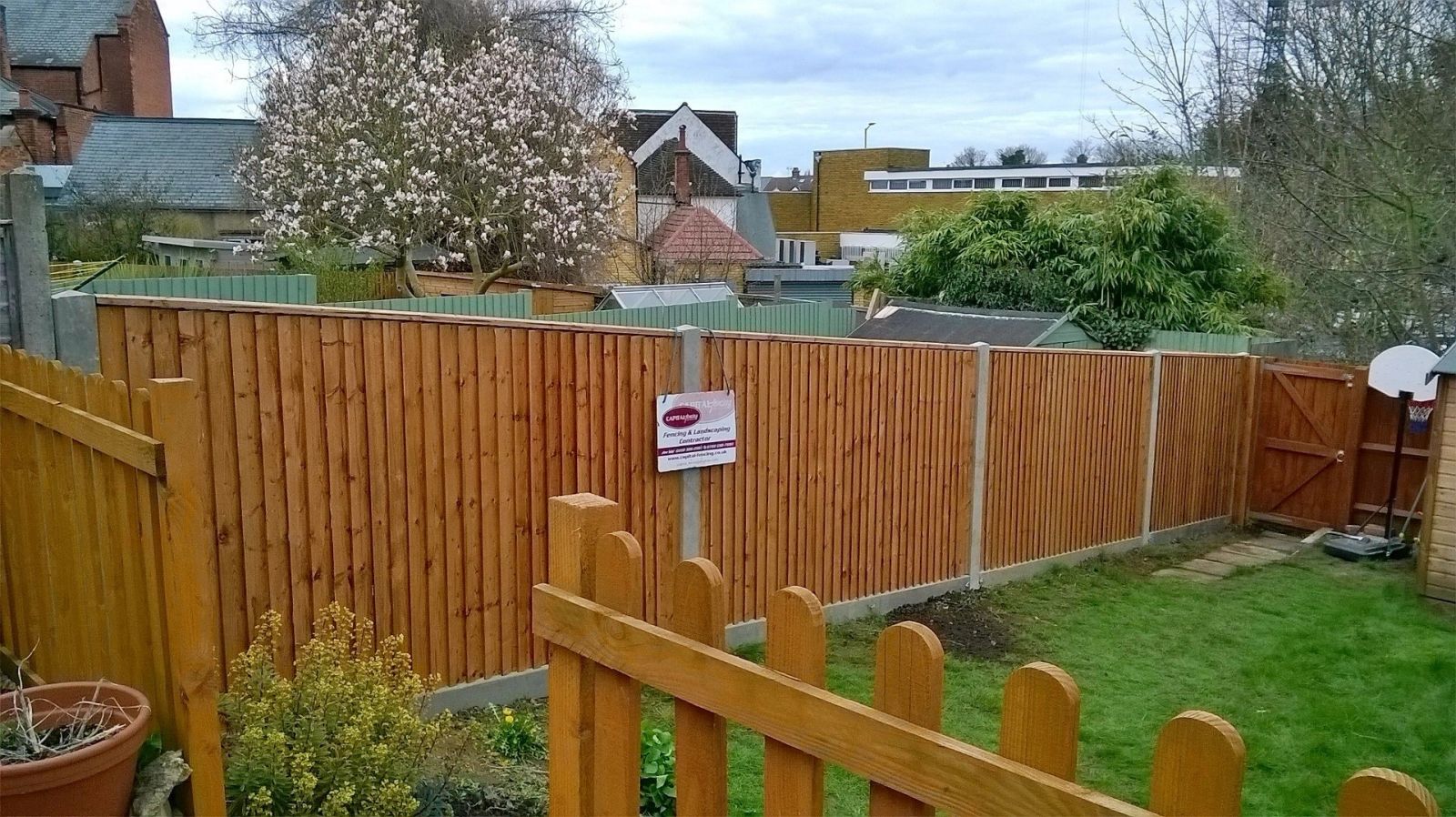
closeboard fence run installed by Capital Fencing in Islington (N1)
Islington · N1 / N5 / N7 / N19 / EC1

New build fencing across Islington — Islington

Capital Fencing installs new-build boundary fencing across Islington and out toward camden and hackney. What separates a new-build boundary fencing job from a standard boundary is the detail: replacing developer 4ft overlap panels with 6ft closeboard on concrete posts. That's the work, not the marketing. Roads such as Highbury Grove and Liverpool Road are typical of the local layout. Emirates Stadium is a useful local reference point. The Regent's Canal passes through the borough via the City Road Basin, and Highbury Fields is one of its largest open spaces.

Capital Fencing installs new-build boundary fencing across Islington and out toward camden and hackney. What separates a new-build boundary fencing job from a standard boundary is the detail: replacing developer 4ft overlap panels with 6ft closeboard on concrete posts. That's the work, not the marketing. Roads such as Highbury Grove and Liverpool Road are typical of the local layout. Emirates Stadium is a useful local reference point. The Regent's Canal passes through the borough via the City Road Basin, and Highbury Fields is one of its largest open spaces.

What goes wrong

Common failure modes on new-build boundary fencing

  • putting new closeboard on the existing developer posts — those are the part that failed first, not the panels
  • raising a shared boundary without agreeing with the neighbour, then discovering they've taken it down
Default spec

How we build new-build boundary fencing in Islington

6ft closeboard on concrete posts, 150mm gravel boards, mid-rail capped — a genuine 15-year replacement for the developer's 4-year panel. On Islington jobs we adjust for conservation-area consent plus tight rear-mews access makes bespoke gate and boundary work the norm.

Property mix locally: Georgian terraces around Barnsbury and Canonbury, Victorian streets in Highbury, and dense mansion blocks. Typical gardens: compact walled rear gardens with rear-mews access on parts of Barnsbury and De Beauvoir. Postcodes we regularly service: N1, N5, N7, N19, EC1.

Why this spec, for buyers on modern estates upgrading the developer's minimum-spec boundary after handover

  • no more callouts every winter — the standard developer spec fails inside four years and we know exactly what fails
  • we work around plot-boundary pegs and drainage runs that new-build gardens hide badly
  • quotes broken down so you can see exactly where the money over the developer spec goes

Typical new-build boundary fencing briefs in Islington

  • replacing developer 4ft overlap panels with 6ft closeboard on concrete posts
  • adding trellis and gravel boards to lengthen the life of an otherwise usable developer fence

New-Build Garden Fencing FAQs — Islington

What's the maximum height without planning on a new build?

On new-build boundary fencing jobs in Islington (N1), our default answer is: 6ft closeboard on concrete posts, 150mm gravel boards, mid-rail capped — a genuine 15-year replacement for the developer's 4-year panel. We'll walk you through no more callouts every winter — the standard developer spec fails inside four years and we know exactly what fails on the site visit before you commit.

Can I replace the developer's fence in the first two years?

Across Islington we spec around conservation-area consent plus tight rear-mews access makes bespoke gate and boundary work the norm, so on new-build boundary fencing that usually means 6ft closeboard on concrete posts. For context: we work around plot-boundary pegs and drainage runs that new-build gardens hide badly. Measured, quoted and installed by the same small crew.

Can you match my neighbour's post colour and spacing?

Islington coverage means we can survey most N1 addresses inside a week — buyers on modern estates upgrading the developer's minimum-spec boundary after handover. We'll walk you through no more callouts every winter — the standard developer spec fails inside four years and we know exactly what fails on the site visit before you commit.

Do I need permission to raise a new-build boundary?

Practically: replacing developer 4ft overlap panels with 6ft closeboard on concrete posts. That's the Islington version of this job, not a generic one. We'll walk you through no more callouts every winter — the standard developer spec fails inside four years and we know exactly what fails on the site visit before you commit.

Why do developer fences fail so quickly?

On new-build boundary fencing jobs in Islington (N1), our default answer is: 6ft closeboard on concrete posts, 150mm gravel boards, mid-rail capped — a genuine 15-year replacement for the developer's 4-year panel. For context: we work around plot-boundary pegs and drainage runs that new-build gardens hide badly. Measured, quoted and installed by the same small crew.

Recent new-build garden fencing work
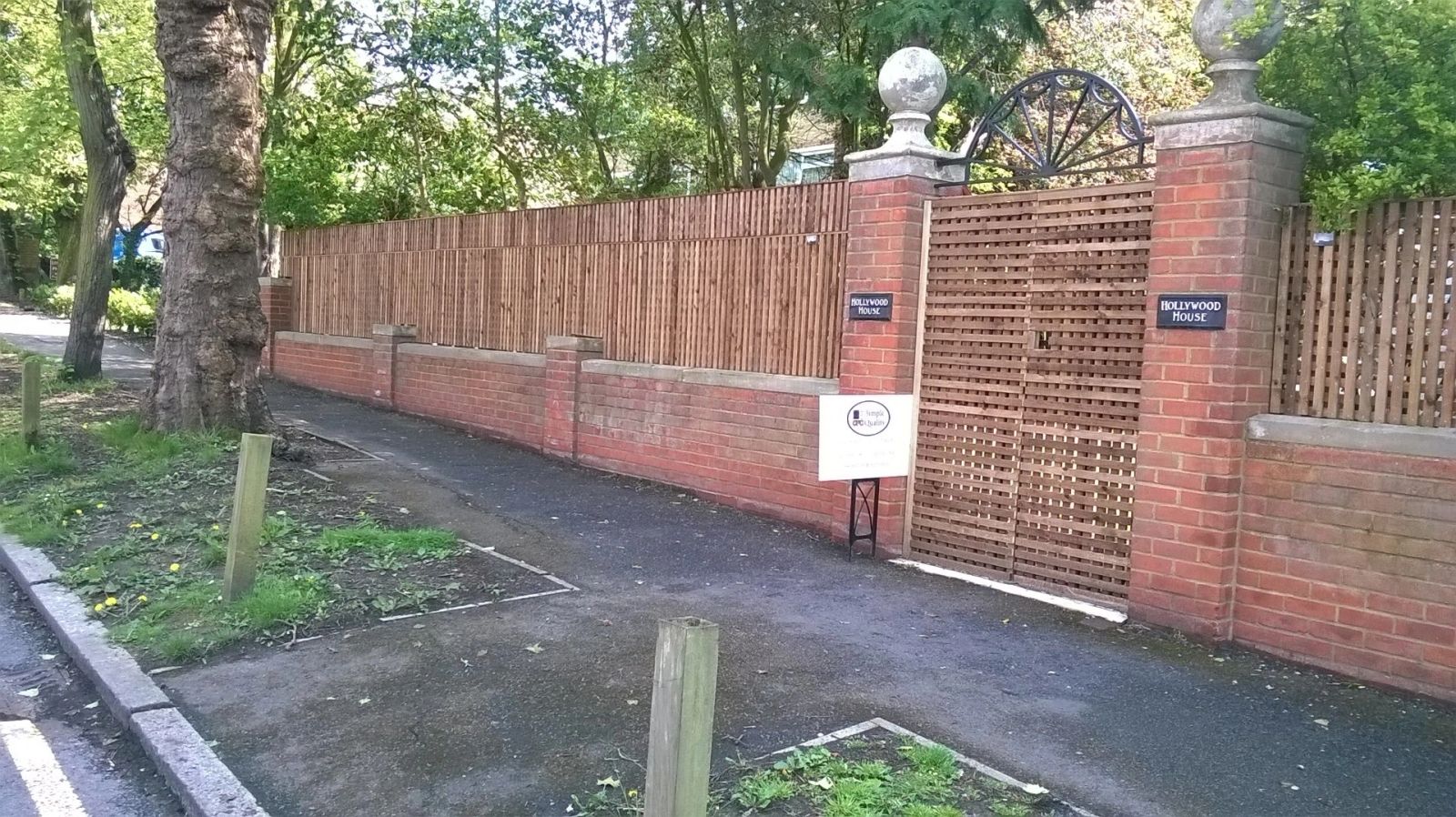
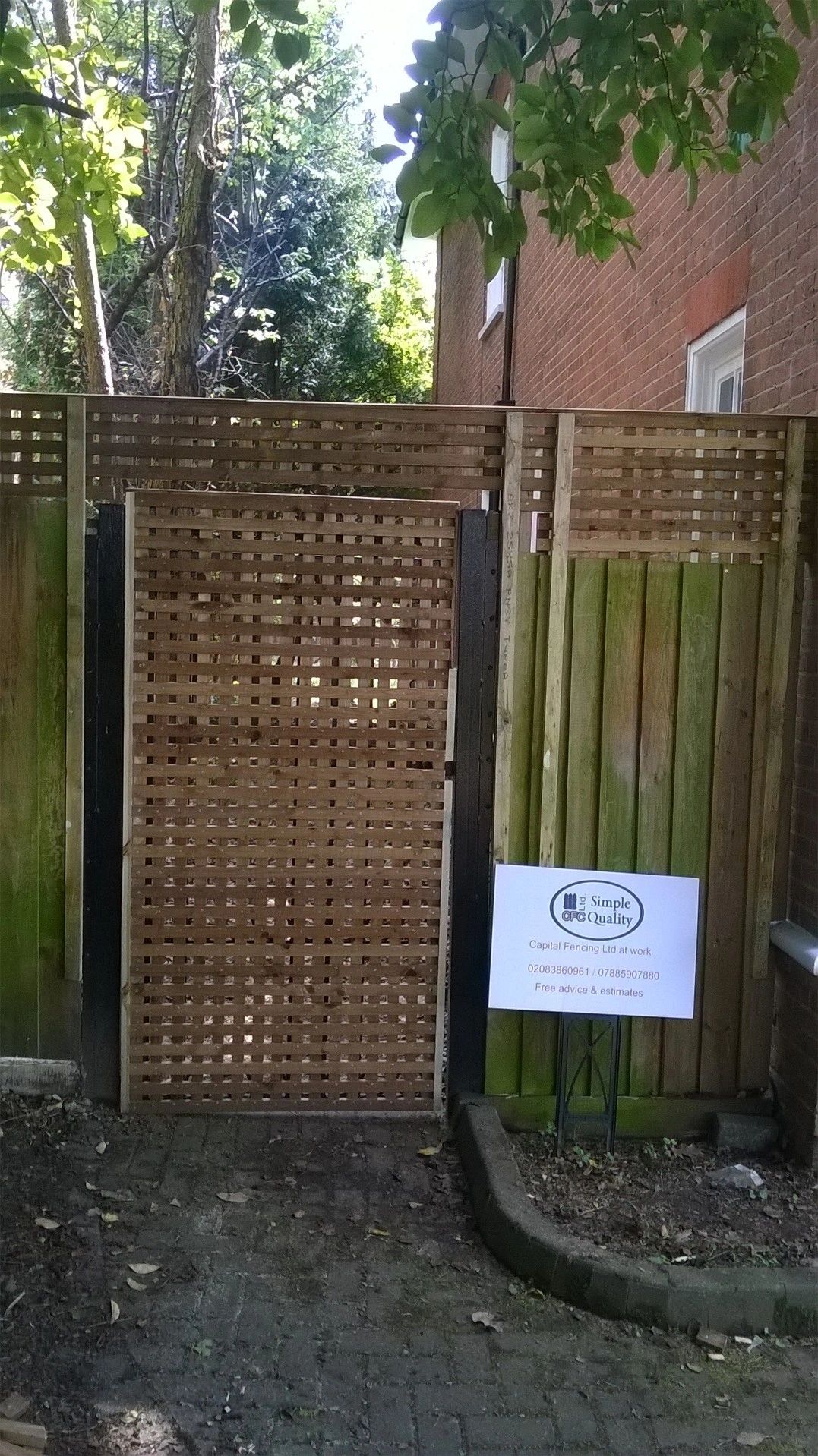
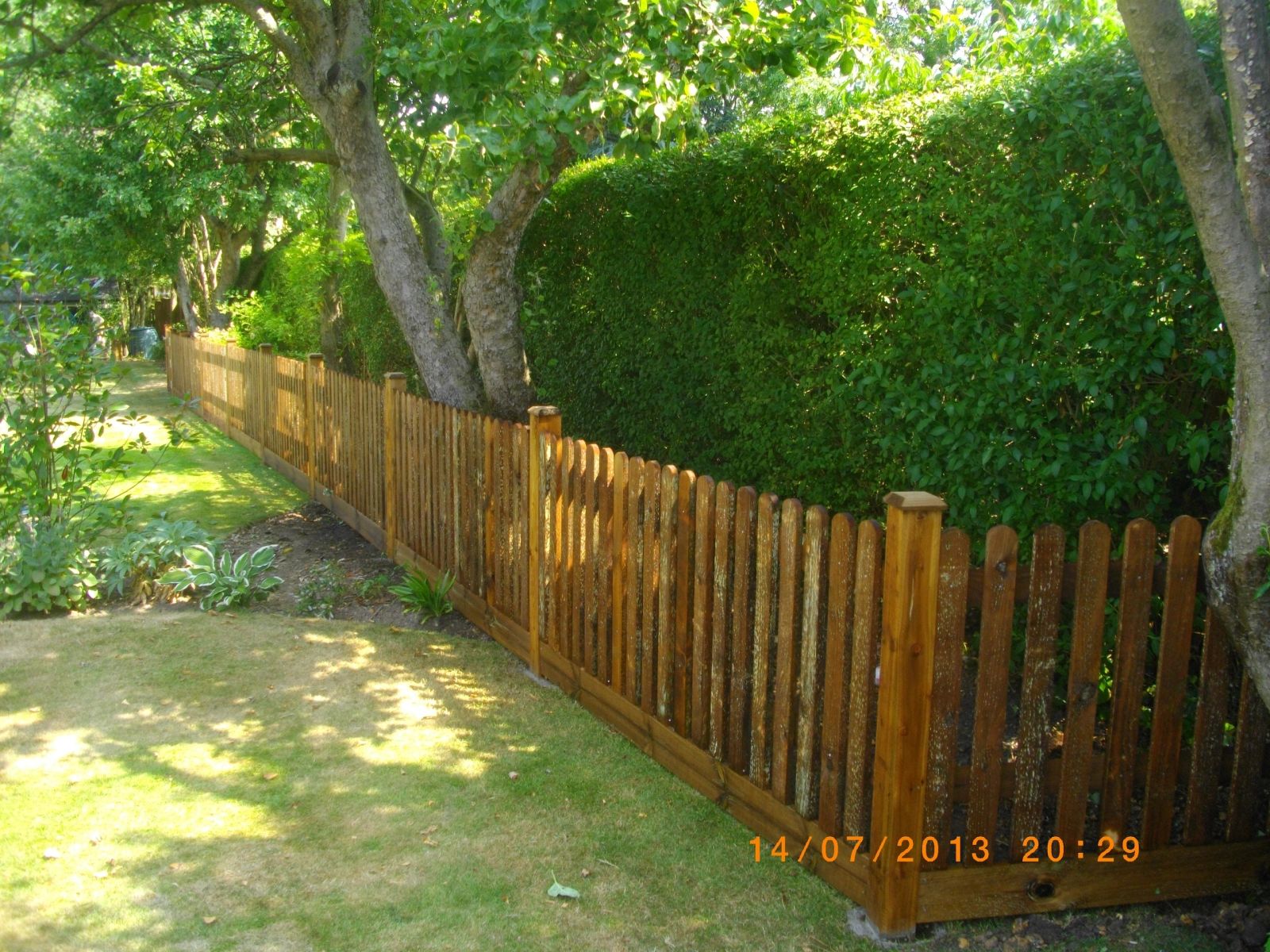
closeboard fence run installed by Capital Fencing in Islington (N1)panel fence install installed by Capital Fencing in Islington (N1)trellis-topped fence installed by Capital Fencing in Islington (N1)bespoke decorative fence installed by Capital Fencing in Islington (N1)

Local considerations across Islington and camden

Post-repair maintenance intervals

A repaired section benefits from a check at roughly the same interval as the rest of the fence — typically an annual look at fixings, timber condition and any leaning — rather than being assumed sound indefinitely once fixed.

Newly fitted timber and concrete are also worth a closer check after their first full winter, since that's when a repair that wasn't quite right tends to show it.

Tree root heave near posts

A root growing under or beside a post footing can lift or crack the concrete over several years as the root thickens, distorting the post's alignment even though the timber itself may be sound.

Repairing a post affected by root heave sometimes means offsetting the new footing slightly rather than resetting it in exactly the same spot, particularly where the tree is protected and the root can't be cut.

Restaurants and pub gardens

Boundary fencing around a pub garden or restaurant terrace often does double duty as noise and light screening for neighbouring residential properties, and its height and permeability can be a condition attached to the premises licence rather than a free choice.

Trading hours mean access for fencing work is usually easiest early morning before service starts, since a garden in active use for covers can't have posts being dug mid-lunch.

Where outdoor seating sits close to the boundary, fixings and post positions need checking against any licensed seating plan so the finished fence doesn't reduce covers below what the licence allows.

Algae growth on north-facing panels

A boundary that faces north, or sits in the permanent shade of a tall building or dense hedge, stays damp for far longer after rain than a south-facing run, which is exactly the condition green algae needs to establish.

Algae on timber is mostly cosmetic in the early stages but makes the surface noticeably slippery, which matters where a fence line doubles as an informal foothold near steps or a sloped path.

A dilute biocidal wash applied before restaining is more effective long-term than staining directly over algae, which simply seals damp organic growth beneath the new coating.

Fitting post caps correctly to shed water

A post cap that doesn't fully overhang the post's top edge on all sides leaves a lip where water can track back under the cap and sit on the end grain, defeating much of its purpose.

Pyramid or weathered profile caps shed water faster than a flat cap, which matters more on an exposed post than a sheltered one, though either performs better than no cap at all on a cut post top.

Caps fixed with a single central nail can work loose and rock in wind, letting water in at the edges; a bead of exterior adhesive under the cap in addition to fixings gives a more weathertight result.

Discontinued panel styles

Panel fencing ranges get discontinued or reformulated by manufacturers more often than solid boarded fencing components, since panels are a proprietary product rather than built from generic stock timber sizes.

A ten- or fifteen-year-old panel range is often simply no longer made, which means a single damaged panel in an otherwise sound run may need the whole run replaced, or a mismatched panel accepted as a compromise.

Closeboard and picket fencing, built from standard boards, rails and posts rather than a proprietary panel, are generally easier to repair piecemeal decades later precisely because the components aren't tied to one manufacturer's product cycle.

Rail configurations on a palisade or railing run

A two-rail configuration (top and bottom) suits lower runs, while anything above around 2.4m generally takes a third, mid-height rail to stop the pales flexing independently under a push or climb attempt.

Rail spacing is set so a gap doesn't become a foothold; on a taller run the middle rail is positioned deliberately off-centre rather than dead-centre, to avoid creating an even climbing ladder.

Party Wall Act considerations for boundary fencing works

Fencing work itself rarely triggers the Party Wall Act, but where a security upgrade involves excavating close to a shared wall's foundation or building a new wall astride the boundary line, notice to the neighbouring owner may be required before work starts.

Checking whether proposed post positions or a new plinth wall fall within the Act's notice distance from a party structure is worth doing at design stage, since retrospective notice after work has begun causes more delay than checking first.

Wicket gates set within a larger gate

A wicket gate is a small pedestrian door built into one leaf of a larger vehicle gate, allowing foot access without opening the whole gate, and it needs its own hinge, latch and frame within the host leaf.

Because it's a frame within a frame, movement in the main gate can throw the wicket's alignment out even when the wicket's own hardware is sound, so both are checked together.

Gate widths for cycle access

A side gate wide enough for a wheelbarrow isn't automatically wide enough for a cargo bike or a bike with panniers, which is worth checking against the actual bikes a household owns rather than a generic standard width.

Cycle storage tucked behind a side gate also needs a gate that can be propped open safely while wheeling a bike through, rather than one that swings shut under its own weight mid-manoeuvre.

Where cycle access is a genuine daily-use requirement, a slightly wider opening at quote stage is a cheap addition compared with widening an existing narrow gate later.

Combining a low concrete plinth wall with fencing above

A low block or concrete plinth wall under a fence panel raises the effective height, resists dig-under and impact better than a timber gravel board, and gives a clean, level starting line on sloped or uneven ground.

The plinth needs its own foundation independent of the fence posts above it, since settling of one shouldn't be allowed to drag the other out of line.

Upgrading security at a farm gateway

A farm gateway is a common target for rural theft of machinery, fuel and livestock, and a five-bar field gate on its own offers little more than a visual boundary marker, so a security upgrade typically adds a padlockable hasp, a stronger hinge set and sometimes a second inner gate as a layered deterrent.

Positioning a gate slightly back from the road with a locked field gate behind an open highway gate can slow a vehicle-based theft attempt without obstructing the farmer's own daily access.

Balancing delivery scheduling with retail service yard security

A retail service yard often needs its security gate open for scheduled delivery windows through the day, which creates a predictable gap in the site's perimeter security that opportunist theft can exploit if the yard isn't otherwise supervised during those hours.

A visitor or delivery intercom paired with a smaller pedestrian gate lets staff manage vehicle access without leaving the main gate open for the full delivery window, reducing the time the yard is left unsecured.

Storm damage triage

After a storm, triage prioritises anything posing an immediate hazard — a fence leaning over a path, a snapped post near a driveway — ahead of cosmetic damage further along the same run.

A wider survey of the whole boundary is worth doing at the same visit, since storm stress often weakens bays that haven't visibly failed yet but are more likely to fail in the next event.

Board thickness and deflection

A thin board fixed across a wide unsupported span will visibly bow or deflect under its own weight or a light push long before it's anywhere near breaking, because deflection increases sharply as thickness decreases.

Doubling a board's thickness roughly increases its stiffness eightfold for the same span, which is why panel manufacturers specify a maximum bay width for a given board thickness rather than treating thickness as purely a durability choice.

On wider bays it's usually cheaper overall to add an intermediate rail or reduce the bay width than to over-specify board thickness across the whole run to compensate.

Guide roller side play on sliding gates

A guide roller keeps the top of a sliding gate steady as it travels, controlling side-to-side play rather than carrying the gate's weight, and excess play here shows up as the gate rocking or leaning as it moves rather than dragging.

Adjusting or replacing a worn guide roller is usually a smaller job than addressing the main track or bottom rollers, but it's often overlooked because the fault looks similar from a distance.

Choosing post hole diameter for the post size

A hole cut too close to the post's own width leaves no room for concrete to fully surround it, which weakens the base and gives water a direct channel down alongside the timber rather than a solid seal.

A generally quoted rule is a hole roughly three times the post's width, so a 100mm post wants in the region of a 300mm diameter hole, adjusted upward on poor ground or for taller, more heavily loaded posts such as gate posts.

Oversized holes aren't free either — they use more concrete and take longer to backfill and haunch neatly, so the aim is the right diameter for the post and ground rather than simply digging as wide as convenient.

Relocating a builders' compound fence as a project phases

A builders' compound fence is often installed in stages as a construction project progresses, with the secure line moving inward as completed areas are handed over and outward again if the site boundary expands into an adjoining phase.

Because compound fencing is frequently relocated, panel systems with reusable feet or block-based supports are generally favoured over concreted posts, even though a concreted post gives a more permanent fixing where the boundary line is fixed for the whole project.

A spec checklist for comparing quotes

Two quotes at very different prices for what looks like the same fence often differ in the parts that aren't obvious from a headline description — post type and spacing, gravel board material, rail count, use class of treatment, and whether waste removal is included.

Worth confirming explicitly: post material and size, number of arris rails for the height quoted, gravel board type, treatment use class of ground-contact timber, fixing corrosion class, and whether post caps and capping rail are included as standard.

A written spec covering those points, rather than just a total price and a photo of a similar job, is the practical way to compare quotes on equal terms rather than discovering the difference once the fence is already up.

Appealing a refused boundary planning application

Where a planning application for a taller or otherwise non-permitted boundary structure is refused, there's a formal right of appeal to the Planning Inspectorate within a set time limit.

Appeals are considered on planning merit rather than personal circumstances, and can take several months to be decided, which is worth factoring into any timeline.

Getting professional planning advice before submitting an appeal often improves the prospects of addressing the reasons for the original refusal effectively.

Coordinating fence height with CCTV sightlines

A taller or more solid fence installed after cameras are in place can blind a sightline that used to cover the boundary, so camera angles should be checked before a height increase is finalised, not after.

Where both are being fitted together, camera mounting height and field of view are agreed against the fence design so the two work together rather than one undoing the other.

Guide wheel and channel wear on sliding gates

A sliding gate runs along a bottom track or overhead guide rather than swinging on hinges, and wear in these components shows up as the gate binding, jumping the track, or leaning as it travels rather than dropping at a hinge corner.

Debris in the track is one of the most common causes of a sliding gate sticking, and clearing it is worth checking before assuming a wheel or motor fault.

Buyers on modern estates upgrading the developer's minimum-spec boundary after handover — that's who this page is for. In Islington and out to Islington, we run the new-build boundary fencing spec that survives conservation-area consent plus tight rear-mews access makes bespoke gate and boundary work the norm. Roads such as Cross Street and Highbury Grove are typical of the local layout. Emirates Stadium is a useful local reference point. Islington is largely built up with Georgian and Victorian terraced housing, much of it within conservation areas covering streets such as Barnsbury and Canonbury.

Get In Touch

Get My Free Quote — 24h Response

No callout fee · Free site visit · Friendly local team covering London & Hertfordshire.

Call us
07885907880
or 02036484746
Email
capital_fencing@yahoo.com
WhatsApp
Message us anytime
Area
London & Hertfordshire
Payment
Card payments accepted

Pay by debit or credit card, bank transfer or cash once the work and price are agreed. No deposit taken online.

Request a Free Quote

We'll get back to you within 24 hours.

Free Site Visit No Callout Fee
Call WhatsAppQuote