London & Hertfordshire Free Site Visit
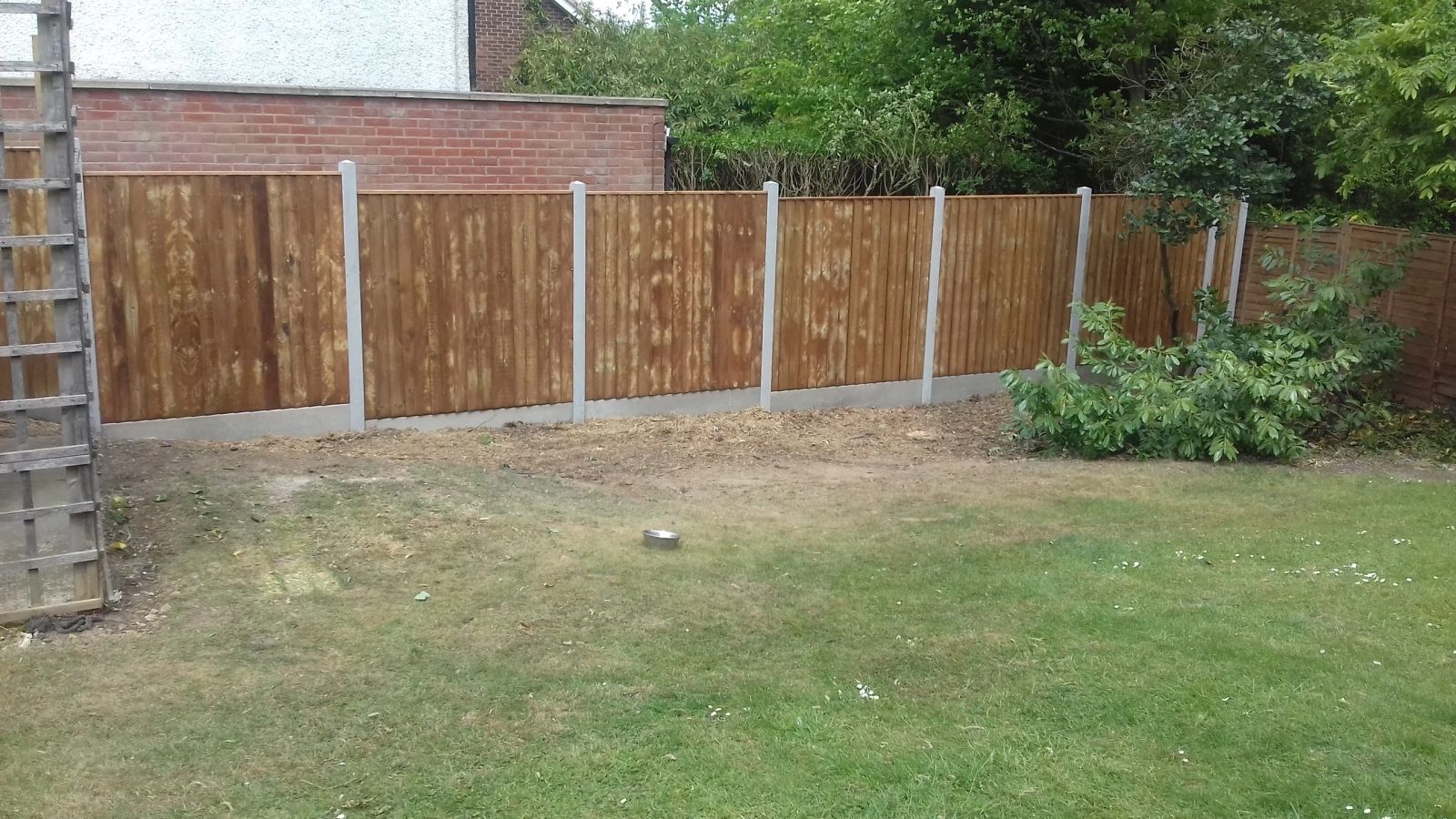
closeboard fence run installed by Capital Fencing in Haringey (N4)
Haringey · N4 / N8 / N15 / N17 / N22

New-Build Garden Fencing, Haringey: match-what-you-have spec for Victorian terraces (Harringay Ladder

If you're weighing new-build boundary fencing for a property in Haringey, the first thing that matters is how the finish sits next to the neighbour's existing boundary — not the material choice. Once that's settled, 6ft closeboard on concrete posts is where most of our new-build boundary fencing work in N4 lands, with upgrade lap-panels swapped for tongue-and-groove on the same post spacing as a considered alternative. Roads such as Wightman Road and Ferme Park Road are typical of the local layout. Bruce Castle Park is a useful local reference point. Alexandra Palace sits on high ground overlooking much of the borough, and the slope down from the Palace affects garden gradients on the surrounding streets.

If you're weighing new-build boundary fencing for a property in Haringey, the first thing that matters is how the finish sits next to the neighbour's existing boundary — not the material choice. Once that's settled, 6ft closeboard on concrete posts is where most of our new-build boundary fencing work in N4 lands, with upgrade lap-panels swapped for tongue-and-groove on the same post spacing as a considered alternative. Roads such as Wightman Road and Ferme Park Road are typical of the local layout. Bruce Castle Park is a useful local reference point. Alexandra Palace sits on high ground overlooking much of the borough, and the slope down from the Palace affects garden gradients on the surrounding streets.

Why this spec, for buyers on modern estates upgrading the developer's minimum-spec boundary after handover

  • no more callouts every winter — the standard developer spec fails inside four years and we know exactly what fails
  • we work around plot-boundary pegs and drainage runs that new-build gardens hide badly
  • quotes broken down so you can see exactly where the money over the developer spec goes

Typical new-build boundary fencing briefs in Haringey

  • raising a shared boundary height with neighbour agreement, keeping to permitted development
  • replacing developer 4ft overlap panels with 6ft closeboard on concrete posts
Default spec

How we build new-build boundary fencing in Haringey

6ft closeboard on concrete posts, 150mm gravel boards, mid-rail capped — a genuine 15-year replacement for the developer's 4-year panel. On Haringey jobs we adjust for ladder-street back-to-back gardens mean every fence run has two owners and three neighbours to keep informed.

Property mix locally: Victorian terraces (Harringay Ladder, Crouch End), 1930s semis in Muswell Hill, and post-war estates around Tottenham. Typical gardens: long thin Victorian rear gardens with London clay and mature street trees. Postcodes we regularly service: N4, N8, N15, N17, N22.

What goes wrong

Common failure modes on new-build boundary fencing

  • putting new closeboard on the existing developer posts — those are the part that failed first, not the panels
  • raising a shared boundary without agreeing with the neighbour, then discovering they've taken it down

New-Build Garden Fencing FAQs — Haringey

Can I replace the developer's fence in the first two years?

On new-build boundary fencing jobs in Haringey (N4), our default answer is: 6ft closeboard on concrete posts, 150mm gravel boards, mid-rail capped — a genuine 15-year replacement for the developer's 4-year panel. For context: we work around plot-boundary pegs and drainage runs that new-build gardens hide badly. Measured, quoted and installed by the same small crew.

Do you handle the neighbour conversation on a shared boundary?

Across Haringey we spec around ladder-street back-to-back gardens mean every fence run has two owners and three neighbours to keep informed, so on new-build boundary fencing that usually means 6ft closeboard on concrete posts. For context: we work around plot-boundary pegs and drainage runs that new-build gardens hide badly. Measured, quoted and installed by the same small crew.

Do I need permission to raise a new-build boundary?

Haringey coverage means we can survey most N4 addresses inside a week — buyers on modern estates upgrading the developer's minimum-spec boundary after handover. We'll walk you through no more callouts every winter — the standard developer spec fails inside four years and we know exactly what fails on the site visit before you commit.

Can new panels be fitted to existing developer posts?

Practically: replacing developer 4ft overlap panels with 6ft closeboard on concrete posts. That's the Haringey version of this job, not a generic one. The honest trade-off is putting new closeboard on the existing developer posts — those are the part that failed first, not the panels — which is exactly what our default spec designs out.

Why do developer fences fail so quickly?

On new-build boundary fencing jobs in Haringey (N4), our default answer is: 6ft closeboard on concrete posts, 150mm gravel boards, mid-rail capped — a genuine 15-year replacement for the developer's 4-year panel. We'll walk you through no more callouts every winter — the standard developer spec fails inside four years and we know exactly what fails on the site visit before you commit.

Recent new-build garden fencing work
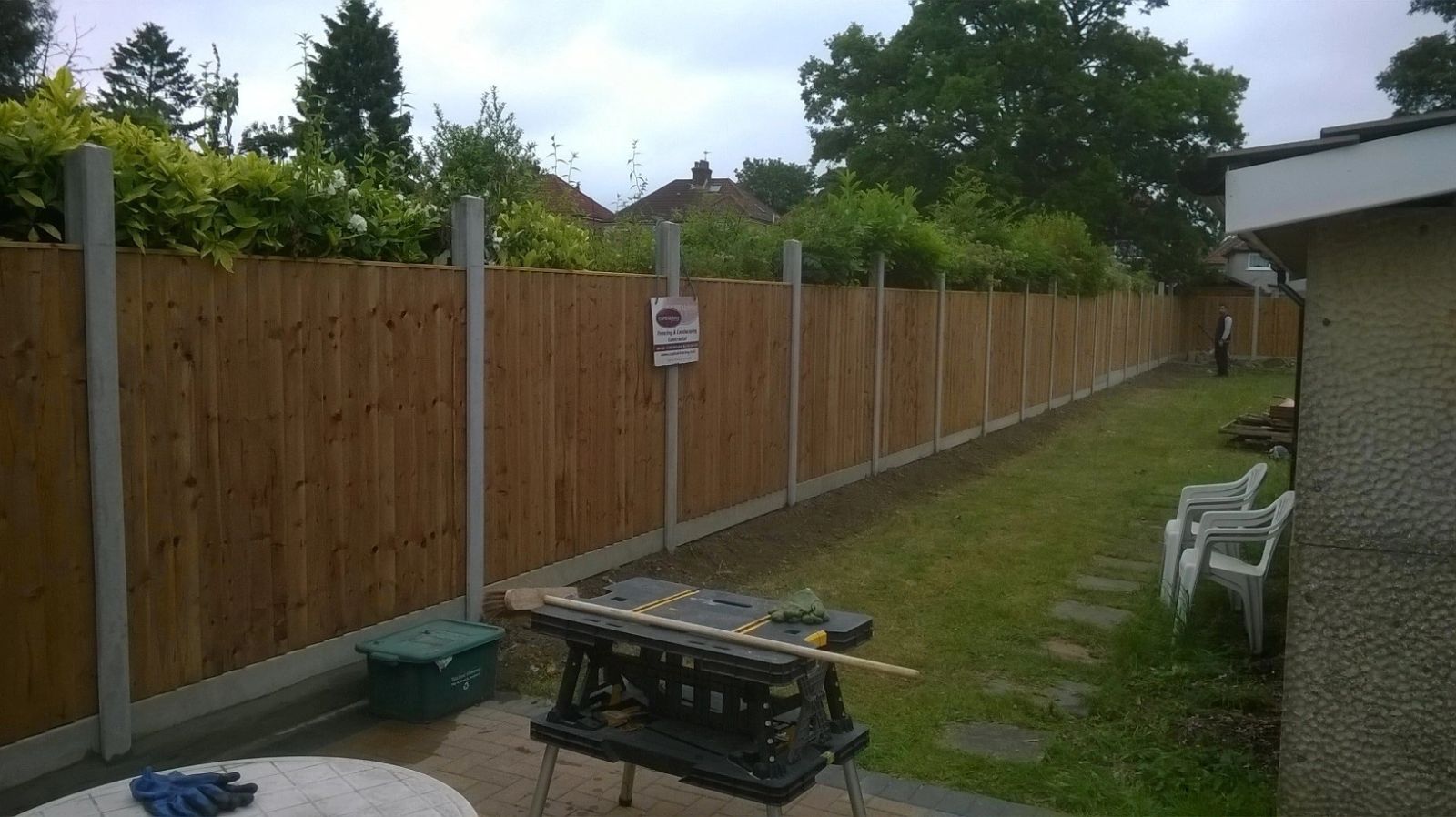
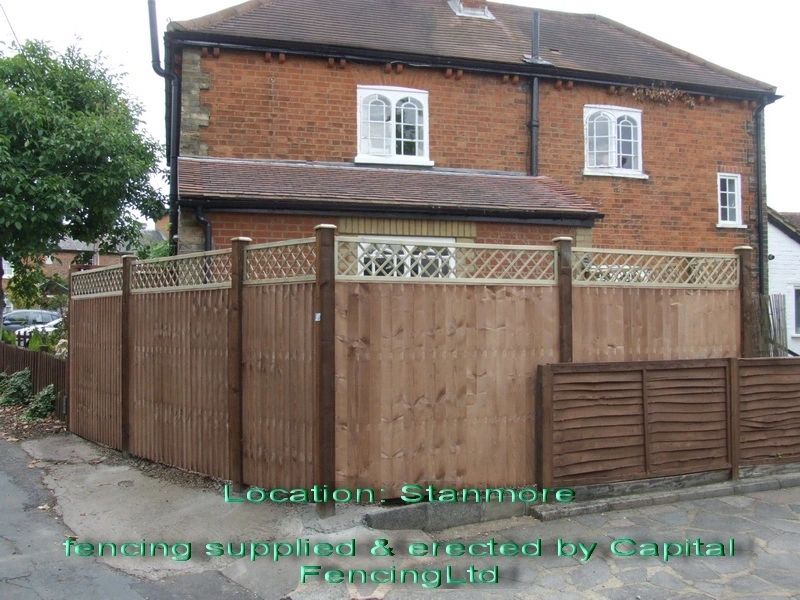
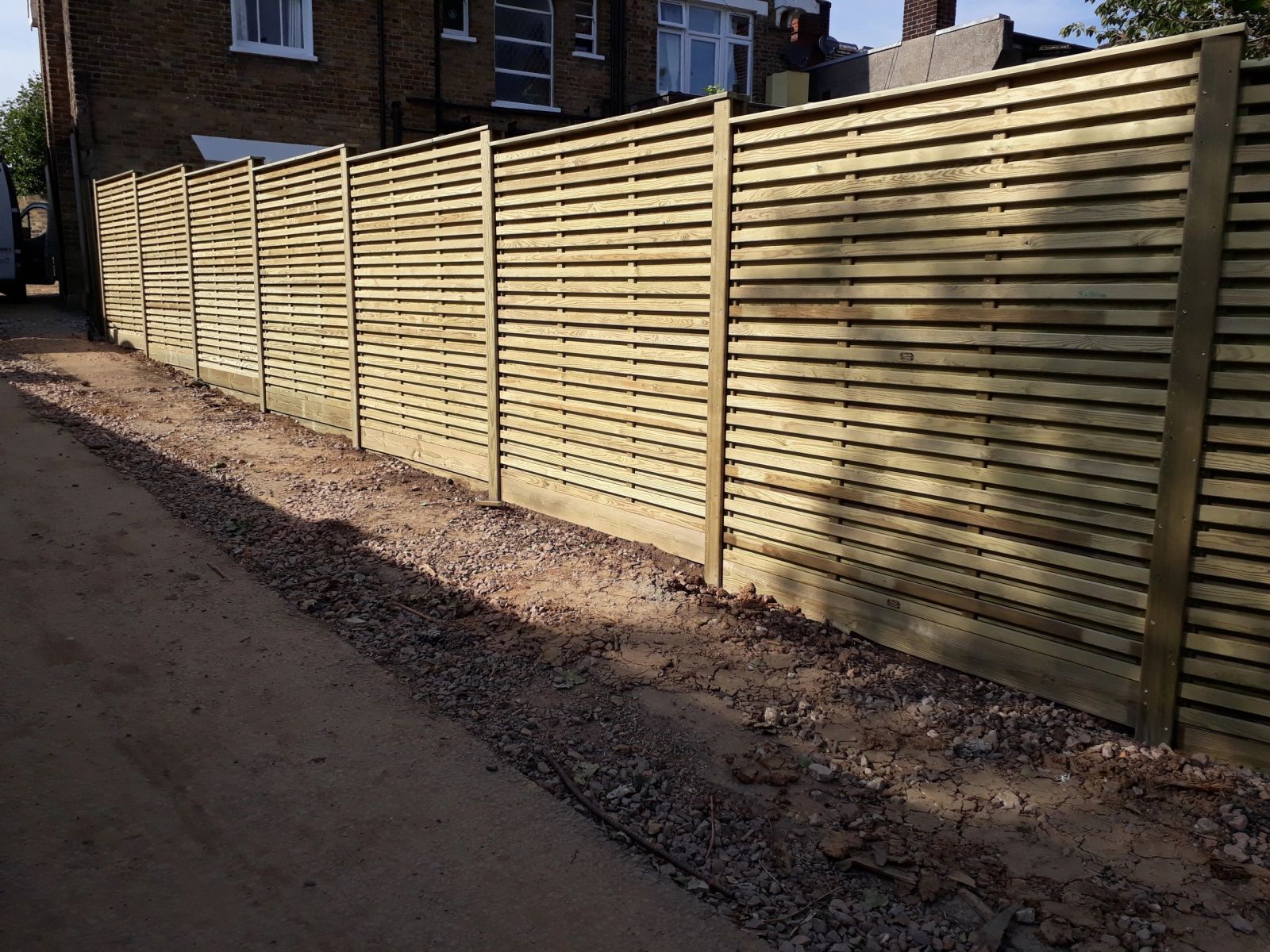
closeboard fence run installed by Capital Fencing in Haringey (N4)panel fence install installed by Capital Fencing in Haringey (N4)trellis-topped fence installed by Capital Fencing in Haringey (N4)bespoke decorative fence installed by Capital Fencing in Haringey (N4)

Before you book new-build garden fencing in Haringey

Gates on a sloped driveway or path

A gate hung across a sloped driveway or path needs a hinge set that allows it to clear the ground through its full swing without dragging at the low end, which sometimes means a different hinge height or a cropped bottom edge compared with a gate on level ground.

We check ground fall across the full swing before fitting, not just at the closed position.

Timber grading and treatment for a security spec

Where timber is used on a security run, a denser, higher-grade section holds up to sustained pressure at gate junctions and pedestrian pinch points better than a standard fence-grade board, and pressure treatment needs to penetrate fully rather than sit on the surface.

We spec the grade to the load the section will actually see, not a single grade across the whole job.

Matching a new gate to the existing boundary

A replacement gate is sized and detailed to match the piers or posts either side of the opening rather than fitted as a stock size, since a gate that doesn't sit flush against its opening looks obviously replaced even when well built.

Where the surrounding fence has a specific profile or capping detail, the gate frame is matched to it.

Timing the work seasonally

Fencing and decking can be installed year-round, but ground conditions change the practicalities: concrete cures more slowly in cold weather and shouldn't be poured in a hard frost, while waterlogged winter ground makes post holes collapse before they can be set.

Late spring and summer give the most predictable digging conditions and the fastest concrete cure times, which is also when demand is highest and lead times stretch out.

Autumn and early winter bookings, ground conditions allowing, are often the quickest to schedule and let a new timber fence weather in before the following summer.

Corner visibility splays affecting fence height specifically

Some corner plots have a specific visibility splay condition attached to their planning history that limits fence, hedge or wall height at the junction to well below the normal 1m road-facing limit.

This is separate from the general permitted development height rule and takes precedence where it applies, since it's usually tied to road safety at a specific junction.

Checking the property's planning history for this kind of condition before fencing a corner plot boundary avoids building something that later needs cutting back.

Weight distribution on double driveway gates

A pair of driveway gates carries its weight on two separate hinge posts rather than one, so an imbalance between leaves — one heavier, one lighter, or one dropped more than the other — shows up as an uneven meeting line at the centre.

Correcting this usually means addressing each leaf's hinges independently rather than adjusting only the leaf that looks worse.

Bat and bird nesting season timing

Wild bird nests are protected while in use under the Wildlife and Countryside Act, which in practice means hedge-cutting and dense vegetation clearance along a boundary is generally best avoided during the main nesting season, roughly March to August, unless the hedge has been checked and confirmed clear.

Bats are protected year-round, but works affecting their roosting sites — old sheds, mature trees with cavities, ivy-clad walls — carry particular risk in spring and autumn when bats are moving between summer and winter roosts.

On any boundary job involving significant vegetation or old structure removal, a quick visual check for active nests or signs of bat use before starting is a simple way to avoid inadvertently committing an offence.

Diagnosing stiffness that eases through the day

A gate that's noticeably stiffer first thing in the morning and frees up as the day goes on is often responding to overnight condensation or dew on the hinge pins and latch mechanism rather than a structural fault.

This pattern is worth distinguishing from a fault that's present all day regardless of temperature, since the two point to very different causes and fixes.

Post depth as a ratio of height above ground

A common rule of thumb is that roughly a third to a quarter of a post's total length should be in the ground, so a post standing 1.5m proud typically needs somewhere in the region of 500-600mm of burial depth depending on soil and loading.

Taller fences, gate posts, and posts on exposed or poorly-draining ground all push toward the deeper end of that range, since the leverage on a buried post increases with height above ground far more than it does with depth.

Skimping depth to save digging time is one of the most common causes of a post working loose within its first few winters, well before the timber itself shows any sign of failing.

Western red cedar characteristics

Western red cedar contains natural oils and extractives that give it decay and insect resistance without chemical treatment, which is why it's often left untreated and allowed to silver naturally over time rather than stained.

It's considerably lighter and softer than most fencing softwoods, which makes it easier to work but also more prone to surface denting and scuffing during handling and fitting.

Because it's naturally durable rather than pressure-treated, cedar doesn't carry the green or brown tint of treated softwood, and any colour change over its life comes from UV exposure rather than a fading dye.

Preparing a weathered gate surface before refinishing

A timber gate that's greyed and roughened from UV and weather exposure needs its surface sanded back to sound wood before a new stain or paint is applied, since coating over a degraded surface fails much sooner than one applied to properly prepared timber.

Loose or flaking old paint in particular needs removing fully rather than painting over, as trapped moisture behind a failed coating accelerates rot underneath.

Vertical picket infill on top of a mesh security panel

Adding a row of vertical steel pickets above a mesh panel gives extra height without the wind loading of a full-height solid mesh extension, and the picket spacing is kept tight enough that it doesn't create a new set of usable footholds.

This detail is common where a boundary needs to reach a taller overall height for a later phase of a site's security review without replacing the mesh panels already installed at the lower level.

Downpipe discharge points near a fence base

A downpipe discharging directly onto open ground near a fence line, rather than into a proper drain or soakaway, concentrates a large volume of roof water at one specific point along the boundary during heavy rain.

Over time this creates a permanently saturated patch that behaves like a high water table locally, even though the rest of the garden drains normally.

Redirecting the discharge with a short length of pipe or a small soakaway a metre or two from the fence line resolves the issue far more effectively than trying to compensate with a more resistant post base.

Arris rails and rail counts by height

Arris rails are the triangular-section horizontal timbers that run between posts and carry the vertical boards in a closeboard fence, and how many are used per bay is set by the finished height rather than fixed at two everywhere.

A fence up to around 1.2m typically runs on two rails, but anything taller — particularly 1.8m closeboard — needs a third rail roughly at mid-height to stop the boards bowing outward under wind pressure.

Morticing the rail ends into the post rather than merely nailing them on gives a stiffer, longer-lived joint, which matters more as the number of rails and the height of the fence both increase.

Diagnosing squeaks and creaks in gate hardware

A squeak or creak from a gate is almost always dry friction at a hinge pin, pivot or roller rather than a structural fault, and it's worth locating the exact source by working the gate slowly through its swing rather than assuming which hinge is responsible.

Cleaning out old, dirt-laden grease before applying fresh lubricant gives a longer-lasting fix than simply oiling over grit that's already worked into the bearing surface.

Safety edges and force limits on automated gates

Automated gates are expected to operate within recognised safety standards covering force limits and trapping-point protection, generally addressed through pressure-sensitive edges, photocells or a torque-limited motor rather than relying on the gate design alone.

This is specialist automation-engineer territory; on the gate itself, we make sure there are no obvious additional trapping points created by the leaf design before automation is fitted.

Working around overhead power or telecoms lines during repair

A post repair beneath an overhead service line limits how tall equipment or extended tools can be used safely, and any post reset in that position needs the same overhead clearance considered as it would during a new installation.

Where a line runs close to the repair, checking clearance and, if needed, contacting the network operator before starting is worth doing even for what looks like a routine single-post job.

Kiln-dried versus green timber movement

Green (wet, unseasoned) timber is cheaper and easier to nail without splitting, but it shrinks noticeably as it dries in situ, which opens gaps between overlapping boards and can loosen fixings within the first year.

Kiln-dried timber has already lost most of that moisture before it reaches site, so it holds its dimensions far better once fixed, at a higher material cost.

Closeboard fencing traditionally tolerates green feather-edge boards reasonably well because the overlap absorbs some shrinkage, but a tight tongue-and-groove or slatted panel is far less forgiving and benefits from kiln-dried stock.

Board overlap orientation relative to prevailing weather

Featherboard and closeboard panels are built with each board overlapping the next, and the direction of that overlap affects how well the panel sheds driven rain — the leading edge of each board should face the prevailing wind and rain direction so water runs off rather than being driven behind the board.

This is straightforward to get right at manufacture but is occasionally reversed on a bespoke or site-built run, which shows up over time as faster localised rot on the boards facing the wrong way for the local prevailing weather.

Checking overlap direction against the site's known prevailing wind is a small detail worth confirming before a bespoke run is built rather than assuming a standard orientation will suit every site.

Selvedge detailing on chain-link mesh

The selvedge is the twisted or knuckled edge finish at the top and bottom of a chain-link roll, and a twisted (barbed) selvedge gives a rougher, harder-to-grip edge than a knuckled one, which is a small but relevant detail on a security-rated chain-link run.

A knuckled selvedge is safer where the fence is near public access because it removes the sharp twisted ends, so the choice between the two trades off deterrent value against injury risk in the same way as toppings do.

Wheeling barrows over lawn without lasting damage

Repeated barrow runs over the same strip of lawn compact the soil and flatten the grass, and on wet ground a laden barrow can rut the turf enough that it doesn't recover without reseeding.

Laying scaffold boards or trackway matting along the barrow route spreads the load and protects the same strip from repeated single-wheel pressure, which is worth doing on any job running more than a day or two.

Choosing a slightly longer but firmer route — along a path rather than across open lawn — often does less lasting damage than the shortest direct line, even though it takes a little longer per trip.

Vegetation growing through or over a shared fence

Plants growing from one garden through, over or against a shared fence — a spreading shrub, an overhanging branch, a self-seeded sapling in the fence line itself — sit in a grey area between garden maintenance and boundary structure that isn't always covered by a simple 'good neighbour' agreement.

A sapling that germinates directly against a post and is left to grow can eventually distort or crack the post as its trunk thickens, which is a slow-motion structural problem rather than a purely cosmetic one.

Flagging seedlings growing in or immediately against a fence line at an early stage, before root or trunk growth causes structural distortion, avoids a much larger repair later.

Buyers on modern estates upgrading the developer's minimum-spec boundary after handover — that's who this page is for. In Haringey and out to Haringey, we run the new-build boundary fencing spec that survives ladder-street back-to-back gardens mean every fence run has two owners and three neighbours to keep informed. Roads such as West Green Road and Green Lanes are typical of the local layout. Alexandra Palace is a useful local reference point. Turnpike Lane and Wood Green form the borough's main retail centres.

Get In Touch

Get My Free Quote — 24h Response

No callout fee · Free site visit · Friendly local team covering London & Hertfordshire.

Call us
07885907880
or 02036484746
Email
capital_fencing@yahoo.com
WhatsApp
Message us anytime
Area
London & Hertfordshire
Payment
Card payments accepted

Pay by debit or credit card, bank transfer or cash once the work and price are agreed. No deposit taken online.

Request a Free Quote

We'll get back to you within 24 hours.

Free Site Visit No Callout Fee
Call WhatsAppQuote