Drainage fixes as part of a repair
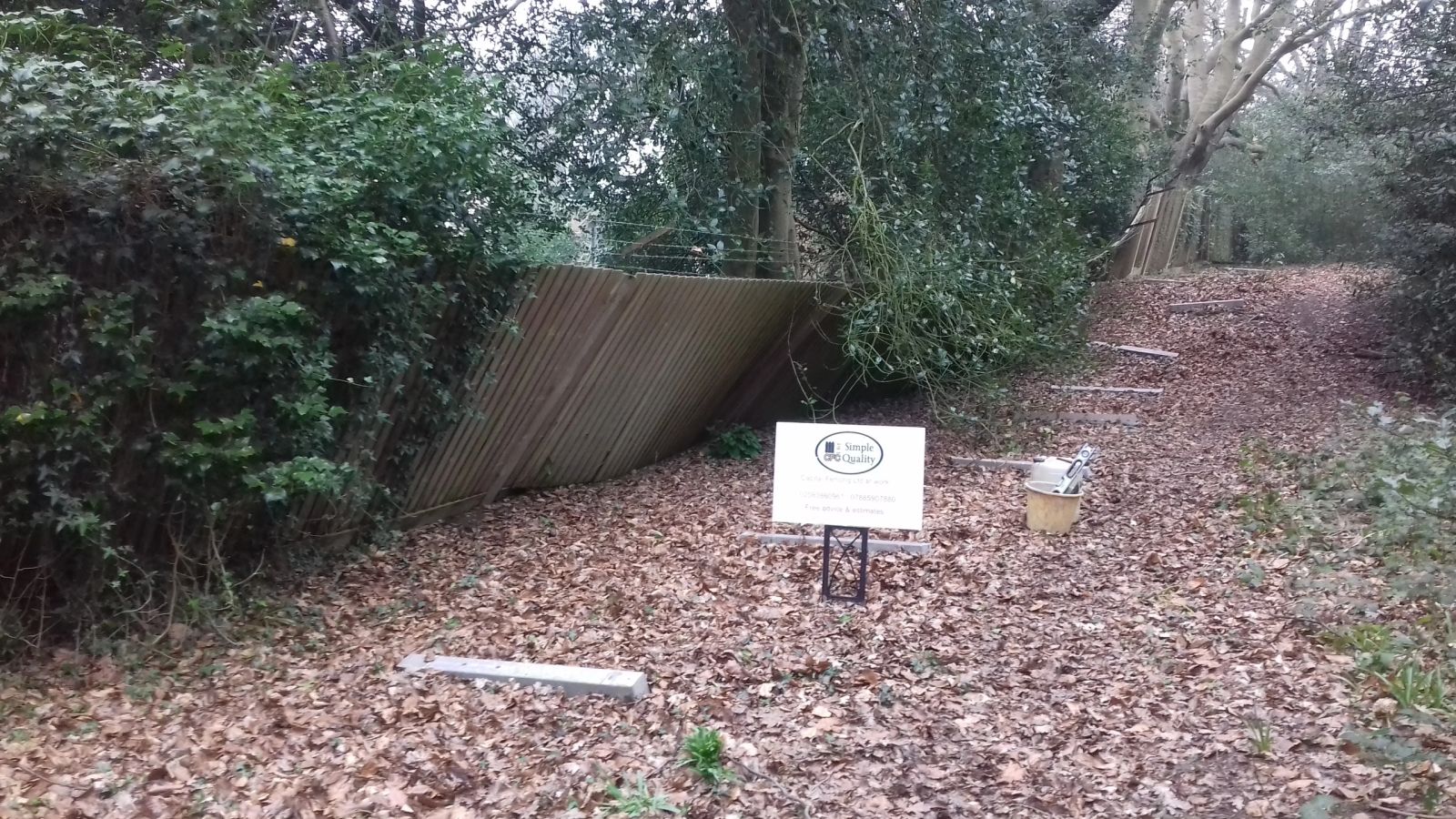
Where poor drainage caused or contributed to the original failure, a repair that doesn't also address the drainage — regrading a low spot, adding a small soakaway, or fitting a concrete gravel board — risks the same failure recurring.
Addressing drainage at repair time is usually more cost-effective than repeating the same panel or post repair every few years.
Wind loading on a solid gate face
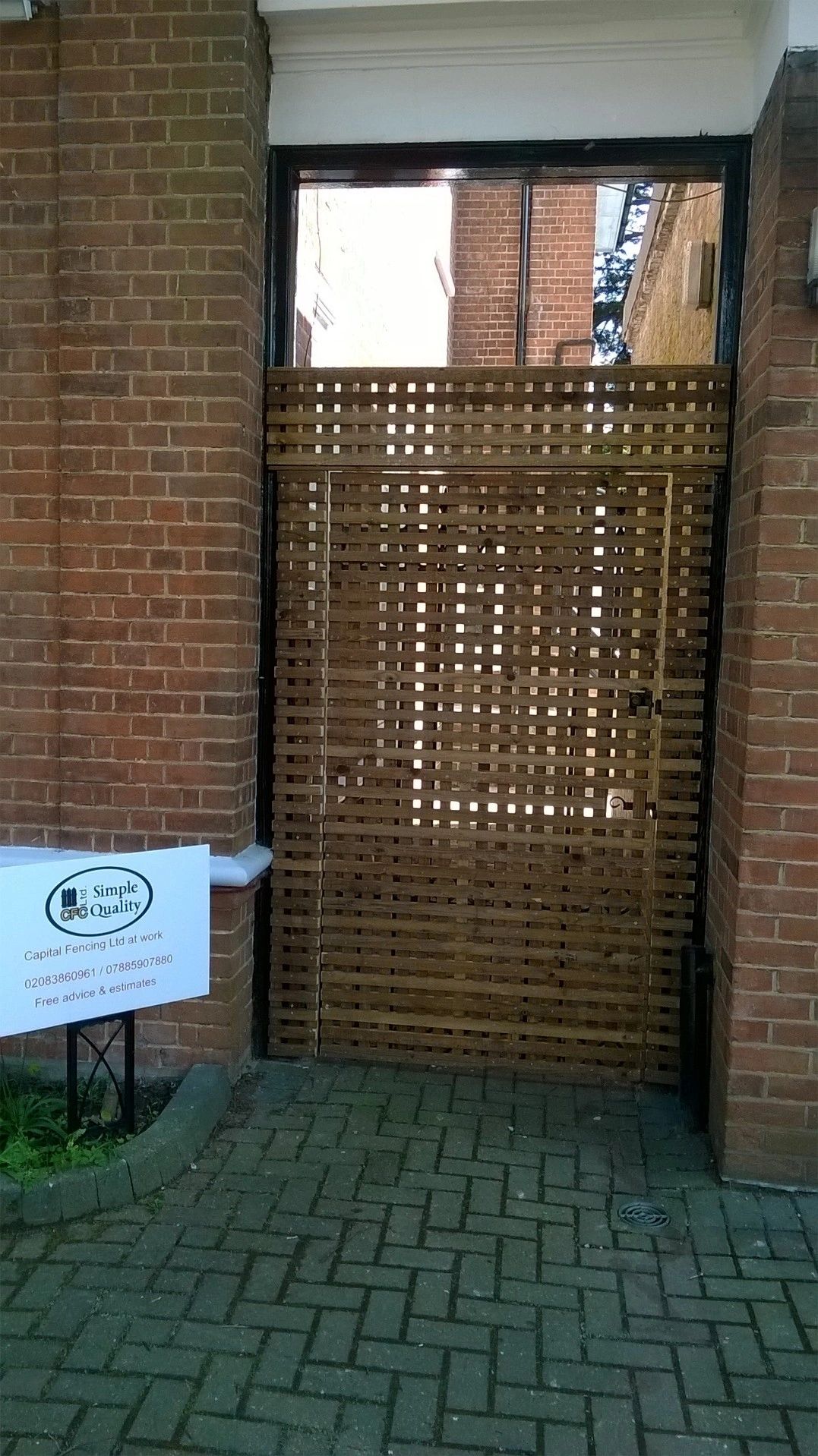
A solid gate face catches far more wind than an open-bar design of the same size, which puts extra strain on the hinge side over time — this is worth factoring in when repairing or replacing a gate on an exposed frontage.
Bracing the frame diagonally helps a solid gate resist that racking force in a way a simple butt-jointed frame doesn't.
Sizing a hinge post to the gate's actual weight
A hinge post needs to be sized to the specific gate it will carry, since a heavy solid timber or metal gate loads its post far more than a lightweight picket gate of the same height, and an undersized post will lean over time even if correctly concreted.
This sizing decision is best made before the post goes in, since upsizing a post after a lean has developed generally means digging it out and starting again.
Corner plots and highway sightlines
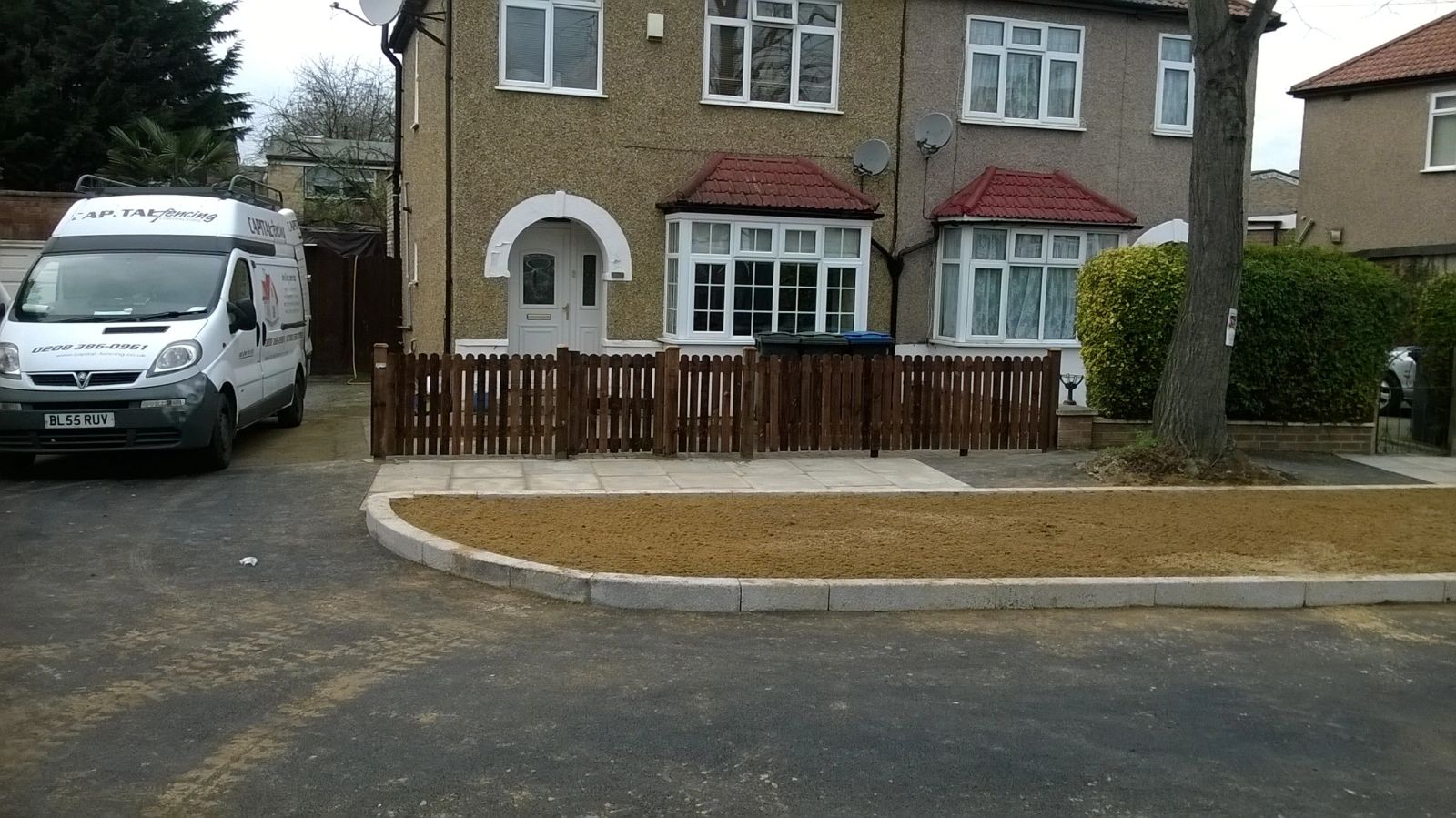
A boundary fronting a road used by vehicles is limited to 1m under permitted development, but corner plots have a second constraint: the highway authority's visibility splay, which can require even lower boundary treatment near a junction so drivers can see pedestrians and oncoming traffic.
These splays are measured as a triangle from a set point back along both roads and are sometimes fixed by a planning condition on the original build rather than by the general permitted development rules.
A solid fence built to the letter of the 1m rule can still be a highway safety problem on a tight corner, so it's worth checking the local plan or asking planning before finalising height on a corner boundary.
Decking oil versus fence stain maintenance cycles
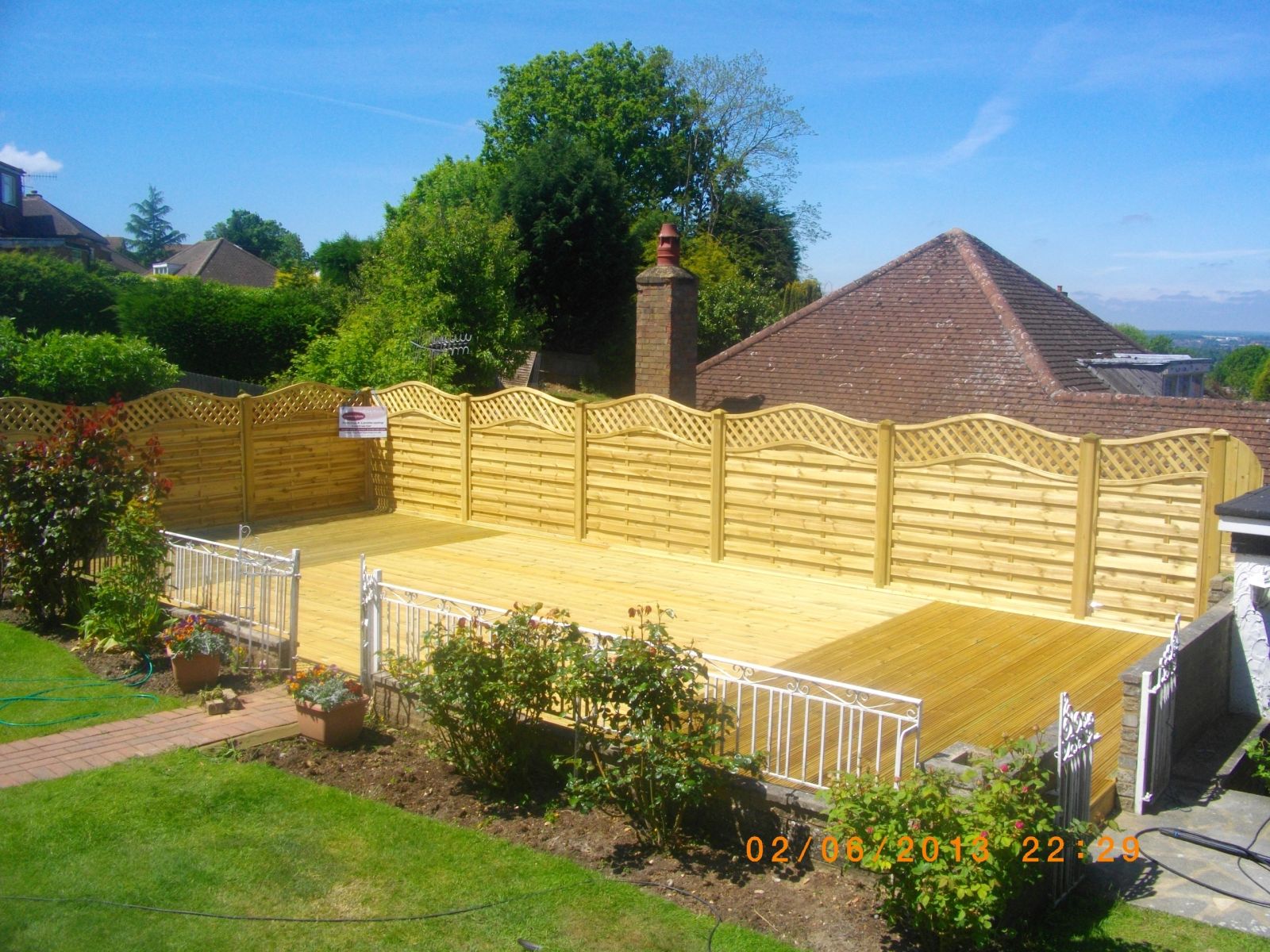
Decking oil is formulated to cope with foot traffic and standing water in a way that a vertical fence stain isn't, and typically needs reapplying annually on a well-used deck compared with the two-to-three year cycle for a fence.
The horizontal surface of a deck also collects standing water and UV exposure differently to a vertical panel face, wearing unevenly in high-traffic paths compared with less-used corners.
Clients used to a fence's maintenance rhythm sometimes underestimate how much more frequently a deck's finish needs attention, which is worth setting expectations on at the time of installation.
Working safely on a roadside or public-facing boundary
A security fence often runs along a frontage that faces a pavement, a school run or a shared access road, so material storage, tool use and post-hole cover are managed to keep the public side of the works safe throughout.
On a commercial site this extends to keeping a fire route or loading bay clear while the new line goes in.
Allotment and paddock ground
Allotment and paddock boundaries are often on ground that's been cultivated, grazed or left rough for decades, with a topsoil layer that's deeper and looser than a typical garden lawn but can also conceal old cultivation debris, buried irrigation pipe or fencing stobs from previous boundaries.
Paddock ground grazed by livestock compacts unevenly, with poached, churned patches near gateways sitting very differently underfoot from the firmer ground a few metres away.
Post specifications on this kind of ground usually need to account for stock leaning or rubbing on the fence line, which is a different load case from a garden boundary that just needs to withstand weather and general wear.
Timber post taper and strength distribution
A sawn timber post is typically a constant cross-section along its length, whereas the bending moment from wind load on the attached panel is greatest at ground level and reduces toward the top, meaning the post's strength margin isn't evenly used along its height.
This is why increasing embedment depth or post section size, rather than simply extending post height, is generally the more effective way to improve resistance to wind-induced snapping at ground level.
A post that fails from wind load almost always fails at or just below ground level rather than partway up its exposed length, reflecting where the bending stress genuinely concentrates.
Chain link wire coating options
Chain link fencing wire is available galvanised, or galvanised with an additional PVC coating bonded over the zinc, which adds a further weatherproof barrier and is available in a range of colours rather than plain galvanised silver.
The PVC coating also cushions the wire slightly, reducing the risk of the sharp cut ends common on plain galvanised chain link snagging clothing or skin.
Where the PVC coating is damaged or cut through, for example at a repair splice, the exposed galvanised wire beneath is still protected by the zinc, though it will weather to a different appearance than the surrounding coated wire.
Checking the repair before signing off
Once a repair is finished we open and close the gate repeatedly to check it swings cleanly and latches first time, since a gate that only closes properly on the first attempt in calm conditions can still catch once it's windy or the ground has moved slightly.
We also check the diagonal brace, where fitted, is taking the load evenly rather than pulling to one side.
Temporary fencing while a permanent boundary is rebuilt
Removing an old boundary fence before the new one is built leaves a gap that matters for security, for keeping pets or children contained, and for site safety around an open excavation.
A simple temporary screen — netting on stakes, or hurdles wired together — bridges that gap without committing to a full second install, and is worth agreeing with the client if the job will span more than a day.
On a site backing onto a road, path or shared area, a temporary barrier around open post holes overnight is also a basic precaution against someone stepping into an unmarked hole in the dark.
Constraints on gates near listed buildings or in conservation areas
A gate forming part of the boundary treatment of a listed building, or sited within a conservation area, may need consent before being altered or replaced, particularly where the change affects the property's appearance from a public viewpoint.
Checking whether any such designation applies to a site before specifying a replacement gate avoids work that later needs to be reversed or amended.
Sheltered courtyard microclimates and reduced wear
A small enclosed courtyard garden surrounded by walls or buildings on most sides creates a sheltered microclimate with reduced wind and often reduced direct rain exposure, which can extend the practical life of a timber finish well beyond the general guideline interval.
The trade-off is often reduced airflow and higher humidity in the enclosed space, which can favour algae or mould growth even though the timber itself isn't taking direct weather.
Recommending a maintenance interval based on general exposure alone can be too cautious for a sheltered courtyard or too relaxed for a damp, poorly-ventilated one, so it's worth judging each enclosed garden on its own conditions.
Letterbox and parcel provision in a secure gate
A fully secured pedestrian gate can leave deliveries with nowhere to leave post or parcels, so a secure gate-mounted letterbox or a parcel box positioned outside the locked line is worth planning at design stage.
Positioning it so it can be reached without opening the gate keeps the boundary genuinely closed while still allowing routine deliveries.
Concrete post spalling and what can and can't be patched
Spalling is concrete breaking away from the surface as a corroding internal reinforcing rod expands, and once that process has started it keeps progressing even if the visible flaking is patched over cosmetically.
A post spalling only at the surface with the rod still fully protected can sometimes be repaired with a proprietary concrete repair mortar, but any post spalling down to exposed, rusted reinforcement is a replacement rather than a patch job.
Fixing a post that has rotated in its concrete base
A post can twist within a slightly oversized or cracked footing without leaning, so the panels either side pull out of square even though the post still stands upright, which is easy to miss on a quick visual check.
Repair means breaking out enough concrete to free the post, resetting it square to the run, and packing and re-pouring rather than trying to twist it back while still gripped by the old footing.
Washing off mould before treatment
Black mould spotting, distinct from green algae, tends to appear on shaded timber with poor airflow behind it, such as a fence panel sitting close against dense shrub planting on one side.
A proprietary fungicidal wash left to dwell before rinsing removes far more of the surface growth than a plain water wash, which can spread spores across the surface rather than lifting them off.
Cutting back planting to restore airflow behind the affected section addresses the underlying cause; treating the timber alone without improving ventilation usually sees the mould return within a year.
Visibility splays for vehicle gates onto a road
A driveway gate opening directly onto a road needs to be positioned or set back so that a driver waiting to exit can see approaching traffic clearly, and a solid gate that opens outward across the pavement can obstruct pedestrians as well as sightlines if not set back far enough.
This is a site layout consideration that needs addressing at the design stage, since it's much harder to correct once posts are concreted in a fixed position.
Staining versus painting: different maintenance cycles
A translucent or semi-transparent stain penetrates the timber surface and wears gradually, so re-application every two to three years is a top-up rather than a full strip-back, and overlap patches between old and new coats blend reasonably well.
Opaque exterior paint or solid-colour masonry-style coatings sit on the surface as a film, which looks crisper initially but is prone to flaking and cracking as the timber moves seasonally, and once it starts to fail it usually needs full removal rather than a top coat.
Clients choosing paint for a specific colour should budget for that more disruptive maintenance cycle rather than assuming it behaves like a stain with a different finish.
Repairing a bowed panel
A panel that's bowed outward has usually taken sustained wind or leaning pressure that's stressed the internal battens rather than the face boards themselves, and a bow rarely pulls itself straight again once the timber has set in that shape.
Depending on severity, a bowed panel can sometimes be braced from behind with an additional batten, but a panel bowed badly enough to have cracked its frame is generally more reliably replaced than braced.
Cat-proofing retrofit limits
Adding an inward-curved topper or roller bar to deter cats from climbing over an existing fence works reliably on a fence in good condition, but the fixings for that addition still rely on the post and rail beneath being sound.
Retrofitting cat-proofing to a run that also needs repair is best sequenced after the repair, since fitting new hardware to a post that's about to be reset is wasted effort.
Dealing with buried debris uncovered while digging out a repair footing
Old post stubs, broken glass, hardcore or builder's rubble from a previous era of the garden's use sometimes turn up when digging out a footing for repair, particularly on older plots that have been through several changes of use.
Where this happens, it's worth clearing enough of the obstruction to get a clean footing rather than working around it, and flagging anything unexpected — old drainage, buried cabling, unusually large rubble — to the client before continuing.