London & Hertfordshire Free Site Visit
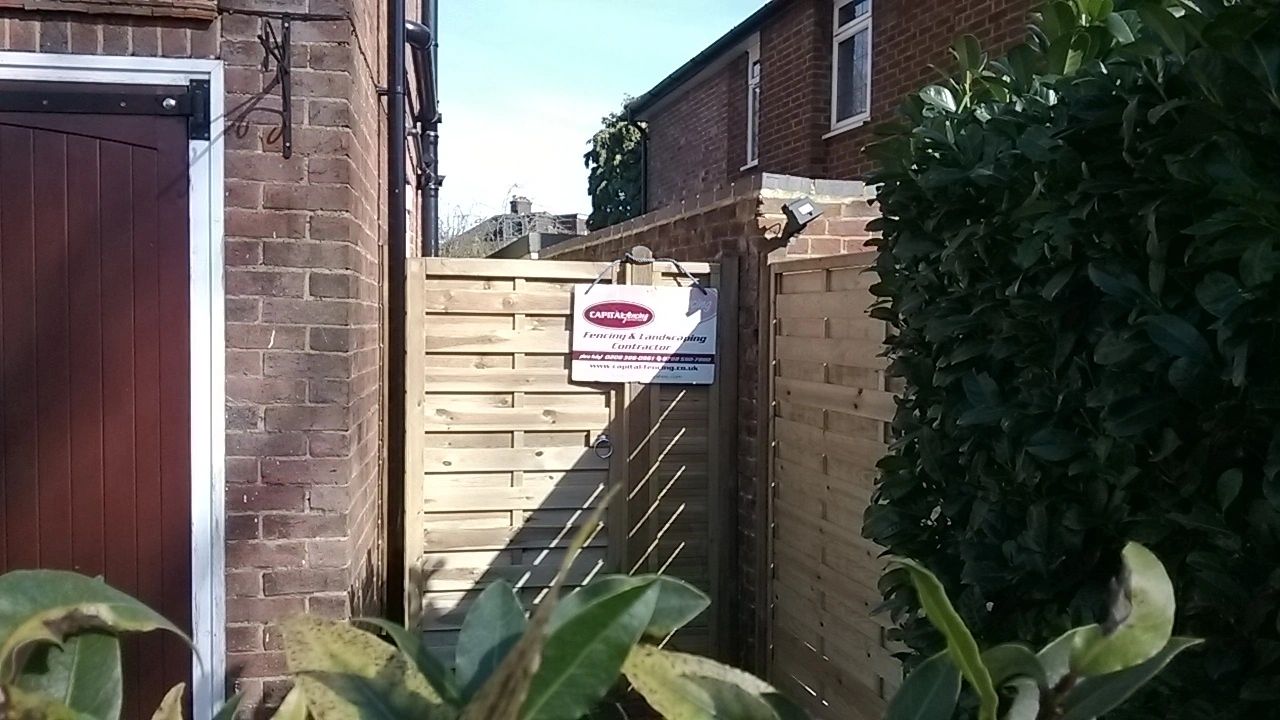
bespoke wooden gate installed by Capital Fencing in Hackney (E5)
Hackney · E5 / E8 / E9 / N1 / N16

Pedestrian Side Gates in Hackney — Built for how the finish sits next to the neighbour's existing boundary

If you're weighing pedestrian side gates for a property in Hackney, the first thing that matters is how the finish sits next to the neighbour's existing boundary — not the material choice. Once that's settled, closeboard-matched softwood for behind-the-house lines is where most of our pedestrian side gates work in E5 lands, with painted picket for front-boundary matching as a considered alternative. Roads such as Broadway Market and Lower Clapton Road are typical of the local layout. Victoria Park (west edge) is a useful local reference point. The Regent's Canal and the River Lea both run through the borough, with Hackney Marshes forming a large area of open land on the eastern edge.

If you're weighing pedestrian side gates for a property in Hackney, the first thing that matters is how the finish sits next to the neighbour's existing boundary — not the material choice. Once that's settled, closeboard-matched softwood for behind-the-house lines is where most of our pedestrian side gates work in E5 lands, with painted picket for front-boundary matching as a considered alternative. Roads such as Broadway Market and Lower Clapton Road are typical of the local layout. Victoria Park (west edge) is a useful local reference point. The Regent's Canal and the River Lea both run through the borough, with Hackney Marshes forming a large area of open land on the eastern edge.

Why this spec, for single-leaf pedestrian gates matched into existing fencing runs

  • carried in as a like-for-like match to what's already there — no visible new post
  • hinge and latch geometry sized for daily use rather than as a one-off decorative piece
  • installed with the closing stop and latch in one visit so nothing has to be revisited

Typical pedestrian side gates briefs in Hackney

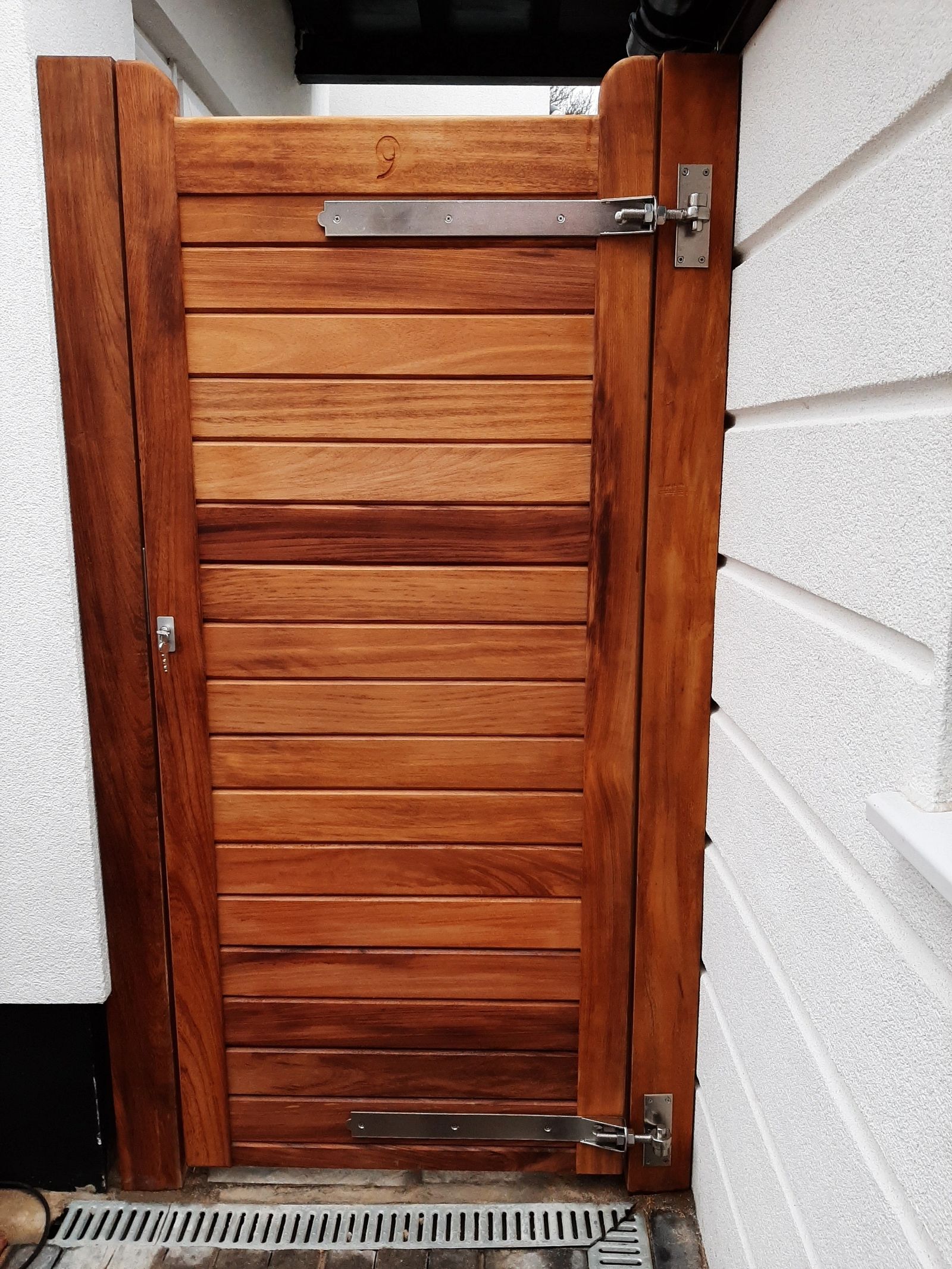
  • hardwood pedestrian gate through a brick garden wall opening
  • matched picket gate into a painted picket frontage
Default spec

How we build pedestrian side gates in Hackney

single leaf on ball-race hinges, thumb-latch and dead-locking hardware, closing stop and drop-bolt where security is a priority. On Hackney jobs we adjust for many boundaries are shared with three or four neighbours on victorian back-to-backs — clear ownership marks matter.

Property mix locally: Victorian terraces across Stoke Newington and De Beauvoir, plus post-war estates around Homerton and London Fields. Typical gardens: small rear gardens with mature planting; several plots border the Regent's Canal or Hackney Marshes. Postcodes we regularly service: E5, E8, E9, N1, N16.

What goes wrong

Common failure modes on pedestrian side gates

  • hinging off the last post of an old fence run — the post moves and the gate stops closing within weeks
  • specifying a decorative latch not rated for daily use — hardware fatigue inside a year

Pedestrian Side Gates FAQs — Hackney

How do I keep the gate closed without a spring hinge?

On pedestrian side gates jobs in Hackney (E5), our default answer is: single leaf on ball-race hinges, thumb-latch and dead-locking hardware, closing stop and drop-bolt where security is a priority. We'll walk you through carried in as a like-for-like match to what's already there — no visible new post on the site visit before you commit.

What hinges do you use so the gate doesn't drop?

Across Hackney we spec around many boundaries are shared with three or four neighbours on victorian back-to-backs — clear ownership marks matter, so on pedestrian side gates that usually means closeboard-matched softwood for behind-the-house lines. We'll walk you through carried in as a like-for-like match to what's already there — no visible new post on the site visit before you commit.

Softwood or hardwood for a matched pedestrian gate?

Hackney coverage means we can survey most E5 addresses inside a week — single-leaf pedestrian gates matched into existing fencing runs. For context: hinge and latch geometry sized for daily use rather than as a one-off decorative piece. Measured, quoted and installed by the same small crew.

Can a pedestrian gate go through a brick wall opening?

Practically: single 900mm pedestrian gate cut into an existing closeboard run. That's the Hackney version of this job, not a generic one. We'll walk you through carried in as a like-for-like match to what's already there — no visible new post on the site visit before you commit.

Can the gate be sized to an unusual opening?

On pedestrian side gates jobs in Hackney (E5), our default answer is: single leaf on ball-race hinges, thumb-latch and dead-locking hardware, closing stop and drop-bolt where security is a priority. We'll walk you through carried in as a like-for-like match to what's already there — no visible new post on the site visit before you commit.

Recent pedestrian side gates work
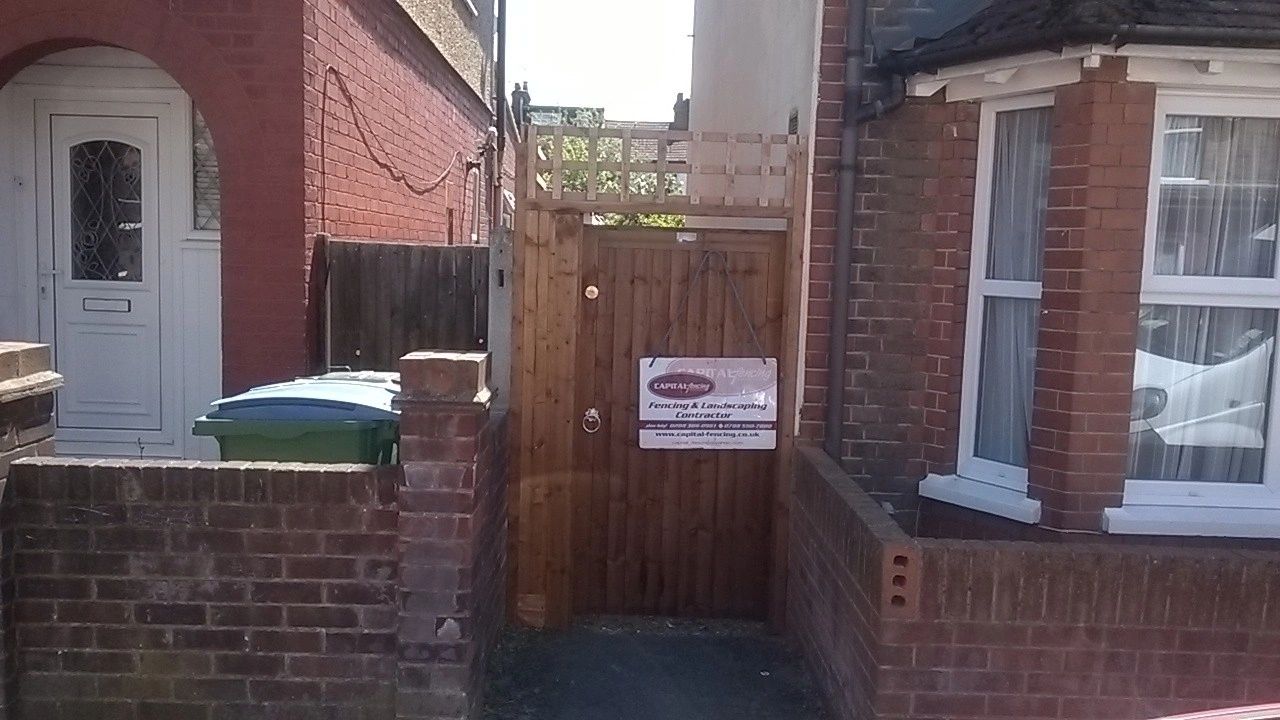
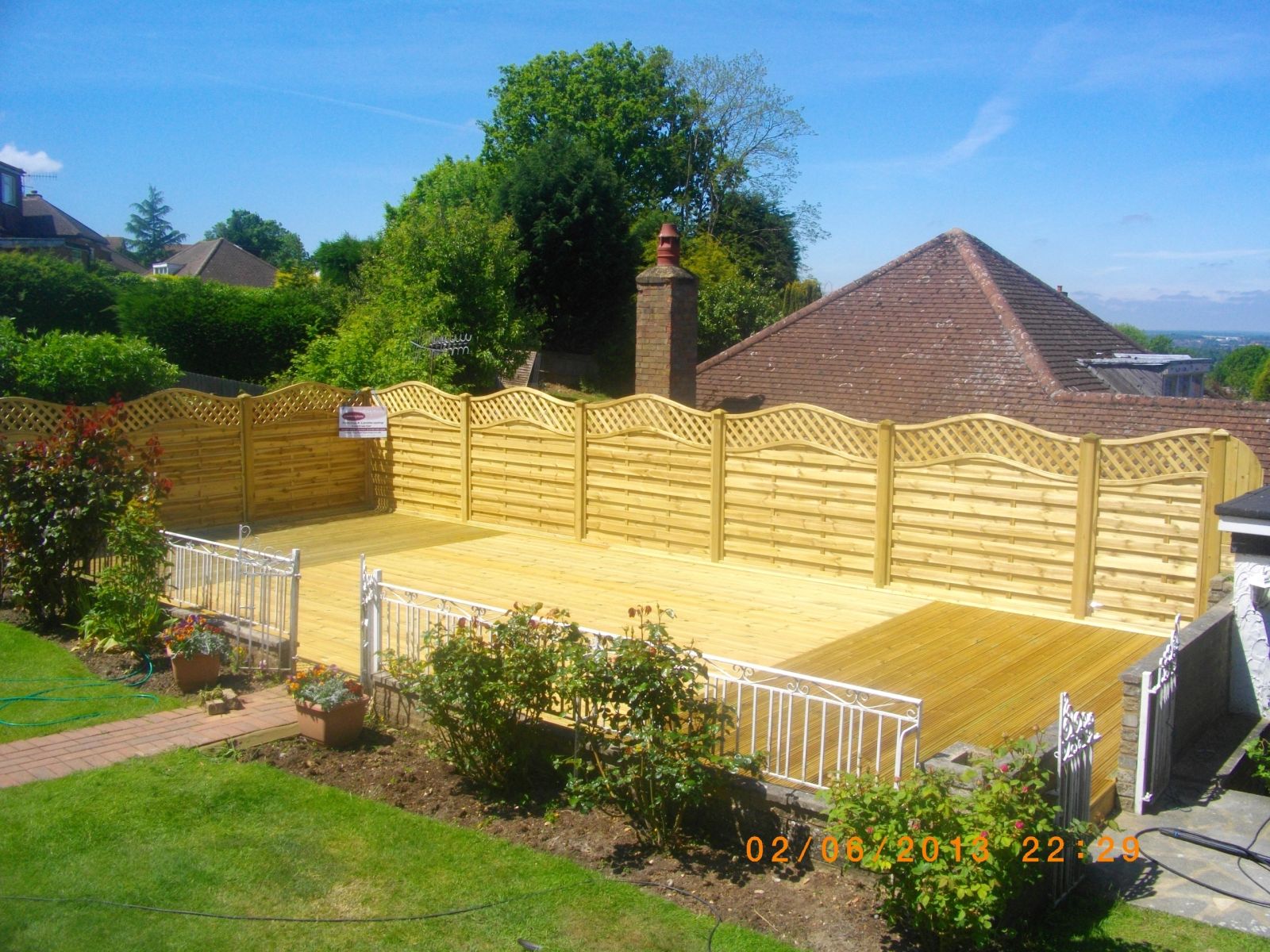
bespoke wooden gate installed by Capital Fencing in Hackney (E5)double driveway gates installed by Capital Fencing in Hackney (E5)hardwood side gate installed by Capital Fencing in Hackney (E5)metal entrance gate installed by Capital Fencing in Hackney (E5)

Before you book pedestrian side gates in Hackney

Fencing shared or communal garden spaces

Communal gardens shared by several properties usually need any new fencing agreed by the group or managing body rather than one resident acting unilaterally, since a partition can change how the whole space is used.

Where a communal garden includes mature planting or trees under a collective management plan, new fence lines need checking against that plan rather than just against the ground itself.

Access routes for maintenance vehicles or refuse collection through a communal garden also need to stay clear when planning new subdivisions with fencing.

Sequencing a multi-day install

A typical multi-day fence installation runs old fence removal and waste clearance first, then post setting with time for concrete to go off, then panels, gravel boards and capping once posts are firm enough to take a load.

Rushing panels onto posts before the concrete has cured enough — particularly in cold weather when curing slows down — is a common cause of a fence leaning within its first few weeks.

On a longer run it often makes sense to work in sections so part of the boundary is never left fully open overnight, rather than removing the entire old fence before any new posts are in.

Gates binding in winter

A gate that closes freely in summer but binds against its frame or post in winter is very often timber swelling from increased moisture rather than a hinge or frame fault, and easing the latch edge slightly is usually enough to fix it.

We check moisture-related binding before altering hinge position, since a hinge adjustment made to fix a seasonal swelling issue often needs reversing again in summer.

Fence junctions above a retaining wall

A fence sitting on top of a retaining wall adds lateral load the wall wasn't necessarily designed for, particularly on a taller solid-faced security screen catching wind, so the wall's condition and the fence's fixing method both need checking before installation rather than assumed to be compatible.

Where the wall can't safely take a bolted post, a freestanding post line set back slightly from the wall edge, tied back if needed, keeps the fence load off the retaining structure entirely.

Recording an informal boundary agreement properly

Where neighbours agree a boundary line that differs slightly from, or clarifies, what the deeds show, that agreement carries far more weight if it's put in writing and signed by both parties rather than left as a verbal understanding.

A formal boundary agreement can, in some cases, be registered with HM Land Registry against both titles, which protects the arrangement for future owners of either property.

Even a simple written note with an agreed sketch, dated and signed by both neighbours, is worth far more later than relying on memory of a conversation years afterwards.

Using a rule of thumb for how much sound timber a repair joint needs

A splice, bracket or sistered repair generally needs a reasonable depth of genuinely sound timber on each side of the joint to hold its fixings securely, and a post probed as sound for only an inch or two below the surface usually doesn't have enough left to repair into reliably.

Where a probe test shows sound timber tapering off quickly rather than continuing solidly below the damaged section, that's usually the point where replacement becomes more sensible than trying to repair into marginal material.

Moss build-up on shaded paths beside a north boundary fence

A path or step running alongside a permanently shaded north-facing fence often develops moss faster than the same surface elsewhere in the garden, since the fence itself blocks low winter sun that would otherwise help the surface dry.

This isn't strictly a fence maintenance issue but is worth mentioning to clients, since a fence replacement project is often the moment a client is already thinking about that part of the garden and receptive to fixing a related slip hazard at the same time.

A lighter, more open fence design along that boundary, where privacy allows, can let in enough additional light to measurably reduce moss growth on the path beside it.

Conservation covenants affecting boundary land

A relatively newer legal tool, the conservation covenant, allows landowners to agree binding restrictions on land use for conservation purposes, which can in principle extend to boundary treatments on affected plots.

These are still uncommon on ordinary residential properties but more likely on larger plots, smallholdings, or land near protected habitats.

Checking the title register for any registered covenant of this kind is worth doing on larger or more unusual plots before assuming standard rules apply.

Board thickness and deflection

A thin board fixed across a wide unsupported span will visibly bow or deflect under its own weight or a light push long before it's anywhere near breaking, because deflection increases sharply as thickness decreases.

Doubling a board's thickness roughly increases its stiffness eightfold for the same span, which is why panel manufacturers specify a maximum bay width for a given board thickness rather than treating thickness as purely a durability choice.

On wider bays it's usually cheaper overall to add an intermediate rail or reduce the bay width than to over-specify board thickness across the whole run to compensate.

Supplementing a hedge line boundary with security fencing

A mature hedge gives limited security on its own because gaps at the base and thin patches higher up both offer a way through, so a low stock fence or mesh run installed within or just behind the hedge line closes those gaps without removing the hedge's screening value.

The supporting fence is set back enough from the hedge to allow future trimming access, since a fence built hard against the hedge line makes routine maintenance of the hedge itself far harder.

Frost effects on curing concrete

Concrete that freezes before it has gained enough initial strength can suffer permanent damage — the water within it expands as ice, disrupting the matrix before it sets properly, leaving a weaker base than the mix should give.

Fast-setting post-fix concretes generate some heat as they cure and are more frost-tolerant than a standard wet mix, which is one reason they're the practical choice for winter installations.

Where a hard frost is forecast within the first 24 hours of a pour, delaying the job or insulating the base overnight is usually cheaper than replacing a post that's failed at the concrete collar the following year.

Ironmongery grades for gates

Gate hinges, latches and drop bolts are graded broadly by size and load rating rather than sold as one universal fitting, and undersized ironmongery on a heavy hardwood gate is a common cause of early sagging even when the frame itself is well built.

Externally, ironmongery needs a corrosion-resistant finish suited to constant weather exposure — galvanised, stainless or a specifically outdoor-rated coated finish — rather than internal-grade fittings that will rust and seize within a season or two.

A self-closing hinge or a matching pair of hinges rated for the gate's actual weight is worth specifying explicitly on a quote, since 'a pair of hinges' without a load rating leaves the actual spec to whatever's in stock.

Checking mesh tension across seasonal temperature changes

Steel mesh infill expands and contracts slightly with temperature across the year, and a mesh tensioned tight in cold winter conditions can develop a visible sag by the height of summer if the original tensioning didn't allow for that movement.

A seasonal tension check, particularly after the first full year following installation, catches this early and allows a simple re-tensioning before a sagging mesh starts to create a usable foothold or gap at the base.

Signage and lawful notices on a security boundary

Signage warning of CCTV, guard dogs or electric fencing has to be truthful and visible from the approach it's warning about — a sign for a feature that doesn't exist, or one hidden from view, offers no legal protection and can mislead.

Where a boundary carries a genuine hazard such as an electrified topping, specific warning signage at defined intervals is generally a legal requirement, not an optional extra.

Gust funnelling between semi-detached gaps

The narrow gap between two semi-detached or terraced houses can accelerate wind passing through it, in the same way air speeds up through a nozzle, so a fence sitting at the mouth of that gap sees higher gusts than the open garden either side.

This is easy to miss on a site visit if the wind isn't blowing that day, but it shows up over a few winters as one particular bay of panelling failing repeatedly while the rest of the run stays sound.

Reinforcing just that section with a heavier post or a part-slatted panel is usually enough, rather than upgrading the whole run.

Setting posts in clay

London clay and the heavier Hertfordshire boulder clays shrink and swell noticeably between a dry summer and a wet winter, which is exactly the movement that works a badly-set post loose over a few seasons.

The fix is depth and drainage rather than just more concrete: posts need to go below the zone that dries out and cracks seasonally, typically deeper than the standard 600mm used on free-draining ground, with a stone or gravel key at the base so water isn't trapped against the timber.

Postcrete alone on shallow clay bases is one of the most common reasons we're called out to replace a fence that's only a few years old.

Deck board gapping to allow seasonal movement

Timber deck boards expand slightly when they absorb moisture and contract as they dry, so boards laid without a small gap between them can cup, bow or push against each other as conditions change through the year.

The correct gap depends on the moisture content of the timber at the time of laying — kiln-dried boards laid tight in winter may need a slightly wider gap than the same boards laid already at a higher moisture content in summer.

Composite boards move with temperature rather than moisture and have their own manufacturer-specified gap and expansion allowance, particularly at butt joints and against fixed edging.

Sliding versus swing gate security

A sliding gate needs a clear track run alongside the opening and doesn't sweep into the site, which suits a tight yard or a gate that has to sit flush with a boundary wall; a swing gate needs clearance to open but is generally simpler to fix and repair.

For security, a sliding gate is harder to force from a stationary position because the load runs along a track rather than through a single hinge post, but its track and rollers need regular clearing to keep operating.

Cane bolts on double gates

A cane bolt is a long sliding bolt dropped into a separate ground socket some distance below the gate, giving more holding leverage against wind or knock than a short drop bolt on a wide double-gate leaf.

They're common on wider vehicle gates where a standard drop bolt alone doesn't give enough resistance to the leaf swinging in wind.

Nesting birds in vegetation on a fence line

Dense hedging, ivy or overgrown trellis attached to a fence can hold active bird nests during the spring and summer nesting season, and disturbing a nest in use is an offence regardless of how routine the fence repair itself is.

Where a repair requires cutting back vegetation that might be nesting habitat, checking for active nests first and, if found, delaying that part of the work until the nest is no longer in use is the straightforward way to stay compliant.

Drilling into engineering brick or dense blockwork

Engineering brick and dense concrete block are far harder than ordinary facing brick, so standard masonry drill bits blunt quickly and a hammer-action drill with a carbide-tipped bit designed for dense material is needed to make progress without excessive heat.

Drilling slowly with intermittent withdrawal to clear dust keeps the bit cooler and the hole cleaner than forcing continuous pressure, which tends to glaze the hole and reduce the fixing's grip.

Where a wall is engineering brick specifically because it's load-bearing or below damp-proof course, it's worth checking that the fixing depth and pattern doesn't compromise the wall's structural role before drilling a run of holes into it.

Obstruction offences under the Highways Act

The Highways Act 1980 makes it an offence to obstruct a public highway, including the footway, without lawful authority, which is the underlying reason fencing, skips or materials on a pavement need proper authorisation.

This applies regardless of whether the obstruction is temporary for a delivery or intended as a permanent boundary feature encroaching onto highway land.

Where any part of planned boundary work might extend onto or over a public footway or verge, checking with the highway authority first avoids a straightforward enforcement issue later.

On pedestrian side gates in Hackney you get the same crew from first site visit to hand-over. That's the whole model — small team, match-what-you-have spec, written quote before we start. Roads such as Broadway Market and Lower Clapton Road are typical of the local layout. Broadway Market is a useful local reference point. Broadway Market and London Fields are established local landmarks in the south of the borough.

Get In Touch

Get My Free Quote — 24h Response

No callout fee · Free site visit · Friendly local team covering London & Hertfordshire.

Call us
07885907880
or 02036484746
Email
capital_fencing@yahoo.com
WhatsApp
Message us anytime
Area
London & Hertfordshire
Payment
Card payments accepted

Pay by debit or credit card, bank transfer or cash once the work and price are agreed. No deposit taken online.

Request a Free Quote

We'll get back to you within 24 hours.

Free Site Visit No Callout Fee
Call WhatsAppQuote