London & Hertfordshire Free Site Visit
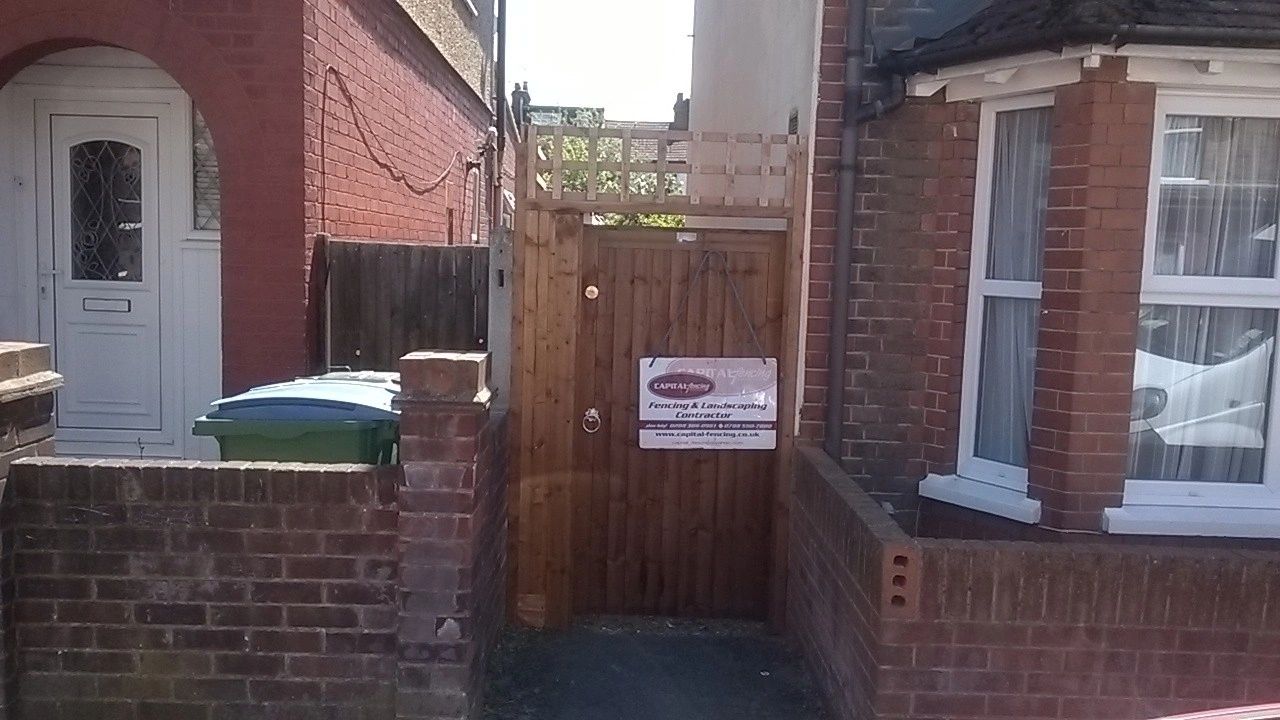
bespoke wooden gate installed by Capital Fencing in Letchworth Garden City (SG6)
Letchworth Garden City · SG6

Pedestrian Side Gates in Letchworth Garden City — Built for how the finish sits next to the neighbour's existing boundary

Pedestrian side gates in Letchworth Garden City is one of our regular briefs — single-leaf pedestrian gates matched into existing fencing runs. On the world's first garden city — arts and crafts cottages with generous, the failure mode we see most often is the one we design out first. Roads such as Wilbury Road and Sollershott West are typical of the local layout. Broadway Cinema is a useful local reference point. Letchworth Garden City was the first garden city, and its layout and architecture are protected through covenants overseen by the Letchworth Garden City Heritage Foundation.

Pedestrian side gates in Letchworth Garden City is one of our regular briefs — single-leaf pedestrian gates matched into existing fencing runs. On the world's first garden city — arts and crafts cottages with generous, the failure mode we see most often is the one we design out first. Roads such as Wilbury Road and Sollershott West are typical of the local layout. Broadway Cinema is a useful local reference point. Letchworth Garden City was the first garden city, and its layout and architecture are protected through covenants overseen by the Letchworth Garden City Heritage Foundation.

Typical pedestrian side gates briefs in Letchworth Garden City

  • hardwood pedestrian gate through a brick garden wall opening
  • single 900mm pedestrian gate cut into an existing closeboard run
Default spec

How we build pedestrian side gates in Letchworth Garden City

single leaf on ball-race hinges, thumb-latch and dead-locking hardware, closing stop and drop-bolt where security is a priority. On Letchworth Garden City jobs we adjust for letchworth heritage foundation design rules dictate fence styles, heights and finishes on most streets.

Property mix locally: the world's first garden city — Arts and Crafts cottages, planned terraces and consistent street trees. Typical gardens: generous, leafy plots — many gardens contain protected trees with TPOs. Postcodes we regularly service: SG6.

Why this spec, for single-leaf pedestrian gates matched into existing fencing runs

  • carried in as a like-for-like match to what's already there — no visible new post
  • hinge and latch geometry sized for daily use rather than as a one-off decorative piece
  • installed with the closing stop and latch in one visit so nothing has to be revisited
What goes wrong

Common failure modes on pedestrian side gates

  • hinging off the last post of an old fence run — the post moves and the gate stops closing within weeks
  • specifying a decorative latch not rated for daily use — hardware fatigue inside a year

Pedestrian Side Gates FAQs — Letchworth Garden City

Can the gate be sized to an unusual opening?

On pedestrian side gates jobs in Letchworth Garden City (SG6), our default answer is: single leaf on ball-race hinges, thumb-latch and dead-locking hardware, closing stop and drop-bolt where security is a priority. For context: hinge and latch geometry sized for daily use rather than as a one-off decorative piece. Measured, quoted and installed by the same small crew.

Can you match a new pedestrian gate into my existing fence?

Across Letchworth Garden City we spec around letchworth heritage foundation design rules dictate fence styles, heights and finishes on most streets, so on pedestrian side gates that usually means closeboard-matched softwood for behind-the-house lines. The honest trade-off is hinging off the last post of an old fence run — the post moves and the gate stops closing within weeks — which is exactly what our default spec designs out.

How do I keep the gate closed without a spring hinge?

North Hertfordshire District coverage means we can survey most SG6 addresses inside a week — single-leaf pedestrian gates matched into existing fencing runs. We'll walk you through carried in as a like-for-like match to what's already there — no visible new post on the site visit before you commit.

Can a pedestrian gate go through a brick wall opening?

Practically: single 900mm pedestrian gate cut into an existing closeboard run. That's the Letchworth Garden City version of this job, not a generic one. The honest trade-off is hinging off the last post of an old fence run — the post moves and the gate stops closing within weeks — which is exactly what our default spec designs out.

What hinges do you use so the gate doesn't drop?

On pedestrian side gates jobs in Letchworth Garden City (SG6), our default answer is: single leaf on ball-race hinges, thumb-latch and dead-locking hardware, closing stop and drop-bolt where security is a priority. We'll walk you through carried in as a like-for-like match to what's already there — no visible new post on the site visit before you commit.

Recent pedestrian side gates work
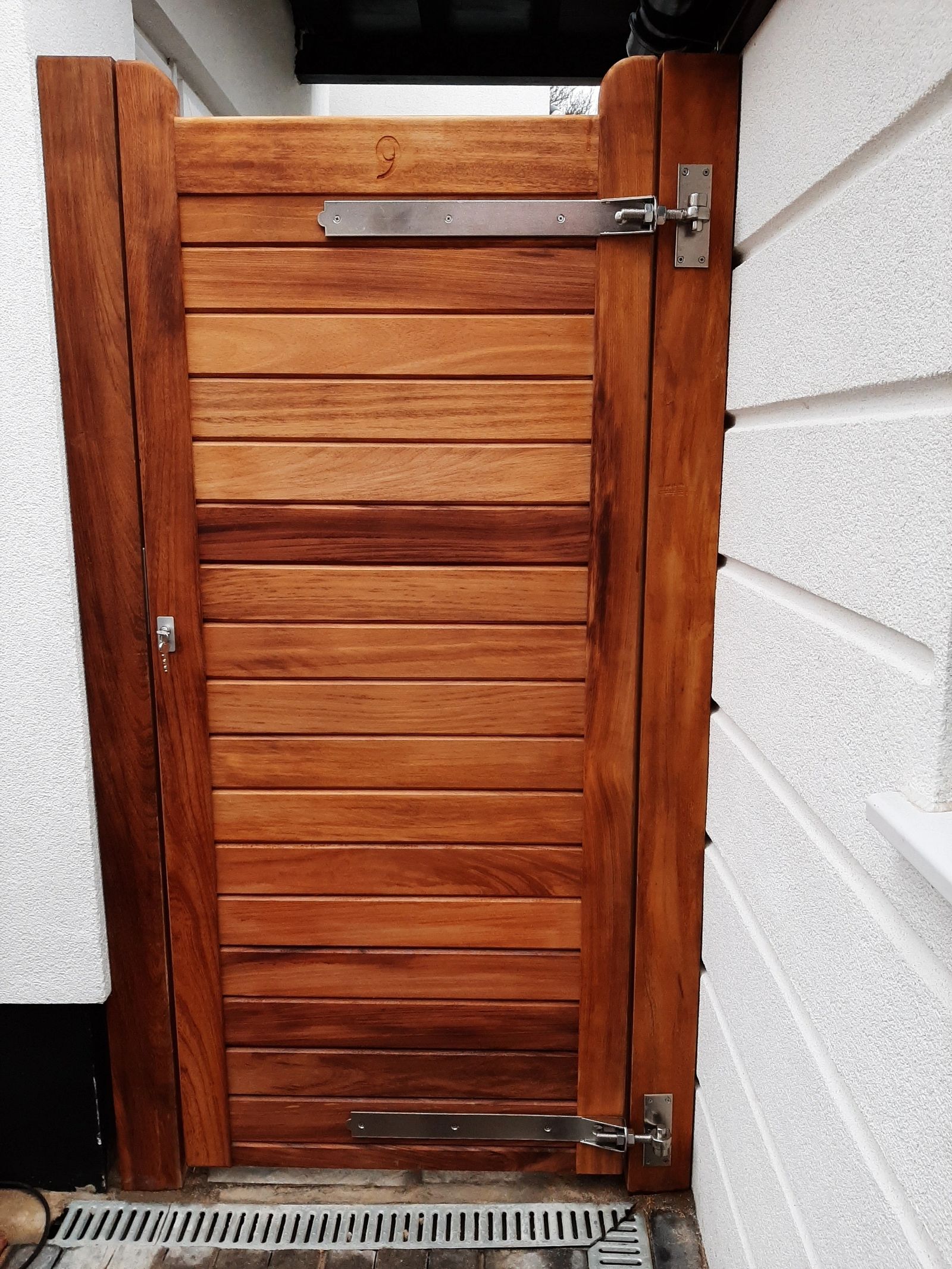
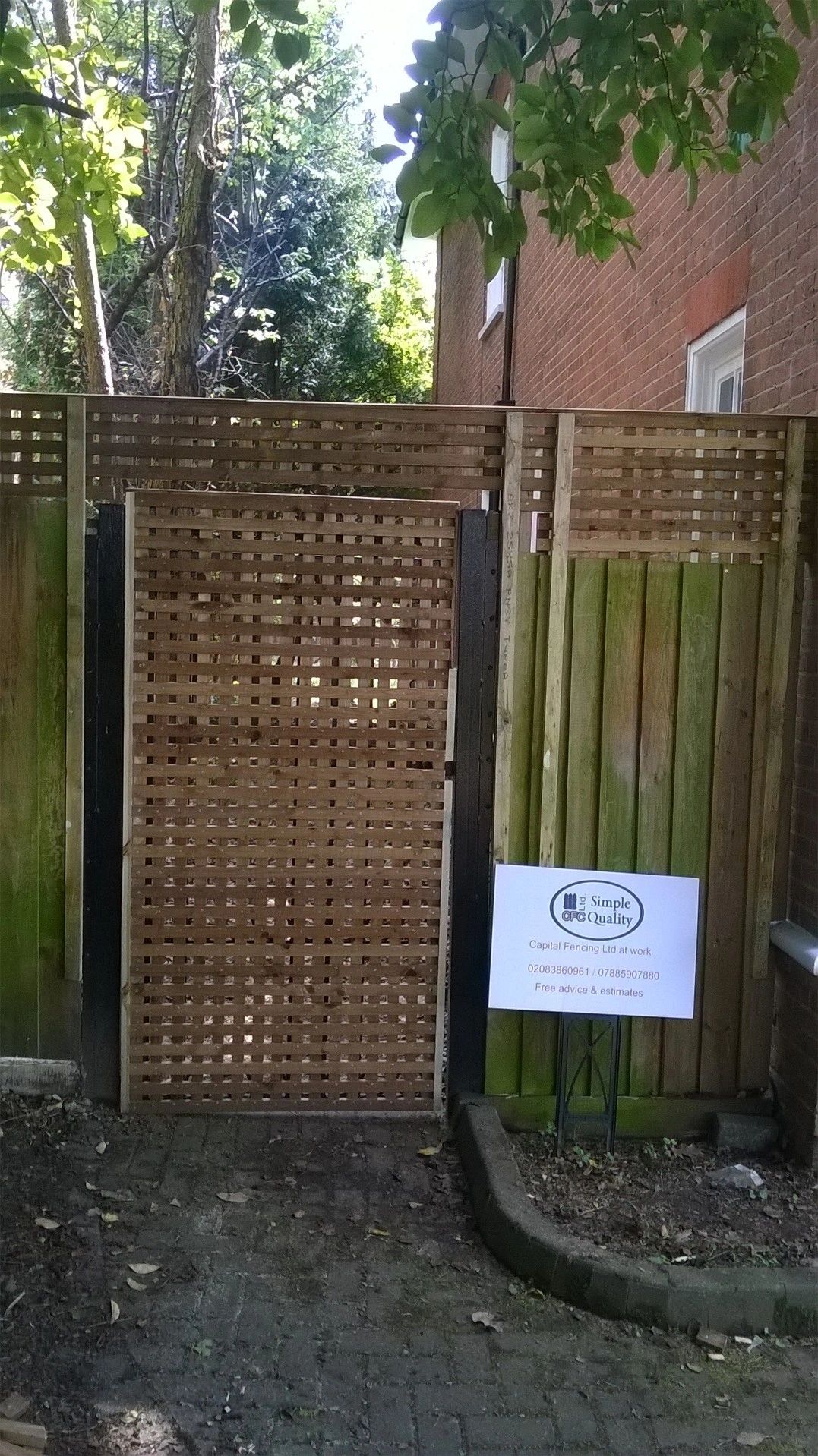
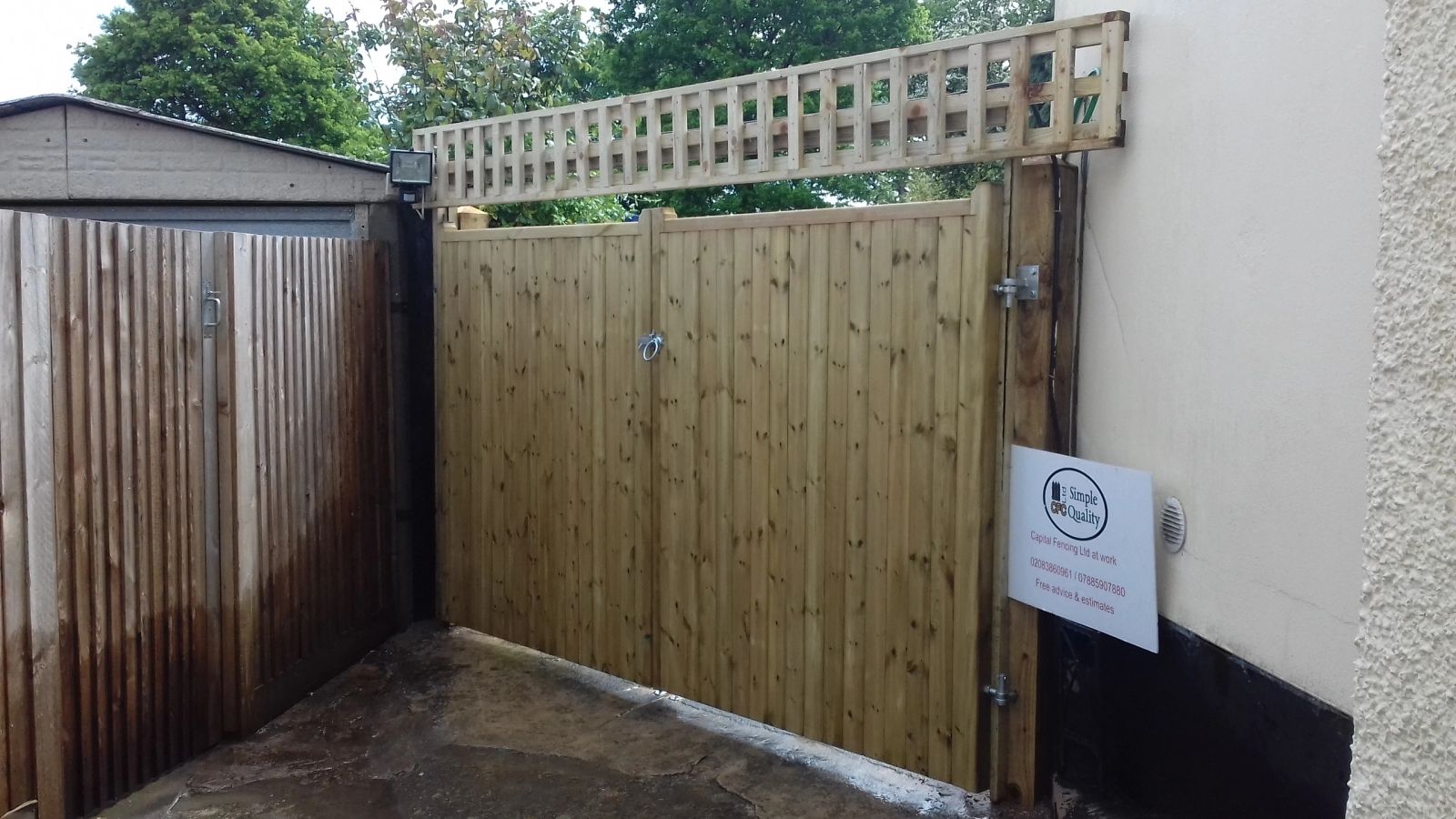
bespoke wooden gate installed by Capital Fencing in Letchworth Garden City (SG6)double driveway gates installed by Capital Fencing in Letchworth Garden City (SG6)hardwood side gate installed by Capital Fencing in Letchworth Garden City (SG6)metal entrance gate installed by Capital Fencing in Letchworth Garden City (SG6)

How we approach pedestrian side gates on Letchworth Garden City properties

Secure by Design principles for boundaries

Secure by Design is a police-backed set of principles covering layout, lighting, sightlines and boundary treatment that developments are assessed against, and fencing specification is one part of meeting it.

Applying the principles generally means avoiding blind corners, keeping sightlines open where surveillance matters, and using proportionate rather than maximum height and solidity on each boundary.

Kiln-dried versus green timber in new gate frames

A gate built from timber that wasn't properly dried before construction will shrink and potentially twist as it dries out in service, opening joints that were tight when first fitted, whereas kiln-dried stock has already done most of that movement before assembly.

This is worth checking when a newly fitted gate develops joint gaps within its first year, since it points to the timber's moisture content at build rather than a fitting fault.

Splitting maintenance costs on a shared access boundary

Where a title includes a shared right of way, the deeds sometimes specify how maintenance costs for that shared strip, including any bordering fence, should be split between the properties using it.

Where the deeds are silent on cost-sharing despite recording the shared right, this becomes another matter for direct agreement between the parties involved.

Checking exactly what the title says about cost responsibility, rather than assuming an even split is automatic, avoids a common source of disagreement on shared accessways.

Sizing a hinge post to the gate's actual weight

A hinge post needs to be sized to the specific gate it will carry, since a heavy solid timber or metal gate loads its post far more than a lightweight picket gate of the same height, and an undersized post will lean over time even if correctly concreted.

This sizing decision is best made before the post goes in, since upsizing a post after a lean has developed generally means digging it out and starting again.

Storm damage to a boundary fence and insurance

Standard buildings insurance policies frequently exclude fences from cover for storm damage, or cover them only up to a modest specified limit, which surprises many homeowners after a bad storm.

Where a fence is shared or ownership is unclear, storm damage can also raise the question of whose policy, if either, is expected to respond.

Checking a policy's specific wording on fences and gates before relying on it for storm repair avoids finding out about exclusions only after a claim is made.

Addressing a retaining sleeper wall that has started to bulge

A timber sleeper retaining wall bulges where the soil behind it has built up more pressure than the wall's bracing or embedded posts were designed to hold, often after prolonged rain has saturated the retained ground.

A wall bulging only slightly can sometimes be reinforced with additional bracing posts driven in behind it, but a wall bulging enough that sleepers have visibly separated at their joints usually needs partial or full rebuilding with proper drainage behind it.

Post-war estates and uniform frontages

Post-war council and private estates were often built with a consistent low front boundary — dwarf wall, hedge or short picket — as part of the original street design, and some retain a restrictive covenant or estate management scheme controlling what can replace it.

Swapping a low picket for a tall close-boarded front fence on these estates can breach the covenant even where planning permission wouldn't be needed under general permitted development rules.

It's worth checking the original conveyance or asking the estate's management company before ordering material, since covenant breaches are a civil matter between neighbours or the management company rather than something the council enforces.

Oak tannin staining on fixings

Oak contains a high concentration of tannic acid, which reacts with iron to produce a dark blue-black stain that can streak down a post or rail from any ferrous fixing left in contact with damp oak.

The same reaction corrodes ordinary mild steel fixings faster than it would in most other timbers, which is why stainless steel or silicon bronze fixings are the usual specification for oak gates and structural oak work.

Staining is largely cosmetic and doesn't weaken the timber, but on a visible feature gate it's often the deciding factor in paying the difference for stainless fixings over galvanised ones.

Downpipe discharge points near a fence base

A downpipe discharging directly onto open ground near a fence line, rather than into a proper drain or soakaway, concentrates a large volume of roof water at one specific point along the boundary during heavy rain.

Over time this creates a permanently saturated patch that behaves like a high water table locally, even though the rest of the garden drains normally.

Redirecting the discharge with a short length of pipe or a small soakaway a metre or two from the fence line resolves the issue far more effectively than trying to compensate with a more resistant post base.

Party Wall Act considerations for boundary fencing works

Fencing work itself rarely triggers the Party Wall Act, but where a security upgrade involves excavating close to a shared wall's foundation or building a new wall astride the boundary line, notice to the neighbouring owner may be required before work starts.

Checking whether proposed post positions or a new plinth wall fall within the Act's notice distance from a party structure is worth doing at design stage, since retrospective notice after work has begun causes more delay than checking first.

Trading off fence height against site visibility from outside

Increasing a boundary's height improves resistance to climbing but also reduces visibility into the site from the street, which can work against security by giving an intruder who does get over the fence more concealment once inside.

A part-solid, part-mesh design, or a solid lower section topped with an open mesh upper section, is one way to gain height without losing all visibility, balancing the climbing deterrent against the loss of natural surveillance from passers-by.

Delivery access and material drop-off

Fencing materials are heavy and awkward rather than especially bulky individually, but a full job's worth of posts, panels and gravel boards still needs a genuine drop-off point close to the work area rather than a kerbside stack carried the full plot length.

On restricted streets, agreeing a specific delivery slot with the supplier avoids a lorry blocking a road during school run or peak hours, which is often the point neighbours complain about a job rather than the noise of the work itself.

Where a driveway can take a small vehicle, checking headroom and turning space in advance saves a delivery being refused on the day and materials having to be hand-carried instead.

Applying for a Land Registry boundary determination

Where a boundary's exact position is genuinely disputed, it's possible to apply to HM Land Registry for a 'determined boundary', which involves a formal survey and legally fixes the line rather than leaving it as a general indication.

This process is comparatively rare for domestic disputes because of the cost and evidence involved, and is normally a last resort after direct discussion has failed.

Most everyday fence replacement work never needs this, but it exists as a formal route for the minority of cases where agreement genuinely can't be reached.

Adjusting post heights when repairing a fence on sloping ground

A fence stepped down a slope has posts of varying heights above ground even though the panels themselves are a standard size, and a repaired post needs to match the stepped height of its neighbours rather than a single standard measurement.

Getting this wrong on a repair creates a visible kink in the top line of an otherwise consistent stepped run, so measuring the actual height of the posts either side of the repair matters more here than on a level run.

Matching a new run to an existing style

Matching an extension or repair to an existing fence starts with identifying the actual system in use — panel type, post type, rail count, board profile — rather than assuming any similarly-priced product from a different range will look consistent alongside it.

Weathered timber and faded composite are both difficult to match exactly with new material, so a visible seam between old and new sections is often unavoidable and worth agreeing with the client at quote stage rather than promising an invisible join.

Where a manufacturer has changed a profile or a colour range since the original was fitted, matching sometimes means re-doing a full run rather than extending it, which is worth flagging before ordering a small top-up quantity.

How a written quote should be structured

A clear fencing quote itemises materials, labour, waste removal and any groundwork separately, rather than a single lump sum that hides what's actually included.

It should state the exact fence height, post size, panel or board specification and run length, since 'like-for-like replacement' can mean very different things depending on what was there before.

Anything excluded — removal of the old fence, reinstating disturbed planting, or work beyond the surveyed run length — should be listed explicitly, so there's no ambiguity if ground conditions turn out different from what was assumed at survey.

Boundary questions following inheritance or probate

Properties passing through inheritance sometimes bring boundary questions to light for the first time, particularly where an elderly relative had an informal understanding with neighbours that was never documented.

Executors and new owners are generally well advised to check the title plan and deeds carefully during this process rather than simply continuing an inherited informal arrangement without confirming it.

Where a boundary genuinely wasn't clear to the previous owner, this is a reasonable moment to check with the neighbour and consider formalising a written agreement.

Producing an accurate cutting list before ordering materials

An accurate cutting list — exact post count, panel or board lengths, and any bespoke cut sizes for short bays or gate openings — worked out from a proper site survey avoids the delay of a return trip for materials missed on the first order.

Rounding measurements generously rather than precisely is common practice for consumable items like fixings and concrete, but panel and post counts benefit from being counted exactly, since over-ordering large items wastes money and under-ordering stalls the job.

Where a run includes several different bay widths from stepping around obstructions, listing each bay's exact requirement separately rather than assuming an average avoids ordering a batch of identical cut panels that don't actually fit their intended positions.

Narrow access and carrying materials by hand

Where there's no side access wide enough for a barrow, materials have to be hand-carried through the house or over a boundary, which changes both the time a job takes and the choice of components — shorter, lighter sections are far easier to move this way than long concrete gravel boards.

Protecting internal flooring and doorways during a through-house carry is worth agreeing before the first delivery arrives, since a scuffed hallway wall is one of the most common complaints on this kind of access.

On some terraces the only alternative is craning or lifting material over a roof or side wall, which needs its own access and safety plan rather than being treated as a simple manual carry.

Hedge pressure on a fence line

An unmanaged hedge planted close to a boundary fence pushes against the panel or rail as it thickens, and that steady lateral pressure can bow a panel or rack a post over several seasons even without any storm involved.

Cutting the hedge back from the fence line at repair time reduces the chance of the same section failing again shortly after.

Raised beds built directly against a fence

A raised planting bed built with its back edge against a fence line keeps damp soil and mulch in permanent contact with the lowest boards or gravel board, which accelerates rot at exactly the point most vulnerable to moisture.

Lining the inside face of the bed against the fence with a damp-proof membrane, rather than backfilling soil directly onto the timber, reduces this contact without changing the visible design.

This detail is easy to miss at the planning stage since the bed and the fence are often specified and built by different trades without either flagging the interaction.

Reinstating turf strips damaged by tool storage

A pile of tools, offcuts or a mixing tray left in one spot on a lawn for several days can leave a yellowed, compacted patch even after the job is finished and everything is cleared away.

Moving stored items to a slightly different spot every day or two, where the site allows, spreads that pressure rather than concentrating it in a single dead patch that then needs separate attention to recover.

Where a genuinely fixed storage point is unavoidable, laying a board or matting underneath from the start protects the grass far more effectively than trying to revive a flattened patch afterwards.

Whether the brief is single 900mm pedestrian gate cut into an existing closeboard run or matched picket gate into a painted picket frontage, we quote it from a site visit, not a photo. Letchworth Garden City is inside our core working patch and most jobs are booked in inside a fortnight. Roads such as Pixmore Way and Wilbury Road are typical of the local layout. Howard Park is a useful local reference point. Icknield Way follows the route of the ancient Icknield Way trackway, and chalk geology sits close to the surface along much of its length.

Get In Touch

Get My Free Quote — 24h Response

No callout fee · Free site visit · Friendly local team covering London & Hertfordshire.

Call us
07885907880
or 02036484746
Email
capital_fencing@yahoo.com
WhatsApp
Message us anytime
Area
London & Hertfordshire
Payment
Card payments accepted

Pay by debit or credit card, bank transfer or cash once the work and price are agreed. No deposit taken online.

Request a Free Quote

We'll get back to you within 24 hours.

Free Site Visit No Callout Fee
Call WhatsAppQuote