Access and material handling on site
Concrete, posts and panels are heavy, and a site with only a narrow side return or no vehicle access changes how a job is priced and sequenced — materials sometimes have to be carried through rather than dropped at the boundary.
On a commercial yard the opposite problem applies: keeping a working site operational around a delivery of steel palisade or mesh panels needs a delivery and storage plan agreed before the first post goes in.
Post depth as a ratio of height above ground
A common rule of thumb is that roughly a third to a quarter of a post's total length should be in the ground, so a post standing 1.5m proud typically needs somewhere in the region of 500-600mm of burial depth depending on soil and loading.
Taller fences, gate posts, and posts on exposed or poorly-draining ground all push toward the deeper end of that range, since the leverage on a buried post increases with height above ground far more than it does with depth.
Skimping depth to save digging time is one of the most common causes of a post working loose within its first few winters, well before the timber itself shows any sign of failing.
Post-mix curing times
Fast-setting post-mix concrete typically reaches a workable set within 10-30 minutes, holding a post upright without props, but its full design strength isn't reached for several days afterwards, and lateral loads applied too soon can shift the post before it's cured.
Standard site-mixed concrete cures more slowly than fast-setting post-mix but generally achieves a denser, less porous final material, which some contractors prefer for structural gate posts subject to repeated racking loads.
Cold weather slows the curing chemistry considerably in both cases, and concrete placed close to freezing can be seriously weakened if it freezes before curing, which is why exposed posts set in winter often need extra time before load is applied.
Carrying 2.4m panels through a domestic hallway
A standard 2.4m fence panel is longer than most internal hallways are wide, so it has to be carried end-on through doorways and pivoted at corners rather than moved flat, which takes two people to control safely.
Door frames, light switches and stair newels are the most common casualties of moving long panels through a house, so a dry run to identify pinch points before committing to carrying a stack of panels through saves repeated near-misses.
Where a hallway genuinely can't take a full panel around a tight corner, the practical fallback is building the run from shorter featheredge boards fixed in place rather than trying to force a pre-built panel through.
Sherardised nails and fixings
Sherardising coats small steel fixings in zinc through a low-temperature diffusion process using zinc dust rather than a molten bath, giving a matt grey, evenly distributed coating well suited to fasteners with fine threads.
Because the process doesn't build up excess zinc at edges and threads the way hot-dip galvanising can, sherardised nails and screws keep a cleaner, more precise fit than galvanised equivalents of the same size.
The coating is thinner than typical hot-dip galvanising, so sherardised fixings are generally specified for above-ground, moderate-exposure use rather than permanent ground contact.
Boundary treatments in a conservation area
Being inside a conservation area doesn't automatically ban garden fencing, but many councils apply an Article 4 direction locally that removes some permitted development rights, meaning even modest boundary changes may need planning permission.
Where this applies, guidance often favours traditional materials and finishes that suit the area's character over modern composite or brightly coloured alternatives.
The only reliable way to know what applies to a specific property is to check with the local planning authority, since conservation area rules vary considerably between councils.
Frost heave effects on shallow-set posts
Frost heave occurs when water in saturated soil freezes and expands, lifting the ground surface and any shallowly set post embedded in it, sometimes by several millimetres each freeze-thaw cycle over a winter.
Posts set below the typical frost penetration depth for the region are far less affected, since the freezing zone that drives heave rarely reaches that far down, which is one reason recommended minimum depths are deeper in areas with harder winters.
A post that's visibly risen slightly over a hard winter, without any sign of the concrete cracking, has often been affected by heave rather than a failed footing, and it can sometimes settle back as the ground thaws.
Picket fence styles and spacing
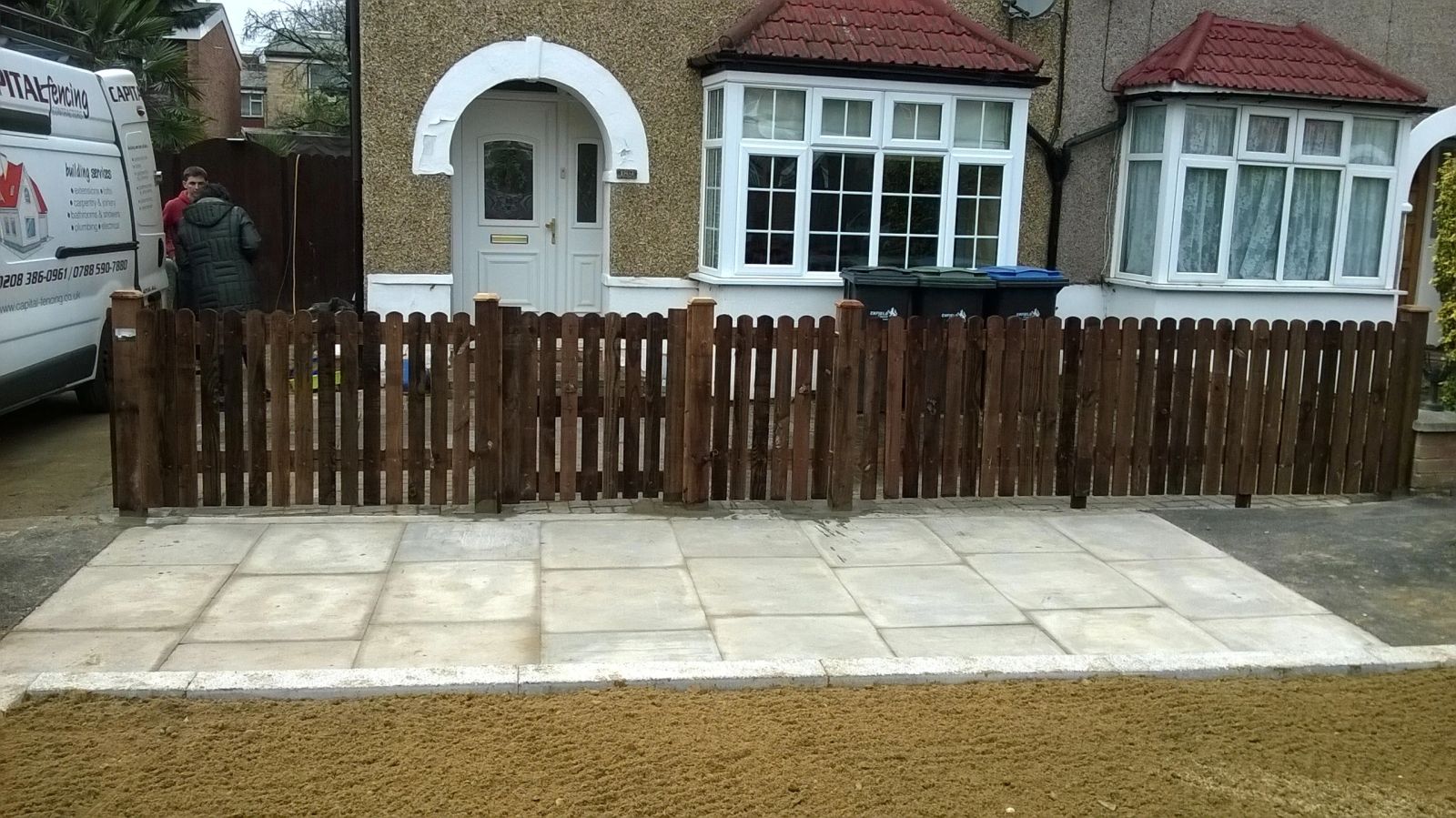
Picket fencing trades privacy for a lower, more open boundary, which suits front gardens where sightlines to the street and a welcoming appearance matter more than screening.
Picket spacing is a genuine design choice — narrower gaps look more traditional and offer a bit more containment for small pets, while wider spacing uses less timber and lets more light and air through a planted border behind it.
Because picket fencing is low, it rarely needs the same post depth as a taller closeboard run, though corner and gate posts still need proper concrete footings regardless of the fence's height.
The typical sequence for installing a fence run
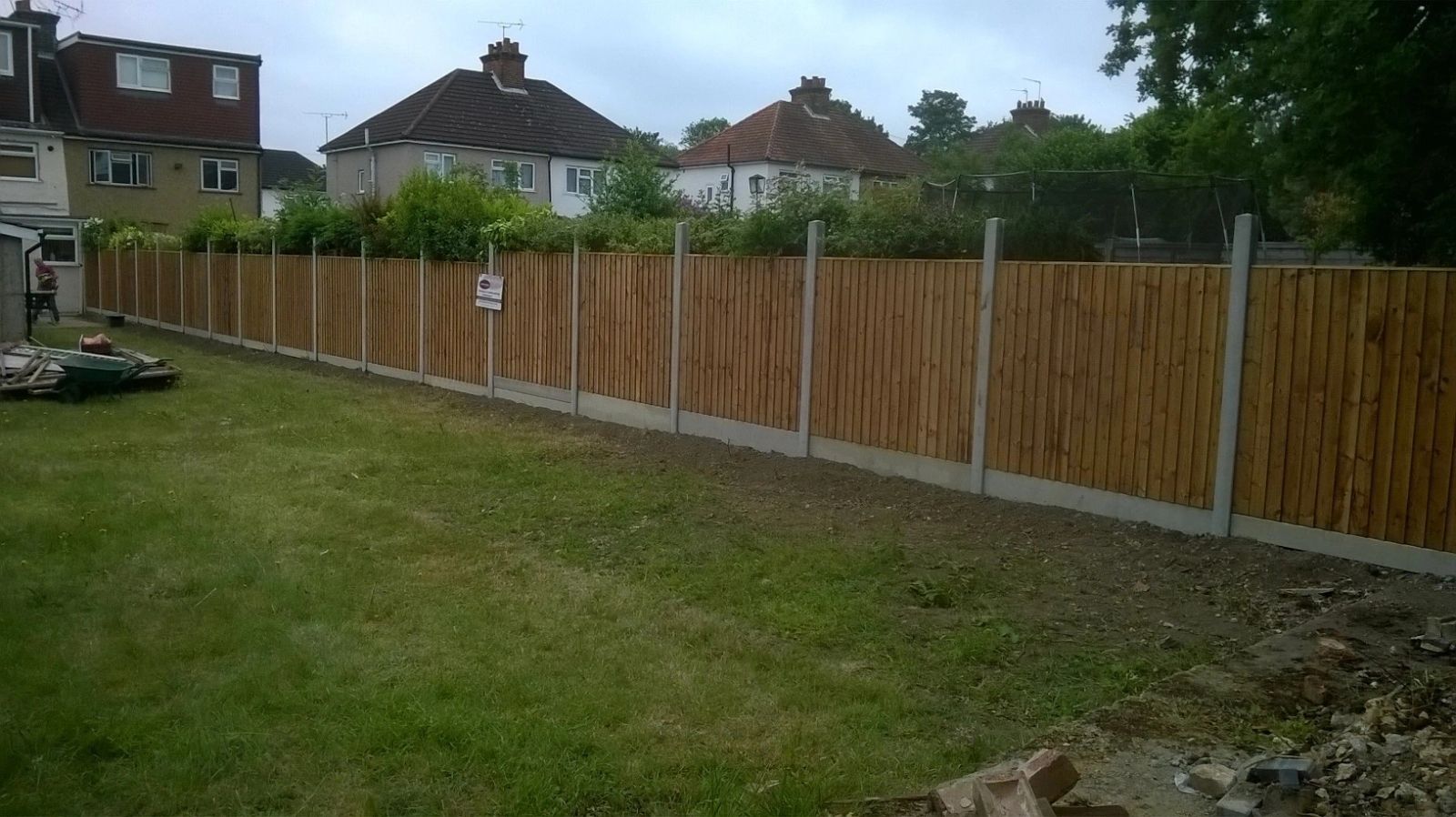
A well-run fencing job generally sets out the full line first, digs and concretes every post before fixing anything else, and only starts hanging panels, rails or boards once every post has had time to cure.
Fixing panels to posts before the concrete has cured risks knocking a post out of true, which is why rushing straight from digging into panel-fitting on the same visit is usually avoided on anything beyond a very small repair.
Working this way also means any post that turns out to be misaligned is caught and corrected before panels are cut to fit it, rather than after, when correcting the post means undoing finished work.
Repair-versus-replace where the original installation was poor
A fence that's failed early because of shallow footings, undersized posts or poor timber grading in the original build is a weaker candidate for like-for-like repair, since fixing the immediate damage doesn't address why it failed in the first place.
In that situation it's worth being upfront that a repair matching the original spec may fail again on a similar timescale, and that a modest upgrade in post size or footing depth at repair time is often better value than repeating the original approach.
Aligning hinges before final gate fixing
Hinges fixed slightly out of vertical alignment with each other make a gate bind or swing shut under its own weight rather than staying wherever it's left, even if each hinge individually looks correctly fitted.
Propping the gate at the intended finished height and checking the gap is even top and bottom before final fixing catches most alignment problems while they're still easy to adjust.
Loosely fitting the top hinge first, checking swing and clearance, and only then fully fixing both hinges is a more forgiving sequence than fully fixing both at once and finding the gate doesn't swing cleanly.
Segregating timber and concrete waste
Treated timber, plain untreated offcuts and broken concrete are usually classed and processed differently at a waste facility, so keeping them in separate piles or skip compartments on site can reduce disposal cost and avoid a mixed load being rejected.
Old concrete post bases and gravel boards are inert waste and can sometimes be crushed and reused as hardcore rather than sent to landfill, which is worth checking with the waste carrier before assuming it all goes in one load.
Metal fittings — old hinges, bolts, wire ties — pulled out during a strip-down are usually worth separating too, since scrap metal is handled through a different route to general construction waste.
Weather windows for concrete and timber work
Concrete shouldn't be mixed or poured in a hard frost, since freezing water in the mix before it cures weakens the finished base permanently rather than just delaying the cure.
Heavy or prolonged rain during digging can turn a clean-sided post hole into a collapsing, waterlogged trench within an hour on clay or silty ground, which is why digging is often timed around a forecast dry spell rather than started regardless.
Staining or oiling timber needs a dry surface and typically a minimum air temperature to cure properly, so that stage of a job is usually scheduled separately from the wetter groundwork rather than done back-to-back on the same visit.
Schools and nurseries
Boundary fencing around a school or nursery has a safeguarding function as well as a security one — height, anti-climb detailing and gate self-closing mechanisms are usually specified to stop children leaving unsupervised as much as to keep intruders out.
Work on an occupied site needs to be sequenced around the school day, with noisy or access-blocking tasks scheduled for after hours, weekends or holiday periods rather than during term-time drop-off and pick-up.
Any gaps at ground level under a boundary fence matter more here than on a typical domestic job, since a small child can get through a gap an adult wouldn't notice.
Setting gate posts before the rest of a fence run
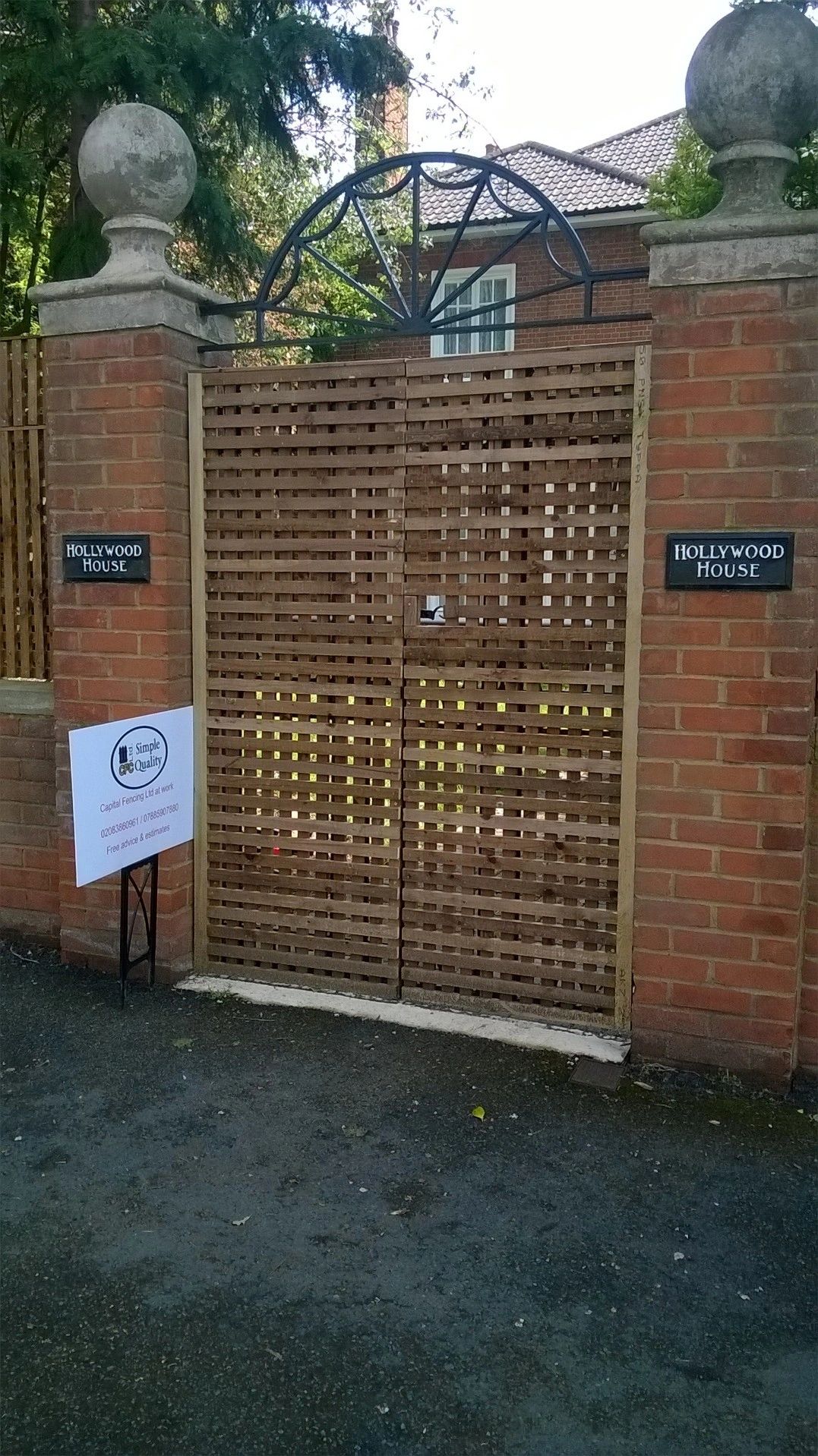
Gate posts carry more load and need tighter tolerances on spacing and plumb than intermediate fence posts, so they're normally set and checked first, with the rest of the run measured out relative to the confirmed gate opening rather than the other way round.
Where a gate is ordered to a bespoke size, its exact opening width has to be locked in before that section of the run is built, since a fence panel either side can absorb small adjustments far more easily than a made-to-measure gate can.
A gate post is also usually set with extra depth or a wider concrete base than a standard fence post, given the additional leverage a swinging gate applies, so it needs its own dig rather than being treated the same as its neighbours.
Timber species and on-site workability
Workability describes how easily a timber can be sawn, planed, nailed and screwed without splitting, tearing or blunting tools excessively, and it varies considerably between species independent of durability or strength.
Straight-grained, moderate-density softwoods like redwood pine are generally easier to work on site than dense hardwoods or highly figured timber with interlocked or wavy grain, which can tear out during cutting or planing.
A timber chosen purely for durability or appearance without considering workability can significantly slow on-site fitting, particularly where a lot of site cutting and drilling is needed rather than factory-machined components.
Appealing a refused boundary planning application
Where a planning application for a taller or otherwise non-permitted boundary structure is refused, there's a formal right of appeal to the Planning Inspectorate within a set time limit.
Appeals are considered on planning merit rather than personal circumstances, and can take several months to be decided, which is worth factoring into any timeline.
Getting professional planning advice before submitting an appeal often improves the prospects of addressing the reasons for the original refusal effectively.
Safety standards for automated gates
Automated gates fall under machinery safety regulations, which means a force-limiting device or safety edge to stop the gate on contact with an obstruction, and photocells or other sensors to detect someone in the gate's path, aren't optional extras.
A risk assessment covering the specific installation — proximity to a public footpath, likely pedestrian use, manual override in a power cut — should be part of any automation job, not an afterthought once the gate's already built.
Annual servicing of the motor, safety sensors and mechanical stops keeps an automated gate compliant and catches wear before it becomes a safety issue rather than just an inconvenience.
Windbreak netting as an interim exposure measure
On a newly exposed plot, such as after a neighbouring hedge or building is removed, temporary windbreak netting fixed to the existing fence can reduce load on the structure while a longer-term solution like replanting or upgrading the fence itself is arranged.
This is a genuinely useful stop-gap rather than a permanent fix, since netting left up long-term degrades in UV and adds its own wind resistance once it starts to fray and catch more air than when new.
It buys time to plan a proper specification change rather than leaving a suddenly-exposed fence to fail before a permanent upgrade can be arranged.
Widening an existing gate opening
Widening a driveway opening to take a larger vehicle usually means moving or replacing both hanging and slamming posts, not just fitting a wider gate to the existing gap, since the posts themselves define the usable width.
Ground and drainage either side of the widened opening are checked at the same time, since regrading the entrance often follows a widening job.
Drilling into engineering brick or dense blockwork
Engineering brick and dense concrete block are far harder than ordinary facing brick, so standard masonry drill bits blunt quickly and a hammer-action drill with a carbide-tipped bit designed for dense material is needed to make progress without excessive heat.
Drilling slowly with intermittent withdrawal to clear dust keeps the bit cooler and the hole cleaner than forcing continuous pressure, which tends to glaze the hole and reduce the fixing's grip.
Where a wall is engineering brick specifically because it's load-bearing or below damp-proof course, it's worth checking that the fixing depth and pattern doesn't compromise the wall's structural role before drilling a run of holes into it.
Checking an unstable adjacent structure before repairing the fence against it
Where a fence panel is fixed to or sits hard against a garden wall, shed or outbuilding that's itself showing signs of movement, repairing the fence without addressing the structure it depends on risks the same failure recurring.
This is worth flagging to a client as a separate issue rather than working around it silently, since a fence repair fixed to an unstable wall is only as reliable as that wall.