London & Hertfordshire Free Site Visit
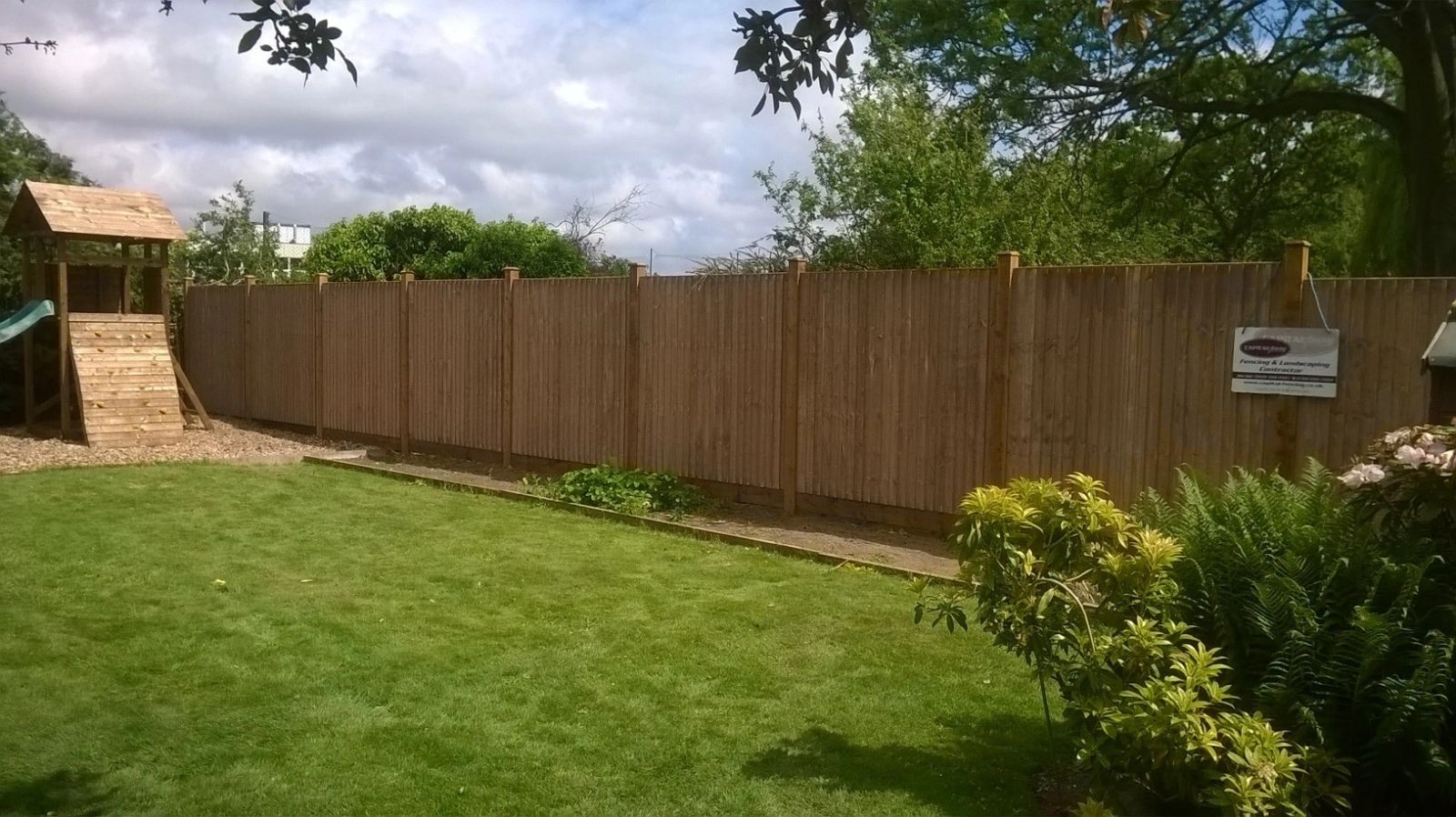
closeboard fence run installed by Capital Fencing in St Albans (AL1)
St Albans · AL1 / AL2 / AL3 / AL4

School & Nursery Fencing in St Albans (AL1)

School and nursery fencing in St Albans is one of our regular briefs — primary schools, nurseries and early-years settings needing safeguarding-compliant boundaries. On victorian terraces with mature gardens, the failure mode we see most often is the one we design out first. Roads such as Beaconsfield Road and Sandpit Lane are typical of the local layout. St Albans Cathedral is a useful local reference point. Verulamium Park preserves the site of the Roman city of Verulamium, one of the largest Roman sites in Britain.

School and nursery fencing in St Albans is one of our regular briefs — primary schools, nurseries and early-years settings needing safeguarding-compliant boundaries. On victorian terraces with mature gardens, the failure mode we see most often is the one we design out first. Roads such as Beaconsfield Road and Sandpit Lane are typical of the local layout. St Albans Cathedral is a useful local reference point. Verulamium Park preserves the site of the Roman city of Verulamium, one of the largest Roman sites in Britain.

Typical school and nursery fencing briefs in St Albans

  • 1.8m weld-mesh on galvanised posts around a primary school MUGA
  • matched pedestrian and vehicle gates with mag-lock and DDA-compliant pedestrian access
Default spec

How we build school and nursery fencing in St Albans

1.2m or 1.8m bow-top or 358 weld-mesh, hot-dip galvanised then RAL powder-coated posts, self-closing gates with anti-finger-trap hinges. On St Albans jobs we adjust for extensive conservation areas mean fence heights and materials need to match the streetscape.

Property mix locally: Victorian terraces, Edwardian villas in Marshalswick, and Tudor / Georgian properties near the cathedral. Typical gardens: mature gardens, often with established hedging that needs lifting before fencing goes in. Postcodes we regularly service: AL1, AL2, AL3, AL4.

we install to BS 1722-14 for bow-top and BS 1722-10 for weld-mesh, provide safeguarding-relevant sign-off notes, and can attend outside term time only.

Why this spec, for primary schools, nurseries and early-years settings

  • no horizontal rails at climbable heights — safeguarding-first geometry
  • hot-dip galvanised then powder-coated finishes carry a 25-year service life
  • welded rather than bolted joints so nothing works loose over a school year
What goes wrong

Common failure modes on school and nursery fencing

  • specifying decorative railings with climbable finials near a play area — trips a safeguarding audit every time
  • under-sized gate posts on double vehicle gates — they drop within a year on daily use

School & Nursery Fencing FAQs — St Albans

Do you supply RAMS and public-liability certificate ahead of works?

On school and nursery fencing jobs in St Albans (AL1), our default answer is: 1.2m or 1.8m bow-top or 358 weld-mesh, hot-dip galvanised then RAL powder-coated posts, self-closing gates with anti-finger-trap hinges. For context: hot-dip galvanised then powder-coated finishes carry a 25-year service life. Installed to BS 1722 standards, with fitter details available on request.

Do you install to BS 1722 for school fencing?

Across St Albans we spec around extensive conservation areas mean fence heights and materials need to match the streetscape, so on school and nursery fencing that usually means bow-top 1.2m for EYFS boundaries. We install to BS 1722-14 for bow-top and BS 1722-10 for weld-mesh, provide safeguarding-relevant sign-off notes, and can attend outside term time only.

How do you avoid finger-trap points on self-closing gates?

St Albans City and District coverage means we can survey most AL1 addresses inside a week — primary schools, nurseries and early-years settings needing safeguarding-compliant boundaries. We install to BS 1722-14 for bow-top and BS 1722-10 for weld-mesh, provide safeguarding-relevant sign-off notes, and can attend outside term time only.

Are your fitters DBS-checked?

Practically: bow-top mesh replacing tired timber around a nursery outdoor area. That's the St Albans version of this job, not a generic one. For context: hot-dip galvanised then powder-coated finishes carry a 25-year service life. Installed to BS 1722 standards, with fitter details available on request.

What height should nursery outdoor fencing be?

On school and nursery fencing jobs in St Albans (AL1), our default answer is: 1.2m or 1.8m bow-top or 358 weld-mesh, hot-dip galvanised then RAL powder-coated posts, self-closing gates with anti-finger-trap hinges. For context: hot-dip galvanised then powder-coated finishes carry a 25-year service life. Installed to BS 1722 standards, with fitter details available on request.

Recent school & nursery fencing work
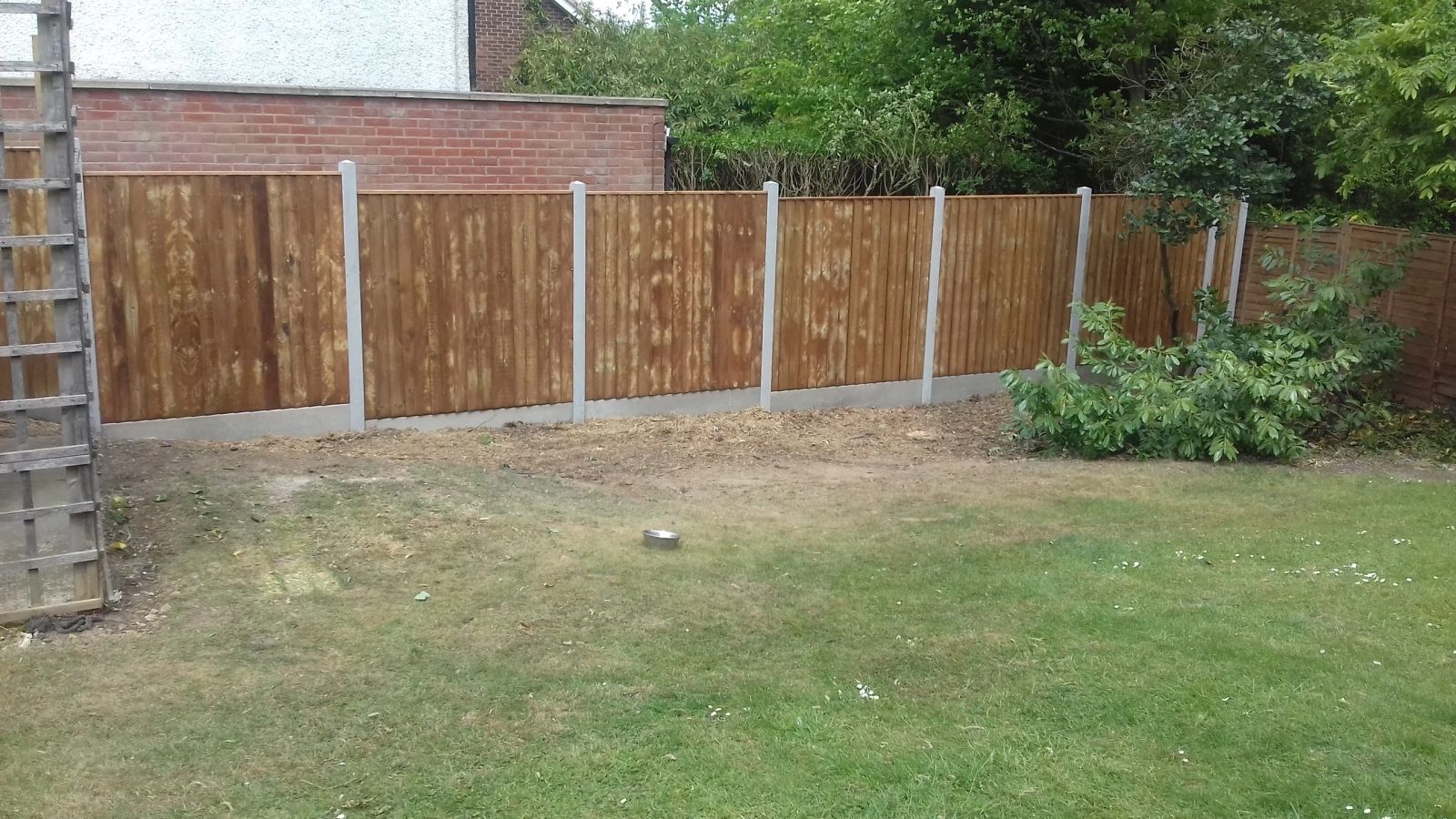
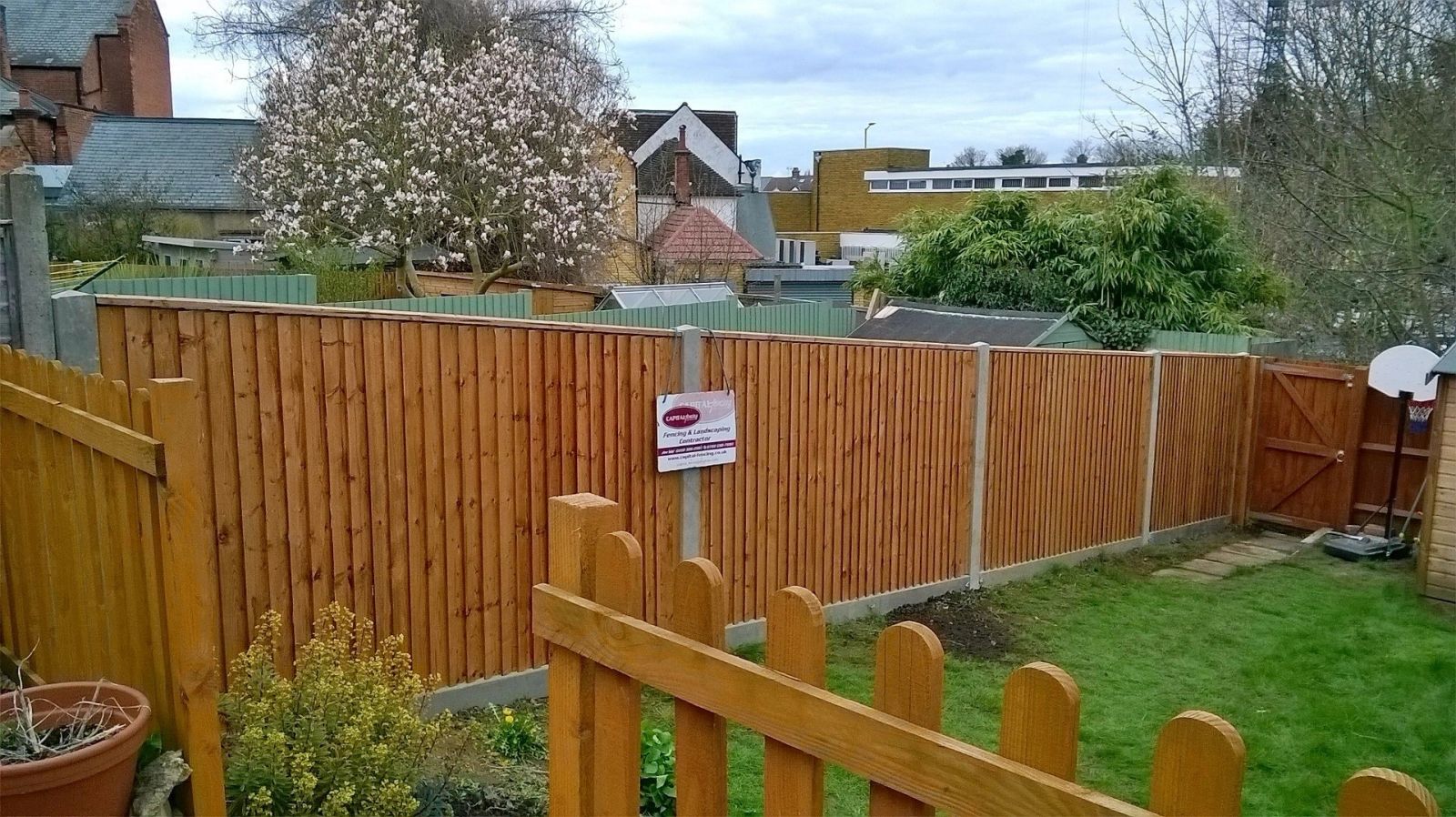
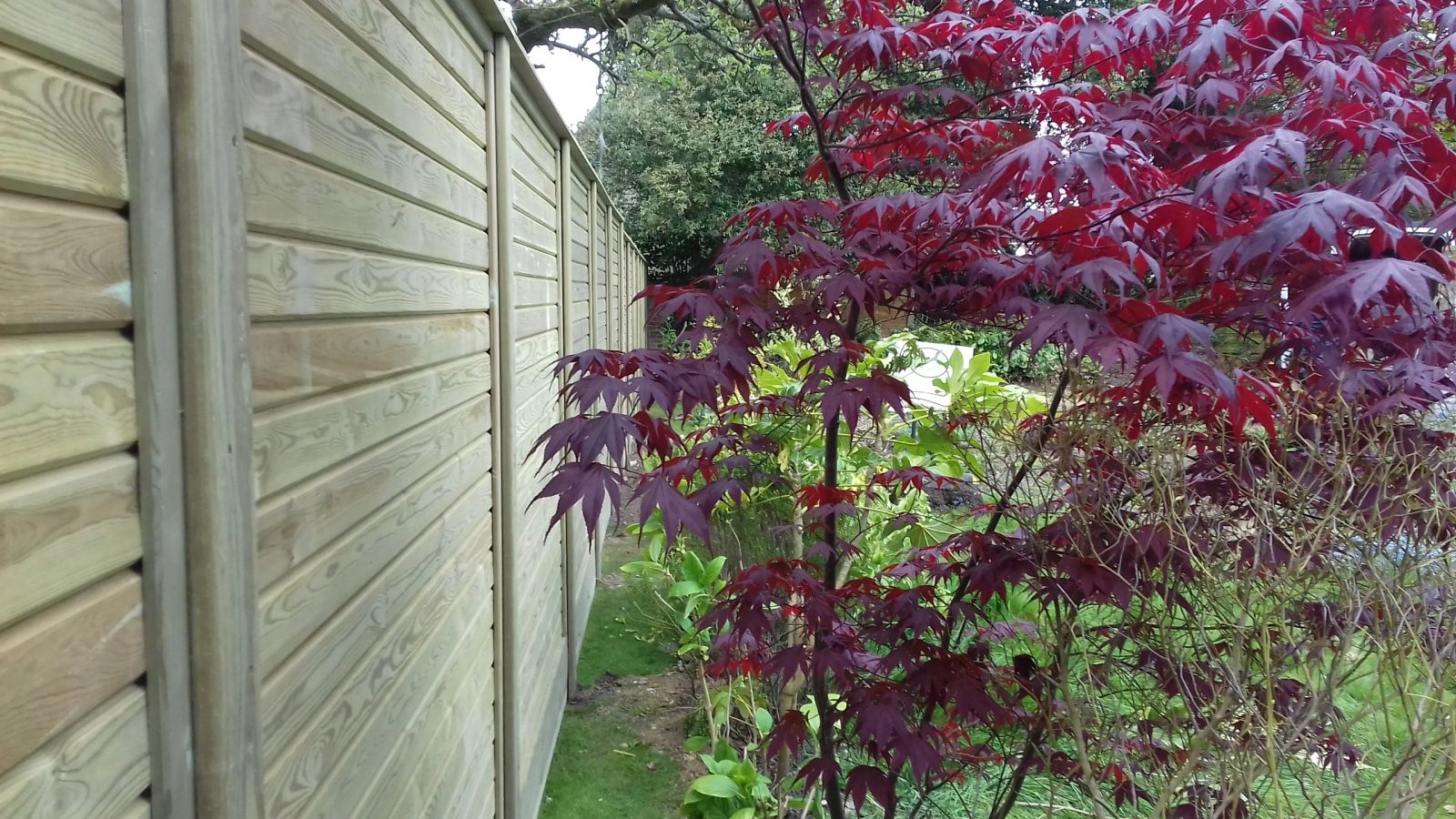
closeboard fence run installed by Capital Fencing in St Albans (AL1)panel fence install installed by Capital Fencing in St Albans (AL1)trellis-topped fence installed by Capital Fencing in St Albans (AL1)bespoke decorative fence installed by Capital Fencing in St Albans (AL1)

What actually matters for school & nursery fencing around St Albans

Douglas fir for structural fencing timber

Douglas fir is a stronger, stiffer softwood than typical whitewood or redwood, with a pronounced grain pattern and moderate natural durability in its heartwood, making it a common choice for structural posts and gate framing rather than boarding.

Its resin content is generally lower than pine, which reduces the risk of resin bleed showing through a painted or stained finish.

Because of its strength-to-weight ratio it's often specified for longer unsupported spans, such as wide gate frames, where a lighter section still needs to resist twisting under its own weight.

Addressing a retaining sleeper wall that has started to bulge

A timber sleeper retaining wall bulges where the soil behind it has built up more pressure than the wall's bracing or embedded posts were designed to hold, often after prolonged rain has saturated the retained ground.

A wall bulging only slightly can sometimes be reinforced with additional bracing posts driven in behind it, but a wall bulging enough that sleepers have visibly separated at their joints usually needs partial or full rebuilding with proper drainage behind it.

Scribing a gravel board to uneven ground

Ground level rarely runs perfectly straight between two posts, so a gravel board cut square often leaves a gap under one end and digs into the ground at the other unless it's scribed to follow the actual contour.

Scribing means holding the board in position, marking the ground profile onto its face, and cutting along that line so the board's bottom edge follows the undulation rather than an assumed flat datum.

On concrete gravel boards this isn't possible after casting, so uneven ground either needs the board bedded on a shaped mortar bed or a timber board used instead where the ground profile is particularly irregular.

Boundaries against a railway embankment

A boundary running along a railway embankment is very often owned and maintained by the railway infrastructure operator rather than the adjoining householder, and any work close to the operator's land, including digging near its toe or crest, usually needs prior notice or permission.

Embankment ground can also be made up of variable historic fill rather than natural strata, since many were built up from spoil during original construction, which affects both digging and the stability assumptions for post bases near the base of the slope.

Access for materials and machinery along these boundaries is frequently restricted, so confirming land ownership and any operator consent needed is a necessary step before quoting the work.

Aligning a drop bolt on double gates

A drop bolt on the leading edge of one leaf of a double gate needs a matching socket set into the ground or a fixed plate below it, and that socket has to be positioned after the gates are hung and checked closed, not marked out in advance from a plan.

Ground movement or a slight settling of the gate posts over the following months can throw the bolt out of alignment with its socket, which is why some installers set the socket in a slightly oversized recess rather than a tight-fitting hole.

Where the ground under the gate is loose gravel or soft earth, a concrete socket set flush with the surface holds alignment far better over time than a bolt simply pushed into bare ground.

Diagnosing rot at the ground line versus mid-post

Ground-line rot sits just below and just above soil level, where moisture cycles wet and dry fastest and fungal decay does most of its damage; a probe test at that band catches most failures before they're visible above ground.

Rot higher up the post, mid-height under a rail bracket or where a panel clip traps water, is a different failure mode caused by standing moisture rather than soil contact, and needs the fixing checked as well as the timber.

Ground clearance for airflow

Leaving a consistent gap, typically 50-75mm, between the underside of a fence panel or gate and the ground lets air circulate around the bottom rail, which is usually the first part of a timber fence to rot.

That clearance also stops the panel wicking moisture directly from wet grass or standing puddles after rain, something ground contact makes almost unavoidable over time.

On sites with soft or uneven ground, a gravel board fitted below the panel achieves the same protection while keeping the panel itself off the soil entirely.

Working over septic or drainage runs

Properties without mains drainage, more common on the rural fringes of Hertfordshire, often have a septic tank or soakaway drainage field with pipework running across the garden that a fence line can unknowingly cross.

A collapsed or compressed drainage pipe under a post base is a common cause of a fence settling unevenly a season or two after installation.

Where a septic system's layout isn't documented, a damp or lush strip of grass running away from the tank is often the visible sign of a soakaway field that needs avoiding when setting posts.

Carrying out a final walk-round check before calling a job complete

A final check along the full run — hinges swinging freely, caps seated, fixings tight, gravel boards sitting flush — catches small issues that are quick to fix on the day but awkward to revisit once tools and materials have left site.

Checking gate latches and bolts actually engage properly under normal use, not just that they look fitted, avoids a callback for something that would have taken moments to adjust while still on site.

A brief look at the surrounding area — cleared spoil, protected surfaces returned to their original state, tools accounted for — is as much a part of finishing the job properly as the fence itself.

Checking for adjacent drainage runs before excavating

A land drain or perimeter drainage run laid to keep a garden from waterlogging is easy to miss during a routine dig, since it's often shallower and less obviously marked than a mains service.

Digging through one doesn't usually cause an immediate problem visible on the day, but it can quietly reintroduce a waterlogging issue the drain was originally installed to solve, sometimes not noticed until the following wet season.

Where a garden has a known history of standing water that was previously addressed with drainage work, it's worth asking the client what's down there before digging rather than finding out by breaking through a pipe.

Nursery outdoor play area boundary detailing

An outdoor play boundary at a nursery needs a barrier young children genuinely can't climb or squeeze through, which usually rules out wide-aperture mesh and low horizontal rails in favour of vertical bar infill or tight-weave mesh with no climbable rung.

Gate latches are set at adult height and out of a small child's reach, and self-closing hardware is specified with enough force to shut the gate reliably without slamming hard enough to catch fingers.

Concrete post reinforcement

Precast concrete fence posts are reinforced internally with steel rods or mesh running the post's length, which gives the otherwise brittle concrete the tensile strength to resist bending loads from wind pressure on the panels it holds.

The reinforcement needs adequate concrete cover on all sides to stop moisture reaching the steel and causing it to rust and expand, a process that can crack the post from the inside out over time, known as spalling.

A concrete post with reinforcement bar visible or rust-staining at the surface has usually already lost some of its cover and is worth replacing before the cracking spreads further along its length.

Diagnosing a latch that only sticks in damp weather

A latch or gate that closes fine in dry weather but sticks or binds after rain is very often timber swelling with moisture rather than a hardware fault, and this points to a finish or ventilation issue rather than the latch mechanism itself.

Confirming the pattern is weather-related before adjusting or replacing hardware avoids fixing a symptom that will return with the next wet spell.

Boundary questions raised during a property sale

Conveyancing on a property sale routinely asks the seller to confirm boundary ownership and flag any known disputes, which can bring long-dormant boundary questions to the surface.

A fence built or replaced without proper regard to the true boundary line can complicate or delay a sale if it comes up during these enquiries.

Keeping any boundary agreements, planning permissions or correspondence about a garden fence on file makes answering these standard conveyancing questions considerably easier when the time comes.

Repair versus replace decision criteria

The decision between repairing and replacing usually comes down to what proportion of a run is affected and how sound the unaffected timber is — a single failed post on an otherwise good run favours a repair, while widespread rot along several bays tips toward replacement.

Age of the existing timber matters too, since a repair fitted into a fence already near the end of its working life may only buy a season or two before further failures appear elsewhere.

Buried rubble and old foundations

Gardens that once held an outbuilding, air-raid shelter or earlier boundary wall often still have its foundation strip sitting just below turf level, invisible until an auger or spade hits it.

A shallow concrete strip footing crossing the fence line usually needs breaking out locally rather than working around it, since a post can't be reliably set on top of a narrow buried footing.

Where old foundations run the length of a boundary, it's worth probing the full run before quoting rather than assuming one trial hole represents the whole job.

Galvanised versus stainless steel fixings on a coastal or corrosive site

Standard galvanised fixings perform well on most inland commercial sites, but a coastal, industrial or otherwise chemically aggressive environment accelerates corrosion at the fixing points well beyond what the same fence would experience on a typical inland yard.

Specifying stainless steel fixings instead of galvanised on an exposed site increases the outlay at installation but avoids a cycle of repeated fixing replacement that a standard galvanised specification would otherwise need in that environment.

Stainless fixings in exposed positions

Stainless steel fixings resist corrosion better than galvanised equivalents and don't leave the dark rust streaks that a failing galvanised screw head can bleed into pale or oiled timber.

They're specified more selectively than as a blanket upgrade, typically on coastal or otherwise highly exposed sites, on hardwood where tannins react badly with ordinary galvanised steel, or on visible ironmongery where staining would be obvious.

Grade matters even within stainless — 304 is adequate for most exposed domestic fencing work, while a genuinely coastal or salt-exposed site is better served by the more corrosion-resistant 316 grade.

Timber moisture content testing

A pin-type moisture meter measures electrical resistance between two probes pushed into the timber's surface, giving a reasonably reliable reading of moisture content near the surface but not necessarily reflecting the core of a thick section.

Fencing timber delivered at above roughly 20% moisture content is more prone to significant post-installation shrinkage and movement than timber closer to its long-term equilibrium moisture content for outdoor use.

Because timber left stacked outdoors and uncovered reabsorbs moisture from rain and humidity, a moisture reading taken on delivery can differ significantly from the same stack a fortnight later if it hasn't been kept covered.

Where the adopted highway boundary actually sits

The legal edge of an adopted public highway doesn't always match the visible edge of the tarmac or verge, and can extend further onto what looks like private land in some cases.

Erecting a fence, wall or gate on adopted highway land without authorisation is a separate issue from planning permission, and the highway authority can require its removal.

Where there's any doubt about the exact highway boundary, the local highway authority can usually confirm the extent of the adopted highway against its own records.

Algae growth on north-facing panels

A boundary that faces north, or sits in the permanent shade of a tall building or dense hedge, stays damp for far longer after rain than a south-facing run, which is exactly the condition green algae needs to establish.

Algae on timber is mostly cosmetic in the early stages but makes the surface noticeably slippery, which matters where a fence line doubles as an informal foothold near steps or a sloped path.

A dilute biocidal wash applied before restaining is more effective long-term than staining directly over algae, which simply seals damp organic growth beneath the new coating.

Spur repair material choice

A concrete or timber spur bolted alongside a rotted post base lets the sound upper section of the post be retained while replacing only the failed section near ground level, avoiding a full post replacement.

A concrete spur resists the ground moisture that caused the original rot far better than a timber spur repeating the same material in the same failure-prone zone, though it's heavier and less forgiving to align precisely.

The repair is only as good as the connection between spur and post, and coach bolts through both members, rather than screws alone, are needed to transfer wind load reliably across the joint.

On school and nursery fencing in St Albans you get the same crew from first site visit to hand-over. That's the whole model — small team, safeguarding-first spec, written quote before we start. Roads such as Beaconsfield Road and Folly Lane are typical of the local layout. Verulamium Park is a useful local reference point. St Albans has multiple conservation areas, including Fishpool Street and Romeland, which constrain front-boundary materials on the historic streets running toward the cathedral.

Get In Touch

Get My Free Quote — 24h Response

No callout fee · Free site visit · Friendly local team covering London & Hertfordshire.

Call us
07885907880
or 02036484746
Email
capital_fencing@yahoo.com
WhatsApp
Message us anytime
Area
London & Hertfordshire
Payment
Card payments accepted

Pay by debit or credit card, bank transfer or cash once the work and price are agreed. No deposit taken online.

Request a Free Quote

We'll get back to you within 24 hours.

Free Site Visit No Callout Fee
Call WhatsAppQuote