London & Hertfordshire Free Site Visit
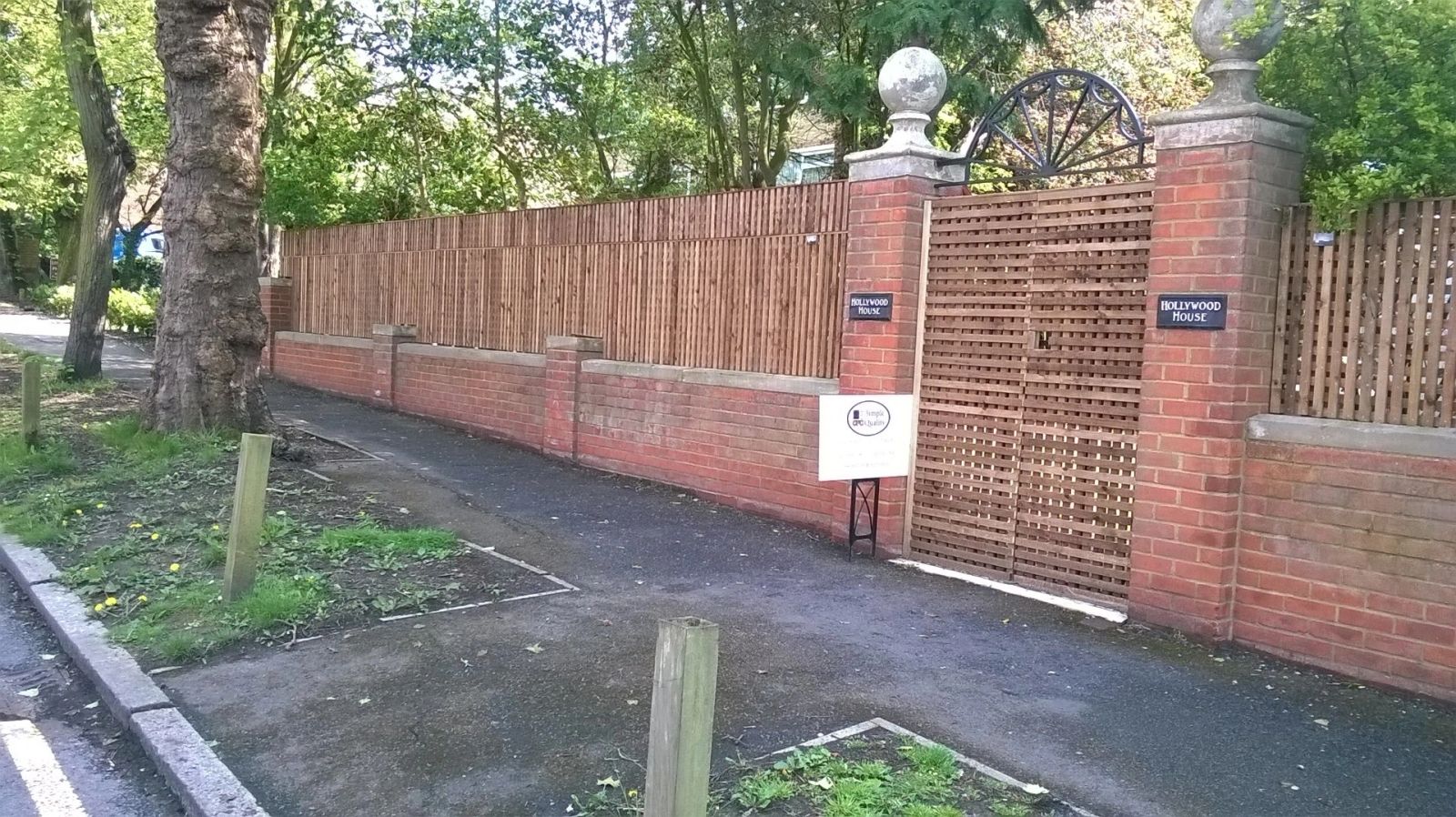
closeboard fence run installed by Capital Fencing in Borehamwood (WD6)
Borehamwood · WD6

School & Nursery Fencing in Borehamwood (WD6)

School and nursery fencing in Borehamwood is one of our regular briefs — primary schools, nurseries and early-years settings needing safeguarding-compliant boundaries. On mix of post-war terraces with small to mid-size rear plots, the failure mode we see most often is the one we design out first. Roads such as Cardinal Avenue and Shenley Road are typical of the local layout. BBC Elstree Centre is a useful local reference point. Whitehouse Avenue has council-maintained hedging along the pavement that narrows the usable frontage.

School and nursery fencing in Borehamwood is one of our regular briefs — primary schools, nurseries and early-years settings needing safeguarding-compliant boundaries. On mix of post-war terraces with small to mid-size rear plots, the failure mode we see most often is the one we design out first. Roads such as Cardinal Avenue and Shenley Road are typical of the local layout. BBC Elstree Centre is a useful local reference point. Whitehouse Avenue has council-maintained hedging along the pavement that narrows the usable frontage.

Default spec

How we build school and nursery fencing in Borehamwood

1.2m or 1.8m bow-top or 358 weld-mesh, hot-dip galvanised then RAL powder-coated posts, self-closing gates with anti-finger-trap hinges. On Borehamwood jobs we adjust for limited rear access on the older estates means materials usually have to come through the house.

Property mix locally: mix of post-war terraces, 1960s low-rise estates and new-build apartments near the studios. Typical gardens: small to mid-size rear plots, often south-facing on the Elstree side. Postcodes we regularly service: WD6.

we install to BS 1722-14 for bow-top and BS 1722-10 for weld-mesh, provide safeguarding-relevant sign-off notes, and can attend outside term time only.

Why this spec, for primary schools, nurseries and early-years settings

  • no horizontal rails at climbable heights — safeguarding-first geometry
  • hot-dip galvanised then powder-coated finishes carry a 25-year service life
  • welded rather than bolted joints so nothing works loose over a school year

Where school and nursery fencing isn't the right answer

  • conservation-area primary schools where planning restricts galvanised finish visible from the street
  • domestic-scale nurseries in a converted house where a timber boundary already meets Ofsted line-of-sight rules

Typical school and nursery fencing briefs in Borehamwood

  • 1.8m weld-mesh on galvanised posts around a primary school MUGA
  • matched pedestrian and vehicle gates with mag-lock and DDA-compliant pedestrian access

School & Nursery Fencing FAQs — Borehamwood

What height should nursery outdoor fencing be?

On school and nursery fencing jobs in Borehamwood (WD6), our default answer is: 1.2m or 1.8m bow-top or 358 weld-mesh, hot-dip galvanised then RAL powder-coated posts, self-closing gates with anti-finger-trap hinges. The honest trade-off is specifying decorative railings with climbable finials near a play area — trips a safeguarding audit every time — which is exactly what our default spec designs out.

Are your fitters DBS-checked?

Across Borehamwood we spec around limited rear access on the older estates means materials usually have to come through the house, so on school and nursery fencing that usually means bow-top 1.2m for EYFS boundaries. We install to BS 1722-14 for bow-top and BS 1722-10 for weld-mesh, provide safeguarding-relevant sign-off notes, and can attend outside term time only.

Do you supply RAMS and public-liability certificate ahead of works?

Hertsmere Borough coverage means we can survey most WD6 addresses inside a week — primary schools, nurseries and early-years settings needing safeguarding-compliant boundaries. The honest trade-off is specifying decorative railings with climbable finials near a play area — trips a safeguarding audit every time — which is exactly what our default spec designs out.

How do you avoid finger-trap points on self-closing gates?

Practically: bow-top mesh replacing tired timber around a nursery outdoor area. That's the Borehamwood version of this job, not a generic one. The honest trade-off is specifying decorative railings with climbable finials near a play area — trips a safeguarding audit every time — which is exactly what our default spec designs out.

Can pedestrian and vehicle gates share a controlled entry?

On school and nursery fencing jobs in Borehamwood (WD6), our default answer is: 1.2m or 1.8m bow-top or 358 weld-mesh, hot-dip galvanised then RAL powder-coated posts, self-closing gates with anti-finger-trap hinges. For context: hot-dip galvanised then powder-coated finishes carry a 25-year service life. Installed to BS 1722 standards, with fitter details available on request.

Recent school & nursery fencing work
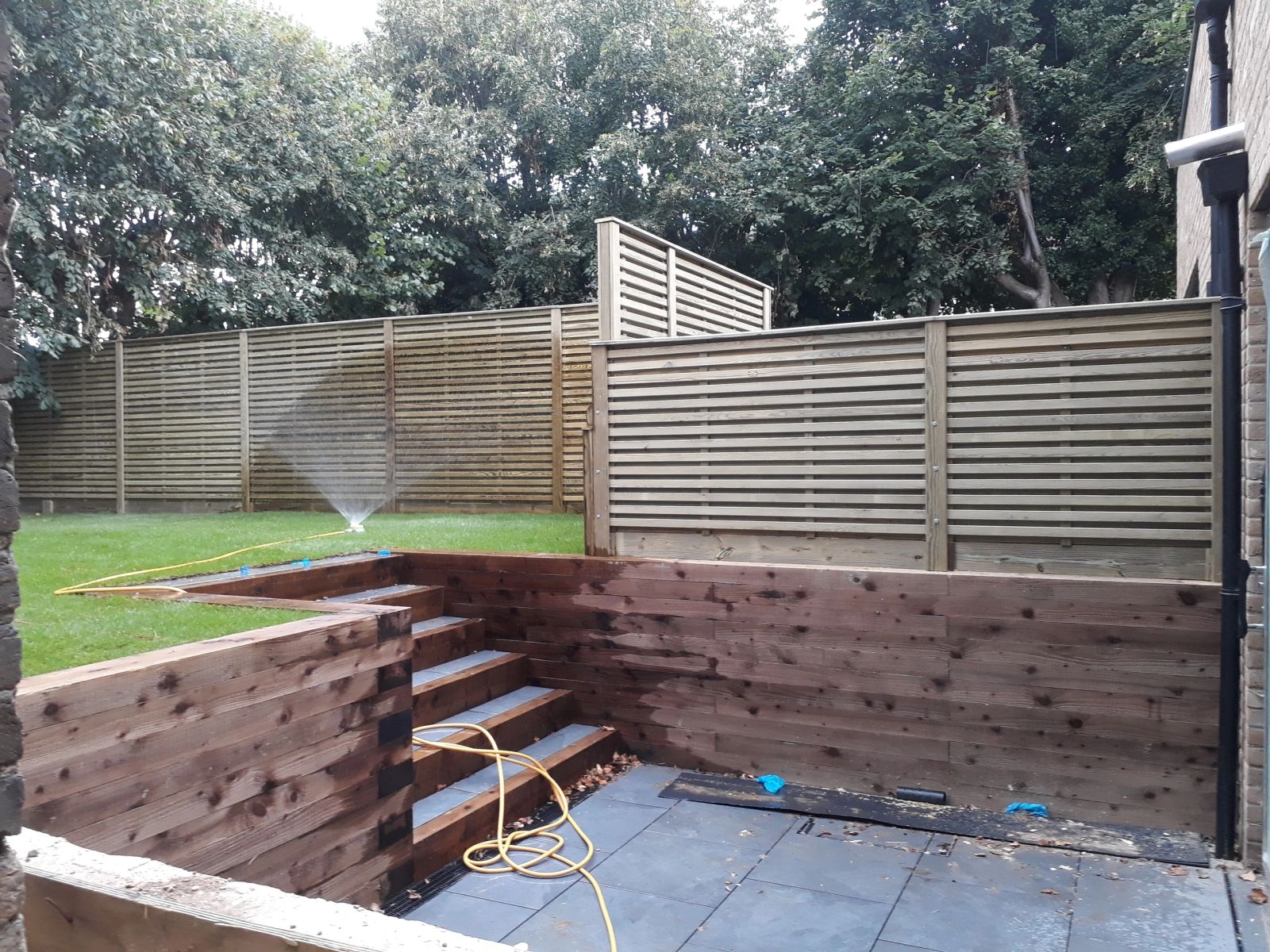
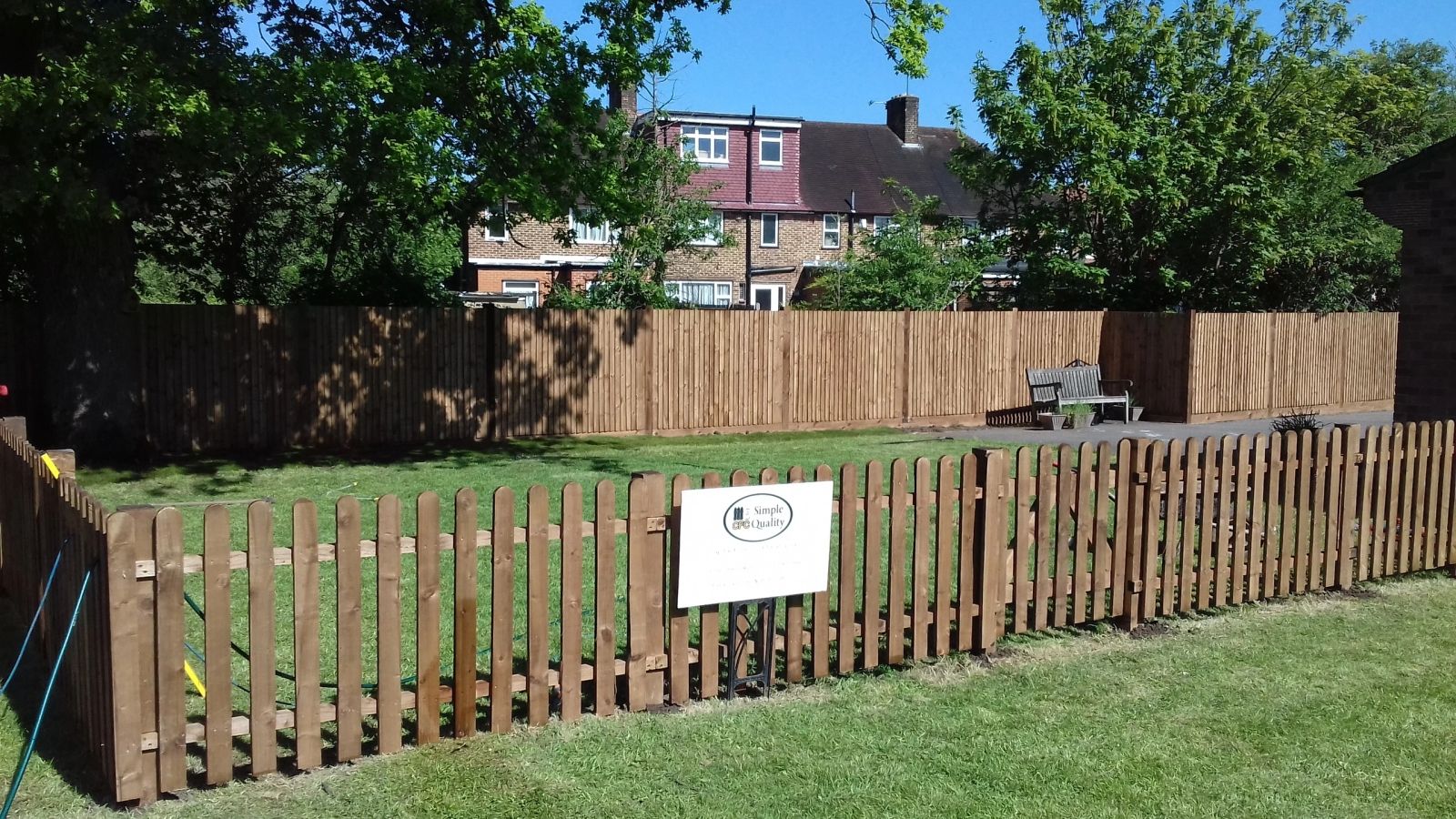
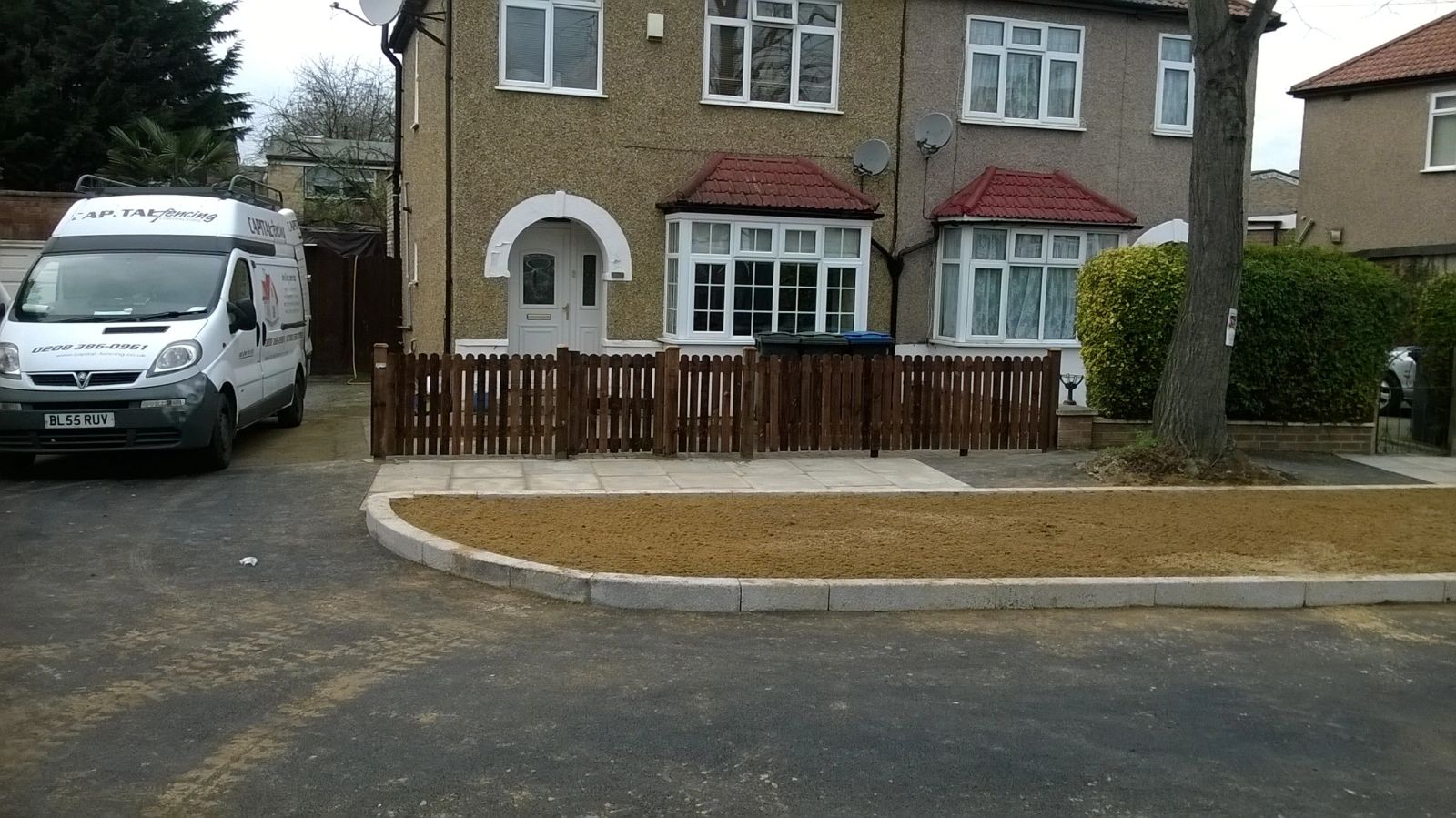
closeboard fence run installed by Capital Fencing in Borehamwood (WD6)panel fence install installed by Capital Fencing in Borehamwood (WD6)trellis-topped fence installed by Capital Fencing in Borehamwood (WD6)bespoke decorative fence installed by Capital Fencing in Borehamwood (WD6)

Local considerations across Borehamwood and bushey

Establishing who owns the boundary

Title deeds don't always mark ownership clearly, and a security upgrade is exactly the kind of work that surfaces a dispute if the existing line is assumed rather than checked. Where a boundary is shared, we recommend confirming ownership and getting neighbour agreement in writing before work starts, particularly on a line that's being made taller or more solid than what's there now.

On terraced rows this matters more than on a detached plot, because a shared rear boundary can affect several neighbours at once.

Chain-link and stock fencing for allotments and paddocks

Chain-link is a low-cost, low-maintenance option for allotments, paddocks and utilitarian boundaries where appearance matters less than containment and budget.

Straining wires and correctly tensioned line wire at top and bottom keep chain-link from sagging over a long run, which is the most common complaint about a poorly installed mesh fence.

Where the boundary needs to keep livestock in rather than just mark a line, stock fencing with a smaller mesh at the base stops smaller animals getting through in a way that standard chain-link doesn't.

Building control interaction with retaining walls

A retaining wall over 1m in height, or one supporting a structure or the stability of a neighbouring building, generally falls within the scope of the Building Regulations even though a simple garden fence of the same height wouldn't, because failure carries a structural safety risk beyond the immediate boundary.

Building control involvement typically means the wall's design needs to demonstrate adequate drainage behind it and sufficient strength to resist the retained ground, often requiring a structural engineer's calculations rather than a standard trade specification.

Retaining structures built without the necessary building control sign-off can create problems on sale of the property, since a buyer's solicitor will often ask for a completion certificate that doesn't exist.

Boundary questions in conveyancing enquiries

When a property is sold, standard conveyancing enquiries (the TA6 form) ask the seller to confirm boundary ownership and disclose any known disputes, including informal agreements about fence lines that were never registered.

An unrecorded verbal agreement about who maintains which boundary can cause problems at sale stage if it isn't consistent with the T-marks or general boundary on the title plan, since the buyer's solicitor will flag the discrepancy.

Keeping a simple written note or email trail of any boundary agreement reached with a neighbour, even an informal one, makes a later sale considerably smoother than relying on memory years afterwards.

A spec checklist for comparing quotes

Two quotes at very different prices for what looks like the same fence often differ in the parts that aren't obvious from a headline description — post type and spacing, gravel board material, rail count, use class of treatment, and whether waste removal is included.

Worth confirming explicitly: post material and size, number of arris rails for the height quoted, gravel board type, treatment use class of ground-contact timber, fixing corrosion class, and whether post caps and capping rail are included as standard.

A written spec covering those points, rather than just a total price and a photo of a similar job, is the practical way to compare quotes on equal terms rather than discovering the difference once the fence is already up.

Knot loosening in structural timber

Knots are the base of a branch embedded in the trunk, and as timber dries the knot itself shrinks less than the surrounding wood, which can leave it loose or eventually cause it to drop out and leave a hole.

A live knot, still bonded to the surrounding fibres, is far less of a concern than a dead knot with a dark ring around it, which indicates the branch had already died before the tree grew over it and bonds poorly.

On load-bearing sections like arris rails, a cluster of large or dead knots near a fixing point is worth avoiding, since it reduces the effective cross-section carrying the load at that point.

Rotating spike toppings as a climb deterrent

A rotating spike topping uses a free-spinning tube studded with blunt spikes along the top of a wall or fence, so that a hand or foot pressing down on it spins rather than gripping, which defeats a climbing attempt without the injury risk of a fixed razor product.

It's most often fitted to a boundary wall in a residential or light-commercial setting where a coil topping would look too industrial, and it needs periodic checking that the rotating mechanism hasn't seized with paint overspray or corrosion.

Checking mesh tension across seasonal temperature changes

Steel mesh infill expands and contracts slightly with temperature across the year, and a mesh tensioned tight in cold winter conditions can develop a visible sag by the height of summer if the original tensioning didn't allow for that movement.

A seasonal tension check, particularly after the first full year following installation, catches this early and allows a simple re-tensioning before a sagging mesh starts to create a usable foothold or gap at the base.

Planed versus sawn timber faces

Sawn timber retains the rough, slightly fibrous surface left by the mill saw, which holds paint and stain better initially but can also hold moisture and dirt in the surface fibres for longer after rain.

Planed, or PAR (planed all round), timber has a smooth, machined finish that looks tidier and is more pleasant to handle, but its closed surface can mean stain sits on top rather than soaking in, needing more frequent reapplication.

Fencing components are commonly specified as sawn for structural parts like posts and rails and planed for visible features like capping, reflecting the balance between weathering performance and finished appearance.

Gates binding in winter

A gate that closes freely in summer but binds against its frame or post in winter is very often timber swelling from increased moisture rather than a hinge or frame fault, and easing the latch edge slightly is usually enough to fix it.

We check moisture-related binding before altering hinge position, since a hinge adjustment made to fix a seasonal swelling issue often needs reversing again in summer.

Checking existing boundary alignment before a like-for-like rebuild

Rebuilding a fence on the line of an existing one assumes that existing line was accurate, which isn't always the case — old fences can have drifted from the true boundary over successive repairs and replacements.

A quick check against any available reference, such as a boundary marker, an adjoining wall, or a neighbour's fence that's known to be accurate, is worth doing before assuming the old line should simply be copied.

Where a discrepancy is found, it's a conversation for the client and neighbour to have before rebuilding, since quietly correcting or quietly perpetuating a boundary error both carry consequences beyond the fencing job itself.

Hedge pressure on a fence line

An unmanaged hedge planted close to a boundary fence pushes against the panel or rail as it thickens, and that steady lateral pressure can bow a panel or rack a post over several seasons even without any storm involved.

Cutting the hedge back from the fence line at repair time reduces the chance of the same section failing again shortly after.

Protecting a boundary fence during nearby building work

Where building work, an extension or a loft conversion is happening on an adjoining property, existing boundary fences and their footings are sometimes shifted, undermined or damaged by machinery or excavation.

It's reasonable to raise this in advance with a neighbour undertaking major building work, ideally recording the fence's condition beforehand with photographs.

Where a party wall notice has been served for related works, that process can sometimes address boundary condition issues as part of a schedule of condition, which is worth asking about.

Outbuildings close to a boundary and separate rules

Garden rooms, sheds and other outbuildings have their own distinct permitted development rules on height and proximity to a boundary, which are different from the rules governing fences, walls and gates.

It's a common mix-up to apply fence height limits to an outbuilding, or vice versa, when checking what's allowed near a boundary line.

Where a fence and a new outbuilding are being planned together near the same boundary, it's worth checking each against its own specific permitted development category.

How a written quote should be structured

A clear fencing quote itemises materials, labour, waste removal and any groundwork separately, rather than a single lump sum that hides what's actually included.

It should state the exact fence height, post size, panel or board specification and run length, since 'like-for-like replacement' can mean very different things depending on what was there before.

Anything excluded — removal of the old fence, reinstating disturbed planting, or work beyond the surveyed run length — should be listed explicitly, so there's no ambiguity if ground conditions turn out different from what was assumed at survey.

Repairing fence sections undermined by fox or badger digging

A gap dug beneath a gravel board or the base of a panel is usually a fox rather than a badger unless it's part of a larger, more established sett system, and the repair approach differs depending on which is causing it.

Fox damage can usually be repaired by reinforcing the base with a buried mesh skirt or a deeper gravel board, but any active badger sett close to the boundary is legally protected and needs specialist advice before any digging near it as part of the repair.

RAL colours and UV fade

RAL is a standardised colour matching system widely used for powder coating and factory paint finishes on metal fencing and gates, allowing a specific shade to be reordered consistently years apart.

Darker RAL shades, particularly reds and some greens, tend to fade faster under UV exposure than blacks and greys, since the pigments used to achieve those colours are often less UV-stable.

South-facing runs in direct sun for most of the day will fade noticeably faster than a shaded run of the same colour and coating, which is worth factoring in in when matching an extension to existing fencing.

Repairing where two adjoining fence styles meet at a corner

A corner where one owner's closeboard fence meets a neighbour's panel fence is a common awkward point for repair, since damage at the corner post can affect both runs but only one owner may be instructing the work.

Where only one side is being repaired, the corner post and its fixings into both runs need checking so the finished repair doesn't leave the untouched neighbouring fence with a weaker connection than before.

Diagnosing a fence problem before quoting

A repair quote starts with identifying which of the usual failure points is actually responsible — post, panel, gravel board or a full run — because pricing a full replacement for what's actually a single post repair costs the client far more than necessary.

We probe timber at ground level and check the whole run for related stress, not just the section that's obviously failed.

Checking screw and bolt length matches the timber section

A fixing that's too short doesn't engage enough timber to hold under load, while one that's too long can punch through the far face of a rail or post, both of which are easy mistakes when reaching for whatever's in the tool bag rather than checking the actual section thickness first.

As a rough guide, a screw fixing generally wants to penetrate the receiving timber to a meaningful multiple of its own diameter to hold securely, which is worth checking against the actual post or rail dimensions being used on a given job rather than assumed from habit.

Where a through-bolt is used instead of a screw, matching the bolt length to the combined thickness of both pieces plus washer and nut avoids either an unsightly protruding stub or a bolt that can't be tightened properly.

Ground-line collars on timber posts

A plastic or metal collar fitted around a timber post at the point where it enters the ground creates a physical break between the post and the surrounding soil, reducing direct abrasion and moisture wicking at that specific zone.

Ground level is where oxygen, moisture and soil organisms are all present together in the right combination for decay fungi to thrive, which is why this narrow band is disproportionately where post failure originates compared with either the fully buried or fully exposed sections.

A collar doesn't replace preservative treatment but adds a secondary physical barrier specifically targeted at this highest-risk zone, similar in principle to the extra retention already specified for ground-contact use-class timber.

Nesting birds in vegetation on a fence line

Dense hedging, ivy or overgrown trellis attached to a fence can hold active bird nests during the spring and summer nesting season, and disturbing a nest in use is an offence regardless of how routine the fence repair itself is.

Where a repair requires cutting back vegetation that might be nesting habitat, checking for active nests first and, if found, delaying that part of the work until the nest is no longer in use is the straightforward way to stay compliant.

On school and nursery fencing in Borehamwood you get the same crew from first site visit to hand-over. That's the whole model — small team, safeguarding-first spec, written quote before we start. Roads such as Furzehill Road and Shenley Road are typical of the local layout. Sky Studios entrance is a useful local reference point. Borehamwood's post-war estates are laid out on a tight grid, with front access generally straightforward but rear access varying by street.

Get In Touch

Get My Free Quote — 24h Response

No callout fee · Free site visit · Friendly local team covering London & Hertfordshire.

Call us
07885907880
or 02036484746
Email
capital_fencing@yahoo.com
WhatsApp
Message us anytime
Area
London & Hertfordshire
Payment
Card payments accepted

Pay by debit or credit card, bank transfer or cash once the work and price are agreed. No deposit taken online.

Request a Free Quote

We'll get back to you within 24 hours.

Free Site Visit No Callout Fee
Call WhatsAppQuote