Height and visibility rules for gates
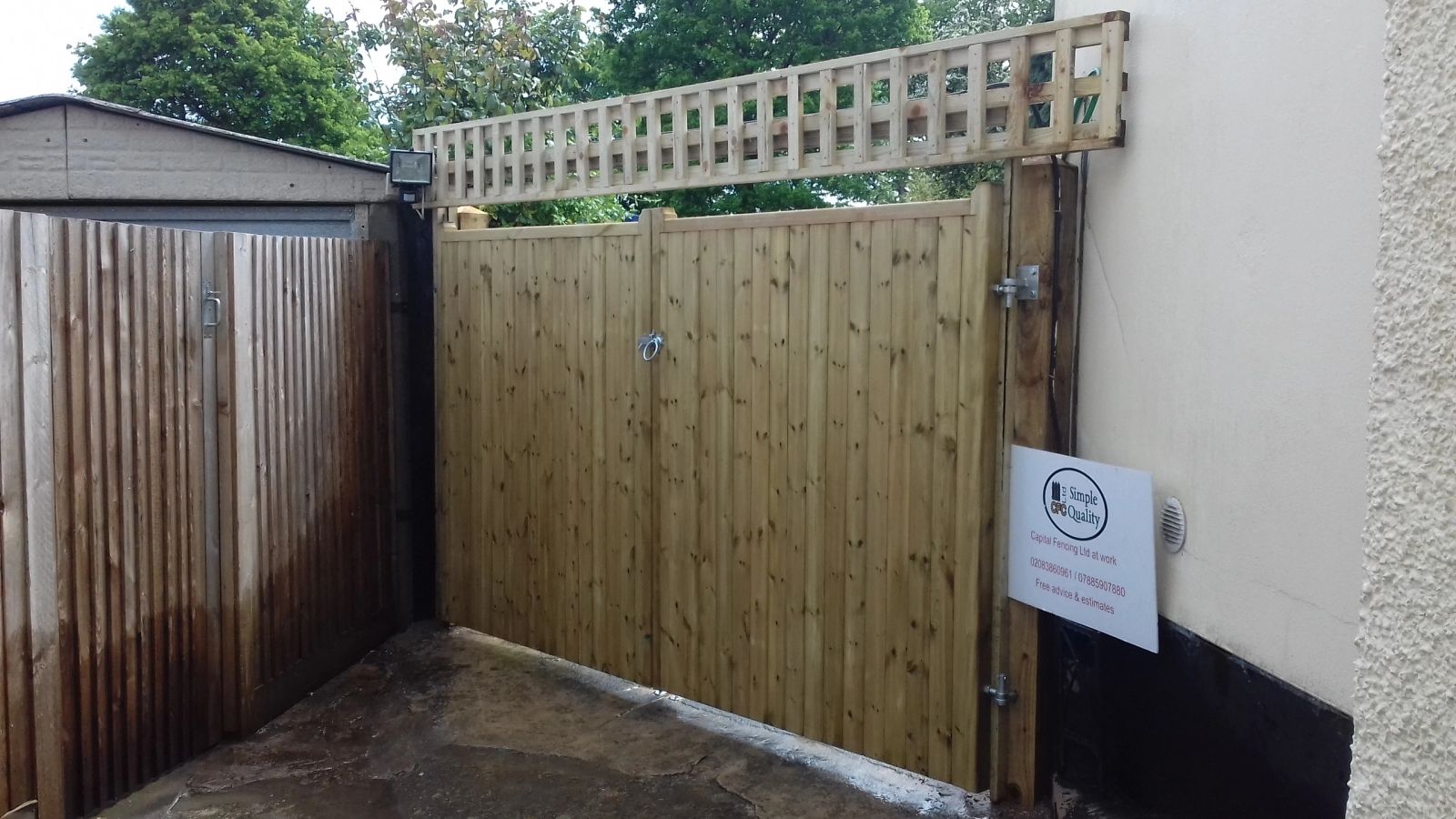
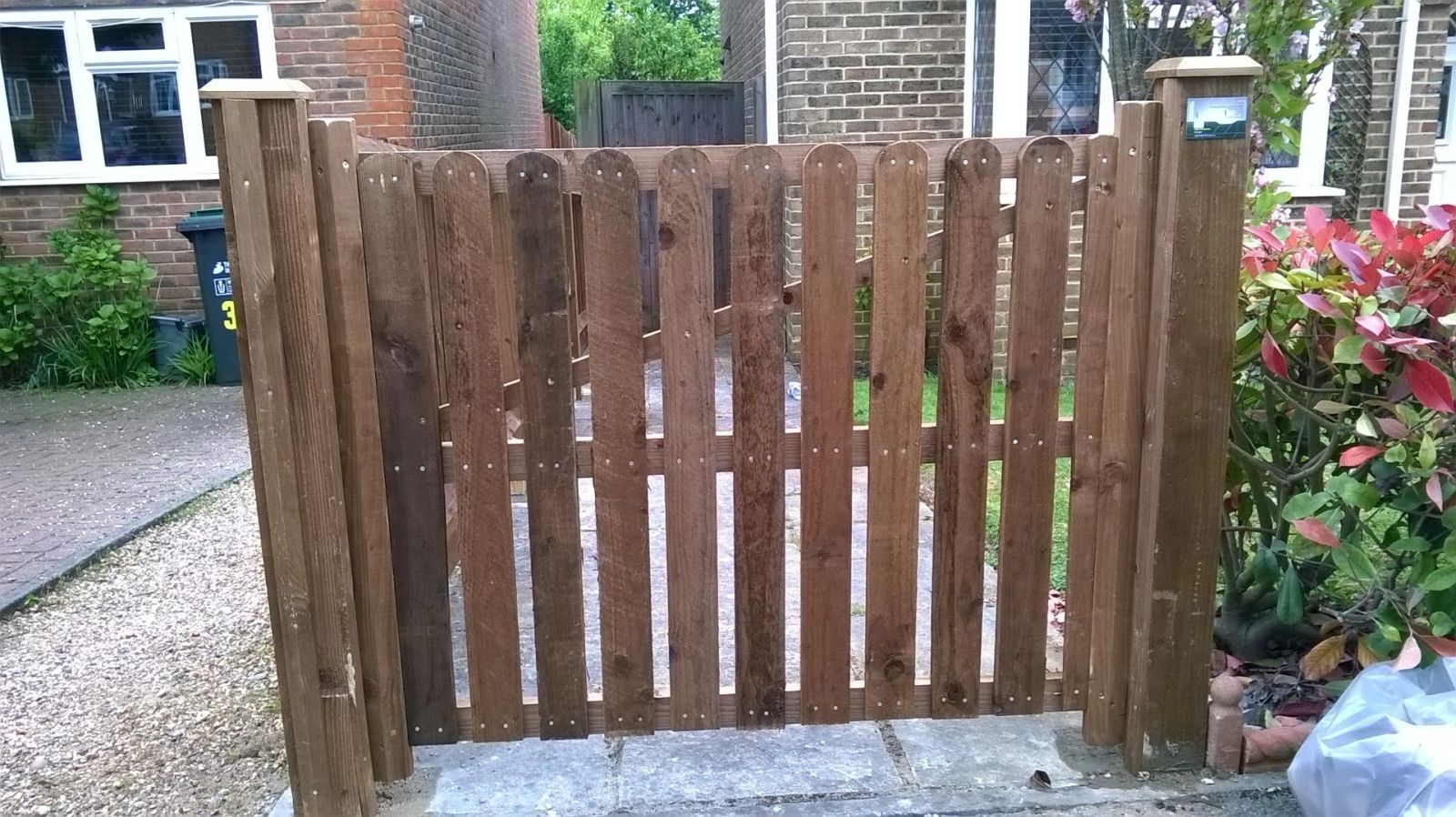
A driveway or front gate is subject to the same permitted development height limits as a boundary fence, and a gate near a junction or a shared driveway has additional visibility requirements to keep sightlines clear for road users.
We check these before recommending a taller or more solid replacement gate, not just when repairing an existing one.
Comparing acoustic build methods
A standard lap-panel fence, built from thin overlapping boards with a gap at every joint, does very little acoustically even at height, while a tongue-and-groove or shiplap double-skin build with sealed joints performs noticeably better even at a shorter run.
Composite acoustic panels exist but are less common on domestic boundaries than a timber-and-mineral-wool build, largely on cost grounds for the run lengths involved.
Lubrication scheduling for security gate hinges
A heavy security gate hinge under constant use benefits from a scheduled lubrication check rather than waiting until it starts to squeak or bind, since a dry hinge accelerates wear on the pin and bush faster than the load alone would cause.
A grease appropriate to outdoor exposure is used rather than a light household oil, which washes out quickly in wet weather and leaves the hinge running dry again within a short period.
Closing dampers to prevent slamming
A hydraulic or pneumatic closing damper fitted alongside a self-closing spring slows the last part of the gate's travel, preventing the slam that a spring alone produces and reducing wear on the frame, latch and keep.
Dampers are a common retrofit on gates that were fitted with a spring only, once the noise or repeated impact damage from slamming becomes a nuisance.
The difference between an informal and a legal boundary
The 'legal' boundary is whatever the title deeds and any supporting documents actually define, whereas the 'physical' or informal boundary is simply where a fence, hedge or wall happens to stand today.
Over years of incremental replacement, these two things can drift apart without anyone intending it, particularly where each new fence has been built slightly inside the previous one's line for convenience.
Where a discrepancy is suspected, this is worth raising as a documents question rather than assuming the current physical fence line is automatically correct.
Pressure-washer damage on soft timber
A pressure washer used too close, or at too high a setting, strips the softer spring-growth wood fibres from softwood faster than the harder summer-growth bands, leaving a rippled, furry surface texture that no longer takes stain evenly.
This damage is largely irreversible on a panel face and usually shortens the remaining life of the timber by exposing more surface area to moisture uptake.
A wide fan nozzle held well back, or a lower-pressure setting reserved for decking rather than fence panels, cleans without cutting into the timber surface.
Using a post hole auger effectively
A petrol or manual auger clears loose, stone-free ground far faster than hand-digging, but it works by shearing soil rather than levering it, so it struggles the moment it meets a root, a buried stone or compacted rubble.
Lifting the auger clear and clearing spoil from the flutes every 150-200mm of depth keeps it cutting efficiently; forcing it deeper without clearing spoil just packs the hole and stalls the motor.
On heavy clay an auger can also polish and seal the hole's sides, which reduces drainage around the base — a quick scoring of the sides with a spade before concreting helps break that glazed surface.
Schools and nurseries
Boundary fencing around a school or nursery has a safeguarding function as well as a security one — height, anti-climb detailing and gate self-closing mechanisms are usually specified to stop children leaving unsupervised as much as to keep intruders out.
Work on an occupied site needs to be sequenced around the school day, with noisy or access-blocking tasks scheduled for after hours, weekends or holiday periods rather than during term-time drop-off and pick-up.
Any gaps at ground level under a boundary fence matter more here than on a typical domestic job, since a small child can get through a gap an adult wouldn't notice.
Repairing a damaged section of welded mesh panel
A localised dent or cut in a weld mesh panel can sometimes be patched by welding in a replacement section rather than replacing the whole panel, provided the damage doesn't extend to the panel's frame or fixing points.
Where damage is at a corner or fixing point rather than mid-panel, a full panel swap is usually more reliable than a patch repair, since a repaired fixing point is a more likely future failure than a repaired mesh field.
Shiplap board profiles
Shiplap boards are machined with a rebated lap joint along each long edge, so adjoining boards interlock rather than simply overlapping flat, which sheds water more effectively than a plain overlap.
The rebate also means shiplap panels sit with a smaller visible overlap than feather-edge for the same weather resistance, giving a flatter, more even panel face.
Because the interlocking edges rely on a consistent machined profile, shiplap doesn't tolerate the same board-to-board variation as waney-edge, and a warped board can be harder to seat correctly in the joint.
Driveway gate sizing and swing arc
A driveway gate needs its swing arc checked against the car actually parked behind it, not just the opening width, since a gate that clears a small hatchback can still clash with a larger estate or a roof box.
Outward-opening gates onto a public footway are generally avoided because they can obstruct pedestrians and pushchairs, which is why most residential driveway gates are hung to open inward onto the drive itself.
Sliding gates are a practical alternative on a short or sloping driveway where there isn't room for a swing arc, though they need a level track run and enough side clearance to slide fully open.