London & Hertfordshire Free Site Visit
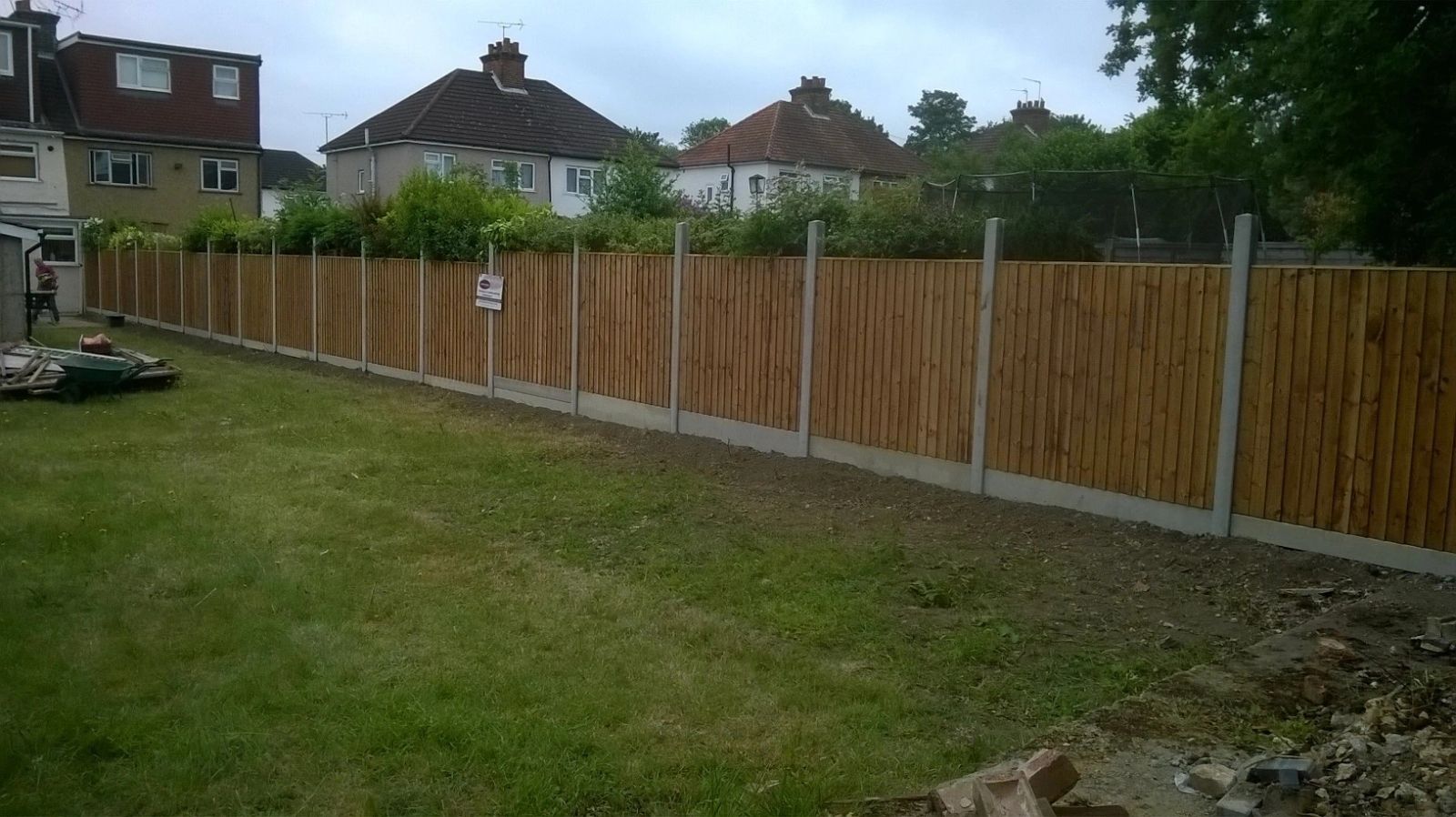
closeboard fence run installed by Capital Fencing in Watford (WD17)
Watford · WD17 / WD18 / WD19

Landlord fencing across Watford — Watford Borough

If you're weighing landlord-grade fencing for a property in Watford, the first thing that matters is tenancy turnaround windows and inventory sign-off — not the material choice. Once that's settled, pressure-treated closeboard on concrete posts is where most of our landlord-grade fencing work in WD17 lands, with 6ft overlap panels with concrete posts and gravel boards as a considered alternative. Roads such as Bushey Mill Lane and Hempstead Road are typical of the local layout. Vicarage Road stadium is a useful local reference point. The Grand Union Canal runs along the edge of Cassio Road, with a Canal & River Trust easement maintained along the towpath.

If you're weighing landlord-grade fencing for a property in Watford, the first thing that matters is tenancy turnaround windows and inventory sign-off — not the material choice. Once that's settled, pressure-treated closeboard on concrete posts is where most of our landlord-grade fencing work in WD17 lands, with 6ft overlap panels with concrete posts and gravel boards as a considered alternative. Roads such as Bushey Mill Lane and Hempstead Road are typical of the local layout. Vicarage Road stadium is a useful local reference point. The Grand Union Canal runs along the edge of Cassio Road, with a Canal & River Trust easement maintained along the towpath.

Typical landlord-grade fencing briefs in Watford

  • cheapest defensible spec that will still stand up to the next storm and inventory
  • boundary run replaced between two tenancies inside a single working week
Default spec

How we build landlord-grade fencing in Watford

6ft closeboard on concrete posts with gravel boards, mid-rail capped, softwood side gate with padlock hasp. On Watford jobs we adjust for tree-root heave is common near cassiobury and whippendell wood, so concrete-set posts are non-negotiable.

Property mix locally: Victorian terraces around the centre, 1930s semis in Oxhey, and large detached homes in Cassiobury. Typical gardens: mixed — tight back-to-backs near the town centre, generous plots toward Cassiobury Park. Postcodes we regularly service: WD17, WD18, WD19.

we bill via one purchase order across a portfolio, provide before/after photos for the inventory clerk, and can be on and off site inside a tenancy void.

Why this spec, for buy-to-let owners and letting agents

  • individual boards or single panels can be swapped without touching the whole run
  • concrete posts and gravel boards keep the ground contact off the timber — that's where landlord fences usually fail
  • one crew, one price sheet across multiple properties — inventory-friendly for portfolio owners
What goes wrong

Common failure modes on landlord-grade fencing

  • cheapest lap panels racking in wind because posts were shallow — we always concrete to 600mm minimum on landlord work
  • using bare softwood posts on ground contact — three winters and they're gone

Landlord Fencing FAQs — Watford

Do you invoice per property or per portfolio?

On landlord-grade fencing jobs in Watford (WD17), our default answer is: 6ft closeboard on concrete posts with gravel boards, mid-rail capped, softwood side gate with padlock hasp. We bill via one purchase order across a portfolio, provide before/after photos for the inventory clerk, and can be on and off site inside a tenancy void.

Do you handle the removal and skip for the old fence?

Across Watford we spec around tree-root heave is common near cassiobury and whippendell wood, so concrete-set posts are non-negotiable, so on landlord-grade fencing that usually means pressure-treated closeboard on concrete posts. The honest trade-off is cheapest lap panels racking in wind because posts were shallow — we always concrete to 600mm minimum on landlord work — which is exactly what our default spec designs out.

Can before-and-after photos be provided for the inventory?

Watford Borough coverage means we can survey most WD17 addresses inside a week — buy-to-let owners and letting agents needing durable boundaries between tenancies. The honest trade-off is cheapest lap panels racking in wind because posts were shallow — we always concrete to 600mm minimum on landlord work — which is exactly what our default spec designs out.

Can you turn a rental boundary around between tenancies?

Practically: boundary run replaced between two tenancies inside a single working week. That's the Watford version of this job, not a generic one. The honest trade-off is cheapest lap panels racking in wind because posts were shallow — we always concrete to 600mm minimum on landlord work — which is exactly what our default spec designs out.

What's the cheapest defensible spec you'd stand behind for a rental?

On landlord-grade fencing jobs in Watford (WD17), our default answer is: 6ft closeboard on concrete posts with gravel boards, mid-rail capped, softwood side gate with padlock hasp. For context: concrete posts and gravel boards keep the ground contact off the timber — that's where landlord fences usually fail. One crew, one price sheet, before-and-after photos as standard.

Recent landlord fencing work
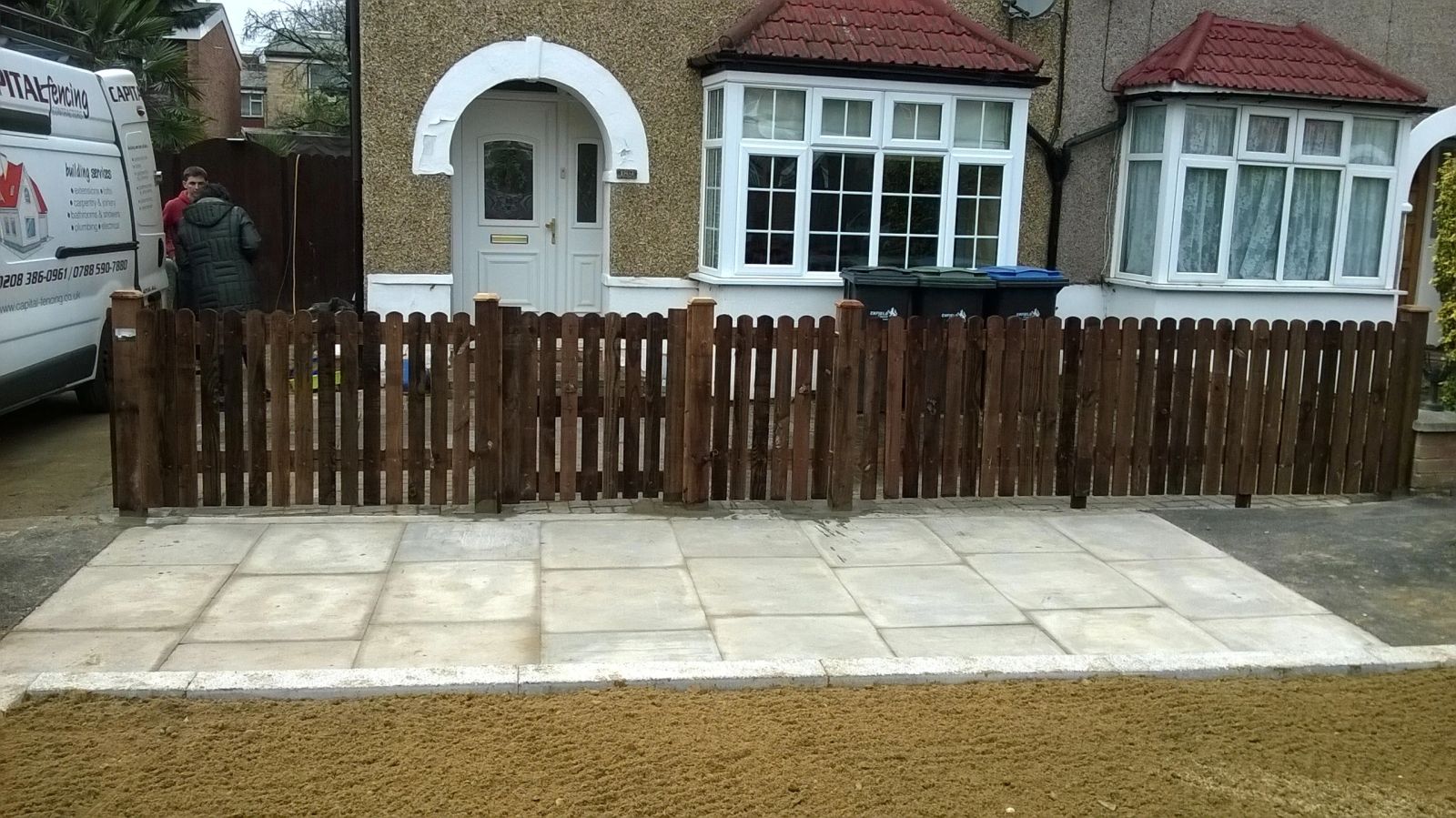
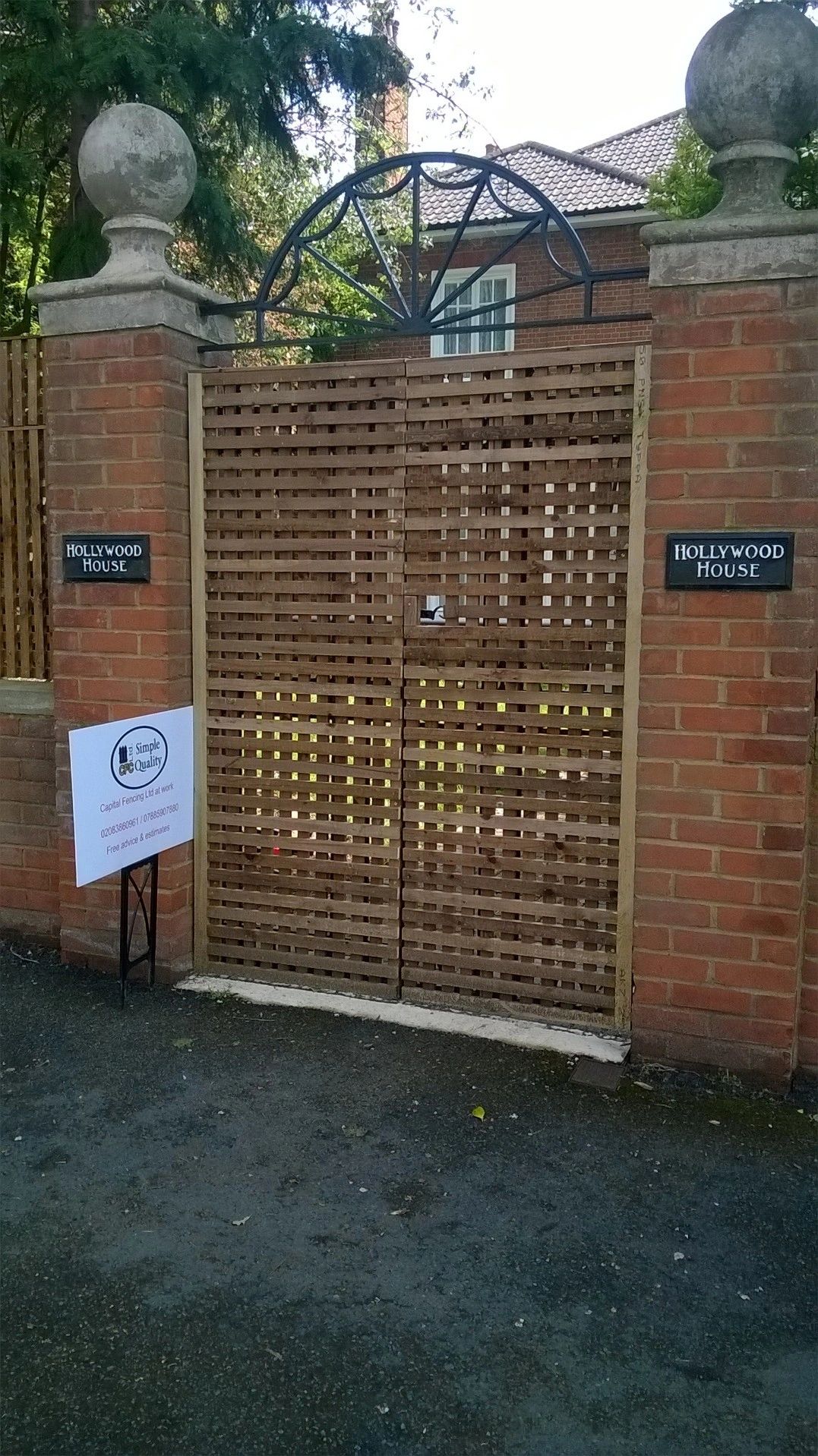
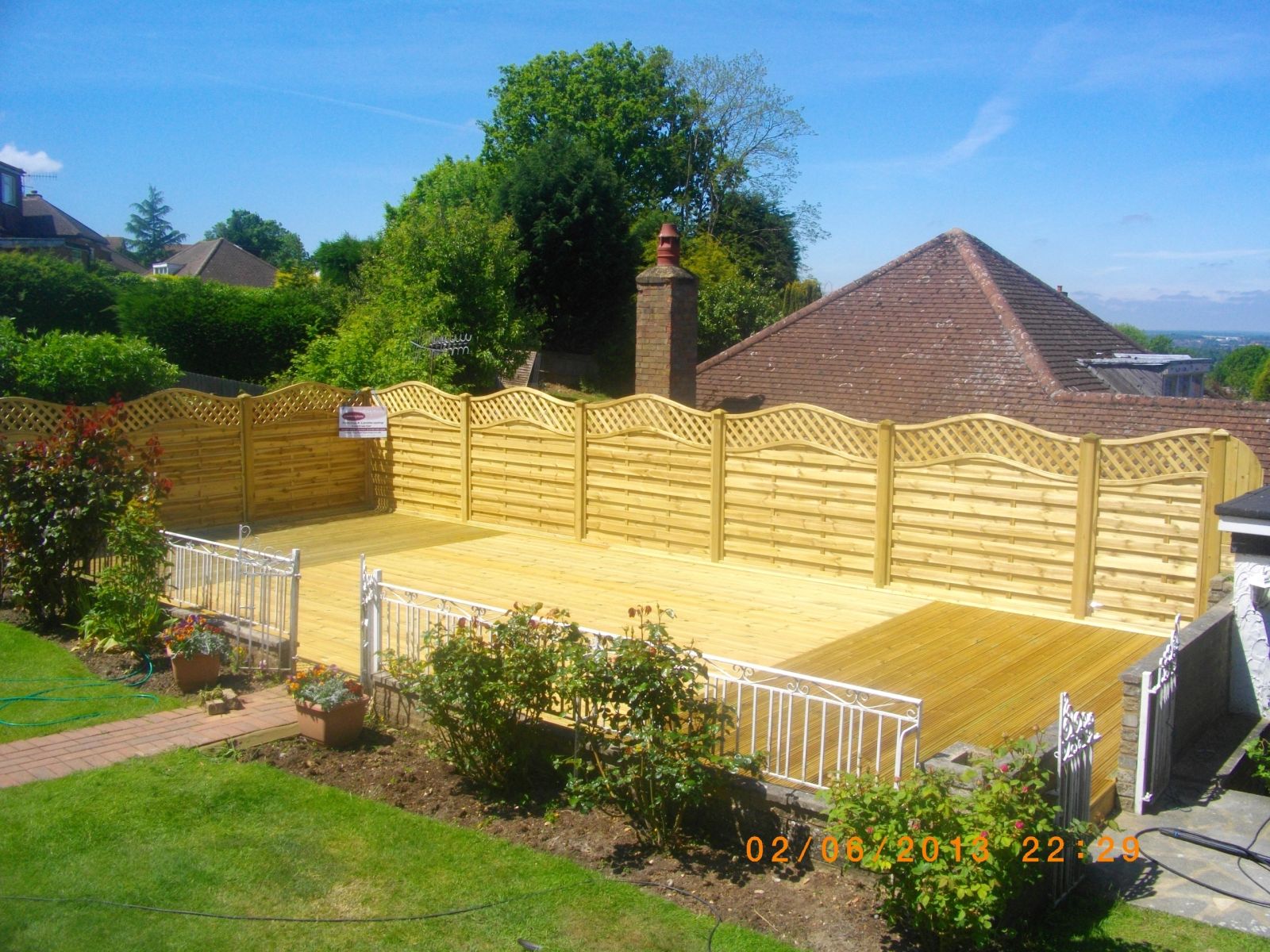
closeboard fence run installed by Capital Fencing in Watford (WD17)panel fence install installed by Capital Fencing in Watford (WD17)trellis-topped fence installed by Capital Fencing in Watford (WD17)bespoke decorative fence installed by Capital Fencing in Watford (WD17)

Landlord Fencing in Watford: the practical detail

Side gates on narrow plots

A side gate typically sits in a tighter opening than a driveway or garden gate, often between the house wall and a boundary fence, which limits post size and leaves little room for a wide frame or heavy bracing.

Access for materials and tools is also restricted on these jobs, so repairs are usually planned around what can be carried through the gap by hand rather than what a fully equipped van pitch would allow.

Bollards and hostile-vehicle basics

Bollards protect a pedestrian area or building frontage from vehicle incursion and are specified separately from the fence line itself, usually to a recognised impact rating for the vehicle speed and mass expected.

Fixed, removable and retractable bollards each suit different access patterns — removable bollards are common where delivery vehicles need occasional access through an otherwise protected frontage.

Tree roots as a cause of fence failure

Roots growing under or against a post base can lift or crack a footing over several years, and a repair in that position sometimes needs the post offset slightly rather than reset in exactly the same spot.

Where a protected tree is involved, any groundwork near it is checked against that protection before a repair goes ahead.

Padlock and hasp standards

Padlocks are commonly rated to a recognised standard covering resistance to cutting, drilling and picking, and a high-security hasp is only as good as the padlock fitted to it — pairing a budget padlock with a heavy-duty hasp undermines the whole fitting.

A closed-shackle or shrouded hasp design protects the padlock body from bolt-croppers, which is the more common attack on an exposed gate than picking.

Trellis toppers for extra height and privacy

Adding a trellis topper to an existing or new fence is a common way to gain extra height for climbing plants or additional privacy without exceeding permitted development limits for a solid boundary.

Because trellis is inherently more open than solid panel, it doesn't usually count the same way toward the 2m height rule in every case, but it's still worth checking with the local authority since interpretations vary.

A trellis topper needs its own bracing where it's more than a token height, since a tall panel of trellis catching wind behaves more like a sail than most people expect.

Why front and rear boundaries on the same property often differ

A front garden boundary facing an open street with no buildings opposite can have meaningfully different wind and rain exposure to a rear garden boundary sheltered by the house itself and neighbouring gardens, even on the same property.

This is why a single specification for 'the fencing' on a property sometimes needs to vary between front and rear runs, rather than defaulting to one standard chosen for the more visible frontage.

It's worth assessing each boundary on a property independently during a site visit rather than assuming uniform conditions simply because it's all one garden.

Wicket gates set within a larger gate

A wicket gate is a small pedestrian door built into one leaf of a larger vehicle gate, allowing foot access without opening the whole gate, and it needs its own hinge, latch and frame within the host leaf.

Because it's a frame within a frame, movement in the main gate can throw the wicket's alignment out even when the wicket's own hardware is sound, so both are checked together.

Cat-proofing retrofit limits

Adding an inward-curved topper or roller bar to deter cats from climbing over an existing fence works reliably on a fence in good condition, but the fixings for that addition still rely on the post and rail beneath being sound.

Retrofitting cat-proofing to a run that also needs repair is best sequenced after the repair, since fitting new hardware to a post that's about to be reset is wasted effort.

Post cross-section and wind load resistance

A post's resistance to bending under wind load increases with the square of its cross-sectional depth in the direction the load is applied, meaning a modest increase in post thickness gives a disproportionately larger gain in stiffness.

This is why taller fences and larger gate leaves, which present more surface area to the wind, are specified with noticeably thicker posts rather than simply the same section set deeper, since depth alone doesn't address bending strength above ground.

Orientating a rectangular post section with its greater dimension facing the prevailing wind direction, where the panel design allows it, makes better use of the timber's strength than an arbitrary orientation chosen for appearance alone.

Fast-setting post mix performance in cold, exposed conditions

Fast-setting post-fix concrete generates heat as it cures, which normally helps it set reliably even in cool weather, but on a genuinely exposed and cold site that heat can be carried away faster than it's generated, slowing or compromising the cure.

In these conditions a longer undisturbed curing period, or a mix formulated for cold-weather use, gives a more reliable result than assuming a fast-set product will behave the same as it would in a sheltered garden.

Posts loaded too soon after pouring on an exposed site — by wind rather than by the installer — are a genuine risk that doesn't apply in the same way to a sheltered, still garden.

Sapwood versus heartwood durability

Heartwood is the older, inner part of a tree trunk that's stopped conducting sap and often contains natural extractives that resist fungal decay, while sapwood is the outer, still-active layer with little inherent durability.

Species like oak and western red cedar owe much of their reputation for longevity to heartwood content, but any board can include a strip of pale sapwood at the edge that will rot faster than the rest of the same piece.

Because sawn fencing timber is rarely graded strictly by heartwood content, some sapwood is inevitable in most runs, which is exactly why preservative treatment matters even on naturally durable species.

Post shoe drainage detailing

A metal post shoe supports a timber post above a concrete or paved surface, and the shoe's base plate needs a way for water to drain away rather than pooling directly under the post's end grain.

Shoes with a raised or perforated base, rather than a flat solid plate, let water that does reach the post's foot drain or evaporate rather than sitting trapped between metal and timber.

Even a well-designed shoe underperforms if it's set into a low point that collects surface water, so the surrounding ground or paving level, not just the shoe detail itself, needs to shed water away from the post base.

Fixing a fence or gate to a neighbour's wall

Attaching a new fence panel, gate post or trellis to a wall that belongs solely to a neighbour is a trespass unless they've agreed to it, even where the fixing itself is small and reversible like a single bracket.

Where a wall is genuinely shared or in unclear ownership, written agreement before drilling avoids disputes later, particularly since removing a fixing can leave visible damage the wall owner didn't consent to.

The safer default on an unclear boundary is a free-standing post set just inside the client's own land, rather than relying on an existing structure whose ownership hasn't been confirmed.

Offsetting the string line to protect it during digging

A string line pulled exactly along the intended post centre line gets in the way of digging and is easily knocked or buried in spoil, so many installers set it slightly to one side and measure across to it rather than digging directly beneath it.

A fixed offset distance, checked and noted once at the start, lets every post position be measured consistently from the same reference without needing the string itself to survive undisturbed through a full day of digging.

Re-checking the offset periodically through the day catches the line if it's been nudged, since a small unnoticed shift partway through a run throws every subsequent post slightly off true.

Fixing into a rendered wall without cracking the render

Render sits as a relatively thin, brittle coat over the masonry beneath it, so drilling straight through without care can crack or blow a patch of render around the hole rather than leaving a clean fixing point.

Marking and drilling a pilot hole slowly through the render layer first, before switching to full hammer action once through into the masonry, reduces the chance of the render cracking outward from the drill's initial impact.

Where render is already loose or hollow-sounding when tapped near the intended fixing point, it's worth choosing a different spot or repairing that patch of render first rather than fixing into a surface that's already failing.

Fixed versus crimped capping rail junctions

A capping rail bolted or screwed to the top of a panel run gives a fixing point that can be removed for maintenance but is also the fixing most often targeted for theft or vandalism where the rail carries scrap value.

A crimped or one-way rivet fixing is harder to remove without specialist tools, trading off easy future maintenance access against a meaningfully harder target for casual interference with the capping line.

Removing or working around hedges

A mature hedge along a boundary line often needs partial removal or heavy cutting back before a new fence can go in behind or in place of it, and stump and root removal is usually a bigger job than the hedge above ground suggests.

Where a hedge is being kept and a fence added behind it, root disturbance during digging needs the same care as any other established planting — cutting a major root to fit a post line can visibly stress or kill the hedge over the following season.

Some hedgerows, particularly older boundary hedgerows in a rural or semi-rural setting, are protected under separate hedgerow regulations, so it's worth checking before removing one entirely rather than just cutting it back.

Quick-set post mix versus mixed concrete

A quick-set post concrete cures within a few hours and is convenient for a single-post repair where the fence needs to take load again quickly, but a standard mixed concrete generally gives a denser, longer-lasting footing for a larger job.

For a repair affecting several posts along a run, mixed concrete is usually the more durable choice even though it takes longer to reach working strength.

Deciding the scope of a part-run rebuild

A part-run rebuild replaces a defined stretch of bays back to sound posts at either end rather than patching individual failures within a longer run, which gives a cleaner, more consistent result where damage is clustered.

Setting the boundaries of a part-run rebuild means checking the posts just outside the visibly damaged section too, since a post that looks fine next to an obviously failed one can still be borderline and best included in the same piece of work.

Timber stain versus paint breathability

A translucent or semi-transparent stain generally remains vapour-permeable, allowing moisture that gets into the timber to escape back out again as the wood dries, which reduces the risk of trapped moisture driving rot.

Solid, opaque paint films are often less permeable, and a paint film that cracks or is breached can trap moisture behind it against the timber, sometimes accelerating localised decay compared with an unpainted equivalent.

Modern microporous exterior paints aim to combine paint's fuller colour coverage with a degree of vapour permeability, narrowing but not eliminating this trade-off between appearance and moisture management.

Permitted development height limits

Under the General Permitted Development Order, a fence, wall or gate can normally go up to 1m without planning permission where it fronts a highway used by vehicles, and up to 2m elsewhere on the plot.

That 2m figure is measured from the natural ground level, not from the base of a retaining structure, which catches people out on sloping plots where the fence ends up effectively taller on the low side.

Corner plots, listed buildings and land inside a conservation area all tighten these limits, so it's worth checking the local authority's own guidance before ordering materials rather than after.

Garden orientation and post-rain drying time

A south or west-facing garden dries out after rain considerably faster than a north or east-facing one, purely because it receives more direct sun through the day, which has a real effect on how long timber sits wet and therefore how fast rot and mould can establish.

This is worth factoring into treatment choice as much as species choice — a slower-drying orientation benefits more from a breathable stain that lets residual moisture escape than from a heavier film-forming coating that traps it in.

Two identical fences in the same postcode but opposite orientations can have meaningfully different realistic maintenance intervals for this reason alone.

Whether the brief is boundary run replaced between two tenancies inside a single working week or matched fencing across three or four adjacent rental plots owned by one landlord, we quote it from a site visit, not a photo. Watford is inside our core working patch and most jobs are booked in inside a fortnight. Roads such as Rickmansworth Road and Bushey Mill Lane are typical of the local layout. Grand Union Canal locks is a useful local reference point. Nascot Wood Road backs onto mature woodland with beech and hornbeam trees subject to tree preservation orders.

Get In Touch

Get My Free Quote — 24h Response

No callout fee · Free site visit · Friendly local team covering London & Hertfordshire.

Call us
07885907880
or 02036484746
Email
capital_fencing@yahoo.com
WhatsApp
Message us anytime
Area
London & Hertfordshire
Payment
Card payments accepted

Pay by debit or credit card, bank transfer or cash once the work and price are agreed. No deposit taken online.

Request a Free Quote

We'll get back to you within 24 hours.

Free Site Visit No Callout Fee
Call WhatsAppQuote