Access constraints on a repair job
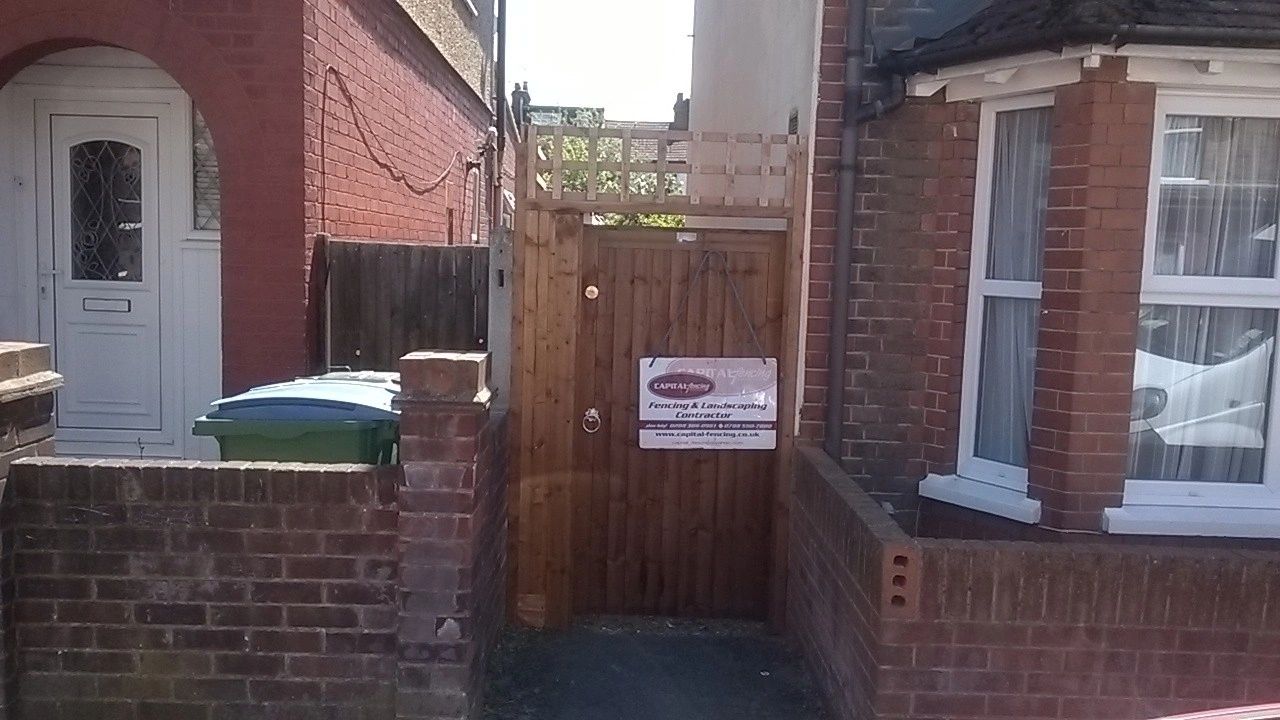
A repair to a single post or panel deep in a rear garden with no side access still needs materials and tools carried through rather than dropped at the boundary, which is worth factoring into the timeline on a tight terraced plot.
On a multi-property repair — several gardens sharing a rear boundary — coordinating access across neighbours can be the more awkward part of the job than the repair itself.
Fencing a marina or boatyard compound
A marina or boatyard compound combines standard perimeter security with exposure to salt air and standing water, so galvanising specification and fixing hardware are upgraded from a typical inland commercial job to resist accelerated corrosion.
Gate access often needs to accommodate trailered boats and cradles passing through, which pushes toward a wide sliding gate or a removable section rather than a fixed-width pedestrian-scale opening.
Restrictor arms and stays for wind-prone double gates
A restrictor arm or stay holds a double gate leaf open at a set angle, preventing it from swinging shut or being blown further open by wind while a vehicle passes through, which is particularly useful on an exposed driveway entrance.
Without a stay, an open gate leaf left unsecured in wind can swing back and strike a vehicle or a person passing through the opening.
Bin and bike access considerations
A gate used regularly to move bins or bikes through needs enough clear width and a low enough threshold that wheels don't catch, which is a different design priority to a gate that's mostly left closed.
Where this is the main use of a side gate, we factor it into leaf width and threshold detail at repair or replacement time rather than defaulting to a standard pedestrian gate size.
Setting posts in clay
London clay and the heavier Hertfordshire boulder clays shrink and swell noticeably between a dry summer and a wet winter, which is exactly the movement that works a badly-set post loose over a few seasons.
The fix is depth and drainage rather than just more concrete: posts need to go below the zone that dries out and cracks seasonally, typically deeper than the standard 600mm used on free-draining ground, with a stone or gravel key at the base so water isn't trapped against the timber.
Postcrete alone on shallow clay bases is one of the most common reasons we're called out to replace a fence that's only a few years old.
How a written quote should be structured
A clear fencing quote itemises materials, labour, waste removal and any groundwork separately, rather than a single lump sum that hides what's actually included.
It should state the exact fence height, post size, panel or board specification and run length, since 'like-for-like replacement' can mean very different things depending on what was there before.
Anything excluded — removal of the old fence, reinstating disturbed planting, or work beyond the surveyed run length — should be listed explicitly, so there's no ambiguity if ground conditions turn out different from what was assumed at survey.
Tree root damage to a shared boundary structure
Where a neighbour's tree roots have visibly damaged a shared boundary wall or fence footing, resolving responsibility for repair can depend on tree ownership, the nature of any easement, and whether prior warning was given about root damage.
This is a fact-specific question rather than one with a single automatic answer, and can occasionally end up needing legal advice where the cost of repair is significant.
Documenting the damage with photographs and dates as it develops is useful evidence regardless of which direction a later conversation about responsibility takes.
Tree Preservation Orders and a post line
A Tree Preservation Order protects specified trees from work that would damage them, and that protection extends below ground to root systems, not just the visible trunk and canopy.
Digging post holes within a protected tree's root protection area can count as damage even without touching the trunk, so it's worth checking the local TPO register before finalising a post line near a mature tree.
Where a TPO applies, the local authority can require an application before any groundworks proceed, and unauthorised damage carries meaningful penalties.
Matching fence specification to a site-specific threat assessment
Not every commercial boundary needs the same specification — a compound holding cash or controlled substances warrants a different height, mesh and topping to a low-value storage yard, and starting a quote from a fixed catalogue spec rather than the specific threat can lead to over- or under-specifying the job.
A short threat assessment covering what's inside the boundary, who has legitimate access, and what's happened on similar sites nearby gives a more defensible basis for the chosen spec than a generic default.
Rubber buffer pads at double-gate meeting stiles
A rubber buffer pad fitted where two gate leaves meet or where a gate meets its stop cushions the impact of closing, reducing wear on the timber or metal edge and quietening what would otherwise be a hard knock each time.
These pads perish with UV and weather exposure over time and need replacing periodically, since a hardened, cracked pad no longer cushions the impact it was fitted to absorb.
Ring-shank versus smooth nails
Ring-shank nails have a series of raised rings machined into the shank, which bite into surrounding timber fibres as they're driven and resist being pulled back out far more effectively than a plain smooth shank.
That extra grip matters on fencing components subject to repeated movement from wind load, such as feather-edge boards on rails, where smooth nails can gradually work loose over several seasons of flexing.
The trade-off is that ring-shank nails are harder to remove cleanly for repairs, often splitting the timber around them rather than sliding out, whereas smooth nails can usually be levered free without damaging the board.
Consent needed to connect drainage across a boundary
Running a new drainage connection across a neighbouring property's land, sometimes done alongside boundary works, needs the neighbour's consent and possibly a formal easement, not just a friendly verbal understanding.
Water companies can also require notice for new connections joining an existing public sewer, separate from any neighbour agreement about crossing their land.
Where fencing work uncovers or affects a drainage connection crossing the boundary, it's worth pausing to confirm what rights actually exist before proceeding.
Matching gate infill to the adjoining fence
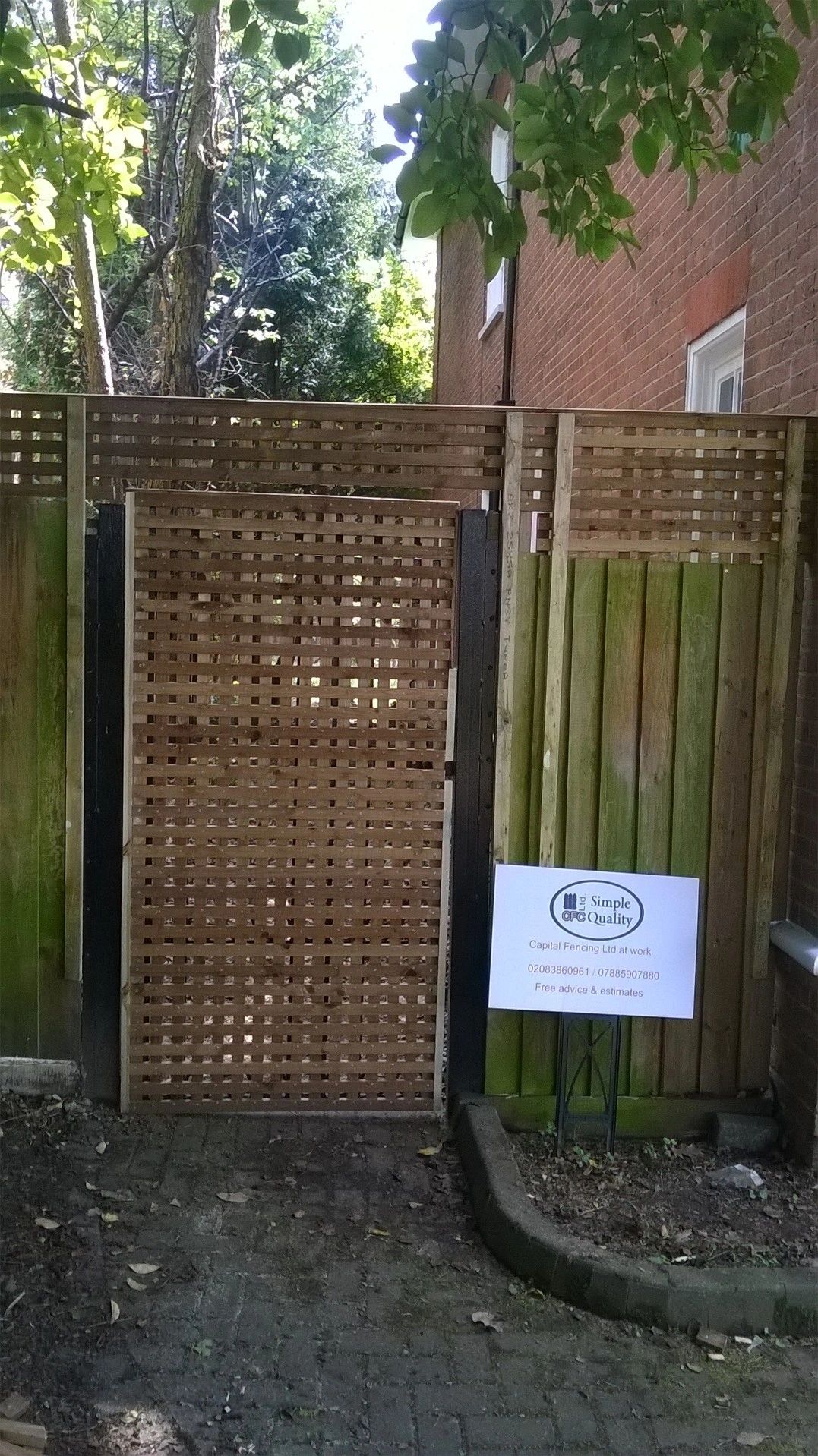
A gate with a different infill pattern to the fence either side is a visible weak point as well as an inconsistency, because an intruder targets the section that looks different from the rest of the run.
Matching pale spacing, mesh aperture or panel style across the gate and fence keeps the whole perimeter to one standard rather than leaving the gate as the obvious soft spot.
Buried rubble and old foundations
Gardens that once held an outbuilding, air-raid shelter or earlier boundary wall often still have its foundation strip sitting just below turf level, invisible until an auger or spade hits it.
A shallow concrete strip footing crossing the fence line usually needs breaking out locally rather than working around it, since a post can't be reliably set on top of a narrow buried footing.
Where old foundations run the length of a boundary, it's worth probing the full run before quoting rather than assuming one trial hole represents the whole job.
Gate widths for cycle access
A side gate wide enough for a wheelbarrow isn't automatically wide enough for a cargo bike or a bike with panniers, which is worth checking against the actual bikes a household owns rather than a generic standard width.
Cycle storage tucked behind a side gate also needs a gate that can be propped open safely while wheeling a bike through, rather than one that swings shut under its own weight mid-manoeuvre.
Where cycle access is a genuine daily-use requirement, a slightly wider opening at quote stage is a cheap addition compared with widening an existing narrow gate later.
Levelling ground before building a decking substructure
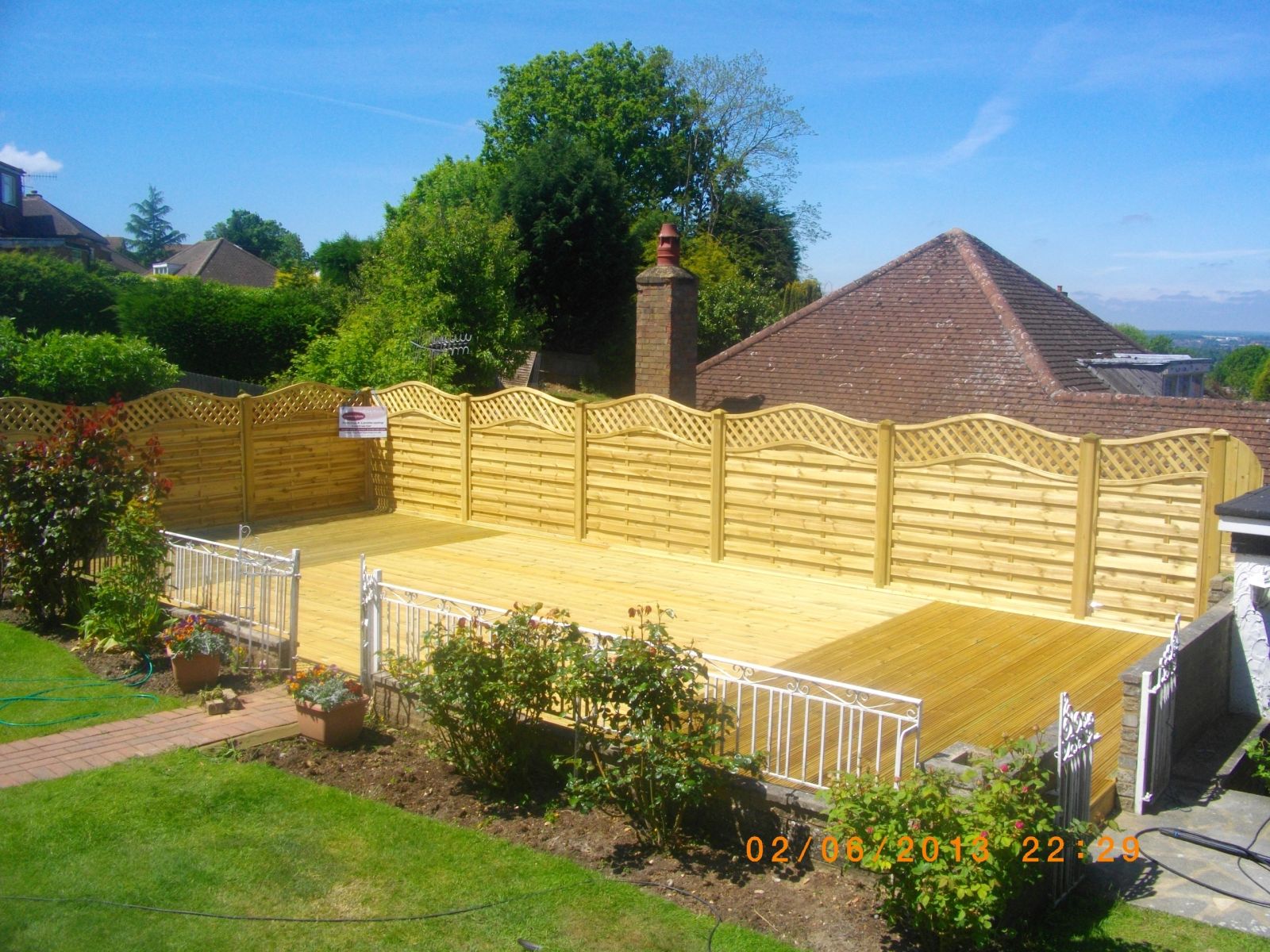
A decking frame built over uneven ground without first levelling or terracing the site ends up with support posts of wildly inconsistent length, which is harder to get right and more prone to individual post settlement than a site graded roughly level first.
Removing turf and topsoil under the deck footprint rather than building over it also reduces the organic material that would otherwise decompose and settle unevenly under the structure.
Where the ground has a genuine and significant fall, working out whether to terrace the ground itself or simply vary support post heights is a decision made before any joists are cut, since it changes the whole substructure design.
Distinguishing checking from structural splitting
Surface checking, fine drying cracks confined to the outer face of a timber section, is cosmetic and doesn't usually run deep enough to compromise a post or rail's strength.
A structural split runs further into or along the timber, sometimes right through a section, and can significantly reduce the effective load-bearing area at that point, particularly if it passes through a fixing or joint.
The practical test is depth and location: a shallow surface check away from any fixing is rarely a concern, while any split intersecting a bolt hole, mortice or bearing point is worth assessing before continued use.
Post-repair adjustment after settling
A newly concreted or reset gate post can settle slightly in the weeks after installation, particularly in looser or made-up ground, which can throw a freshly hung gate's swing or latch alignment out again.
A follow-up adjustment to hinges or the latch keep after the post has settled is normal practice rather than a sign the original repair was done incorrectly.
Weld mesh and chain link
Weld mesh panels are a rigid grid of welded steel wire, usually galvanised and often polyester-coated, and they hold their shape under impact far better than chain link, which is why they're common on boundaries needing a firmer physical barrier.
Chain link is a diamond-pattern woven wire fixed to line wires and posts rather than a rigid panel, which makes it cheaper and easier to tension over long or uneven runs but more prone to sagging or distorting under repeated pressure.
Neither offers meaningful privacy on its own, so both are frequently paired with hedging or slatted infill where visual screening is also wanted alongside the containment.
Compost bins and damp concentration against a fence
A compost bin or heap placed directly against a fence line concentrates moisture and organic decay right at the timber surface, which is a common and avoidable cause of localised rot on an otherwise healthy run.
A gap of even a few hundred millimetres between the bin and the fence, or a bin set on a hard base rather than directly against timber, avoids this concentrated exposure.
It's a detail worth raising with clients at handover, since it's the kind of everyday garden use that isn't obvious as a fence maintenance issue until the damage has already occurred.
New-build plots and developer specification
New-build plots are frequently handed over with a minimal timber boundary treatment specified by the developer, sometimes with a defects-period clause that ties any alteration to the developer's own maintenance obligations for the first two years.
Ground on a recently-built plot is also often disturbed or re-graded rather than settled, so posts set too soon after landscaping can move as the ground consolidates over the following winter.
Estate-wide design codes on new developments frequently specify a single approved fence style and colour for the first several years of occupation, which is worth checking against the site's planning conditions before replacing anything.
Sports-pitch ground with irrigation
Perimeter fencing around a sports pitch or playing field often runs over ground with an engineered drainage or irrigation system just below the surface, including sand-slit drains or pop-up sprinkler lines that aren't always accurately recorded.
Damaging a drainage lateral while setting posts can cause localised waterlogging on the pitch itself long after the fencing work is finished, which is a far more costly problem to fix than the original fence job.
Liaising with the groundskeeper or facilities manager over exact drain and irrigation layout before digging is standard practice on this type of site, rather than relying on a general services scan alone.