London & Hertfordshire Free Site Visit
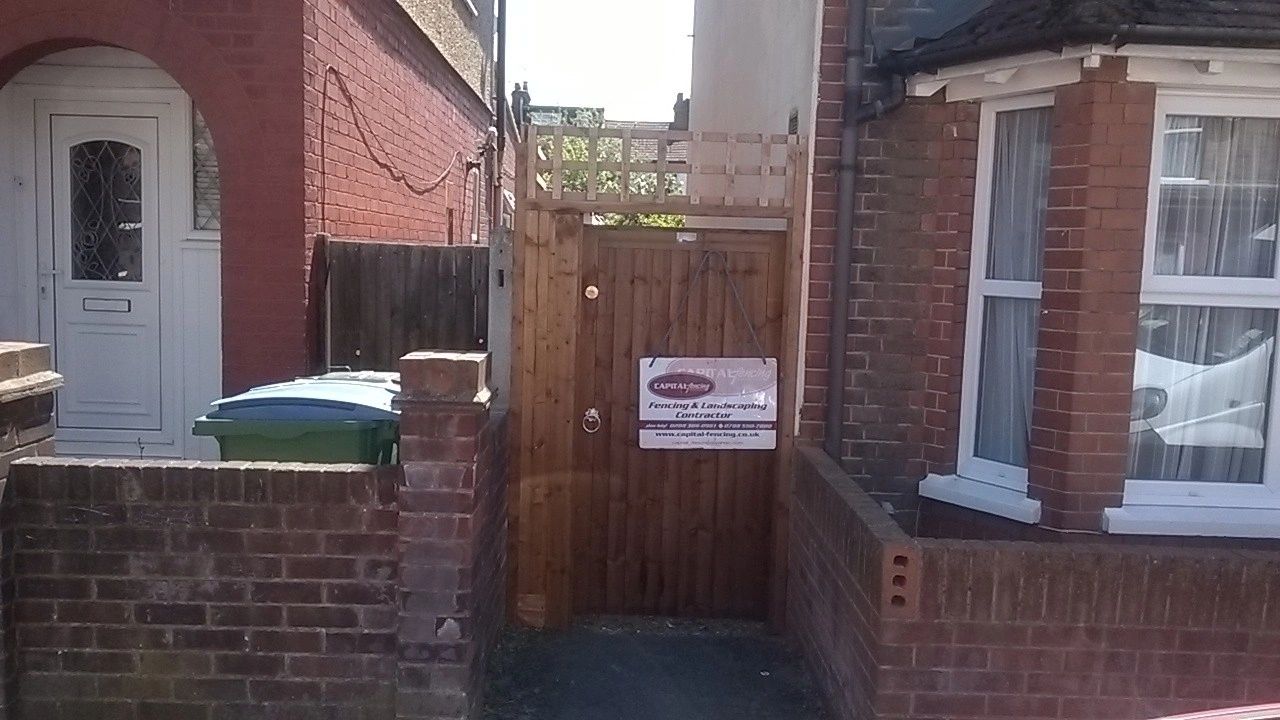
bespoke wooden gate installed by Capital Fencing in Hoddesdon (EN11)
Hoddesdon · EN11

Security & Access Gates, Hoddesdon: engineered-to-load spec for 1930s and 1950s semis

Security & Access Gates in Hoddesdon is a specific brief for us — residential and small-commercial clients wanting secure access — anti-lift hinges, deadlocking, prep for entry systems. The default local answer isn't a stock catalogue drop: it's steel or hardwood framed, anti-lift ball-race hinges, deadlocking hardware, cabling duct pre-run to the intercom position. On Hoddesdon sites we also spec around older fence runs in the old town often hide rotted posts under cement skirts — full removal is usually required, which is where a lot of security access gates jobs quietly fail two years in. Roads such as Conduit Lane and Cock Lane are typical of the local layout. Spitalbrook slipway is a useful local reference point. Broxbourne Council maintains tree protection orders across much of Essex Road and Middlefield Road.

Security & Access Gates in Hoddesdon is a specific brief for us — residential and small-commercial clients wanting secure access — anti-lift hinges, deadlocking, prep for entry systems. The default local answer isn't a stock catalogue drop: it's steel or hardwood framed, anti-lift ball-race hinges, deadlocking hardware, cabling duct pre-run to the intercom position. On Hoddesdon sites we also spec around older fence runs in the old town often hide rotted posts under cement skirts — full removal is usually required, which is where a lot of security access gates jobs quietly fail two years in. Roads such as Conduit Lane and Cock Lane are typical of the local layout. Spitalbrook slipway is a useful local reference point. Broxbourne Council maintains tree protection orders across much of Essex Road and Middlefield Road.

Typical security access gates briefs in Hoddesdon

  • steel-framed pedestrian access gate with mag-lock and key-override for a small commercial forecourt
  • matched pedestrian and vehicle gates cabled for GSM intercom and keypad entry
Default spec

How we build security access gates in Hoddesdon

steel or hardwood framed, anti-lift ball-race hinges, deadlocking hardware, cabling duct pre-run to the intercom position. On Hoddesdon jobs we adjust for older fence runs in the old town often hide rotted posts under cement skirts — full removal is usually required.

Property mix locally: 1930s and 1950s semis, with Victorian cottages toward the Old Town. Typical gardens: mid-sized flat gardens; properties near Rye Park often have direct alley access. Postcodes we regularly service: EN11.

Why this spec, for residential and small-commercial clients wanting secure access — anti-lift hinges, deadlocking, prep for entry systems

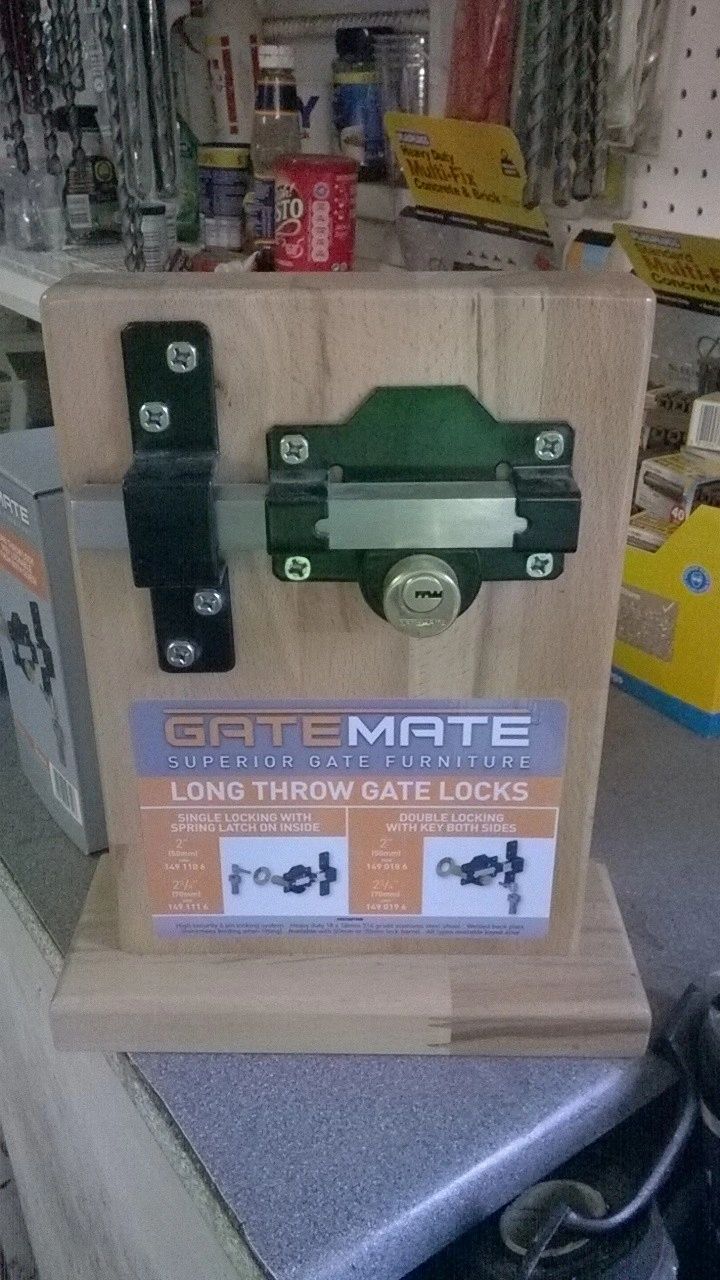
  • anti-lift hinge geometry as standard — a swing gate should not lift off the pins
  • prep work done for automation and access control even when it's phased for later
  • we co-ordinate with the intercom, mag-lock or GSM installer so cabling routes are right first time
What goes wrong

Common failure modes on security access gates

  • domestic hinges on a security gate — trivially lifted off
  • no separate escape release on a mag-locked pedestrian gate — building-control issue on an occupied premises

Security & Access Gates FAQs — Hoddesdon

What lock hardware do you use as standard?

On security access gates jobs in Hoddesdon (EN11), our default answer is: steel or hardwood framed, anti-lift ball-race hinges, deadlocking hardware, cabling duct pre-run to the intercom position. We'll walk you through anti-lift hinge geometry as standard — a swing gate should not lift off the pins on the site visit before you commit.

Are hardwood gates as secure as steel?

Across Hoddesdon we spec around older fence runs in the old town often hide rotted posts under cement skirts — full removal is usually required, so on security access gates that usually means hardwood on galvanised anti-lift hinges. The honest trade-off is domestic hinges on a security gate — trivially lifted off — which is exactly what our default spec designs out.

Can the pedestrian and vehicle gates share entry control?

Broxbourne Borough coverage means we can survey most EN11 addresses inside a week — residential and small-commercial clients wanting secure access — anti-lift hinges, deadlocking, prep for entry systems. The honest trade-off is domestic hinges on a security gate — trivially lifted off — which is exactly what our default spec designs out.

Can you fit anti-lift hinges on a wooden gate?

Practically: hardwood driveway gates with anti-lift hinges, key-lockable drop bolt and prep for intercom cabling. That's the Hoddesdon version of this job, not a generic one. The honest trade-off is domestic hinges on a security gate — trivially lifted off — which is exactly what our default spec designs out.

Do you prep for future automation without installing it now?

On security access gates jobs in Hoddesdon (EN11), our default answer is: steel or hardwood framed, anti-lift ball-race hinges, deadlocking hardware, cabling duct pre-run to the intercom position. We'll walk you through anti-lift hinge geometry as standard — a swing gate should not lift off the pins on the site visit before you commit.

Recent security & access gates work
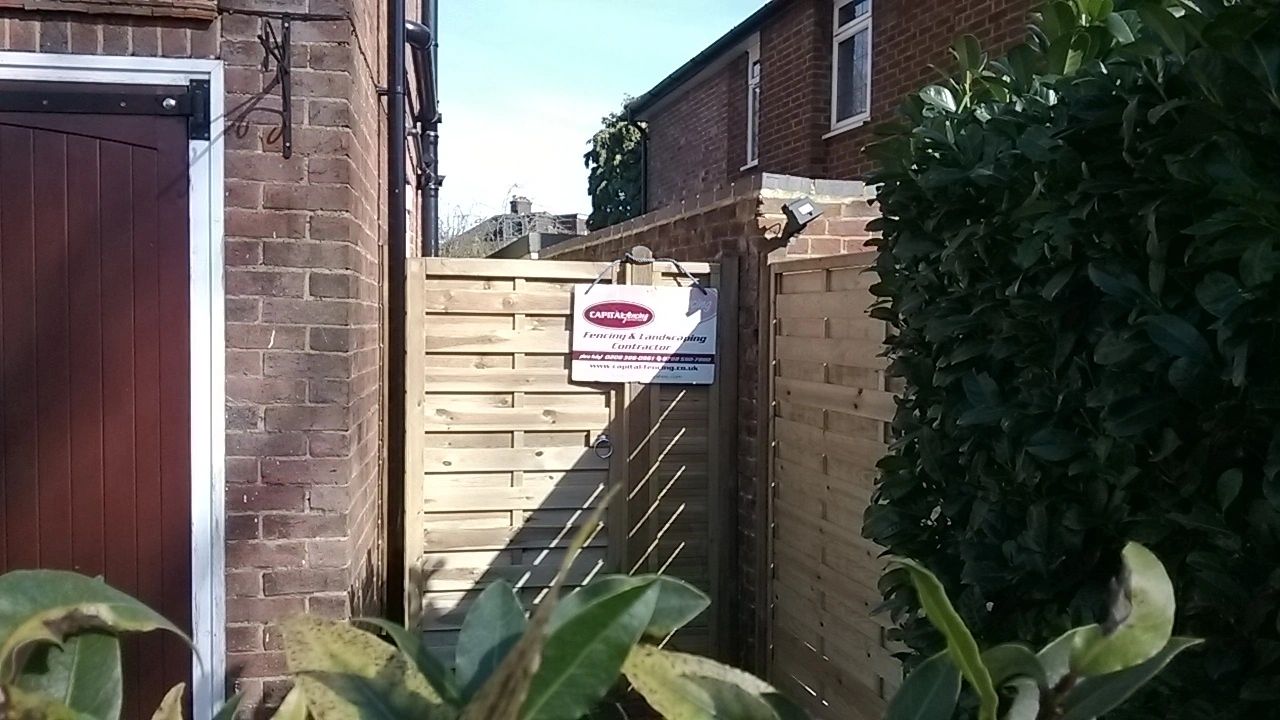
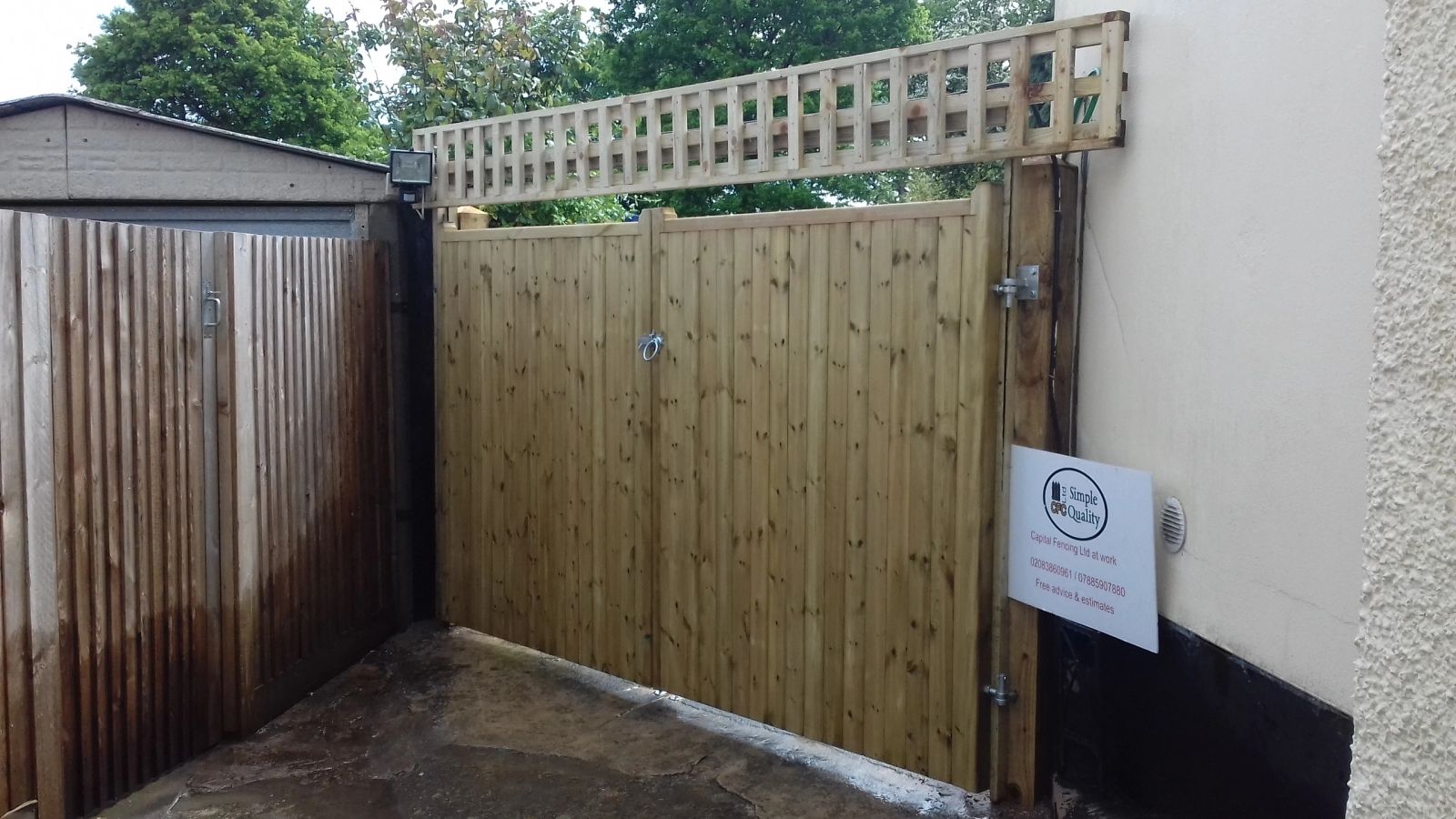
bespoke wooden gate installed by Capital Fencing in Hoddesdon (EN11)double driveway gates installed by Capital Fencing in Hoddesdon (EN11)hardwood side gate installed by Capital Fencing in Hoddesdon (EN11)metal entrance gate installed by Capital Fencing in Hoddesdon (EN11)

Security & Access Gates in Hoddesdon: the practical detail

Coordinating fence height with CCTV sightlines

A taller or more solid fence installed after cameras are in place can blind a sightline that used to cover the boundary, so camera angles should be checked before a height increase is finalised, not after.

Where both are being fitted together, camera mounting height and field of view are agreed against the fence design so the two work together rather than one undoing the other.

Padlock and hasp standards

Padlocks are commonly rated to a recognised standard covering resistance to cutting, drilling and picking, and a high-security hasp is only as good as the padlock fitted to it — pairing a budget padlock with a heavy-duty hasp undermines the whole fitting.

A closed-shackle or shrouded hasp design protects the padlock body from bolt-croppers, which is the more common attack on an exposed gate than picking.

Step riser heights on a raised deck

Steps down from a raised deck work best with consistent riser heights throughout the flight, since an irregular step height is a common trip hazard, particularly where the top or bottom step differs slightly from the others.

Building regulations guidance for steps in a domestic setting generally favours risers in the range of roughly 150-170mm with adequate going (tread depth), though garden steps have more flexibility than an internal staircase.

Where a deck sits at a height that doesn't divide evenly into consistent risers, it's better to adjust the deck height slightly at the design stage than to build one oddly-sized step to make up the difference.

Boundary fences and neighbouring solar panel shading

There's no dedicated 'right to sunlight' for solar panels under general property law, so a compliant boundary fence generally isn't unlawful purely because it casts some shade on a neighbour's panels.

Some newer local planning policies do encourage considering solar shading when reviewing extension or outbuilding applications, though this is less commonly applied to ordinary garden fencing.

Where a fence height decision could noticeably affect a neighbour's solar generation, discussing options informally tends to avoid resentment even without a strict legal duty to do so.

Parking suspensions and permits for works

Where a job needs a van parked directly outside for loading, or a dropped kerb blocked for delivery, most councils offer a paid parking bay suspension or dispensation that has to be applied for in advance, sometimes with several working days' notice.

On residents' permit streets, working without a suspension risks a parking charge notice for the vehicle even where the work itself is entirely legitimate, since traffic wardens enforce the bay markings regardless of the reason for parking.

Booking the suspension early and displaying the paperwork in the vehicle windscreen is a small piece of admin that avoids delays and unnecessary penalty charges on street-fronting jobs.

Security fencing directly alongside a public footpath

A fence running hard against a public footpath needs anti-climb toppings avoided or set back for pedestrian safety, and any gate opening onto the footpath must not swing out into it, since an outward-opening gate on a shared path is both a trip hazard and often a rights-of-way issue.

Where the footpath is well used, sightlines along the path are kept open at any pinch point rather than allowed to be blocked entirely by a solid fence, partly for personal safety of path users after dark.

Higher wear on gates serving a shared driveway

A gate serving a driveway shared by more than one household sees substantially more open-close cycles than a private garden gate, which accelerates hinge and latch wear well ahead of the general maintenance interval expected for a single-household gate.

Specifying heavier-duty hinges and a latch mechanism rated for frequent use, rather than standard domestic hardware, is worth the modest extra cost on a shared-access gate given how much more it's actually used.

It's also worth agreeing maintenance responsibility for a shared gate in writing between households, since a gate serving multiple parties doesn't have the same single clear owner a private gate does.

Boundary near a railway or utility corridor

A boundary next to a railway or utility corridor may be governed by the operator's own standards as well as normal planning rules, and access for their maintenance staff sometimes has to be preserved even where the land is privately owned.

Any work close to a railway boundary generally needs the operator notified in advance, and specific fence types or heights may be mandated rather than left to the landowner's choice.

How post hole diameter relates to load capacity

A wider post hole gives the concrete footing more surface area to resist overturning, which matters most on a taller or more exposed security run where wind and impact loading are higher than on a standard garden fence.

Increasing hole depth without also increasing diameter has a smaller effect on lateral resistance than is often assumed, since it's the concrete's bearing area against the surrounding soil that resists the post trying to rotate, not depth alone.

Transition detail from decking down to lawn or planting

The edge where a deck meets an adjoining lawn or border needs a defined transition — a fascia board with a small step down, or a gravel or edging strip — rather than boards simply stopping at soil level, which otherwise leads to soil and organic matter migrating up against the deck edge.

That buildup against an unprotected deck edge holds moisture against the timber in exactly the way a raised bed built too close to a fence does, and is a common cause of localised rot along an otherwise sound deck perimeter.

A simple edging detail agreed at the design stage costs little compared with the deck itself but noticeably protects the vulnerable soil-contact edge.

Terraced gardens and stepped runs

A garden cut into level terraces, common on steeper plots across the Chilterns fringe, usually means the fence has to step down at each change of level rather than run as one continuous raked line.

Each stepped section needs its own post pair set level within that section, with the horizontal joint between sections finished cleanly rather than leaving an open triangular gap under the lower panel.

Where the terraces are formed by retaining walls rather than simple grading, the fence posts typically sit on top of the wall structure and need fixings suited to masonry rather than a standard earth-set post.

Realistic maintenance intervals

Pressure-treated softwood fencing generally wants a re-application of preservative or stain every two to three years to keep the surface protected, more often on a south-facing run that gets constant UV exposure.

Gate hinges and latches are worth checking annually for movement or corrosion, since a small adjustment caught early avoids the gate racking out of square and needing a rebuild.

Decking boards benefit from a yearly clean to clear leaf litter and algae from the gaps, which is what actually causes most of the slipperiness people blame on the timber itself.

Repairing a fence on a sloped or stepped boundary

A boundary on a slope often fails first at the lowest point of each step, where water naturally collects, so a repair there sometimes needs a revised drainage detail rather than simply replacing the failed section like-for-like.

We check the fall of the whole run before repairing one section, since a step that's settled unevenly can be the real cause of a failure further along.

Setting out a line over a sloping plot

On a slope, a string line pulled level between two posts of equal height will sit above the ground at one end and below it at the other, so setting out has to work from a boning rod or a laser level rather than the string alone.

The usual method is to fix the top and bottom posts first, establish the actual fall between them, then decide bay by bay whether intermediate posts step down in even drops or follow the ground continuously.

Getting this decision agreed before any post is concreted matters, because changing from a stepped to a raked layout partway along a run after posts are set means starting again.

Dealing with concealed or unusual legacy fixings

Older fence runs sometimes used fixings that aren't common today, such as coach-screws recessed and pelleted over, which take longer to locate and remove than a standard exposed nail or screw.

Identifying the fixing type before starting a repair avoids damaging surrounding sound timber by forcing a component free with the wrong method.

Overhead cables and clearance for gate operation

A gate installed beneath or near an overhead service cable needs its swing or opening path checked against that cable's height and any sag, particularly for a wider vehicle gate that might otherwise catch a low cable at its highest point of travel.

This is a straightforward site check to make before installation, since moving a gate's position after cables have been identified as a clearance problem is far more disruptive than checking beforehand.

Deciding between adjustment and rebuild

Most gate faults can be corrected by adjusting hinges, replacing a latch or hardening a loose joint, but a frame that's racked badly enough to have opened its joints permanently, or timber that's rotted through a structural member, generally needs rebuilding rather than adjusting.

Establishing which category a gate falls into early avoids repeated small adjustments on a frame that's already past the point where adjustment alone will hold.

Timber grades and treatment

Pressure-treated softwood is graded by the treatment's intended service life — timber rated for ground contact (Use Class 4) should always be used for posts, while a lighter Use Class 3 treatment is normally sufficient for panels and boards that don't touch soil.

Tanalised or vacuum-pressure-treated stock takes preservative deeper into the timber than a surface-dipped batch, which matters most at cut ends, where the untreated core is exposed and should always be re-treated on site.

Hardwoods like oak or iroko don't need chemical preservative to the same degree but cost more upfront and behave differently as they season, so the choice is really about budget and maintenance appetite rather than one being simply 'better'.

Reinstating turf strips damaged by tool storage

A pile of tools, offcuts or a mixing tray left in one spot on a lawn for several days can leave a yellowed, compacted patch even after the job is finished and everything is cleared away.

Moving stored items to a slightly different spot every day or two, where the site allows, spreads that pressure rather than concentrating it in a single dead patch that then needs separate attention to recover.

Where a genuinely fixed storage point is unavoidable, laying a board or matting underneath from the start protects the grass far more effectively than trying to revive a flattened patch afterwards.

Post splitting from over-driven fixings

Driving a nail or coach screw too close to a timber post's edge, particularly near the end grain, concentrates stress in a narrow section of fibres and can split the post along the grain rather than simply seating the fixing.

Pre-drilling a pilot hole for larger fixings, especially near board or post ends, relieves that concentrated stress by giving the fixing a path that doesn't have to force the surrounding fibres apart.

Species with straighter, more even grain generally resist this kind of splitting better than timber with interlocked or knotty grain near the fixing point, where existing weaknesses in the fibre structure make a split more likely to propagate.

Packing a hinge to correct drop

Where a gate has dropped only slightly and the frame itself is still square, packing out the top hinge or shimming the bottom one can correct the swing without remaking any joints.

This is a quick adjustment rather than a permanent fix if the underlying cause is a loose fixing, so we still check why the drop happened before packing alone is used as the solution.

Flats and maisonettes with communal gardens

Where a garden is communal to several flats, no single leaseholder normally has authority to alter the boundary fence unilaterally — that decision usually sits with the freeholder or a resident's management company under the lease.

Ground-floor maisonettes with an exclusive-use garden are a common exception, but the lease still often restricts fence height or style to protect the amenity of upper flats overlooking the space.

Any quote for work in a communal garden should confirm who is legally instructing the job and paying for it before work starts, since informal agreement from one resident isn't the same as management company sign-off.

Security & Access Gates across EN11 is a regular run for us. We'll quote honestly, tell you if security access gates isn't the right answer for your site, and book the job in within a week or two of a signed quote. structural spans and post depths calculated, not guessed. Roads such as Cock Lane and Amwell Street are typical of the local layout. Hoddesdon Clock Tower is a useful local reference point. The A10 dual carriageway runs along the eastern edge of the town, bringing traffic noise to the gardens nearest it.

Get In Touch

Get My Free Quote — 24h Response

No callout fee · Free site visit · Friendly local team covering London & Hertfordshire.

Call us
07885907880
or 02036484746
Email
capital_fencing@yahoo.com
WhatsApp
Message us anytime
Area
London & Hertfordshire
Payment
Card payments accepted

Pay by debit or credit card, bank transfer or cash once the work and price are agreed. No deposit taken online.

Request a Free Quote

We'll get back to you within 24 hours.

Free Site Visit No Callout Fee
Call WhatsAppQuote