London & Hertfordshire Free Site Visit
bespoke wooden gate installed by Capital Fencing in Cheshunt (EN7)
Cheshunt · EN7 / EN8

Local driveway double gates specialist covering Cheshunt & waltham cross

We approach driveway double gates in Cheshunt from the failure end backwards. Not levelling the closing point — one leaf drags on the drive within a year — that's the single most common thing we're called back to fix, and it's the first thing our spec addresses. Roads such as Flamstead End Road and Windmill Lane are typical of the local layout. Cedars Park is a useful local reference point. Cedars Park and the wider Lee Valley Regional Park both border the town.

We approach driveway double gates in Cheshunt from the failure end backwards. Not levelling the closing point — one leaf drags on the drive within a year — that's the single most common thing we're called back to fix, and it's the first thing our spec addresses. Roads such as Flamstead End Road and Windmill Lane are typical of the local layout. Cedars Park is a useful local reference point. Cedars Park and the wider Lee Valley Regional Park both border the town.

Typical driveway double gates briefs in Cheshunt

  • matched pedestrian gate alongside 3.6m double vehicle gates on a corner-plot driveway
  • 4.0m composite-faced double gates prepared for underground automation

Why this spec, for homes with off-street parking wanting matched double vehicle gates, manual or automated

  • measured on site off the actual brick piers, not a builder's plan set
  • prepared for future automation even when you're not fitting it yet — cabling ducts under the drive, hinges rated for it
  • matched pedestrian gate carried in the same visit so alignment and finish are identical
Default spec

How we build driveway double gates in Cheshunt

44mm framed, tongue-and-groove or composite infill, hot-dip galvanised or stainless ironmongery, sized to the actual masonry opening not the drawing. On Cheshunt jobs we adjust for ground water near the lee valley means post bases need extra care to prevent rot.

Property mix locally: mid-century semis and bungalows, plus newer riverside developments toward Goffs Oak. Typical gardens: long flat gardens — many back onto the Lee Valley with high-water-table conditions. Postcodes we regularly service: EN7, EN8.

Where driveway double gates isn't the right answer

  • spans over 4m where a cantilever slider is a better answer than a two-leaf swing
  • sloping driveways where full-close geometry isn't achievable without a rising hinge system

Driveway Double Gates FAQs — Cheshunt

How much clearance do you leave under a driveway gate?

On driveway double gates jobs in Cheshunt (EN7), our default answer is: 44mm framed, tongue-and-groove or composite infill, hot-dip galvanised or stainless ironmongery, sized to the actual masonry opening not the drawing. For context: prepared for future automation even when you're not fitting it yet — cabling ducts under the drive, hinges rated for it. Structural spans and post depths calculated, not guessed.

What's the widest span before double gates need a wheel or cantilever?

Across Cheshunt we spec around ground water near the lee valley means post bases need extra care to prevent rot, so on driveway double gates that usually means iroko hardwood on galvanised ironmongery. We'll walk you through measured on site off the actual brick piers, not a builder's plan set on the site visit before you commit.

How do you stop a heavy gate dropping on the closing point?

Broxbourne Borough coverage means we can survey most EN7 addresses inside a week — homes with off-street parking wanting matched double vehicle gates, manual or automated. We'll walk you through measured on site off the actual brick piers, not a builder's plan set on the site visit before you commit.

Can pedestrian and vehicle gates share the same finish and ironmongery?

Practically: 3.0m opening hardwood double gates on ball-race hinges with drop bolt and top slide bolt. That's the Cheshunt version of this job, not a generic one. For context: prepared for future automation even when you're not fitting it yet — cabling ducts under the drive, hinges rated for it. Structural spans and post depths calculated, not guessed.

Do you fit into existing brick piers or install new?

On driveway double gates jobs in Cheshunt (EN7), our default answer is: 44mm framed, tongue-and-groove or composite infill, hot-dip galvanised or stainless ironmongery, sized to the actual masonry opening not the drawing. The honest trade-off is not levelling the closing point — one leaf drags on the drive within a year — which is exactly what our default spec designs out.

Recent driveway double gates work
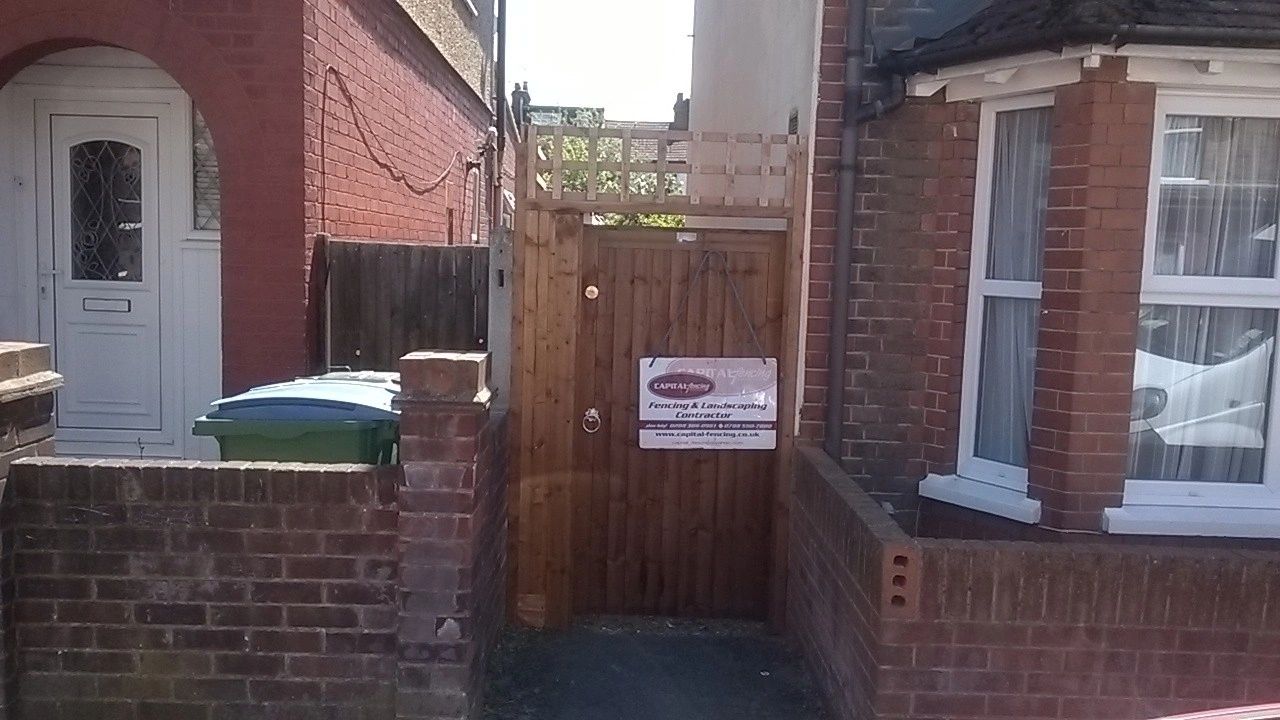
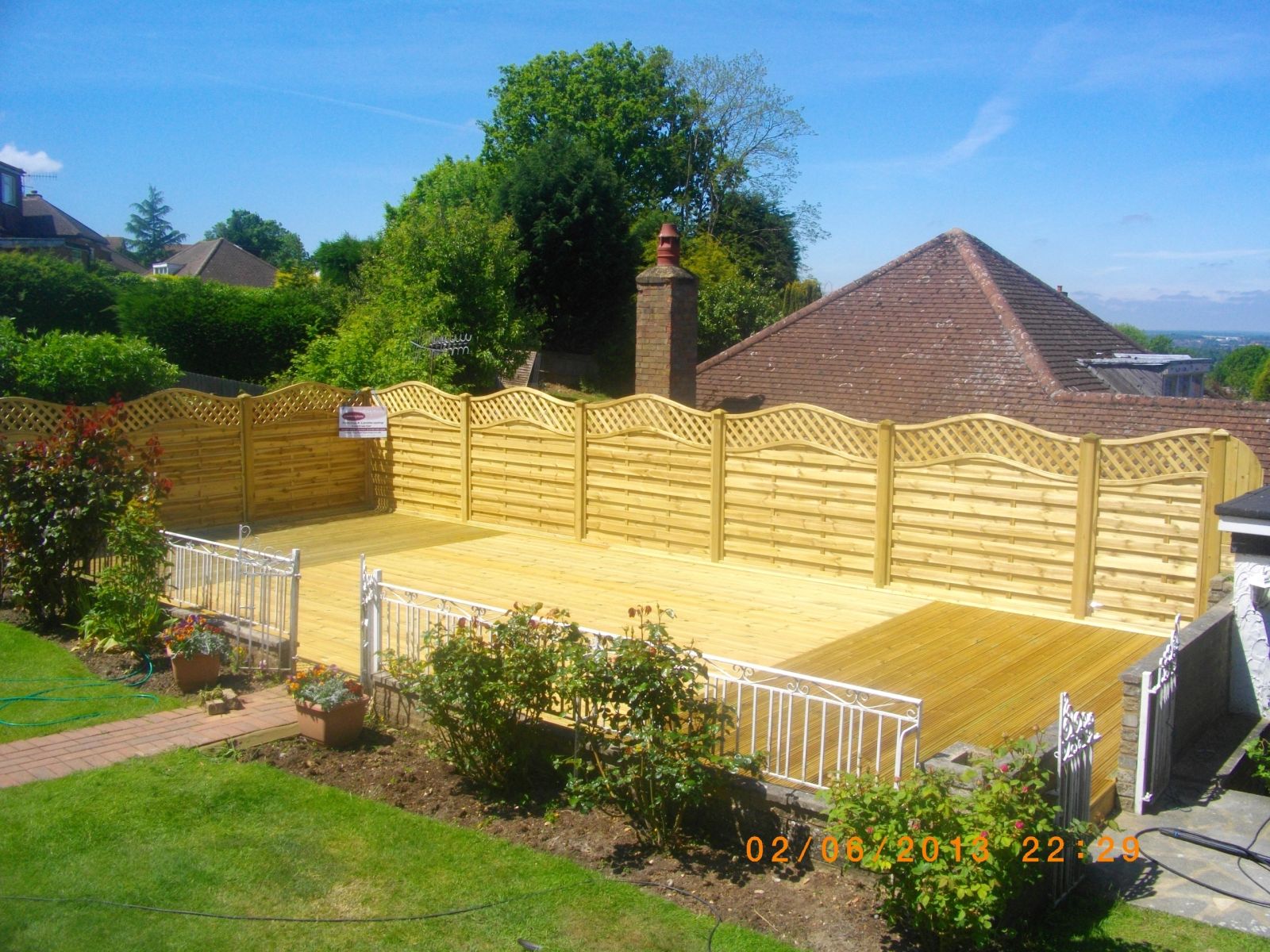
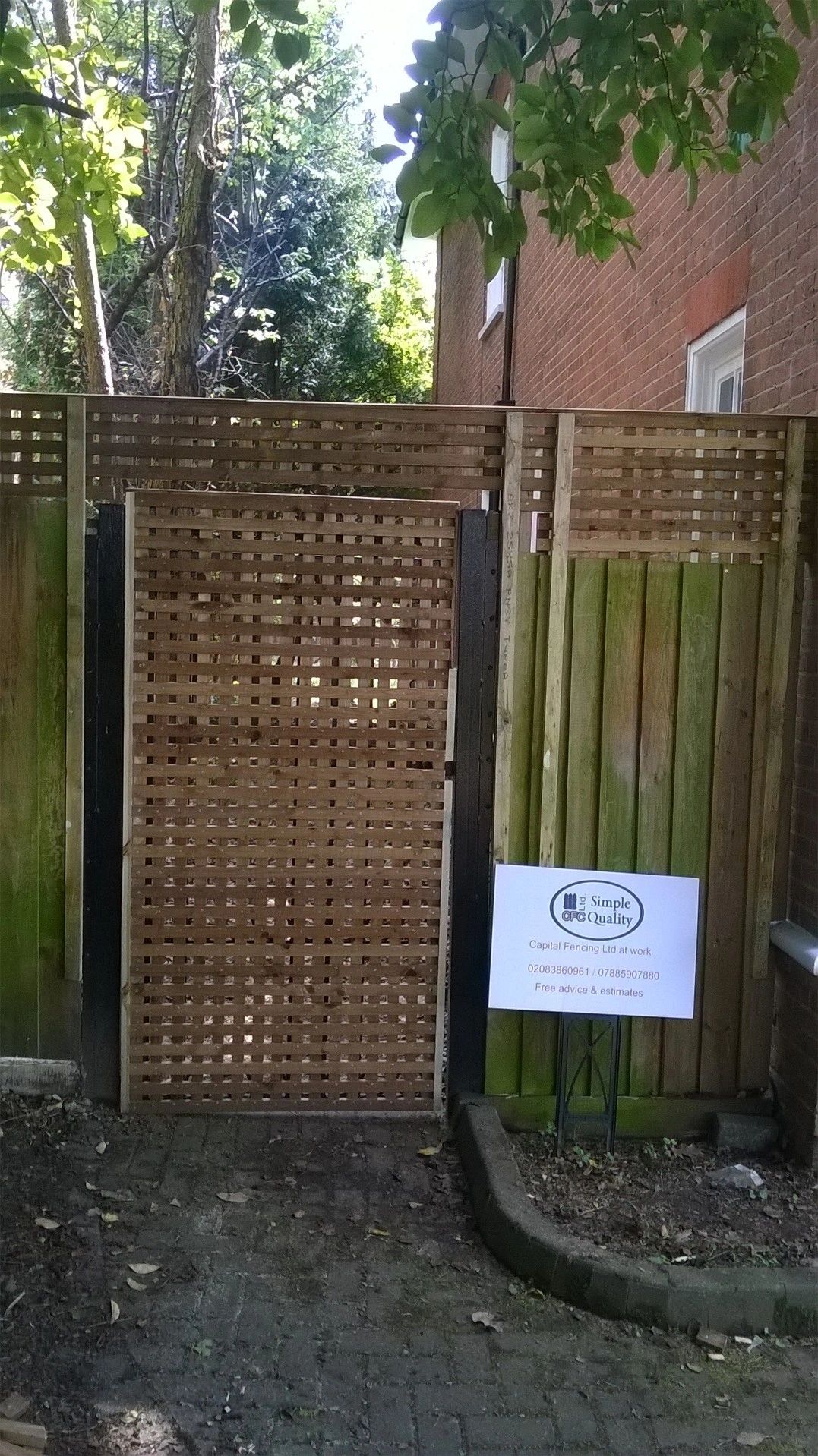
bespoke wooden gate installed by Capital Fencing in Cheshunt (EN7)double driveway gates installed by Capital Fencing in Cheshunt (EN7)hardwood side gate installed by Capital Fencing in Cheshunt (EN7)metal entrance gate installed by Capital Fencing in Cheshunt (EN7)

Driveway Double Gates in Cheshunt: the practical detail

Matching a new gate to the existing boundary

A replacement gate is sized and detailed to match the piers or posts either side of the opening rather than fitted as a stock size, since a gate that doesn't sit flush against its opening looks obviously replaced even when well built.

Where the surrounding fence has a specific profile or capping detail, the gate frame is matched to it.

Simple maintenance that prevents gate failure

Checking hinge screws are still tight and that the gate still closes flush against the frame once or twice a year catches the early stages of sag before it becomes a full repair job.

A gate that's starting to catch on the ground is far cheaper to fix at that stage than after the frame has racked further out of square.

Trellis wind load as a failure cause

A solid-backed trellis, sometimes fitted with climbers trained across it, catches significantly more wind than an open lattice design, and that extra load is transferred straight into the post below it.

Where a trellis topper keeps failing on an exposed run, switching to a more open lattice pattern reduces the load rather than simply refitting the same design each time.

Digging near land drains

Older gardens, especially those on heavier clay, sometimes have unrecorded clay pipe or perforated plastic land drains laid to relieve waterlogging, and these rarely appear on any plan.

Hitting one with an auger usually shows up as a sudden drop in resistance followed by water pooling in the hole from a direction that doesn't match the water table generally on site.

A damaged land drain should be reconnected or rerouted rather than just backfilled over, since a broken run can redirect water against a post base for years afterwards.

Vegetation growing through or over a shared fence

Plants growing from one garden through, over or against a shared fence — a spreading shrub, an overhanging branch, a self-seeded sapling in the fence line itself — sit in a grey area between garden maintenance and boundary structure that isn't always covered by a simple 'good neighbour' agreement.

A sapling that germinates directly against a post and is left to grow can eventually distort or crack the post as its trunk thickens, which is a slow-motion structural problem rather than a purely cosmetic one.

Flagging seedlings growing in or immediately against a fence line at an early stage, before root or trunk growth causes structural distortion, avoids a much larger repair later.

Talking to neighbours before you start

A shared boundary fence, even one that's entirely your responsibility to maintain, sits next to someone else's garden — giving a neighbour advance notice of the height, style and timing of the work heads off most disputes before they start.

Where a fence straddles the boundary line exactly, both parties technically have an interest in it, and a quick written note agreeing who's paying for what avoids a much longer argument later if it needs replacing again.

This isn't a formal Party Wall Act process — that applies to structures like walls between buildings — but the same basic courtesy of clear, written communication before work starts applies just as well to garden boundaries.

Sliding gate track and roller wear

A sliding gate runs along a ground-mounted track or is carried on top rollers against a guide rail, and debris or corrosion in the track is one of the most common causes of a sliding gate becoming stiff or jamming partway through its travel.

Clearing and checking the track for level is usually the first step in diagnosing a sliding gate fault before assuming the rollers themselves need replacing.

Segregating timber and concrete waste

Treated timber, plain untreated offcuts and broken concrete are usually classed and processed differently at a waste facility, so keeping them in separate piles or skip compartments on site can reduce disposal cost and avoid a mixed load being rejected.

Old concrete post bases and gravel boards are inert waste and can sometimes be crushed and reused as hardcore rather than sent to landfill, which is worth checking with the waste carrier before assuming it all goes in one load.

Metal fittings — old hinges, bolts, wire ties — pulled out during a strip-down are usually worth separating too, since scrap metal is handled through a different route to general construction waste.

Sequencing a multi-bay repair

On a repair spanning several bays, work generally runs from the soundest end toward the most damaged, so the newly fixed sections provide a stable reference line for the rest of the work rather than starting from the worst-affected point.

Where a repair is linked to an insurance claim, documentation is completed at each stage rather than only at the end.

Parking suspensions and permits for works

Where a job needs a van parked directly outside for loading, or a dropped kerb blocked for delivery, most councils offer a paid parking bay suspension or dispensation that has to be applied for in advance, sometimes with several working days' notice.

On residents' permit streets, working without a suspension risks a parking charge notice for the vehicle even where the work itself is entirely legitimate, since traffic wardens enforce the bay markings regardless of the reason for parking.

Booking the suspension early and displaying the paperwork in the vehicle windscreen is a small piece of admin that avoids delays and unnecessary penalty charges on street-fronting jobs.

High water table and post-base concrete

On a plot where the water table sits close to the surface, a post hole can start filling with groundwater before the post is even positioned, which stops a wet concrete mix from curing properly around the base.

The usual fix is a free-draining pea shingle or hardcore base rather than solid concrete, letting water pass the post instead of holding it in permanent damp.

Pumping a hole dry immediately before setting the post is only a short-term measure if the water simply returns within minutes, and that's usually the signal to change the base specification rather than repeat the attempt.

Wire supports for climbing plants on a fence

Climbers like clematis or trained fruit need their own tensioned wire or trellis support rather than relying on the fence panel itself, since the twisting and clinging growth habit can distort thin battens over time.

Vine eyes and straining wire fixed into posts, not into panel infill, spreads the load onto the structural timber rather than the part of the fence most likely to need replacing first.

Planning wire runs at the time a fence is built, rather than drilling into finished posts later, avoids weakening a post at exactly the point that already carries the most load.

Fixing classes for bolt-down base plates

Anchor fixings for base plates are classed by their approved use in cracked or uncracked concrete, and a fixing rated only for uncracked concrete can under-perform badly if used on an older slab that's already showing hairline cracking.

The manufacturer's technical data sheet gives pull-out and shear values for a specific concrete grade and thickness, and these figures are checked against the actual slab on site rather than assumed from a general spec sheet.

Capping rails and rail theft

Timber capping rails and metal top rails both protect the fence line beneath them from weather, but an unsecured metal capping on a low-value run has occasionally been targeted for scrap, which is worth factoring in on an isolated boundary.

Fixing capping with concealed or tamper-resistant screws rather than exposed standard screws reduces how easily a section can be lifted off without cutting into the maintenance schedule.

Protecting a boundary fence during nearby building work

Where building work, an extension or a loft conversion is happening on an adjoining property, existing boundary fences and their footings are sometimes shifted, undermined or damaged by machinery or excavation.

It's reasonable to raise this in advance with a neighbour undertaking major building work, ideally recording the fence's condition beforehand with photographs.

Where a party wall notice has been served for related works, that process can sometimes address boundary condition issues as part of a schedule of condition, which is worth asking about.

HMO licensing and boundary obligations

A licensed House in Multiple Occupation can carry specific conditions relating to the external areas of the property, including secure and well-maintained boundary fencing, safe means of escape through a rear garden, and bin storage screened from the street.

Licensing officers inspecting the property will check the condition of boundary structures as part of the wider fire safety and amenity standards, and a broken or unsafe fence can be flagged as a licence condition breach requiring remedy within a set period.

Landlords of licensed HMOs should treat boundary repair requests from the council's licensing team as time-limited compliance matters rather than routine maintenance to schedule at leisure.

Gating a shared driveway

A gate across a driveway shared by more than one property needs the agreement of everyone with a right to use it, since restricting access — even with a key provided to all parties — changes how that access can practically be used, especially for larger vehicles or emergency access.

Automated gates on a shared drive raise additional questions about who controls the opening mechanism, who pays for maintenance, and what happens if the power or motor fails, all of which are worth agreeing in writing before installation.

Where the shared drive is used by refuse collection or emergency services, checking minimum clear widths and turning circles with the council or fire service before fitting a gate avoids a structure that later has to be removed.

The 1m limit next to a highway

Where a boundary fronts a highway used by vehicles — which includes most residential roads, not just main routes — permitted development height drops to 1 metre rather than 2 metres.

This lower limit exists mainly for visibility and road safety reasons, so it applies even where the fence itself is set back slightly from the actual carriageway edge.

Corner plots can be caught by this rule on more than one side, which is easy to miss when only the main frontage is considered.

Removing old fencing and waste

Old fence panels, rotten posts and broken concrete bases don't disappear on their own, and a domestic wheelie bin won't take timber or rubble — it needs a licensed waste carrier and, for larger volumes, a registered waste transfer note.

Treated timber in particular shouldn't go on a garden bonfire, since older stock may have been treated with preservatives that produce harmful smoke when burned.

We'd always confirm whether removal and disposal of the old boundary is included in a quote, since it's one of the most common items left out of a cheaper like-for-like comparison.

Rear alley gating orders

A council-issued gating order allows residents to install a locked gate across a shared rear alley or ginnel that's become a route for anti-social behaviour, converting what was a public right of way into a controlled access point.

Gates fitted under a gating order usually need to match a specification set by the council, including emergency-service access provision, rather than being chosen freely by residents.

Using a post level clamp for solo plumb-checking

A post level that clips onto two adjacent faces of a post at once lets one person check plumb in both directions simultaneously without needing a second pair of hands to hold a separate level against each face.

This is particularly useful when bracing a post alone, since the clamp stays attached and visible while adjustments are made, rather than needing to remove and reposition a standard spirit level after every small correction.

It's worth checking the clamp itself is seated flat against the post with no debris or splinters holding it proud, since a level that isn't sitting flush will give a false reading regardless of how carefully the post is actually adjusted.

Land Registry title plans and their limits

Land Registry title plans are based on Ordnance Survey mapping and are deliberately described as showing 'general boundaries' rather than the precise legal line, typically accurate to a scale where a boundary can shift by up to half a metre without contradicting the plan.

That means a title plan is rarely enough on its own to settle exactly where a fence should sit to the centimetre, particularly on older plots where boundaries have drifted gradually over decades of replacement.

A determined boundary application can fix a precise legal line where a dispute genuinely needs it, but for most routine fence replacements, agreeing the line by eye with reference to the existing structure and the general boundary plan is the practical approach.

Whether the brief is 3.0m opening hardwood double gates on ball-race hinges with drop bolt and top slide bolt or 4.0m composite-faced double gates prepared for underground automation, we quote it from a site visit, not a photo. Cheshunt is inside our core working patch and most jobs are booked in inside a fortnight. Roads such as Crossbrook Street and Flamstead End Road are typical of the local layout. Cheshunt station is a useful local reference point. Gardens backing onto the Lee Navigation and the New River have restricted access from the front, which affects how a delivery is planned.

Get In Touch

Get My Free Quote — 24h Response

No callout fee · Free site visit · Friendly local team covering London & Hertfordshire.

Call us
07885907880
or 02036484746
Email
capital_fencing@yahoo.com
WhatsApp
Message us anytime
Area
London & Hertfordshire
Payment
Card payments accepted

Pay by debit or credit card, bank transfer or cash once the work and price are agreed. No deposit taken online.

Request a Free Quote

We'll get back to you within 24 hours.

Free Site Visit No Callout Fee
Call WhatsAppQuote