London & Hertfordshire Free Site Visit
bespoke wooden gate installed by Capital Fencing in Welwyn Garden City (AL7)
Welwyn Garden City · AL7 / AL8

Security & Access Gates, Welwyn Garden City: engineered-to-load spec for the original Garden City Movement housing — neo-Georgian semis and short terraces with consistent frontages

We approach security access gates in Welwyn Garden City from the failure end backwards. Domestic hinges on a security gate — trivially lifted off — that's the single most common thing we're called back to fix, and it's the first thing our spec addresses. Roads such as Digswell Road and Applecroft Road are typical of the local layout. Stanborough Lakes is a useful local reference point. Digswell Road slopes toward the Digswell Viaduct, a Grade II listed railway viaduct and well-known local landmark.

We approach security access gates in Welwyn Garden City from the failure end backwards. Domestic hinges on a security gate — trivially lifted off — that's the single most common thing we're called back to fix, and it's the first thing our spec addresses. Roads such as Digswell Road and Applecroft Road are typical of the local layout. Stanborough Lakes is a useful local reference point. Digswell Road slopes toward the Digswell Viaduct, a Grade II listed railway viaduct and well-known local landmark.

Default spec

How we build security access gates in Welwyn Garden City

steel or hardwood framed, anti-lift ball-race hinges, deadlocking hardware, cabling duct pre-run to the intercom position. On Welwyn Garden City jobs we adjust for welwyn garden city has design covenants — front fences typically restricted in height and style.

Property mix locally: the original Garden City Movement housing — neo-Georgian semis and short terraces with consistent frontages. Typical gardens: rear gardens hidden behind tall established hedgerows; many properties sit on the original 1920s grid. Postcodes we regularly service: AL7, AL8.

Why this spec, for residential and small-commercial clients wanting secure access — anti-lift hinges, deadlocking, prep for entry systems

  • anti-lift hinge geometry as standard — a swing gate should not lift off the pins
  • prep work done for automation and access control even when it's phased for later
  • we co-ordinate with the intercom, mag-lock or GSM installer so cabling routes are right first time

Where security access gates isn't the right answer

  • high-risk commercial sites needing a rated pass-security gate — beyond a domestic joinery scope
  • listed frontages where visible ironmongery isn't allowed to change

Typical security access gates briefs in Welwyn Garden City

  • steel-framed pedestrian access gate with mag-lock and key-override for a small commercial forecourt
  • matched pedestrian and vehicle gates cabled for GSM intercom and keypad entry

Security & Access Gates FAQs — Welwyn Garden City

What lock hardware do you use as standard?

On security access gates jobs in Welwyn Garden City (AL7), our default answer is: steel or hardwood framed, anti-lift ball-race hinges, deadlocking hardware, cabling duct pre-run to the intercom position. The honest trade-off is domestic hinges on a security gate — trivially lifted off — which is exactly what our default spec designs out.

Can you fit anti-lift hinges on a wooden gate?

Across Welwyn Garden City we spec around welwyn garden city has design covenants — front fences typically restricted in height and style, so on security access gates that usually means hardwood on galvanised anti-lift hinges. For context: prep work done for automation and access control even when it's phased for later. Structural spans and post depths calculated, not guessed.

Are hardwood gates as secure as steel?

Welwyn Hatfield Borough coverage means we can survey most AL7 addresses inside a week — residential and small-commercial clients wanting secure access — anti-lift hinges, deadlocking, prep for entry systems. For context: prep work done for automation and access control even when it's phased for later. Structural spans and post depths calculated, not guessed.

Do you prep for future automation without installing it now?

Practically: hardwood driveway gates with anti-lift hinges, key-lockable drop bolt and prep for intercom cabling. That's the Welwyn Garden City version of this job, not a generic one. We'll walk you through anti-lift hinge geometry as standard — a swing gate should not lift off the pins on the site visit before you commit.

Can the pedestrian and vehicle gates share entry control?

On security access gates jobs in Welwyn Garden City (AL7), our default answer is: steel or hardwood framed, anti-lift ball-race hinges, deadlocking hardware, cabling duct pre-run to the intercom position. For context: prep work done for automation and access control even when it's phased for later. Structural spans and post depths calculated, not guessed.

Recent security & access gates work
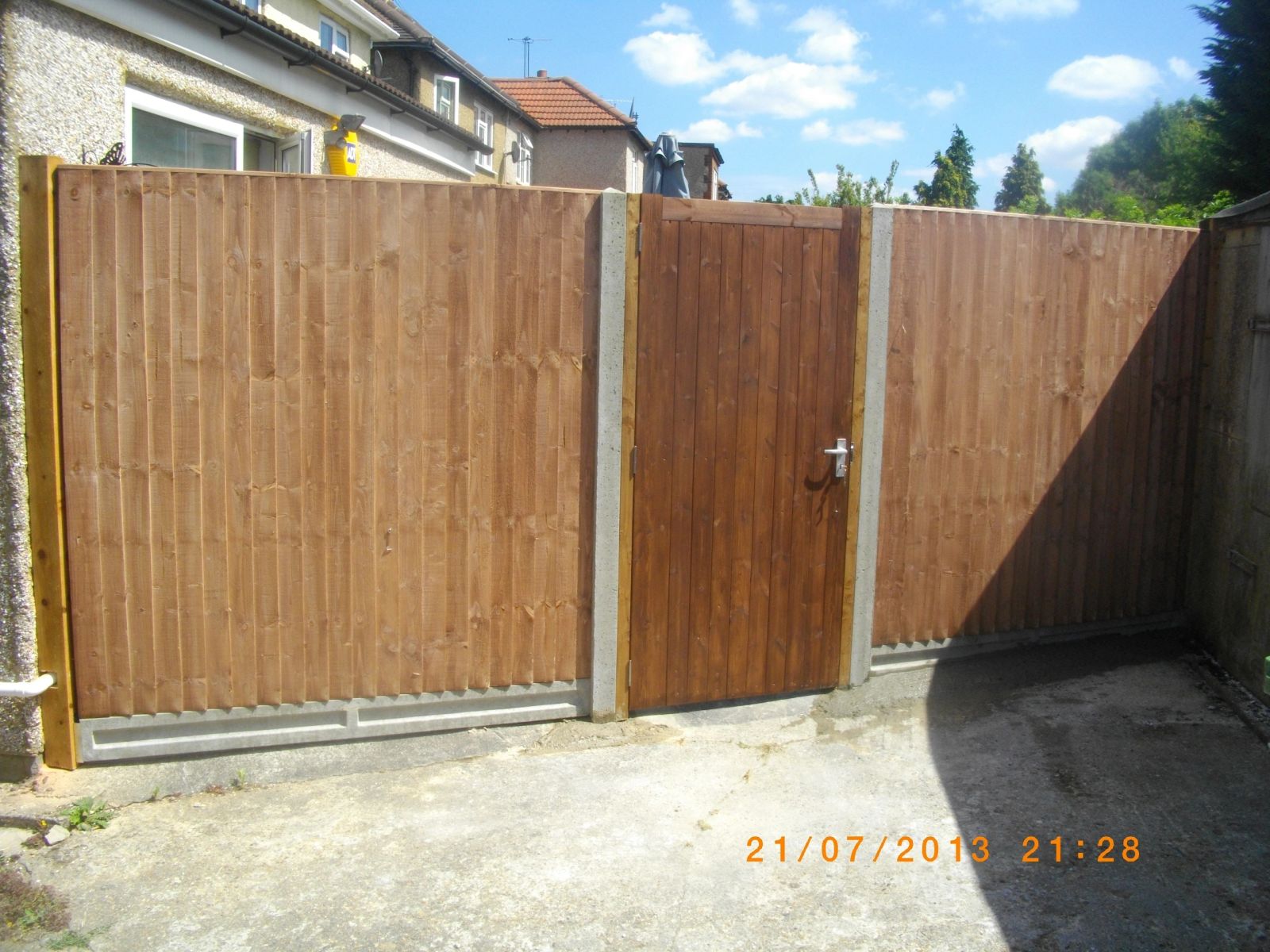
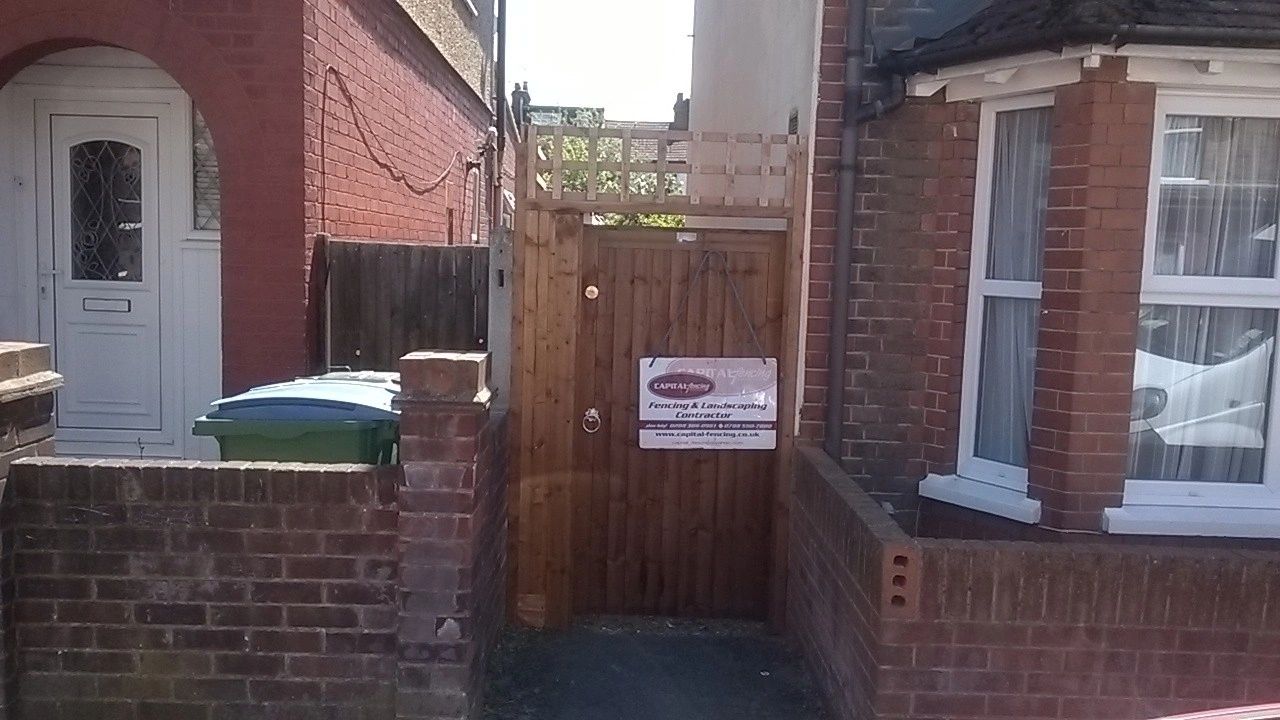
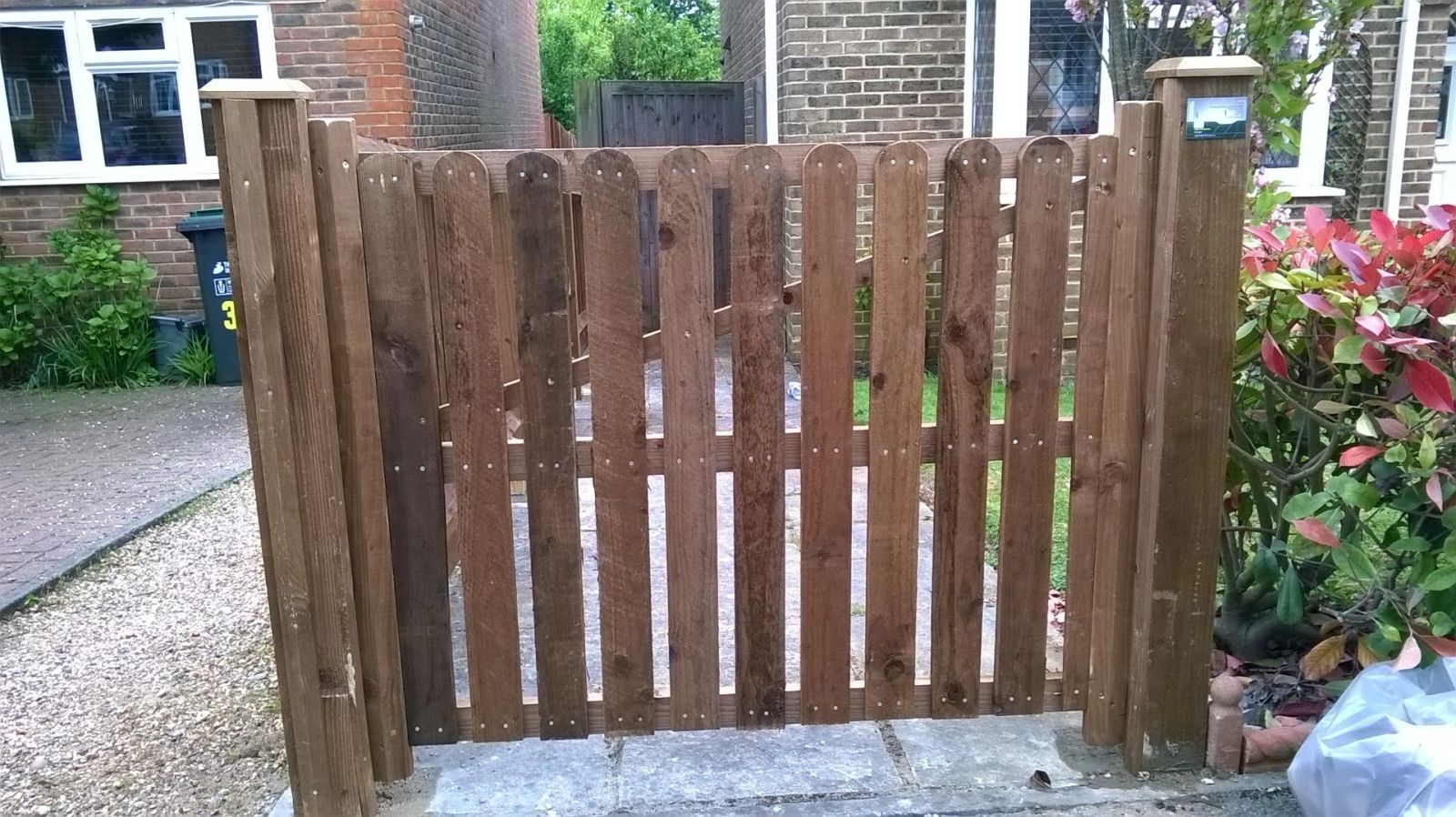
bespoke wooden gate installed by Capital Fencing in Welwyn Garden City (AL7)double driveway gates installed by Capital Fencing in Welwyn Garden City (AL7)hardwood side gate installed by Capital Fencing in Welwyn Garden City (AL7)metal entrance gate installed by Capital Fencing in Welwyn Garden City (AL7)

Security & Access Gates in Welwyn Garden City: the practical detail

Security fencing around a builders' compound

A builders' compound holding plant, materials and fuel needs a higher standard of fencing than the general site hoarding, since compound contents are a specific theft target and are often left unattended overnight or over a weekend.

Anti-climb toppings, a single monitored access gate and lighting are more commonly justified on a compound than on the wider site perimeter, given the concentration of value inside a relatively small footprint.

Sleeper thresholds beneath field and driveway gates

A timber or concrete sleeper set into the ground beneath a wide field or driveway gate gives the gate's bottom edge a firm, level reference to close against, preventing the bottom rail from dropping into soft or rutted ground over time.

This detail is particularly useful on unsurfaced openings where the ground either side of the gate sees regular vehicle or livestock traffic and would otherwise rut unevenly.

Planting distances from a new fence line

Shrubs and hedging planted hard against a new fence eventually push against the panel faces as they mature, trapping moisture against the timber and making later maintenance or panel replacement far harder without disturbing established roots.

A gap of a few hundred millimetres, sized to the expected mature spread of the species chosen, keeps airflow behind the fence and leaves room to work if a panel needs replacing years later.

This is worth raising at the design stage, since it is far easier to plan spacing before planting than to relocate mature shrubs once they have grown into the fence line.

Restaurants and pub gardens

Boundary fencing around a pub garden or restaurant terrace often does double duty as noise and light screening for neighbouring residential properties, and its height and permeability can be a condition attached to the premises licence rather than a free choice.

Trading hours mean access for fencing work is usually easiest early morning before service starts, since a garden in active use for covers can't have posts being dug mid-lunch.

Where outdoor seating sits close to the boundary, fixings and post positions need checking against any licensed seating plan so the finished fence doesn't reduce covers below what the licence allows.

Splash-back staining from adjacent paving

A fence running alongside a patio, path or driveway picks up rain splash-back off the hard surface, which carries fine grit and, on older paving, residual cement dust that leaves a pale tide-mark along the lowest boards.

This band of discolouration is separate from general weathering and won't fade with the rest of the timber, since it is a surface deposit rather than UV bleaching.

A gravel strip or planting border between paving and fence line reduces the splash distance, and a periodic wash-down of just the lower boards keeps the tide-mark from building up permanently.

Feather-edge board replacement

Individual feather-edge boards on a closeboard fence can be replaced one at a time without disturbing the rest of the run, since each board overlaps the next and is fixed independently to the arris rails.

Matching the taper and width of the existing boards matters more here than on a panel fence, since a mismatched board is visible immediately in a close-run overlap.

Spur repair material choice

A concrete or timber spur bolted alongside a rotted post base lets the sound upper section of the post be retained while replacing only the failed section near ground level, avoiding a full post replacement.

A concrete spur resists the ground moisture that caused the original rot far better than a timber spur repeating the same material in the same failure-prone zone, though it's heavier and less forgiving to align precisely.

The repair is only as good as the connection between spur and post, and coach bolts through both members, rather than screws alone, are needed to transfer wind load reliably across the joint.

Checking an unstable adjacent structure before repairing the fence against it

Where a fence panel is fixed to or sits hard against a garden wall, shed or outbuilding that's itself showing signs of movement, repairing the fence without addressing the structure it depends on risks the same failure recurring.

This is worth flagging to a client as a separate issue rather than working around it silently, since a fence repair fixed to an unstable wall is only as reliable as that wall.

Tamper-evident caps over external fixing bolts

A plastic or metal tamper-evident cap fitted over an external bolt head shows visible signs of damage if someone has attempted to remove it, giving a maintenance team an early visual signal that a section of fence has been interfered with even where nothing has actually come loose.

This is a low-cost addition on a run where fixings are otherwise exposed, and it's most useful on a boundary that isn't checked in person every day, where interference could otherwise go unnoticed for some time.

Care homes

Care home boundaries need to manage two directions of risk at once: keeping the site secure from outside, and, where residents live with dementia, preventing unsupervised exit through a garden gate that looks like a normal feature of the grounds.

Gates onto care home gardens are often specified with a delayed-release or coded latch rather than a simple thumb-turn, agreed with the home's management against its own care regulator requirements.

Access for contractors on an occupied care site usually needs coordinating around resident routines and quiet hours rather than a standard domestic working day.

Public liability considerations on a shared boundary

Work that takes place on or near a shared boundary inherently affects two properties, which is one reason contractors carry public liability insurance covering damage or injury arising from the works, generally quite separate from any specific job guarantee.

Clients are entitled to ask to see a contractor's current public liability certificate before work starts, and for jobs involving excavation near a neighbour's structure or a shared wall it's reasonable practice to confirm cover explicitly rather than assume it.

This is a generic industry consideration rather than a claim about any particular policy, and the details of cover, exclusions and limits vary between insurers and should be checked directly with the provider.

Historic boundary stones and markers

Older rural and some urban boundaries occasionally retain historic boundary stones, iron markers or other physical features predating modern title plans, sometimes referenced directly in old deeds.

These features can carry real evidential weight in establishing a long-accepted boundary line, particularly where later documents are vague or contradictory.

Where such a marker exists, it's worth photographing and noting its position before any fencing work potentially disturbs or removes it.

Diagnosing which of the three usual causes applies

Almost every failing gate comes down to the hinge side, the frame or the ironmongery, and diagnosing which one it actually is before quoting avoids paying for a new gate that wasn't needed.

We check hinge fixings, frame square and latch alignment separately on site rather than assuming from how the gate looks.

Who maintains a grass verge next to a boundary

A grass verge between a garden boundary and the road is often owned and maintained by the local council as part of the adopted highway, rather than by the adjoining property owner.

This affects where a fence can legally be positioned, since building onto highway land, even a seemingly unused verge, generally needs authorisation.

Where the extent of a verge and its ownership isn't obvious, the local highway authority can usually confirm it against their adopted highway records.

Bat and bird nesting season timing

Wild bird nests are protected while in use under the Wildlife and Countryside Act, which in practice means hedge-cutting and dense vegetation clearance along a boundary is generally best avoided during the main nesting season, roughly March to August, unless the hedge has been checked and confirmed clear.

Bats are protected year-round, but works affecting their roosting sites — old sheds, mature trees with cavities, ivy-clad walls — carry particular risk in spring and autumn when bats are moving between summer and winter roosts.

On any boundary job involving significant vegetation or old structure removal, a quick visual check for active nests or signs of bat use before starting is a simple way to avoid inadvertently committing an offence.

Correcting mismatched post spacing discovered during a repair

Occasionally an older run turns out to have inconsistent post spacing from the original build, which only becomes apparent when a panel being fitted during a repair doesn't sit at the expected width against the next post.

Rather than forcing a standard panel into a non-standard gap, options include a site-cut infill panel or slightly repositioning the post if it hasn't already been set, since forcing a fit usually strains the panel's frame and shortens its life.

Made ground and buried rubble

Plots built on old industrial land, demolished outbuildings or infilled yards often have a layer of brick, concrete or hardcore sitting a foot or two down rather than natural subsoil.

An auger that hits rubble at 300-400mm usually means hand-digging or breaking out that layer rather than fighting it, because a post set on top of loose fill will rock within a year regardless of how much concrete goes round it.

It's worth budgeting extra time for this on any plot with a known history of redevelopment, rather than assuming a standard dig will go to plan.

London Clay shrink-swell behaviour

London Clay is one of the most shrinkable soils in the country, expanding when saturated over winter and pulling away from anything set in it during a dry summer, sometimes opening a visible gap around a post base.

That cycle is what loosens posts that were adequately firm when first concreted in, rather than any fault in the original installation.

Depth and a granular key at the base do more to resist this movement long-term than simply increasing the volume of concrete around a shallow post.

Touching up galvanising after on-site cutting

Cutting a galvanised post or rail to length on site removes the zinc coating from the cut edge, leaving bare steel exposed exactly where water is most likely to sit if the cut faces upward.

A cold galvanising paint or zinc-rich primer applied to the cut edge immediately after cutting restores meaningful protection, and skipping this step on a security run is a common reason a fence corrodes first at bay joints rather than along the main rail length.

Softwood species used in fencing

Most UK fencing timber is a European redwood or whitewood softwood, chosen for cost and workability rather than natural durability, which is why it's almost always sold pressure-treated rather than untreated.

Redwood (Scots pine) takes preservative more readily than whitewood (spruce) because of its structure, which is part of why it's the more common species specified for treated fencing components.

Species alone isn't a durability guarantee — the treatment class and detailing (post caps, gravel boards, drainage at the base) generally matter more to service life than which softwood was used underneath it.

Converted flats and shared bin storage

Houses converted into two or three flats often have a shared bin store or side passage boundary that wasn't part of the original single-dwelling fence layout, and responsibility for repair can be unclear where the freeholder retains the passage but individual flats use it daily.

A gate onto a shared bin store needs to be wide enough for wheelie bins to pass without lifting them over a threshold, and a self-closing latch is worth specifying so the gate isn't left open between collections.

Where flats were converted without formal division of the garden, it's worth clarifying in writing which flat is responsible for which section of boundary before starting any replacement work.

Creosote and its substitutes

Traditional creosote, a tar-oil wood preservative, gives strong protection against rot and insects but is now restricted to professional and agricultural use in the UK following changes in chemical regulation, and isn't available for general retail sale.

Modern water-based and oil-based substitute preservatives aim to replicate creosote's protective performance without the same handling and environmental restrictions, though some traditionalists consider the older tar-oil formulations more effective on long-term exposed structural timber.

Fencing sold as 'creosoted' to the public today is typically treated with one of these substitute formulations rather than genuine creosote, since supply of the original product to non-professional users has been curtailed.

Security & Access Gates across AL7, AL8 is a regular run for us. We'll quote honestly, tell you if security access gates isn't the right answer for your site, and book the job in within a week or two of a signed quote. structural spans and post depths calculated, not guessed. Roads such as Howardsgate and Pentley Park are typical of the local layout. Welwyn Garden City station is a useful local reference point. The Garden City Movement's design principles, associated with Ebenezer Howard, are still referenced informally by residents on streets such as Applecroft and Handside.

Get In Touch

Get My Free Quote — 24h Response

No callout fee · Free site visit · Friendly local team covering London & Hertfordshire.

Call us
07885907880
or 02036484746
Email
capital_fencing@yahoo.com
WhatsApp
Message us anytime
Area
London & Hertfordshire
Payment
Card payments accepted

Pay by debit or credit card, bank transfer or cash once the work and price are agreed. No deposit taken online.

Request a Free Quote

We'll get back to you within 24 hours.

Free Site Visit No Callout Fee
Call WhatsAppQuote