London & Hertfordshire Free Site Visit
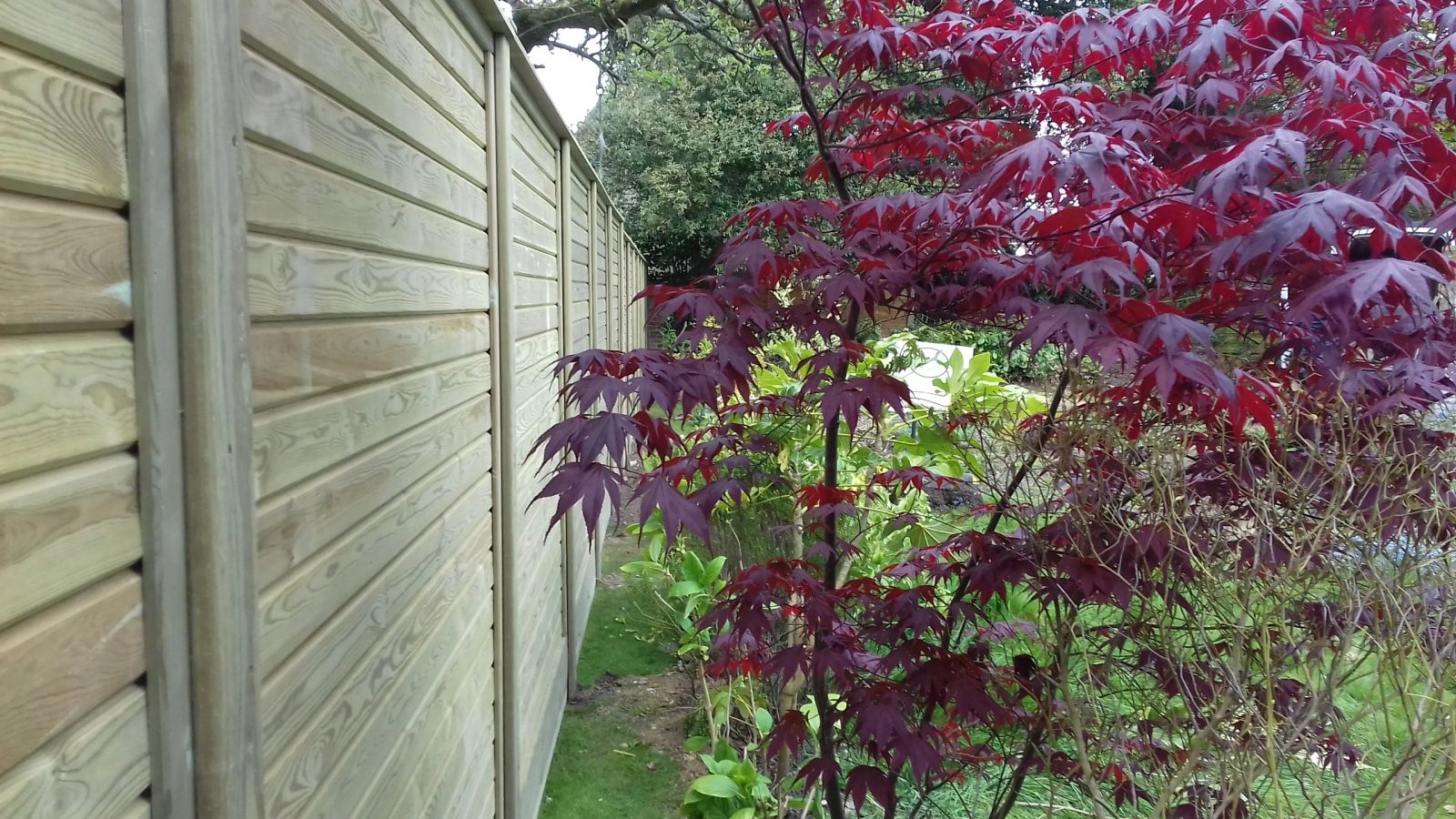
bespoke wooden gate installed by Capital Fencing in Bushey (WD23)
Bushey · WD23

Side Return Gates, Bushey: match-what-you-have spec for large detached and semi-detached homes around Bushey Heath

Capital Fencing installs side-return gates across Bushey and out toward watford and borehamwood. What separates a side-return gates job from a standard boundary is the detail: hardwood side gate between a rendered wall and a brick pier, 780mm opening, drop-bolt into a concrete slab socket. That's the work, not the marketing. Roads such as Park Avenue and Bushey Hall Road are typical of the local layout. Bushey Museum is a useful local reference point. The area sits close to the M1, and gardens on the highest ground have views toward the motorway corridor.

Capital Fencing installs side-return gates across Bushey and out toward watford and borehamwood. What separates a side-return gates job from a standard boundary is the detail: hardwood side gate between a rendered wall and a brick pier, 780mm opening, drop-bolt into a concrete slab socket. That's the work, not the marketing. Roads such as Park Avenue and Bushey Hall Road are typical of the local layout. Bushey Museum is a useful local reference point. The area sits close to the M1, and gardens on the highest ground have views toward the motorway corridor.

What goes wrong

Common failure modes on side-return gates

  • fitting a full-weight hardwood gate on domestic pin hinges — drops within six months
  • not shooting a drop-bolt into a concrete socket — kicked or pried open too easily
Default spec

How we build side-return gates in Bushey

44mm framed hardwood or planed softwood, tongue-and-groove infill, adjustable ball-race hinges, closing stop and drop-bolt. On Bushey jobs we adjust for bushey heath conservation area limits front boundary heights and prohibits certain panel styles.

Property mix locally: large detached and semi-detached homes around Bushey Heath, with older cottages in Bushey Village. Typical gardens: deep, mature gardens — many sloping with mature trees and substantial existing planting. Postcodes we regularly service: WD23.

Why this spec, for London terraces and semis with a narrow alley between the house and the neighbouring wall

  • framed builds don't drop the way board-and-batten side gates do in year two
  • adjustable hinges handle the seasonal timber movement every London side gate experiences
  • made to the exact opening — no packing pieces, no gaps for burglars or foxes

Typical side-return gates briefs in Bushey

  • hardwood side gate between a rendered wall and a brick pier, 780mm opening, drop-bolt into a concrete slab socket
  • matched pedestrian and bin-store gate serving a shared side alley between two flats

Side Return Gates FAQs — Bushey

Do you handle the wall fixing on both sides?

On side-return gates jobs in Bushey (WD23), our default answer is: 44mm framed hardwood or planed softwood, tongue-and-groove infill, adjustable ball-race hinges, closing stop and drop-bolt. We'll walk you through framed builds don't drop the way board-and-batten side gates do in year two on the site visit before you commit.

How do you stop a side gate dropping over time?

Across Bushey we spec around bushey heath conservation area limits front boundary heights and prohibits certain panel styles, so on side-return gates that usually means iroko hardwood on galvanised ironmongery for 15+ year service. For context: adjustable hinges handle the seasonal timber movement every London side gate experiences. Measured, quoted and installed by the same small crew.

Is a drop-bolt necessary as well as a lock?

Hertsmere Borough coverage means we can survey most WD23 addresses inside a week — London terraces and semis with a narrow alley between the house and the neighbouring wall. We'll walk you through framed builds don't drop the way board-and-batten side gates do in year two on the site visit before you commit.

How wide can a single side gate span before it needs a wheel?

Practically: hardwood side gate between a rendered wall and a brick pier, 780mm opening, drop-bolt into a concrete slab socket. That's the Bushey version of this job, not a generic one. The honest trade-off is fitting a full-weight hardwood gate on domestic pin hinges — drops within six months — which is exactly what our default spec designs out.

Softwood or hardwood for a London side gate?

On side-return gates jobs in Bushey (WD23), our default answer is: 44mm framed hardwood or planed softwood, tongue-and-groove infill, adjustable ball-race hinges, closing stop and drop-bolt. We'll walk you through framed builds don't drop the way board-and-batten side gates do in year two on the site visit before you commit.

Recent side return gates work
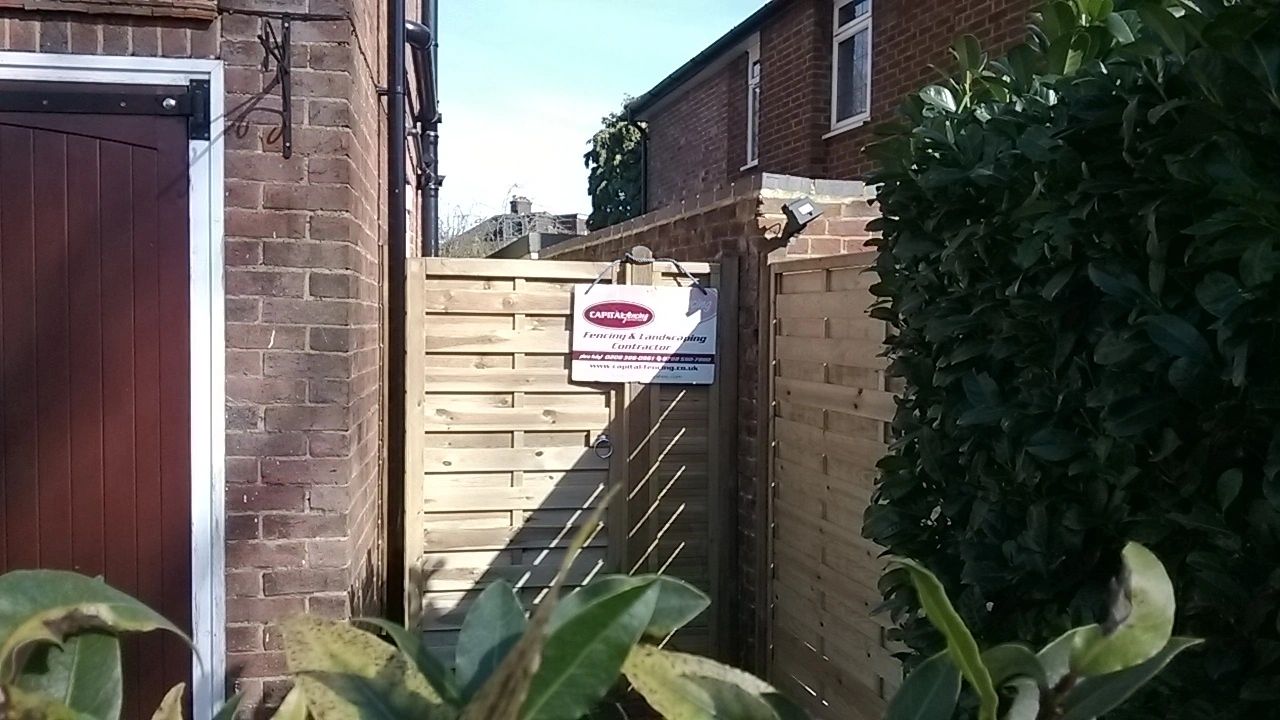
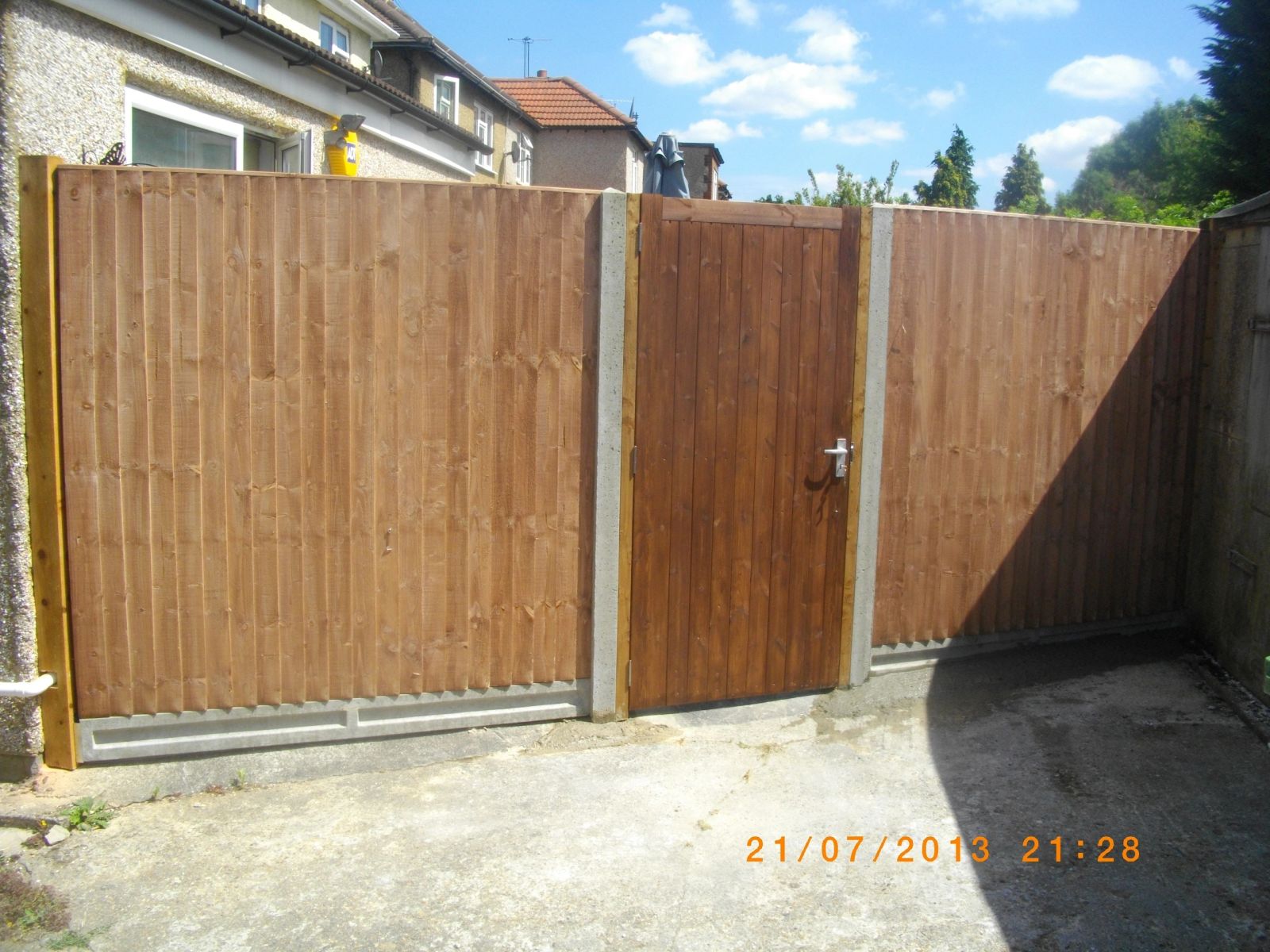
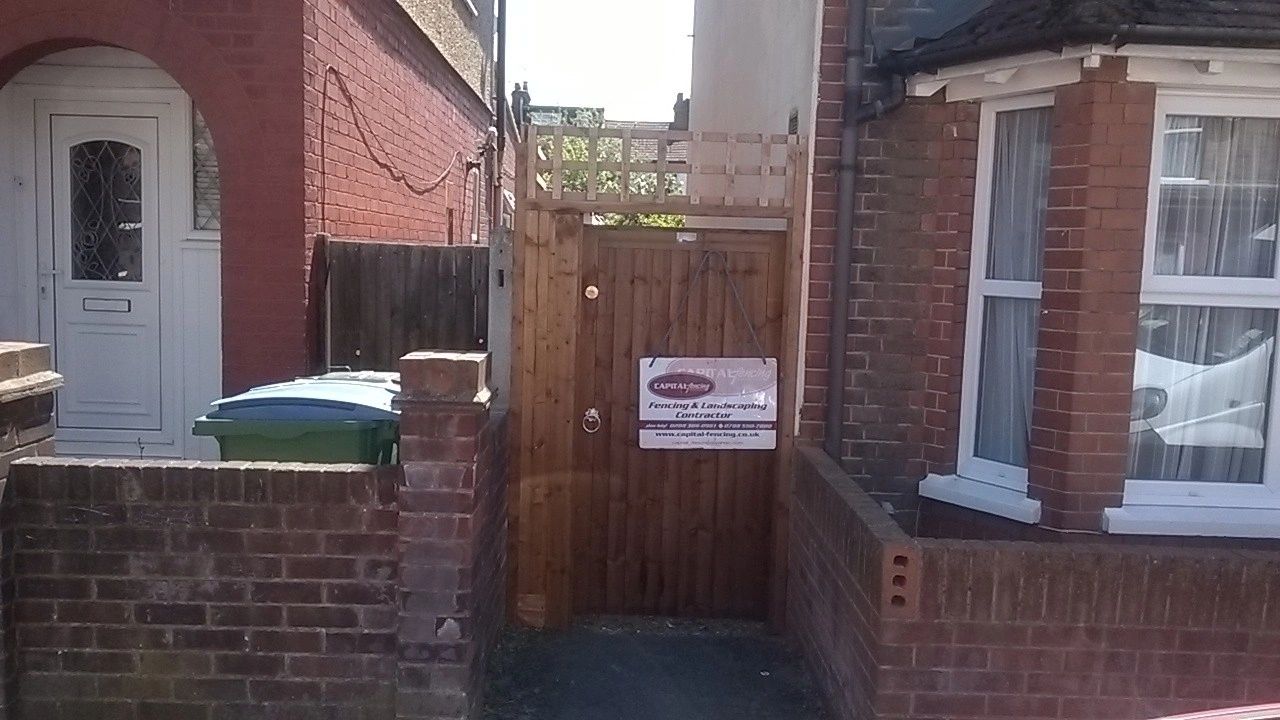
bespoke wooden gate installed by Capital Fencing in Bushey (WD23)double driveway gates installed by Capital Fencing in Bushey (WD23)hardwood side gate installed by Capital Fencing in Bushey (WD23)metal entrance gate installed by Capital Fencing in Bushey (WD23)

What actually matters for side return gates around Bushey

Matching a repair into an older run

Matching a repair into a boundary that's twenty or thirty years old sometimes means the original panel profile is no longer available, in which case we offer the closest realistic option and explain honestly where it won't be an exact match.

On an estate where many neighbouring gardens share the same original fence line, one household's repair is often the first of several over the following years, and we keep a note of the spec used for consistency.

Coordinating fencing work with other trades on a shared site

On a job where fencing follows landscaping, paving or groundworks by another trade, confirming final levels and boundary positions with that other trade before digging starts avoids fence posts being set to a level that then changes once the remaining groundwork is finished.

Where fencing is scheduled before paving, agreeing which side of the post line the paving will finish against prevents a post ending up embedded in what should have been a clear paving joint.

Simple sequencing conversations at the outset, rather than each trade working to its own assumptions, avoid the more expensive alternative of one trade's finished work being disturbed by the next.

Setting posts in clay

London clay and the heavier Hertfordshire boulder clays shrink and swell noticeably between a dry summer and a wet winter, which is exactly the movement that works a badly-set post loose over a few seasons.

The fix is depth and drainage rather than just more concrete: posts need to go below the zone that dries out and cracks seasonally, typically deeper than the standard 600mm used on free-draining ground, with a stone or gravel key at the base so water isn't trapped against the timber.

Postcrete alone on shallow clay bases is one of the most common reasons we're called out to replace a fence that's only a few years old.

Checking existing boundary alignment before a like-for-like rebuild

Rebuilding a fence on the line of an existing one assumes that existing line was accurate, which isn't always the case — old fences can have drifted from the true boundary over successive repairs and replacements.

A quick check against any available reference, such as a boundary marker, an adjoining wall, or a neighbour's fence that's known to be accurate, is worth doing before assuming the old line should simply be copied.

Where a discrepancy is found, it's a conversation for the client and neighbour to have before rebuilding, since quietly correcting or quietly perpetuating a boundary error both carry consequences beyond the fencing job itself.

Weed and damp membrane beneath a ground-level deck

A permeable membrane laid over the ground beneath a low-level deck suppresses weed growth and reduces the amount of moisture rising from bare soil into the enclosed void under the boards.

It needs to be permeable rather than a solid impermeable sheet, since trapping ground moisture entirely beneath an impermeable membrane can create a worse damp environment than leaving the soil exposed to some airflow.

Combined with adequate ventilation gaps at the deck's edges, a permeable membrane is a low-cost addition that measurably reduces the humidity the joists sit in throughout the year.

Cladding fixing pattern and thermal movement

Timber cladding boards are usually fixed with a single row of fixings near one edge rather than through the centre, allowing the board to expand and contract slightly around that fixed edge without the fixing itself resisting the movement.

Fixing through both edges of a wide board effectively locks it in place, which forces any subsequent expansion or shrinkage to manifest as cupping, splitting or fixing failure rather than free movement.

This detail becomes more important as board width increases, since a narrow board moves relatively little in absolute terms while a wide board can move several millimetres across its face between a dry and a humid spell.

Certificates of lawfulness for existing boundary structures

A Certificate of Lawfulness of Existing Use or Development can formally confirm that an existing boundary structure was lawfully built, which is useful where there's uncertainty or a dispute about historic permissions.

This is different from planning permission itself — it's a factual confirmation of lawful status, often sought before a property sale to resolve a conveyancing query.

Where a long-standing boundary fence's planning history is unclear, applying for this kind of certificate can settle the question more reliably than relying on assumption.

Fence or gate height near roof-mounted solar panels

A tall fence, gate, or dense trellis topper built close to a boundary can cast shade onto a neighbouring roof-mounted solar array during parts of the day, which isn't usually a planning matter but can become a point of neighbourly friction worth being aware of.

This is a relatively new consideration compared with the traditional daylight and boundary height concerns, but is increasingly relevant as more households install solar panels close to shared boundaries.

Discussing height and position informally with a neighbour before installing a particularly tall boundary feature near their south-facing roof avoids a dispute that has no clear formal regulation to resolve it.

Wind loading on exposed runs

A fence on an open, elevated or unsheltered boundary — a plateau, a field edge, or a long unbroken run with no buildings breaking the wind — takes a real structural load that a sheltered suburban garden never sees.

Standard 75x75mm posts and full-height solid panels are the combination most likely to fail here; heavier posts, shorter bays between them, and a slatted or louvred profile that lets some wind through all reduce the load rather than fighting it head-on.

It's a specification decision made at quote stage, not something to retrofit after the first panel goes over in a storm.

Routing deck lighting cable away from standing water

Low-voltage deck lighting cable run beneath boards needs to be kept clear of any point where water is likely to pool, since even low-voltage cable connectors degrade faster in permanently wet conditions than in the intermittent dampness the rest of the substructure sees.

Routing cable along the higher side of a deck's fall, rather than through the lowest point where water naturally collects, is a simple planning step that extends the life of an otherwise reliable lighting installation.

Any cable joints beneath a deck should use fully waterproof-rated connectors rather than standard household connectors, given the substructure environment is functionally outdoors and damp regardless of overall deck condition.

Block management and communal consultation

Managing agents for blocks of flats are usually required to consult leaseholders on works above a set cost threshold under a Section 20 process, which applies to significant boundary or fencing works charged through the service charge.

That consultation period adds real time to a project timeline compared with a private garden job, so it's worth building the notice period into the schedule rather than assuming work can start once a quote is accepted.

Communal boundary decisions also tend to involve balancing several flats' differing views on privacy, light and appearance, which a single homeowner job never has to negotiate.

Five-bar field gate hardware and repair

A five-bar field gate is built for spanning wide openings rather than security, with widely spaced horizontal bars and a diagonal brace, and its hardware is typically heavier gauge than a garden gate's to cope with livestock or vehicle contact.

Hanging and heel posts on this type carry more load per fixing than domestic posts, so repairs often focus on the post fixing itself rather than the gate frame.

Drop bolts and ground sockets

A drop bolt fixed to the bottom rail of a leaf drops into a ground socket to hold that leaf still while the other leaf is used for daily access, and a socket that's silted up or out of alignment is a common reason a drop bolt stops locating properly.

We check the socket depth and drainage as well as the bolt itself, since a blocked socket is often mistaken for a bent or worn bolt.

Haunching a post base above ground level

Haunching means shaping the concrete around a post so it stands slightly proud of the surrounding ground and slopes away from the post in all directions, rather than finishing flush or dished.

That slope sheds rainwater away from the timber-to-concrete interface, which is the point most prone to trapping moisture and starting rot at the base of an otherwise sound post.

A flush or dished base, by contrast, holds a shallow puddle around the post after every rainfall, quietly shortening the post's life regardless of how well the timber itself was treated.

Reading a title plan's boundary responsibility marks

Land Registry title plans sometimes show a T-mark against a boundary line, indicating which owner is responsible for maintaining that section — though many properties, especially older ones, have no such marks and the deeds are simply silent.

Where marks exist they're a strong steer but not always conclusive, and where they're absent, ownership defaults to being agreed between neighbours or, in a genuine dispute, determined by a boundary surveyor.

Getting a copy of the title plan before quoting a replacement fence is a five-minute step that avoids rebuilding a boundary neither party is formally responsible for.

Repairing posts in waterlogged ground after heavy rain

A footing dug in waterlogged ground doesn't compact or bond as reliably as one dug in drier conditions, and standing water in the hole can dilute a concrete mix before it's had a chance to set properly.

Where a repair can't wait for drier ground, options include a free-draining aggregate base in the hole and a quick-set mix suited to damp conditions, but the underlying decision is often whether the repair should be delayed a few days rather than pushed through in poor conditions.

Weather delays and rescheduling honestly

Concrete won't cure properly in a hard frost, and post holes dug in heavy rain can collapse or fill with water before the post goes in, so a genuinely bad-weather day is a legitimate reason to reschedule rather than push through and risk a poor-quality fix.

Wind strong enough to make handling full panels unsafe is a similarly clear-cut reason to delay, particularly when working at height on taller gates or fence runs.

Being upfront about a weather delay as soon as it's known, rather than on the morning the crew was due, gives the client time to adjust their own plans around the new date.

Repairing a bowed panel

A panel that's bowed outward has usually taken sustained wind or leaning pressure that's stressed the internal battens rather than the face boards themselves, and a bow rarely pulls itself straight again once the timber has set in that shape.

Depending on severity, a bowed panel can sometimes be braced from behind with an additional batten, but a panel bowed badly enough to have cracked its frame is generally more reliably replaced than braced.

Rail configurations on a palisade or railing run

A two-rail configuration (top and bottom) suits lower runs, while anything above around 2.4m generally takes a third, mid-height rail to stop the pales flexing independently under a push or climb attempt.

Rail spacing is set so a gap doesn't become a foothold; on a taller run the middle rail is positioned deliberately off-centre rather than dead-centre, to avoid creating an even climbing ladder.

Salt and de-icing near a pavement

A front boundary fence close to a pavement or road gritted in winter is exposed to salt spray and run-off that a rear-garden fence never sees, and that salt accelerates corrosion in untreated steel fixings and speeds up timber degradation at ground level.

Galvanised or stainless fixings resist this better than standard bright steel, and are worth specifying as standard on any boundary within a few metres of a regularly gritted surface.

Salt-laden ground also tends to stay damp for longer after a thaw, extending the period a post base is sitting in wet conditions each winter.

Dropped kerbs and boundary gate positions

A dropped kerb is authorised for a specific width and position, and a gate or fence opening that doesn't line up with it can create a technically unauthorised vehicle crossing over the footway.

Where a driveway gate is being repositioned or widened, it's worth checking whether the dropped kerb needs to be extended or moved to match, which is a separate application to the council's highways department.

Parking a vehicle over a kerb that hasn't been properly dropped, even briefly during works, can also draw attention from the local authority in some areas.

Diagnosing a latch that only sticks in damp weather

A latch or gate that closes fine in dry weather but sticks or binds after rain is very often timber swelling with moisture rather than a hardware fault, and this points to a finish or ventilation issue rather than the latch mechanism itself.

Confirming the pattern is weather-related before adjusting or replacing hardware avoids fixing a symptom that will return with the next wet spell.

On side-return gates in Bushey you get the same crew from first site visit to hand-over. That's the whole model — small team, match-what-you-have spec, written quote before we start. Roads such as Sparrows Herne and Falconer Road are typical of the local layout. Bushey station is a useful local reference point. Bushey Hall and the surrounding parkland reflect the area's history as a country estate before suburban development.

Get In Touch

Get My Free Quote — 24h Response

No callout fee · Free site visit · Friendly local team covering London & Hertfordshire.

Call us
07885907880
or 02036484746
Email
capital_fencing@yahoo.com
WhatsApp
Message us anytime
Area
London & Hertfordshire
Payment
Card payments accepted

Pay by debit or credit card, bank transfer or cash once the work and price are agreed. No deposit taken online.

Request a Free Quote

We'll get back to you within 24 hours.

Free Site Visit No Callout Fee
Call WhatsAppQuote