Minimum clear width for pedestrian gate access
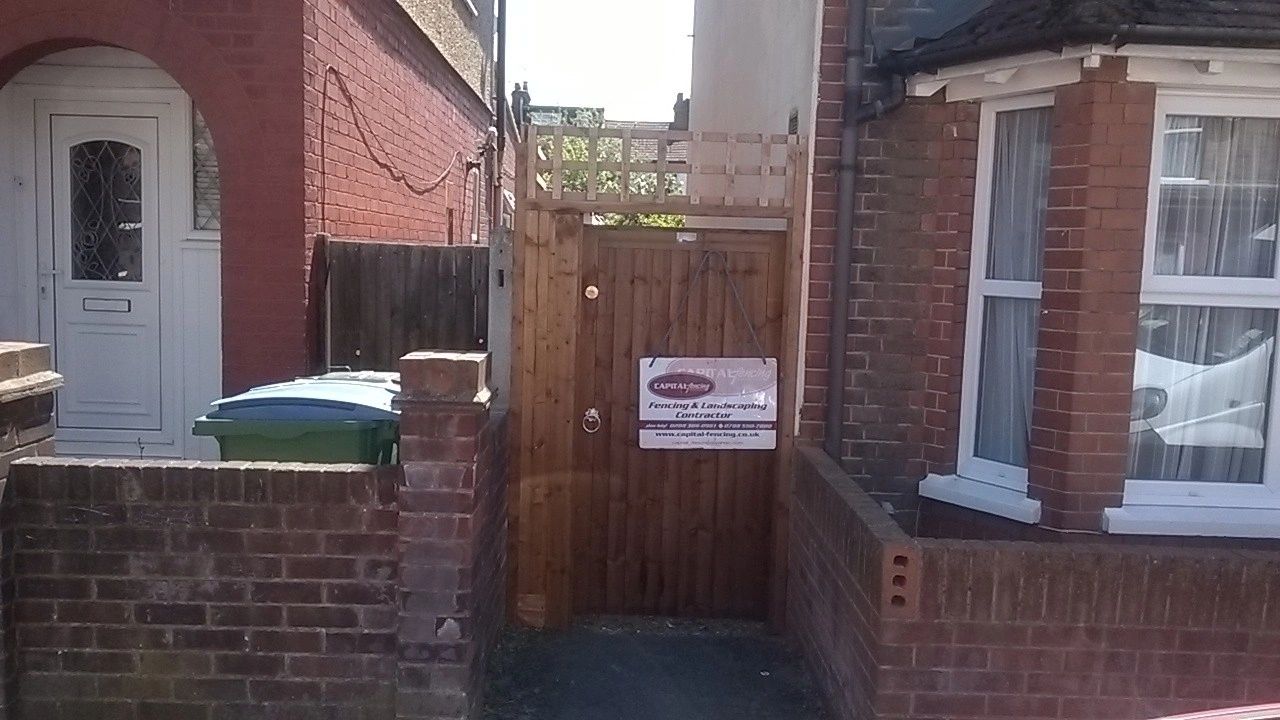
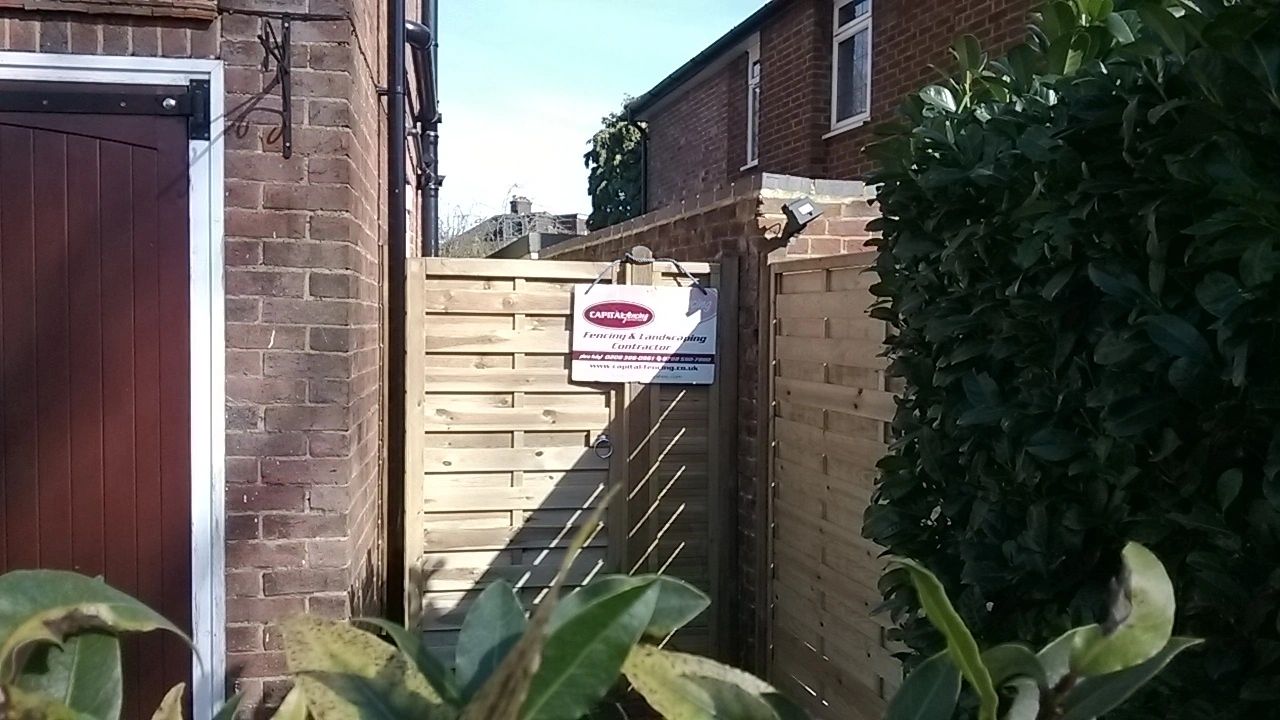
A pedestrian gate needs enough clear width once open to comfortably pass through with hands full, a pushchair or a wheeled bin, and a gate that technically opens but leaves very little usable width against an adjacent wall or post is a common design oversight on tight side returns.
Checking the actual clear opening, not just the gate leaf's nominal width, avoids this problem before a gate is ordered.
Timber grading and treatment for a security spec
Where timber is used on a security run, a denser, higher-grade section holds up to sustained pressure at gate junctions and pedestrian pinch points better than a standard fence-grade board, and pressure treatment needs to penetrate fully rather than sit on the surface.
We spec the grade to the load the section will actually see, not a single grade across the whole job.
Estate gates hung from masonry piers
An estate-style gate is often hung from brick or stone piers rather than timber posts, which changes the repair approach entirely since a loose hinge fixing means re-drilling or resin-fixing into masonry rather than replacing a post.
Pier movement itself, from ground settlement or frost heave, can throw two gates out of alignment with each other even when both gates and their hinges are otherwise sound.
Defensive planting alongside a security fence
Dense, thorny planting such as hawthorn or berberis along the inside or outside of a lower fence adds a deterrent layer without extra height, and is sometimes used where planning limits the fence itself.
Planting needs a maintained gap from the fence line so roots don't undermine posts and growth doesn't hide someone approaching the boundary — the deterrent only works if it's kept low enough to see over and dense enough not to push through.
Keeps and hasps for padlocking
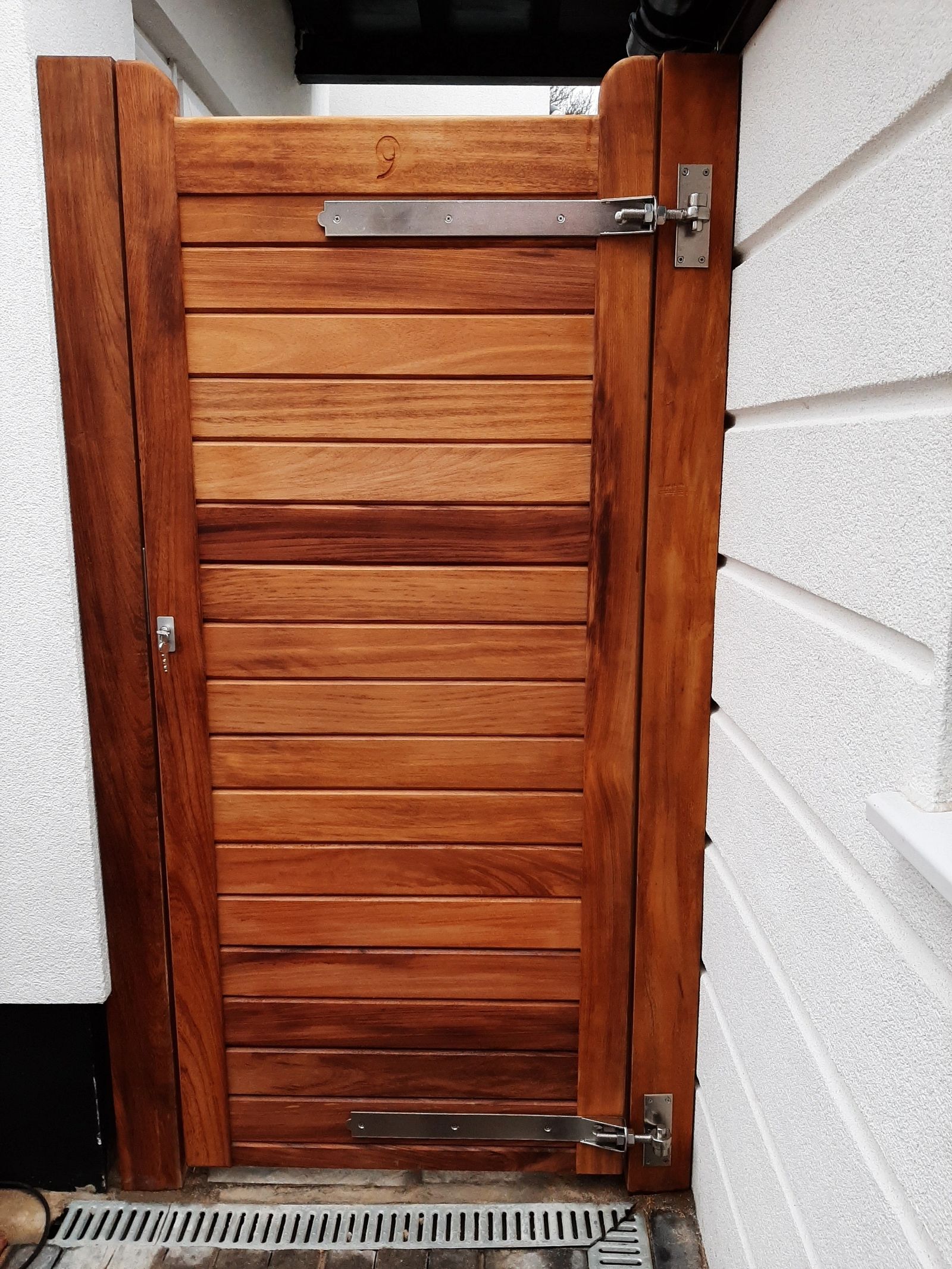
A keep holds a sliding or dropping latch bar, while a hasp is the separate hinged plate that a padlock passes through — the two are often confused but serve different jobs and aren't interchangeable on most gate designs.
Hasp screws are a common weak point since they're fitted from the accessible face; through-bolting a hasp gives more resistance to forcing than screws alone.
Knot loosening in structural timber
Knots are the base of a branch embedded in the trunk, and as timber dries the knot itself shrinks less than the surrounding wood, which can leave it loose or eventually cause it to drop out and leave a hole.
A live knot, still bonded to the surrounding fibres, is far less of a concern than a dead knot with a dark ring around it, which indicates the branch had already died before the tree grew over it and bonds poorly.
On load-bearing sections like arris rails, a cluster of large or dead knots near a fixing point is worth avoiding, since it reduces the effective cross-section carrying the load at that point.
Being mindful of working hours and noise on a repair in a residential setting
Cutting timber, breaking out old concrete and driving fixings all generate noise that's more noticeable on a short repair visit in a quiet residential street than it might be on a larger, more expected construction project nearby.
Keeping to reasonable working hours and giving immediate neighbours brief notice ahead of a repair that involves breaking out concrete is a simple courtesy that avoids unnecessary complaints on an otherwise routine job.
Padbolt throw length and post engagement
A padbolt needs enough throw length to engage solidly into the post or an adjacent leaf, and a bolt with too short a throw for the gap it's covering can be forced open with comparatively little effort.
Checking throw length against the actual gap, rather than fitting a standard-length bolt regardless of the opening, is a simple but often-missed step when upgrading gate security.
Capping rail replacement
A capping rail along the top of a panel run sheds rainwater off the panel faces and its own fixings are exposed to the most weathering on the whole fence, so it often needs replacing before the panels beneath show any damage.
Refitting capping with a slight overhang and a drip groove reduces water tracking back onto the panel face compared with a flush-fitted replacement.
Repairing a spot damaged repeatedly by a dog
A dog that digs at the base of a fence or chews at exposed board edges tends to concentrate damage at one recurring spot rather than spreading it along the whole run, which makes a localised repair — a buried mesh skirt, a metal kick-plate — more effective than a general fence upgrade.
Addressing the underlying cause, such as blocking the specific gap the dog is trying to reach through, matters as much as the physical repair, since a repaired section without that change is often damaged again in the same place.
Spoil volume and removal
Digging a full run of post holes generates more spoil than most clients expect, particularly on clay where the dug material swells in volume compared with its compacted state in the ground.
Spoil that can't be spread thinly elsewhere on the plot without smothering lawn or borders usually needs skip or licensed grab-lorry removal, which should be agreed and costed before the dig starts rather than after a pile has built up on the lawn.
Heavy clay spoil left on grass for more than a day or two will usually kill it, so covering or removing arisings promptly matters if the lawn is staying.
Upgrading security at a farm gateway
A farm gateway is a common target for rural theft of machinery, fuel and livestock, and a five-bar field gate on its own offers little more than a visual boundary marker, so a security upgrade typically adds a padlockable hasp, a stronger hinge set and sometimes a second inner gate as a layered deterrent.
Positioning a gate slightly back from the road with a locked field gate behind an open highway gate can slow a vehicle-based theft attempt without obstructing the farmer's own daily access.
Electrified topping wire basics
An electrified topping wire adds a pulsed low-current deterrent above an existing fence line and is installed to specific clearance and signage rules rather than fitted freely, since it counts as a controlled hazard.
Specialist installers handle the energiser and wiring; the fencing contractor's role is limited to providing insulated brackets and a structurally sound top line for the wire to run along.
Deck board gapping to allow seasonal movement
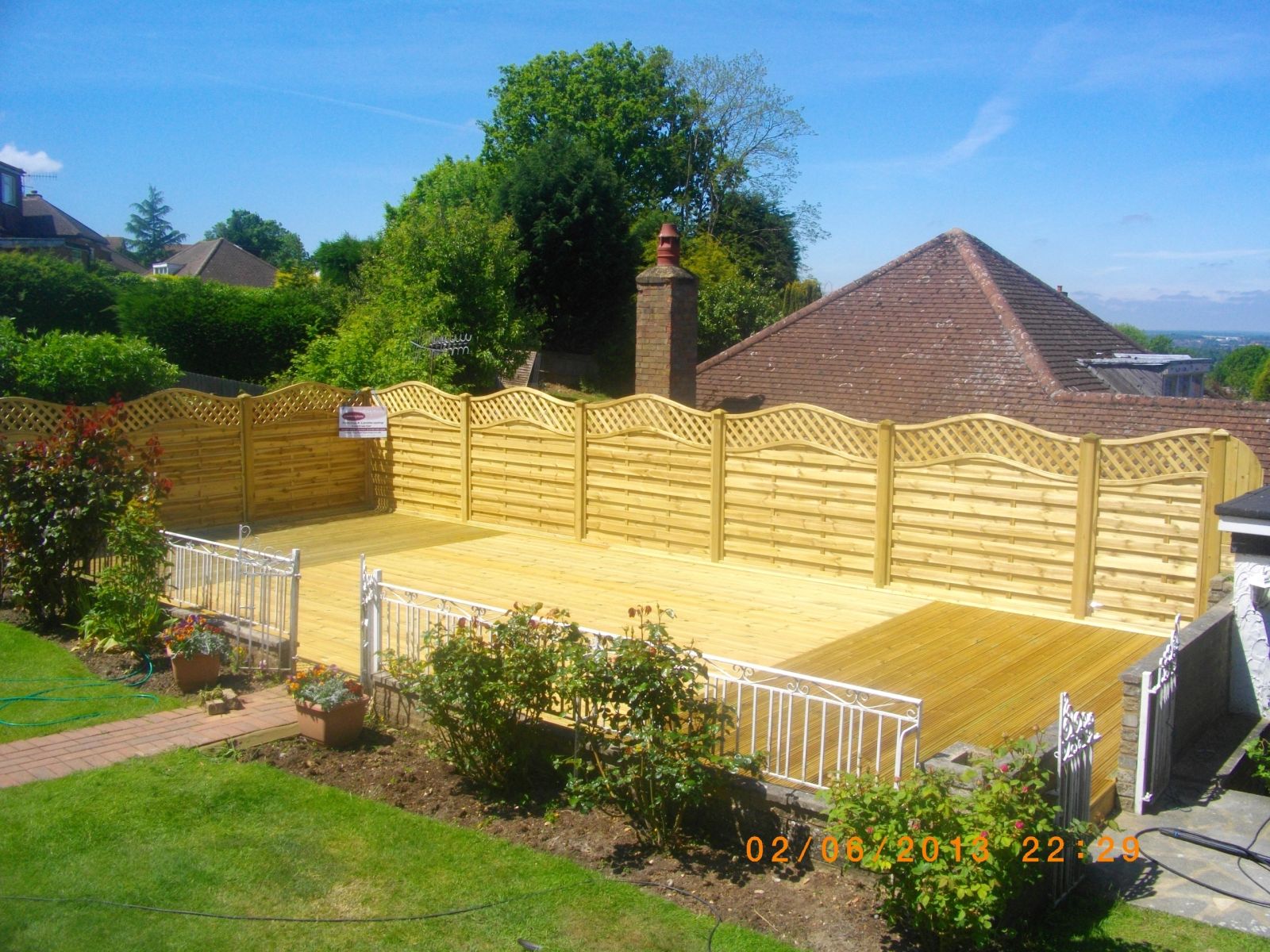
Timber deck boards expand slightly when they absorb moisture and contract as they dry, so boards laid without a small gap between them can cup, bow or push against each other as conditions change through the year.
The correct gap depends on the moisture content of the timber at the time of laying — kiln-dried boards laid tight in winter may need a slightly wider gap than the same boards laid already at a higher moisture content in summer.
Composite boards move with temperature rather than moisture and have their own manufacturer-specified gap and expansion allowance, particularly at butt joints and against fixed edging.
Latch types: Suffolk, ring, auto-latch, gravity
A Suffolk latch and a ring latch both use a thumb-operated lever to lift a bar out of a keep, while an auto-latch closes itself on contact and a gravity latch relies on weighted design to drop into place — each needs different striker alignment to work reliably.
Replacing a worn latch with a like-for-like type is usually simpler than switching types, since the keep and striker positions are often already cut for that specific mechanism.
Who maintains a grass verge next to a boundary
A grass verge between a garden boundary and the road is often owned and maintained by the local council as part of the adopted highway, rather than by the adjoining property owner.
This affects where a fence can legally be positioned, since building onto highway land, even a seemingly unused verge, generally needs authorisation.
Where the extent of a verge and its ownership isn't obvious, the local highway authority can usually confirm it against their adopted highway records.
Subdividing a garden and creating a new boundary
Splitting part of a garden off for a new dwelling, annexe, or sale to a neighbour creates a brand new legal boundary that needs to be properly defined and registered with the Land Registry, not just marked with a fence.
A fence alone doesn't create or confirm legal ownership of subdivided land — the conveyancing and registration is what actually establishes the new boundary in law.
Anyone considering this kind of garden subdivision should involve a solicitor for the legal transfer before, rather than after, any physical fence goes in to mark the new line.
Deliveries and access control interfaces
A gate that's also the main delivery route needs wider clearances and a more robust hinge and closer than a purely pedestrian gate, because it will be opened and knocked far more often.
Where an intercom or access-control system is fitted, the fencing contractor coordinates gate width and swing with the installer of that system rather than fixing the gate first and adapting the electronics afterwards.
Where neighbours disagree on sharing a repair cost
A boundary fence repair is sometimes split between neighbours by informal agreement, but there's no automatic legal requirement for a neighbour to contribute unless the deeds specifically say so, and disagreement over cost-sharing is common enough to plan for.
In practice it's simpler to quote the repair to whichever party is instructing the work and let that client resolve any cost-sharing conversation separately, rather than trying to split an invoice between two parties who haven't agreed terms.
Repairing post damage caused by an added light fitting or wiring
A post drilled to carry a solar light, festoon wiring or a mounted fitting has extra penetration points that can let water into the timber, accelerating rot at a spot that wouldn't otherwise be a weak point on that post.
Repair means addressing both the rot and, ideally, resealing or relocating the fitting so the same penetration doesn't cause the same damage again once the post section has been renewed.
Ongoing access rights reserved under a utility wayleave
A recorded wayleave or easement for utility apparatus usually reserves an ongoing right for the utility company to access and maintain their equipment, which can mean a fence built across the strip needs a lockable gate or removable section.
Building an entirely fixed fence over an area subject to this kind of reserved access can lead to the utility company needing to remove part of it later at the owner's inconvenience.
Checking the title register for any registered wayleave before finalising a fence design avoids this kind of retrofit.
Working carefully around artificial lawn during fencing installation
Artificial turf doesn't recover from scuffing, dropped tools or concrete splash the way real grass can regrow, so any damage to it during a fencing job is effectively permanent rather than something that fades over a season.
Digging post holes at the very edge of an artificial lawn needs particular care to avoid disturbing the turf's edge trim or the compacted base beneath it, since that base is engineered to stay firm and level rather than simply being soil.
Boards or sheeting laid over artificial turf during material handling protect it from scuffing in the same way they would a patio, and are worth using as standard rather than only when asked.