London & Hertfordshire Free Site Visit
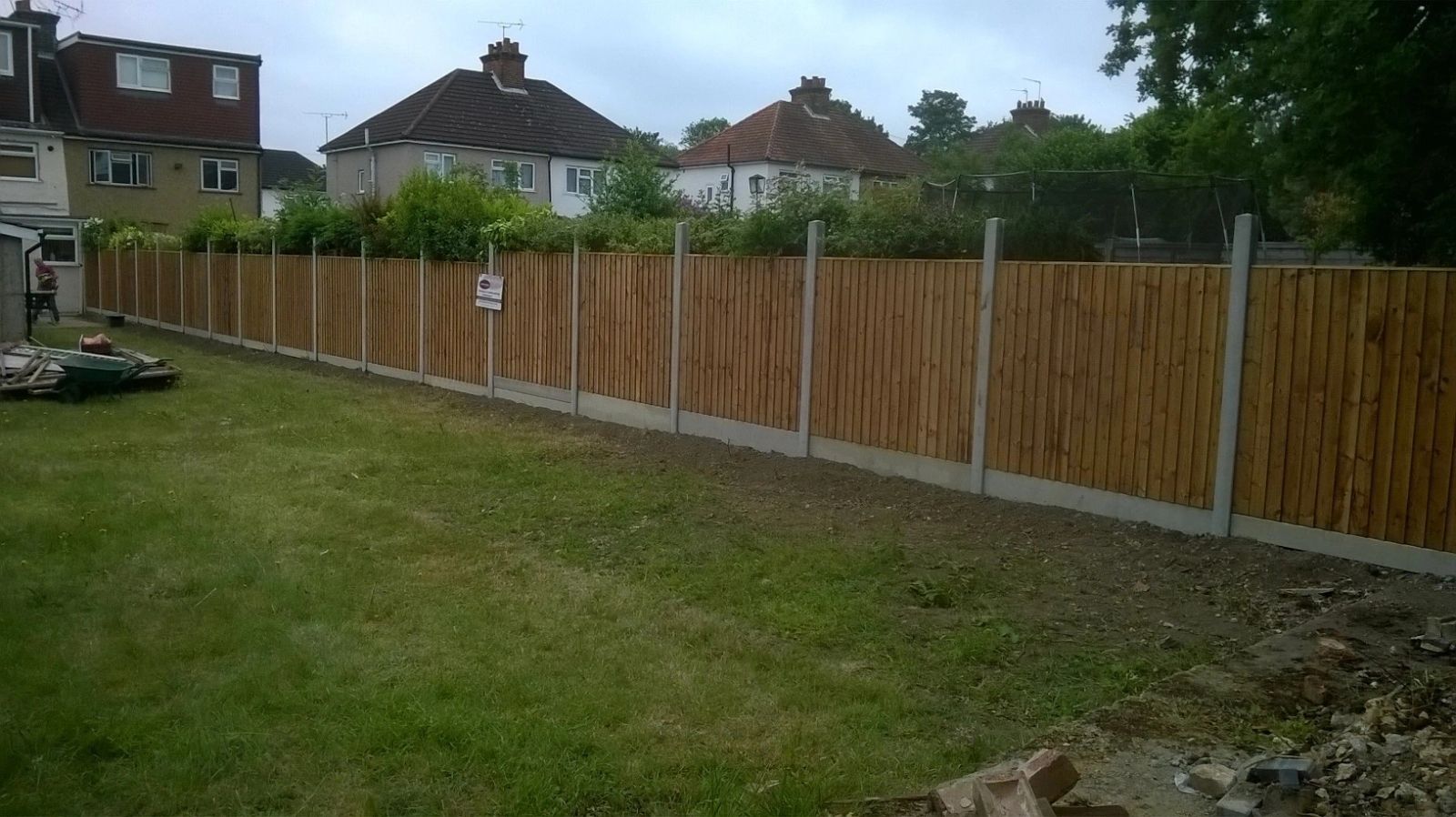
closeboard fence run installed by Capital Fencing in Waltham Forest (E4)
Waltham Forest · E4 / E10 / E11 / E17

Sloping Garden Fencing, Waltham Forest: engineered-to-load spec for Victorian terraces across Walthamstow and Leyton

We approach sloping-garden fencing in Waltham Forest from the failure end backwards. Using panels on any slope over 300mm across the bay — the panel drops one end and rots at the sunken corner — that's the single most common thing we're called back to fix, and it's the first thing our spec addresses. Roads such as Chingford Mount Road and Hoe Street are typical of the local layout. Lloyd Park is a useful local reference point. Chingford's plots back onto Epping Forest in places, where boundary changes near forest land need care.

We approach sloping-garden fencing in Waltham Forest from the failure end backwards. Using panels on any slope over 300mm across the bay — the panel drops one end and rots at the sunken corner — that's the single most common thing we're called back to fix, and it's the first thing our spec addresses. Roads such as Chingford Mount Road and Hoe Street are typical of the local layout. Lloyd Park is a useful local reference point. Chingford's plots back onto Epping Forest in places, where boundary changes near forest land need care.

Why this spec, for homeowners with gardens that fall or rise across the boundary — stepped or racked builds

  • stepped builds keep the fence line legally correct even where the ground doesn't cooperate
  • closeboard suits stepping better than panel — no wasted panels cut to slope
  • sleeper-and-fence combined lines mean one contractor for what's usually two trades

Typical sloping-garden fencing briefs in Waltham Forest

  • racked feather-edge run tracking a gentle slope without visible stagger
  • retaining sleepers under fencing to level a garden with a two-course drop to the neighbour
Default spec

How we build sloping-garden fencing in Waltham Forest

closeboard on 100×100 pressure-treated posts, stepped in 150mm gravel-board increments or racked where the slope is gentle enough. On Waltham Forest jobs we adjust for wind funnelled off the lea valley regularly takes out weak panel fences on the eastern boundaries.

Property mix locally: Victorian terraces across Walthamstow and Leyton, 1930s semis in Chingford, and post-war estates around Leyton. Typical gardens: mid-length rear gardens, several sloping toward the Lea Valley with heavy clay. Postcodes we regularly service: E4, E10, E11, E17.

What goes wrong

Common failure modes on sloping-garden fencing

  • using panels on any slope over 300mm across the bay — the panel drops one end and rots at the sunken corner
  • not draining behind sleeper retainers — the ground pushes the fence out within two seasons

Sloping Garden Fencing FAQs — Waltham Forest

Is panel fencing ever OK on a slope?

On sloping-garden fencing jobs in Waltham Forest (E4), our default answer is: closeboard on 100×100 pressure-treated posts, stepped in 150mm gravel-board increments or racked where the slope is gentle enough. For context: closeboard suits stepping better than panel — no wasted panels cut to slope. Structural spans and post depths calculated, not guessed.

What's the biggest drop you can span in one bay?

Across Waltham Forest we spec around wind funnelled off the lea valley regularly takes out weak panel fences on the eastern boundaries, so on sloping-garden fencing that usually means closeboard on stepped gravel boards. We'll walk you through stepped builds keep the fence line legally correct even where the ground doesn't cooperate on the site visit before you commit.

Should a fence follow the slope or step down it?

Waltham Forest coverage means we can survey most E4 addresses inside a week — homeowners with gardens that fall or rise across the boundary — stepped or racked builds. We'll walk you through stepped builds keep the fence line legally correct even where the ground doesn't cooperate on the site visit before you commit.

Do I need retaining sleepers before the fence?

Practically: stepped closeboard down a 900mm fall across a 15m rear boundary. That's the Waltham Forest version of this job, not a generic one. The honest trade-off is using panels on any slope over 300mm across the bay — the panel drops one end and rots at the sunken corner — which is exactly what our default spec designs out.

Who is liable when the ground falls onto a neighbour's plot?

On sloping-garden fencing jobs in Waltham Forest (E4), our default answer is: closeboard on 100×100 pressure-treated posts, stepped in 150mm gravel-board increments or racked where the slope is gentle enough. The honest trade-off is using panels on any slope over 300mm across the bay — the panel drops one end and rots at the sunken corner — which is exactly what our default spec designs out.

Recent sloping garden fencing work
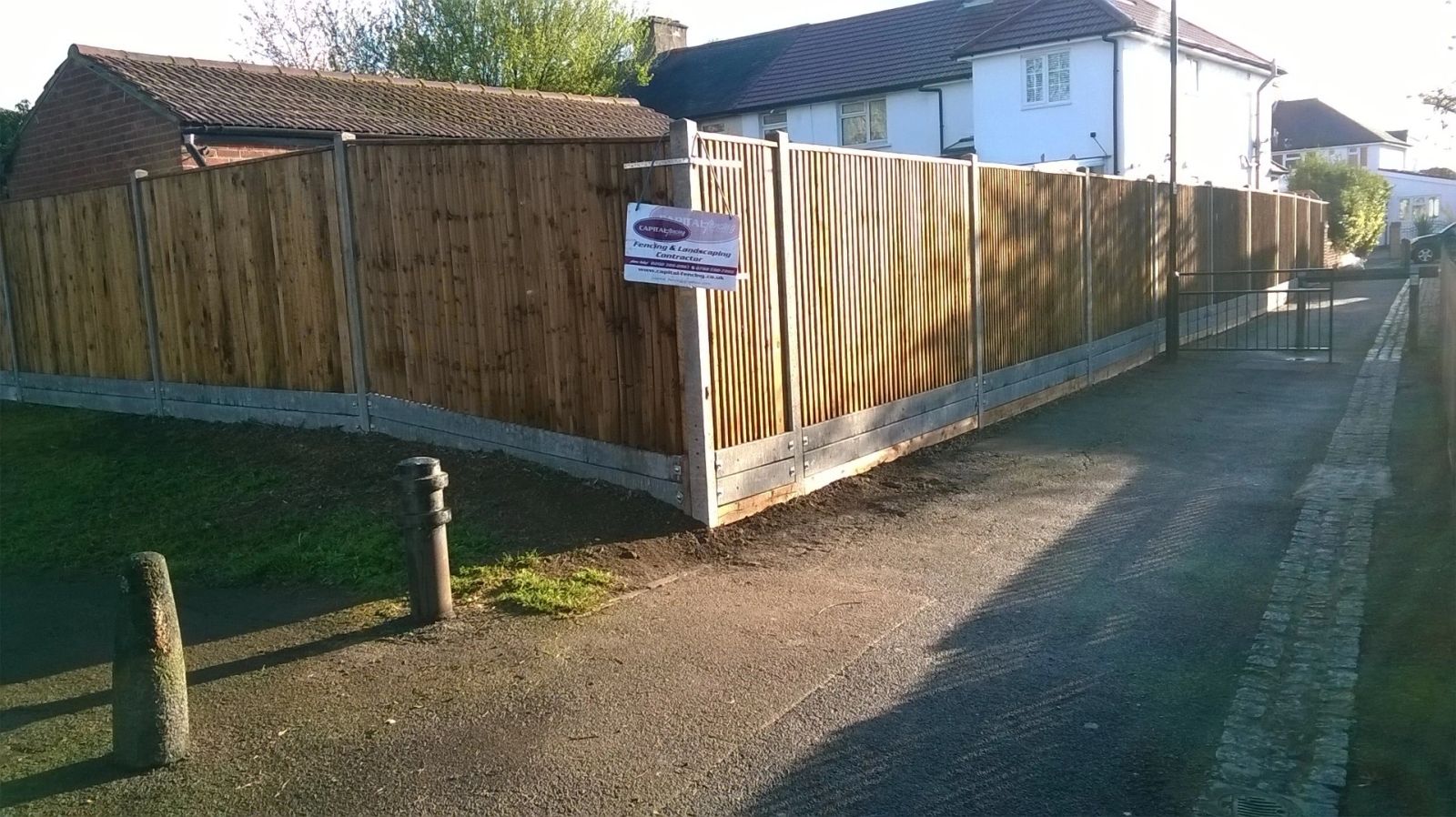
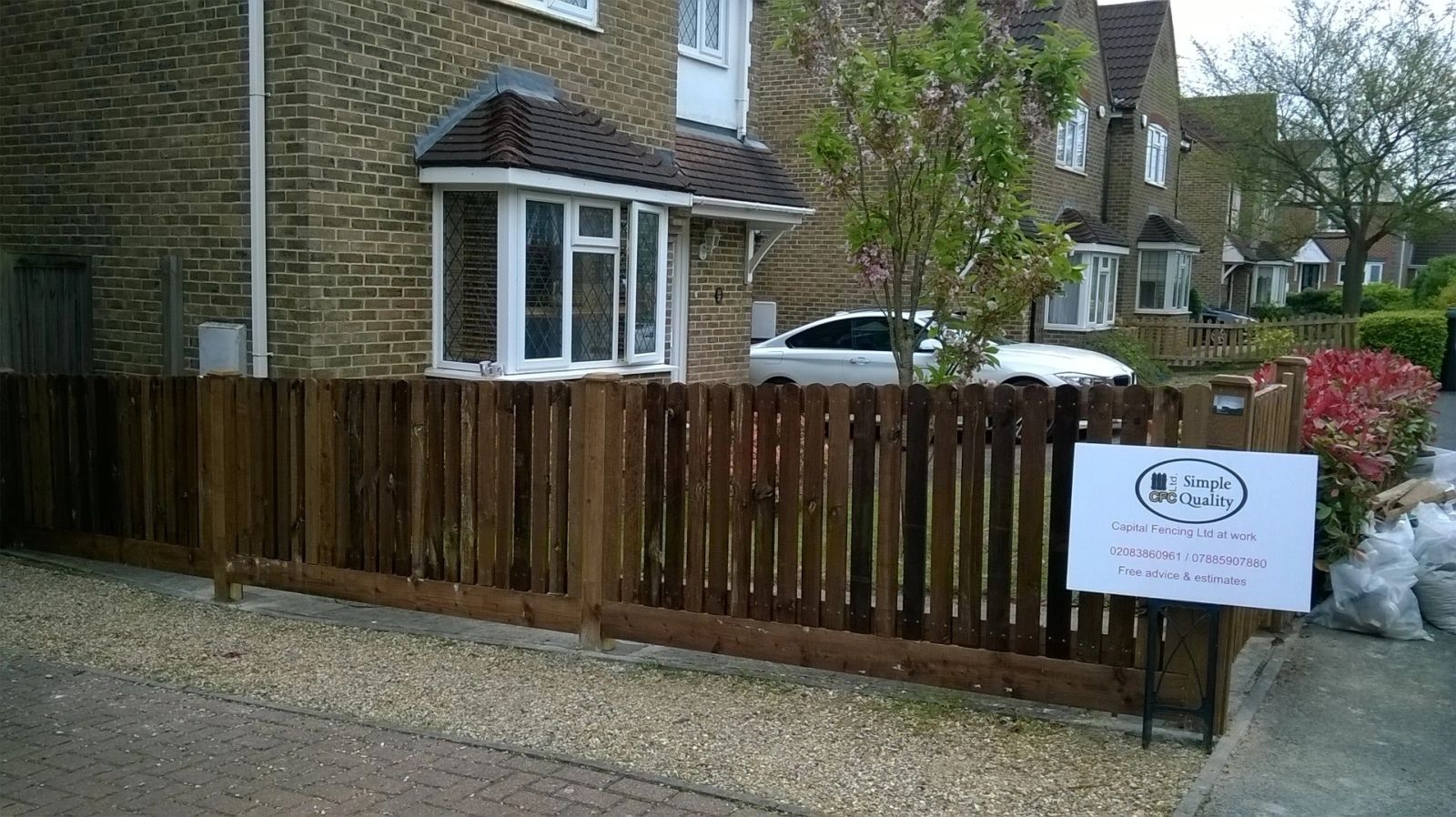
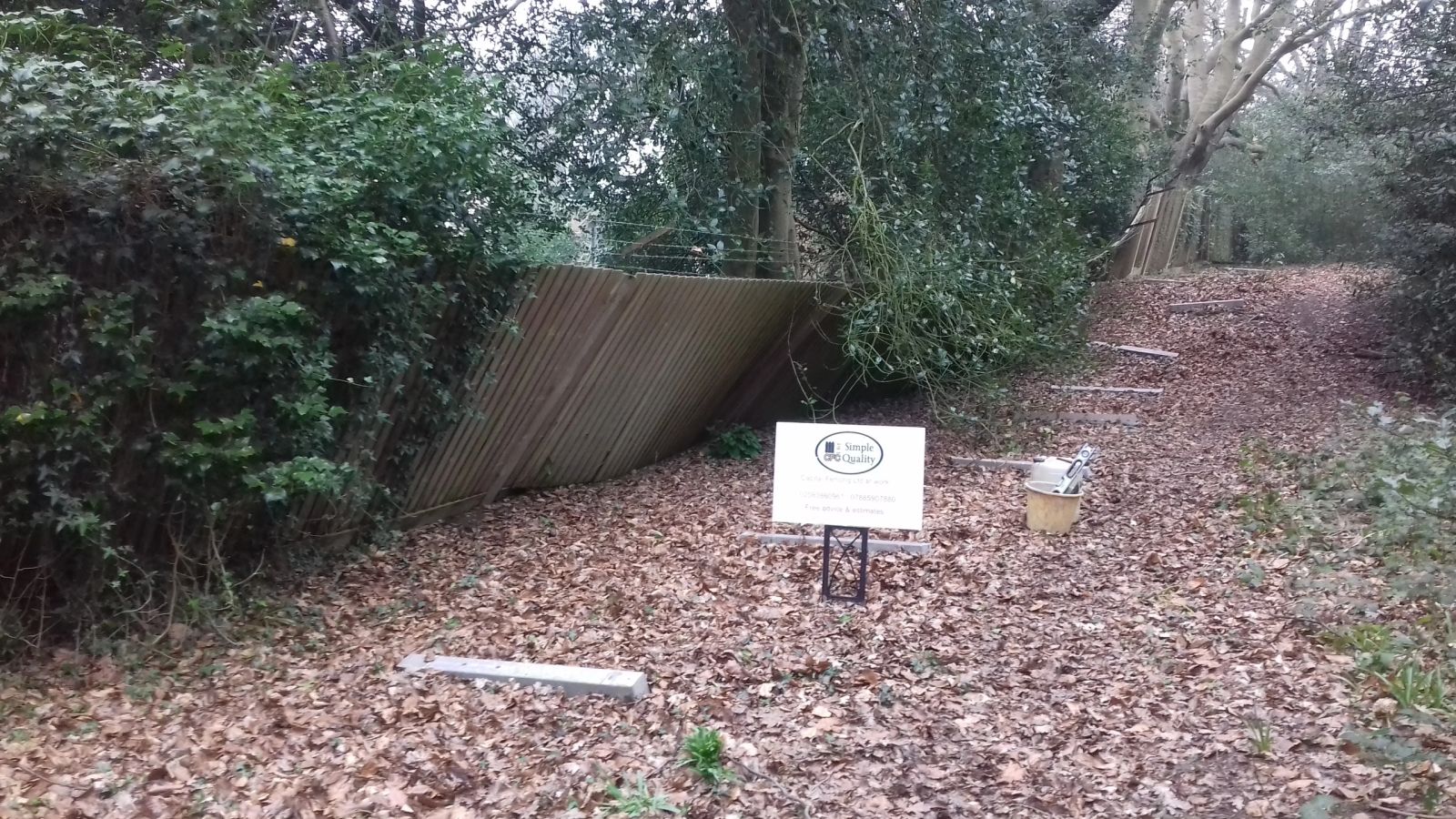
closeboard fence run installed by Capital Fencing in Waltham Forest (E4)panel fence install installed by Capital Fencing in Waltham Forest (E4)trellis-topped fence installed by Capital Fencing in Waltham Forest (E4)bespoke decorative fence installed by Capital Fencing in Waltham Forest (E4)

Before you book sloping garden fencing in Waltham Forest

Maintenance that prevents the next repair

Most repairs we're called out for could have been caught earlier with a simple seasonal check — a post that's started to lean, a gravel board showing early rot, or a hinge that's begun to sag are all cheaper to address before they fail outright.

We'll flag anything else on the boundary that looks like it's heading the same way while we're on site for an unrelated repair.

Post-repair maintenance intervals

A repaired section benefits from a check at roughly the same interval as the rest of the fence — typically an annual look at fixings, timber condition and any leaning — rather than being assumed sound indefinitely once fixed.

Newly fitted timber and concrete are also worth a closer check after their first full winter, since that's when a repair that wasn't quite right tends to show it.

Diagnosing a latch that only sticks in damp weather

A latch or gate that closes fine in dry weather but sticks or binds after rain is very often timber swelling with moisture rather than a hardware fault, and this points to a finish or ventilation issue rather than the latch mechanism itself.

Confirming the pattern is weather-related before adjusting or replacing hardware avoids fixing a symptom that will return with the next wet spell.

Dealing with a manhole cover sitting on the boundary line

A manhole or inspection chamber cover on or near the fence line has to stay accessible, since utility companies and drainage authorities retain a right to lift covers for maintenance regardless of what's built nearby.

The practical fix is usually to offset the nearest post to one side and let a shortened panel or gravel board span across above the cover, rather than boxing it in or fencing directly over it.

Where the chamber serves a shared drain, it's worth confirming with a neighbour or the water company which covers must stay clear before finalising post positions, since covering one by mistake can mean taking the fence apart again later.

Deck boards against a shaded wall building up algae

A deck built hard against a shaded wall, fence, or dense planting on one side often shows a distinct band of algae growth along that edge well before the rest of the deck, since it dries far more slowly after rain.

This uneven wear pattern is normal rather than a sign of a substandard board, but it does mean that edge needs cleaning more often to keep slip resistance consistent across the whole deck.

Where possible, leaving even a narrow gap between the deck edge and an adjoining wall or dense hedge improves airflow along that edge and reduces how quickly algae establishes there.

Ground clearance over gravel or block paving

A gate hung with tight clearance over a lawn can start dragging once the surface underneath is changed to gravel or block paving, since both typically sit slightly higher than turf and compact unevenly over time.

We check finished ground level, not just the level at the time of the original hang, before setting clearance on a repair or re-hang.

Suspending a parking bay for a delivery

Where a residential street has marked parking bays, a resident or contractor may need to apply to the council to formally suspend a bay for the duration of a delivery or a working van.

Suspensions are usually charged per bay per day and typically need a few working days' notice, so they're worth arranging well ahead of a fencing or decking job rather than on the morning of delivery.

Parking in a suspended bay without paying the fee, or using a bay that hasn't been suspended at all, can result in a parking charge notice regardless of the reason for being there.

Boundary fencing for HMOs and multi-occupancy buildings

Houses in multiple occupation often have higher footfall through shared external areas than a single-family home, which points toward more durable gate hardware and fencing specified for frequent use rather than the lighter fittings suited to a quiet family garden.

Bin and cycle storage for several households sharing one plot needs more space and more robust screening than a single-household equivalent, and is worth planning at the same time as any boundary work.

Landlords managing several such properties often prefer a single consistent spec across their portfolio, both for cost predictability and so that future repairs use readily available standard parts.

Boundary treatments in a conservation area

Being inside a conservation area doesn't automatically ban garden fencing, but many councils apply an Article 4 direction locally that removes some permitted development rights, meaning even modest boundary changes may need planning permission.

Where this applies, guidance often favours traditional materials and finishes that suit the area's character over modern composite or brightly coloured alternatives.

The only reliable way to know what applies to a specific property is to check with the local planning authority, since conservation area rules vary considerably between councils.

Choosing rail section size for a security run

Rails on a palisade or railing run are sized in cross-section to the span between posts, not to the pale height alone, because a rail that's too slender for its span will visibly deflect under a leaning or pushing load.

A heavier box-section or channel rail is specified on wider bays or taller runs, and increasing bay width to save on posts only works if the rail section is upsized to match the extra span.

Ground-line collars on timber posts

A plastic or metal collar fitted around a timber post at the point where it enters the ground creates a physical break between the post and the surrounding soil, reducing direct abrasion and moisture wicking at that specific zone.

Ground level is where oxygen, moisture and soil organisms are all present together in the right combination for decay fungi to thrive, which is why this narrow band is disproportionately where post failure originates compared with either the fully buried or fully exposed sections.

A collar doesn't replace preservative treatment but adds a secondary physical barrier specifically targeted at this highest-risk zone, similar in principle to the extra retention already specified for ground-contact use-class timber.

North-facing boundaries and slower drying

A north-facing boundary receives little or no direct sun through autumn and winter, so rainfall sits on the timber and in the surrounding ground noticeably longer than on a south-facing equivalent.

This affects concrete curing time as well as timber drying — a post base poured on a north-facing run in cold weather takes longer to reach working strength and shouldn't be loaded or backfilled early just because a south-facing base nearby has already set.

Over the life of the fence, the practical effect is usually a shorter repaint or restain interval on the shaded side than the rest of the same boundary.

Line wire spacing on a chain-link run

Chain-link relies on horizontal line wires threaded through the mesh at intervals to stop it sagging or being pushed out of shape between posts; wider spacing saves wire but lets the mesh bow more under a leaning load.

A security-rated chain-link run typically tightens this spacing compared with a low-cost agricultural install, along with a straining wire top and bottom rather than just one line.

Checking for secondary damage after a fence has fallen flat

Once a section of fence has actually fallen rather than just leaning, it's worth checking what it fell onto or against — a shed, a parked car, planting — since secondary damage from the fall is sometimes the more significant repair cost.

The fallen section itself also needs assessing for whether any timber is still reusable, since a fall can snap fixings without necessarily destroying the panel or boards, which affects how much of the repair is replacement versus refitting.

Widening an existing gate opening

Widening a driveway opening to take a larger vehicle usually means moving or replacing both hanging and slamming posts, not just fitting a wider gate to the existing gap, since the posts themselves define the usable width.

Ground and drainage either side of the widened opening are checked at the same time, since regrading the entrance often follows a widening job.

Protecting a shared alley during material delivery

A shared rear alley used by several households for bin access can't be blocked completely for a full day without agreement, so materials are often moved through in stages between other residents' access needs rather than left stacked across the full width.

Trailing cables, tools and offcuts left in a shared passage are a trip hazard for neighbours as well as the crew, so keeping the alley clear at the end of each working day matters even if the job isn't finished.

Any damage to the alley surface itself — cracked paving, a scraped wall corner from a wide panel — is worth flagging to the client immediately, since a shared area often has joint liability that's harder to unpick after the event.

Gate widths for cycle access

A side gate wide enough for a wheelbarrow isn't automatically wide enough for a cargo bike or a bike with panniers, which is worth checking against the actual bikes a household owns rather than a generic standard width.

Cycle storage tucked behind a side gate also needs a gate that can be propped open safely while wheeling a bike through, rather than one that swings shut under its own weight mid-manoeuvre.

Where cycle access is a genuine daily-use requirement, a slightly wider opening at quote stage is a cheap addition compared with widening an existing narrow gate later.

Automation compatibility checks and specialist referral

Before a gate is automated, its weight, swing clearance and frame rigidity need to suit the motor type being considered, and a gate that's sound for manual use isn't automatically suitable for automation without checking.

We check the gate itself is fit for automation and refer the motor, control-board and sensor installation to a specialist automation engineer.

Pressure washing a fence before assessing the extent of repair needed

Algae, dirt and old flaking coatings can hide the true condition of timber underneath, so a light clean before a repair assessment sometimes reveals splits, rot or fixing corrosion that wasn't visible under the surface grime.

Pressure washing needs a gentle setting and some distance from the timber face, since an aggressive jet held too close can strip soft surface fibres from weathered wood and make marginal timber look more damaged than it actually is.

HMO licensing and boundary obligations

A licensed House in Multiple Occupation can carry specific conditions relating to the external areas of the property, including secure and well-maintained boundary fencing, safe means of escape through a rear garden, and bin storage screened from the street.

Licensing officers inspecting the property will check the condition of boundary structures as part of the wider fire safety and amenity standards, and a broken or unsafe fence can be flagged as a licence condition breach requiring remedy within a set period.

Landlords of licensed HMOs should treat boundary repair requests from the council's licensing team as time-limited compliance matters rather than routine maintenance to schedule at leisure.

Tamper-proof fixings and shear-nut bolts

Standard hex-head bolts can be undone with a spanner from outside a compound, so security runs use shear-nut or one-way bolts that snap the head off once torqued, leaving nothing for a tool to grip.

These are fitted at pale-to-rail junctions and on any panel that could otherwise be unbolted from outside the line, and they cost little more than standard fixings for a meaningful gain in tamper resistance.

Smallholdings

A smallholding often needs several different boundary specifications on one plot — stock fencing for grazing paddocks, a more secure perimeter around poultry runs to keep foxes out, and a conventional garden fence around the house itself.

Movement of livestock between fields is usually managed with gates rather than continuous fence removal, so gate positions need agreeing against the smallholder's actual rotation pattern rather than simply the shortest route.

Because smallholdings often combine agricultural and residential use on the same title, it's worth checking which parts of a boundary project count as agricultural permitted development and which fall under the standard residential rules.

Homeowners with gardens that fall or rise across the boundary — stepped or racked builds — that's who this page is for. In Waltham Forest and out to Waltham Forest, we run the sloping-garden fencing spec that survives wind funnelled off the lea valley regularly takes out weak panel fences on the eastern boundaries. Roads such as Church Lane and Chingford Mount Road are typical of the local layout. Walthamstow Wetlands is a useful local reference point. The borough's Mini-Holland cycling scheme has altered traffic layouts and narrowed some side streets in Walthamstow, which changes where a van can unload.

Get In Touch

Get My Free Quote — 24h Response

No callout fee · Free site visit · Friendly local team covering London & Hertfordshire.

Call us
07885907880
or 02036484746
Email
capital_fencing@yahoo.com
WhatsApp
Message us anytime
Area
London & Hertfordshire
Payment
Card payments accepted

Pay by debit or credit card, bank transfer or cash once the work and price are agreed. No deposit taken online.

Request a Free Quote

We'll get back to you within 24 hours.

Free Site Visit No Callout Fee
Call WhatsAppQuote