London & Hertfordshire Free Site Visit
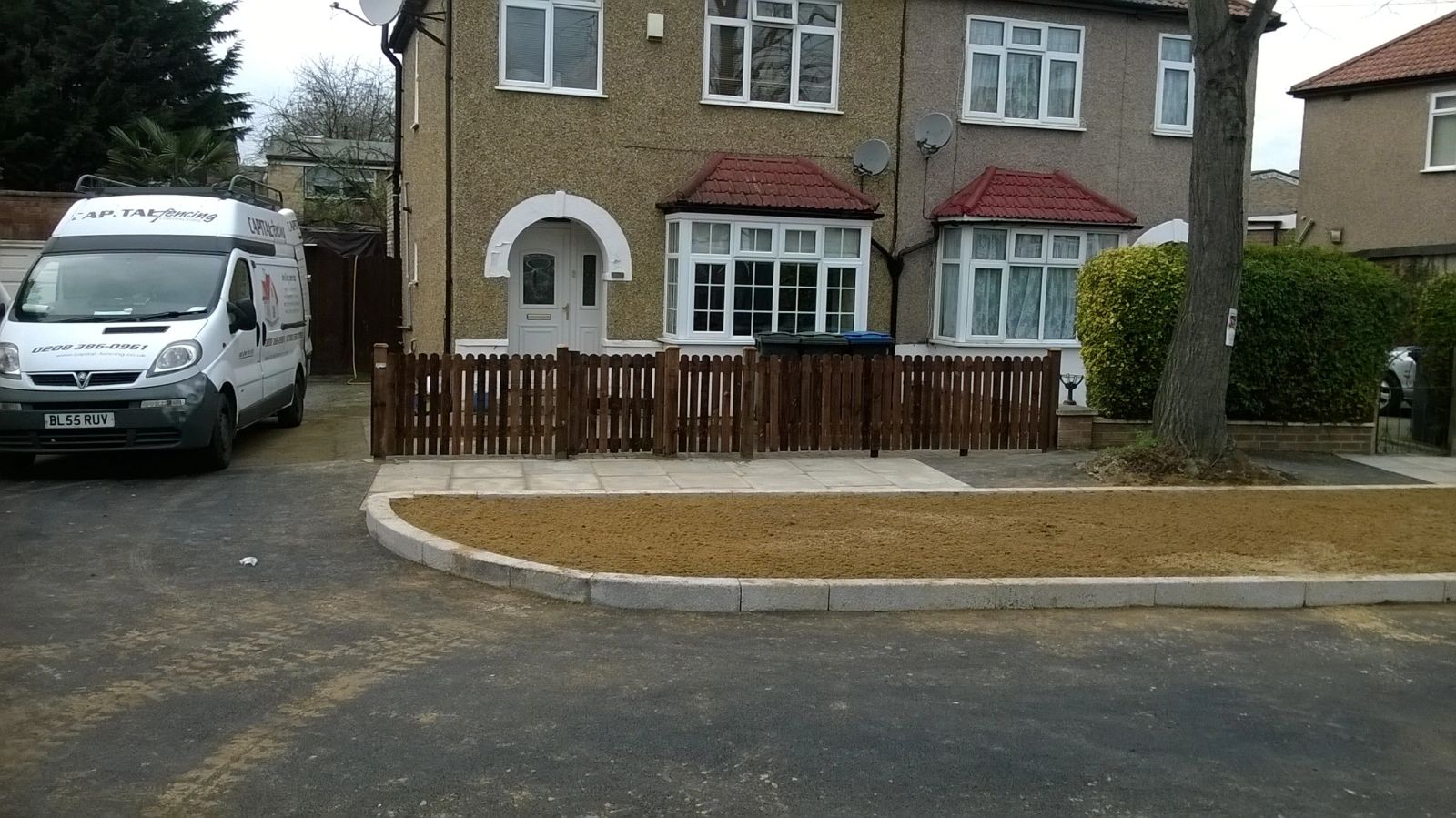
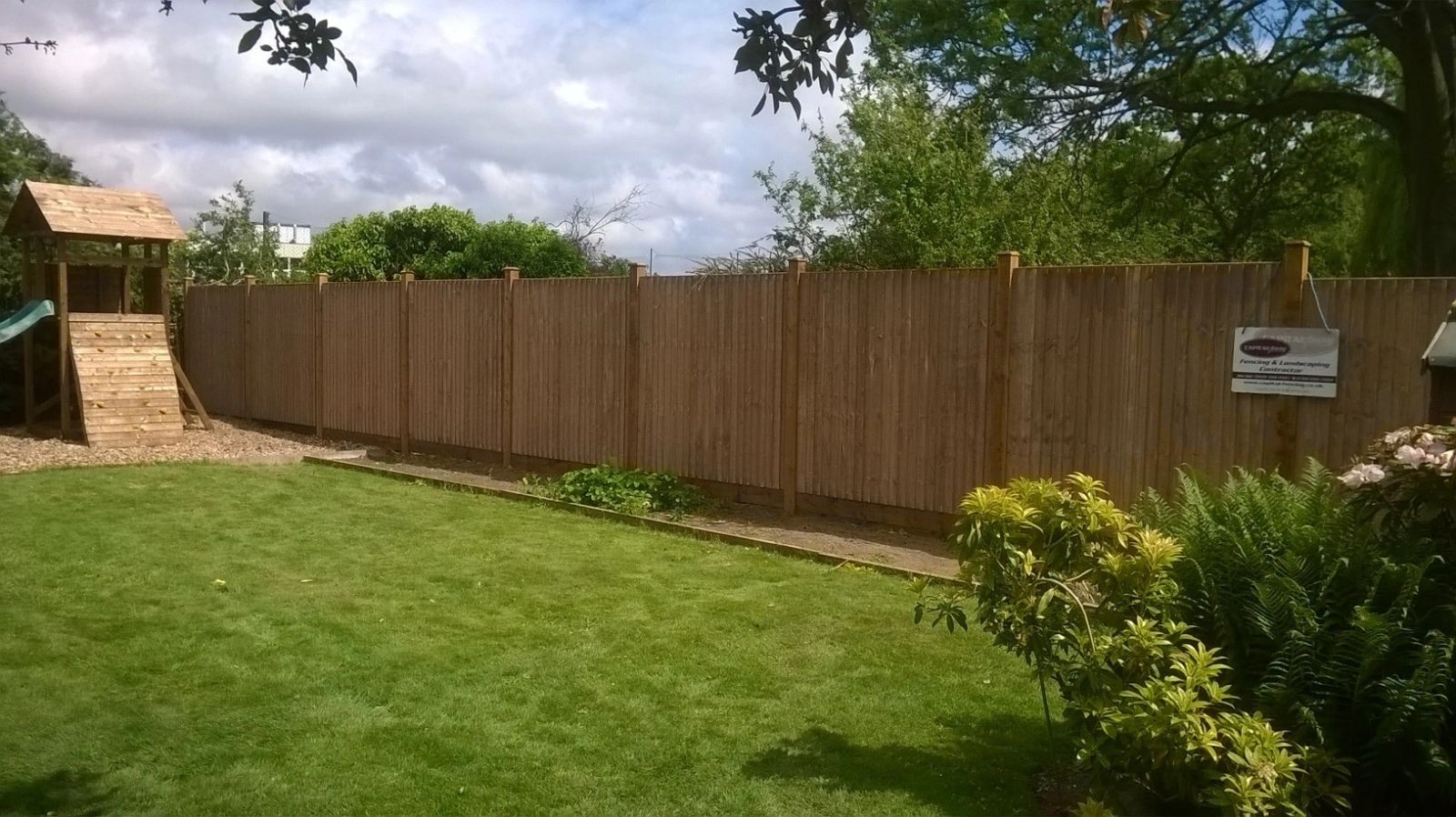
closeboard fence run installed by Capital Fencing in Enfield (EN1)
Enfield · EN1 / EN2 / EN3

Local sloping-garden fencing specialist covering Enfield & waltham cross

We approach sloping-garden fencing in Enfield from the failure end backwards. Using panels on any slope over 300mm across the bay — the panel drops one end and rots at the sunken corner — that's the single most common thing we're called back to fix, and it's the first thing our spec addresses. Roads such as Carterhatch Lane and Silver Street are typical of the local layout. Forty Hall is a useful local reference point. Enfield Town Park and the wider Lee Valley Regional Park both fall within the borough.

We approach sloping-garden fencing in Enfield from the failure end backwards. Using panels on any slope over 300mm across the bay — the panel drops one end and rots at the sunken corner — that's the single most common thing we're called back to fix, and it's the first thing our spec addresses. Roads such as Carterhatch Lane and Silver Street are typical of the local layout. Forty Hall is a useful local reference point. Enfield Town Park and the wider Lee Valley Regional Park both fall within the borough.

Default spec

How we build sloping-garden fencing in Enfield

closeboard on 100×100 pressure-treated posts, stepped in 150mm gravel-board increments or racked where the slope is gentle enough. On Enfield jobs we adjust for high winds funnelled down the lea valley regularly knock over weaker panel fences.

Property mix locally: interwar semis, 1960s estates and pockets of Georgian housing around Forty Hill. Typical gardens: medium-depth gardens that often back onto alleyways — access is the deciding factor. Postcodes we regularly service: EN1, EN2, EN3.

Why this spec, for homeowners with gardens that fall or rise across the boundary — stepped or racked builds

  • stepped builds keep the fence line legally correct even where the ground doesn't cooperate
  • closeboard suits stepping better than panel — no wasted panels cut to slope
  • sleeper-and-fence combined lines mean one contractor for what's usually two trades

Where sloping-garden fencing isn't the right answer

  • very steep sites where a proper retaining wall (brick or concrete) is the right answer before any fence goes on top
  • green-belt frontages where visible sleeper retaining isn't allowed

Typical sloping-garden fencing briefs in Enfield

  • retaining sleepers under fencing to level a garden with a two-course drop to the neighbour
  • stepped closeboard down a 900mm fall across a 15m rear boundary

Sloping Garden Fencing FAQs — Enfield

Do I need retaining sleepers before the fence?

On sloping-garden fencing jobs in Enfield (EN1), our default answer is: closeboard on 100×100 pressure-treated posts, stepped in 150mm gravel-board increments or racked where the slope is gentle enough. For context: closeboard suits stepping better than panel — no wasted panels cut to slope. Structural spans and post depths calculated, not guessed.

Who is liable when the ground falls onto a neighbour's plot?

Across Enfield we spec around high winds funnelled down the lea valley regularly knock over weaker panel fences, so on sloping-garden fencing that usually means closeboard on stepped gravel boards. We'll walk you through stepped builds keep the fence line legally correct even where the ground doesn't cooperate on the site visit before you commit.

Should a fence follow the slope or step down it?

Enfield coverage means we can survey most EN1 addresses inside a week — homeowners with gardens that fall or rise across the boundary — stepped or racked builds. We'll walk you through stepped builds keep the fence line legally correct even where the ground doesn't cooperate on the site visit before you commit.

What's the biggest drop you can span in one bay?

Practically: stepped closeboard down a 900mm fall across a 15m rear boundary. That's the Enfield version of this job, not a generic one. We'll walk you through stepped builds keep the fence line legally correct even where the ground doesn't cooperate on the site visit before you commit.

Can you match a neighbour's stepped boundary starting point?

On sloping-garden fencing jobs in Enfield (EN1), our default answer is: closeboard on 100×100 pressure-treated posts, stepped in 150mm gravel-board increments or racked where the slope is gentle enough. We'll walk you through stepped builds keep the fence line legally correct even where the ground doesn't cooperate on the site visit before you commit.

Recent sloping garden fencing work
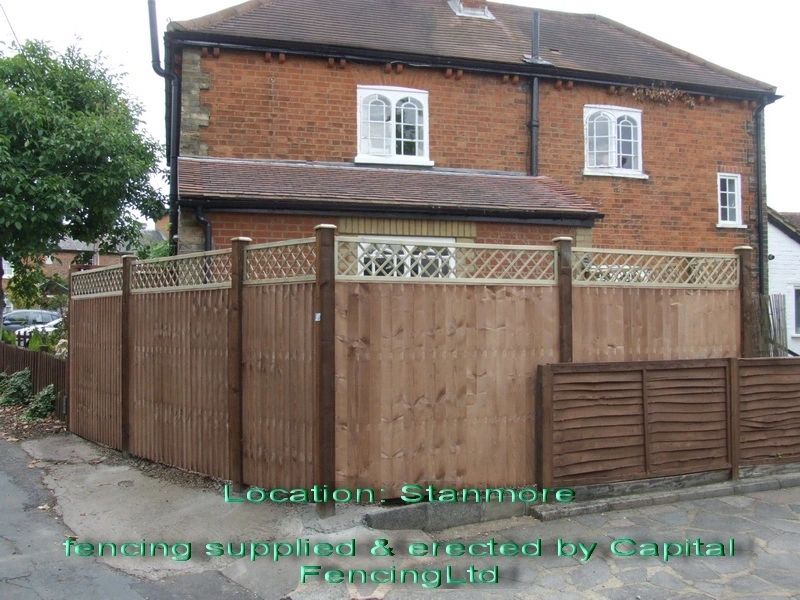
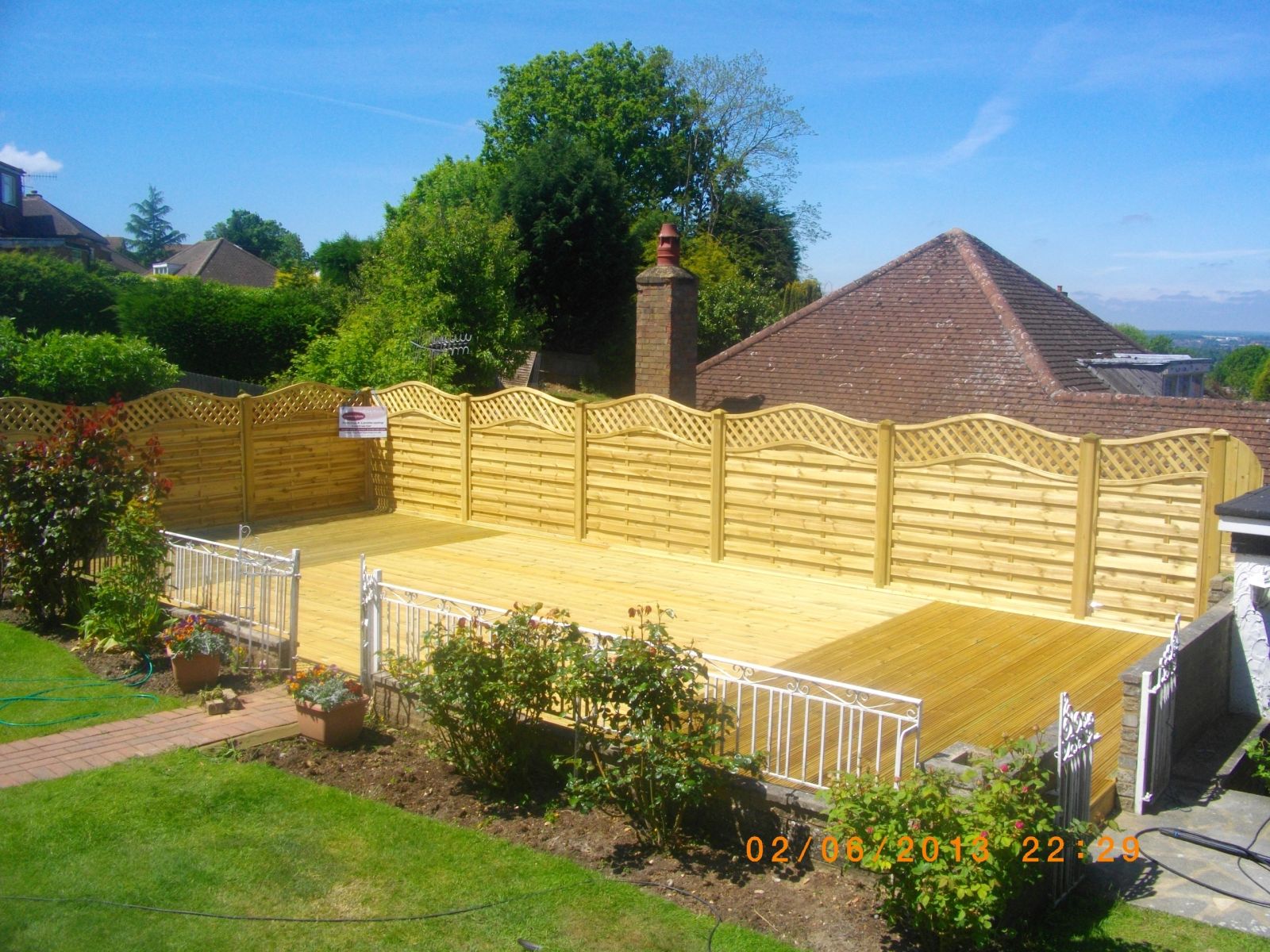
closeboard fence run installed by Capital Fencing in Enfield (EN1)panel fence install installed by Capital Fencing in Enfield (EN1)trellis-topped fence installed by Capital Fencing in Enfield (EN1)bespoke decorative fence installed by Capital Fencing in Enfield (EN1)

How we approach sloping garden fencing on Enfield properties

Clearing debris from a sliding gate track

Leaves, gravel and windblown litter collect in a ground-level sliding gate track over time, and a build-up is one of the most common reasons a gate that used to run smoothly starts binding or stalling partway along its travel.

Regular clearing of the track, particularly after autumn leaf fall or after a period of wind, prevents debris from being repeatedly crushed into the track and becoming harder to remove.

Photographic record as part of a boundary survey

A dated photographic record of the existing boundary condition, taken before work starts, protects both parties if a dispute later arises over what state a shared fence or wall was in beforehand.

This is particularly useful on a party boundary or where neighbouring property could be affected by access during the works, and costs nothing beyond the time to take and keep the photos.

Aligning mortices for arris rails between posts

Concrete posts with pre-formed mortice slots fix the height of each arris rail at manufacture, so the posts themselves have to be set at consistent heights and spacing for the rails to run in level without twisting.

Timber posts morticed on site give more flexibility to adjust rail height locally, but the mortice needs cutting square and to a consistent depth so the rail seats fully rather than sitting proud and under strain.

A rail forced into a mortice that's slightly too shallow or misaligned puts ongoing stress on the joint, which is a common cause of a joint splitting within the first year even though the timber itself is sound.

Windbreak netting as an interim exposure measure

On a newly exposed plot, such as after a neighbouring hedge or building is removed, temporary windbreak netting fixed to the existing fence can reduce load on the structure while a longer-term solution like replanting or upgrading the fence itself is arranged.

This is a genuinely useful stop-gap rather than a permanent fix, since netting left up long-term degrades in UV and adds its own wind resistance once it starts to fray and catch more air than when new.

It buys time to plan a proper specification change rather than leaving a suddenly-exposed fence to fail before a permanent upgrade can be arranged.

Digging in summer-baked clay ground

Clay that's dried and cracked over a hot summer can be almost as hard as digging through soft rock in the top few hundred millimetres, even though the same ground would be workable a season later once it's rehydrated.

An auger struggles on baked clay in the same way it struggles on rubble, tending to bounce and judder rather than cut cleanly, so a pilot hole broken up with a bar first can make the auger's job easier.

Watering the dig point lightly the day before, where practical, softens the very top layer enough to ease the first stage of digging without turning the hole into a mud pit.

Sherardised nails and fixings

Sherardising coats small steel fixings in zinc through a low-temperature diffusion process using zinc dust rather than a molten bath, giving a matt grey, evenly distributed coating well suited to fasteners with fine threads.

Because the process doesn't build up excess zinc at edges and threads the way hot-dip galvanising can, sherardised nails and screws keep a cleaner, more precise fit than galvanised equivalents of the same size.

The coating is thinner than typical hot-dip galvanising, so sherardised fixings are generally specified for above-ground, moderate-exposure use rather than permanent ground contact.

Balancing tight mesh apertures against airflow around plant equipment

A tight-aperture high-security mesh gives strong resistance to climbing and reach-through, but wrapped closely around outdoor plant equipment such as chillers or generators it can restrict airflow needed for the equipment to run efficiently.

Setting the mesh enclosure at a slight distance from the equipment casing, or specifying a marginally larger aperture where the site's threat assessment allows it, keeps most of the security benefit while avoiding an airflow restriction that could affect equipment performance.

Gate hinge material and load ratings

Gate hinges are rated by the load they can bear without excessive wear or sag, and that rating depends on the hinge's material, its pin diameter and the bearing surface area between the moving parts.

A heavy timber gate on a lightweight hinge designed for a garden gate will wear the pin and bushing far faster than the same hinge on a lighter gate, eventually developing a visible droop at the latch side.

Stainless steel or greased bronze bushings resist wear better than plain steel-on-steel hinges, particularly on gates opened frequently, where repeated friction is the main driver of hinge wear rather than corrosion.

Ledger board fixing to an existing wall

A ledger board bolted to an existing house wall to support one edge of a deck needs to be fixed through masonry into structural material, with a damp-proof membrane strip behind it and flashing above to stop water tracking into the wall build-up.

Fixing a ledger to a cavity wall needs care to avoid bridging the cavity or compressing insulation, and on a rendered or clad wall the fixings need to reach the structural leaf behind the finish rather than just gripping the surface material.

Where the wall build-up is unclear or the deck is heavily loaded, a free-standing beam and post arrangement independent of the house wall avoids the risk altogether.

Working within narrow plot access

Some plots simply don't have a route wide enough for a wheelbarrow, let alone a van, which means every post, board and bag of aggregate goes in by hand across a longer distance than usual.

That changes both the time a job takes and, sometimes, the choice of materials — favouring shorter, lighter sections that two people can carry over long single panels that need mechanical handling.

It's worth flagging access constraints at the quote stage rather than on the day, since they're one of the most common reasons a job takes longer than a straightforward driveway-access equivalent.

Community Infrastructure Levy and larger boundary projects

The Community Infrastructure Levy is a charge some councils apply to larger new development, and while it rarely touches ordinary domestic fencing, larger boundary projects tied to bigger planning permissions can occasionally interact with it.

This is a specialist area mainly relevant to substantial developments rather than a single garden fence, but worth being aware of if boundary work forms part of a larger planning permission.

Anyone unsure whether a larger project's boundary elements might be affected should check with the council's planning or CIL team directly.

Safety edges and force limits on automated gates

Automated gates are expected to operate within recognised safety standards covering force limits and trapping-point protection, generally addressed through pressure-sensitive edges, photocells or a torque-limited motor rather than relying on the gate design alone.

This is specialist automation-engineer territory; on the gate itself, we make sure there are no obvious additional trapping points created by the leaf design before automation is fitted.

Checking and shakes as timber dries

Checking refers to small surface splits that open along the grain as the outer face of a timber dries and shrinks faster than the still-damp core, and it's a normal, largely cosmetic feature of drying softwood rather than a structural fault.

Shakes are a related but distinct defect present in the standing tree or log itself, such as a separation between growth rings, and can run deeper into a section than surface checking.

A moderate amount of surface checking on a post or rail doesn't usually compromise strength, but a shake running the length of a load-bearing post is worth inspecting before use, since it can concentrate stress along that plane.

Sealing cut end grain on site-modified gates

Cutting a gate down to fit a narrower opening exposes fresh end grain that takes up water far faster than a factory-sealed edge, and leaving that cut unsealed is one of the quickest ways to start rot in an otherwise sound gate.

Sealing or capping any cut edge before the gate goes back into service is a small step that significantly extends the life of an altered gate.

Hedge disputes and the high hedge complaint route

A hedge over 2m tall made up mainly of evergreen or semi-evergreen species can be the subject of a formal 'high hedge' complaint to the local council under the Anti-social Behaviour Act 2003, but only after direct attempts to resolve it with the neighbour have failed and a fee is paid.

The council can then issue a remedial notice requiring the hedge to be reduced to a specified height, enforceable in the same way as a planning enforcement notice, though it typically won't require complete removal.

This process is separate from ordinary fence or boundary work and doesn't apply to deciduous hedges or single ornamental trees, which fall under general nuisance and tree law instead.

Temporary propping and making safe

Where a full repair can't happen immediately, a leaning panel or post can be temporarily propped or strapped to stop it falling further, which reduces risk without committing to the final repair method on the spot.

Temporary propping is treated as exactly that — a stopgap — since a prop left in place over a wet season can itself start to sink or shift in soft ground.

Industrial units and compounds

Industrial estate boundaries are frequently specified as high-security palisade or welded mesh rather than timber, both for perimeter security and because timber degrades faster next to hardstanding and vehicle movement.

A shared service road between units means access for fencing plant has to be coordinated with other tenants using the same route, and any material laydown area needs agreeing so it doesn't block emergency access.

Compound gates wide enough for HGV access are a different specification challenge from a domestic driveway gate, needing heavier hinges, a track or wheel to carry the weight, and clear signage where they open across a shared road.

Timber strength grading classes

Structural timber is graded into strength classes such as C16 or C24 based on visual inspection of defects like knots and slope of grain, or by machine stress grading that measures stiffness directly.

C24 timber has been graded to a higher strength and stiffness threshold than C16, and is specified where a structural calculation demands it, such as a longer unsupported gate post span, rather than chosen purely by appearance.

Fencing timber is rarely strength-graded in the same formal way as construction timber, which is one reason gate posts subject to real structural calculation sometimes specify a graded section rather than standard fencing stock.

Producing an accurate cutting list before ordering materials

An accurate cutting list — exact post count, panel or board lengths, and any bespoke cut sizes for short bays or gate openings — worked out from a proper site survey avoids the delay of a return trip for materials missed on the first order.

Rounding measurements generously rather than precisely is common practice for consumable items like fixings and concrete, but panel and post counts benefit from being counted exactly, since over-ordering large items wastes money and under-ordering stalls the job.

Where a run includes several different bay widths from stepping around obstructions, listing each bay's exact requirement separately rather than assuming an average avoids ordering a batch of identical cut panels that don't actually fit their intended positions.

Wheelbarrow routes and lawn protection

Moving concrete, gravel boards and spoil across a lawn on a wet day can leave rutting that lasts the rest of the season, particularly on clay soils that compact easily underfoot.

Boards or trackway laid along the barrow route spread the load and are a cheap precaution compared with reinstating a churned-up lawn afterwards.

Planning the route to cross the lawn at its narrowest point, or using a hard surface where one exists, reduces the area affected without slowing the job down.

Keeping mortice depth consistent across a run of timber posts

Hand-cut mortices in timber posts can vary slightly in depth from post to post if they're cut freehand rather than to a fixed jig or depth stop, which then shows up as a rail sitting at a slightly different height at each junction.

A simple depth stop clamped to the chisel or drill bit, checked against the first mortice cut, keeps every subsequent one consistent without needing to measure each one individually from scratch.

Checking a sample rail against several mortices before committing to cutting the whole run confirms the depth is right before the error, if there is one, has been repeated across every post.

Welded versus woven mesh

Welded mesh is formed from wires fused at each intersection, giving a rigid grid that holds its shape well and resists distortion under point loads such as someone leaning or climbing on it.

Woven mesh, including chain link, has wires interlaced rather than fused, which lets the whole panel flex and absorb impact rather than transferring load to a single joint, but it can also sag or distort more visibly over time.

Welded mesh is generally preferred where a crisp, rigid appearance matters, while woven mesh is favoured for larger open areas like sports enclosures where some give under impact is actually beneficial.

Whether the brief is stepped closeboard down a 900mm fall across a 15m rear boundary or racked feather-edge run tracking a gentle slope without visible stagger, we quote it from a site visit, not a photo. Enfield is inside our core working patch and most jobs are booked in inside a fortnight. Roads such as Lancaster Road and Baker Street are typical of the local layout. Lee Valley Park is a useful local reference point. Forty Hall, a Grade I listed Jacobean mansion, sits within its own historic parkland on the town's northern edge.

Get In Touch

Get My Free Quote — 24h Response

No callout fee · Free site visit · Friendly local team covering London & Hertfordshire.

Call us
07885907880
or 02036484746
Email
capital_fencing@yahoo.com
WhatsApp
Message us anytime
Area
London & Hertfordshire
Payment
Card payments accepted

Pay by debit or credit card, bank transfer or cash once the work and price are agreed. No deposit taken online.

Request a Free Quote

We'll get back to you within 24 hours.

Free Site Visit No Callout Fee
Call WhatsAppQuote