London & Hertfordshire Free Site Visit
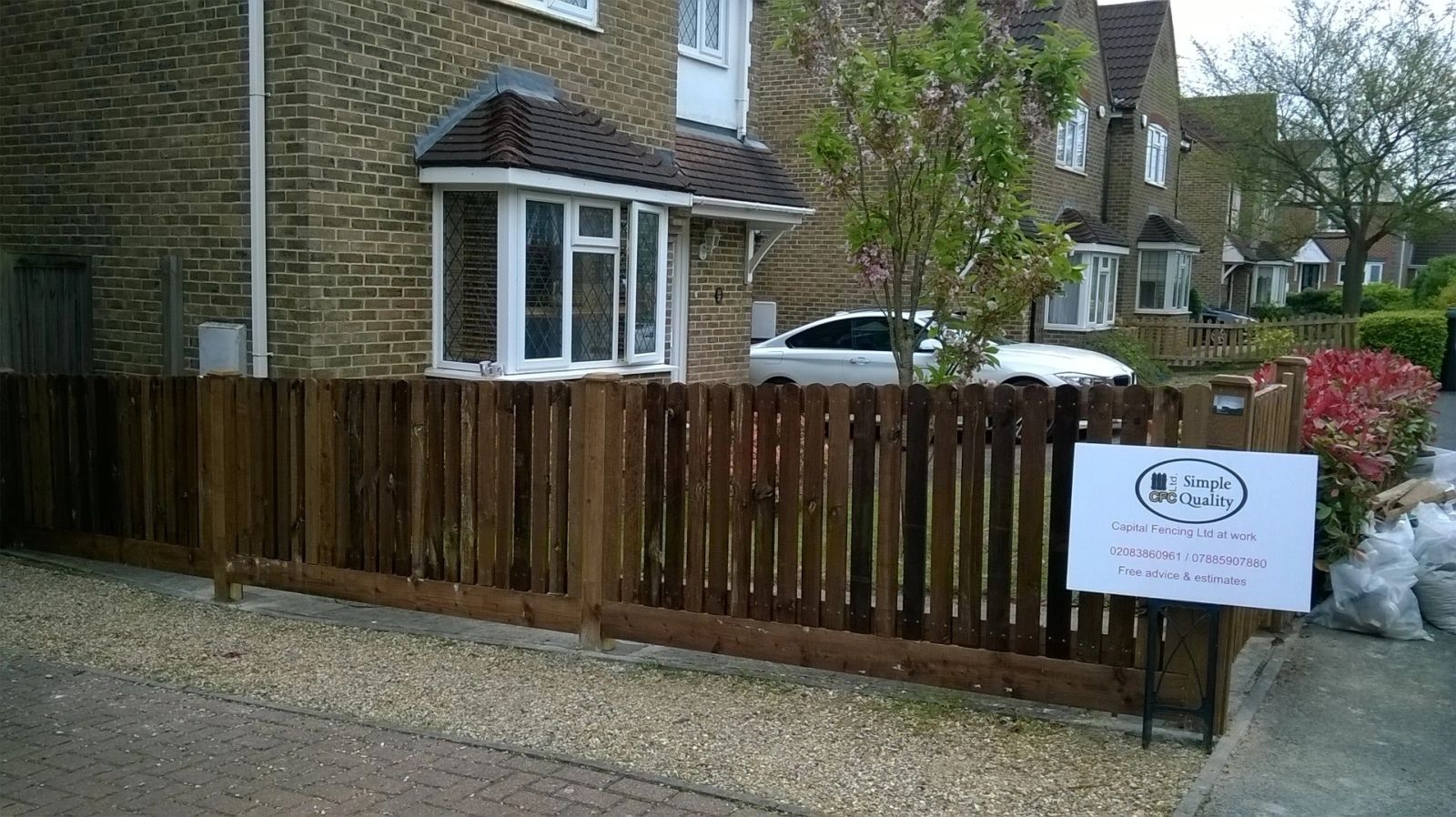
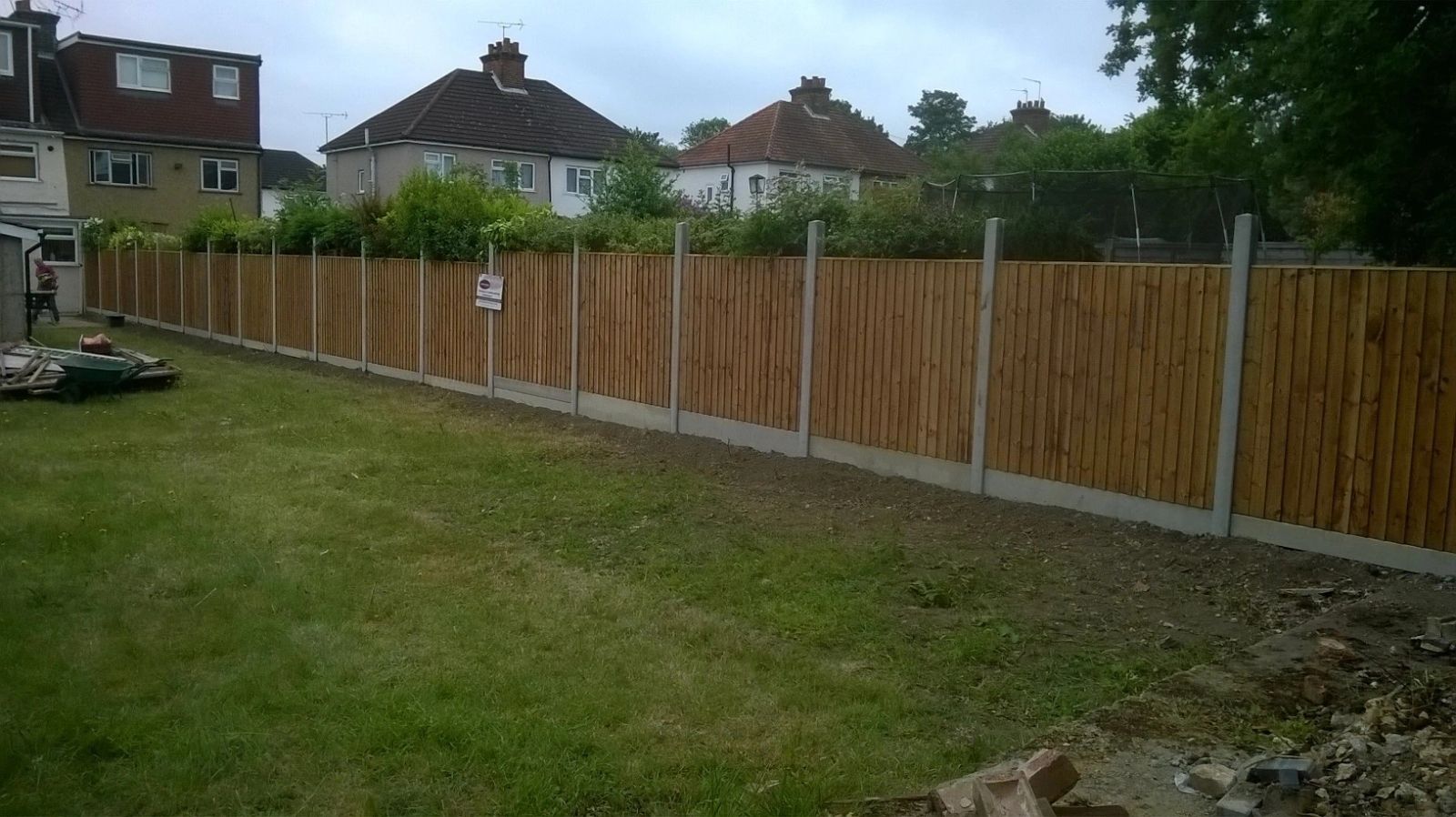
closeboard fence run installed by Capital Fencing in Waltham Forest (E4)
Waltham Forest · E4 / E10 / E11 / E17

Landlord Fencing in Waltham Forest — Built for tenancy turnaround windows and inventory sign-off

Landlord-grade fencing in Waltham Forest is one of our regular briefs — buy-to-let owners and letting agents needing durable boundaries between tenancies. On victorian terraces across walthamstow and leyton with mid-length rear gardens, the failure mode we see most often is the one we design out first. Roads such as Forest Road and Hoe Street are typical of the local layout. Lloyd Park is a useful local reference point. The borough's Mini-Holland cycling scheme has altered traffic layouts and narrowed some side streets in Walthamstow.

Landlord-grade fencing in Waltham Forest is one of our regular briefs — buy-to-let owners and letting agents needing durable boundaries between tenancies. On victorian terraces across walthamstow and leyton with mid-length rear gardens, the failure mode we see most often is the one we design out first. Roads such as Forest Road and Hoe Street are typical of the local layout. Lloyd Park is a useful local reference point. The borough's Mini-Holland cycling scheme has altered traffic layouts and narrowed some side streets in Walthamstow.

What goes wrong

Common failure modes on landlord-grade fencing

  • cheapest lap panels racking in wind because posts were shallow — we always concrete to 600mm minimum on landlord work
  • using bare softwood posts on ground contact — three winters and they're gone
Default spec

How we build landlord-grade fencing in Waltham Forest

6ft closeboard on concrete posts with gravel boards, mid-rail capped, softwood side gate with padlock hasp. On Waltham Forest jobs we adjust for wind funnelled off the lea valley regularly takes out weak panel fences on the eastern boundaries.

Property mix locally: Victorian terraces across Walthamstow and Leyton, 1930s semis in Chingford, and post-war estates around Leyton. Typical gardens: mid-length rear gardens, several sloping toward the Lea Valley with heavy clay. Postcodes we regularly service: E4, E10, E11, E17.

we bill via one purchase order across a portfolio, provide before/after photos for the inventory clerk, and can be on and off site inside a tenancy void.

Why this spec, for buy-to-let owners and letting agents

  • individual boards or single panels can be swapped without touching the whole run
  • concrete posts and gravel boards keep the ground contact off the timber — that's where landlord fences usually fail
  • one crew, one price sheet across multiple properties — inventory-friendly for portfolio owners

Typical landlord-grade fencing briefs in Waltham Forest

  • matched fencing across three or four adjacent rental plots owned by one landlord
  • cheapest defensible spec that will still stand up to the next storm and inventory

Landlord Fencing FAQs — Waltham Forest

Who owns the fence — landlord or neighbour — and does it matter to the quote?

On landlord-grade fencing jobs in Waltham Forest (E4), our default answer is: 6ft closeboard on concrete posts with gravel boards, mid-rail capped, softwood side gate with padlock hasp. The honest trade-off is cheapest lap panels racking in wind because posts were shallow — we always concrete to 600mm minimum on landlord work — which is exactly what our default spec designs out.

Can before-and-after photos be provided for the inventory?

Across Waltham Forest we spec around wind funnelled off the lea valley regularly takes out weak panel fences on the eastern boundaries, so on landlord-grade fencing that usually means pressure-treated closeboard on concrete posts. For context: concrete posts and gravel boards keep the ground contact off the timber — that's where landlord fences usually fail. One crew, one price sheet, before-and-after photos as standard.

What's the cheapest defensible spec you'd stand behind for a rental?

Waltham Forest coverage means we can survey most E4 addresses inside a week — buy-to-let owners and letting agents needing durable boundaries between tenancies. We bill via one purchase order across a portfolio, provide before/after photos for the inventory clerk, and can be on and off site inside a tenancy void.

Can you match existing fencing across neighbouring rental plots?

Practically: boundary run replaced between two tenancies inside a single working week. That's the Waltham Forest version of this job, not a generic one. For context: concrete posts and gravel boards keep the ground contact off the timber — that's where landlord fences usually fail. One crew, one price sheet, before-and-after photos as standard.

Do you handle the removal and skip for the old fence?

On landlord-grade fencing jobs in Waltham Forest (E4), our default answer is: 6ft closeboard on concrete posts with gravel boards, mid-rail capped, softwood side gate with padlock hasp. We bill via one purchase order across a portfolio, provide before/after photos for the inventory clerk, and can be on and off site inside a tenancy void.

Recent landlord fencing work
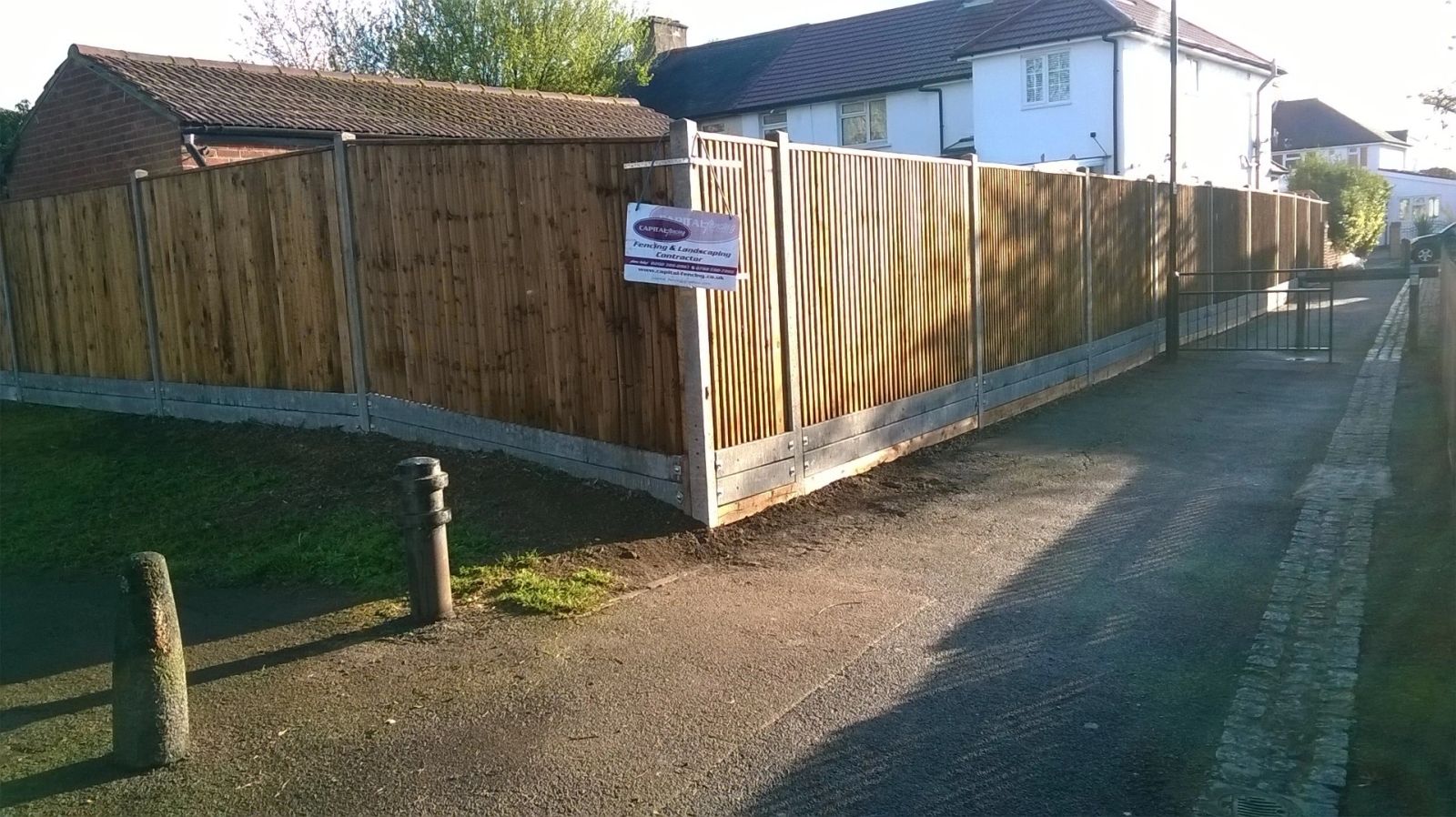
closeboard fence run installed by Capital Fencing in Waltham Forest (E4)panel fence install installed by Capital Fencing in Waltham Forest (E4)trellis-topped fence installed by Capital Fencing in Waltham Forest (E4)bespoke decorative fence installed by Capital Fencing in Waltham Forest (E4)

Before you book landlord fencing in Waltham Forest

Safety on a gate that's failed near a road

A driveway gate that's dropped or come off its hinges next to a road or shared path is treated as a priority repair, since a swinging or fallen gate in that position is a hazard to passers-by as well as an inconvenience.

We make a failed gate safe on the first visit where it poses any immediate risk, even if the full repair follows separately.

Pet-proofing gaps at gate edges and thresholds

A small dog or cat can exploit a surprisingly narrow gap at a gate's hinge edge, latch edge or bottom clearance, and a gate that's perfectly secure against people can still let a determined pet through if these gaps aren't considered separately.

Closing plates, a lowered threshold detail or a secondary mesh infill are common ways to pet-proof a gate without rebuilding it entirely.

Minimum clear width for pedestrian gate access

A pedestrian gate needs enough clear width once open to comfortably pass through with hands full, a pushchair or a wheeled bin, and a gate that technically opens but leaves very little usable width against an adjacent wall or post is a common design oversight on tight side returns.

Checking the actual clear opening, not just the gate leaf's nominal width, avoids this problem before a gate is ordered.

Deck board gapping to allow seasonal movement

Timber deck boards expand slightly when they absorb moisture and contract as they dry, so boards laid without a small gap between them can cup, bow or push against each other as conditions change through the year.

The correct gap depends on the moisture content of the timber at the time of laying — kiln-dried boards laid tight in winter may need a slightly wider gap than the same boards laid already at a higher moisture content in summer.

Composite boards move with temperature rather than moisture and have their own manufacturer-specified gap and expansion allowance, particularly at butt joints and against fixed edging.

Out-of-hours security considerations for a GP surgery boundary

A GP surgery boundary needs to accommodate a high daytime footfall of patients and visitors alongside stronger overnight security around bin stores, plant rooms and any area holding clinical waste, which often means combining an open, welcoming frontage with a more solid, higher-security rear compound.

Access for ambulance and emergency vehicles is checked against gate width and turning space before a security gate is specified, since a locked or narrow rear gate can delay emergency access if not planned around actual vehicle routes.

Sliding gate track and roller wear

A sliding gate runs along a ground-mounted track or is carried on top rollers against a guide rail, and debris or corrosion in the track is one of the most common causes of a sliding gate becoming stiff or jamming partway through its travel.

Clearing and checking the track for level is usually the first step in diagnosing a sliding gate fault before assuming the rollers themselves need replacing.

Headroom and finger-trap gaps on gates

A sliding gate leaves a running gap between the gate and its guide posts that can trap fingers if it isn't guarded, and a swing gate's hinge side needs enough clearance to close without shearing anything caught in it.

Guards or brush strips over the trap points are a small addition that matters more on a gate used by children or the public than on a compound gate few people approach closely.

Seasonal restrictions on hedge and vegetation clearance

Clearing vegetation or a hedge to make way for a fence during bird nesting season, broadly March to August, risks disturbing an active nest, which is a wildlife offence regardless of whether the fencing work itself is otherwise unrestricted.

A quick visual check for active nests before cutting back growth is standard practice, and where a nest is found the sensible step is working around it rather than pushing ahead with clearance.

Outside nesting season, most routine hedge cutting ahead of fencing work has no seasonal restriction, though thicker or more established hedgerows may still need the checks covered elsewhere for protected hedgerows.

UV stabilisers in composite and PVC fencing

UV stabiliser additives are blended into composite and PVC fencing products during manufacture to slow the surface degradation and colour fade that ultraviolet exposure otherwise causes in polymer materials over time.

Products with a lower proportion of UV stabiliser, often reflected in a lower price point, tend to show chalking, a dusty faded surface, and colour loss earlier than better-stabilised equivalents exposed to the same sunlight.

South and west-facing runs receive substantially more cumulative UV exposure than shaded or north-facing runs, so the same product can visibly fade at different rates depending purely on orientation and surrounding shade.

Checking a post is plumb in two planes

A post checked with a spirit level on only one face can still be leaning across the run even though it looks vertical along it, so plumb needs confirming on two adjacent faces at right angles before concrete goes in.

This matters most on corner and gate posts, where a lean invisible from the main run direction becomes obvious the moment a gate is hung and doesn't swing true.

Rechecking plumb again just before the concrete starts to go off catches any post nudged out of position while backfilling or bracing, since that's a common point for a post to drift slightly unnoticed.

Night latches on garden and side doors

A night latch, more commonly seen on house front doors, is sometimes fitted to a solid garden door or side gate door for self-latching convenience, engaging automatically on closing while still allowing free egress from inside.

It needs a solid, well-fitted frame to work reliably outdoors, since timber movement that would be barely noticeable indoors can be enough to throw an exterior-mounted night latch out of alignment.

Landlord void period turnarounds

A rented property between tenancies is often the only window a landlord has to get fencing repaired without disrupting an occupied garden, and void periods are typically measured in days rather than weeks.

Fast turnaround work in a void needs the survey, quote and material order compressed into that period, which means a landlord instructing work should flag the void dates as early as possible rather than after keys have already changed hands.

It's also the point at which deferred repairs flagged in a previous check-out report tend to get actioned, so it's worth reviewing that report against the fence line before starting rather than duplicating what's already been noted.

End-grain sealing on cut timber

Any cut made on site — trimming a post to length or cutting a rail to fit — exposes end grain that draws in moisture far faster than the treated face of the timber, making it a common starting point for rot if left unsealed.

Sealing cut ends with an end-grain preservative at the time of cutting, not afterward, closes off that entry point before the timber is fixed in place.

Prioritising gate spec over fence spec under a limited budget

Where a security budget doesn't stretch to upgrading an entire boundary at once, spending proportionally more on the gate and its ironmongery than on the fence panels themselves is usually the better trade-off, since a gate junction is statistically the more common point of forced entry than a length of intact fence.

A phased approach that fits a strong gate first and upgrades panel sections over following phases still leaves weaker fence runs as the interim weak point, so this trade-off is only sound as a first step, not a final specification.

Setting gate posts before the rest of a fence run

Gate posts carry more load and need tighter tolerances on spacing and plumb than intermediate fence posts, so they're normally set and checked first, with the rest of the run measured out relative to the confirmed gate opening rather than the other way round.

Where a gate is ordered to a bespoke size, its exact opening width has to be locked in before that section of the run is built, since a fence panel either side can absorb small adjustments far more easily than a made-to-measure gate can.

A gate post is also usually set with extra depth or a wider concrete base than a standard fence post, given the additional leverage a swinging gate applies, so it needs its own dig rather than being treated the same as its neighbours.

Vegetation growing through or over a shared fence

Plants growing from one garden through, over or against a shared fence — a spreading shrub, an overhanging branch, a self-seeded sapling in the fence line itself — sit in a grey area between garden maintenance and boundary structure that isn't always covered by a simple 'good neighbour' agreement.

A sapling that germinates directly against a post and is left to grow can eventually distort or crack the post as its trunk thickens, which is a slow-motion structural problem rather than a purely cosmetic one.

Flagging seedlings growing in or immediately against a fence line at an early stage, before root or trunk growth causes structural distortion, avoids a much larger repair later.

Brace direction on a braced timber gate

A diagonal brace on a ledged-and-braced gate has to run from the bottom hinge corner up to the top latch corner to work in compression rather than tension, and a brace fitted the wrong way round does almost nothing to stop the frame dropping.

This is a common fault on older self-built gates, and correcting brace direction is sometimes enough to fix a sagging gate without replacing any timber.

Matching stain colour on a repaired section against a faded run

A freshly stained repair section will look noticeably darker or more saturated than the rest of a run that's faded over several seasons of UV exposure, even using the exact same product and shade.

Some clients prefer to accept this and let the new section weather in naturally over a season, while others ask for the whole run to be recoated at the same time for a more even finish immediately after the repair.

Post splitting from over-driven fixings

Driving a nail or coach screw too close to a timber post's edge, particularly near the end grain, concentrates stress in a narrow section of fibres and can split the post along the grain rather than simply seating the fixing.

Pre-drilling a pilot hole for larger fixings, especially near board or post ends, relieves that concentrated stress by giving the fixing a path that doesn't have to force the surrounding fibres apart.

Species with straighter, more even grain generally resist this kind of splitting better than timber with interlocked or knotty grain near the fixing point, where existing weaknesses in the fibre structure make a split more likely to propagate.

Fencing a marina or boatyard compound

A marina or boatyard compound combines standard perimeter security with exposure to salt air and standing water, so galvanising specification and fixing hardware are upgraded from a typical inland commercial job to resist accelerated corrosion.

Gate access often needs to accommodate trailered boats and cradles passing through, which pushes toward a wide sliding gate or a removable section rather than a fixed-width pedestrian-scale opening.

Cutting and resealing treated timber ends on site

Any cut made to pressure-treated timber on site exposes an untreated core at that face, since preservative penetration doesn't reach the centre of most sections, and that cut end is then the most vulnerable point on the whole piece.

Brushing a compatible end-grain preservative onto every site cut before the piece is fixed restores a working level of protection at minimal extra time, and is worth building into the cutting process rather than treated as optional.

Post tops cut to length on site are a common place this gets missed, since the cut is often made last, after the post is already concreted in, when it's easy to move on to the next post without going back to treat the cut.

Neighbour notification during a boundary planning application

Where a planning application is needed for a boundary structure, the council typically notifies adjoining neighbours and gives them a period to comment before a decision is made.

This is a formal statutory step distinct from any informal courtesy conversation that may already have taken place, and objections raised at this stage are genuinely considered by the case officer.

Having already discussed the proposal informally with a neighbour often means fewer surprises when the formal notification arrives.

Buy-to-let owners and letting agents needing durable boundaries between tenancies — that's who this page is for. In Waltham Forest and out to Waltham Forest, we run the landlord-grade fencing spec that survives wind funnelled off the lea valley regularly takes out weak panel fences on the eastern boundaries. Roads such as Church Lane and Wood Street are typical of the local layout. Lloyd Park is a useful local reference point. Waltham Forest runs from the tightly-terraced streets of Leyton in the south to the more spacious detached housing of Chingford in the north, close to Epping Forest.

Get In Touch

Get My Free Quote — 24h Response

No callout fee · Free site visit · Friendly local team covering London & Hertfordshire.

Call us
07885907880
or 02036484746
Email
capital_fencing@yahoo.com
WhatsApp
Message us anytime
Area
London & Hertfordshire
Payment
Card payments accepted

Pay by debit or credit card, bank transfer or cash once the work and price are agreed. No deposit taken online.

Request a Free Quote

We'll get back to you within 24 hours.

Free Site Visit No Callout Fee
Call WhatsAppQuote