London & Hertfordshire Free Site Visit
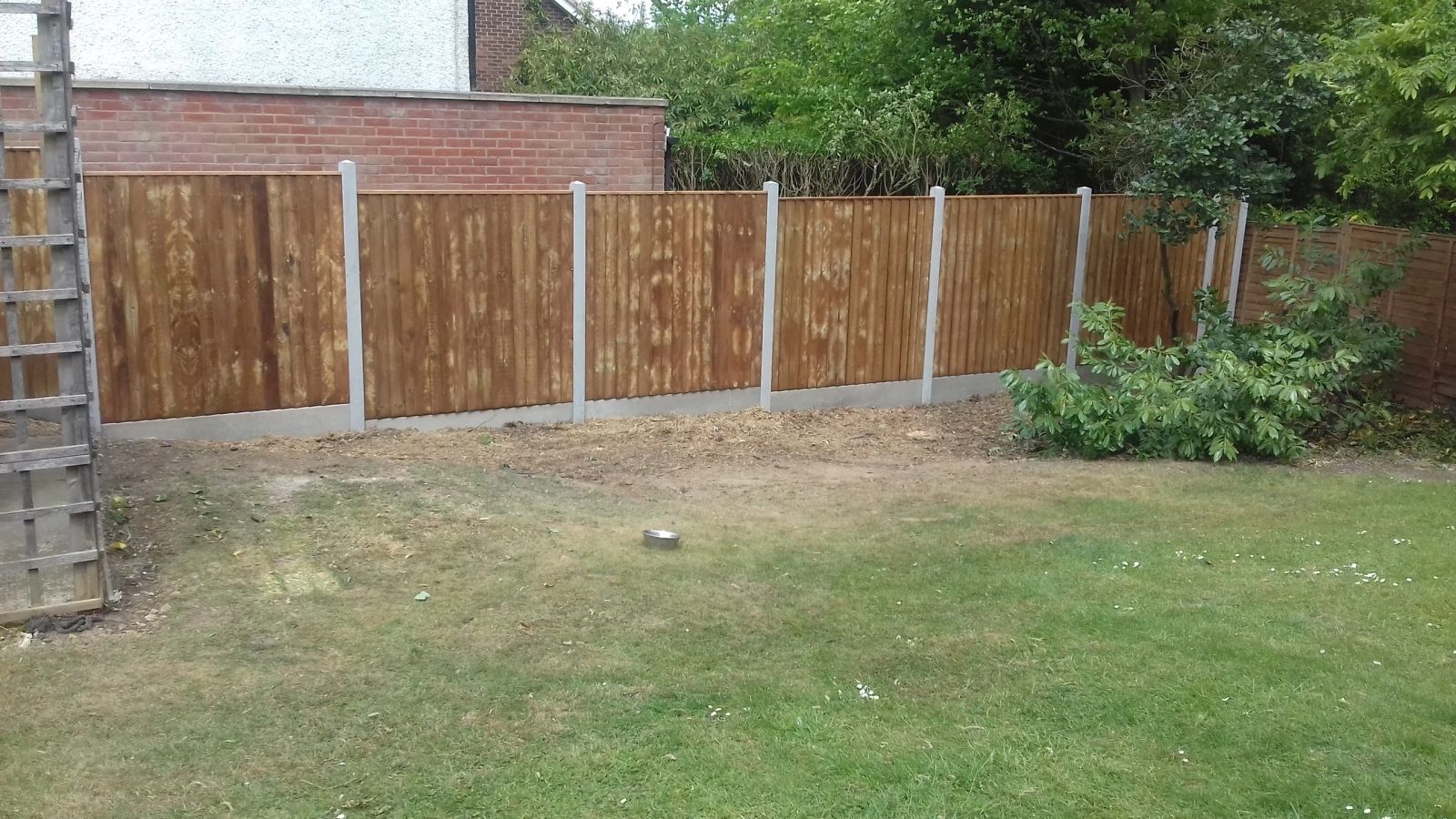
closeboard fence run installed by Capital Fencing in Haringey (N4)
Haringey · N4 / N8 / N15 / N17 / N22

Sloping Garden Fencing, Haringey: engineered-to-load spec for Victorian terraces (Harringay Ladder

If you're weighing sloping-garden fencing for a property in Haringey, the first thing that matters is how the structure performs under real use, not a showroom drawing — not the material choice. Once that's settled, closeboard on stepped gravel boards is where most of our sloping-garden fencing work in N4 lands, with feather-edge racked between posts for shallow slopes as a considered alternative. Roads such as Falkland Road and Green Lanes are typical of the local layout. Harringay Ladder is a useful local reference point. Turnpike Lane and Wood Green form the borough's main retail centres.

If you're weighing sloping-garden fencing for a property in Haringey, the first thing that matters is how the structure performs under real use, not a showroom drawing — not the material choice. Once that's settled, closeboard on stepped gravel boards is where most of our sloping-garden fencing work in N4 lands, with feather-edge racked between posts for shallow slopes as a considered alternative. Roads such as Falkland Road and Green Lanes are typical of the local layout. Harringay Ladder is a useful local reference point. Turnpike Lane and Wood Green form the borough's main retail centres.

Typical sloping-garden fencing briefs in Haringey

  • racked feather-edge run tracking a gentle slope without visible stagger
  • retaining sleepers under fencing to level a garden with a two-course drop to the neighbour

Why this spec, for homeowners with gardens that fall or rise across the boundary — stepped or racked builds

  • stepped builds keep the fence line legally correct even where the ground doesn't cooperate
  • closeboard suits stepping better than panel — no wasted panels cut to slope
  • sleeper-and-fence combined lines mean one contractor for what's usually two trades
Default spec

How we build sloping-garden fencing in Haringey

closeboard on 100×100 pressure-treated posts, stepped in 150mm gravel-board increments or racked where the slope is gentle enough. On Haringey jobs we adjust for ladder-street back-to-back gardens mean every fence run has two owners and three neighbours to keep informed.

Property mix locally: Victorian terraces (Harringay Ladder, Crouch End), 1930s semis in Muswell Hill, and post-war estates around Tottenham. Typical gardens: long thin Victorian rear gardens with London clay and mature street trees. Postcodes we regularly service: N4, N8, N15, N17, N22.

Where sloping-garden fencing isn't the right answer

  • very steep sites where a proper retaining wall (brick or concrete) is the right answer before any fence goes on top
  • green-belt frontages where visible sleeper retaining isn't allowed

Sloping Garden Fencing FAQs — Haringey

How do you keep water off the low end of a stepped run?

On sloping-garden fencing jobs in Haringey (N4), our default answer is: closeboard on 100×100 pressure-treated posts, stepped in 150mm gravel-board increments or racked where the slope is gentle enough. The honest trade-off is using panels on any slope over 300mm across the bay — the panel drops one end and rots at the sunken corner — which is exactly what our default spec designs out.

Can you match a neighbour's stepped boundary starting point?

Across Haringey we spec around ladder-street back-to-back gardens mean every fence run has two owners and three neighbours to keep informed, so on sloping-garden fencing that usually means closeboard on stepped gravel boards. For context: closeboard suits stepping better than panel — no wasted panels cut to slope. Structural spans and post depths calculated, not guessed.

Is panel fencing ever OK on a slope?

Haringey coverage means we can survey most N4 addresses inside a week — homeowners with gardens that fall or rise across the boundary — stepped or racked builds. We'll walk you through stepped builds keep the fence line legally correct even where the ground doesn't cooperate on the site visit before you commit.

Who is liable when the ground falls onto a neighbour's plot?

Practically: stepped closeboard down a 900mm fall across a 15m rear boundary. That's the Haringey version of this job, not a generic one. We'll walk you through stepped builds keep the fence line legally correct even where the ground doesn't cooperate on the site visit before you commit.

What's the biggest drop you can span in one bay?

On sloping-garden fencing jobs in Haringey (N4), our default answer is: closeboard on 100×100 pressure-treated posts, stepped in 150mm gravel-board increments or racked where the slope is gentle enough. For context: closeboard suits stepping better than panel — no wasted panels cut to slope. Structural spans and post depths calculated, not guessed.

Recent sloping garden fencing work
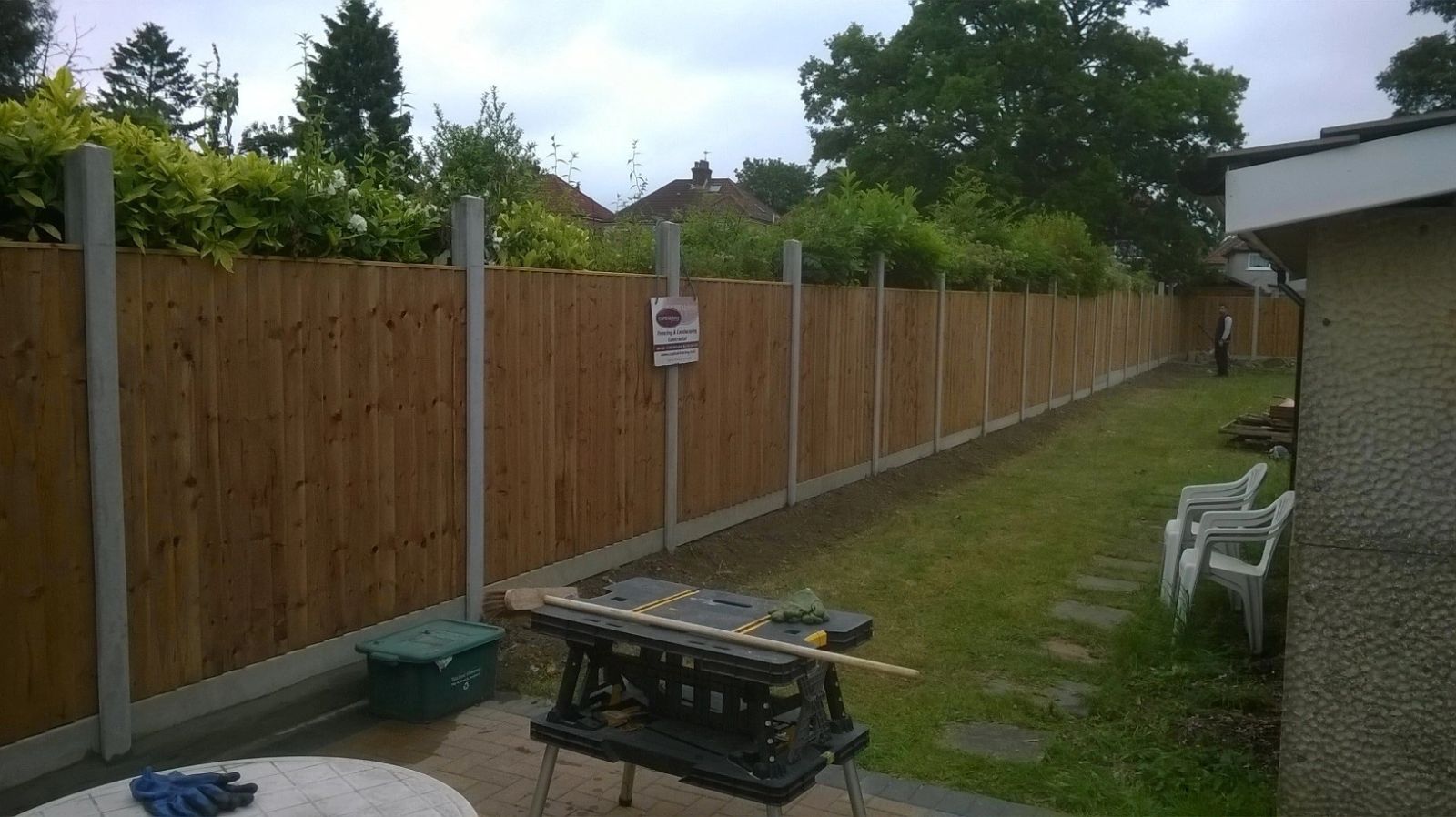
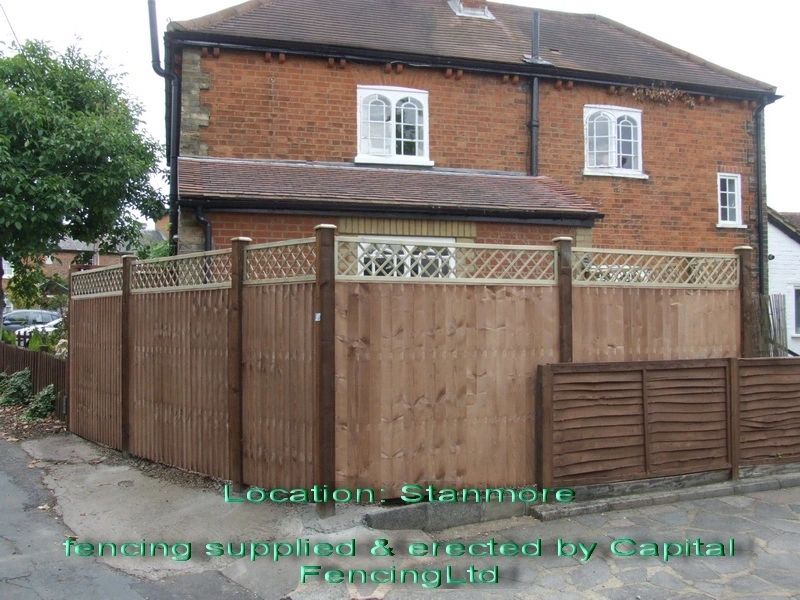
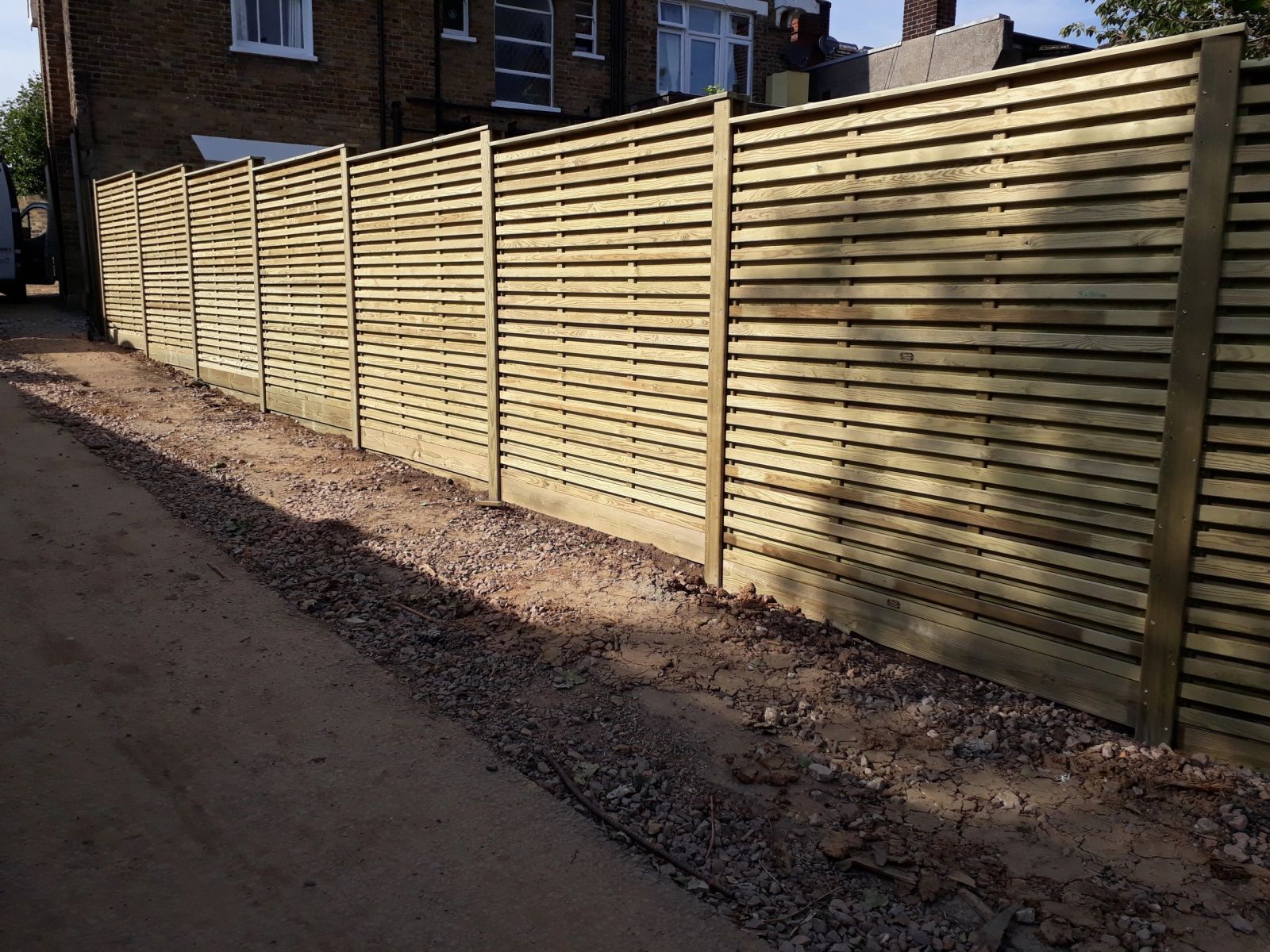
closeboard fence run installed by Capital Fencing in Haringey (N4)panel fence install installed by Capital Fencing in Haringey (N4)trellis-topped fence installed by Capital Fencing in Haringey (N4)bespoke decorative fence installed by Capital Fencing in Haringey (N4)

Sloping Garden Fencing in Haringey: the practical detail

Straightening a leaning run

A run that's leaning uniformly along several bays usually points to a common cause — waterlogged ground, wind loading from one direction, or an original footing depth that was too shallow — rather than a fault with any single post.

Straightening involves resetting posts along the affected bays rather than pulling the fence back into line at the top, since forcing the panels straight without addressing the post bases just reintroduces the lean.

Douglas fir for structural fencing timber

Douglas fir is a stronger, stiffer softwood than typical whitewood or redwood, with a pronounced grain pattern and moderate natural durability in its heartwood, making it a common choice for structural posts and gate framing rather than boarding.

Its resin content is generally lower than pine, which reduces the risk of resin bleed showing through a painted or stained finish.

Because of its strength-to-weight ratio it's often specified for longer unsupported spans, such as wide gate frames, where a lighter section still needs to resist twisting under its own weight.

Mechanical condition needed before adding automation

A gate being considered for automation needs to swing or slide freely by hand first, since an automated opener will struggle with — and can be damaged by — a gate that already binds, drags or requires extra force to move manually.

Addressing hinge, track or frame issues before automation is fitted avoids putting new load on a mechanical fault that was already present.

Gravity latch weight and pivot balance

A gravity latch relies on its own weight to drop the bar into the keep as the gate closes, so the pivot point and the latch's weight distribution both need to be correct for it to fall reliably rather than sticking mid-drop.

A latch that's been repainted heavily can gain enough extra weight or friction at the pivot to stop working properly, which is worth checking before assuming the mechanism itself has failed.

A practical corrosion inspection schedule for steel fencing

A basic inspection walk checks ground-line rust on posts, coating breakdown at cut edges and weld points, and any bare metal exposed by a scrape or impact, since these are the points corrosion establishes itself first rather than spreading evenly across a whole panel.

Catching surface rust early with a localised repair coating is far cheaper than replacing a section once corrosion has perforated the steel, and an annual check is usually enough to catch problems at that early stage on a well-galvanised run.

Boundary responsibilities under an agricultural tenancy

Where land is let under an agricultural tenancy, responsibility for boundary fencing can sit with the tenant rather than the landowner, depending on the specific tenancy agreement's terms.

This differs from the usual residential landlord and tenant position, reflecting the different statutory framework agricultural tenancies operate under.

Checking the tenancy agreement itself is the only reliable way to establish who's actually responsible for a specific boundary on let agricultural land.

Checking for adjacent drainage runs before excavating

A land drain or perimeter drainage run laid to keep a garden from waterlogging is easy to miss during a routine dig, since it's often shallower and less obviously marked than a mains service.

Digging through one doesn't usually cause an immediate problem visible on the day, but it can quietly reintroduce a waterlogging issue the drain was originally installed to solve, sometimes not noticed until the following wet season.

Where a garden has a known history of standing water that was previously addressed with drainage work, it's worth asking the client what's down there before digging rather than finding out by breaking through a pipe.

Sourcing reclaimed or discontinued timber to match an existing run

Older properties sometimes have a fence built from timber sections, profiles or panel sizes no longer in standard production, which makes an exact match difficult without sourcing reclaimed stock or having a bespoke run cut.

Reclaimed timber needs the same checks as new stock — treatment condition, rot, and structural soundness — before reuse, since visually matching timber that's structurally compromised isn't a genuine repair.

Where matching isn't practical, agreeing a deliberate, tidy transition point with the client (a change of panel style at a natural break, like a corner post) usually looks better than trying and failing to blend two slightly different materials seamlessly.

Terraced housing and rear access

Victorian and Edwardian terraces were rarely built with side access, which means materials for a rear garden fence often have to go through the house, over a shared side return, or down a narrow rear alley shared with several other properties.

That access constraint changes the practical choice of materials — full concrete gravel boards and long panels are harder to move through a narrow hallway than shorter timber sections carried in and built up on site.

It's also why timing matters on these jobs: a delivery that blocks a shared alley for half a day needs agreeing with neighbours in advance, not discovering on the morning of the job.

Boundary treatments for flats and maisonettes

Shared amenity gardens attached to flats or maisonettes usually have boundary decisions made collectively through a management company or freeholder rather than by an individual leaseholder, which changes who needs to sign off a fence or gate change.

Lease terms sometimes specify who's responsible for maintaining which boundary, and altering a shared boundary without checking the lease is a common source of dispute between leaseholders.

Where several flats share a single rear garden, dividing it with new fencing usually needs agreement from all affected leaseholders, not just the person requesting the work.

Restrictive covenants on open-plan frontages

Many post-war estates were built with an explicit covenant in the title deeds preventing front garden fences or walls above a low height, intended to preserve an open-plan street appearance.

These covenants are private legal obligations between landowners rather than planning rules, and breaching one can in principle be enforced by whoever holds the benefit of the covenant, sometimes a management company.

Checking the title register for this kind of restriction before fitting a front boundary fence avoids finding out about it after the work is done.

Pet-proofing a garden boundary

Dogs that dig will often go under a fence line rather than over it, so a gravel board or buried mesh apron at the base does more to keep a determined digger in than extra height above ground.

Gaps at gate thresholds and where a fence meets a wall or building are the most common escape points, and are worth checking specifically rather than assuming a continuous fence line is actually continuous at ground level.

Smaller or younger dogs and cats can fit through gaps that look too small to be a concern, so picket or trellis-style boundaries usually need a solid section or mesh backing if pet containment is the priority.

Dealing with a post hole that keeps collapsing in loose or sandy soil

Loose or sandy soil can slump back into a freshly dug post hole before concrete goes in, which is more of a problem on a repair — where the hole is often reopening ground already disturbed by the original failure — than on undisturbed ground.

A sleeve, shuttering, or a wider hole packed with a drier mix that doesn't rely on firm hole walls to hold its shape can get a repair post set securely even where the surrounding soil won't hold a clean-sided hole.

Continuous strip footing compared with individual post holes

A continuous concrete strip footing running the full length of a fence line gives even support and a clean base for a plinth wall or kickboard, and is generally chosen where the boundary also needs a level base to close gaps under the fence.

Individual post holes are quicker and cheaper on a long straight run over consistent ground, but they leave open ground between posts that needs a separate gravel board or infill strip if a continuous barrier at ground level is also required.

Packing as a repair for an uneven panel gap

Packing uses timber shims between a post and a panel to correct a gap that's opened up as ground has settled unevenly beneath one end of a run, restoring a level top line without lifting or resetting every post along the bay.

It's a reasonable short-term fix for minor settlement, but packing over a gap caused by an actively failing post just delays a proper reset and the packing itself will need adjusting again as the post continues to move.

Gate frame timber sizes by width

A gate frame's timber section needs to increase with the width of the opening, since a wider gate has more leverage acting on the hinge side and more unsupported span across the middle before diagonal bracing is added.

A narrow single pedestrian gate can often use a modest frame section, while a wide double-leaf driveway gate needs substantially heavier stiles and rails plus a diagonal brace to stop it dropping or racking out of square at the latch side.

Bracing should run from the top of the hinge side down to the bottom of the latch side, in the direction that actually resists the gate's tendency to sag, not simply corner to corner for appearance.

Specification driven by an insurer's boundary requirements

Some commercial and high-value premises have boundary security requirements set by an insurance policy — a minimum fence height, mesh type or lock standard — that the fencing spec has to meet regardless of what would otherwise be chosen.

Where a specific requirement applies, it's worth getting it in writing from the policy documents before quoting, since fitting to a general standard when a stricter one is required can leave a gap the client didn't expect.

Corner plots and unusual exposure

A corner plot often loses the shelter of a neighbouring garden on one side, leaving a boundary that faces open street or open ground the way an interior garden fence never does.

That side of the plot is worth treating like a rural exposed boundary for post spacing and panel choice even though the rest of the garden is a normal suburban size.

It is also usually the run most visible to passers-by, so the practical answer is often a slightly heavier specification rather than a cheaper standard one to avoid repeat failures on the most conspicuous boundary.

Gravel terraces of the Lea and Colne valleys

The river terraces along the Lea and Colne valleys are largely sand and gravel over clay, ground that drains quickly and digs easily compared with the heavier clays further from the rivers.

Free-draining gravel is generally kinder to timber posts since water doesn't pool against the base, but loose gravel can also slump back into an open hole faster than clay, making a wider working hole necessary to get concrete properly around the post.

Where the gravel sits directly over a clay band, augers can hit a hard, sticky transition partway down that slows digging without warning.

Weight distribution on double driveway gates

A pair of driveway gates carries its weight on two separate hinge posts rather than one, so an imbalance between leaves — one heavier, one lighter, or one dropped more than the other — shows up as an uneven meeting line at the centre.

Correcting this usually means addressing each leaf's hinges independently rather than adjusting only the leaf that looks worse.

Protecting a boundary fence during nearby building work

Where building work, an extension or a loft conversion is happening on an adjoining property, existing boundary fences and their footings are sometimes shifted, undermined or damaged by machinery or excavation.

It's reasonable to raise this in advance with a neighbour undertaking major building work, ideally recording the fence's condition beforehand with photographs.

Where a party wall notice has been served for related works, that process can sometimes address boundary condition issues as part of a schedule of condition, which is worth asking about.

Wet rot versus dry rot fungi in fence timber

Wet rot fungi need sustained high moisture content to establish and spread, and are the more common cause of decay in buried or ground-contact fence posts that stay consistently damp.

Dry rot, despite the name, also needs moisture to establish initially but can then spread through drier surrounding material via root-like strands, making it more of a concern in enclosed, poorly ventilated timber structures than open-air fencing.

In practice, most fence post decay encountered on typical garden and boundary fencing is wet rot rather than dry rot, given the open, ventilated conditions most fencing timber sits in.

Sloping Garden Fencing across N4, N8, N15, N17, N22 is a regular run for us. We'll quote honestly, tell you if sloping-garden fencing isn't the right answer for your site, and book the job in within a week or two of a signed quote. structural spans and post depths calculated, not guessed. Roads such as Ferme Park Road and Alexandra Park Road are typical of the local layout. Turnpike Lane market is a useful local reference point. The New River runs through the east of the borough on its way south from Hertfordshire.

Get In Touch

Get My Free Quote — 24h Response

No callout fee · Free site visit · Friendly local team covering London & Hertfordshire.

Call us
07885907880
or 02036484746
Email
capital_fencing@yahoo.com
WhatsApp
Message us anytime
Area
London & Hertfordshire
Payment
Card payments accepted

Pay by debit or credit card, bank transfer or cash once the work and price are agreed. No deposit taken online.

Request a Free Quote

We'll get back to you within 24 hours.

Free Site Visit No Callout Fee
Call WhatsAppQuote