Fencing for sloping gardens across Hertford — East Hertfordshire District
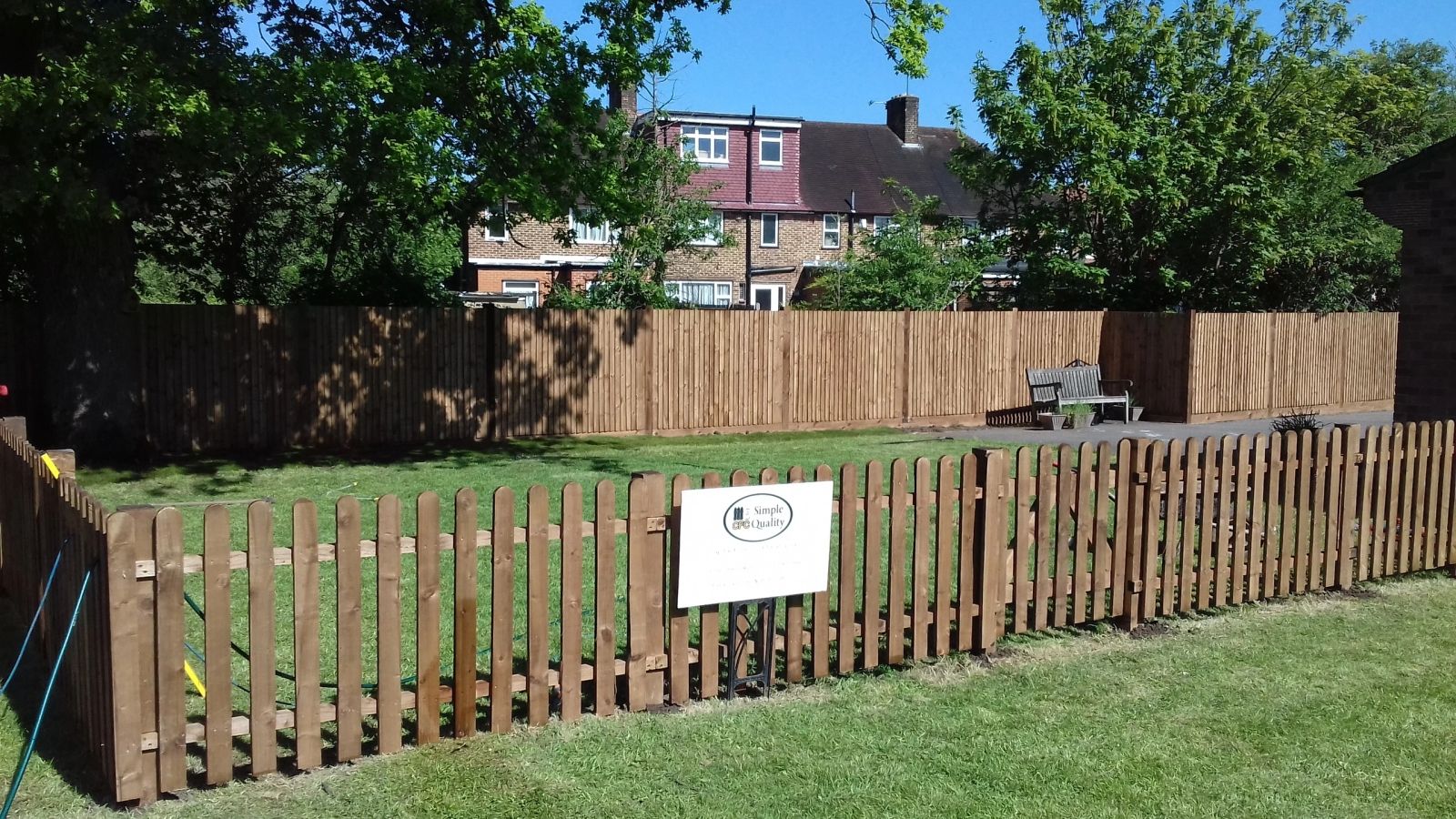
Sloping Garden Fencing in Hertford is a specific brief for us — homeowners with gardens that fall or rise across the boundary — stepped or racked builds. The default local answer isn't a stock catalogue drop: it's closeboard on 100×100 pressure-treated posts, stepped in 150mm gravel-board increments or racked where the slope is gentle enough. On Hertford sites we also spec around conservation areas and listed buildings around the castle restrict heights and finishes, which is where a lot of sloping-garden fencing jobs quietly fail two years in. Recent work on Bengeo Street and Ware Road. We orient jobs off Hertford Castle grounds. Hartham Common-side rear boundary. Hit-and-miss panels to keep dog-walker traffic visible without losing wind-flow. Replaced a leaning lap-panel run that had failed twice in three years.
Sloping Garden Fencing in Hertford is a specific brief for us — homeowners with gardens that fall or rise across the boundary — stepped or racked builds. The default local answer isn't a stock catalogue drop: it's closeboard on 100×100 pressure-treated posts, stepped in 150mm gravel-board increments or racked where the slope is gentle enough. On Hertford sites we also spec around conservation areas and listed buildings around the castle restrict heights and finishes, which is where a lot of sloping-garden fencing jobs quietly fail two years in. Recent work on Bengeo Street and Ware Road. We orient jobs off Hertford Castle grounds. Hartham Common-side rear boundary. Hit-and-miss panels to keep dog-walker traffic visible without losing wind-flow. Replaced a leaning lap-panel run that had failed twice in three years.
Typical sloping-garden fencing briefs in Hertford
- → stepped closeboard down a 900mm fall across a 15m rear boundary
- → retaining sleepers under fencing to level a garden with a two-course drop to the neighbour
Why this spec, for homeowners with gardens that fall or rise across the boundary — stepped or racked builds
- stepped builds keep the fence line legally correct even where the ground doesn't cooperate
- closeboard suits stepping better than panel — no wasted panels cut to slope
- sleeper-and-fence combined lines mean one contractor for what's usually two trades
How we build sloping-garden fencing in Hertford
closeboard on 100×100 pressure-treated posts, stepped in 150mm gravel-board increments or racked where the slope is gentle enough. On Hertford jobs we adjust for conservation areas and listed buildings around the castle restrict heights and finishes.
Property mix locally: Georgian and Victorian townhouses in the centre, with newer estates on the Bengeo and Sele Farm sides. Typical gardens: long, sloping plots dropping toward the River Lea — terracing and retaining work are often part of the job. Postcodes we regularly service: SG13, SG14.
Where sloping-garden fencing isn't the right answer
- — very steep sites where a proper retaining wall (brick or concrete) is the right answer before any fence goes on top
- — green-belt frontages where visible sleeper retaining isn't allowed
Sloping Garden Fencing FAQs — Hertford
What's the biggest drop you can span in one bay?
On sloping-garden fencing jobs in Hertford (SG13), our default answer is: closeboard on 100×100 pressure-treated posts, stepped in 150mm gravel-board increments or racked where the slope is gentle enough. The honest trade-off is using panels on any slope over 300mm across the bay — the panel drops one end and rots at the sunken corner — which is exactly what our default spec designs out.
Is panel fencing ever OK on a slope?
Across Hertford we spec around conservation areas and listed buildings around the castle restrict heights and finishes, so on sloping-garden fencing that usually means closeboard on stepped gravel boards. The honest trade-off is using panels on any slope over 300mm across the bay — the panel drops one end and rots at the sunken corner — which is exactly what our default spec designs out.
Can you match a neighbour's stepped boundary starting point?
East Hertfordshire District coverage means we can survey most SG13 addresses inside a week — homeowners with gardens that fall or rise across the boundary — stepped or racked builds. We'll walk you through stepped builds keep the fence line legally correct even where the ground doesn't cooperate on the site visit before you commit.
Who is liable when the ground falls onto a neighbour's plot?
Practically: stepped closeboard down a 900mm fall across a 15m rear boundary. That's the Hertford version of this job, not a generic one. The honest trade-off is using panels on any slope over 300mm across the bay — the panel drops one end and rots at the sunken corner — which is exactly what our default spec designs out.
How do you keep water off the low end of a stepped run?
On sloping-garden fencing jobs in Hertford (SG13), our default answer is: closeboard on 100×100 pressure-treated posts, stepped in 150mm gravel-board increments or racked where the slope is gentle enough. For context: closeboard suits stepping better than panel — no wasted panels cut to slope. Structural spans and post depths calculated, not guessed.
Recent sloping garden fencing work
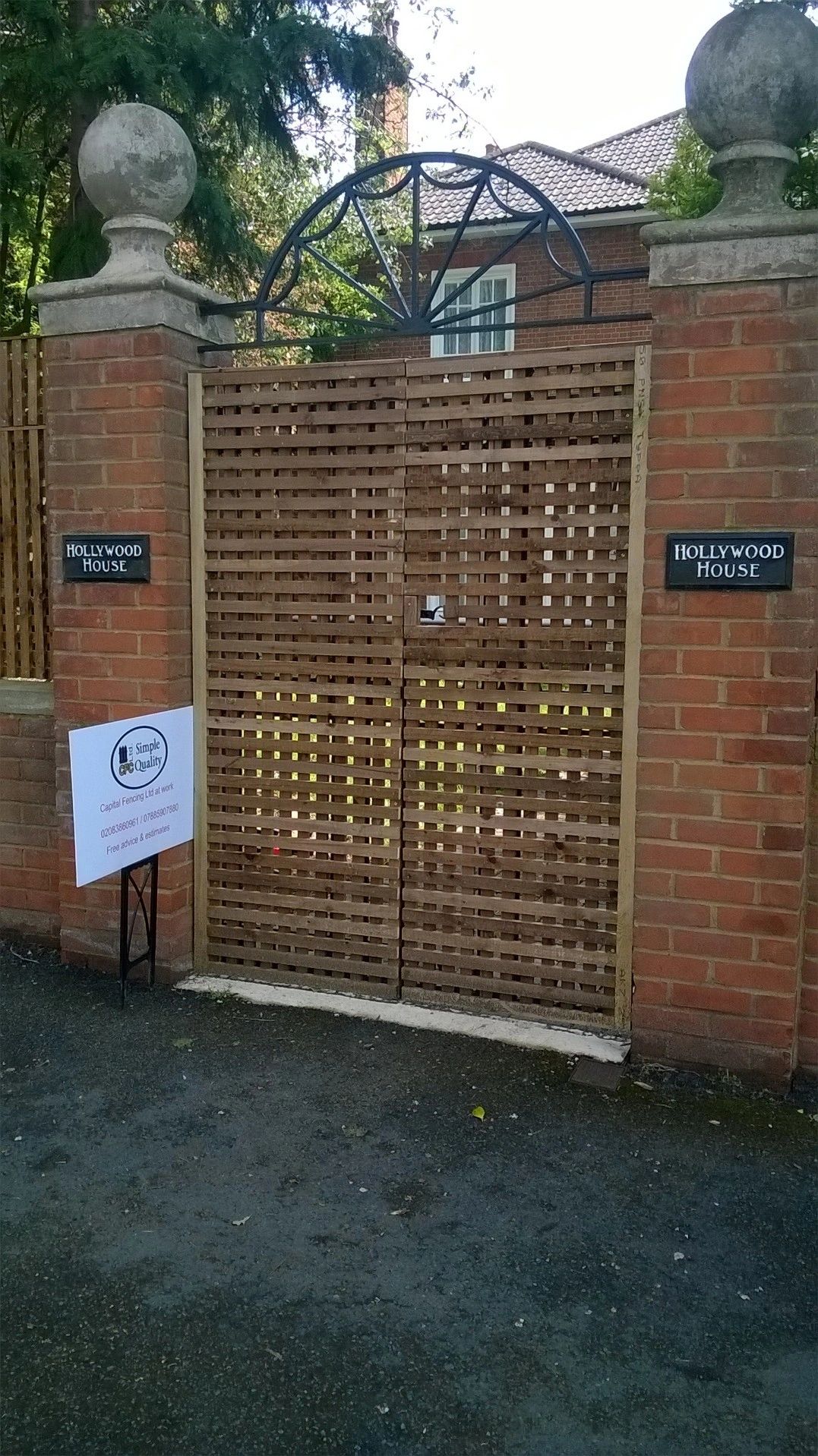
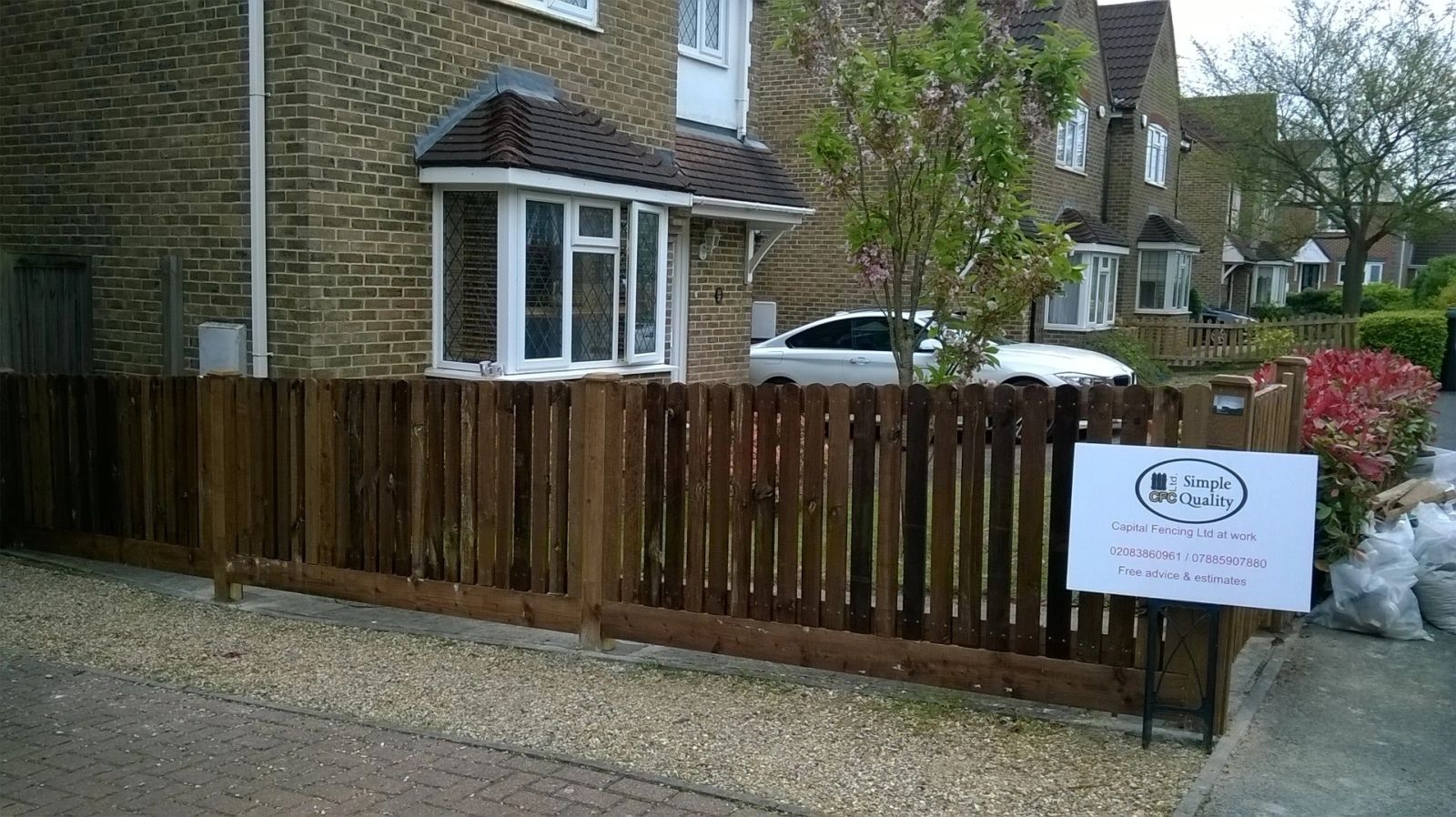
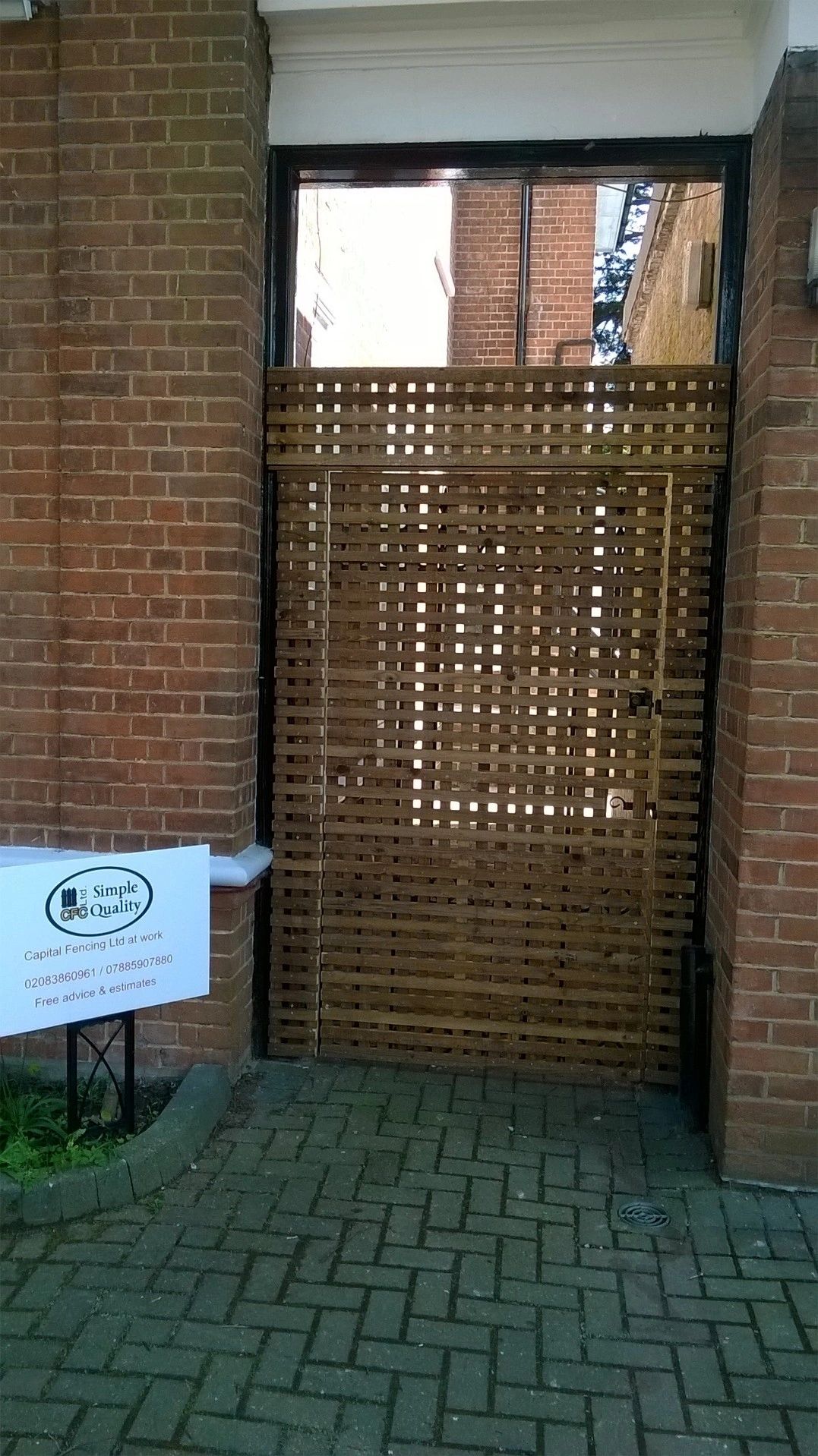
Homeowners with gardens that fall or rise across the boundary — stepped or racked builds — that's who this page is for. In Hertford and out to East Hertfordshire District, we run the sloping-garden fencing spec that survives conservation areas and listed buildings around the castle restrict heights and finishes. Recent work on Bengeo Street and Fanshawe Street. We orient jobs off Hartham Common. Bengeo Street bespoke iroko side gate with matching planter box. Iroko hardwood gate on galvanised hinges, sized for 820mm opening between brick pier and rendered wall. Original softwood had rotted at the sill; new gate quoted for 20-year lifespan.
Get My Free Quote — 24h Response
No callout fee · Fully insured · Friendly local team covering London & Hertfordshire.