
How it's done
Choosing a Balustrade for Your Deck
Last updated
The short answer
Choose a decking balustrade by how high the deck is, how open or private you want the edge, and how much upkeep you accept. Timber spindles, composite rails and metal infill all work, but strength comes from the posts being bolted into the deck frame, not sat on the boards. Guidance on guarding sits in Approved Document K.
Official guidance: GOV.UK: Approved Document K; Planning Portal: decking
At a glance
- Needed on
- Raised decks and steps where someone could fall
- Infill choices
- Timber, composite, metal, or solid and slatted panels
- Key to strength
- Posts bolted into the deck frame
- Rules
- Building Regulations guidance and planning for raised decks
A balustrade has to be strong first and good looking second. The choice of infill matters less than how firmly the posts are tied into the deck frame.
Once a deck sits above the garden rather than on it, the edge becomes something people lean on, children run along and guests sit against. A balustrade turns a raised platform into somewhere safe and comfortable to use, and it changes the look of the whole deck more than most owners expect.
We fit balustrades, handrails and railings to new and existing decks across London and Hertfordshire. This guide explains the choices we talk through with customers and what makes a balustrade feel solid rather than wobbly.
Does your deck need one?
Any raised deck where someone could step or fall off the edge benefits from guarding, and steps with more than a couple of risers are easier and safer with a handrail. For homes, the guidance on protection from falling sits in the Building Regulations, in Approved Document K published on GOV.UK. Because the details depend on the height and use of the deck, we check what applies to your deck rather than quote a single rule for everyone.
Height also matters for planning. The Planning Portal explains that decking more than 30cm above the ground needs planning permission rather than falling under permitted development, and a raised deck with a balustrade can also affect neighbours' privacy. Your council can confirm what applies to your property.
Infill options
The infill is the part between the posts. Each type gives a different balance of view, privacy and upkeep.
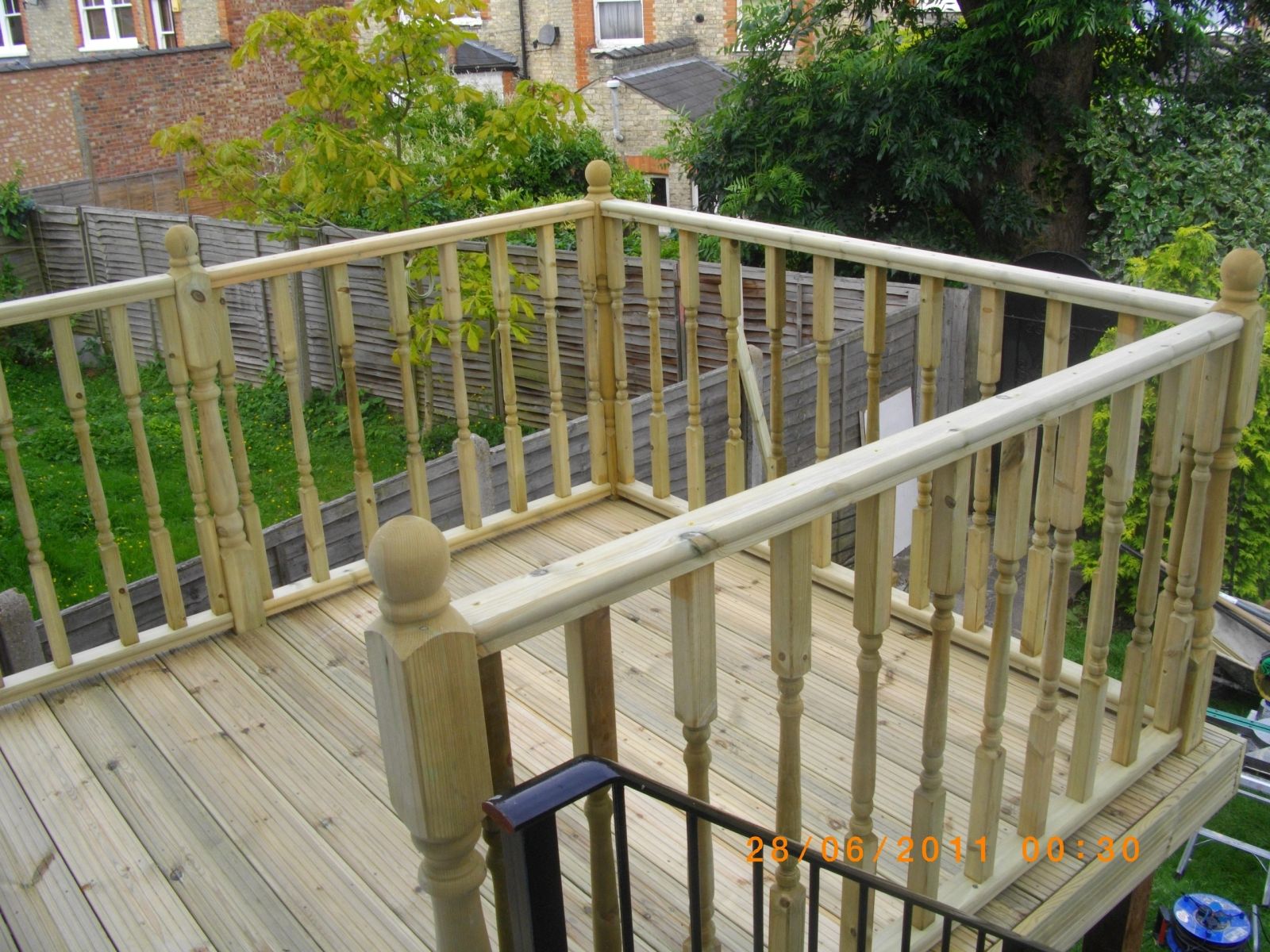
- Timber spindles: traditional, simple to repair, need the same care as the deck
- Composite rails and spindles: matched to composite boards, no oiling
- Metal infill or rods: slim and open, keeps the view across the garden
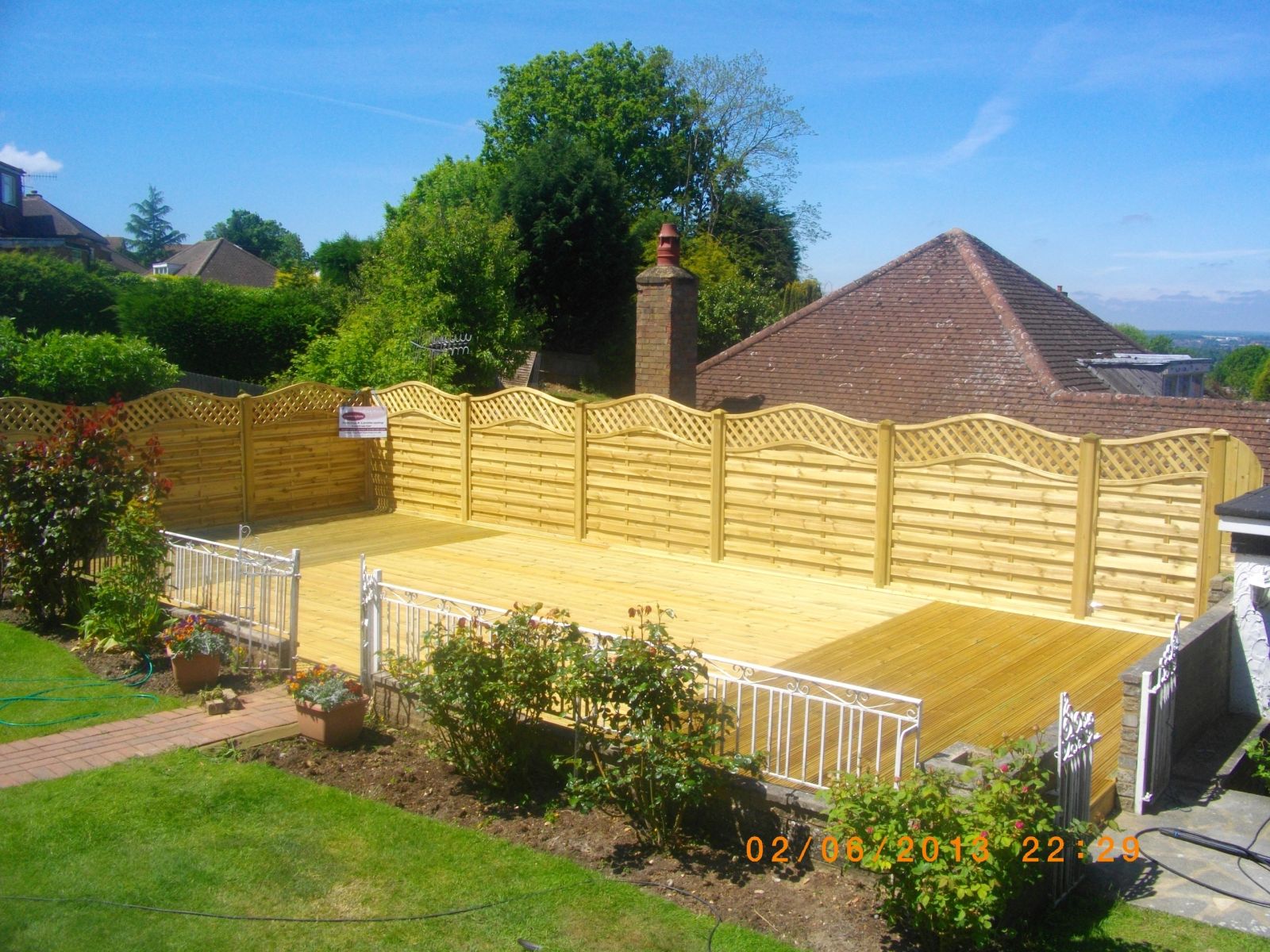
- Solid timber or slatted panels: more privacy and wind shelter on an exposed deck
Fixing the posts properly
A balustrade post that only sits on top of the boards will move however good the infill is. We fix posts into the frame itself, bolted to joists or bearers with blocking added where needed, so the load runs into the structure. On an existing deck this sometimes means lifting a few boards to reach the frame and add the extra timber.
Post spacing is set by the infill and the handrail. Longer spans between posts feel springier, so a run along the open edge of a high deck usually needs posts closer together than a low edge beside a lawn.
Handrails and steps
The top rail is what people actually touch, so it needs to be smooth, comfortable to grip and firm. On steps the rail should follow the pitch of the treads and carry on far enough at each end to be useful when stepping on and off. Timber rails are often rounded or chamfered so they are kind to hands and shed water rather than holding it.
Matching the deck and garden
A balustrade is a large, visible piece of the deck, so it is worth thinking about the view from the house as well as from the garden. Open metal infill keeps a small garden feeling bigger. Slatted timber can tie a deck to a slatted fence nearby. Composite balustrades suit composite decks where the point was to avoid regular oiling.
Gates and child safety
Where a raised deck has steps down to the lawn, a small gate in the balustrade can keep young children or a dog on the deck. It needs its own firm posts and a latch that closes reliably. Gaps between spindles or rails should be small enough that a child cannot climb through or get stuck, which is another reason we check the guidance for each deck rather than guess.
Getting a quote
Send photos of the deck edges and steps, the deck's height above the ground at its highest point, the length of each edge and your postcode. We send a written estimate and visit to confirm before the work is agreed.
Frequently asked
Can you add a balustrade to my existing deck?
Usually, yes. We check the frame, add blocking where the posts will go and bolt the posts into the structure rather than onto the boards.
What is the strongest type of decking balustrade?
Strength comes mostly from how the posts are fixed into the frame. Any of the common infill types can feel solid if the posts are tied in properly.
Do I need planning permission for a raised deck with a balustrade?
The Planning Portal says decking more than 30cm above the ground needs planning permission. Check with your council for your property.
Can a balustrade give my deck more privacy?
Yes. Solid or slatted panels between posts give more screening and shelter than spindles or metal rods.
Do composite balustrades need maintenance?
They need cleaning, but not oiling or staining. Fixings are worth checking now and then like any balustrade.
Want this priced properly for your garden?
Photos first, then a written estimate across London and Hertfordshire, a written specification, and a fixed price. No obligation.