
Comparisons
Composite Fencing vs Timber: An Honest Comparison
Composite fencing is made from wood fibre bound in plastic, sold as panels that slot between posts. Compared with timber it needs no staining, will not rot and holds its colour for longer, but it costs more up front and a damaged board is harder to patch. Timber is cheaper, warmer-looking and easier to repair. Composite buys you fifteen-plus years without staining at roughly double the up-front cost; timber is cheaper, warmer-looking and easier to repair.
We fit both, and we have no reason to push either. Composite is genuinely excellent in the right setting and an expensive mistake in the wrong one, so here is the comparison as we would give it standing in your garden.
Where composite clearly wins
Colour-through boards do not fade to grey the way pressure-treated timber does, aluminium post systems do not rot at ground level, and there is no annual staining. For long boundaries, rental portfolios, and anyone who does not want a ladder-and-brush weekend every spring, that is a real benefit.
Where timber still wins
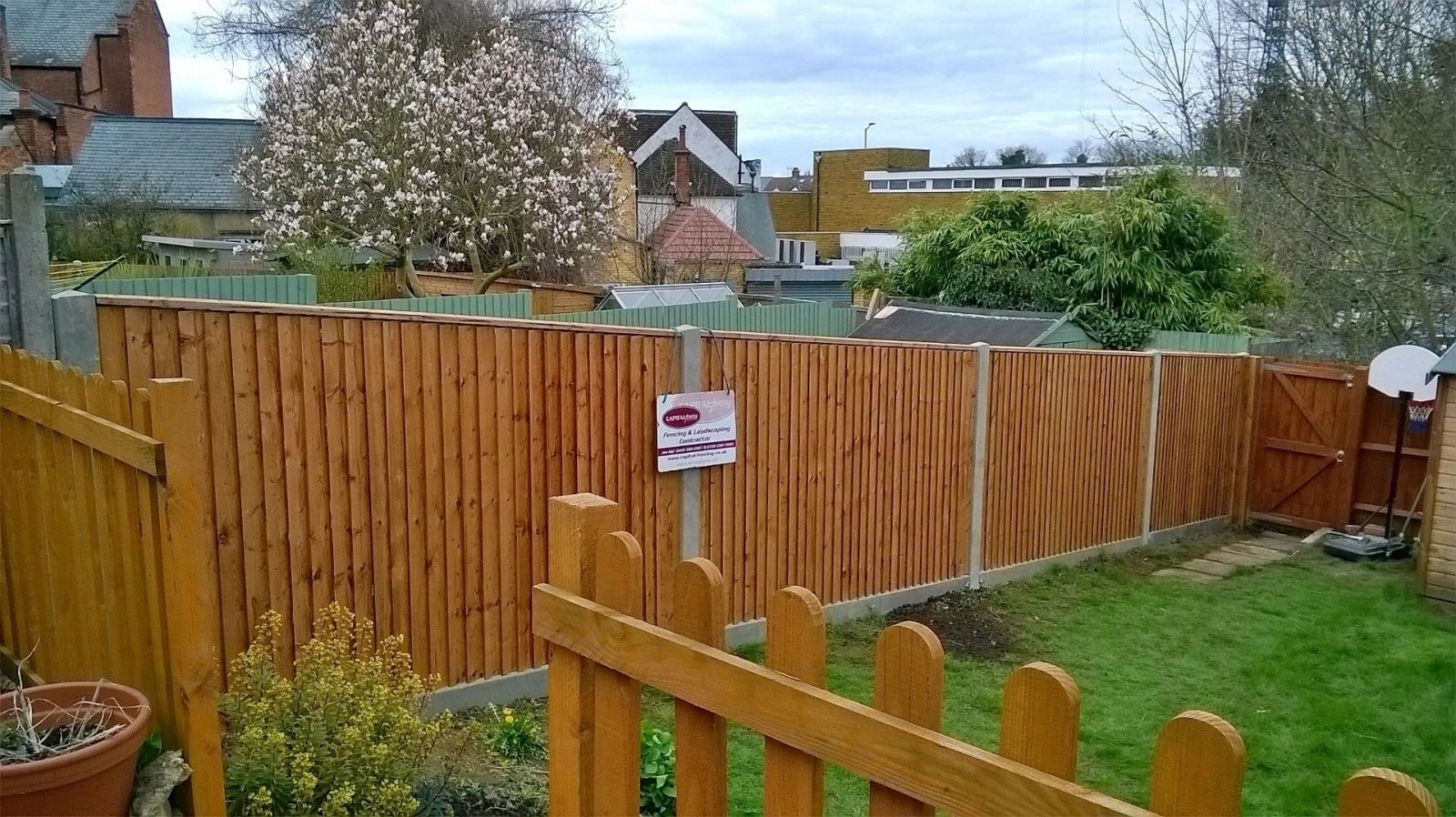
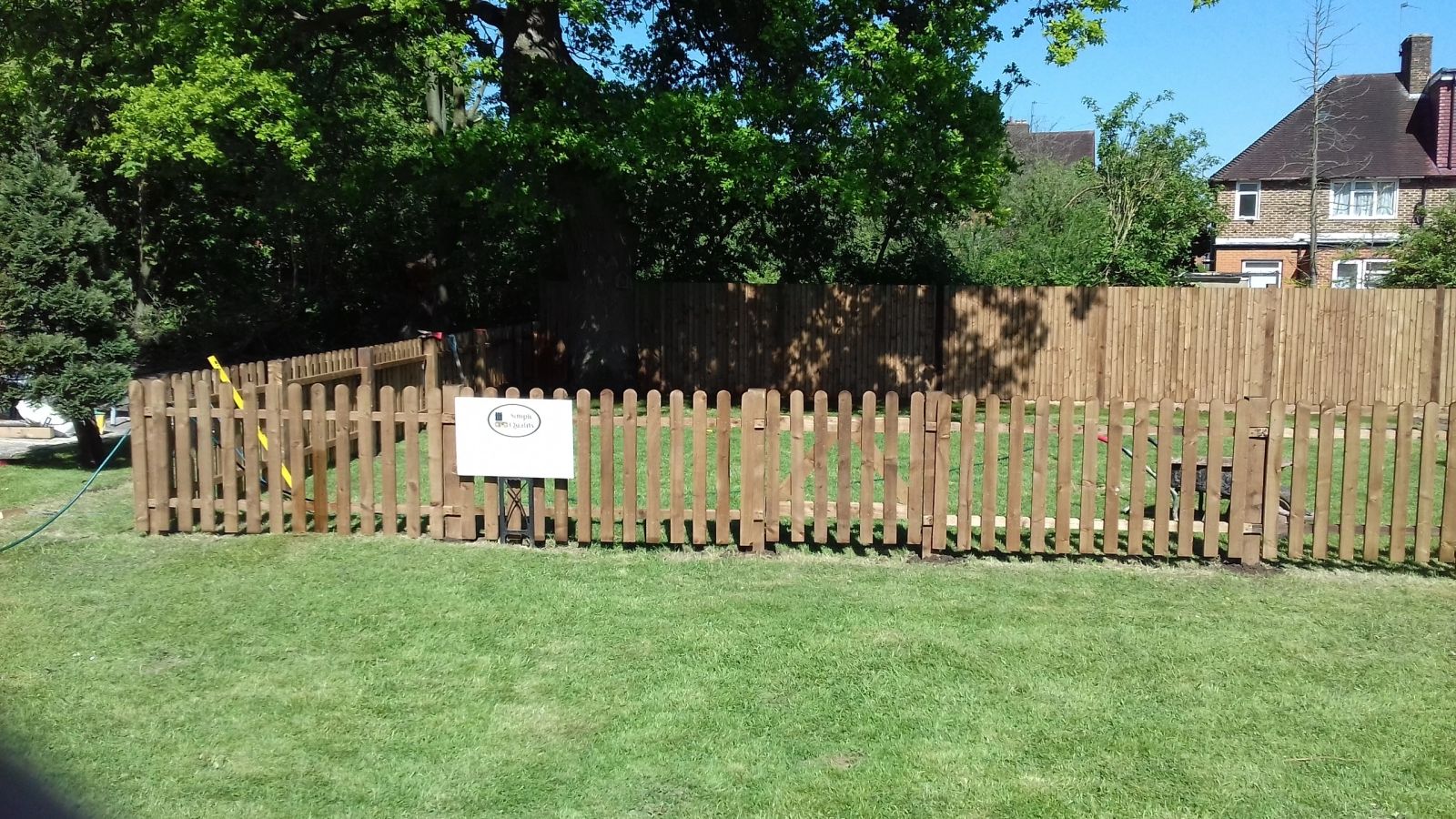
Up-front cost is roughly half. Timber can be raked to a slope, cut and scribed around obstructions, painted any colour, and repaired board by board with materials from any merchant. In conservation areas, traditional close-board or painted picket is usually the only thing that will look right — and sometimes the only thing accepted.
The downsides nobody mentions
Composite boards dent under a hard football strike or a strimmer edge, and a damaged board cannot be sanded out — it is replaced. Cheap composite systems also expand and contract noticeably, so installation gaps matter. Timber's downside is simpler: without treatment, it greys, and untreated ground contact ends its life early.
How we usually split it
A common brief we quote: composite along the long rear boundary that nobody wants to maintain, timber down the side returns where cost per metre matters and access is tight. Nothing says the whole garden must be one system.
Frequently asked
What are composite fence panels made of?
A mix of wood fibre and plastic, formed into boards that slot together into panels between posts. The finish is built in, so there is nothing to paint or stain.
Does composite fencing need special posts?
Most systems use their own aluminium or composite posts, or specific fixings for concrete posts. We check whether your existing posts can be reused at the site visit.
Do you fit both composite and timber fencing?
Yes. We fit both, so the advice here is not tied to selling one of them.
Does composite fencing fade?
Quality colour-through boards weather slightly in the first season and then hold steady. Cheaper capped boards fade more visibly where sun is direct all day.
Can composite panels use my existing concrete posts?
Sometimes — slot widths vary. We measure the existing slots before quoting rather than assuming.
Is composite fencing stronger in wind?
The post system is the deciding factor, not the board. Aluminium or steel posts correctly based handle wind well; the boards themselves are solid.
Which is better value over 15 years?
Composite typically evens out on total cost once you count two rounds of staining materials and any timber panel replacements — but only if you were genuinely going to maintain the timber.
Want this priced properly for your garden?
Photos first, then a written estimate across London and Hertfordshire, a written specification, and a fixed price. No obligation.