
How it's done
Should Decking Grooves Face Up or Down?
Last updated
The short answer
Lay decking with the manufacturer's intended finished face upwards. Some boards are explicitly reversible, but turning others over can expose the wrong edge or prevent hidden clips fitting. Grooves are a surface profile, not a substitute for ventilation, drainage or cleaning, and they do not guarantee slip resistance.
At a glance
- Deciding source
- The board manufacturer's instructions
- Reversible?
- Only when the product explicitly allows it
- Grooves provide
- Texture and appearance, not drainage
- Still essential
- Correct fixings, gaps and cleaning
Lay the board with its intended finished face upwards. Grooves are not a universal anti slip channel or a substitute for drainage, and reversing a board may expose the wrong profile.
The argument about which way grooved decking should face usually starts with a board that has one ribbed face and one smoother face. It sounds like a simple choice, yet the answer depends on how that particular board was manufactured and intended to be used.
The safest starting point is the supplier's instructions, not a general rule passed between gardens. This guide explains what grooves can and cannot do, and why the frame and cleaning routine matter more than a claim about one orientation.
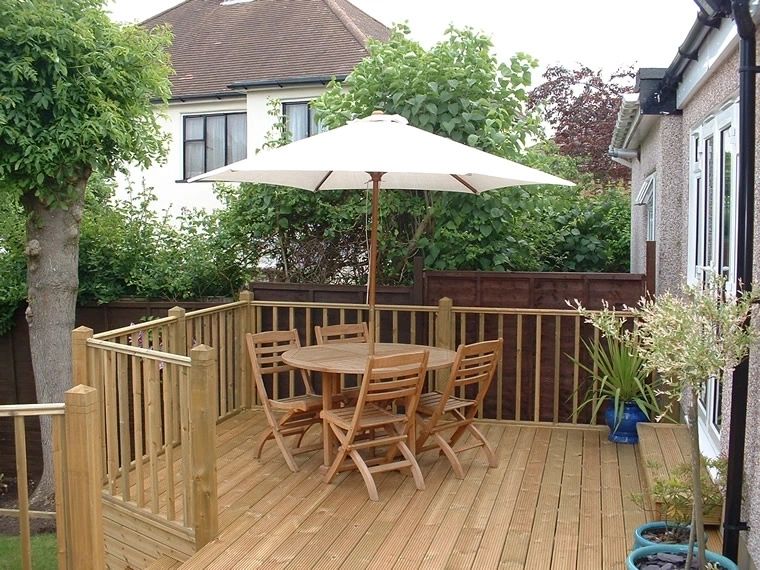
Use the manufacturer's finished face
Many boards are produced with a specific upper face, edge profile and fixing arrangement. One side may be smoother for a different visual option, while another is textured or grooved as the intended walking surface.
Reversible boards do exist, but reversibility should be stated by the manufacturer. Turning a board over can change the edge radius, groove position and the way clips or screws are meant to engage.
What grooves are designed to provide
Grooves are primarily a surface profile and design feature. Depending on the product, they may add texture underfoot and contribute to the board's appearance. They should not be treated as a guarantee against slipping in every condition.
Algae, ice, wet leaves and smooth worn patches can still make a grooved deck slippery. The entire surface and its environment need attention rather than relying on the pattern alone.
Why grooves are not drainage channels
Water should drain through the planned gaps and away from the correctly supported surface. A shallow groove does not replace a fall or an open route off the deck. Dirt can also collect in the profile and remain damp.
Turning grooves downwards in the hope of improving drainage can leave the wrong surface on top without solving the frame's water management. Airflow and ground drainage below are separate design issues.
Cleaning a grooved surface
A brush can follow the grooves to remove mud, pollen and algae. The cleaning method should suit timber or composite and avoid damaging the texture. A harsh pressure jet may roughen timber or mark a composite cap rather than simply removing dirt.
Regular clearing matters most in shaded areas and beside planting. A grooved board with compacted debris can be just as slippery as a smooth one with the same growth.
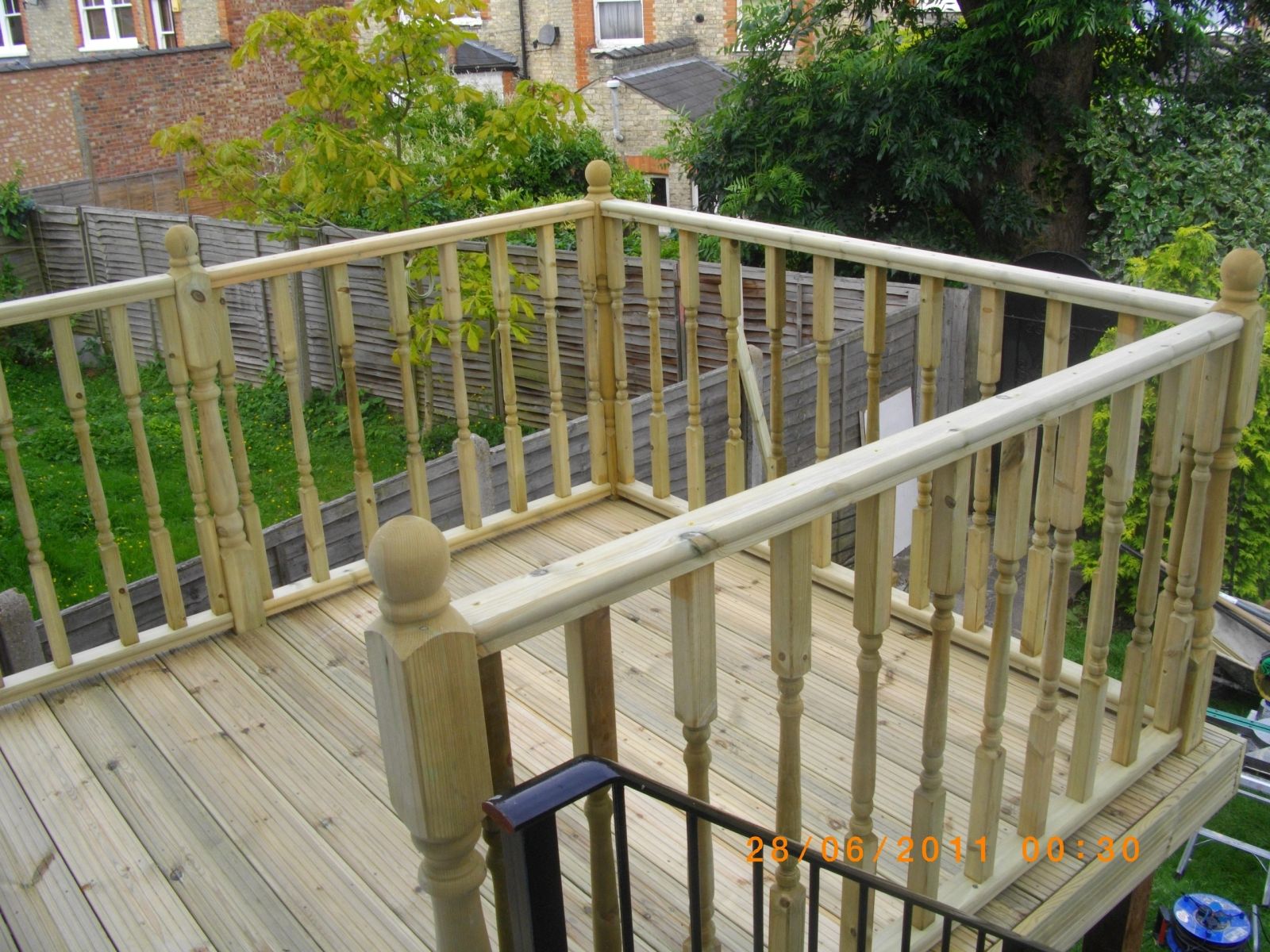
Fixings and edge details
Face fixed boards need the correct screws for the chosen material and orientation. Hidden fixing systems are usually designed for a particular side groove, so flipping the board may make the clip unusable or insecure.
Picture frames, steps and cut ends should all use compatible profiles. Mixing orientations casually can leave edges that differ in thickness, shape or colour from the rest of the deck.
Smooth and grooved boards can both move
The profile on top does not prevent timber from swelling, shrinking or cupping, and it does not control thermal movement in composite. Board spacing, support centres and fixings still need to follow the product requirements.
If a board has distorted, turning it over is not a structural repair. The moisture, support and fixing conditions that caused the movement need investigating before the surface is reused or replaced.
Choosing between two intended faces
Where a manufacturer offers a smooth and grooved option on the same board, consider appearance, cleaning and the way the space is used. Neither face removes routine maintenance. Actual samples give a better impression of texture than a small online photograph.
- Confirm that both faces are intended for use
- Keep the same orientation where the system requires it
- Use the fixing groove or face specified for clips
- Do not expect the profile to prevent algae or ice
- Keep steps and thresholds consistent with the main deck
If you already have boards fitted upside down
First check the product instructions and whether the surface is performing safely. A different face alone may not be a fault if the board was explicitly designed to be reversible.
If clips no longer fit, edges are exposed or the finish is wearing unexpectedly, send photographs of the face, edges and fixings. We can help identify whether the problem is orientation or a separate support and maintenance issue before boards are lifted unnecessarily.
Choosing a board profile?
Tell us the product and how you want the deck to look. We will confirm the intended face and the matching fixing system before fitting.
Frequently asked
Should grooved decking be laid groove side up?
If that is the manufacturer's intended finished face, yes. Some boards offer two faces, so the product instructions should decide rather than a universal rule.
Are grooved boards always less slippery?
No. Texture may help under some conditions, but algae, ice and debris can make any decking slippery. Cleaning and drainage remain essential.
Do grooves underneath improve airflow?
They do not replace a properly ventilated frame. Airflow below depends on the void, supports and open details of the deck, not simply the board profile.
Can hidden clip boards be turned over?
Only if the manufacturer permits it. The clip usually engages a specifically formed side groove, and reversing the board may prevent a secure fixing.