
How it's done
How to Lay a Patio: From Setting Out to Pointing
Last updated
The short answer
To lay a patio, set the finished level below the damp proof course with a gentle fall away from the house, dig out, compact a crushed stone sub base, then bed each paving slab on a full layer of mortar. Cut neatly, haunch exposed edges and point the joints once the bed has set.
At a glance
- Level
- Below the damp course, falling away
- Base
- Compacted crushed stone
- Bedding
- Full mortar bed, not dabs
- Finish
- Fully filled joints
A patio that stays flat and sheds water depends on correct levels, a compacted sub base and a full bed under each slab. Laying the slabs is the visible part of a mostly hidden job.
Laying a patio and laying paving slabs are the same task described two ways. Whatever the stone, the slabs are only as good as the layers below them. Most patio failures, from rocking slabs to puddles by the back door, trace back to the base or the levels.
Patios and paving are part of our landscaping work. This guide follows the order of work on site, so you know what a properly priced patio includes and which shortcuts to question.
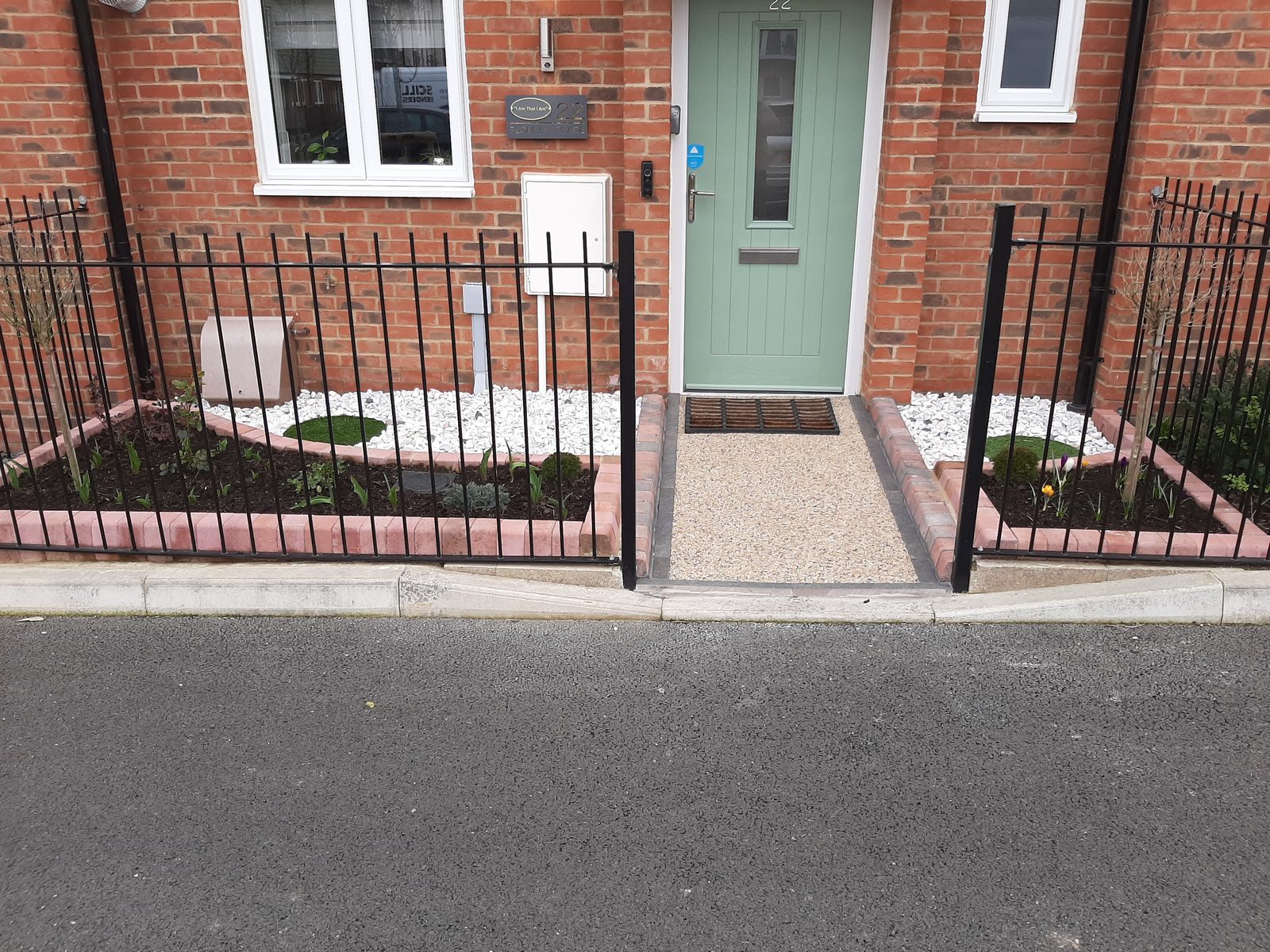
Setting levels and falls
The finished patio must sit below the damp proof course of the house, normally by at least two brick courses, and slope gently so rain runs away from the walls. That fall is set with string lines before any digging starts.
Existing drains, air bricks and door thresholds fix several heights at once. They decide the finished level, and the depth of digging follows from that.
Excavating the area
The ground is dug out to allow for the sub base, the bedding layer and the thickness of the slab. Soft spots, roots and old rubble are removed rather than buried.
Before breaking ground for a patio, locate any cables, gas and water pipes and drain runs, and hand dig near anything uncertain.
Laying the sub base
Crushed stone is spread and compacted in layers with a plate compactor. A patio for normal foot traffic needs less depth than a surface that will take a vehicle, and clay or made ground can need more.
The top of the sub base already follows the falls, so the bedding layer above stays a consistent thickness.
Bedding and laying the slabs
Each slab goes onto a full bed of mortar rather than a few dabs at the corners. Dabs leave hollows where water collects and freezes, and the slab can crack or rock when weight lands on an unsupported edge.
Slabs are tapped down to the string lines, checked with a level and spaced evenly. Natural stone is usually laid from mixed packs so colours and sizes are spread across the area rather than bunched.
Cutting and edges
Cuts are planned so small slivers do not end up against the house or along a visible edge. Edges facing lawns or beds are often haunched with mortar so the outer slabs cannot creep outward.
Where the patio meets a fence, the gravel boards are set so paving does not bury the base of the posts.
Pointing the joints
Once the bed has set, the joints are filled with mortar or a suitable jointing compound pushed fully into the gap. Shallow or crumbly pointing lets weeds and ants in and allows the slab edges to move.
Keep the patio clear of heavy furniture until the mortar has had time to cure.
Hiring a patio installer
Large patios, sloping gardens, poor drainage or difficult access for removing soil all add weight and planning to the job. A quote should say how deep the base is, how the slabs are bedded and how waste leaves the site.
We visit, check the levels against the house and drains, and give a written quote covering the excavation, base, paving and pointing.
Choosing the paving
Sandstone and limestone give a natural, varied look and mellow with age. Porcelain is dense, consistent and easy to keep clean, but it needs a bonding primer when it is laid. Concrete slabs are the most economical and come in many finishes. The choice affects the bedding method, the cutting equipment and how much cleaning the patio will want over the years, so it is worth settling early.
Drainage around the patio
Water running off a patio has to go somewhere. Usually it is directed towards a lawn, a planted bed or a channel drain rather than towards the house or a neighbour. Air bricks must stay clear and uncovered, and paving should never bridge the damp course, because both problems show up later as damp inside the house.
Frequently asked
Can paving slabs be laid on sand?
Sand alone lets slabs move and sink. A compacted sub base with a full mortar bed is the usual method for a lasting patio.
How much fall does a patio need?
It needs a gentle slope away from the house so water does not pool. The exact fall depends on the paving and the site, and is set with string lines before digging.
How far below the damp course should a patio be?
Normally at least two brick courses below the damp proof course, so splashing rain does not bridge it.
Do you lay patios?
Yes. Patios, paving and porcelain are part of our landscaping work, quoted in writing after a visit.
How long does a patio take to lay?
It depends on size, access and how much excavation is needed. Weather affects mortar setting too, so we confirm the timing in the quote.
Planning a new patio?
Send photos of the area by the house, including doors and drains. We will check levels and set out the base and paving in a written quote.