
How it's done
How to Make a Raised Garden Bed That Stays Square
Last updated
The short answer
To make a raised garden bed, mark out a square outline, level and firm the ground, lay the first course of sleepers dead level, stack further courses with staggered joints and fix the corners with long screws or bolts. Leave the base open to drain, line the inside sides and fill with topsoil and compost.
At a glance
- Usual material
- Treated softwood or hardwood sleepers
- Key step
- A level, firm first course
- Drainage
- Open base or gaps on paving
- On a slope
- Step the beds so each sits level
A raised bed lasts when it sits on a level, firm base with fixed corners and somewhere for water to drain. Sleepers are the usual material because they are heavy and simple to join.
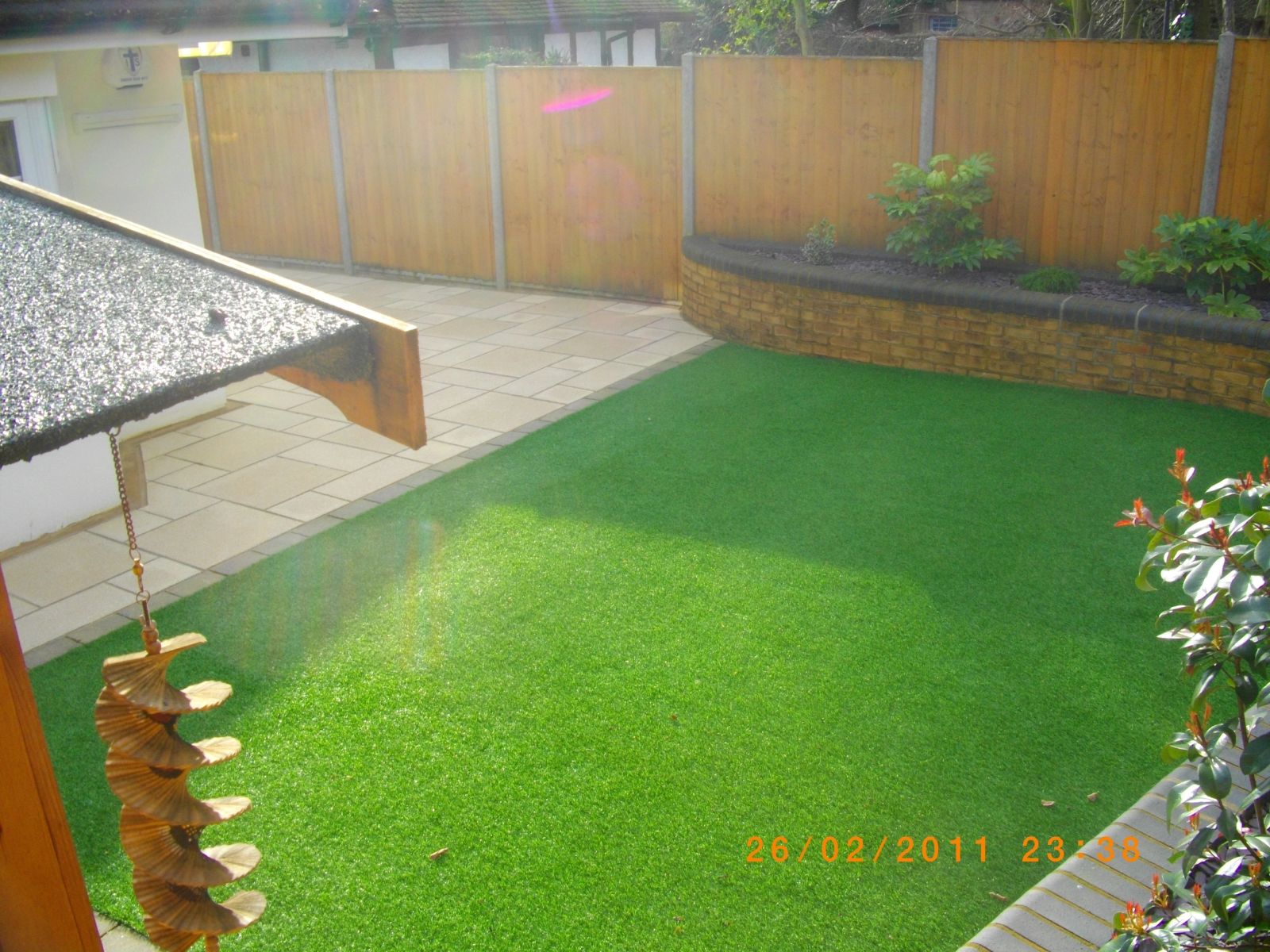
A raised bed, box or flower bed lifts the soil above the surrounding ground. It gives better drainage on heavy soil, defines the edge of a lawn or patio and saves some bending. On a sloping garden a row of beds can also turn an awkward bank into usable steps.
Railway sleeper beds are part of the landscaping we carry out. This guide explains how a bed is built so it stays square once it is full of wet soil, which is when weak corners and soft bases give themselves away.
Choosing the material
Timber sleepers are popular because they are heavy, stack neatly and can be cut to length on site. New softwood sleepers are pressure treated for ground contact, while hardwood sleepers are denser and heavier. Old reclaimed sleepers that weep tar are best avoided around food crops.
Thinner boarded kits are fine for small vegetable beds, but they flex under the weight of soil much sooner than sleepers do.
Deciding size and height
Keep the width narrow enough to reach the centre from the sides without stepping on the soil. Length is limited mainly by the space and how the bed relates to paths and lawn edges.
One sleeper high is enough for many flowers. Two or three courses suit vegetables, people who would rather not kneel, or beds that double as seating. Taller beds hold much more soil and push harder on their sides, so they need stronger corner fixing.
Setting out and preparing the base
The outline is marked with pegs and string, checking the diagonals match so the bed is square. Turf is removed and the ground levelled so the first course sits flat along its whole length. On soft ground, a compacted strip of stone or a shallow footing helps stop one end sinking.
Check for underground services before excavating the base. Pipes and cables are sometimes shallower than expected under old flower beds.
Fixing the corners
Each course is laid with the joints staggered like brickwork, then fixed with long timber screws or coach bolts through the corners. Taller beds often take internal corner posts or steel brackets as well.
The first course must be level before anything goes on top. Every millimetre out at the bottom shows as a visible tilt by the top course.
Drainage and lining
Water must be able to escape. The base is normally left open to the ground below, and a bed built on paving needs gaps or weep points so it does not become a planter full of standing water.
A permeable liner fixed inside the sleepers helps keep wet soil off the timber. A plastic sheet that traps water against the wood tends to shorten its life rather than extend it.
Beds on sloping ground
On a slope, beds are usually stepped so each one sits level, with the uphill side cut into the bank. Where the bed is holding back soil rather than just containing it, it is acting as a small retaining structure and needs firmer support, such as posts set into the ground.
Larger level changes need proper design. We will say during the visit if the height involved goes beyond what a sleeper bed should do.
Filling and planting
Fill with a mix of topsoil and compost, firming it in layers and topping up after it settles over the first weeks. Very tall beds can take rubble free subsoil in the lower part to reduce the volume of bought soil.
Plan access around the bed too. A mowing strip or paved edge alongside it stops grass growing into the timber and makes the bed look finished.
Placing beds around the garden
Vegetable beds want the sunniest part of the plot and easy access to a tap. Flower beds can sit along fences, frame a patio or break up a long lawn. Leave paths between beds wide enough for a wheelbarrow, and think about where a hose or watering can will reach before the sleepers are cut to length, because moving a full bed later is heavy work.
Fancy sleeper beds?
Tell us roughly where they would go and how high. We can build them on their own or alongside a new fence or patio.
Frequently asked
What is the best wood for a raised bed?
Pressure treated softwood or hardwood sleepers are the usual choice. Avoid old tar coated sleepers near edible plants.
Should a raised bed have a bottom?
On soil, it is normally left open so water drains away and roots can go deeper. On paving it needs drainage gaps.
How high should a raised garden bed be?
One sleeper high suits many flowers, while two or three courses suit vegetables or easier access. Taller beds need stronger corner fixings.
Do you build raised beds?
Yes. Railway sleeper raised beds are part of our landscaping work, usually alongside fencing, decking, patios or turf.