London & Hertfordshire Free Site Visit
softwood garden decking installed by Capital Fencing in Hertford (SG13)
Hertford · SG13 / SG14

Looking for Composite Decking in Hertford? Local Specialist Serving East Hertfordshire District

Composite decking is bought for the years after the build: no annual oiling, no lifting boards, a wash-down and that is it. What makes or breaks it in Hertford is the frame underneath — joists at 300mm centres, ventilated, and level to the millimetre. If you're weighing composite decking for a property in Hertford, the housing stock — Georgian and Victorian townhouses in the centre, with newer estates on the Bengeo and Sele Farm sides — sets most of the answer. On long, sloping plots dropping toward the River Lea — terracing and retaining work are often part of the job, capped wood-polymer composite boards on treated softwood joists generally makes sense for rear gardens where the client wants no annual oiling or sanding. Where it doesn't, we say so. Recent work on Queens Road and Port Vale. We orient jobs off Hartham Common.

Composite decking is bought for the years after the build: no annual oiling, no lifting boards, a wash-down and that is it. What makes or breaks it in Hertford is the frame underneath — joists at 300mm centres, ventilated, and level to the millimetre. If you're weighing composite decking for a property in Hertford, the housing stock — Georgian and Victorian townhouses in the centre, with newer estates on the Bengeo and Sele Farm sides — sets most of the answer. On long, sloping plots dropping toward the River Lea — terracing and retaining work are often part of the job, capped wood-polymer composite boards on treated softwood joists generally makes sense for rear gardens where the client wants no annual oiling or sanding. Where it doesn't, we say so. Recent work on Queens Road and Port Vale. We orient jobs off Hartham Common.

Typical spec

How we build composite decking in Hertford

Capped wood-polymer composite boards on treated softwood joists. Standard build: Trex or Q-Deck capped boards on 150×47mm treated joists at 300mm centres. On Hertford jobs we adjust for conservation areas and listed buildings around the castle restrict heights and finishes.

Property mix locally: Georgian and Victorian townhouses in the centre, with newer estates on the Bengeo and Sele Farm sides. Typical gardens: long, sloping plots dropping toward the River Lea — terracing and retaining work are often part of the job. Postcodes we regularly service: SG13, SG14.

Why composite decking works here

  • no annual maintenance beyond a wash-down
  • capped boards resist stains and don't fade to grey the way softwood does
  • grooved surface keeps grip in wet weather

Common Hertford briefs

  • raised decks around hot tubs and outdoor kitchens where slip resistance matters
  • rear gardens where the client wants no annual oiling or sanding

Composite Decking FAQs — Hertford

Can composite boards be cut and mitred on site?

Ventilation under a Hertford deck is not optional — a boxed-in frame with no airflow is what rots first. Survey slots across SG13 are usually inside a week. Practically, that means capped boards resist stains and don't fade to grey the way softwood does — and we're upfront that can feel hotter underfoot in full sun than timber.

Is composite slippery when wet?

Ventilation under a Hertford deck is not optional — a boxed-in frame with no airflow is what rots first. We work this patch weekly, from Mead Lane industrial estate out toward ware. Practically, that means capped boards resist stains and don't fade to grey the way softwood does — and we're upfront that can feel hotter underfoot in full sun than timber.

Can composite decking be laid over an existing frame?

Hidden clip fixings mean no screw heads on the walking surface of a Hertford terrace. For georgian and victorian townhouses in the centre in SG13, that is where the cost sits. Worth weighing no annual maintenance beyond a wash-down against up-front cost is 40–60% higher than a matching softwood deck before you commit.

How long do composite boards typically last?

Fascia and trims are what make a composite deck look finished; they are on the quote, not an extra at the end. We allow for long when setting out in Hertford. Worth weighing no annual maintenance beyond a wash-down against up-front cost is 40–60% higher than a matching softwood deck before you commit.

How do you clean composite decking?

Ventilation under a Hertford deck is not optional — a boxed-in frame with no airflow is what rots first. Survey slots across SG13 are usually inside a week. Worth weighing no annual maintenance beyond a wash-down against up-front cost is 40–60% higher than a matching softwood deck before you commit.

Recent composite decking work
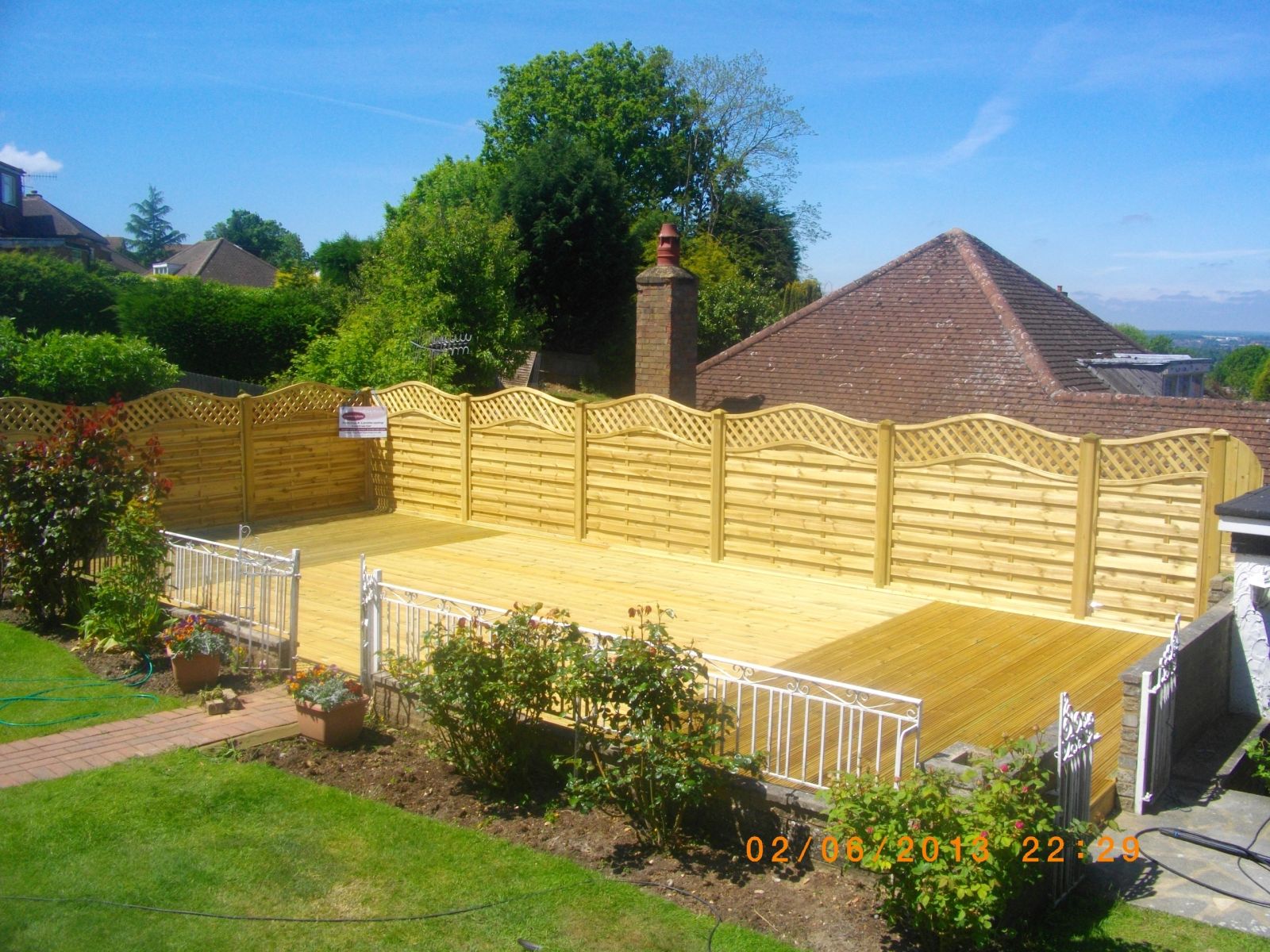
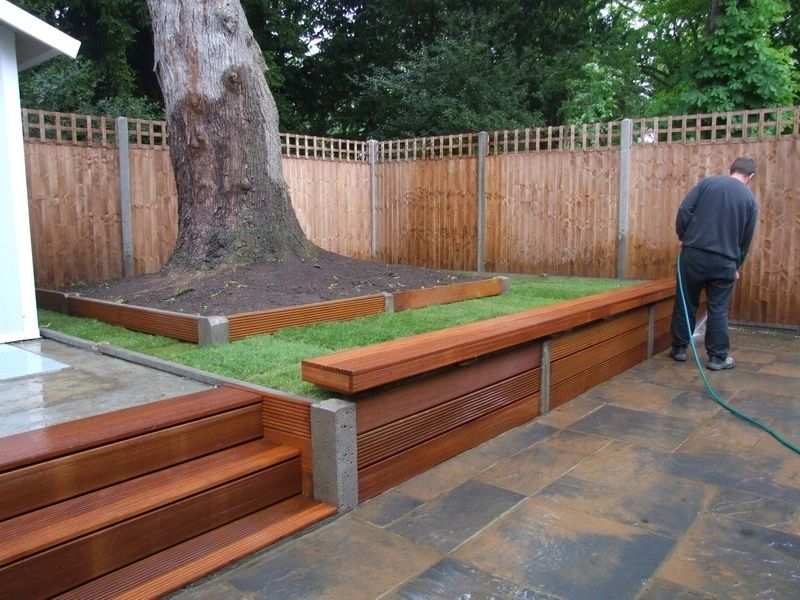
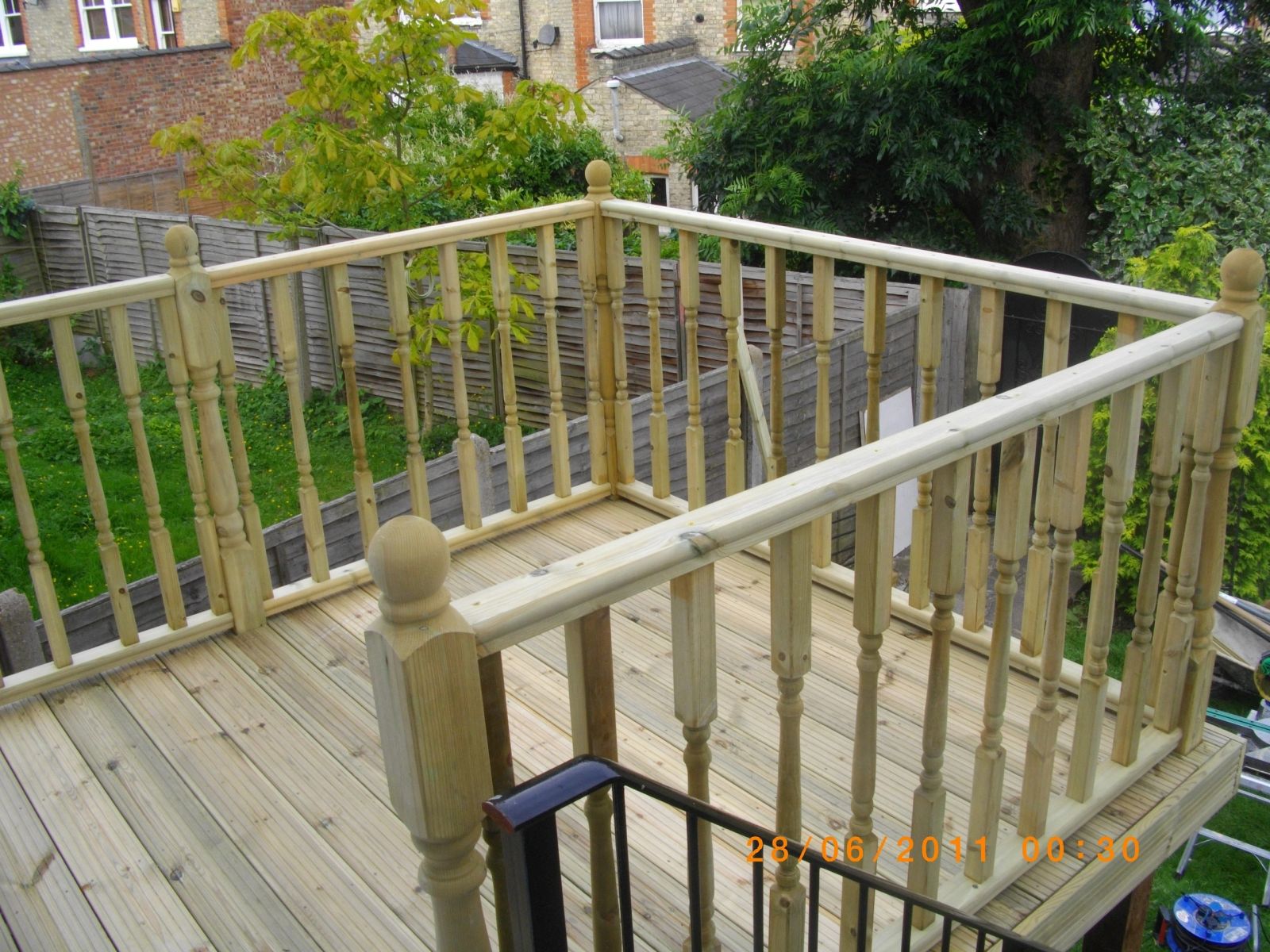
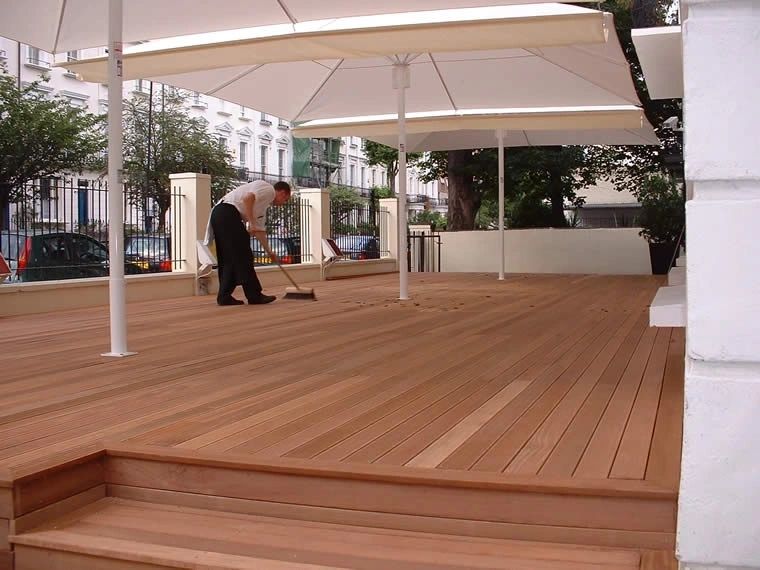
softwood garden decking installed by Capital Fencing in Hertford (SG13)hardwood deck install installed by Capital Fencing in Hertford (SG13)composite decking installed by Capital Fencing in Hertford (SG13)raised garden deck installed by Capital Fencing in Hertford (SG13)

Site notes: composite decking in SG13

Matching a repair into an older run

Matching a repair into a boundary that's twenty or thirty years old sometimes means the original panel profile is no longer available, in which case we offer the closest realistic option and explain honestly where it won't be an exact match.

On an estate where many neighbouring gardens share the same original fence line, one household's repair is often the first of several over the following years, and we keep a note of the spec used for consistency.

Controlling dust and debris close to a neighbour

Angle grinding a metal fixing or breaking out an old concrete footing throws dust and fine debris further than expected, which matters on a repair close to a neighbour's washing line, patio furniture or parked car.

Sheeting off the immediate work area and clearing debris before leaving site each day is worth doing even on a short repair, since a small job that leaves a mess behind causes disproportionate friction with a neighbour compared with the size of the work itself.

Driveway gate sizing and swing arc

A driveway gate needs its swing arc checked against the car actually parked behind it, not just the opening width, since a gate that clears a small hatchback can still clash with a larger estate or a roof box.

Outward-opening gates onto a public footway are generally avoided because they can obstruct pedestrians and pushchairs, which is why most residential driveway gates are hung to open inward onto the drive itself.

Sliding gates are a practical alternative on a short or sloping driveway where there isn't room for a swing arc, though they need a level track run and enough side clearance to slide fully open.

Dealing with buried debris uncovered while digging out a repair footing

Old post stubs, broken glass, hardcore or builder's rubble from a previous era of the garden's use sometimes turn up when digging out a footing for repair, particularly on older plots that have been through several changes of use.

Where this happens, it's worth clearing enough of the obstruction to get a clean footing rather than working around it, and flagging anything unexpected — old drainage, buried cabling, unusually large rubble — to the client before continuing.

Staple and clout corrosion

Wire staples and clout nails used to fix wire mesh or thin capping are among the first fixings to corrode, since their small cross-section and shallow galvanising thickness give them less protection than a heavier fixing.

A repair that replaces the mesh or board but reuses corroded staples is only a partial fix, since the corroded fixings will fail again well before the new material does.

Smallholdings

A smallholding often needs several different boundary specifications on one plot — stock fencing for grazing paddocks, a more secure perimeter around poultry runs to keep foxes out, and a conventional garden fence around the house itself.

Movement of livestock between fields is usually managed with gates rather than continuous fence removal, so gate positions need agreeing against the smallholder's actual rotation pattern rather than simply the shortest route.

Because smallholdings often combine agricultural and residential use on the same title, it's worth checking which parts of a boundary project count as agricultural permitted development and which fall under the standard residential rules.

Culverted watercourses running beneath a boundary

Some older boundaries have a small watercourse culverted — enclosed in a pipe — beneath them, often unnoticed until groundworks reveal it or a drainage problem develops.

Ordinary watercourses, even culverted ones, can carry maintenance obligations and sometimes require consent from the local authority or Environment Agency before altering anything above or around them.

Where an old map or local knowledge suggests a watercourse might run beneath a boundary, checking with the council's land drainage team before digging is a sensible precaution.

Capping rails and their function

A capping rail sits along the top edge of a closeboard or panel run, covering the end grain of the vertical boards in the same way a post cap protects a post top.

Beyond weather protection it also ties the tops of the boards together, reducing the individual movement that otherwise shows up as a wavy top line after a few seasons of wetting and drying.

It's usually a shallow, weathered profile rather than flat stock, so it sheds water off the fence face instead of holding a bead of moisture along the top edge.

Checking metal fixings for corrosion even where the timber looks sound

A post or rail can look structurally fine while the nails, screws or brackets holding it together have corroded enough to have lost most of their holding strength, which only becomes obvious once the timber is put back under load.

A repair that only replaces damaged timber and refits with the original corroded fixings risks a second failure at the fixing point shortly afterwards, so checking fixing condition is worth doing as a routine part of any repair, not just where timber damage is visible.

Running bamboo and rhizome pressure on boundaries

Running bamboo species spread through underground rhizomes that can travel several metres from the parent plant and push up through gravel boards, path joints or even through weak points in a fence base.

Unlike tree roots, rhizome growth is fast and can reappear within a single growing season after being cut back, so a fence base alone rarely stops it without a physical rhizome barrier buried alongside it.

Where established running bamboo sits on a neighbouring boundary, it's worth flagging to the client that fence replacement won't solve the underlying spread on its own.

Repairing stock fencing pushed over or leaned on by animals

Fencing bordering land grazed by livestock takes a different kind of load to a garden boundary — sustained leaning and rubbing rather than occasional wind load — and posts along that kind of boundary often fail by gradually leaning outward rather than snapping.

Repair on this type of boundary is worth specifying with a stronger post spacing or additional strainer posts at intervals, since a repair matching a garden-fence specification often fails again quickly under the same ongoing pressure.

Frost effects on curing concrete

Concrete that freezes before it has gained enough initial strength can suffer permanent damage — the water within it expands as ice, disrupting the matrix before it sets properly, leaving a weaker base than the mix should give.

Fast-setting post-fix concretes generate some heat as they cure and are more frost-tolerant than a standard wet mix, which is one reason they're the practical choice for winter installations.

Where a hard frost is forecast within the first 24 hours of a pour, delaying the job or insulating the base overnight is usually cheaper than replacing a post that's failed at the concrete collar the following year.

Post depth rules of thumb by height

A common trade rule of thumb is burying roughly a third of the total post length below ground, so a 2.4m fence post typically needs around 600-750mm set depth in reasonable ground.

That ratio needs adjusting upward on wind-exposed sites, in poor bearing ground, or on taller runs above around 1.8m, where the extra leverage on the post multiplies the load on the buried section.

On very firm chalk or dense gravel, slightly shallower depths can be adequate, but as a rule it's easier to justify going deeper than to explain a leaning post two winters later.

Terraced gardens and stepped runs

A garden cut into level terraces, common on steeper plots across the Chilterns fringe, usually means the fence has to step down at each change of level rather than run as one continuous raked line.

Each stepped section needs its own post pair set level within that section, with the horizontal joint between sections finished cleanly rather than leaving an open triangular gap under the lower panel.

Where the terraces are formed by retaining walls rather than simple grading, the fence posts typically sit on top of the wall structure and need fixings suited to masonry rather than a standard earth-set post.

Up-front cost runs well above softwood; the payback is fifteen-odd years of nothing more than a wash-down across SG13, SG14. Whether you're on a period street near Mead Lane industrial estate or a newer estate toward ware, composite decking in Hertford is a service we run every week — booked in, on time, and left tidy. Recent work on Fanshawe Street and Bengeo Street. We orient jobs off Hertford Museum.

Get In Touch

Get My Free Quote — 24h Response

No callout fee · Free site visit · Friendly local team covering London & Hertfordshire.

Call us
07885907880
or 02036484746
Email
capital_fencing@yahoo.com
WhatsApp
Message us anytime
Area
London & Hertfordshire
Payment
Card payments accepted

Pay by debit or credit card, bank transfer or cash once the work and price are agreed. No deposit taken online.

Request a Free Quote

We'll get back to you within 24 hours.

Free Site Visit No Callout Fee
Call WhatsAppQuote