London & Hertfordshire Free Site Visit
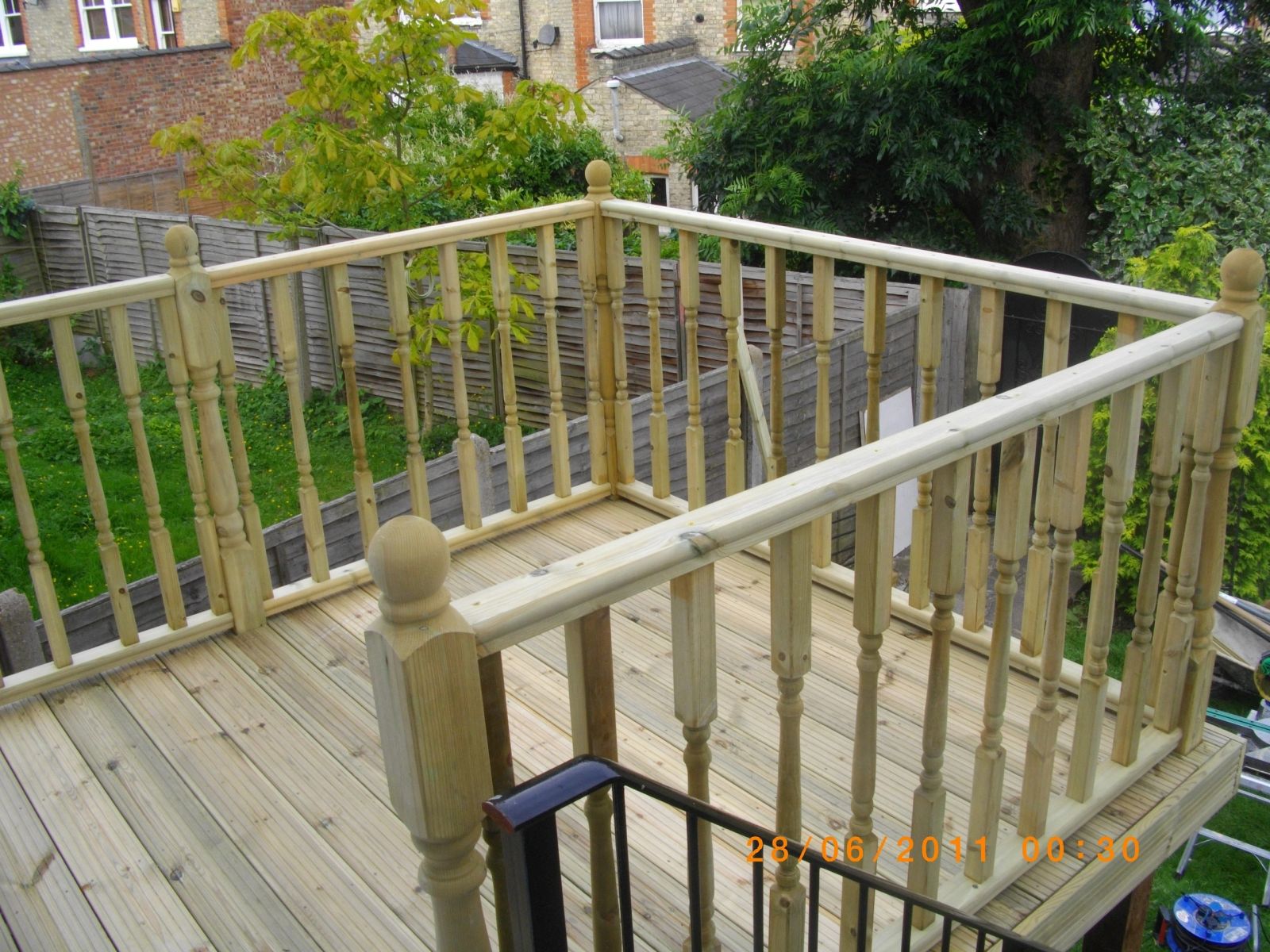
softwood garden decking installed by Capital Fencing in Hackney (E5)
Hackney · E5 / E8 / E9 / N1 / N16

Looking for Hardwood Decking in Hackney? Local Specialist Serving Hackney

Density is the whole story with hardwood: it is harder to cut, needs pre-drilling and hardwood-rated screws, and it silvers rather than greys. In Hackney gardens it is specified where the deck is a feature, not just a surface. If you're weighing hardwood decking for a property in Hackney, the housing stock — Victorian terraces across Stoke Newington and De Beauvoir, plus post-war estates around Homerton and London Fields — sets most of the answer. On small rear gardens with mature planting; several plots border the Regent's Canal or Hackney Marshes, yellow balau, ipe or iroko boards on treated softwood or hardwood joists generally makes sense for premium rear gardens where a natural silver-grey patina is the desired finish. Where it doesn't, we say so. Recent work on Well Street and Kingsland Road. We orient jobs off Broadway Market.

Density is the whole story with hardwood: it is harder to cut, needs pre-drilling and hardwood-rated screws, and it silvers rather than greys. In Hackney gardens it is specified where the deck is a feature, not just a surface. If you're weighing hardwood decking for a property in Hackney, the housing stock — Victorian terraces across Stoke Newington and De Beauvoir, plus post-war estates around Homerton and London Fields — sets most of the answer. On small rear gardens with mature planting; several plots border the Regent's Canal or Hackney Marshes, yellow balau, ipe or iroko boards on treated softwood or hardwood joists generally makes sense for premium rear gardens where a natural silver-grey patina is the desired finish. Where it doesn't, we say so. Recent work on Well Street and Kingsland Road. We orient jobs off Broadway Market.

Why hardwood decking works here

  • genuine 25-year plus service life on yellow balau or ipe when detailed properly
  • richer natural colour and grain than any composite
  • can be sanded and re-oiled indefinitely
Honest trade-offs

Where hardwood decking isn't the right answer

  • material cost is significantly higher than softwood and often composite
  • requires annual oiling to keep the honey colour — otherwise silvers naturally

We'll say so on the site visit — a wasted quote helps nobody.

Typical spec

How we build hardwood decking in Hackney

Yellow balau, ipe or iroko boards on treated softwood or hardwood joists. Standard build: 21mm yellow balau or 19mm ipe, secret-fix or countersunk, hardwood-rated screws. On Hackney jobs we adjust for many boundaries are shared with three or four neighbours on victorian back-to-backs — clear ownership marks matter.

Property mix locally: Victorian terraces across Stoke Newington and De Beauvoir, plus post-war estates around Homerton and London Fields. Typical gardens: small rear gardens with mature planting; several plots border the Regent's Canal or Hackney Marshes. Postcodes we regularly service: E5, E8, E9, N1, N16.

Common Hackney briefs

  • premium rear gardens where a natural silver-grey patina is the desired finish
  • commissioned landscape schemes where the deck is a design feature, not just a floor

Hardwood Decking FAQs — Hackney

How does hardwood compare to composite for slip resistance?

Stainless fixings only: plated screws stain a hardwood face within a season in Hackney. We work this patch weekly, from Kingsland Road out toward islington. In short: genuine 25-year plus service life on yellow balau or ipe when detailed properly, though requires annual oiling to keep the honey colour — otherwise silvers naturally.

Which hardwood lasts longest for decking in the UK climate?

Every hardwood board is pre-drilled — driving straight into balau splits ends and loses you boards on a Hackney job. For victorian terraces across stoke newington and de beauvoir in E5, that is where the cost sits. Worth weighing genuine 25-year plus service life on yellow balau or ipe when detailed properly against requires annual oiling to keep the honey colour — otherwise silvers naturally before you commit.

What joist spacing do you use for hardwood boards?

Board gaps are set for the fitting season, because a hardwood deck laid tight in winter has nowhere to go in July. We allow for small rear gardens with mature planting; several plots border the Regent's Canal or Hackney Marshes when setting out in Hackney. Practically, that means richer natural colour and grain than any composite — and we're upfront that material cost is significantly higher than softwood and often composite.

Do I need to oil hardwood decking every year?

Board gaps are set for the fitting season, because a hardwood deck laid tight in winter has nowhere to go in July. Survey slots across E5 are usually inside a week. Practically, that means richer natural colour and grain than any composite — and we're upfront that material cost is significantly higher than softwood and often composite.

How do you handle end-grain sealing on hardwood decks?

Stainless fixings only: plated screws stain a hardwood face within a season in Hackney. We work this patch weekly, from Kingsland Road out toward islington. Practically, that means richer natural colour and grain than any composite — and we're upfront that material cost is significantly higher than softwood and often composite.

Recent hardwood decking work
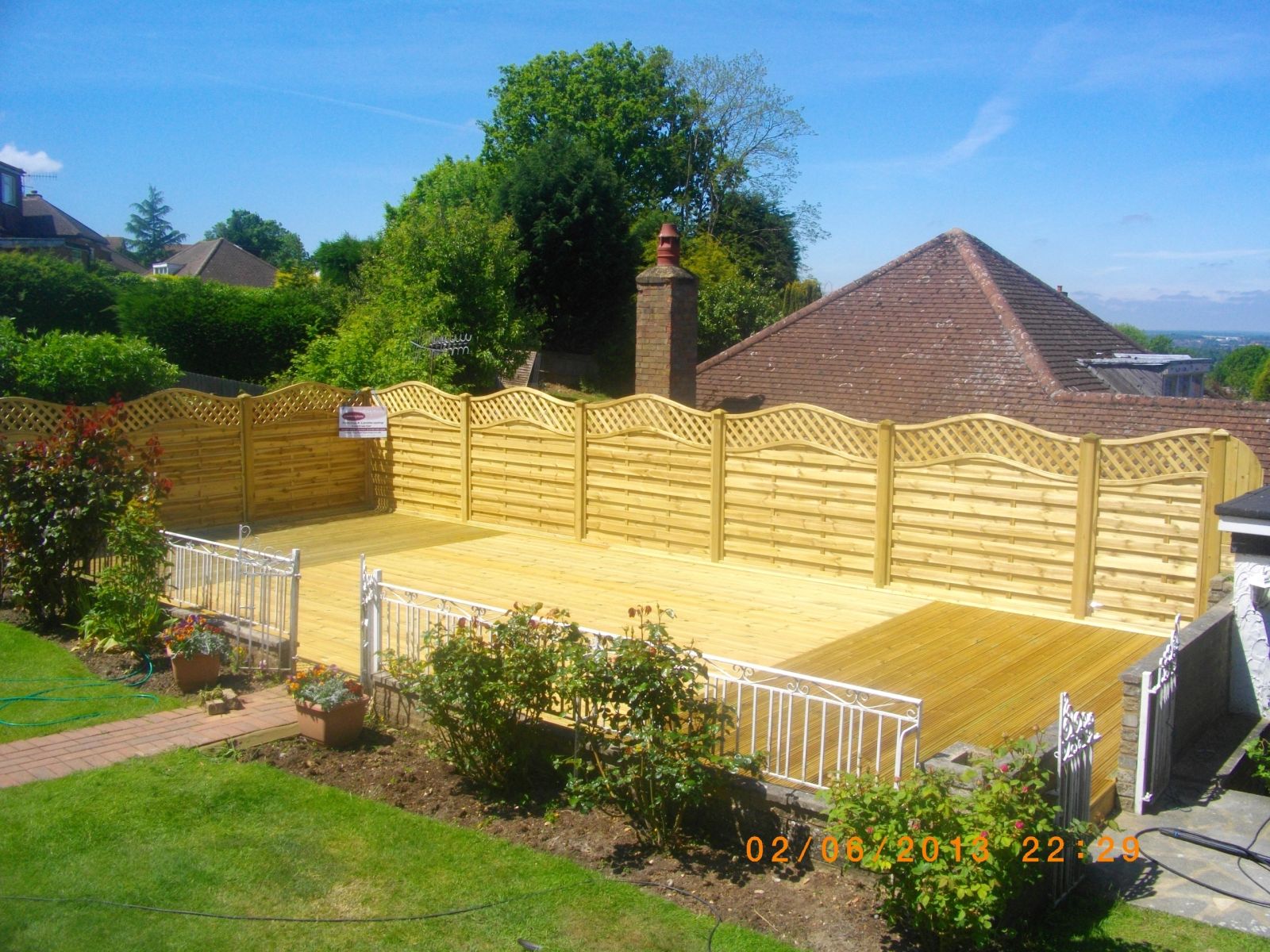
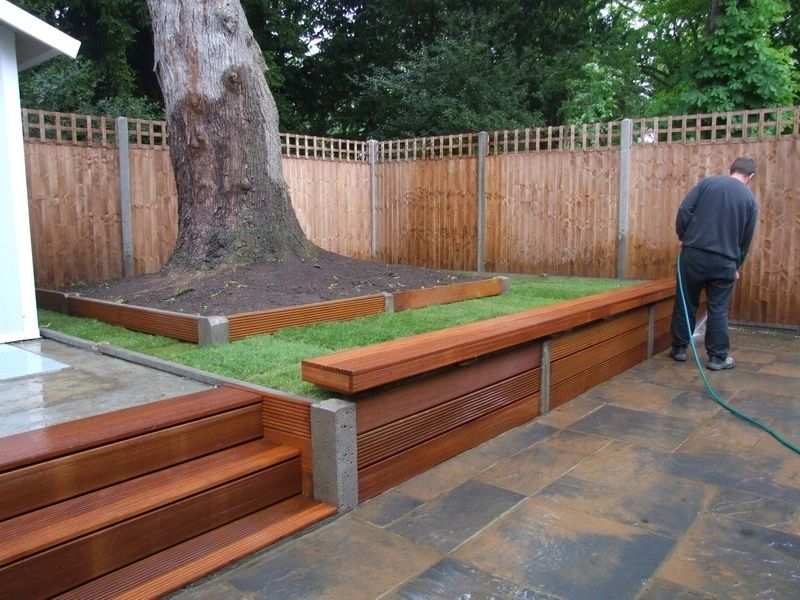
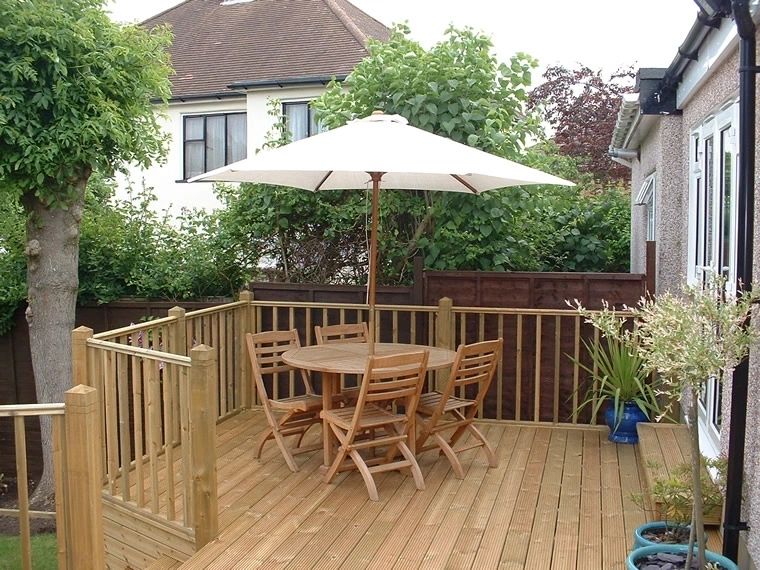
softwood garden decking installed by Capital Fencing in Hackney (E5)hardwood deck install installed by Capital Fencing in Hackney (E5)composite decking installed by Capital Fencing in Hackney (E5)raised garden deck installed by Capital Fencing in Hackney (E5)

How we approach hardwood decking on Hackney properties

Aligning mortices for arris rails between posts

Concrete posts with pre-formed mortice slots fix the height of each arris rail at manufacture, so the posts themselves have to be set at consistent heights and spacing for the rails to run in level without twisting.

Timber posts morticed on site give more flexibility to adjust rail height locally, but the mortice needs cutting square and to a consistent depth so the rail seats fully rather than sitting proud and under strain.

A rail forced into a mortice that's slightly too shallow or misaligned puts ongoing stress on the joint, which is a common cause of a joint splitting within the first year even though the timber itself is sound.

Removing or working around hedges

A mature hedge along a boundary line often needs partial removal or heavy cutting back before a new fence can go in behind or in place of it, and stump and root removal is usually a bigger job than the hedge above ground suggests.

Where a hedge is being kept and a fence added behind it, root disturbance during digging needs the same care as any other established planting — cutting a major root to fit a post line can visibly stress or kill the hedge over the following season.

Some hedgerows, particularly older boundary hedgerows in a rural or semi-rural setting, are protected under separate hedgerow regulations, so it's worth checking before removing one entirely rather than just cutting it back.

Timing a repair around summer timber shrinkage

Timber fitted during a dry summer spell shrinks slightly as it settles to ambient moisture content, which can leave newly fixed boards or rails with small gaps that weren't visible at the point of fitting.

This is a normal part of timber behaviour rather than a fault in the repair, and it's worth explaining at the time so a client isn't surprised to see gaps open up slightly over the following weeks.

Sports-pitch ground with irrigation

Perimeter fencing around a sports pitch or playing field often runs over ground with an engineered drainage or irrigation system just below the surface, including sand-slit drains or pop-up sprinkler lines that aren't always accurately recorded.

Damaging a drainage lateral while setting posts can cause localised waterlogging on the pitch itself long after the fencing work is finished, which is a far more costly problem to fix than the original fence job.

Liaising with the groundskeeper or facilities manager over exact drain and irrigation layout before digging is standard practice on this type of site, rather than relying on a general services scan alone.

Restaurants and pub gardens

Boundary fencing around a pub garden or restaurant terrace often does double duty as noise and light screening for neighbouring residential properties, and its height and permeability can be a condition attached to the premises licence rather than a free choice.

Trading hours mean access for fencing work is usually easiest early morning before service starts, since a garden in active use for covers can't have posts being dug mid-lunch.

Where outdoor seating sits close to the boundary, fixings and post positions need checking against any licensed seating plan so the finished fence doesn't reduce covers below what the licence allows.

Balustrade heights on raised decking

A raised deck with a drop of 600mm or more generally needs a balustrade for safety, with 900mm to 1100mm commonly used as the guide height depending on the drop and whether the household includes young children.

Baluster spacing should follow the same principle as fence gap safety — generally kept under 100mm — to avoid a child being able to squeeze through or get a head trapped between uprights.

Handrail fixings need to resist a lateral push load, not just support their own weight, so posts anchored into the deck frame itself rather than just screwed to a fascia board are the more reliable detail on any deck with a meaningful drop.

Care homes

Care home boundaries need to manage two directions of risk at once: keeping the site secure from outside, and, where residents live with dementia, preventing unsupervised exit through a garden gate that looks like a normal feature of the grounds.

Gates onto care home gardens are often specified with a delayed-release or coded latch rather than a simple thumb-turn, agreed with the home's management against its own care regulator requirements.

Access for contractors on an occupied care site usually needs coordinating around resident routines and quiet hours rather than a standard domestic working day.

Nesting birds in vegetation on a fence line

Dense hedging, ivy or overgrown trellis attached to a fence can hold active bird nests during the spring and summer nesting season, and disturbing a nest in use is an offence regardless of how routine the fence repair itself is.

Where a repair requires cutting back vegetation that might be nesting habitat, checking for active nests first and, if found, delaying that part of the work until the nest is no longer in use is the straightforward way to stay compliant.

Board orientation and grain direction

A board fixed with its bark side facing outward tends to cup away from the fixings as it dries, since the outer growth rings shrink tangentially more than the inner ones, pulling the board's edges outward.

Orienting the bark side inward on a fence board means any cupping pulls the edges toward the fixing rather than away from it, which keeps the board flatter and the fixings under less repeated strain.

This detail is easy to overlook when boards are cut from mixed stock without checking growth ring orientation, but it becomes visible within a season or two as boards from the same batch cup in opposite directions.

Off-street parking and dropped kerbs

Converting a front garden to off-street parking usually requires a dropped kerb permit from the highway authority, and a boundary fence or gate across that new access has to be positioned clear of the visibility splay the dropped kerb creates.

Where a low front boundary already exists specifically to preserve sightlines onto the new parking, replacing it with a taller or solid fence can undo the safety benefit the dropped kerb approval was granted on.

It's worth checking whether the dropped kerb approval included any conditions on boundary treatment before ordering a new front fence or gate.

Softwood species used in fencing

Most UK fencing timber is a European redwood or whitewood softwood, chosen for cost and workability rather than natural durability, which is why it's almost always sold pressure-treated rather than untreated.

Redwood (Scots pine) takes preservative more readily than whitewood (spruce) because of its structure, which is part of why it's the more common species specified for treated fencing components.

Species alone isn't a durability guarantee — the treatment class and detailing (post caps, gravel boards, drainage at the base) generally matter more to service life than which softwood was used underneath it.

Footway licences for materials on a pavement

Storing fencing materials, a small skip, or scaffolding on a public footway, even briefly, can require a licence from the council responsible for that stretch of highway.

This is separate from any parking suspension for a vehicle, and covers the physical obstruction of pedestrian space rather than the road itself.

On narrow residential pavements it's worth checking the council's footway licence requirements ahead of a delivery, since blocking a pushchair or wheelchair route without authorisation can draw a complaint.

Using a post hole auger effectively

A petrol or manual auger clears loose, stone-free ground far faster than hand-digging, but it works by shearing soil rather than levering it, so it struggles the moment it meets a root, a buried stone or compacted rubble.

Lifting the auger clear and clearing spoil from the flutes every 150-200mm of depth keeps it cutting efficiently; forcing it deeper without clearing spoil just packs the hole and stalls the motor.

On heavy clay an auger can also polish and seal the hole's sides, which reduces drainage around the base — a quick scoring of the sides with a spade before concreting helps break that glazed surface.

Metal estate railings and their upkeep

Traditional estate or hoop-top railings suit period properties and low-maintenance open boundaries, but steel needs a rust-inhibiting primer and topcoat maintained over time, unlike galvanised or powder-coated modern equivalents.

Where an old cast or wrought iron railing run is being repaired rather than replaced, matching profiles can mean sourcing reclaimed sections or having new sections cast to match, since standard modern stock rarely matches historic patterns exactly.

Concrete plinth walls under railings are a common point of failure — cracked or spalling concrete at the base undermines the railing fixings even when the metalwork itself is sound.

Oil it and it holds its colour; leave it and it silvers evenly. Either is fine, and we will tell you honestly what each looks like after two Greater London winters. We keep the hardwood decking process simple for Hackney clients: site visit, written quote, agreed start date, then in and out cleanly. No subcontracted labour, no chasing for an invoice at the end. Recent work on Lower Clapton Road and Broadway Market. We orient jobs off Hackney Marshes.

Get In Touch

Get My Free Quote — 24h Response

No callout fee · Free site visit · Friendly local team covering London & Hertfordshire.

Call us
07885907880
or 02036484746
Email
capital_fencing@yahoo.com
WhatsApp
Message us anytime
Area
London & Hertfordshire
Payment
Card payments accepted

Pay by debit or credit card, bank transfer or cash once the work and price are agreed. No deposit taken online.

Request a Free Quote

We'll get back to you within 24 hours.

Free Site Visit No Callout Fee
Call WhatsAppQuote