London & Hertfordshire Free Site Visit
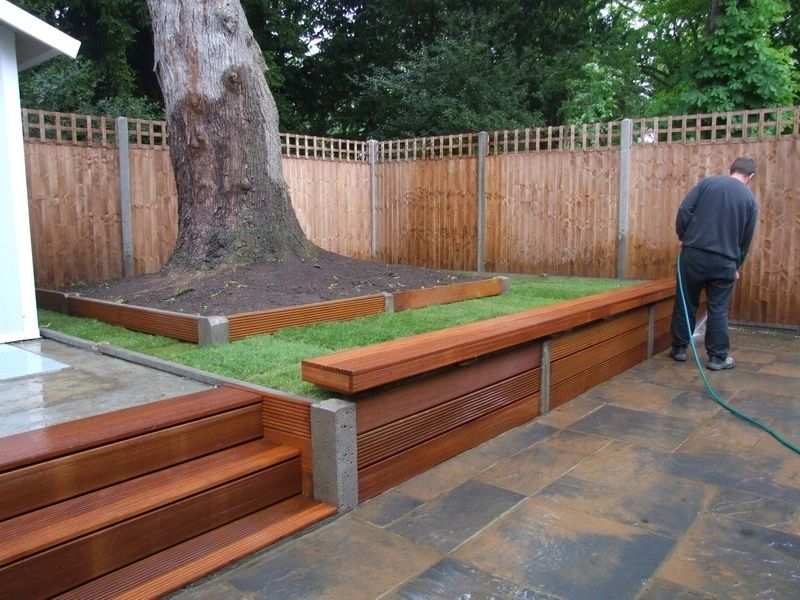
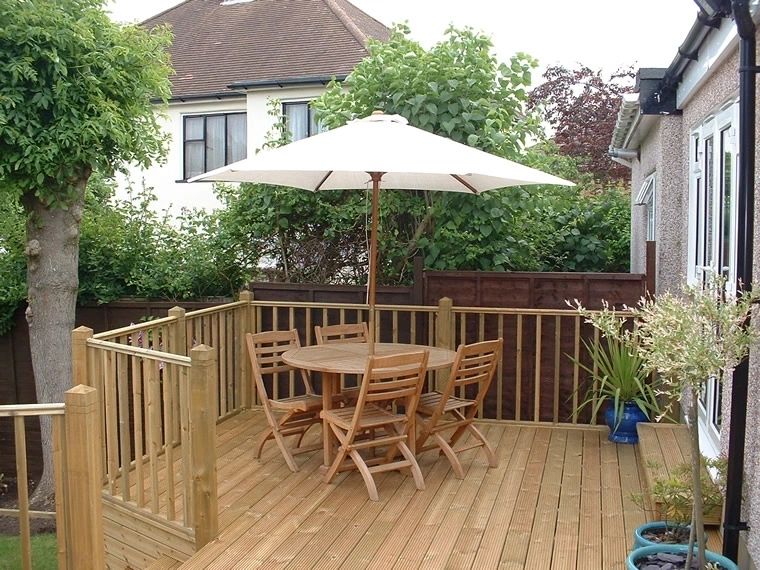
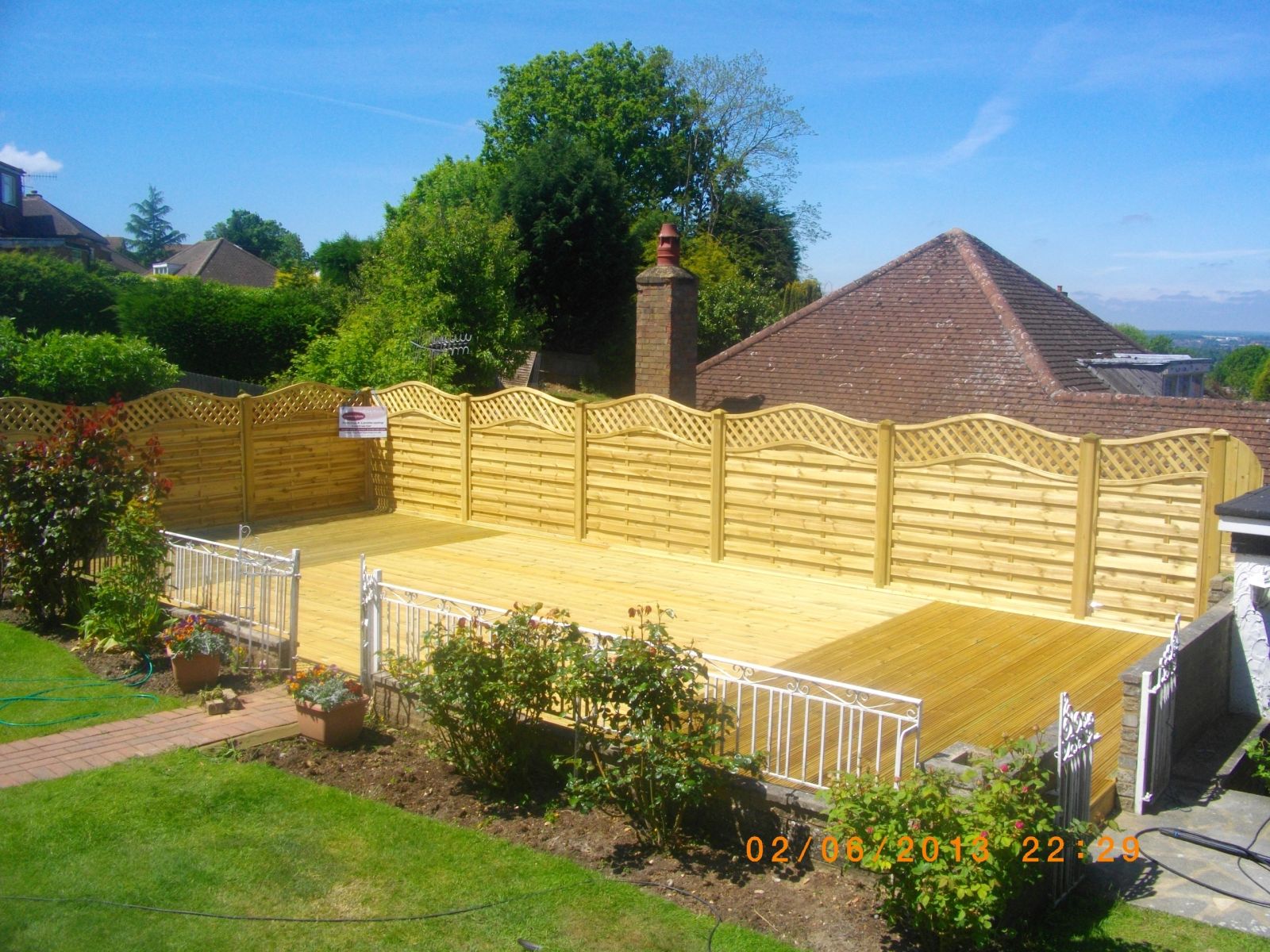
softwood garden decking installed by Capital Fencing in Haringey (N4)
Haringey · N4 / N8 / N15 / N17 / N22

Looking for Hardwood Decking in Haringey? Local Specialist Serving Haringey

Hardwood moves, and pretending otherwise is how gaps end up uneven. We set board gaps for the season we are fitting in and fix with hardwood-rated stainless so nothing bleeds rust into a Haringey board face. If you're weighing hardwood decking for a property in Haringey, the housing stock — Victorian terraces (Harringay Ladder, Crouch End), 1930s semis in Muswell Hill, and post-war estates around Tottenham — sets most of the answer. On long thin Victorian rear gardens with London clay and mature street trees, yellow balau, ipe or iroko boards on treated softwood or hardwood joists generally makes sense for premium rear gardens where a natural silver-grey patina is the desired finish. Where it doesn't, we say so. Recent work on Alexandra Park Road and Wightman Road. We orient jobs off Finsbury Park (north edge).

Hardwood moves, and pretending otherwise is how gaps end up uneven. We set board gaps for the season we are fitting in and fix with hardwood-rated stainless so nothing bleeds rust into a Haringey board face. If you're weighing hardwood decking for a property in Haringey, the housing stock — Victorian terraces (Harringay Ladder, Crouch End), 1930s semis in Muswell Hill, and post-war estates around Tottenham — sets most of the answer. On long thin Victorian rear gardens with London clay and mature street trees, yellow balau, ipe or iroko boards on treated softwood or hardwood joists generally makes sense for premium rear gardens where a natural silver-grey patina is the desired finish. Where it doesn't, we say so. Recent work on Alexandra Park Road and Wightman Road. We orient jobs off Finsbury Park (north edge).

Typical spec

How we build hardwood decking in Haringey

Yellow balau, ipe or iroko boards on treated softwood or hardwood joists. Standard build: 21mm yellow balau or 19mm ipe, secret-fix or countersunk, hardwood-rated screws. On Haringey jobs we adjust for ladder-street back-to-back gardens mean every fence run has two owners and three neighbours to keep informed.

Property mix locally: Victorian terraces (Harringay Ladder, Crouch End), 1930s semis in Muswell Hill, and post-war estates around Tottenham. Typical gardens: long thin Victorian rear gardens with London clay and mature street trees. Postcodes we regularly service: N4, N8, N15, N17, N22.

Why hardwood decking works here

  • genuine 25-year plus service life on yellow balau or ipe when detailed properly
  • richer natural colour and grain than any composite
  • can be sanded and re-oiled indefinitely

Common Haringey briefs

  • poolside and coastal-style decks needing hardwood durability without composite plastic feel
  • commissioned landscape schemes where the deck is a design feature, not just a floor

Hardwood Decking FAQs — Haringey

Do I need to oil hardwood decking every year?

Board gaps are set for the fitting season, because a hardwood deck laid tight in winter has nowhere to go in July. We work this patch weekly, from Wood Green High Road out toward hackney. In short: genuine 25-year plus service life on yellow balau or ipe when detailed properly, though requires annual oiling to keep the honey colour — otherwise silvers naturally.

How do you handle end-grain sealing on hardwood decks?

Every hardwood board is pre-drilled — driving straight into balau splits ends and loses you boards on a Haringey job. For victorian terraces (harringay ladder in N4, that is where the cost sits. In short: genuine 25-year plus service life on yellow balau or ipe when detailed properly, though requires annual oiling to keep the honey colour — otherwise silvers naturally.

What joist spacing do you use for hardwood boards?

Board gaps are set for the fitting season, because a hardwood deck laid tight in winter has nowhere to go in July. We allow for long thin Victorian rear gardens with London clay and mature street trees when setting out in Haringey. Practically, that means richer natural colour and grain than any composite — and we're upfront that material cost is significantly higher than softwood and often composite.

Which hardwood lasts longest for decking in the UK climate?

Every hardwood board is pre-drilled — driving straight into balau splits ends and loses you boards on a Haringey job. Survey slots across N4 are usually inside a week. In short: genuine 25-year plus service life on yellow balau or ipe when detailed properly, though requires annual oiling to keep the honey colour — otherwise silvers naturally.

Can you build a hardwood deck on top of an existing concrete slab?

Every hardwood board is pre-drilled — driving straight into balau splits ends and loses you boards on a Haringey job. We work this patch weekly, from Wood Green High Road out toward hackney. In short: genuine 25-year plus service life on yellow balau or ipe when detailed properly, though requires annual oiling to keep the honey colour — otherwise silvers naturally.

Recent hardwood decking work
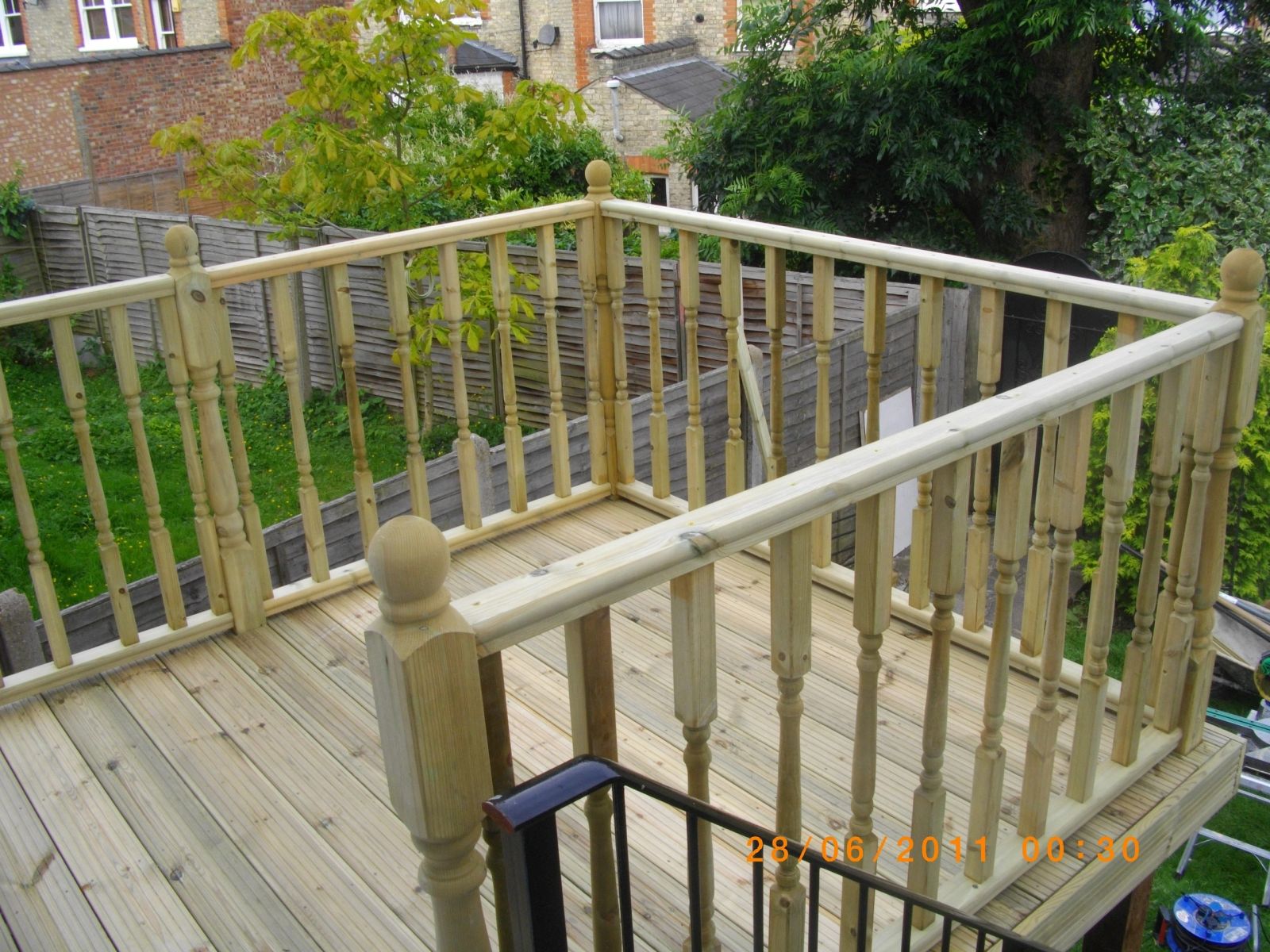
softwood garden decking installed by Capital Fencing in Haringey (N4)hardwood deck install installed by Capital Fencing in Haringey (N4)composite decking installed by Capital Fencing in Haringey (N4)raised garden deck installed by Capital Fencing in Haringey (N4)

Hardwood Decking in Haringey: the practical detail

Drainage fixes as part of a repair

Where poor drainage caused or contributed to the original failure, a repair that doesn't also address the drainage — regrading a low spot, adding a small soakaway, or fitting a concrete gravel board — risks the same failure recurring.

Addressing drainage at repair time is usually more cost-effective than repeating the same panel or post repair every few years.

Post-support metal spikes and why they loosen

A drive-in metal spike relies entirely on ground compaction around the socket for stability, so any repeated wind loading or ground softening after heavy rain gradually works the socket wider and the post starts to rock.

Once a spike has loosened it rarely re-tightens on its own; the usual fix is a larger spike bedded in fresh concrete or a switch to a concreted timber post if the ground repeatedly won't hold a spike.

Balustrade requirements on raised decking

Building regulations generally expect a guarding balustrade wherever a raised deck has a drop of around 600mm or more, with a minimum height (typically around 900mm-1100mm depending on the situation) and gaps small enough that a 100mm sphere can't pass through.

That gap rule is specifically there to stop a small child getting a head or limb through the balustrade, so wide-slat contemporary balustrade designs need checking against it just as carefully as traditional close-spaced spindles.

A deck under that drop threshold doesn't need a balustrade by regulation, but a low kerb or edge trim is still worth considering as a visual cue to the edge, particularly at night.

Bearer support on adjustable pedestals

Adjustable plastic pedestals supporting deck bearers let each support point be levelled individually, which is useful over an uneven concrete base, a sloped patio, or ground that isn't practical to excavate level.

Pedestal spacing still needs to follow the same span logic as timber joists, since an adjustable base doesn't change how far the bearer above it can safely span before it needs another support point.

Pedestals also raise the whole deck slightly, which is worth checking against a threshold or step height at the house before committing to the system.

Why corner posts fail more often and need stronger repair specification

A corner post carries the combined load of two fence runs meeting at an angle rather than a single run passing through, so it's under more sustained stress than an intermediate post and often fails first on an ageing boundary.

Repairing a corner post is worth specifying to a slightly higher standard than a mid-run post — larger section, deeper footing, sometimes additional bracing — given the extra load it carries permanently rather than only occasionally.

Gas and water service positions near boundaries

Gas and water services typically run from the property boundary to the meter position in the shortest practical line, which on many plots means they cross close to or directly under a side boundary fence.

Utility companies can usually supply a service plan on request, though older properties sometimes have connections that predate accurate record-keeping and were never mapped precisely.

Where a plan shows a service crossing the fence line, hand-digging that section and setting the post either side of the marked route avoids the need to relocate a damaged supply.

Applying for a Land Registry boundary determination

Where a boundary's exact position is genuinely disputed, it's possible to apply to HM Land Registry for a 'determined boundary', which involves a formal survey and legally fixes the line rather than leaving it as a general indication.

This process is comparatively rare for domestic disputes because of the cost and evidence involved, and is normally a last resort after direct discussion has failed.

Most everyday fence replacement work never needs this, but it exists as a formal route for the minority of cases where agreement genuinely can't be reached.

Which side a fence's face and posts should sit on

There's a long-standing but informal convention that the 'good side' — the smooth face without visible posts and rails — should face the neighbouring property, though this is a courtesy rather than a legal requirement.

Some title deeds do specify a required orientation as part of an ownership condition, which takes precedence over the general convention where it applies.

Where no such condition exists, agreeing the facing direction with a neighbour before building avoids a common and easily-avoided source of minor friction.

Smallholdings

A smallholding often needs several different boundary specifications on one plot — stock fencing for grazing paddocks, a more secure perimeter around poultry runs to keep foxes out, and a conventional garden fence around the house itself.

Movement of livestock between fields is usually managed with gates rather than continuous fence removal, so gate positions need agreeing against the smallholder's actual rotation pattern rather than simply the shortest route.

Because smallholdings often combine agricultural and residential use on the same title, it's worth checking which parts of a boundary project count as agricultural permitted development and which fall under the standard residential rules.

Dropped kerbs and boundary gate positions

A dropped kerb is authorised for a specific width and position, and a gate or fence opening that doesn't line up with it can create a technically unauthorised vehicle crossing over the footway.

Where a driveway gate is being repositioned or widened, it's worth checking whether the dropped kerb needs to be extended or moved to match, which is a separate application to the council's highways department.

Parking a vehicle over a kerb that hasn't been properly dropped, even briefly during works, can also draw attention from the local authority in some areas.

Discontinued panel styles

Panel fencing ranges get discontinued or reformulated by manufacturers more often than solid boarded fencing components, since panels are a proprietary product rather than built from generic stock timber sizes.

A ten- or fifteen-year-old panel range is often simply no longer made, which means a single damaged panel in an otherwise sound run may need the whole run replaced, or a mismatched panel accepted as a compromise.

Closeboard and picket fencing, built from standard boards, rails and posts rather than a proprietary panel, are generally easier to repair piecemeal decades later precisely because the components aren't tied to one manufacturer's product cycle.

Dog-proofing details at ground level and gaps

Dogs test a fence at ground level far more than at height, so gaps under gravel boards, worn hollows on sloping ground, or wide overlaps between adjacent panels are the points most likely to let a determined dog through or under.

A close-fitting concrete gravel board set with minimal gap to the ground, rather than a timber board that can warp and lift, closes off the most common escape route without changing the overall fence design.

For persistent diggers, a buried mesh apron or paving strip just inside the fence line at ground level stops excavation without needing to alter the visible fence at all.

Questions to ask any fencing contractor

Worth asking directly: who owns the boundary being worked on, what happens if buried obstructions are found, and whether waste removal and disposal are included in the price rather than charged separately afterwards.

It's also reasonable to ask what post-setting method will be used for the specific ground conditions on site, since a contractor who hasn't looked at soil type before quoting depth and concrete volume is guessing rather than specifying.

Asking how a contractor handles a shared boundary with a neighbour who hasn't been consulted is a good test of whether they've thought through the ownership question at all, rather than just the fence itself.

Boundaries adjoining registered common land

Land registered as common land under the Commons Registration Act carries specific legal protections, and fencing along a boundary with it can require consent from the Planning Inspectorate under separate legislation.

This is a different and more specialist process than an ordinary planning application, reflecting the protected status of common land itself.

Anyone with a boundary adjoining registered common land should check its status carefully before assuming a straightforward fence replacement is all that's needed.

Hardwood decking in Haringey is quoted by species and thickness, with the fixing method stated — secret-fix costs more in labour and leaves a clean board face. Whether you're on a period street near Wood Green High Road or a newer estate toward hackney, hardwood decking in Haringey is a service we run every week — booked in, on time, and left tidy. Recent work on Alexandra Park Road and Ferme Park Road. We orient jobs off Finsbury Park (north edge).

Get In Touch

Get My Free Quote — 24h Response

No callout fee · Free site visit · Friendly local team covering London & Hertfordshire.

Call us
07885907880
or 02036484746
Email
capital_fencing@yahoo.com
WhatsApp
Message us anytime
Area
London & Hertfordshire
Payment
Card payments accepted

Pay by debit or credit card, bank transfer or cash once the work and price are agreed. No deposit taken online.

Request a Free Quote

We'll get back to you within 24 hours.

Free Site Visit No Callout Fee
Call WhatsAppQuote