London & Hertfordshire Free Site Visit
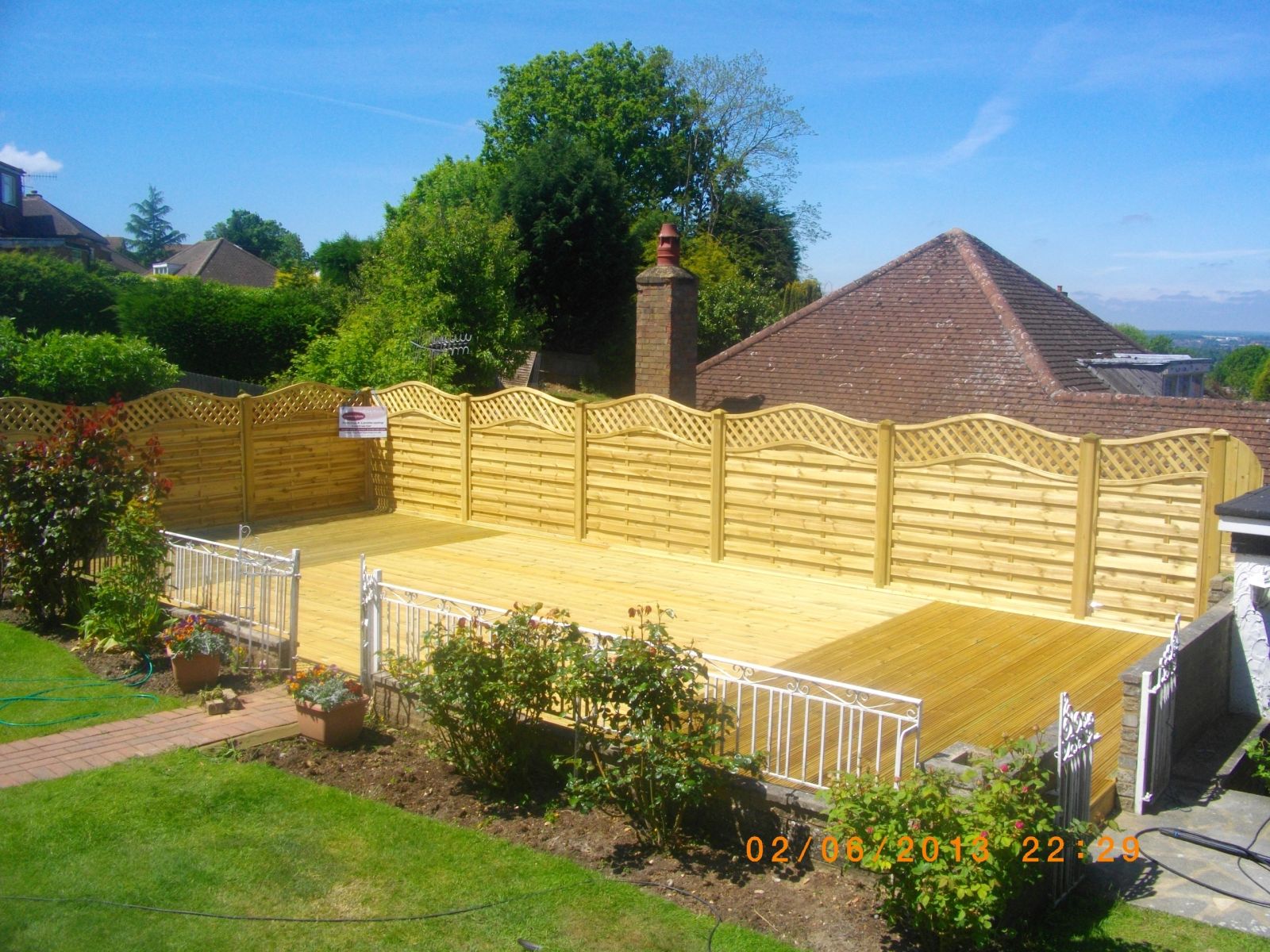
softwood garden decking installed by Capital Fencing in Letchworth Garden City (SG6)
Letchworth Garden City · SG6

Hardwood Decking Installers Across Letchworth Garden City & hitchin

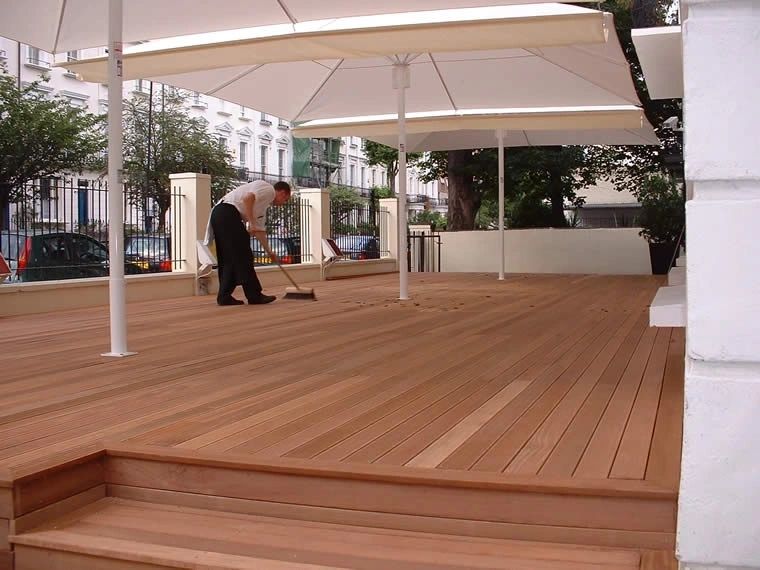
Hardwood decking is the choice when you want real timber and are happy to look after it. Yellow balau, ipe or iroko, secret-fixed or countersunk, on a frame built to carry a much denser board than softwood — that is the Letchworth Garden City hardwood spec. Hardwood Decking in Letchworth Garden City isn't a bolt-on for us — it's a day-in, day-out install. We cover SG6 and the streets running toward A505 / A1(M), and we know before we arrive that letchworth heritage foundation design rules dictate fence styles, heights and finishes on most streets. That's the first thing that shapes the spec, not the last. Recent work on Hillshott and Nevells Road. We orient jobs off The Wynd shops.

Hardwood decking is the choice when you want real timber and are happy to look after it. Yellow balau, ipe or iroko, secret-fixed or countersunk, on a frame built to carry a much denser board than softwood — that is the Letchworth Garden City hardwood spec. Hardwood Decking in Letchworth Garden City isn't a bolt-on for us — it's a day-in, day-out install. We cover SG6 and the streets running toward A505 / A1(M), and we know before we arrive that letchworth heritage foundation design rules dictate fence styles, heights and finishes on most streets. That's the first thing that shapes the spec, not the last. Recent work on Hillshott and Nevells Road. We orient jobs off The Wynd shops.

Typical spec

How we build hardwood decking in Letchworth Garden City

Yellow balau, ipe or iroko boards on treated softwood or hardwood joists. Standard build: 21mm yellow balau or 19mm ipe, secret-fix or countersunk, hardwood-rated screws. On Letchworth Garden City jobs we adjust for letchworth heritage foundation design rules dictate fence styles, heights and finishes on most streets.

Property mix locally: the world's first garden city — Arts and Crafts cottages, planned terraces and consistent street trees. Typical gardens: generous, leafy plots — many gardens contain protected trees with TPOs. Postcodes we regularly service: SG6.

Common Letchworth Garden City briefs

  • poolside and coastal-style decks needing hardwood durability without composite plastic feel
  • premium rear gardens where a natural silver-grey patina is the desired finish
Honest trade-offs

Where hardwood decking isn't the right answer

  • requires annual oiling to keep the honey colour — otherwise silvers naturally
  • material cost is significantly higher than softwood and often composite

We'll say so on the site visit — a wasted quote helps nobody.

Why hardwood decking works here

  • genuine 25-year plus service life on yellow balau or ipe when detailed properly
  • richer natural colour and grain than any composite
  • can be sanded and re-oiled indefinitely

Hardwood Decking FAQs — Letchworth Garden City

Can you build a hardwood deck on top of an existing concrete slab?

Every hardwood board is pre-drilled — driving straight into balau splits ends and loses you boards on a Letchworth Garden City job. We work this patch weekly, from Pixmore Industrial Estate out toward hitchin. Practically, that means richer natural colour and grain than any composite — and we're upfront that material cost is significantly higher than softwood and often composite.

Which hardwood lasts longest for decking in the UK climate?

Board gaps are set for the fitting season, because a hardwood deck laid tight in winter has nowhere to go in July. For the world's first garden city — arts and crafts cottages in SG6, that is where the cost sits. In short: genuine 25-year plus service life on yellow balau or ipe when detailed properly, though requires annual oiling to keep the honey colour — otherwise silvers naturally.

How do you handle end-grain sealing on hardwood decks?

Every hardwood board is pre-drilled — driving straight into balau splits ends and loses you boards on a Letchworth Garden City job. We allow for generous when setting out in Letchworth Garden City. Practically, that means richer natural colour and grain than any composite — and we're upfront that material cost is significantly higher than softwood and often composite.

Do I need to oil hardwood decking every year?

Board gaps are set for the fitting season, because a hardwood deck laid tight in winter has nowhere to go in July. Survey slots across SG6 are usually inside a week. Worth weighing genuine 25-year plus service life on yellow balau or ipe when detailed properly against requires annual oiling to keep the honey colour — otherwise silvers naturally before you commit.

How does hardwood compare to composite for slip resistance?

Every hardwood board is pre-drilled — driving straight into balau splits ends and loses you boards on a Letchworth Garden City job. We work this patch weekly, from Pixmore Industrial Estate out toward hitchin. Worth weighing genuine 25-year plus service life on yellow balau or ipe when detailed properly against requires annual oiling to keep the honey colour — otherwise silvers naturally before you commit.

Recent hardwood decking work
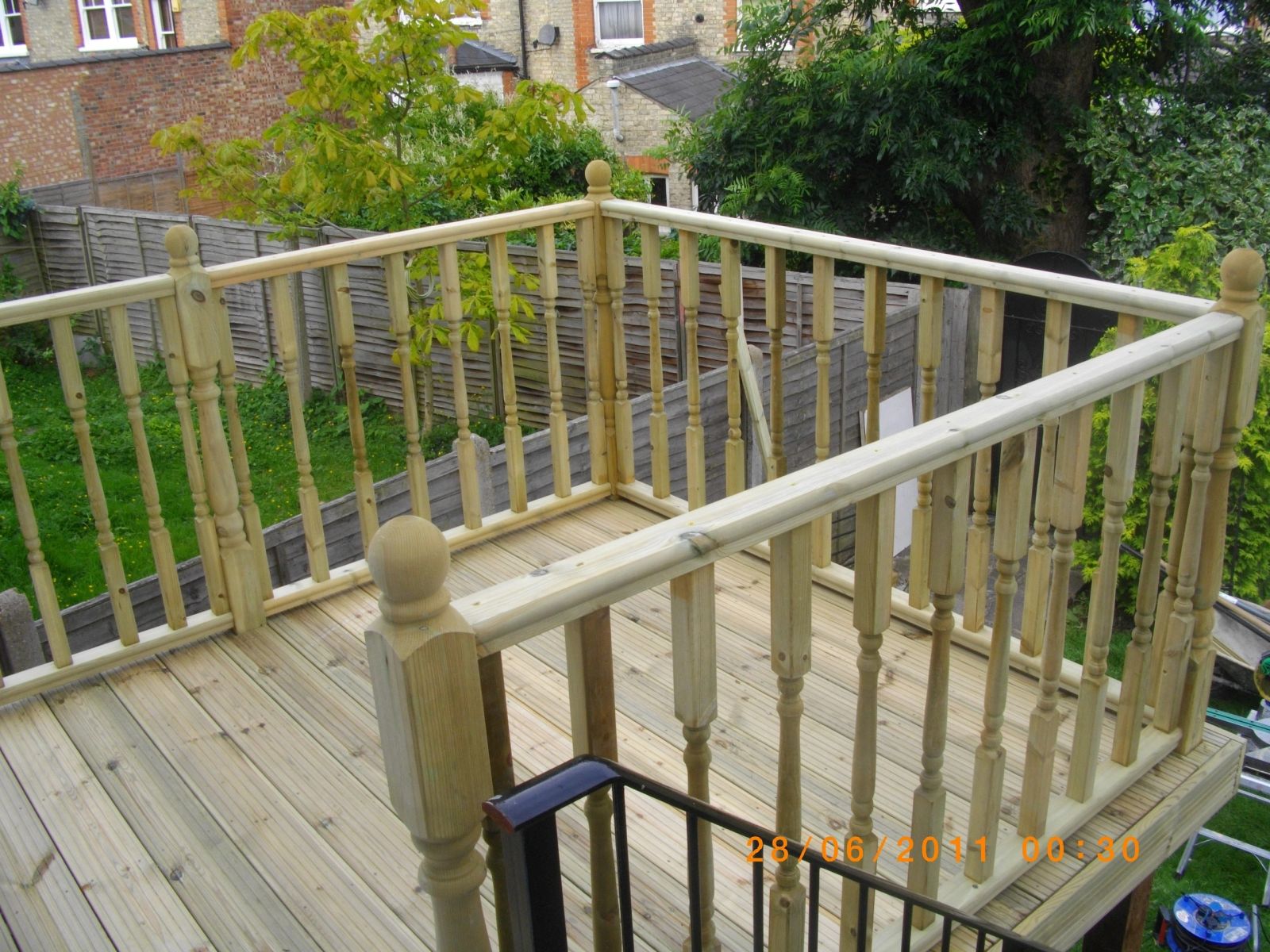
softwood garden decking installed by Capital Fencing in Letchworth Garden City (SG6)hardwood deck install installed by Capital Fencing in Letchworth Garden City (SG6)composite decking installed by Capital Fencing in Letchworth Garden City (SG6)raised garden deck installed by Capital Fencing in Letchworth Garden City (SG6)

Local considerations across Letchworth Garden City and hitchin

Equestrian and paddock fencing basics

Post-and-rail is the standard equestrian boundary because it's forgiving on impact — a horse pushing against it is less likely to be injured than against wire or a rigid panel, and any wire used alongside timber rails needs to be clearly visible, not fine-gauge stock wire that a horse can't see.

Field gate widths for equestrian use are wider than a domestic garden gate, usually at least 3.6m, to allow a horse to be led through without crowding the gateposts.

Paddock fence lines also need checking for toxic hedge or tree species growing along the boundary, since horses can reach through post-and-rail in a way they can't through a solid fence.

Disposing of broken-out concrete footings

Broken-out concrete from an old post footing is inert waste and can generally go to a construction and demolition waste facility, but it still needs removing from site rather than left buried or piled at the back of a garden.

On a job with several posts being reset, the volume of broken concrete adds up quickly, and planning where it's going before the repair starts avoids it sitting as a hazard or an eyesore on site for longer than necessary.

How garden slope affects water shedding along a fence base

On a sloped garden, water naturally runs along the base of a fence line toward the lowest point, which means the downhill end of a run often sits in wetter ground than the uphill end even though both were built to the same specification.

This uneven exposure is a common reason why one end of an otherwise uniform fence needs gravel board replacement years before the rest.

A shallow cross-fall drainage channel or a slightly raised gravel board at the low point can intercept some of this flow before it pools against the timber.

Boundary fencing on land in a flood risk zone

Properties within a designated flood risk zone can be subject to additional requirements around solid boundary structures that might obstruct floodwater flow across the site.

A solid close-boarded fence can behave differently to a more open picket or post-and-rail design when it comes to how water moves through a garden during a flood event.

Where flood risk mapping shows a property is affected, checking with the local authority or Environment Agency for any relevant guidance is sensible before choosing a boundary style.

Spoil volume and removal

Digging a full run of post holes generates more spoil than most clients expect, particularly on clay where the dug material swells in volume compared with its compacted state in the ground.

Spoil that can't be spread thinly elsewhere on the plot without smothering lawn or borders usually needs skip or licensed grab-lorry removal, which should be agreed and costed before the dig starts rather than after a pile has built up on the lawn.

Heavy clay spoil left on grass for more than a day or two will usually kill it, so covering or removing arisings promptly matters if the lawn is staying.

Iroko and tropical hardwood density

Iroko is a dense West African hardwood sometimes used as a substitute for teak in gates and structural fencing components, valued for a natural durability that doesn't rely on chemical treatment.

Its density makes it heavier to handle and slower to work than softwood equivalents, and it typically needs pre-drilling for screws to avoid splitting.

Because it's naturally oily, some finishes and glues bond to it poorly unless the surface is wiped down with a solvent first, which is a detail that's easy to miss when substituting it into a softwood-designed detail.

Timber fence panel frame construction

A standard lap or overlap fence panel is built around a timber frame, typically with a mortice-and-tenon or simple butt-jointed corner, into which the individual overlapping boards are stapled or nailed.

The frame's own timber section size and joint quality do more to determine a panel's racking resistance in wind than the thin overlap boards themselves, since the boards carry little structural load on their own.

A panel with a lightweight, thin frame section will flex and rack under wind load even if the boards look identical to a panel built on a heavier frame, which is one reason nominally similar panels vary noticeably in longevity.

Hit-and-miss fencing for windy plots

Hit-and-miss fencing alternates boards on either side of the rails so each gap on one face is covered by a board on the other, giving privacy from both sides while leaving narrow gaps through the panel itself.

Those gaps let a proportion of wind pass through rather than loading the whole panel face, which is why it's a common recommendation on exposed boundaries where a solid closeboard run would need heavier posts and shorter bays.

It uses more timber than a single-skin boarded fence for the same run length, so it's priced accordingly, but the reduced wind load can offset that in post and repair costs over time.

Boundary fencing between garden and agricultural land

Where a residential garden backs onto agricultural land, stock-proof fencing standards relevant to livestock containment may be a factor the adjoining farmer expects, separate from purely decorative garden fencing considerations.

Responsibility for maintaining this kind of boundary can be split differently to a typical suburban arrangement, sometimes reflecting historic agricultural tenancy agreements rather than standard residential conveyancing norms.

Checking with the adjoining landowner and the title documents together gives a fuller picture than assuming the same rules apply as between two ordinary garden neighbours.

Repairing an end post fixed against a house or garage wall

An end post bolted to masonry rather than set in its own footing fails differently — usually at the wall fixings rather than at ground level — and repair means checking whether the wall fixing itself has corroded or worked loose in the masonry.

Where the original fixing type has degraded, refitting with a heavier-duty or better-protected fixing is generally worth the small extra effort over simply replacing like-for-like into the same drilled holes.

Sherardised nails and fixings

Sherardising coats small steel fixings in zinc through a low-temperature diffusion process using zinc dust rather than a molten bath, giving a matt grey, evenly distributed coating well suited to fasteners with fine threads.

Because the process doesn't build up excess zinc at edges and threads the way hot-dip galvanising can, sherardised nails and screws keep a cleaner, more precise fit than galvanised equivalents of the same size.

The coating is thinner than typical hot-dip galvanising, so sherardised fixings are generally specified for above-ground, moderate-exposure use rather than permanent ground contact.

Clearing storm and repair debris

Broken panels, snapped posts and old concrete are cleared and taken off site as standard on any repair, rather than left in the garden for the client to deal with separately.

Where a repair follows a storm, we also check for and clear any debris that's blown into the garden from elsewhere, not just the fence materials themselves.

Fencing alongside a shared access driveway

A driveway shared by two or more properties usually carries a right of way that limits how close a new fence can come to the actual running surface, regardless of who legally owns the land beneath it.

Width needs checking against the widest vehicle that regularly uses the shared drive, not just a car, since delivery vans and refuse vehicles are a common reason an otherwise reasonable-looking fence line turns out too tight.

Gates across a shared driveway need agreement from all parties with a right of way over it, and usually a means of access — a code, a key, or simply leaving it unlocked — for everyone who needs to use the route.

Diagonal bracing struts on gate posts

A diagonal timber or metal strut run from partway up a gate post back to a buried anchor or second post resists the twisting and leaning force a heavy gate exerts on its hinge post over time, particularly on wide or heavy gates.

Without bracing, that twisting load is carried entirely by the post's own embedment in the ground, which can gradually work the post out of true even where the concrete footing itself remains intact.

Bracing is generally specified based on gate weight and width rather than applied universally, since a light pedestrian gate rarely generates enough leverage to need it while a wide vehicle gate almost always does.

Oil it and it holds its colour; leave it and it silvers evenly. Either is fine, and we will tell you honestly what each looks like after two Hertfordshire winters. Letchworth Garden City clients get the same crew from first visit to hand-over. That's the whole model — one small team, hardwood decking done properly, work agreed in writing before it starts. Recent work on Nevells Road and Pixmore Way. We orient jobs off Howard Park.

Get In Touch

Get My Free Quote — 24h Response

No callout fee · Free site visit · Friendly local team covering London & Hertfordshire.

Call us
07885907880
or 02036484746
Email
capital_fencing@yahoo.com
WhatsApp
Message us anytime
Area
London & Hertfordshire
Payment
Card payments accepted

Pay by debit or credit card, bank transfer or cash once the work and price are agreed. No deposit taken online.

Request a Free Quote

We'll get back to you within 24 hours.

Free Site Visit No Callout Fee
Call WhatsAppQuote