London & Hertfordshire Free Site Visit
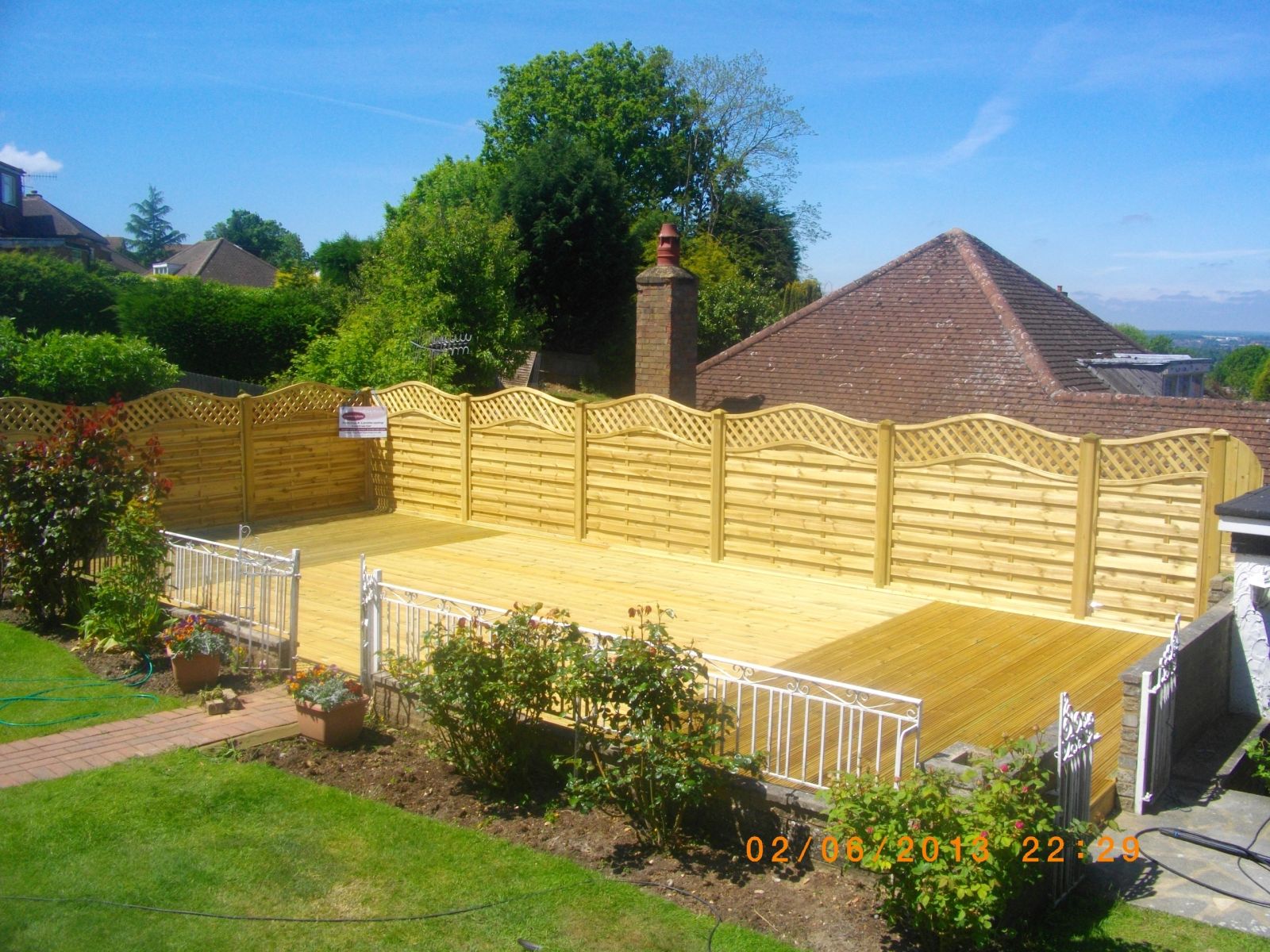
softwood garden decking installed by Capital Fencing in Letchworth Garden City (SG6)
Letchworth Garden City · SG6

Composite Decking in Letchworth Garden City (SG6)

Board centres are the number that matters. Composite flexes more than timber, so a frame built for softwood boards will feel soft underfoot once composite is laid on a Letchworth Garden City terrace. We're a small, time-served composite decking crew working out of London and Herts, and Letchworth Garden City is a regular week for us. Most briefs here come down to rear gardens where the client wants no annual oiling or sanding — and honestly, whether composite decking is the right answer at all before we quote. Recent work on Icknield Way and Pixmore Way. We orient jobs off Standalone Farm.

Board centres are the number that matters. Composite flexes more than timber, so a frame built for softwood boards will feel soft underfoot once composite is laid on a Letchworth Garden City terrace. We're a small, time-served composite decking crew working out of London and Herts, and Letchworth Garden City is a regular week for us. Most briefs here come down to rear gardens where the client wants no annual oiling or sanding — and honestly, whether composite decking is the right answer at all before we quote. Recent work on Icknield Way and Pixmore Way. We orient jobs off Standalone Farm.

Why composite decking works here

  • no annual maintenance beyond a wash-down
  • capped boards resist stains and don't fade to grey the way softwood does
  • grooved surface keeps grip in wet weather
Honest trade-offs

Where composite decking isn't the right answer

  • up-front cost is 40–60% higher than a matching softwood deck
  • can feel hotter underfoot in full sun than timber

We'll say so on the site visit — a wasted quote helps nobody.

Typical spec

How we build composite decking in Letchworth Garden City

Capped wood-polymer composite boards on treated softwood joists. Standard build: Trex or Q-Deck capped boards on 150×47mm treated joists at 300mm centres. On Letchworth Garden City jobs we adjust for letchworth heritage foundation design rules dictate fence styles, heights and finishes on most streets.

Property mix locally: the world's first garden city — Arts and Crafts cottages, planned terraces and consistent street trees. Typical gardens: generous, leafy plots — many gardens contain protected trees with TPOs. Postcodes we regularly service: SG6.

Common Letchworth Garden City briefs

  • raised decks around hot tubs and outdoor kitchens where slip resistance matters
  • rear gardens where the client wants no annual oiling or sanding

Composite Decking FAQs — Letchworth Garden City

Can composite decking be laid over an existing frame?

Hidden clip fixings mean no screw heads on the walking surface of a Letchworth Garden City terrace. Survey slots across SG6 are usually inside a week. Practically, that means capped boards resist stains and don't fade to grey the way softwood does — and we're upfront that can feel hotter underfoot in full sun than timber.

Is composite slippery when wet?

Hidden clip fixings mean no screw heads on the walking surface of a Letchworth Garden City terrace. We work this patch weekly, from Pixmore Industrial Estate out toward hitchin. Practically, that means capped boards resist stains and don't fade to grey the way softwood does — and we're upfront that can feel hotter underfoot in full sun than timber.

How do you clean composite decking?

Fascia and trims are what make a composite deck look finished; they are on the quote, not an extra at the end. For the world's first garden city — arts and crafts cottages in SG6, that is where the cost sits. In short: no annual maintenance beyond a wash-down, though up-front cost is 40–60% higher than a matching softwood deck.

Does composite decking get too hot to walk on?

Fascia and trims are what make a composite deck look finished; they are on the quote, not an extra at the end. We allow for generous when setting out in Letchworth Garden City. Worth weighing no annual maintenance beyond a wash-down against up-front cost is 40–60% higher than a matching softwood deck before you commit.

How long does composite decking last vs timber?

Fascia and trims are what make a composite deck look finished; they are on the quote, not an extra at the end. Survey slots across SG6 are usually inside a week. In short: no annual maintenance beyond a wash-down, though up-front cost is 40–60% higher than a matching softwood deck.

Recent composite decking work
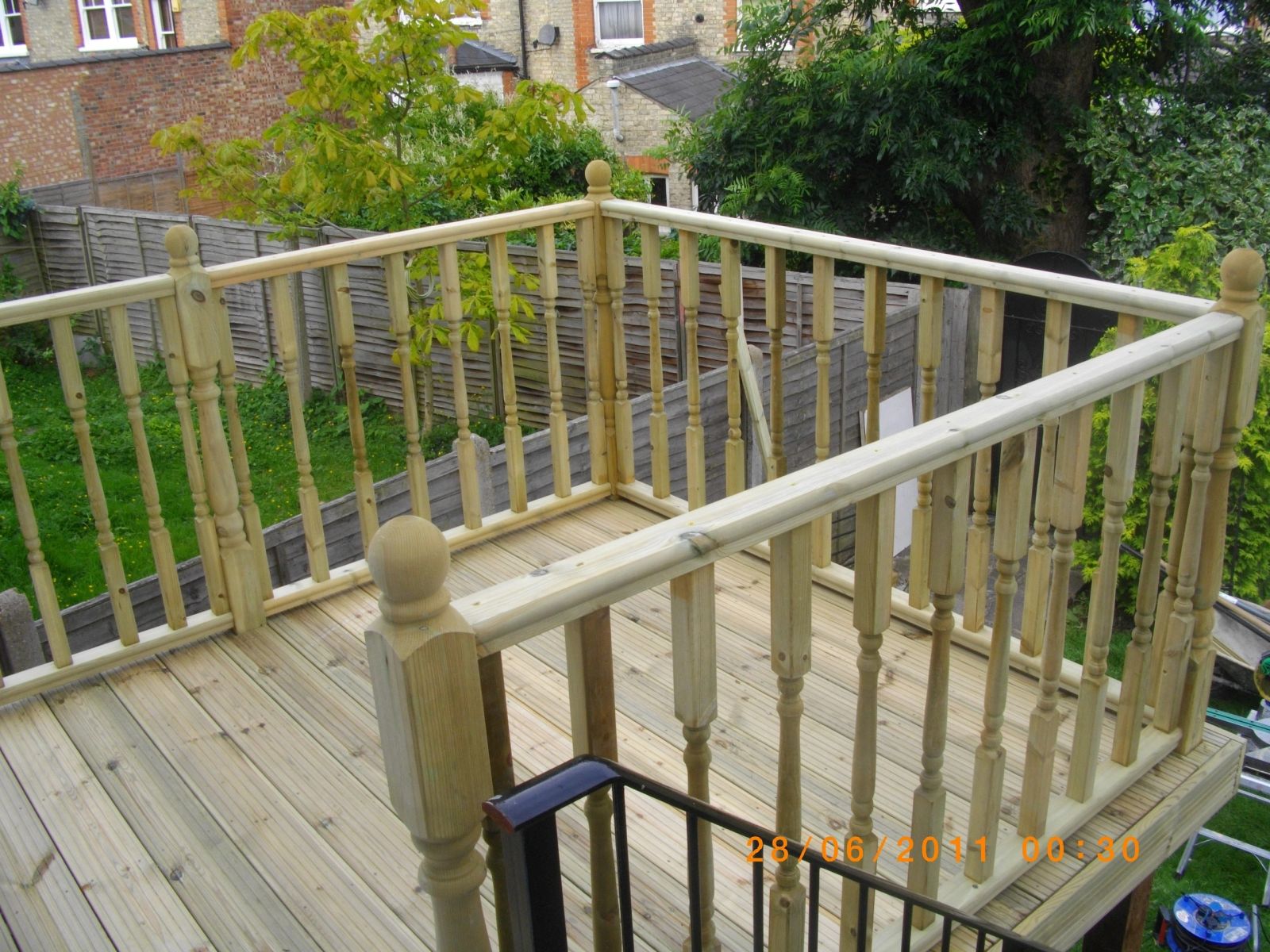
softwood garden decking installed by Capital Fencing in Letchworth Garden City (SG6)hardwood deck install installed by Capital Fencing in Letchworth Garden City (SG6)composite decking installed by Capital Fencing in Letchworth Garden City (SG6)raised garden deck installed by Capital Fencing in Letchworth Garden City (SG6)

Composite Decking in Letchworth Garden City: the practical detail

Child safety at gaps and low openings

Gaps between vertical balusters or slatted infill wide enough to trap a small child's head are a recognised hazard, and the common guidance used for balustrades and railings — keeping gaps under 100mm — is a sensible benchmark for garden fencing near play areas too.

Horizontal rails on an otherwise vertical fence design can also create an unintentional climbing frame for a young child trying to get over a boundary, which is worth considering near a pool, driveway or road-facing frontage.

These details matter most on fences separating a garden from open water, a road, or a shared driveway, where the consequence of a small gap or easy foothold is more serious than on an internal garden division.

Scoping a repair linked to an insurance claim

Where a repair follows an insured event, the scope of work is agreed and documented before starting, since insurers typically require a clear description of what failed and what's being replaced rather than a general like-for-like statement.

Photographs and a written note of the failure are kept alongside the repair record, which is useful if further questions come up later in the claims process.

EV charging cables and boundary fence gates

Where an electric vehicle charge point is fitted near a boundary, cable routing sometimes needs to cross under or through a gate or fence gap, which is worth considering at the design stage rather than retrofitting a channel later.

Trailing a charging cable across a public footway to reach a car isn't permitted in most areas without specific council-approved cable channel provision, which is a separate matter from the fence itself.

Checking the council's position on any cable crossing a footway, alongside the fence and gate design, avoids two separate problems being discovered one after the other.

Choosing a fence stain or paint finish

Fence stains range from clear or lightly tinted preservatives that let the timber grain show through, to fully opaque paints that behave more like a coating than a stain and hide the wood's natural texture.

Darker stains show dust and cobwebs less but can absorb more heat in direct summer sun, which slightly increases how much the timber expands and contracts through the day.

Whatever finish is chosen, re-application intervals differ significantly between a thin stain and a heavier paint system, which is worth factoring into the long-term maintenance plan rather than just the initial look.

Temporary hoarding compared with a permanent boundary fence

Temporary site hoarding erected during building works is generally treated differently under planning rules to a permanent boundary fence, often allowed for a limited period without full permission where it's clearly temporary and related to authorised works.

Problems arise where hoarding intended as temporary is left in place indefinitely once building work finishes, which can then be treated as an unauthorised permanent structure.

Anyone planning to convert temporary site hoarding into a permanent boundary feature should check whether separate permission is needed rather than assuming continuity is automatic.

Boundaries against a railway embankment

A boundary running along a railway embankment is very often owned and maintained by the railway infrastructure operator rather than the adjoining householder, and any work close to the operator's land, including digging near its toe or crest, usually needs prior notice or permission.

Embankment ground can also be made up of variable historic fill rather than natural strata, since many were built up from spoil during original construction, which affects both digging and the stability assumptions for post bases near the base of the slope.

Access for materials and machinery along these boundaries is frequently restricted, so confirming land ownership and any operator consent needed is a necessary step before quoting the work.

Zinc-aluminium coatings

Zinc-aluminium alloy coatings, sold under various trade names, combine zinc's sacrificial protection with aluminium's more stable barrier properties, generally giving longer service life than pure zinc galvanising in the same environment.

They're commonly used on wire products and fixings destined for coastal or heavily salted road environments, where standard galvanising alone corrodes faster than inland applications.

The trade-off is that these coatings are usually applied by wire-drawing or continuous coil coating processes rather than batch hot-dip immersion, which limits them to certain product types rather than large fabricated steelwork.

Conservation area consent process and fees

Applications affecting conservation areas or listed curtilage structures are usually submitted through the same planning portal as a standard householder application, with an additional heritage statement often required to justify the proposed materials and design against the area's character.

Determination periods and validation requirements are broadly the same as ordinary planning applications, typically eight weeks for a straightforward decision, though heritage input from a conservation officer can extend that where the proposal is contentious.

Fees for these applications follow the standard national planning fee schedule rather than a separate heritage tariff, so cost isn't usually the barrier — the main risk is a longer timeline if amendments are requested.

Re-tensioning chain-link mesh that has sagged

Chain-link sags where the line wire running through the top of the mesh has stretched or where a straining post at the end of the run has leaned, taking the tension off the whole span rather than just the section that looks slack.

Repair usually starts at the straining post — replumbing or reinforcing it — before the line wire is re-tensioned with a winder, since re-tensioning against a leaning straining post just pulls it further out of line.

Nesting birds in vegetation on a fence line

Dense hedging, ivy or overgrown trellis attached to a fence can hold active bird nests during the spring and summer nesting season, and disturbing a nest in use is an offence regardless of how routine the fence repair itself is.

Where a repair requires cutting back vegetation that might be nesting habitat, checking for active nests first and, if found, delaying that part of the work until the nest is no longer in use is the straightforward way to stay compliant.

Washing off mould before treatment

Black mould spotting, distinct from green algae, tends to appear on shaded timber with poor airflow behind it, such as a fence panel sitting close against dense shrub planting on one side.

A proprietary fungicidal wash left to dwell before rinsing removes far more of the surface growth than a plain water wash, which can spread spores across the surface rather than lifting them off.

Cutting back planting to restore airflow behind the affected section addresses the underlying cause; treating the timber alone without improving ventilation usually sees the mould return within a year.

Threading a fence run past a rainwater downpipe

A downpipe discharging near the boundary means the fence has to either step around it with a short jog in the line, or leave a gap in the panel run rather than fixing directly over the pipe and its gulley.

Fixing a post immediately behind a downpipe risks trapping water splashing off it against the post base, so a small offset gives both the pipe and the post room without altering the overall run length much.

Where the downpipe discharges to a gulley set into a path or patio, the gravel board also needs enough clearance to avoid sitting in standing water every time it rains.

Temporary fencing while a permanent boundary is rebuilt

Removing an old boundary fence before the new one is built leaves a gap that matters for security, for keeping pets or children contained, and for site safety around an open excavation.

A simple temporary screen — netting on stakes, or hurdles wired together — bridges that gap without committing to a full second install, and is worth agreeing with the client if the job will span more than a day.

On a site backing onto a road, path or shared area, a temporary barrier around open post holes overnight is also a basic precaution against someone stepping into an unmarked hole in the dark.

Keeping post positions clear of drainage gulleys and channels

A surface drainage channel or gulley running near the boundary needs to stay clear and functioning, so a post landing directly over or immediately beside one can block flow or make future clearing of the channel awkward.

Where the fence line has to cross a channel, spanning it with a slightly wider gap under the gravel board, rather than boxing the channel in completely, keeps it accessible for clearing leaves and debris.

It's worth running water through the channel before finishing the job, where practical, to confirm the new fence hasn't inadvertently altered how it drains.

Composite decking in Letchworth Garden City is quoted as frame, boards, fascia and any steps or balustrade — separately, so you can see where the money goes. We keep the composite decking process simple for Letchworth Garden City clients: site visit, written quote, agreed start date, then in and out cleanly. No subcontracted labour, no chasing for an invoice at the end. Recent work on Icknield Way and Wilbury Road. We orient jobs off Howard Park.

Get In Touch

Get My Free Quote — 24h Response

No callout fee · Free site visit · Friendly local team covering London & Hertfordshire.

Call us
07885907880
or 02036484746
Email
capital_fencing@yahoo.com
WhatsApp
Message us anytime
Area
London & Hertfordshire
Payment
Card payments accepted

Pay by debit or credit card, bank transfer or cash once the work and price are agreed. No deposit taken online.

Request a Free Quote

We'll get back to you within 24 hours.

Free Site Visit No Callout Fee
Call WhatsAppQuote