London & Hertfordshire Free Site Visit
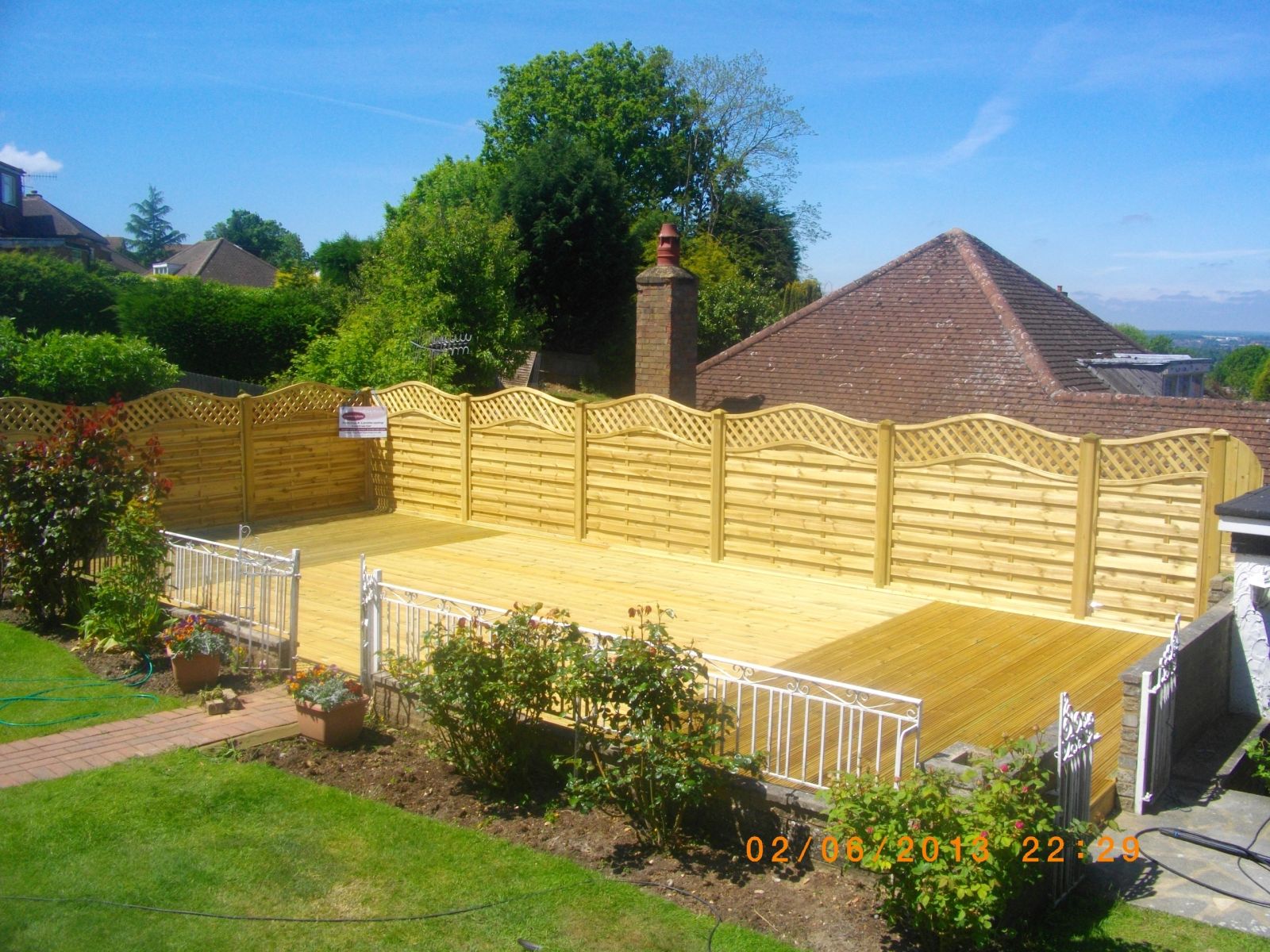
softwood garden decking installed by Capital Fencing in Stevenage (SG1)
Stevenage · SG1 / SG2

Stevenage Hardwood Decking — Specified for SG1, SG2

Hardwood moves, and pretending otherwise is how gaps end up uneven. We set board gaps for the season we are fitting in and fix with hardwood-rated stainless so nothing bleeds rust into a Stevenage board face. Capital Fencing installs hardwood decking across Stevenage and out to hitchin and welwyn garden city. Stevenage Borough coverage plus proximity to A1(M) J7 / J8 means most quotes are on your inbox within 48 hours of a site visit. Recent work on Bedwell Crescent and Broadhall Way. We orient jobs off Stevenage Old Town.

Hardwood moves, and pretending otherwise is how gaps end up uneven. We set board gaps for the season we are fitting in and fix with hardwood-rated stainless so nothing bleeds rust into a Stevenage board face. Capital Fencing installs hardwood decking across Stevenage and out to hitchin and welwyn garden city. Stevenage Borough coverage plus proximity to A1(M) J7 / J8 means most quotes are on your inbox within 48 hours of a site visit. Recent work on Bedwell Crescent and Broadhall Way. We orient jobs off Stevenage Old Town.

Common Stevenage briefs

  • commissioned landscape schemes where the deck is a design feature, not just a floor
  • premium rear gardens where a natural silver-grey patina is the desired finish

Why hardwood decking works here

  • genuine 25-year plus service life on yellow balau or ipe when detailed properly
  • richer natural colour and grain than any composite
  • can be sanded and re-oiled indefinitely
Typical spec

How we build hardwood decking in Stevenage

Yellow balau, ipe or iroko boards on treated softwood or hardwood joists. Standard build: 21mm yellow balau or 19mm ipe, secret-fix or countersunk, hardwood-rated screws. On Stevenage jobs we adjust for shared-with-neighbour fence runs are the norm — quotes need to cover boundary checks first.

Property mix locally: post-war planned housing across Chells, Shephall and Bedwell, plus older properties in Stevenage Old Town. Typical gardens: modest rectangular plots, typically flat, with rear access alleyways on the planned estates. Postcodes we regularly service: SG1, SG2.

Hardwood Decking FAQs — Stevenage

Can you build a hardwood deck on top of an existing concrete slab?

Every hardwood board is pre-drilled — driving straight into balau splits ends and loses you boards on a Stevenage job. We work this patch weekly, from Gunnels Wood industrial area out toward hitchin. Worth weighing genuine 25-year plus service life on yellow balau or ipe when detailed properly against requires annual oiling to keep the honey colour — otherwise silvers naturally before you commit.

Which hardwood lasts longest for decking in the UK climate?

Board gaps are set for the fitting season, because a hardwood deck laid tight in winter has nowhere to go in July. For post-war planned housing across chells in SG1, that is where the cost sits. In short: genuine 25-year plus service life on yellow balau or ipe when detailed properly, though requires annual oiling to keep the honey colour — otherwise silvers naturally.

How does hardwood compare to composite for slip resistance?

Every hardwood board is pre-drilled — driving straight into balau splits ends and loses you boards on a Stevenage job. We allow for modest rectangular plots when setting out in Stevenage. In short: genuine 25-year plus service life on yellow balau or ipe when detailed properly, though requires annual oiling to keep the honey colour — otherwise silvers naturally.

How do you handle end-grain sealing on hardwood decks?

Stainless fixings only: plated screws stain a hardwood face within a season in Stevenage. Survey slots across SG1 are usually inside a week. Worth weighing genuine 25-year plus service life on yellow balau or ipe when detailed properly against requires annual oiling to keep the honey colour — otherwise silvers naturally before you commit.

Do I need to oil hardwood decking every year?

Stainless fixings only: plated screws stain a hardwood face within a season in Stevenage. We work this patch weekly, from Gunnels Wood industrial area out toward hitchin. In short: genuine 25-year plus service life on yellow balau or ipe when detailed properly, though requires annual oiling to keep the honey colour — otherwise silvers naturally.

Recent hardwood decking work
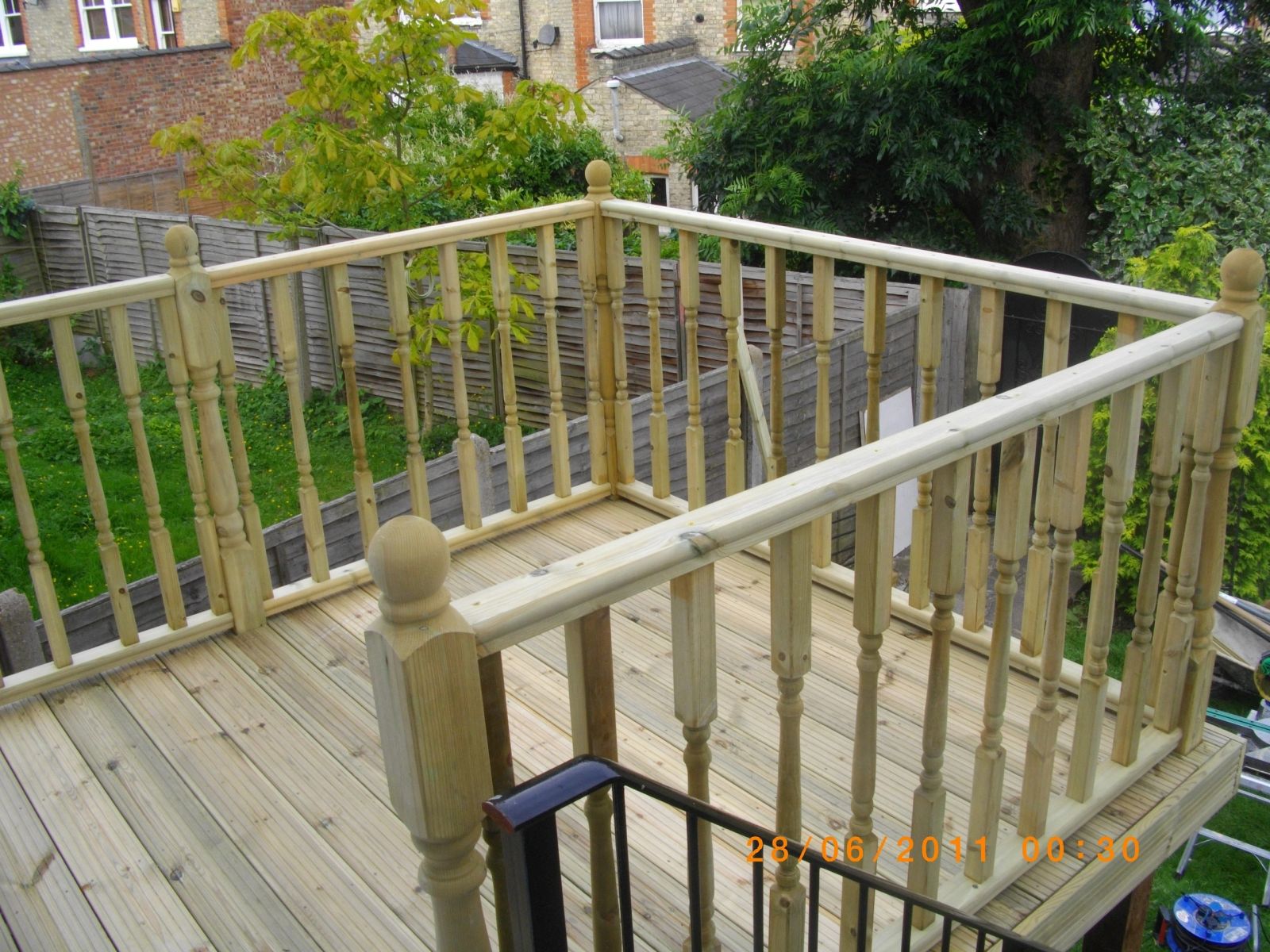
softwood garden decking installed by Capital Fencing in Stevenage (SG1)hardwood deck install installed by Capital Fencing in Stevenage (SG1)composite decking installed by Capital Fencing in Stevenage (SG1)raised garden deck installed by Capital Fencing in Stevenage (SG1)

Before you book hardwood decking in Stevenage

Planed versus sawn timber faces

Sawn timber retains the rough, slightly fibrous surface left by the mill saw, which holds paint and stain better initially but can also hold moisture and dirt in the surface fibres for longer after rain.

Planed, or PAR (planed all round), timber has a smooth, machined finish that looks tidier and is more pleasant to handle, but its closed surface can mean stain sits on top rather than soaking in, needing more frequent reapplication.

Fencing components are commonly specified as sawn for structural parts like posts and rails and planed for visible features like capping, reflecting the balance between weathering performance and finished appearance.

Moss build-up on shaded paths beside a north boundary fence

A path or step running alongside a permanently shaded north-facing fence often develops moss faster than the same surface elsewhere in the garden, since the fence itself blocks low winter sun that would otherwise help the surface dry.

This isn't strictly a fence maintenance issue but is worth mentioning to clients, since a fence replacement project is often the moment a client is already thinking about that part of the garden and receptive to fixing a related slip hazard at the same time.

A lighter, more open fence design along that boundary, where privacy allows, can let in enough additional light to measurably reduce moss growth on the path beside it.

Salt and de-icing near a pavement

A front boundary fence close to a pavement or road gritted in winter is exposed to salt spray and run-off that a rear-garden fence never sees, and that salt accelerates corrosion in untreated steel fixings and speeds up timber degradation at ground level.

Galvanised or stainless fixings resist this better than standard bright steel, and are worth specifying as standard on any boundary within a few metres of a regularly gritted surface.

Salt-laden ground also tends to stay damp for longer after a thaw, extending the period a post base is sitting in wet conditions each winter.

Fastener embedment depth in timber

A fixing's holding strength in timber depends heavily on how far its threaded or ring-shanked section penetrates into the receiving timber, not just its total length, since a screw mostly passing through a thin outer board contributes little grip in that board alone.

General guidance for screwed timber connections aims for at least the full thread length engaged in the receiving member, which for a typical fencing fixing means selecting screw length based on both boards' combined thickness rather than the visible board alone.

Under-length fixings that barely reach the receiving timber are a common, easily overlooked cause of boards or rails working loose within a season, particularly where a shorter screw was substituted for convenience during fitting.

Boundary ownership when a fence needs repair

A failing fence is a common trigger for a dormant boundary dispute, since neither neighbour has had reason to check who's actually responsible until something needs fixing. Where ownership isn't clear from the deeds, we recommend confirming it and notifying the neighbour in writing before repair work starts.

On a shared rear boundary between terraced gardens this is worth doing even for a straightforward panel swap.

Overhanging roofline drip lines onto a boundary

A fence running close to a house or outbuilding without gutters, or with a gutter that overshoots during heavy rain, can sit directly under a concentrated drip line that soaks one section of the run far more than the rest.

Over time this shows up as a localised patch of accelerated rot or algae growth that doesn't match the general weathering pattern of the rest of the boundary.

Where this can't be resolved by fixing the guttering itself, a slightly increased offset from the wall or a more resistant board section at that specific point avoids repeat localised failure.

Surface-water run-off across a boundary

Where one garden sits higher than its neighbour, or has a hard surface that sheds rain quickly, surface water often crosses the boundary line rather than staying on the plot it fell on.

A solid close-boarded fence with gravel boards set into the ground can act as an unintended dam, backing water up against the base and accelerating rot in the boards nearest the high side.

A small gap under the boards, or a French drain running parallel to the fence line, lets water pass through without saturating the timber, and is worth raising with a client before installation rather than after a wet winter.

Dust and noise control in a tight garden

Cutting timber, breaking out old concrete bases or using a petrol auger all generate noise and dust that carries further in a small enclosed garden between close-set houses than on an open plot.

Local authorities can restrict noisy work hours under the Control of Pollution Act, and even where no formal restriction applies, starting before a reasonable hour or working into the evening is one of the fastest ways to draw a neighbour complaint.

Sheeting off concrete-cutting dust and keeping cut ends away from a neighbour's washing line or open windows is a small step that avoids most of the friction on a shared boundary job.

Slotted versus morticed concrete posts

Slotted concrete posts have a continuous groove cast into two or four faces so panels slide down into the slot from above, which makes them fast to erect but means every panel in a run has to come out to replace one in the middle.

Morticed concrete posts have discrete rectangular pockets for arris rail ends instead, matching closeboard or panel construction where individual boards or panels can be replaced without disturbing the rest of the run.

The choice is largely dictated by the fencing system being used — panel fencing wants slotted posts, boarded fencing wants morticed — rather than being a free preference at quote stage.

Siberian larch as a fencing timber

Siberian larch grows slowly in a cold climate, which produces a dense, tight-grained timber with better natural durability than most fast-grown European softwoods, without needing pressure treatment in many applications.

It's noticeably harder to nail and screw without pre-drilling than typical treated pine, and a nail driven in at the wrong angle is more likely to split the board than sink cleanly.

Left unfinished it weathers to a silvery grey similar to cedar, though its higher density means it holds up somewhat better to knocks and general handling on site.

Composite thermal expansion

Wood-plastic composite boards expand and contract with temperature considerably more than solid timber, since the polymer content responds more to heat than wood fibre does on its own.

Manufacturers specify a mandatory expansion gap at both board ends and between boards laid end to end, and skipping that gap during installation is one of the most common causes of composite decking or fencing buckling in hot weather.

Dark-coloured composite absorbs more solar heat than lighter shades and expands correspondingly more, so the expansion allowance recommended for a dark board is often greater than for a pale one of the same profile.

Cutting and resealing treated timber ends on site

Any cut made to pressure-treated timber on site exposes an untreated core at that face, since preservative penetration doesn't reach the centre of most sections, and that cut end is then the most vulnerable point on the whole piece.

Brushing a compatible end-grain preservative onto every site cut before the piece is fixed restores a working level of protection at minimal extra time, and is worth building into the cutting process rather than treated as optional.

Post tops cut to length on site are a common place this gets missed, since the cut is often made last, after the post is already concreted in, when it's easy to move on to the next post without going back to treat the cut.

Retrospective applications and planning appeals

A retrospective planning application can be made for work already carried out without permission, and is assessed against exactly the same policies as if it had been applied for in advance, so there's no guarantee of a more lenient outcome simply because the fence already exists.

If a retrospective application or an enforcement notice is refused or unfavourable, there's a right of appeal to the Planning Inspectorate, but appeals take months to determine and the structure may need to remain unchanged or be altered in the meantime depending on the notice.

It's worth noting that a refused retrospective application still leaves the underlying breach live, so appealing or reapplying with a revised, compliant design is often quicker than contesting the principle of refusal.

Schools and nurseries

Boundary fencing around a school or nursery has a safeguarding function as well as a security one — height, anti-climb detailing and gate self-closing mechanisms are usually specified to stop children leaving unsupervised as much as to keep intruders out.

Work on an occupied site needs to be sequenced around the school day, with noisy or access-blocking tasks scheduled for after hours, weekends or holiday periods rather than during term-time drop-off and pick-up.

Any gaps at ground level under a boundary fence matter more here than on a typical domestic job, since a small child can get through a gap an adult wouldn't notice.

Hardwood decking in Stevenage is quoted by species and thickness, with the fixing method stated — secret-fix costs more in labour and leaves a clean board face. Hardwood Decking across SG1, SG2 is one of our regular runs. We'll quote honestly, tell you if hardwood decking isn't the right answer for your garden, and book the job in within a week or two of a signed quote. Recent work on Shephall Way and Lytton Way. We orient jobs off Six Hills tumuli.

Get In Touch

Get My Free Quote — 24h Response

No callout fee · Free site visit · Friendly local team covering London & Hertfordshire.

Call us
07885907880
or 02036484746
Email
capital_fencing@yahoo.com
WhatsApp
Message us anytime
Area
London & Hertfordshire
Payment
Card payments accepted

Pay by debit or credit card, bank transfer or cash once the work and price are agreed. No deposit taken online.

Request a Free Quote

We'll get back to you within 24 hours.

Free Site Visit No Callout Fee
Call WhatsAppQuote