London & Hertfordshire Free Site Visit

Chingford: Fencing & Decking Within Waltham forest

Postcode E4 takes in Chingford, a pocket of waltham forest under Waltham Forest Council where 1930s semis and post-war detached homes on the epping forest edge predominates and gardens run generous rear gardens, several backing onto epping forest with tpos. Locally, the detail that shapes most quotes is epping forest-adjacent plots need stock-proof timber and no engineered materials at the forest boundary. Aligning hinges before final gate fixing: Hinges fixed slightly out of vertical alignment with each other make a gate bind or swing shut under its own weight rather than staying wherever it's left, even if each hinge individually looks correctly fitted. Propping the gate at the intended finished height and checking the gap is even top and bottom before final fixing catches most alignment problems while they're still easy to adjust. Boundary responsibilities under an agricultural tenancy: Where land is let under an agricultural tenancy, responsibility for boundary fencing can sit with the tenant rather than the landowner, depending on the specific tenancy agreement's terms.

Book a site visit in Chingford

A short walk-round lets us measure, spec and quote in writing before you commit.

Garden boundary work in Chingford
E4

Chingford is part of our Waltham Forest coverage under Waltham Forest Council, with its own property mix and its own recurring brief.

Property & garden in Chingford

Property: 1930s semis and post-war detached homes on the Epping Forest edge

Gardens: generous rear gardens, several backing onto Epping Forest with TPOs

Epping Forest-adjacent plots need stock-proof timber and no engineered materials at the forest boundary

Nearest arterial: A112 / A1069, M25 J26 / M11 J4. Served from Chingford (Greater Anglia terminus). Nearby commercial anchors: Station Road, Old Church Road.

Practical points for boundary work in Chingford

Aligning hinges before final gate fixing

Hinges fixed slightly out of vertical alignment with each other make a gate bind or swing shut under its own weight rather than staying wherever it's left, even if each hinge individually looks correctly fitted.

Propping the gate at the intended finished height and checking the gap is even top and bottom before final fixing catches most alignment problems while they're still easy to adjust.

Loosely fitting the top hinge first, checking swing and clearance, and only then fully fixing both hinges is a more forgiving sequence than fully fixing both at once and finding the gate doesn't swing cleanly.

Boundary responsibilities under an agricultural tenancy

Where land is let under an agricultural tenancy, responsibility for boundary fencing can sit with the tenant rather than the landowner, depending on the specific tenancy agreement's terms.

This differs from the usual residential landlord and tenant position, reflecting the different statutory framework agricultural tenancies operate under.

Checking the tenancy agreement itself is the only reliable way to establish who's actually responsible for a specific boundary on let agricultural land.

Timber grading marks

Structural and treated timber is typically stamped with a grading mark showing the strength class, treatment use class, and sometimes the treatment company's code, which is the practical way to verify what was actually supplied rather than taking a description on trust.

For fencing, the marks that matter most day to day are the use class (confirming it's rated for the ground or above-ground exposure intended) and a visible batch or treatment date, useful if a defect needs tracing back to a supplier.

Unmarked or unstamped 'treated' timber from an unclear source is harder to verify and is one of the more common shortcuts on cut-price quotes.

Fastener embedment depth in timber

A fixing's holding strength in timber depends heavily on how far its threaded or ring-shanked section penetrates into the receiving timber, not just its total length, since a screw mostly passing through a thin outer board contributes little grip in that board alone.

General guidance for screwed timber connections aims for at least the full thread length engaged in the receiving member, which for a typical fencing fixing means selecting screw length based on both boards' combined thickness rather than the visible board alone.

Under-length fixings that barely reach the receiving timber are a common, easily overlooked cause of boards or rails working loose within a season, particularly where a shorter screw was substituted for convenience during fitting.

Gate hinge material and load ratings

Gate hinges are rated by the load they can bear without excessive wear or sag, and that rating depends on the hinge's material, its pin diameter and the bearing surface area between the moving parts.

A heavy timber gate on a lightweight hinge designed for a garden gate will wear the pin and bushing far faster than the same hinge on a lighter gate, eventually developing a visible droop at the latch side.

Stainless steel or greased bronze bushings resist wear better than plain steel-on-steel hinges, particularly on gates opened frequently, where repeated friction is the main driver of hinge wear rather than corrosion.

Feather-edge versus overlap panel construction

Feather-edge fencing uses individual tapered boards nailed vertically to horizontal arris rails, built up on site board by board, which makes it easier to repair a single damaged board without disturbing the rest of the run.

Pre-made overlap or lap panels are faster to install since they arrive as a complete unit, but a single split board usually means replacing the whole panel rather than one board.

Feather-edge also tends to be the sturdier choice on an exposed or long run, since the individual boards and rail structure resist wind loading better than a thinner factory panel.

Services in Chingford

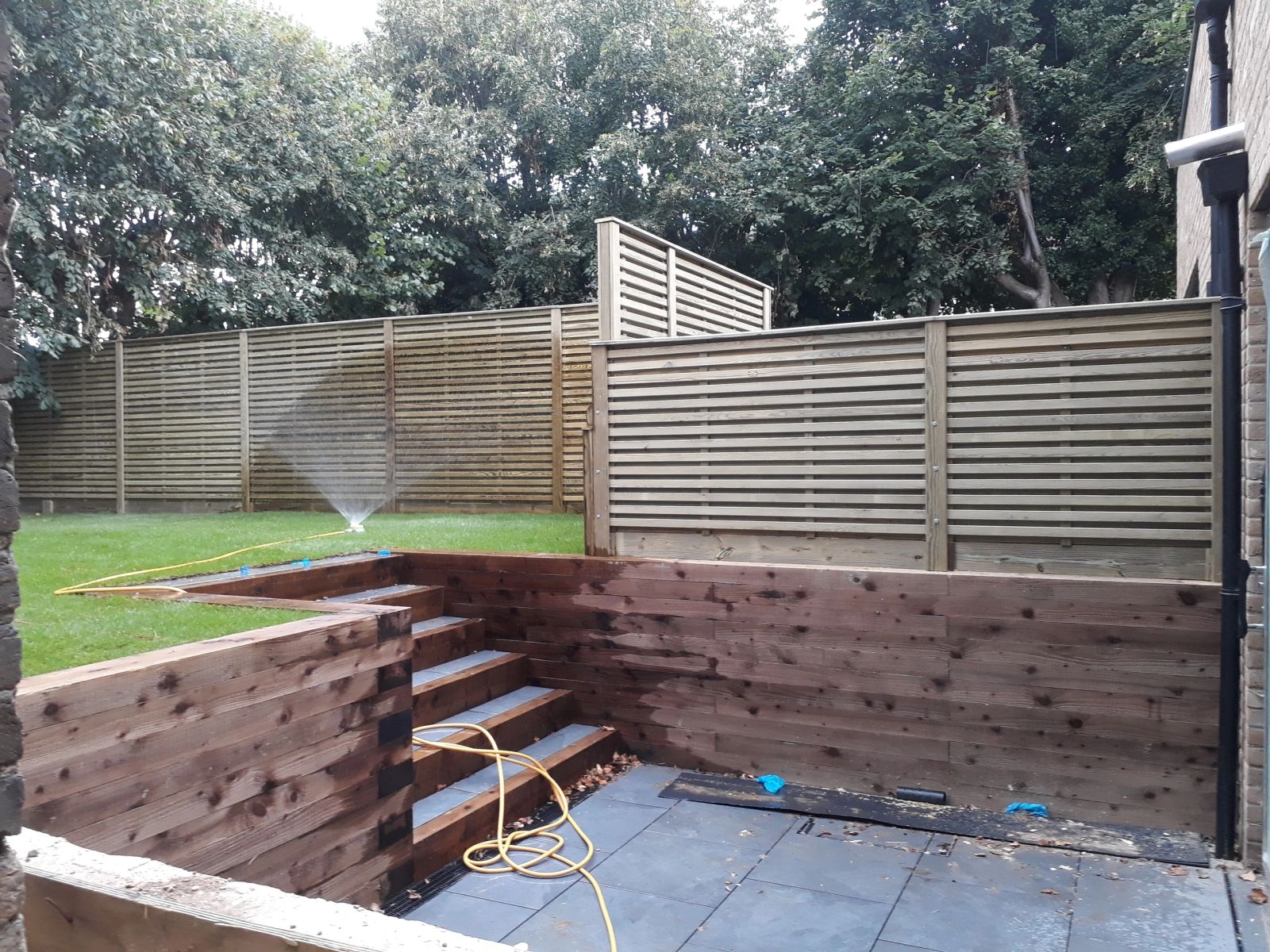
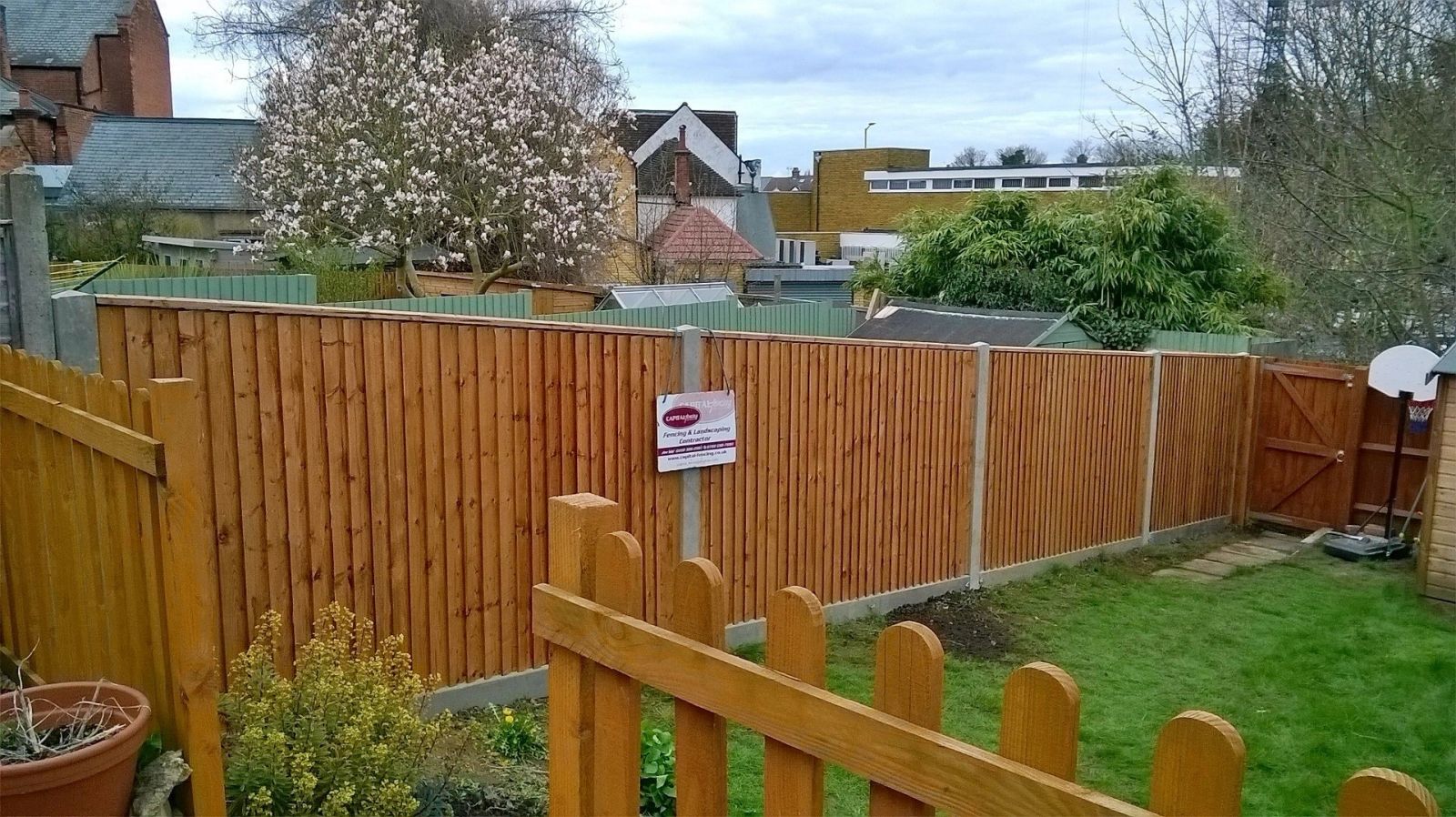
Capital Fencing project in Chingford, E4Capital Fencing project in Chingford, E4Capital Fencing project in Chingford, E4

Chingford — frequently asked

What should I know about timber grading marks in Chingford?

Structural and treated timber is typically stamped with a grading mark showing the strength class, treatment use class, and sometimes the treatment company's code, which is the practical way to verify what was actually supplied rather than taking a description on trust. For fencing, the marks that matter most day to day are the use class (confirming it's rated for the ground or above-ground exposure intended) and a visible batch or treatment date, useful if a defect needs tracing back to a supplier. Unmarked or unstamped 'treated' timber from an unclear source is harder to verify and is one of the more common shortcuts on cut-price quotes.

What areas of Chingford do you cover?

We cover all of Chingford (E4), under Waltham Forest Council.

How does "gate hinge material and load ratings" affect fencing or decking work in Chingford?

Gate hinges are rated by the load they can bear without excessive wear or sag, and that rating depends on the hinge's material, its pin diameter and the bearing surface area between the moving parts. A heavy timber gate on a lightweight hinge designed for a garden gate will wear the pin and bushing far faster than the same hinge on a lighter gate, eventually developing a visible droop at the latch side. Stainless steel or greased bronze bushings resist wear better than plain steel-on-steel hinges, particularly on gates opened frequently, where repeated friction is the main driver of hinge wear rather than corrosion.

What should I know about feather-edge versus overlap panel construction in Chingford?

Pre-made overlap or lap panels are faster to install since they arrive as a complete unit, but a single split board usually means replacing the whole panel rather than one board. Feather-edge also tends to be the sturdier choice on an exposed or long run, since the individual boards and rail structure resist wind loading better than a thinner factory panel. Feather-edge fencing uses individual tapered boards nailed vertically to horizontal arris rails, built up on site board by board, which makes it easier to repair a single damaged board without disturbing the rest of the run.

Fastener embedment depth in timber — what does that mean for a job in Chingford?

A fixing's holding strength in timber depends heavily on how far its threaded or ring-shanked section penetrates into the receiving timber, not just its total length, since a screw mostly passing through a thin outer board contributes little grip in that board alone. General guidance for screwed timber connections aims for at least the full thread length engaged in the receiving member, which for a typical fencing fixing means selecting screw length based on both boards' combined thickness rather than the visible board alone. Under-length fixings that barely reach the receiving timber are a common, easily overlooked cause of boards or rails working loose within a season, particularly where a shorter screw was substituted for convenience during fitting.

What's the typical garden like in Chingford?

Generous rear gardens, several backing onto Epping Forest with TPOs is typical, alongside 1930s semis and post-war detached homes on the epping forest edge.

A112 / A1069 runs through this pocket, with Chingford (Greater Anglia terminus) nearby. Timber grading marks: Structural and treated timber is typically stamped with a grading mark showing the strength class, treatment use class, and sometimes the treatment company's code, which is the practical way to verify what was actually supplied rather than taking a description on trust. For fencing, the marks that matter most day to day are the use class (confirming it's rated for the ground or above-ground exposure intended) and a visible batch or treatment date, useful if a defect needs tracing back to a supplier. Fastener embedment depth in timber: A fixing's holding strength in timber depends heavily on how far its threaded or ring-shanked section penetrates into the receiving timber, not just its total length, since a screw mostly passing through a thin outer board contributes little grip in that board alone.

Get In Touch

Get My Free Quote — 24h Response

No callout fee · Free site visit · Friendly local team covering London & Hertfordshire.

Request a Free Quote

We'll get back to you within 24 hours.

Free Site Visit No Callout Fee
Call WhatsAppQuote