Practical points for boundary work in Walthamstow
How we measure and quote a job
A proper quote starts with a site visit rather than a phone estimate — measuring the actual run length, checking ground conditions with a probe or short trial dig, and confirming access before any numbers go on paper.
That's the only reliable way to catch the things that change a price: buried obstructions, a slope that needs stepping, a shared boundary that needs the neighbour's agreement, or a gate opening that's slightly out of square.
A written quote following that visit should specify post spacing, post and panel material, base type and any extras like gravel boards or capping, so there's nothing to renegotiate once the job starts.
Industrial units and compounds
Industrial estate boundaries are frequently specified as high-security palisade or welded mesh rather than timber, both for perimeter security and because timber degrades faster next to hardstanding and vehicle movement.
A shared service road between units means access for fencing plant has to be coordinated with other tenants using the same route, and any material laydown area needs agreeing so it doesn't block emergency access.
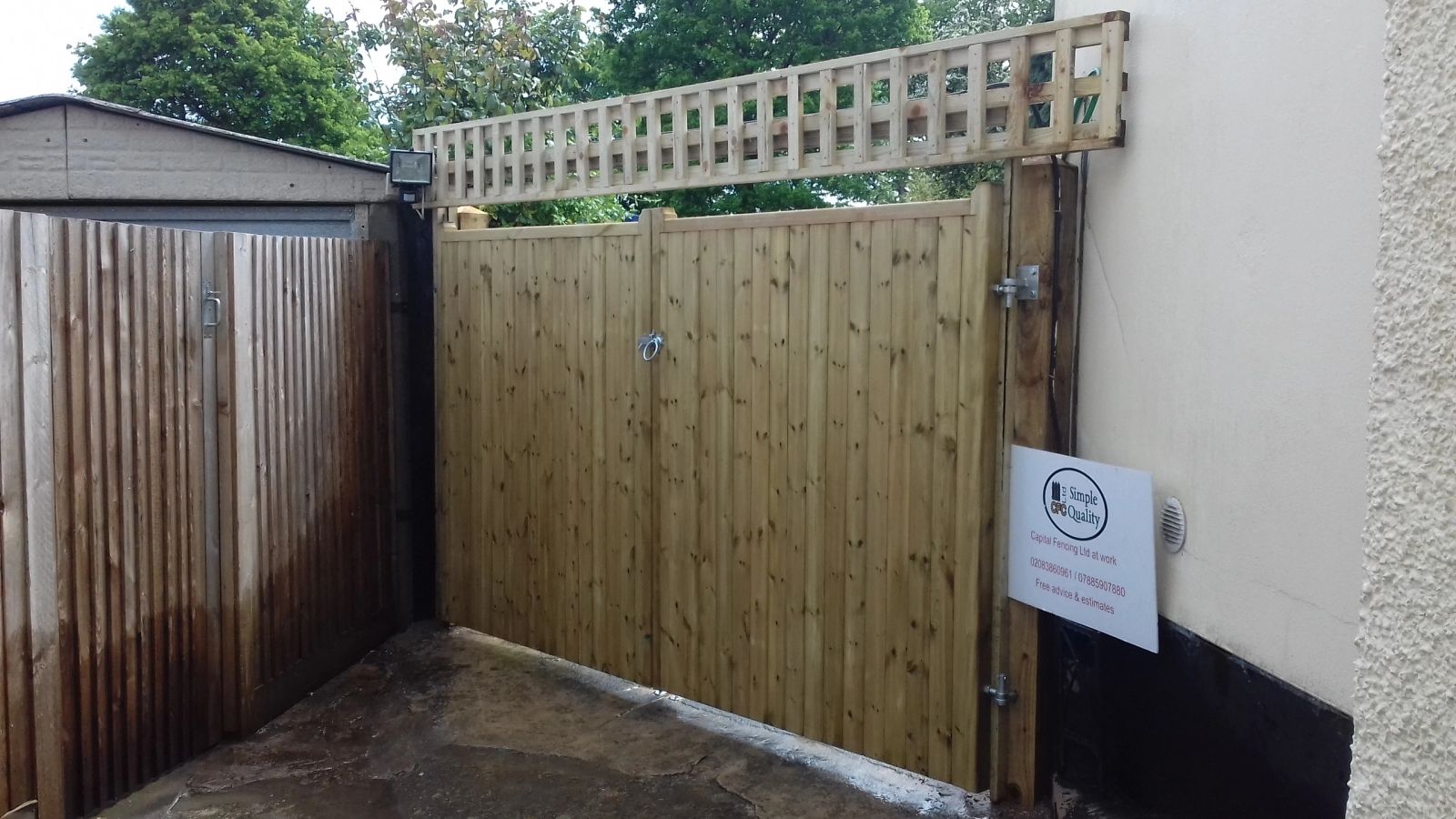
Compound gates wide enough for HGV access are a different specification challenge from a domestic driveway gate, needing heavier hinges, a track or wheel to carry the weight, and clear signage where they open across a shared road.
Fencing around front-garden parking
Converting part of a front garden to off-street parking usually needs a dropped kerb from the highway authority, and any remaining boundary fencing needs to respect the same visibility and access rules as the parking itself.
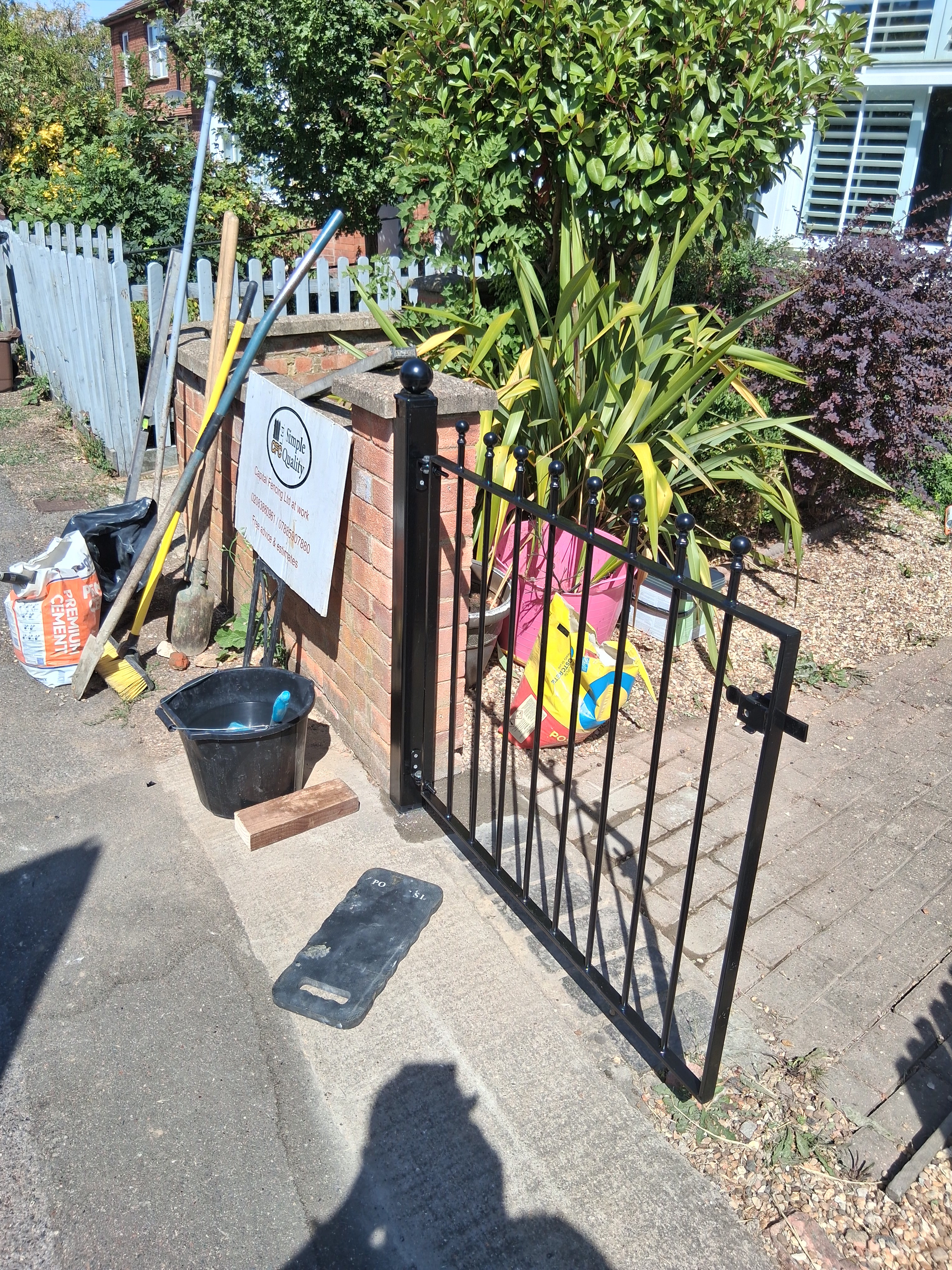
A low wall or open railing at the front, rather than a solid fence, is common on parking conversions so the parked vehicle doesn't look boxed in and sightlines for reversing onto the road stay clear.
Permeable paving is often a planning condition on larger front-garden parking areas to manage surface water run-off, which can indirectly affect where a boundary fence's own drainage needs to go.
Aligning mortices for arris rails between posts
Concrete posts with pre-formed mortice slots fix the height of each arris rail at manufacture, so the posts themselves have to be set at consistent heights and spacing for the rails to run in level without twisting.
Timber posts morticed on site give more flexibility to adjust rail height locally, but the mortice needs cutting square and to a consistent depth so the rail seats fully rather than sitting proud and under strain.
A rail forced into a mortice that's slightly too shallow or misaligned puts ongoing stress on the joint, which is a common cause of a joint splitting within the first year even though the timber itself is sound.
Ring-shank versus smooth nails
Ring-shank nails have a series of raised rings machined into the shank, which bite into surrounding timber fibres as they're driven and resist being pulled back out far more effectively than a plain smooth shank.
That extra grip matters on fencing components subject to repeated movement from wind load, such as feather-edge boards on rails, where smooth nails can gradually work loose over several seasons of flexing.
The trade-off is that ring-shank nails are harder to remove cleanly for repairs, often splitting the timber around them rather than sliding out, whereas smooth nails can usually be levered free without damaging the board.
Powder-coat pre-treatment
Powder coating is only as durable as the surface preparation beneath it, and steel that hasn't been degreased, and often chemically pre-treated with a phosphate or chromate conversion coating, will let the powder coat lift and blister within a season or two.
On galvanised steel specifically, a specialist pre-treatment is needed because standard powder coat doesn't bond reliably to a plain zinc surface without it, which is why powder-coated galvanised railings are a distinct product from simply galvanised steel painted afterwards.
Once properly applied and cured, the powder coat itself is a hard, continuous barrier finish that resists chipping better than wet paint, though any breach down to bare metal will corrode locally without a way to self-heal.