London & Hertfordshire Free Site Visit
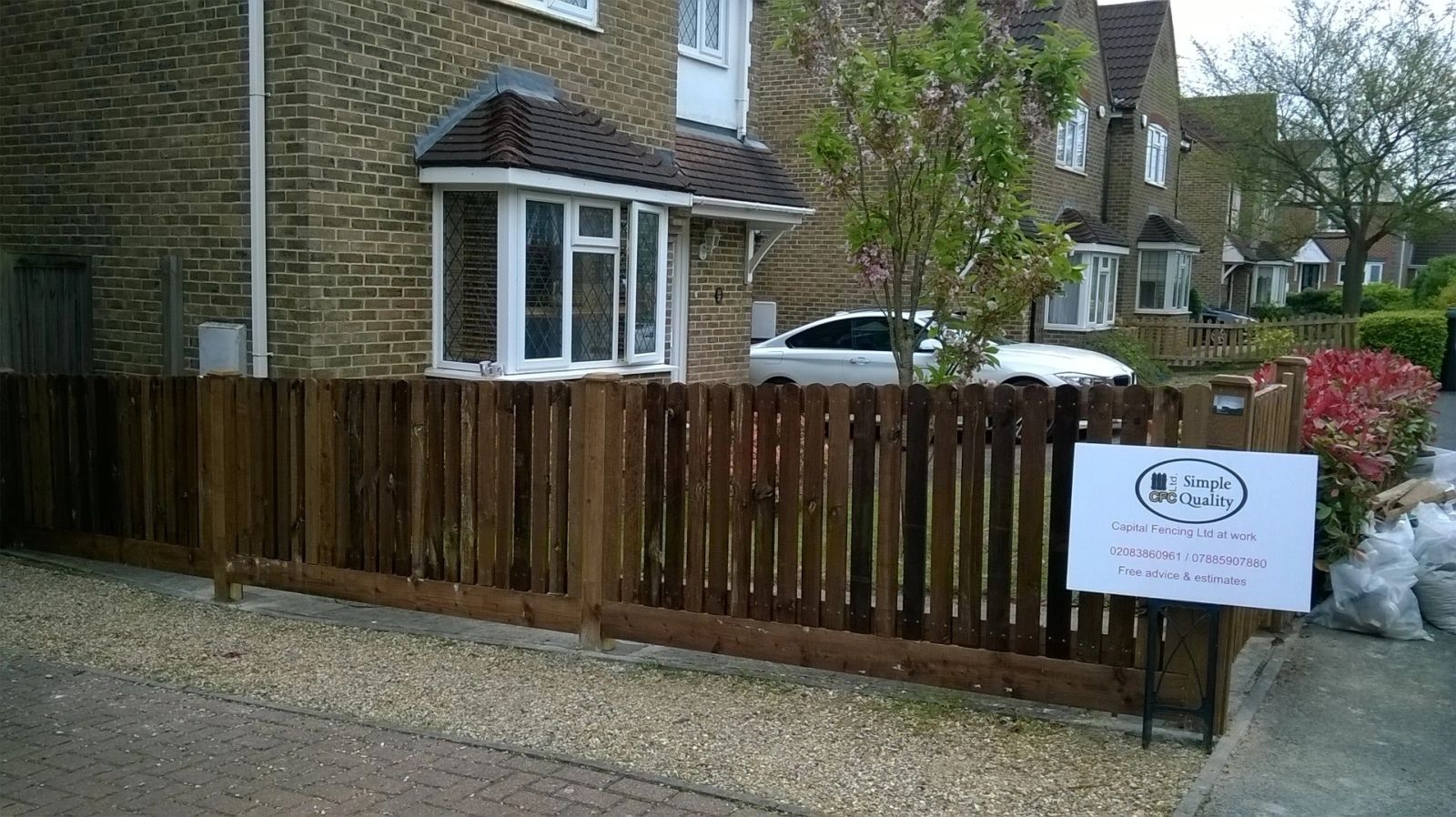
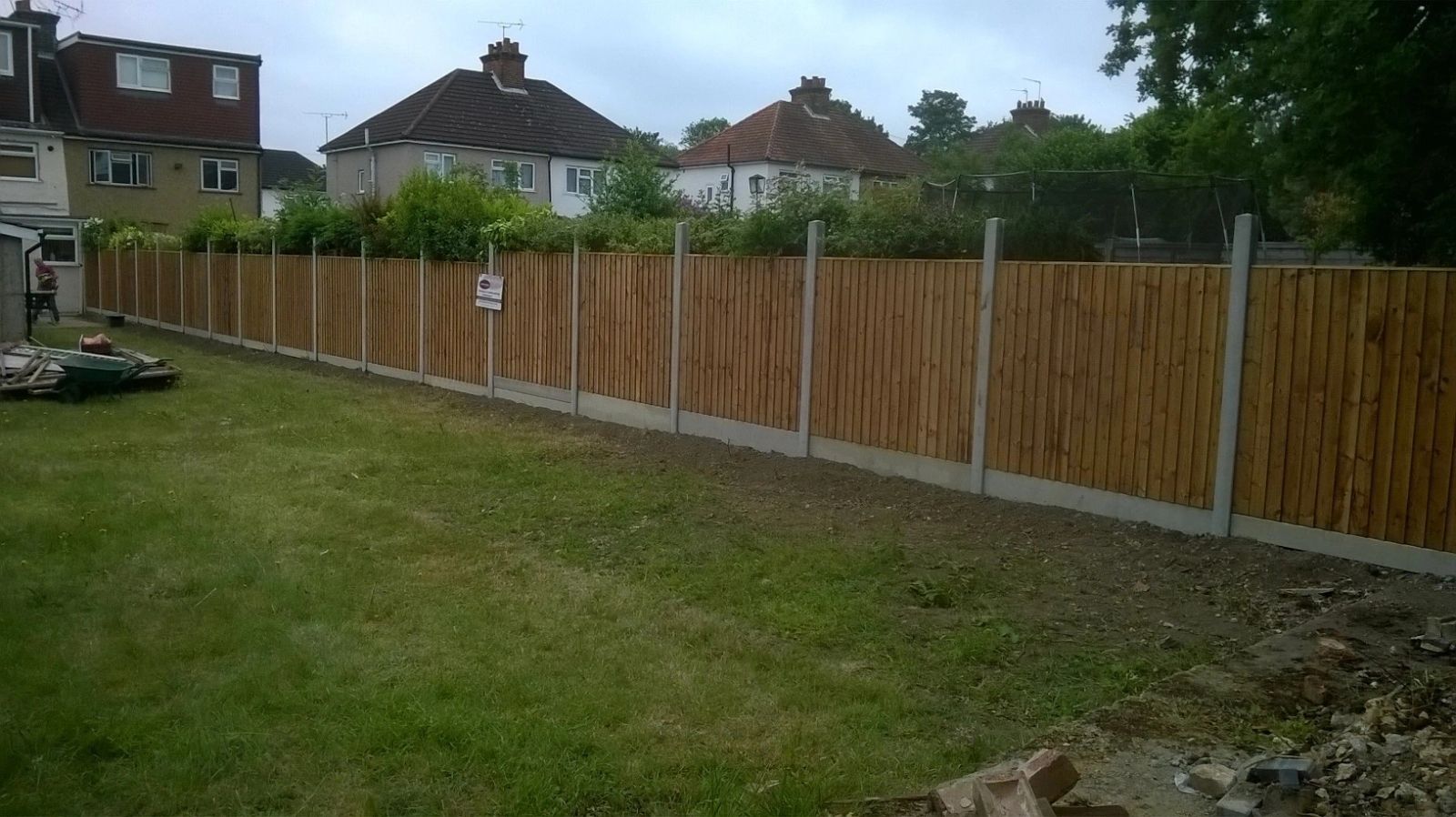
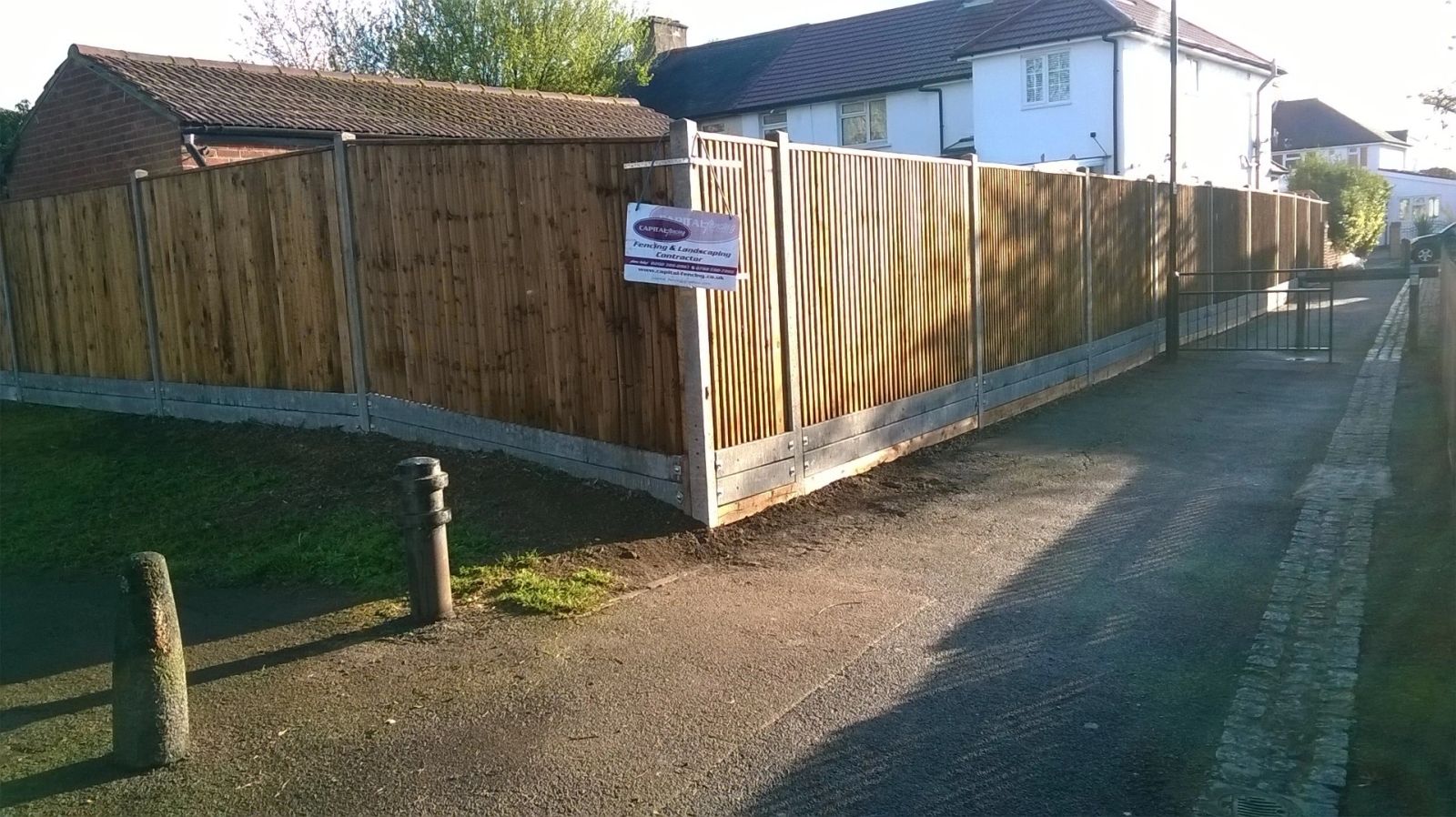
closeboard fence run installed by Capital Fencing in Waltham Forest (E4)
Waltham Forest · E4 / E10 / E11 / E17

Local new-build boundary fencing specialist covering Waltham Forest & hackney

Capital Fencing installs new-build boundary fencing across Waltham Forest and out toward hackney and haringey. What separates a new-build boundary fencing job from a standard boundary is the detail: replacing developer 4ft overlap panels with 6ft closeboard on concrete posts. That's the work, not the marketing. Roads such as Forest Road and Wood Street are typical of the local layout. Walthamstow Wetlands is a useful local reference point. The borough's Mini-Holland cycling scheme has altered traffic layouts and narrowed some side streets in Walthamstow, which changes where a van can unload.

Capital Fencing installs new-build boundary fencing across Waltham Forest and out toward hackney and haringey. What separates a new-build boundary fencing job from a standard boundary is the detail: replacing developer 4ft overlap panels with 6ft closeboard on concrete posts. That's the work, not the marketing. Roads such as Forest Road and Wood Street are typical of the local layout. Walthamstow Wetlands is a useful local reference point. The borough's Mini-Holland cycling scheme has altered traffic layouts and narrowed some side streets in Walthamstow, which changes where a van can unload.

Default spec

How we build new-build boundary fencing in Waltham Forest

6ft closeboard on concrete posts, 150mm gravel boards, mid-rail capped — a genuine 15-year replacement for the developer's 4-year panel. On Waltham Forest jobs we adjust for wind funnelled off the lea valley regularly takes out weak panel fences on the eastern boundaries.

Property mix locally: Victorian terraces across Walthamstow and Leyton, 1930s semis in Chingford, and post-war estates around Leyton. Typical gardens: mid-length rear gardens, several sloping toward the Lea Valley with heavy clay. Postcodes we regularly service: E4, E10, E11, E17.

Why this spec, for buyers on modern estates upgrading the developer's minimum-spec boundary after handover

  • no more callouts every winter — the standard developer spec fails inside four years and we know exactly what fails
  • we work around plot-boundary pegs and drainage runs that new-build gardens hide badly
  • quotes broken down so you can see exactly where the money over the developer spec goes

Where new-build boundary fencing isn't the right answer

  • estates still inside a developer snagging period where the boundary is their liability to fix
  • estates with Section 106 covenants on boundary appearance — check the deeds first

Typical new-build boundary fencing briefs in Waltham Forest

  • raising a shared boundary height with neighbour agreement, keeping to permitted development
  • replacing developer 4ft overlap panels with 6ft closeboard on concrete posts

New-Build Garden Fencing FAQs — Waltham Forest

Do I need permission to raise a new-build boundary?

On new-build boundary fencing jobs in Waltham Forest (E4), our default answer is: 6ft closeboard on concrete posts, 150mm gravel boards, mid-rail capped — a genuine 15-year replacement for the developer's 4-year panel. We'll walk you through no more callouts every winter — the standard developer spec fails inside four years and we know exactly what fails on the site visit before you commit.

Can new panels be fitted to existing developer posts?

Across Waltham Forest we spec around wind funnelled off the lea valley regularly takes out weak panel fences on the eastern boundaries, so on new-build boundary fencing that usually means 6ft closeboard on concrete posts. For context: we work around plot-boundary pegs and drainage runs that new-build gardens hide badly. Measured, quoted and installed by the same small crew.

Can I replace the developer's fence in the first two years?

Waltham Forest coverage means we can survey most E4 addresses inside a week — buyers on modern estates upgrading the developer's minimum-spec boundary after handover. The honest trade-off is putting new closeboard on the existing developer posts — those are the part that failed first, not the panels — which is exactly what our default spec designs out.

Do you handle the neighbour conversation on a shared boundary?

Practically: replacing developer 4ft overlap panels with 6ft closeboard on concrete posts. That's the Waltham Forest version of this job, not a generic one. We'll walk you through no more callouts every winter — the standard developer spec fails inside four years and we know exactly what fails on the site visit before you commit.

What's the maximum height without planning on a new build?

On new-build boundary fencing jobs in Waltham Forest (E4), our default answer is: 6ft closeboard on concrete posts, 150mm gravel boards, mid-rail capped — a genuine 15-year replacement for the developer's 4-year panel. For context: we work around plot-boundary pegs and drainage runs that new-build gardens hide badly. Measured, quoted and installed by the same small crew.

Recent new-build garden fencing work
closeboard fence run installed by Capital Fencing in Waltham Forest (E4)panel fence install installed by Capital Fencing in Waltham Forest (E4)trellis-topped fence installed by Capital Fencing in Waltham Forest (E4)bespoke decorative fence installed by Capital Fencing in Waltham Forest (E4)

Site notes: new-build garden fencing in E4

Boundary fencing on an allotment site

An allotment site boundary is often lower-spec than a commercial compound but still needs to deter casual theft of tools, produce and sheds, so a stock fence or low chain-link topped with a single strand of barbed wire is a common, proportionate choice.

Individual plot gates within the site are usually simpler again, since the main perimeter is doing the primary security work and plot-level fencing is more about defining boundaries between tenants.

Closing gaps and finger-trap risk

A gap left between a closing gate and its post or an adjacent leaf can trap fingers, particularly at a height a child would reach, and this is worth checking on any gate serving a garden used by young children.

Closing plates or adjusted hinge geometry can reduce the gap without replacing the gate itself.

Tree roots and Tree Preservation Orders

Mature trees close to a boundary do two things to a fence: their roots can heave a post out of true over several years, and if the tree is protected by a Tree Preservation Order or sits in a conservation area, digging within its root protection area needs care and sometimes council sign-off.

Where roots are already present we'll usually hand-dig around them rather than auger through, and set the post slightly off the direct line if that avoids cutting a structural root.

It's worth checking with the local authority's tree officer before any excavation near a TPO tree, since unauthorised root damage carries the same penalties as felling the tree itself.

Fencing above a basement lightwell or retaining structure

Where a boundary fence sits directly above a basement lightwell, sunken patio, or retaining wall with a significant drop on one side, the fence effectively doubles as a safety barrier and needs a height and gap specification suited to that fall risk rather than a standard garden boundary spec.

Post fixings in this situation often need to tie into the retaining structure itself rather than a simple ground-set post, which is a different engineering detail to a standard concrete-in post.

This is worth identifying clearly at survey stage, since treating it as a routine fence replacement without accounting for the drop below is a genuine safety oversight.

Combining a windbreak hedge with a lighter fence

Planting a windbreak hedge or shrub line on the exposed side of a fence reduces the wind load the fence structure has to carry directly, since the vegetation absorbs and diffuses much of the force before it reaches the panels.

This takes several years to become effective as the planting matures, so it's usually specified alongside a fence built to cope with full exposure initially, with the expectation that loads reduce over time rather than the reverse.

It's a useful option where a client wants a lighter, less heavily-specified fence than pure exposure would otherwise demand, provided they accept the interim years before the hedge does its share of the work.

Boards splitting along the line of the fixing nail

A board that splits at a nail has usually been fixed too close to its edge or fixed with the nail driven into an existing check in the grain, and the split then runs further with each wet-dry cycle until the board finally lets go.

Repair is either refixing with screws set further from the edge and pre-drilled to avoid a repeat split, or replacing the board outright where the split has already reached the board's full width.

Thumb latch lever and bar wear

A thumb latch lifts an internal bar via a lever operated from one or both faces of the gate, and wear typically shows up as play at the pivot pin or a lever that no longer lifts the bar high enough to clear the keep.

Because the mechanism is simple, most thumb latch faults can be corrected by re-fixing the pivot or reshaping the bar's resting angle rather than replacing the whole latch.

Cane bolts on double gates

A cane bolt is a long sliding bolt dropped into a separate ground socket some distance below the gate, giving more holding leverage against wind or knock than a short drop bolt on a wide double-gate leaf.

They're common on wider vehicle gates where a standard drop bolt alone doesn't give enough resistance to the leaf swinging in wind.

Weather windows for concrete and timber work

Concrete shouldn't be mixed or poured in a hard frost, since freezing water in the mix before it cures weakens the finished base permanently rather than just delaying the cure.

Heavy or prolonged rain during digging can turn a clean-sided post hole into a collapsing, waterlogged trench within an hour on clay or silty ground, which is why digging is often timed around a forecast dry spell rather than started regardless.

Staining or oiling timber needs a dry surface and typically a minimum air temperature to cure properly, so that stage of a job is usually scheduled separately from the wetter groundwork rather than done back-to-back on the same visit.

Fencing around front-garden parking

Converting part of a front garden to off-street parking usually needs a dropped kerb from the highway authority, and any remaining boundary fencing needs to respect the same visibility and access rules as the parking itself.

A low wall or open railing at the front, rather than a solid fence, is common on parking conversions so the parked vehicle doesn't look boxed in and sightlines for reversing onto the road stay clear.

Permeable paving is often a planning condition on larger front-garden parking areas to manage surface water run-off, which can indirectly affect where a boundary fence's own drainage needs to go.

Mesh infill security gates

A mesh security gate uses a welded steel mesh panel within a frame rather than solid boarding, giving visibility through the gate while still resisting climbing, and the mesh-to-frame weld or clip fixing is the usual point of failure rather than the frame itself.

A mesh panel that's come loose from its frame at one corner will often rattle before it fully detaches, which is worth catching early.

Sliding gate track and roller wear

A sliding gate runs along a ground-mounted track or is carried on top rollers against a guide rail, and debris or corrosion in the track is one of the most common causes of a sliding gate becoming stiff or jamming partway through its travel.

Clearing and checking the track for level is usually the first step in diagnosing a sliding gate fault before assuming the rollers themselves need replacing.

Adjustable bolt-on hinges for metal gates

Adjustable bolt-on hinges, common on metal driveway gates, let the gate's height and pitch be fine-tuned after fitting via a bolt and welded bracket rather than needing the hinge repositioned entirely.

These are useful where ground level or post position isn't perfectly fixed, since small adjustments can be made without unbolting the gate from the post.

Working around a soil vent pipe on the boundary

A soil vent pipe running up close to a boundary wall or fence line needs clearance to stay serviceable and to avoid trapping odours or condensation against the timber.

Where a fence panel would otherwise sit directly against the pipe, a narrow gap or a purpose-cut notch in the panel or gravel board keeps the pipe accessible without leaving a large unsightly space either side.

Fixing a post too close to a vent pipe can also make future pipe repairs or clearance rodding awkward, so the post position is usually set slightly back from the pipe run rather than tight against it.

Hardwood options for gates

Gates take more racking stress than a fixed fence panel, opening and closing on a single edge, which is why hardwoods such as oak or iroko are often specified for gates even where the adjoining fence is softwood.

Oak's natural durability means it can be left untreated and will weather to silver-grey, but it also moves seasonally and can stain surrounding masonry with tannin run-off in wet weather, which is worth flagging before it's fitted next to a pale render or paving.

Hardwood gate frames are usually built with mortice-and-tenon joints rather than the simple nailed or bracketed joints acceptable on a softwood panel, since the joint has to resist years of racking without loosening.

Refitting a panel blown clear of its post clips

Slotted-post clip systems let a panel lift straight up and out under strong gusts once the clip lip has worn or bent slightly, which is a common failure on exposed corner bays rather than a sign the panel itself is faulty.

Refitting usually needs the clips checked for wear and sometimes replaced with a deeper or reinforced pattern before the same panel or a new one is dropped back in, since refitting into a worn clip just repeats the failure.

Centre drop bolts on a double-leaf gate

A double swing or sliding gate needs one leaf fixed with a drop bolt into a socket set in the ground or a threshold plate, giving the pair a solid centre point to lock against rather than relying on the latch alone to hold both leaves.

The drop bolt socket needs to stay clear of debris and frost heave to keep engaging properly, and it's a common item that gets missed on a routine gate check.

Hedge disputes and the high hedge complaint route

A hedge over 2m tall made up mainly of evergreen or semi-evergreen species can be the subject of a formal 'high hedge' complaint to the local council under the Anti-social Behaviour Act 2003, but only after direct attempts to resolve it with the neighbour have failed and a fee is paid.

The council can then issue a remedial notice requiring the hedge to be reduced to a specified height, enforceable in the same way as a planning enforcement notice, though it typically won't require complete removal.

This process is separate from ordinary fence or boundary work and doesn't apply to deciduous hedges or single ornamental trees, which fall under general nuisance and tree law instead.

Dealing with concealed or unusual legacy fixings

Older fence runs sometimes used fixings that aren't common today, such as coach-screws recessed and pelleted over, which take longer to locate and remove than a standard exposed nail or screw.

Identifying the fixing type before starting a repair avoids damaging surrounding sound timber by forcing a component free with the wrong method.

Contaminated or capped land general caution

Land with a history of industrial, landfill or heavy commercial use can be capped with a clean soil or membrane layer over contaminated material below, installed specifically to prevent exposure, and breaking through that cap with a post hole risks disturbing what it was designed to contain.

Signs worth treating with caution include unusually dark or ashy soil, chemical odours, unexpected debris at shallow depth, or a site known to have had a previous industrial use even if long redeveloped for housing.

Where contamination is a realistic possibility, checking any available site history or environmental report before excavating is a sensible precaution, and hand-digging with careful observation of the spoil is safer than blind augering.

Decking joist spacing and spans

Joist spacing under a deck is set by the board being used and the load expected, not fixed universally — timber boards typically need joists at closer centres than the equivalent composite board, because composite is generally less stiff across a span.

Manufacturers publish maximum joist spacing for their composite boards, and it's shorter still where boards run diagonally rather than square to the joists, since a diagonal run effectively increases the unsupported span between fixings.

Undersized joist spacing shows up as bounce or long-term sag between joists well before it becomes a safety issue, so it's worth checking spacing against the actual board spec rather than a generic rule of thumb.

Realistic maintenance intervals

Pressure-treated softwood fencing generally wants a re-application of preservative or stain every two to three years to keep the surface protected, more often on a south-facing run that gets constant UV exposure.

Gate hinges and latches are worth checking annually for movement or corrosion, since a small adjustment caught early avoids the gate racking out of square and needing a rebuild.

Decking boards benefit from a yearly clean to clear leaf litter and algae from the gaps, which is what actually causes most of the slipperiness people blame on the timber itself.

New-Build Garden Fencing across E4, E10, E11, E17 is a regular run for us. We'll quote honestly, tell you if new-build boundary fencing isn't the right answer for your site, and book the job in within a week or two of a signed quote. measured, quoted and installed by the same small crew. Roads such as Chingford Mount Road and Hoe Street are typical of the local layout. Walthamstow Village is a useful local reference point. Walthamstow Wetlands, one of Europe's largest urban wetland nature reserves, lies within the borough.

Get In Touch

Get My Free Quote — 24h Response

No callout fee · Free site visit · Friendly local team covering London & Hertfordshire.

Call us
07885907880
or 02036484746
Email
capital_fencing@yahoo.com
WhatsApp
Message us anytime
Area
London & Hertfordshire
Payment
Card payments accepted

Pay by debit or credit card, bank transfer or cash once the work and price are agreed. No deposit taken online.

Request a Free Quote

We'll get back to you within 24 hours.

Free Site Visit No Callout Fee
Call WhatsAppQuote