Post fixing for a security-rated boundary
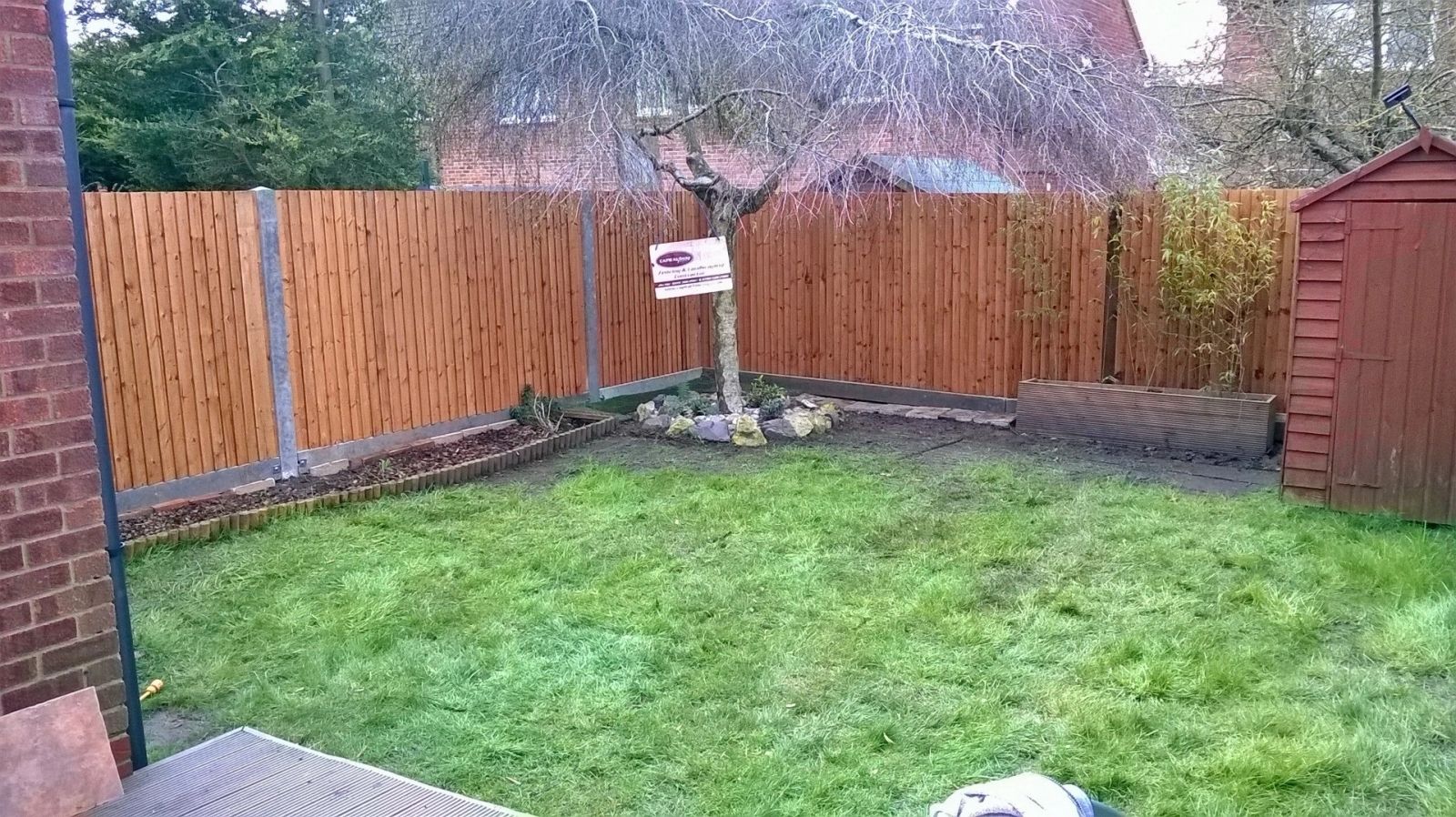
A security fence lives or dies on the post fixing, not the panel — a run that can be rocked loose at the base gives an intruder a lever the panel design can't fix. We set posts into concrete to a depth that matches the height and loading of the run, not a single stock depth for every job.
Where ground is soft or made-up, post spacing is tightened rather than left at a standard interval, because a wider gap between fixings is exactly the weak point a determined push targets first.
Ironmongery grades for gates
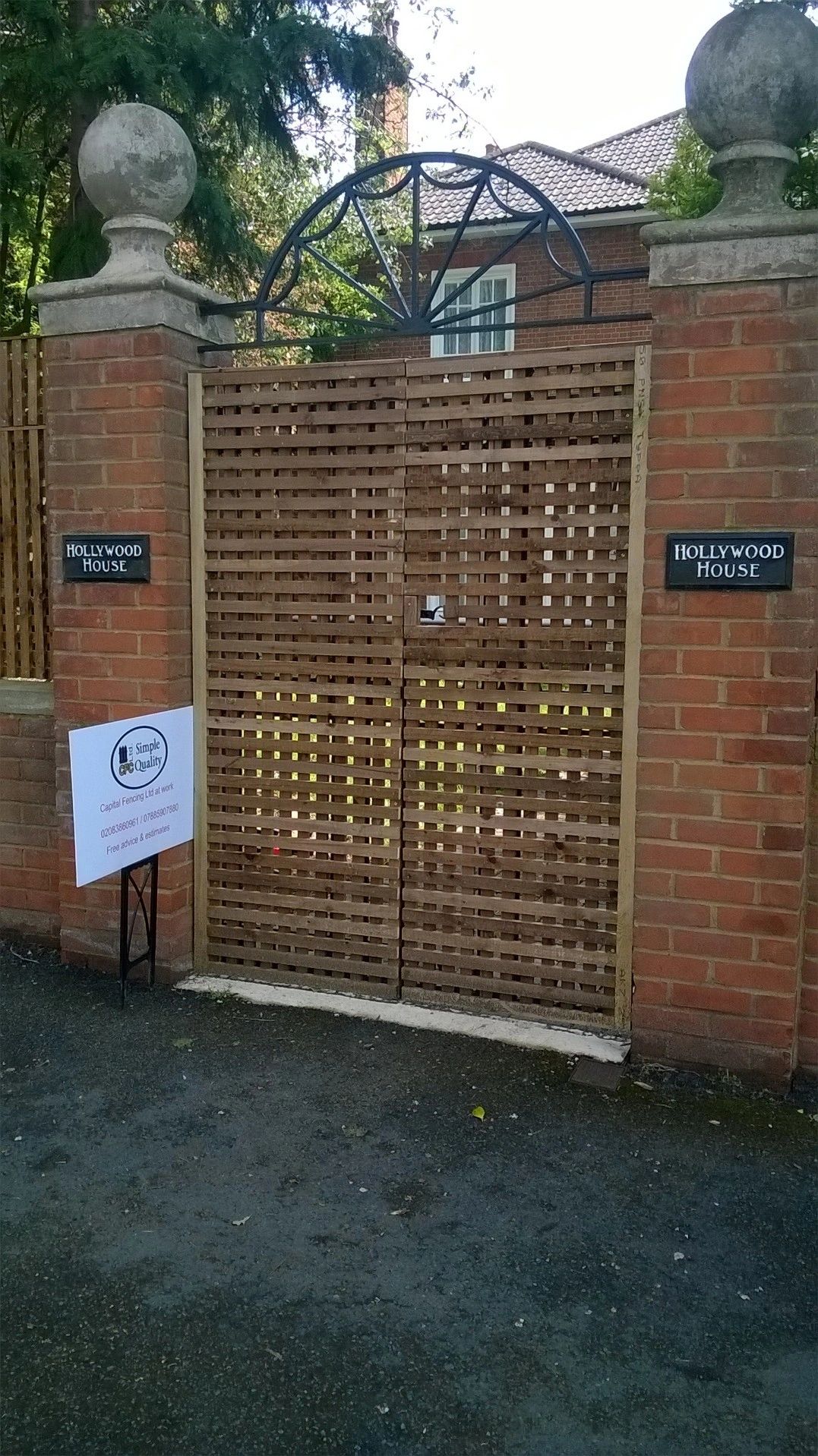
Gate hinges, latches and drop bolts are graded broadly by size and load rating rather than sold as one universal fitting, and undersized ironmongery on a heavy hardwood gate is a common cause of early sagging even when the frame itself is well built.
Externally, ironmongery needs a corrosion-resistant finish suited to constant weather exposure — galvanised, stainless or a specifically outdoor-rated coated finish — rather than internal-grade fittings that will rust and seize within a season or two.
A self-closing hinge or a matching pair of hinges rated for the gate's actual weight is worth specifying explicitly on a quote, since 'a pair of hinges' without a load rating leaves the actual spec to whatever's in stock.
Measuring existing noise levels and why a survey helps
A basic noise survey — even an informal one comparing levels at different points and times of day — helps establish what's actually reaching the garden before deciding on barrier height and specification.
Where noise varies significantly by time of day, such as rush-hour traffic or a school's start and finish times, a survey that captures those peaks gives a more realistic basis for the design than a single spot reading.
Snagging and sign-off walk-round
A finished fence should be walked end to end with the client before sign-off, checking posts are plumb, panels are level and gates open and close cleanly through their full swing without binding on the ground.
Gaps under gravel boards, exposed fixings, and any concrete splashed onto adjoining paving or planting during the install are the kind of small snags worth catching at walk-round rather than left for the client to notice weeks later.
Where any item is flagged, agreeing a specific date for it to be resolved — rather than a vague 'we'll come back' — is what actually gets snagging closed out.
Composite wood-polymer ratios
Wood-plastic composite fencing boards are made from a blend of wood fibre and polymer, and the ratio between the two materially affects the finished product's stiffness, weight and how closely it resembles real timber grain.
A higher wood-fibre content generally gives a more timber-like appearance and feel but can also make the board more absorbent and slightly more prone to swelling at cut edges than a polymer-dominant mix.
Composite boards from different manufacturers aren't interchangeable even when nominally similar in size, since differing ratios change how the board expands with temperature and how it should be fixed and spaced.
Threading a fence run past a rainwater downpipe
A downpipe discharging near the boundary means the fence has to either step around it with a short jog in the line, or leave a gap in the panel run rather than fixing directly over the pipe and its gulley.
Fixing a post immediately behind a downpipe risks trapping water splashing off it against the post base, so a small offset gives both the pipe and the post room without altering the overall run length much.
Where the downpipe discharges to a gulley set into a path or patio, the gravel board also needs enough clearance to avoid sitting in standing water every time it rains.
Joint sealing method between panel sections
Where two acoustic panel sections meet, a simple butt joint leaves a hairline gap that widens slightly as timber moves with the seasons, and even a small gap can measurably undermine the seal of an otherwise solid run.
A rebated or shiplap joint, sometimes backed with a compressible sealant strip, keeps that junction closed through normal seasonal movement in a way a plain butt joint cannot.
Conservation area material rules
Inside a conservation area, the council can restrict fence height, colour and material even within otherwise-permitted development limits, usually through an Article 4 direction that removes some of the usual PD rights.
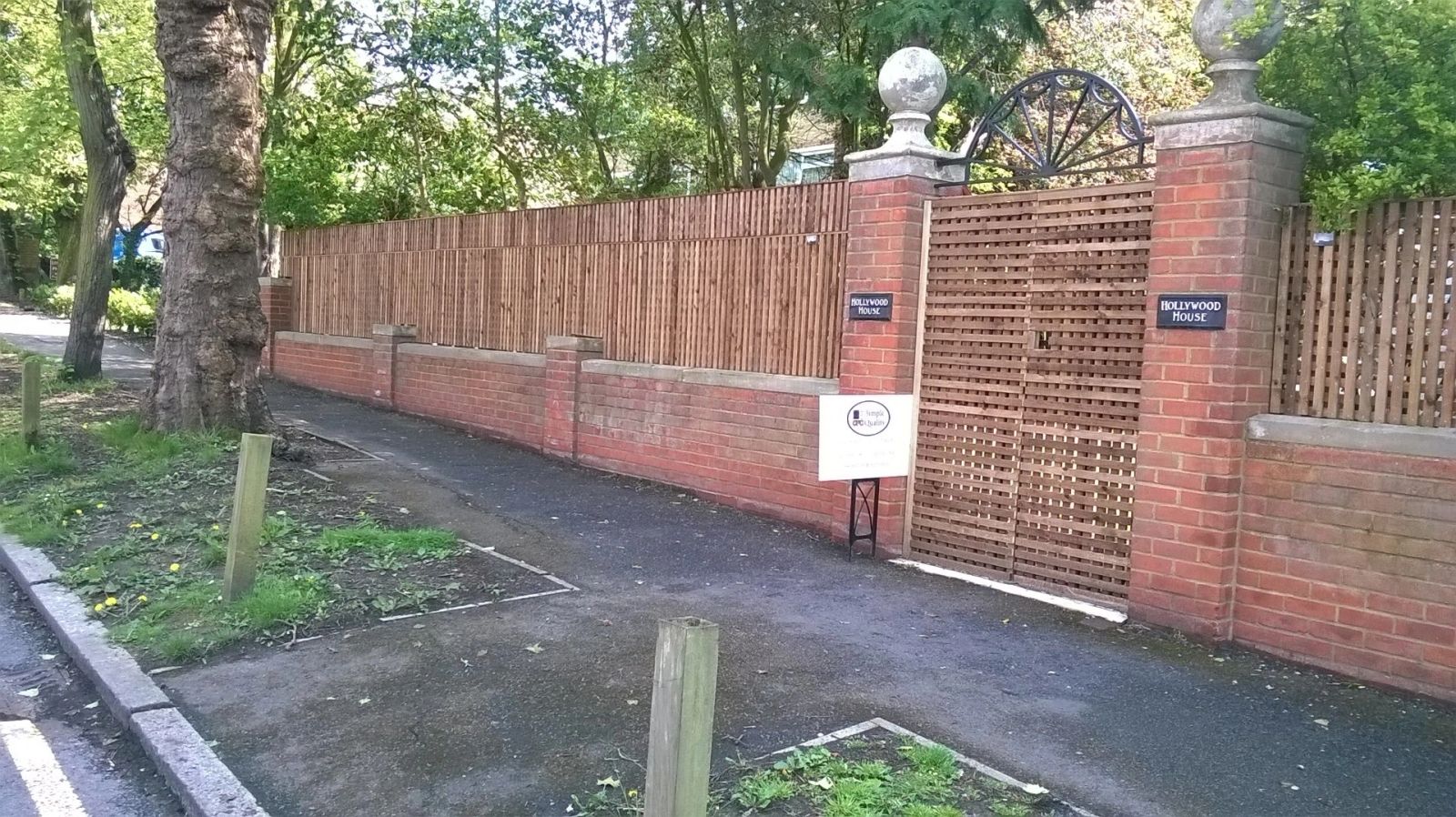
The common ask is close-boarded or picket timber in a natural or traditionally painted finish rather than modern composite or bright stains, particularly on frontages visible from the street.
For a listed building itself, or land within its curtilage, listed building consent can apply even to a garden fence, so it's worth a call to the conservation officer before committing to a spec.
Boundary fencing around a sports ground
A sports ground boundary usually needs to control spectator access on match days while staying open enough the rest of the week for community use, which pushes the design toward lockable gates on an otherwise low, permeable perimeter rather than a solid, high-security line throughout.
Ball-stop netting or higher panels behind goals is a separate specification from the perimeter fence and is chosen for containment rather than security, though the two are sometimes combined on the same run.