London & Hertfordshire Free Site Visit
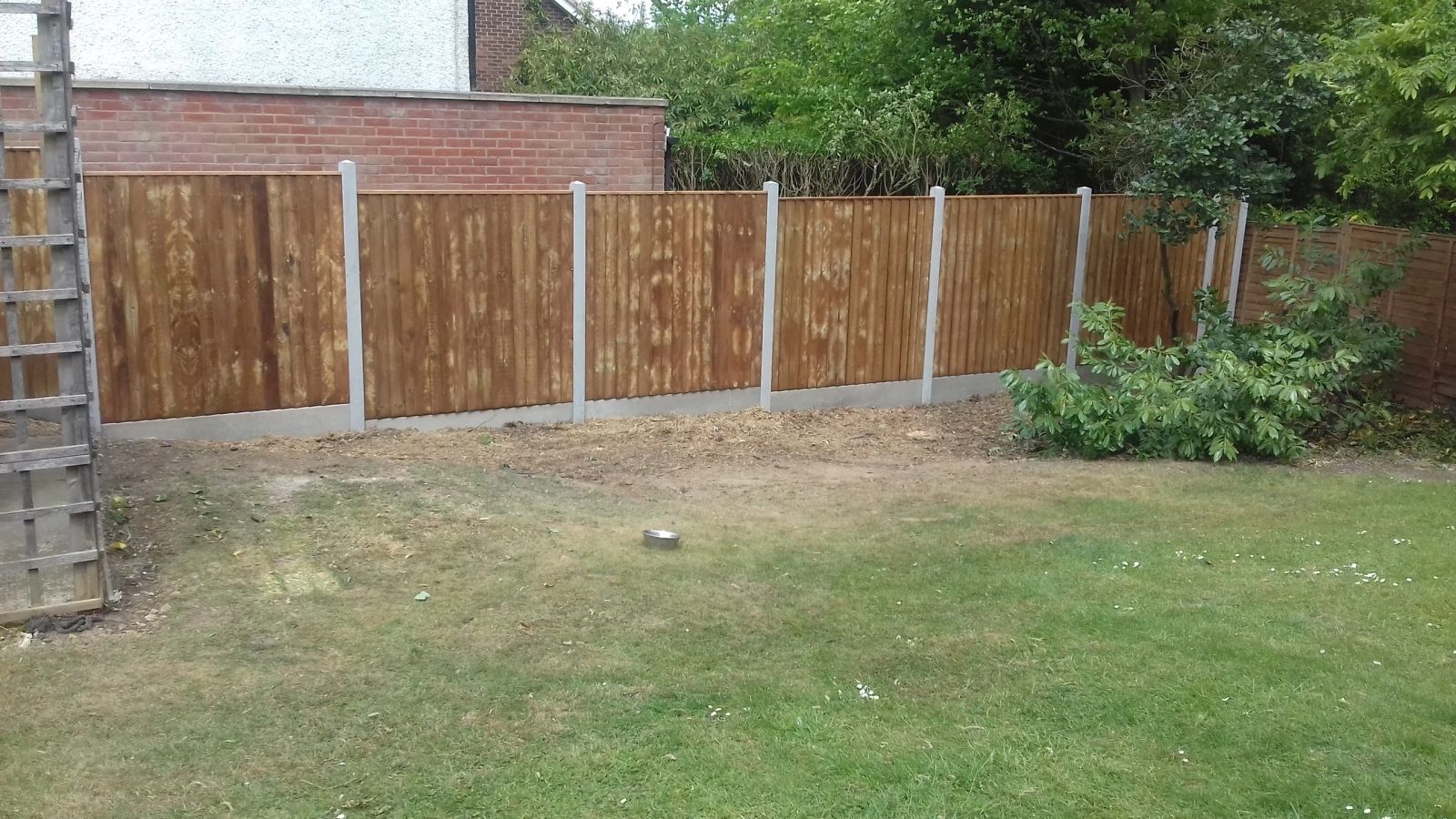
closeboard fence run installed by Capital Fencing in Potters Bar (EN6)
Potters Bar · EN6

Conservation area fencing across Potters Bar — Hertsmere Borough

We approach conservation-area fencing in Potters Bar from the failure end backwards. Installing anything visible from a public road above 1m at the front without permission — the notice arrives inside a month — that's the single most common thing we're called back to fix, and it's the first thing our spec addresses. Roads such as The Avenue and The Walk are typical of the local layout. Wyllyotts Centre is a useful local reference point. Planning sits with Hertsmere Borough Council, and the town is fully inside the Metropolitan Green Belt, which limits what can be built on the fields between Potters Bar and Barnet.

We approach conservation-area fencing in Potters Bar from the failure end backwards. Installing anything visible from a public road above 1m at the front without permission — the notice arrives inside a month — that's the single most common thing we're called back to fix, and it's the first thing our spec addresses. Roads such as The Avenue and The Walk are typical of the local layout. Wyllyotts Centre is a useful local reference point. Planning sits with Hertsmere Borough Council, and the town is fully inside the Metropolitan Green Belt, which limits what can be built on the fields between Potters Bar and Barnet.

Typical conservation-area fencing briefs in Potters Bar

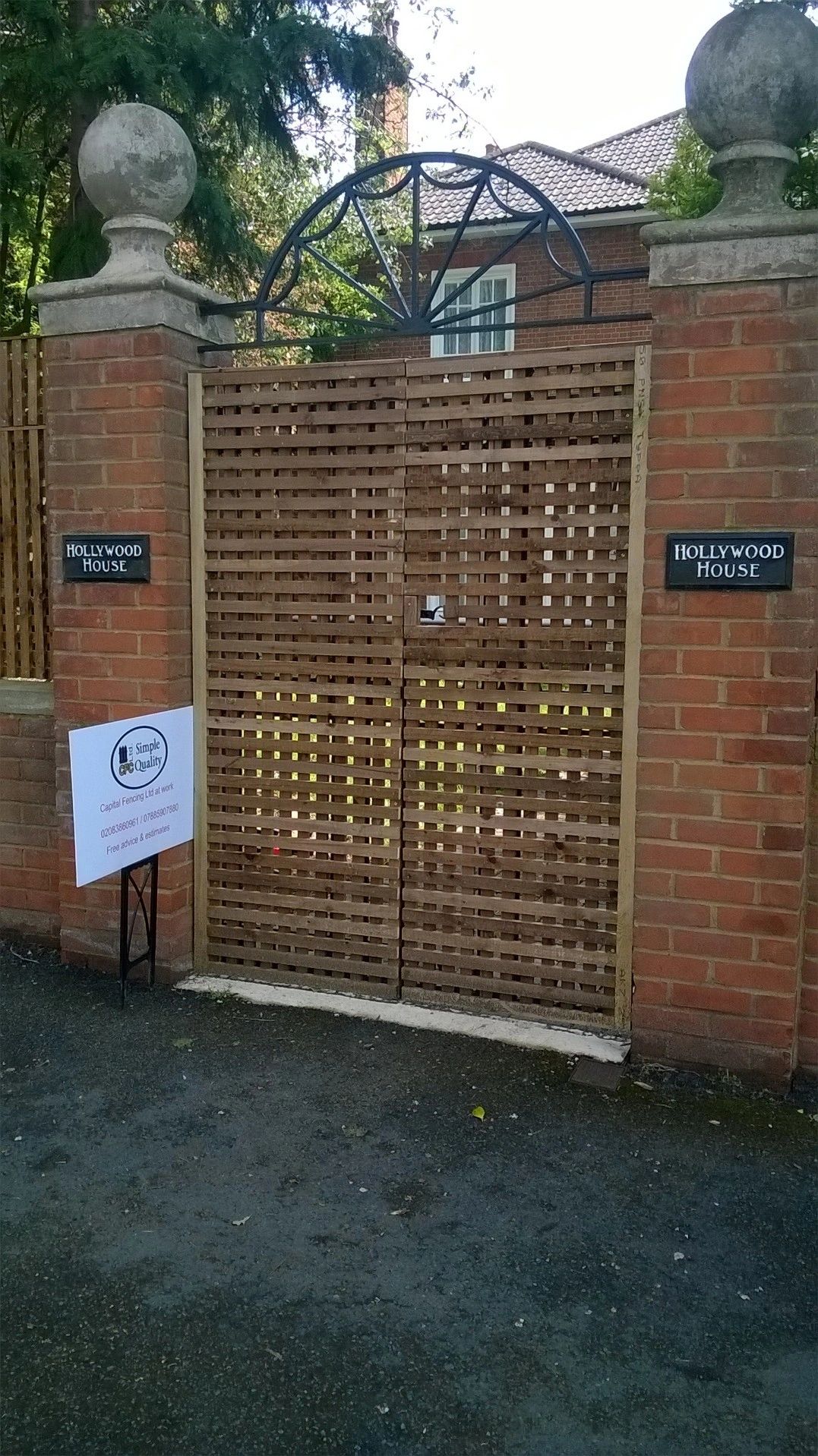
  • painted softwood picket front boundary matched to a neighbouring listed row
  • estate railings on a low brick wall replacing a non-compliant close-panel installed by a previous owner

Why this spec, for owners in a designated conservation area or fronting a listed building — material and height rules apply

  • designs matched to the immediate street rather than a generic catalogue drop-in
  • material choices align with council conservation-area design guides — we've worked through most of them
  • we handle the neighbour and council conversation, not just the physical work
Default spec

How we build conservation-area fencing in Potters Bar

painted softwood picket, oak-post estate railings or low brick-and-rail — heights kept to 1m front / 1.8m rear per PD guidance. On Potters Bar jobs we adjust for many gardens border the green belt — the brief usually needs sturdy stock-proof boundary work.

Property mix locally: 1930s semis, post-war detached homes around Cranborne Road, and infill developments near Little Heath. Typical gardens: generous rear gardens — often deep enough for decking plus a separate utility area. Postcodes we regularly service: EN6.

we check the property's designation, cross-reference the local design guide, and where required prepare drawings for a Certificate of Lawfulness or planning submission.

Where conservation-area fencing isn't the right answer

  • listed buildings themselves — those need Listed Building Consent handled first
  • modern estates outside any conservation designation where standard timber panels are perfectly fine

Conservation Area Fencing FAQs — Potters Bar

Can you match paint colours to the neighbouring frontage?

On conservation-area fencing jobs in Potters Bar (EN6), our default answer is: painted softwood picket, oak-post estate railings or low brick-and-rail — heights kept to 1m front / 1.8m rear per PD guidance. For context: material choices align with council conservation-area design guides — we've worked through most of them. We handle the council conversation as part of the job, not as an after-thought.

Do I need planning permission to change a conservation-area boundary?

Across Potters Bar we spec around many gardens border the green belt — the brief usually needs sturdy stock-proof boundary work, so on conservation-area fencing that usually means hand-painted softwood picket. We check the property's designation, cross-reference the local design guide, and where required prepare drawings for a Certificate of Lawfulness or planning submission.

How long does conservation-area consent take?

Hertsmere Borough coverage means we can survey most EN6 addresses inside a week — owners in a designated conservation area or fronting a listed building — material and height rules apply. The honest trade-off is installing anything visible from a public road above 1m at the front without permission — the notice arrives inside a month — which is exactly what our default spec designs out.

Do you provide drawings for a Certificate of Lawfulness?

Practically: painted softwood picket front boundary matched to a neighbouring listed row. That's the Potters Bar version of this job, not a generic one. The honest trade-off is installing anything visible from a public road above 1m at the front without permission — the notice arrives inside a month — which is exactly what our default spec designs out.

How high can a front boundary be in a conservation area?

On conservation-area fencing jobs in Potters Bar (EN6), our default answer is: painted softwood picket, oak-post estate railings or low brick-and-rail — heights kept to 1m front / 1.8m rear per PD guidance. The honest trade-off is installing anything visible from a public road above 1m at the front without permission — the notice arrives inside a month — which is exactly what our default spec designs out.

Recent conservation area fencing work
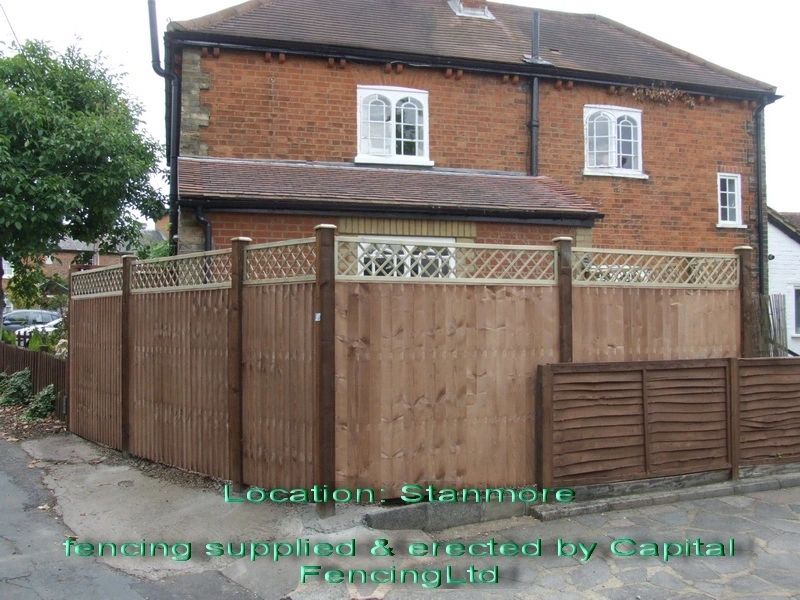
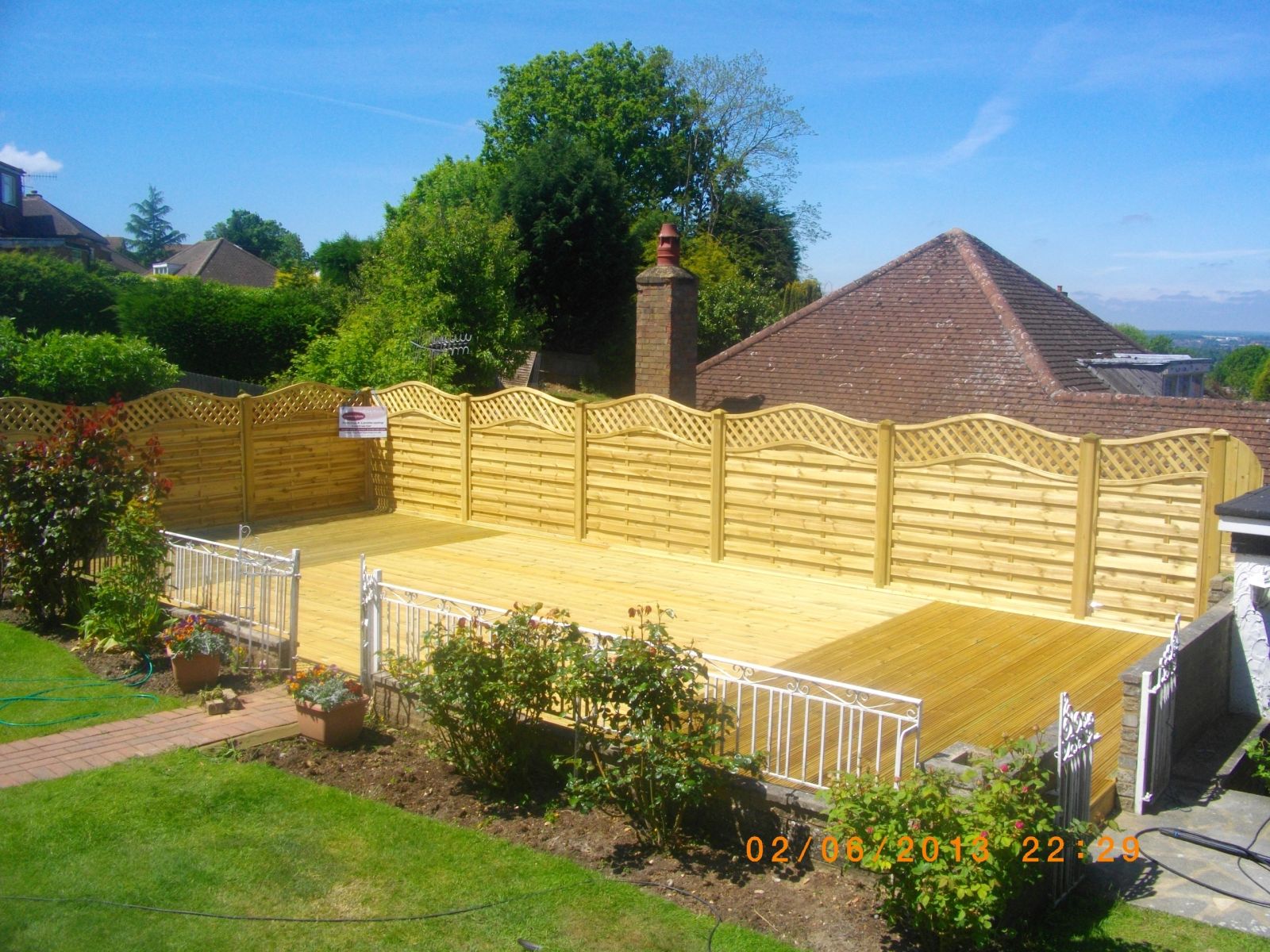
closeboard fence run installed by Capital Fencing in Potters Bar (EN6)panel fence install installed by Capital Fencing in Potters Bar (EN6)trellis-topped fence installed by Capital Fencing in Potters Bar (EN6)bespoke decorative fence installed by Capital Fencing in Potters Bar (EN6)

Before you book conservation area fencing in Potters Bar

Ground anchors on hardstanding

Where a post can't be dug into soil — a concrete yard, a roof terrace, or a surface that can't be broken — a mechanical or resin ground anchor bolted through a base plate provides the fixing instead.

Anchor capacity has to match the loading of the fence height and any expected impact, and manufacturer pull-out figures are checked against the specific slab thickness before anchors are relied on for a taller run.

Boundary questions following inheritance or probate

Properties passing through inheritance sometimes bring boundary questions to light for the first time, particularly where an elderly relative had an informal understanding with neighbours that was never documented.

Executors and new owners are generally well advised to check the title plan and deeds carefully during this process rather than simply continuing an inherited informal arrangement without confirming it.

Where a boundary genuinely wasn't clear to the previous owner, this is a reasonable moment to check with the neighbour and consider formalising a written agreement.

Razor mesh panel systems for high-security compounds

A razor mesh panel embeds short, sharp folded barbs directly into the mesh weave itself rather than adding a separate topping coil, giving an anti-cut and anti-climb barrier across the whole panel height rather than only at the top.

These panels carry a higher injury risk than a standard mesh and are typically reserved for high-value compounds such as a fuel depot or a substation, kept well away from any pedestrian route.

Working carefully around artificial lawn during fencing installation

Artificial turf doesn't recover from scuffing, dropped tools or concrete splash the way real grass can regrow, so any damage to it during a fencing job is effectively permanent rather than something that fades over a season.

Digging post holes at the very edge of an artificial lawn needs particular care to avoid disturbing the turf's edge trim or the compacted base beneath it, since that base is engineered to stay firm and level rather than simply being soil.

Boards or sheeting laid over artificial turf during material handling protect it from scuffing in the same way they would a patio, and are worth using as standard rather than only when asked.

When a boundary dispute reaches a solicitor's letter

A formal 'letter before action' from a solicitor is usually a sign that informal resolution has broken down and one party is preparing to escalate a boundary or fencing dispute further.

Receiving one doesn't automatically mean court is inevitable, but it does mean the matter should be taken seriously and responded to, ideally with professional legal advice rather than informally.

Most fencing disputes never reach this stage, but knowing the general process exists helps put an early disagreement into perspective before it escalates unnecessarily.

Trellis toppers failing under wind load separately from the fence

A trellis topper adds height and surface area above a solid panel, which increases the wind load the whole assembly has to resist even though the panel below might be perfectly sound, and toppers are a common point of failure in gusty conditions.

Where a topper has failed repeatedly on an exposed boundary, a lower-solidity design or additional bracing to the topper's own fixings is worth considering rather than replacing the same topper style each time it fails.

Boundary structures on Green Belt land

Land designated as Green Belt carries additional planning restrictions aimed at preventing inappropriate development, which can extend to boundary treatments beyond the usual permitted development framework in some cases.

Most domestic garden fencing on an existing residential plot within the Green Belt is unaffected, but larger boundary structures or those on paddock and agricultural land nearby can be treated differently.

Checking with the local planning authority is the reliable way to confirm what applies to a specific Green Belt property before committing to a boundary project.

Drainage consents affecting boundary works

Altering ground levels, hardstanding or drainage patterns near a boundary can affect surface water flow onto a neighbour's land, and in some cases needs consent from the local authority or, for work near a watercourse, from the relevant drainage authority or the Environment Agency.

Diverting water so that it discharges onto next door's garden rather than soaking away on the original plot is a common and avoidable source of neighbour disputes, separate from any formal consent requirement.

Where boundary work is combined with a change in levels or new hard surfacing, it's worth checking whether the combined works trigger a drainage consent even if the fence itself wouldn't on its own.

Orientation of expanded metal mesh in a security panel

Expanded metal mesh is formed by slitting and stretching a sheet of steel, leaving diamond-shaped apertures with a slightly raised strand pattern that gives it a rougher, harder-to-grip surface than a flat welded mesh.

The direction the diamonds run relative to the ground affects both appearance and rigidity, and panels are usually oriented with the long diamond axis vertical for a taller security screen to maximise stiffness against horizontal loading.

Right to light and boundary structures

A right to light is a legal easement that can be acquired after twenty years of uninterrupted light through a defined window, and it protects a level of illumination to that window rather than an open view or unobstructed garden outlook.

An ordinary garden fence or low wall almost never generates a right to light issue, but a tall close-boarded fence, high wall or dense screening structure built close to a window that has enjoyed light for decades in principle could, particularly in dense urban plots.

In practice this rarely affects standard fencing height, but it's a different legal question from planning permission and worth being aware of on unusually tall or solid boundary structures near windows.

Rubber buffer pads at double-gate meeting stiles

A rubber buffer pad fitted where two gate leaves meet or where a gate meets its stop cushions the impact of closing, reducing wear on the timber or metal edge and quietening what would otherwise be a hard knock each time.

These pads perish with UV and weather exposure over time and need replacing periodically, since a hardened, cracked pad no longer cushions the impact it was fitted to absorb.

Cantilever sliding gate basics

A cantilever sliding gate has no ground track and instead balances on internal rollers running along a buried or surface-mounted beam, avoiding the debris problems of a ground-track design but needing a longer counterbalanced section behind the opening.

This type is more common on wider commercial or rural openings than standard domestic driveways because of the extra length needed either side of the gap.

Level differences between plots and who retains

Where two plots sit at different levels, the general presumption in law is that whoever created the level difference — usually by cutting or raising ground during earlier development — is responsible for retaining it, though on old or unclear plots this isn't always documented.

A fence contractor isn't in a position to resolve a retaining dispute, but should flag it clearly where a proposed fence line runs directly along or above an unretained level change, since a fence is not a retaining structure and shouldn't be asked to do that job.

Getting this distinction agreed in writing between neighbours before work starts avoids the fence being blamed later for a ground movement problem it never caused.

Diagnosing squeaks and creaks in gate hardware

A squeak or creak from a gate is almost always dry friction at a hinge pin, pivot or roller rather than a structural fault, and it's worth locating the exact source by working the gate slowly through its swing rather than assuming which hinge is responsible.

Cleaning out old, dirt-laden grease before applying fresh lubricant gives a longer-lasting fix than simply oiling over grit that's already worked into the bearing surface.

Matching materials on a part-run repair

Where one or two panels need replacing, we match the existing profile and height as closely as current stock allows, and we're upfront if an older or discontinued profile can't be matched exactly rather than pretending it can.

Concrete gravel boards are often worth fitting in place of the original timber ones at repair time, since they take the brunt of ground moisture that caused the original failure.

Being mindful of working hours and noise on a repair in a residential setting

Cutting timber, breaking out old concrete and driving fixings all generate noise that's more noticeable on a short repair visit in a quiet residential street than it might be on a larger, more expected construction project nearby.

Keeping to reasonable working hours and giving immediate neighbours brief notice ahead of a repair that involves breaking out concrete is a simple courtesy that avoids unnecessary complaints on an otherwise routine job.

Sistering a failed post

Sistering bolts a new length of timber alongside a post that's failed only in one section, leaving the sound parts of the original post carrying load alongside the new piece rather than removing it entirely.

It works best where the failure is localised and the panel fixings on the old post are still usable, and it's generally quicker than a full post swap on a run that can't easily be dismantled.

Acoustic fencing near busy roads or railways

Taller acoustic fencing intended to reduce traffic or railway noise is still subject to the same general permitted development height limits as any other boundary structure, unless it forms part of a formally consented scheme.

Some acoustic fencing along significant infrastructure is installed by the highway or rail authority itself under separate statutory powers, which is different from a homeowner adding their own noise barrier.

A homeowner wanting extra height for noise reasons alone would generally still need to apply for planning permission above the normal limit, the same as for any other reason.

Garden levels raised by decking or patios

A raised deck or built-up patio on one side of a boundary can leave the finished surface level noticeably higher than the fence's original ground-level reference, sometimes reducing the effective fence height as seen from that side.

Where a neighbour raises their ground level after a fence is already installed, drainage that previously ran away from the fence can be redirected toward it, so it's worth checking finished levels on both sides before agreeing a new fence height or base detail.

A fence installed at the same time as a client's own raised patio should account for the new level from the outset, rather than being set to the pre-existing grade and later needing extension.

Compression versus tension fixing of infill panels

Some panel systems clip into a compression-fit channel between posts, relying on the panel being cut to a precise size to stay in place under load; others are bolted under tension to the post face, which tolerates more variation in panel size but adds visible fixing points.

Compression-fit systems look cleaner but are harder to make tamper-resistant, since a panel that can be removed without tools for maintenance can usually also be removed without tools by someone else.

Diagnosing an uneven gap between gate and post

A gap that's wider at the top than the bottom, or vice versa, between a gate and its latch post usually indicates the gate has racked out of square rather than simply dropped evenly, which is a frame issue rather than a hinge-height issue.

Measuring the gap at both top and bottom before starting a repair helps distinguish a racking fault from a straightforward drop, since the two need different corrections.

Ground-line collars on timber posts

A plastic or metal collar fitted around a timber post at the point where it enters the ground creates a physical break between the post and the surrounding soil, reducing direct abrasion and moisture wicking at that specific zone.

Ground level is where oxygen, moisture and soil organisms are all present together in the right combination for decay fungi to thrive, which is why this narrow band is disproportionately where post failure originates compared with either the fully buried or fully exposed sections.

A collar doesn't replace preservative treatment but adds a secondary physical barrier specifically targeted at this highest-risk zone, similar in principle to the extra retention already specified for ground-contact use-class timber.

On conservation-area fencing in Potters Bar you get the same crew from first site visit to hand-over. That's the whole model — small team, planning-aware spec, written quote before we start. Roads such as Mutton Lane and Hatfield Road are typical of the local layout. South Mimms services is a useful local reference point. The lower ground west of Mimms Hall Road lies near Mimmshall Brook, while the streets rising from Darkes Lane toward Oakmere Park sit higher and drain better.

Get In Touch

Get My Free Quote — 24h Response

No callout fee · Free site visit · Friendly local team covering London & Hertfordshire.

Call us
07885907880
or 02036484746
Email
capital_fencing@yahoo.com
WhatsApp
Message us anytime
Area
London & Hertfordshire
Payment
Card payments accepted

Pay by debit or credit card, bank transfer or cash once the work and price are agreed. No deposit taken online.

Request a Free Quote

We'll get back to you within 24 hours.

Free Site Visit No Callout Fee
Call WhatsAppQuote