London & Hertfordshire Free Site Visit
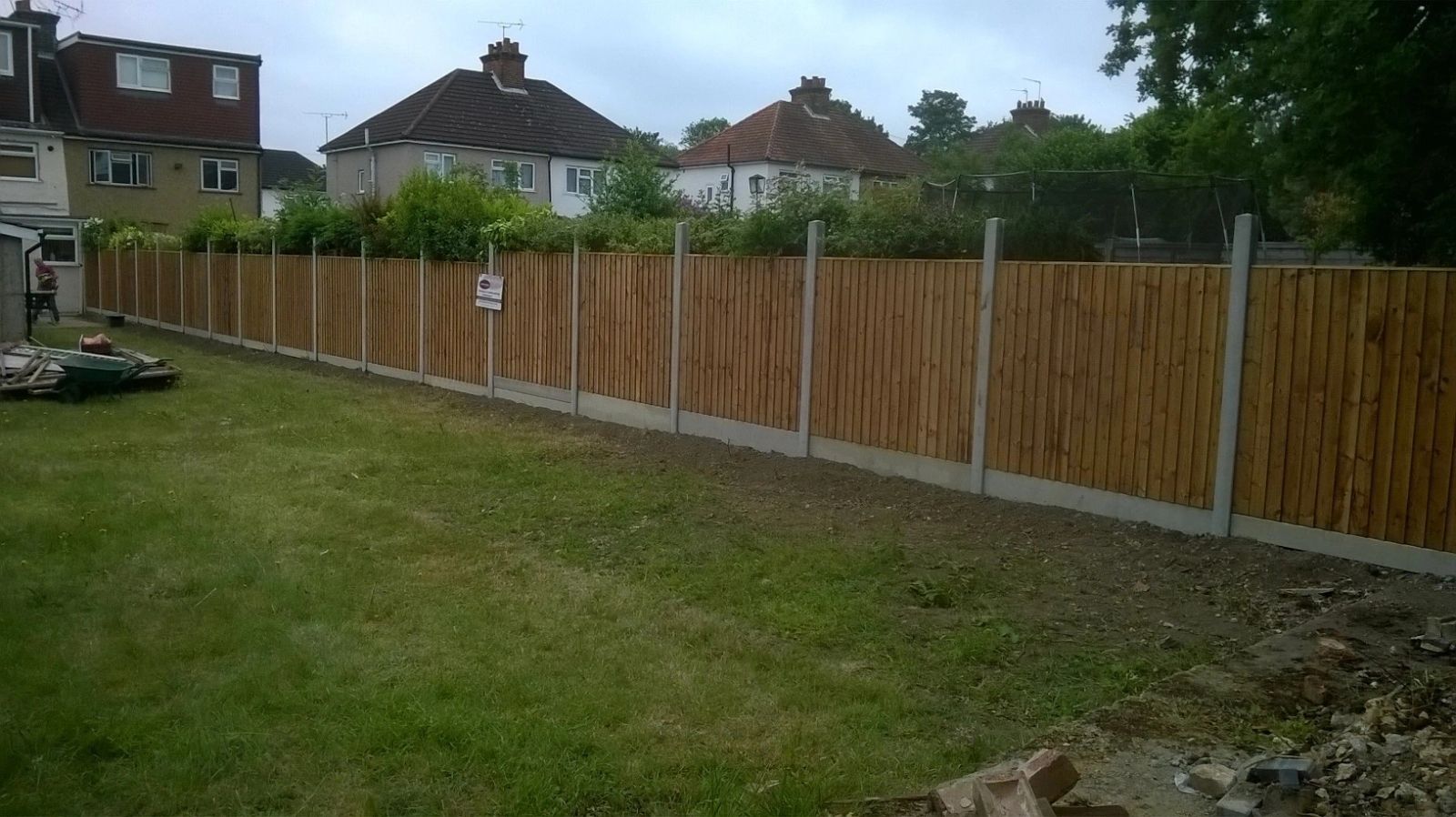
closeboard fence run installed by Capital Fencing in Waltham Forest (E4)
Waltham Forest · E4 / E10 / E11 / E17

Conservation Area Fencing in Waltham Forest — Built for conservation guidance, sight-line splays and permitted-development limits

Capital Fencing installs conservation-area fencing across Waltham Forest and out toward hackney and haringey. What separates a conservation-area fencing job from a standard boundary is the detail: painted softwood picket front boundary matched to a neighbouring listed row. That's the work, not the marketing. Roads such as Wood Street and Chingford Mount Road are typical of the local layout. Walthamstow Village is a useful local reference point. Waltham Forest runs from the tightly-terraced streets of Leyton in the south to the more spacious detached housing of Chingford in the north, close to Epping Forest.

Capital Fencing installs conservation-area fencing across Waltham Forest and out toward hackney and haringey. What separates a conservation-area fencing job from a standard boundary is the detail: painted softwood picket front boundary matched to a neighbouring listed row. That's the work, not the marketing. Roads such as Wood Street and Chingford Mount Road are typical of the local layout. Walthamstow Village is a useful local reference point. Waltham Forest runs from the tightly-terraced streets of Leyton in the south to the more spacious detached housing of Chingford in the north, close to Epping Forest.

Why this spec, for owners in a designated conservation area or fronting a listed building — material and height rules apply

  • designs matched to the immediate street rather than a generic catalogue drop-in
  • material choices align with council conservation-area design guides — we've worked through most of them
  • we handle the neighbour and council conversation, not just the physical work

Typical conservation-area fencing briefs in Waltham Forest

  • estate railings on a low brick wall replacing a non-compliant close-panel installed by a previous owner
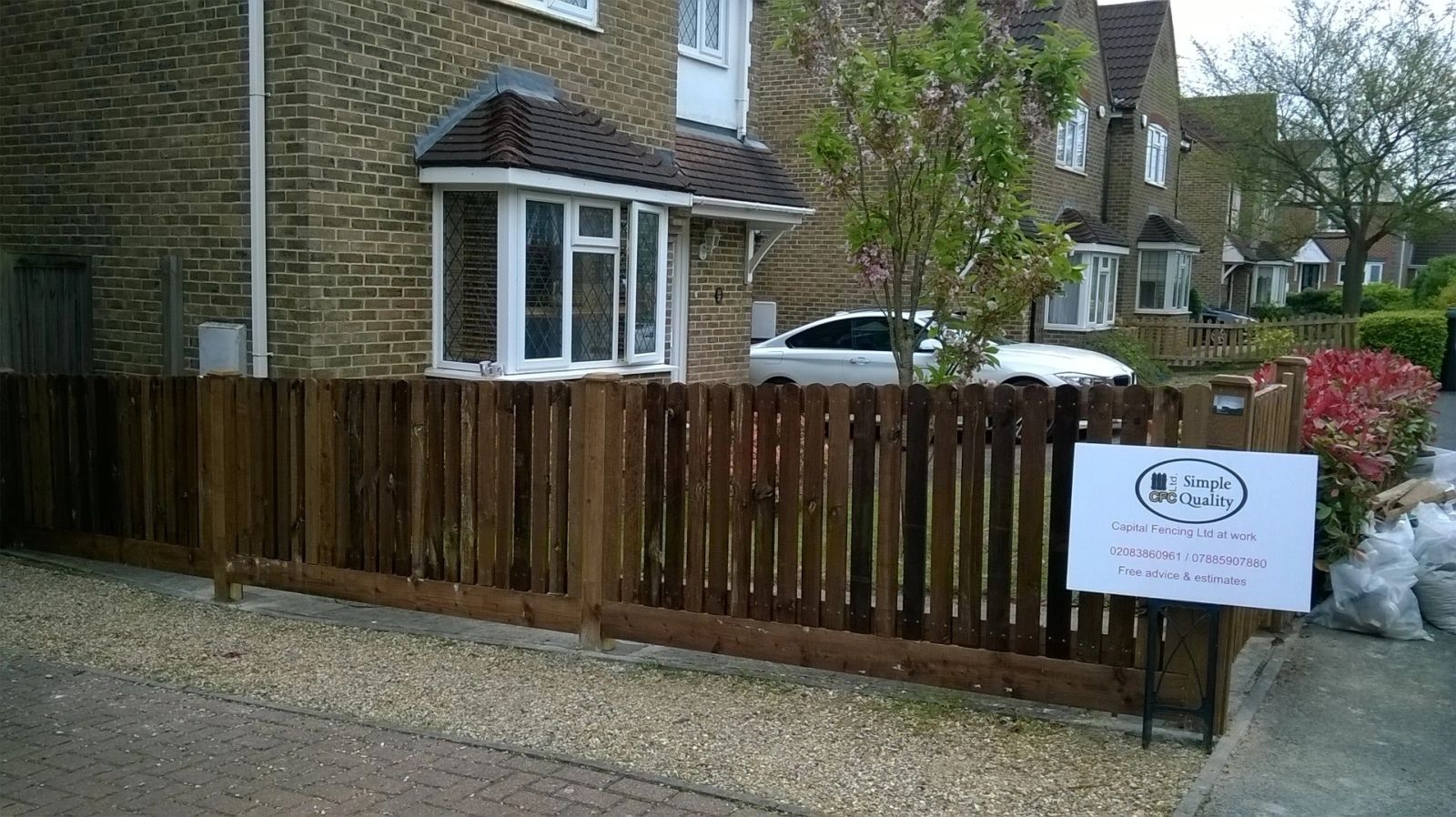
  • painted softwood picket front boundary matched to a neighbouring listed row
Default spec

How we build conservation-area fencing in Waltham Forest

painted softwood picket, oak-post estate railings or low brick-and-rail — heights kept to 1m front / 1.8m rear per PD guidance. On Waltham Forest jobs we adjust for wind funnelled off the lea valley regularly takes out weak panel fences on the eastern boundaries.

Property mix locally: Victorian terraces across Walthamstow and Leyton, 1930s semis in Chingford, and post-war estates around Leyton. Typical gardens: mid-length rear gardens, several sloping toward the Lea Valley with heavy clay. Postcodes we regularly service: E4, E10, E11, E17.

we check the property's designation, cross-reference the local design guide, and where required prepare drawings for a Certificate of Lawfulness or planning submission.

What goes wrong

Common failure modes on conservation-area fencing

  • installing anything visible from a public road above 1m at the front without permission — the notice arrives inside a month
  • using pressure-treated brown timber on a heritage frontage — flagged by neighbours before it's flagged by planning

Conservation Area Fencing FAQs — Waltham Forest

How long does conservation-area consent take?

On conservation-area fencing jobs in Waltham Forest (E4), our default answer is: painted softwood picket, oak-post estate railings or low brick-and-rail — heights kept to 1m front / 1.8m rear per PD guidance. The honest trade-off is installing anything visible from a public road above 1m at the front without permission — the notice arrives inside a month — which is exactly what our default spec designs out.

How high can a front boundary be in a conservation area?

Across Waltham Forest we spec around wind funnelled off the lea valley regularly takes out weak panel fences on the eastern boundaries, so on conservation-area fencing that usually means hand-painted softwood picket. We check the property's designation, cross-reference the local design guide, and where required prepare drawings for a Certificate of Lawfulness or planning submission.

Do you provide drawings for a Certificate of Lawfulness?

Waltham Forest coverage means we can survey most E4 addresses inside a week — owners in a designated conservation area or fronting a listed building — material and height rules apply. For context: material choices align with council conservation-area design guides — we've worked through most of them. We handle the council conversation as part of the job, not as an after-thought.

Can I use closeboard in a conservation area?

Practically: painted softwood picket front boundary matched to a neighbouring listed row. That's the Waltham Forest version of this job, not a generic one. We check the property's designation, cross-reference the local design guide, and where required prepare drawings for a Certificate of Lawfulness or planning submission.

Can you match paint colours to the neighbouring frontage?

On conservation-area fencing jobs in Waltham Forest (E4), our default answer is: painted softwood picket, oak-post estate railings or low brick-and-rail — heights kept to 1m front / 1.8m rear per PD guidance. The honest trade-off is installing anything visible from a public road above 1m at the front without permission — the notice arrives inside a month — which is exactly what our default spec designs out.

Recent conservation area fencing work
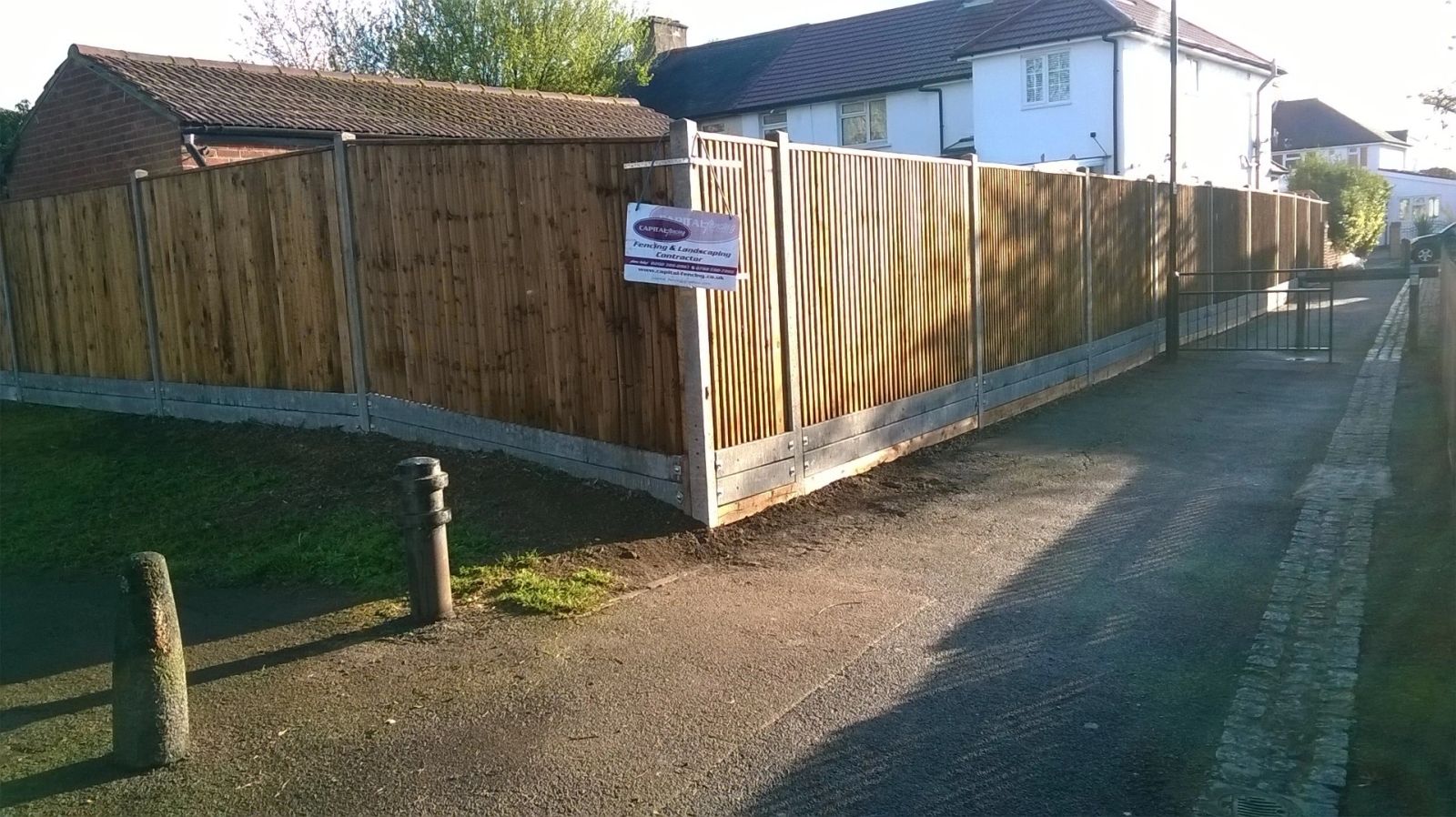
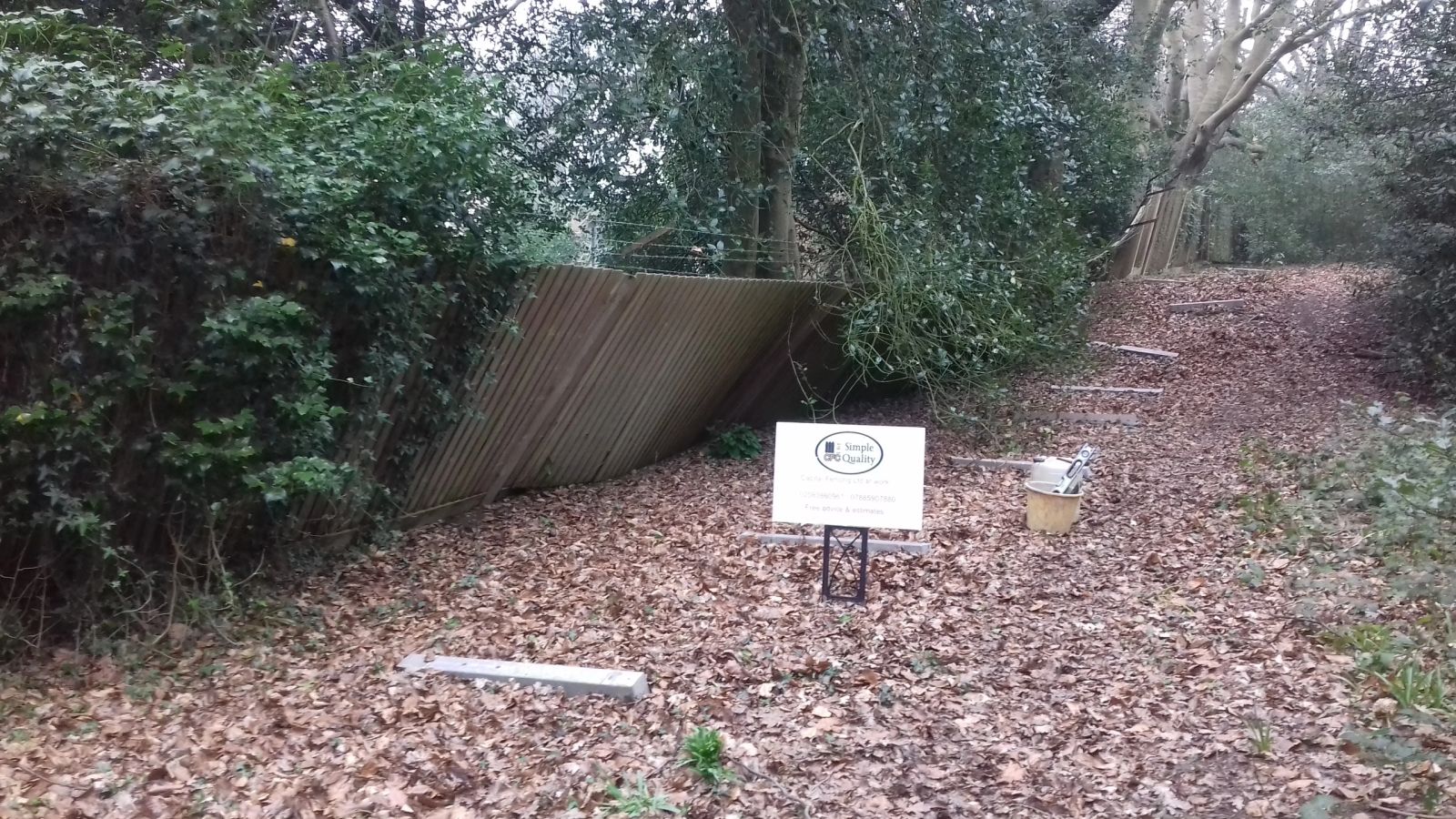
closeboard fence run installed by Capital Fencing in Waltham Forest (E4)panel fence install installed by Capital Fencing in Waltham Forest (E4)trellis-topped fence installed by Capital Fencing in Waltham Forest (E4)bespoke decorative fence installed by Capital Fencing in Waltham Forest (E4)

Site notes: conservation area fencing in E4

A gate that swings and closes itself on a slope

A gate hung on ground that falls away from the latch post can swing open or shut under its own weight rather than staying where it's left, which is a nuisance rather than a fault in the hardware itself.

Fitting a hydraulic closer, a gravity latch set to hold at the correct point, or re-hanging with a slight counter-lean can correct the tendency without rebuilding the gate.

Timber, mesh and steel palisade compared

Timber gives a solid sightline and a domestic look but needs a heavier spec than a standard garden fence to hold a security brief; steel palisade and weld-mesh give a harder physical barrier with a more industrial appearance, which suits a yard better than a front garden.

Most briefs end up as a mix — a solid section where privacy matters and a mesh or railing return where an open sightline is more useful — rather than one material for the whole boundary.

Repairing posts in waterlogged ground after heavy rain

A footing dug in waterlogged ground doesn't compact or bond as reliably as one dug in drier conditions, and standing water in the hole can dilute a concrete mix before it's had a chance to set properly.

Where a repair can't wait for drier ground, options include a free-draining aggregate base in the hole and a quick-set mix suited to damp conditions, but the underlying decision is often whether the repair should be delayed a few days rather than pushed through in poor conditions.

Timber versus metal for a replacement gate

A timber gate is easier to match to an existing fence line and easier to repair in sections, while a metal gate holds its shape better against warping and racking but is harder to alter once fabricated.

We recommend based on what the existing boundary is built from and what the client actually wants to maintain over time, not a single default material.

Snagging and sign-off walk-round

A finished fence should be walked end to end with the client before sign-off, checking posts are plumb, panels are level and gates open and close cleanly through their full swing without binding on the ground.

Gaps under gravel boards, exposed fixings, and any concrete splashed onto adjoining paving or planting during the install are the kind of small snags worth catching at walk-round rather than left for the client to notice weeks later.

Where any item is flagged, agreeing a specific date for it to be resolved — rather than a vague 'we'll come back' — is what actually gets snagging closed out.

Choosing a skip or a grab lorry for waste removal

A skip left on site suits a job generating waste steadily over several days and where there's a legal spot to place it, such as a driveway, but it needs a permit if it sits on the public highway.

A grab lorry collects loose spoil, rubble and old fencing directly without a skip being dropped and left, which suits a single big clearance visit and avoids occupying space on a narrow driveway or street for the whole job.

For a small domestic run, van-and-tip removal on the last day is often simpler than either option, and the right choice generally comes down to waste volume and how long the site can accommodate a static skip.

Part-run replacement and matching heights

Replacing part of a run while leaving the rest standing means matching not just the panel style but the exact height, since even a small step in height between old and new sections is visually obvious along a straight boundary.

Where the original height isn't available in current stock, adjusting the post height or capping detail can sometimes close the gap without replacing the whole run.

Buried rubble and old foundations

Gardens that once held an outbuilding, air-raid shelter or earlier boundary wall often still have its foundation strip sitting just below turf level, invisible until an auger or spade hits it.

A shallow concrete strip footing crossing the fence line usually needs breaking out locally rather than working around it, since a post can't be reliably set on top of a narrow buried footing.

Where old foundations run the length of a boundary, it's worth probing the full run before quoting rather than assuming one trial hole represents the whole job.

Sequencing work when more than one person is digging

On a longer run with more than one person digging simultaneously, working from both ends toward the middle rather than each person working independently along the same stretch reduces the risk of small setting-out errors compounding in the middle of the run.

Whoever sets out the string line and corner points needs to communicate any adjustment immediately to everyone digging, since a post dug to an outdated mark before a correction is passed on means redoing that hole.

Checking in at the midpoint, where the two ends meet, catches any accumulated drift before panels are ordered or cut to a spacing that assumed the line stayed perfectly true throughout.

Visibility splays at a driveway boundary

Some driveways, particularly on corner plots or busier roads, are subject to a required visibility splay — an area kept clear of tall obstructions so drivers can see pedestrians and other vehicles safely.

A fence built to the usual permitted development height can still breach a specific visibility splay condition attached to the property, especially where one was imposed when the driveway was originally created.

Checking historic planning conditions for the property, or asking the council's highways team, is worth doing before fencing close to any vehicle crossing.

Sliding versus swing gate security

A sliding gate needs a clear track run alongside the opening and doesn't sweep into the site, which suits a tight yard or a gate that has to sit flush with a boundary wall; a swing gate needs clearance to open but is generally simpler to fix and repair.

For security, a sliding gate is harder to force from a stationary position because the load runs along a track rather than through a single hinge post, but its track and rollers need regular clearing to keep operating.

Checking a panel is square before final fixing

A panel that's racked slightly out of square, even by a small amount, becomes obvious once several are fitted in a row and the tops don't line up evenly.

Measuring both diagonals of the panel frame before fixing, the same check used on gate openings, confirms it's true and worth doing before the first fixing goes in rather than after, when the panel is harder to shift.

A panel forced square against an out-of-true post rather than corrected itself tends to spring back out of shape once the fixings are removed for any future repair, so it's worth addressing the actual cause rather than just clamping it straight.

Communal gate access arrangements for allotment sites

An allotment site's perimeter fence is usually a lower-cost stock or mesh fence given the modest value at risk, but the communal access gate often gets a disproportionately stronger lock and hinge set, since it's the single point every plot holder and any opportunist intruder both have to pass through.

A keypad or coded padlock at the shared gate avoids the administrative burden of cutting and distributing individual keys to a changing list of plot holders over time.

Breaking out old concrete footings

An old post base often left in the ground after a previous fence comes out will usually be a lump of concrete far bigger than the post it once held, and it rarely sits exactly where a new post needs to go.

Breaking it out with a hand tool or breaker takes real time compared with digging clean ground, and on a long run of old fencing there can be one buried lump per post rather than just an occasional obstruction.

Where a footing can't be fully removed without excessive disruption, offsetting the new post's position by a short distance is usually more practical than fighting the old base to keep exact spacing.

RAL colours and UV fade

RAL is a standardised colour matching system widely used for powder coating and factory paint finishes on metal fencing and gates, allowing a specific shade to be reordered consistently years apart.

Darker RAL shades, particularly reds and some greens, tend to fade faster under UV exposure than blacks and greys, since the pigments used to achieve those colours are often less UV-stable.

South-facing runs in direct sun for most of the day will fade noticeably faster than a shaded run of the same colour and coating, which is worth factoring in in when matching an extension to existing fencing.

Composite wood-polymer ratios

Wood-plastic composite fencing boards are made from a blend of wood fibre and polymer, and the ratio between the two materially affects the finished product's stiffness, weight and how closely it resembles real timber grain.

A higher wood-fibre content generally gives a more timber-like appearance and feel but can also make the board more absorbent and slightly more prone to swelling at cut edges than a polymer-dominant mix.

Composite boards from different manufacturers aren't interchangeable even when nominally similar in size, since differing ratios change how the board expands with temperature and how it should be fixed and spaced.

Haunching a post base above ground level

Haunching means shaping the concrete around a post so it stands slightly proud of the surrounding ground and slopes away from the post in all directions, rather than finishing flush or dished.

That slope sheds rainwater away from the timber-to-concrete interface, which is the point most prone to trapping moisture and starting rot at the base of an otherwise sound post.

A flush or dished base, by contrast, holds a shallow puddle around the post after every rainfall, quietly shortening the post's life regardless of how well the timber itself was treated.

Sliding gate track and roller wear

A sliding gate runs along a ground-mounted track or is carried on top rollers against a guide rail, and debris or corrosion in the track is one of the most common causes of a sliding gate becoming stiff or jamming partway through its travel.

Clearing and checking the track for level is usually the first step in diagnosing a sliding gate fault before assuming the rollers themselves need replacing.

Hinge types found on garden gates

Band-and-gudgeon hinges, tee hinges, plain butt hinges and adjustable bolt-on hinges each suit a different gate weight and post material, and fitting the wrong type for the gate's weight is a common cause of early hinge failure.

A heavy timber gate needs a band-and-gudgeon or heavy-duty tee hinge rather than a light butt hinge sized for an internal door.

Headroom and finger-trap gaps on gates

A sliding gate leaves a running gap between the gate and its guide posts that can trap fingers if it isn't guarded, and a swing gate's hinge side needs enough clearance to close without shearing anything caught in it.

Guards or brush strips over the trap points are a small addition that matters more on a gate used by children or the public than on a compound gate few people approach closely.

Diverting a public right of way away from a new fence

Where a registered public right of way crosses land that's being fenced, it's not something that can simply be blocked — a formal diversion order from the council is needed to legally move its route.

This process typically involves public consultation and can take a meaningful amount of time, so it needs building into any project timeline where it's relevant.

Checking the definitive map of public rights of way, held by the county or unitary council, before finalising a fence layout avoids inadvertently obstructing a protected path.

Using profile boards at corners

Profile boards — a horizontal board fixed between two pegs set back from the actual corner — let a string line be set, removed and reinstated at the exact same point throughout a job without disturbing the corner itself.

They're most useful where a run turns through an angle, since the intersecting lines from two boards mark the true corner point independently of any post already dug.

Leaving the boards in place until the last post is set and checked avoids the common error of the line creeping slightly as pegs get knocked or the string is re-tied.

Conservation Area Fencing across E4, E10, E11, E17 is a regular run for us. We'll quote honestly, tell you if conservation-area fencing isn't the right answer for your site, and book the job in within a week or two of a signed quote. we handle the council conversation as part of the job, not as an after-thought. Roads such as Church Lane and Wood Street are typical of the local layout. Epping Forest (Chingford edge) is a useful local reference point. The River Lea and the Walthamstow reservoirs form the western boundary, and land close to the marshes is low-lying.

Get In Touch

Get My Free Quote — 24h Response

No callout fee · Free site visit · Friendly local team covering London & Hertfordshire.

Call us
07885907880
or 02036484746
Email
capital_fencing@yahoo.com
WhatsApp
Message us anytime
Area
London & Hertfordshire
Payment
Card payments accepted

Pay by debit or credit card, bank transfer or cash once the work and price are agreed. No deposit taken online.

Request a Free Quote

We'll get back to you within 24 hours.

Free Site Visit No Callout Fee
Call WhatsAppQuote