London & Hertfordshire Free Site Visit
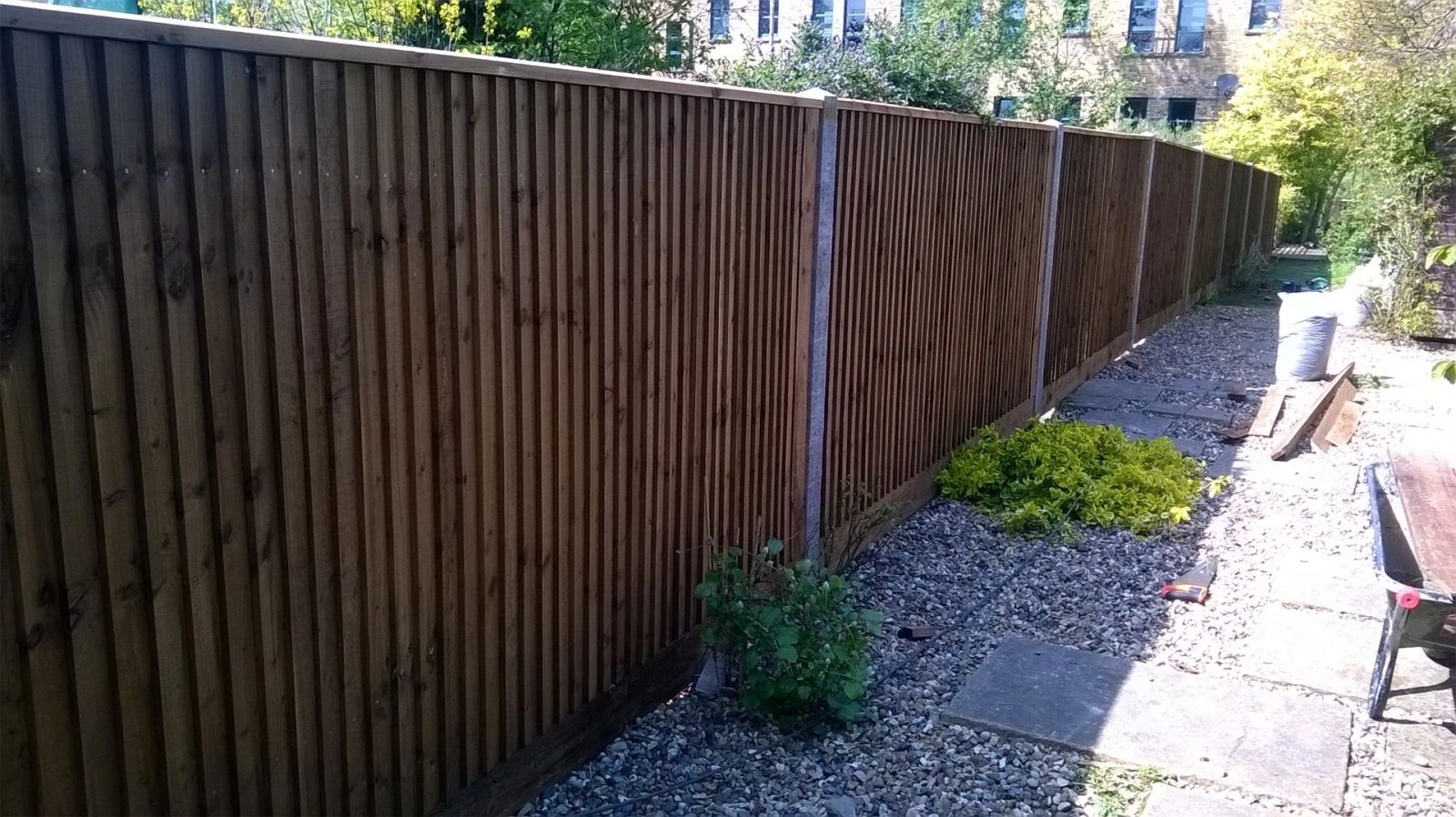
closeboard fence run installed by Capital Fencing in Hoddesdon (EN11)
Hoddesdon · EN11

Local sloping-garden fencing specialist covering Hoddesdon & ware

Capital Fencing installs sloping-garden fencing across Hoddesdon and out toward ware and cheshunt. What separates a sloping-garden fencing job from a standard boundary is the detail: stepped closeboard down a 900mm fall across a 15m rear boundary. That's the work, not the marketing. Roads such as Middlefield Road and Pauls Lane are typical of the local layout. Barclay Park bandstand is a useful local reference point. The A10 dual carriageway runs along the eastern edge of the town, bringing traffic noise to the gardens nearest it.

Capital Fencing installs sloping-garden fencing across Hoddesdon and out toward ware and cheshunt. What separates a sloping-garden fencing job from a standard boundary is the detail: stepped closeboard down a 900mm fall across a 15m rear boundary. That's the work, not the marketing. Roads such as Middlefield Road and Pauls Lane are typical of the local layout. Barclay Park bandstand is a useful local reference point. The A10 dual carriageway runs along the eastern edge of the town, bringing traffic noise to the gardens nearest it.

Default spec

How we build sloping-garden fencing in Hoddesdon

closeboard on 100×100 pressure-treated posts, stepped in 150mm gravel-board increments or racked where the slope is gentle enough. On Hoddesdon jobs we adjust for older fence runs in the old town often hide rotted posts under cement skirts — full removal is usually required.

Property mix locally: 1930s and 1950s semis, with Victorian cottages toward the Old Town. Typical gardens: mid-sized flat gardens; properties near Rye Park often have direct alley access. Postcodes we regularly service: EN11.

Why this spec, for homeowners with gardens that fall or rise across the boundary — stepped or racked builds

  • stepped builds keep the fence line legally correct even where the ground doesn't cooperate
  • closeboard suits stepping better than panel — no wasted panels cut to slope
  • sleeper-and-fence combined lines mean one contractor for what's usually two trades

Where sloping-garden fencing isn't the right answer

  • very steep sites where a proper retaining wall (brick or concrete) is the right answer before any fence goes on top
  • green-belt frontages where visible sleeper retaining isn't allowed

Typical sloping-garden fencing briefs in Hoddesdon

  • racked feather-edge run tracking a gentle slope without visible stagger
  • stepped closeboard down a 900mm fall across a 15m rear boundary

Sloping Garden Fencing FAQs — Hoddesdon

What's the biggest drop you can span in one bay?

On sloping-garden fencing jobs in Hoddesdon (EN11), our default answer is: closeboard on 100×100 pressure-treated posts, stepped in 150mm gravel-board increments or racked where the slope is gentle enough. We'll walk you through stepped builds keep the fence line legally correct even where the ground doesn't cooperate on the site visit before you commit.

Can you match a neighbour's stepped boundary starting point?

Across Hoddesdon we spec around older fence runs in the old town often hide rotted posts under cement skirts — full removal is usually required, so on sloping-garden fencing that usually means closeboard on stepped gravel boards. For context: closeboard suits stepping better than panel — no wasted panels cut to slope. Structural spans and post depths calculated, not guessed.

Who is liable when the ground falls onto a neighbour's plot?

Broxbourne Borough coverage means we can survey most EN11 addresses inside a week — homeowners with gardens that fall or rise across the boundary — stepped or racked builds. We'll walk you through stepped builds keep the fence line legally correct even where the ground doesn't cooperate on the site visit before you commit.

Should a fence follow the slope or step down it?

Practically: stepped closeboard down a 900mm fall across a 15m rear boundary. That's the Hoddesdon version of this job, not a generic one. For context: closeboard suits stepping better than panel — no wasted panels cut to slope. Structural spans and post depths calculated, not guessed.

Is panel fencing ever OK on a slope?

On sloping-garden fencing jobs in Hoddesdon (EN11), our default answer is: closeboard on 100×100 pressure-treated posts, stepped in 150mm gravel-board increments or racked where the slope is gentle enough. For context: closeboard suits stepping better than panel — no wasted panels cut to slope. Structural spans and post depths calculated, not guessed.

Recent sloping garden fencing work
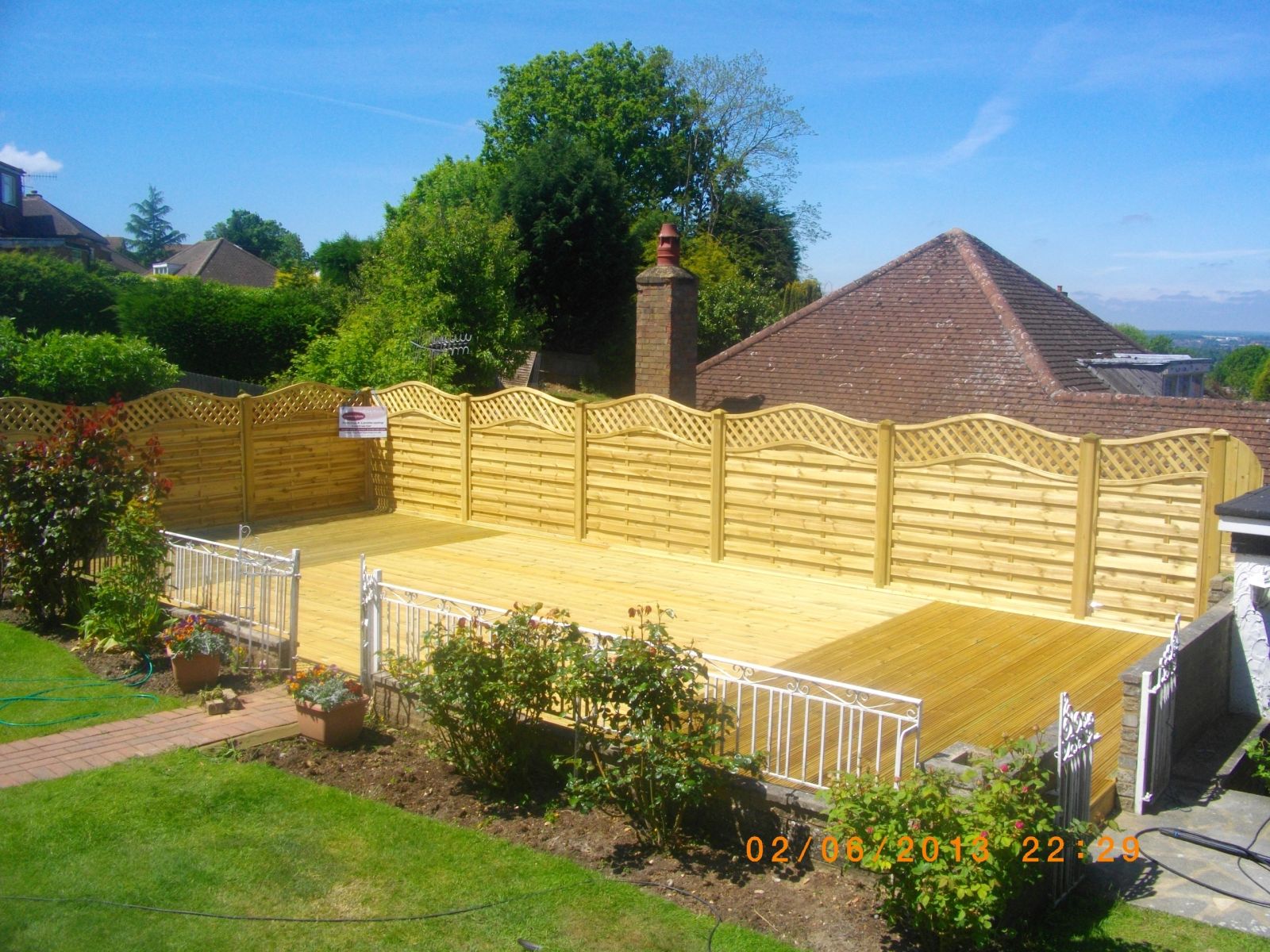
closeboard fence run installed by Capital Fencing in Hoddesdon (EN11)panel fence install installed by Capital Fencing in Hoddesdon (EN11)trellis-topped fence installed by Capital Fencing in Hoddesdon (EN11)bespoke decorative fence installed by Capital Fencing in Hoddesdon (EN11)

Local considerations across Hoddesdon and ware

Drainage as a repeat cause of failure

Where a post has failed at the base, poor drainage around that specific spot is often the underlying reason rather than simple age — a low point that collects rainwater rots a post from the ground up years before the timber above shows any sign of it.

A repair that resets the post without addressing the drainage at that point risks the same failure recurring within a few seasons.

Distinguishing checking from structural splitting

Surface checking, fine drying cracks confined to the outer face of a timber section, is cosmetic and doesn't usually run deep enough to compromise a post or rail's strength.

A structural split runs further into or along the timber, sometimes right through a section, and can significantly reduce the effective load-bearing area at that point, particularly if it passes through a fixing or joint.

The practical test is depth and location: a shallow surface check away from any fixing is rarely a concern, while any split intersecting a bolt hole, mortice or bearing point is worth assessing before continued use.

EV charging cables and boundary fence gates

Where an electric vehicle charge point is fitted near a boundary, cable routing sometimes needs to cross under or through a gate or fence gap, which is worth considering at the design stage rather than retrofitting a channel later.

Trailing a charging cable across a public footway to reach a car isn't permitted in most areas without specific council-approved cable channel provision, which is a separate matter from the fence itself.

Checking the council's position on any cable crossing a footway, alongside the fence and gate design, avoids two separate problems being discovered one after the other.

Gravel boards and dig-under prevention

A gravel board closes the gap between ground and fence face that would otherwise let someone lift the bottom of a panel or dig a shallow scrape underneath on soft ground.

On a security-rated run, a concrete gravel board set into the ground line resists both rot and digging better than a timber board sitting on the surface, and it's the standard choice where dig-under is a realistic risk.

Side gates on narrow plots

A side gate typically sits in a tighter opening than a driveway or garden gate, often between the house wall and a boundary fence, which limits post size and leaves little room for a wide frame or heavy bracing.

Access for materials and tools is also restricted on these jobs, so repairs are usually planned around what can be carried through the gap by hand rather than what a fully equipped van pitch would allow.

Checking a panel is square before final fixing

A panel that's racked slightly out of square, even by a small amount, becomes obvious once several are fitted in a row and the tops don't line up evenly.

Measuring both diagonals of the panel frame before fixing, the same check used on gate openings, confirms it's true and worth doing before the first fixing goes in rather than after, when the panel is harder to shift.

A panel forced square against an out-of-true post rather than corrected itself tends to spring back out of shape once the fixings are removed for any future repair, so it's worth addressing the actual cause rather than just clamping it straight.

Haunching a post base above ground level

Haunching means shaping the concrete around a post so it stands slightly proud of the surrounding ground and slopes away from the post in all directions, rather than finishing flush or dished.

That slope sheds rainwater away from the timber-to-concrete interface, which is the point most prone to trapping moisture and starting rot at the base of an otherwise sound post.

A flush or dished base, by contrast, holds a shallow puddle around the post after every rainfall, quietly shortening the post's life regardless of how well the timber itself was treated.

Boards splitting along the line of the fixing nail

A board that splits at a nail has usually been fixed too close to its edge or fixed with the nail driven into an existing check in the grain, and the split then runs further with each wet-dry cycle until the board finally lets go.

Repair is either refixing with screws set further from the edge and pre-drilled to avoid a repeat split, or replacing the board outright where the split has already reached the board's full width.

Care homes

Care home boundaries need to manage two directions of risk at once: keeping the site secure from outside, and, where residents live with dementia, preventing unsupervised exit through a garden gate that looks like a normal feature of the grounds.

Gates onto care home gardens are often specified with a delayed-release or coded latch rather than a simple thumb-turn, agreed with the home's management against its own care regulator requirements.

Access for contractors on an occupied care site usually needs coordinating around resident routines and quiet hours rather than a standard domestic working day.

Clarifying the '358' mesh naming convention

The '358' name commonly used for high-security welded mesh refers to its aperture dimensions of roughly 76mm by 12.5mm, formed from wire around 4mm thick, giving a mesh too small to get fingers or toes into as a climbing aid.

Different manufacturers use slightly different wire gauges and coating specifications under the same '358' description, so a spec sheet is worth checking rather than assuming all products sold under that name are identical.

Water ingress through a missing or damaged post cap

A post cap sheds rainwater off the exposed end grain at the top of a post, and once it's gone missing or cracked, that end grain absorbs water directly and rots from the top down rather than only from ground contact.

Refitting a cap is a cheap and quick repair on its own, but where a post has already been exposed for some time, it's worth checking how far rot has travelled down the post before assuming a new cap alone has solved the problem.

Matching new post heights into an existing run

Replacing a single failed post partway along an established run means matching its height and the position of any mortices exactly to its neighbours, since posts that are even 20-30mm out throw the top line of the whole run visibly off level.

Where the ground has settled unevenly along the run since it was first built, matching height to the immediate neighbouring posts rather than to a theoretical original level usually gives a better visual result.

It's worth checking the existing posts' actual spacing before ordering a replacement panel, since older or imperial-measured runs sometimes used spacing that doesn't match a modern metric panel exactly.

Listed and period properties

A listed building's curtilage can bring garden walls, railings and even historic fence posts within the scope of listed building consent, regardless of the general permitted development rules that would apply to an unlisted house next door.

Cast iron railings removed during wartime salvage are a common feature many period properties never had reinstated, and some conservation officers now encourage sympathetic replacement rather than modern panel fencing on street-facing boundaries.

Consent applications for listed curtilage work typically want a heritage-appropriate material and jointing method specified up front, so it's worth involving the conservation officer before, not after, a design is finalised.

Safety standards for automated gates

Automated gates fall under machinery safety regulations, which means a force-limiting device or safety edge to stop the gate on contact with an obstruction, and photocells or other sensors to detect someone in the gate's path, aren't optional extras.

A risk assessment covering the specific installation — proximity to a public footpath, likely pedestrian use, manual override in a power cut — should be part of any automation job, not an afterthought once the gate's already built.

Annual servicing of the motor, safety sensors and mechanical stops keeps an automated gate compliant and catches wear before it becomes a safety issue rather than just an inconvenience.

Helical pile foundations for a commercial security run

A helical pile is screwed into the ground using hydraulic or mechanical torque rather than being set in an excavated and concreted hole, giving a foundation that can be installed quickly on a site where digging is disruptive or where ground conditions are variable along the run.

Load capacity is checked by torque readings taken during installation rather than assumed from a standard depth, which makes helical piling useful on a site where soil type changes noticeably across the length of the boundary.

Timing a repair around summer timber shrinkage

Timber fitted during a dry summer spell shrinks slightly as it settles to ambient moisture content, which can leave newly fixed boards or rails with small gaps that weren't visible at the point of fitting.

This is a normal part of timber behaviour rather than a fault in the repair, and it's worth explaining at the time so a client isn't surprised to see gaps open up slightly over the following weeks.

Timber decking board profiles

Grooved decking boards have a reeded or ribbed surface intended to improve underfoot grip, particularly when wet, compared with a smooth-planed board of the same species and treatment.

The grooves can also trap moisture, algae and debris more readily than a smooth board, meaning a grooved deck often needs more regular cleaning to keep the grip benefit from being offset by a slippery algal film.

Reversible boards with a smooth face on one side and grooved on the other let the fitted orientation be chosen, or later reversed once the first face weathers, extending the usable life of the same boards.

Where neighbours disagree on sharing a repair cost

A boundary fence repair is sometimes split between neighbours by informal agreement, but there's no automatic legal requirement for a neighbour to contribute unless the deeds specifically say so, and disagreement over cost-sharing is common enough to plan for.

In practice it's simpler to quote the repair to whichever party is instructing the work and let that client resolve any cost-sharing conversation separately, rather than trying to split an invoice between two parties who haven't agreed terms.

Garden levels raised by decking or patios

A raised deck or built-up patio on one side of a boundary can leave the finished surface level noticeably higher than the fence's original ground-level reference, sometimes reducing the effective fence height as seen from that side.

Where a neighbour raises their ground level after a fence is already installed, drainage that previously ran away from the fence can be redirected toward it, so it's worth checking finished levels on both sides before agreeing a new fence height or base detail.

A fence installed at the same time as a client's own raised patio should account for the new level from the outset, rather than being set to the pre-existing grade and later needing extension.

Post-war estates and uniform frontages

Post-war council and private estates were often built with a consistent low front boundary — dwarf wall, hedge or short picket — as part of the original street design, and some retain a restrictive covenant or estate management scheme controlling what can replace it.

Swapping a low picket for a tall close-boarded front fence on these estates can breach the covenant even where planning permission wouldn't be needed under general permitted development rules.

It's worth checking the original conveyance or asking the estate's management company before ordering material, since covenant breaches are a civil matter between neighbours or the management company rather than something the council enforces.

Timber shrinkage and swelling across seasons

Timber gate frames swell slightly in wet weather and shrink back in dry conditions, and a gate built with no allowance for that movement can bind in one season and rattle loose in another.

A small design gap at the latch side accommodates this movement without needing seasonal adjustment of the hardware itself.

Keeps and hasps for padlocking

A keep holds a sliding or dropping latch bar, while a hasp is the separate hinged plate that a padlock passes through — the two are often confused but serve different jobs and aren't interchangeable on most gate designs.

Hasp screws are a common weak point since they're fitted from the accessible face; through-bolting a hasp gives more resistance to forcing than screws alone.

On sloping-garden fencing in Hoddesdon you get the same crew from first site visit to hand-over. That's the whole model — small team, engineered-to-load spec, written quote before we start. Roads such as Burford Street and Cock Lane are typical of the local layout. Lowewood Museum is a useful local reference point. Broxbourne Council maintains tree protection orders across much of Essex Road and Middlefield Road.

Get In Touch

Get My Free Quote — 24h Response

No callout fee · Free site visit · Friendly local team covering London & Hertfordshire.

Call us
07885907880
or 02036484746
Email
capital_fencing@yahoo.com
WhatsApp
Message us anytime
Area
London & Hertfordshire
Payment
Card payments accepted

Pay by debit or credit card, bank transfer or cash once the work and price are agreed. No deposit taken online.

Request a Free Quote

We'll get back to you within 24 hours.

Free Site Visit No Callout Fee
Call WhatsAppQuote