London & Hertfordshire Free Site Visit
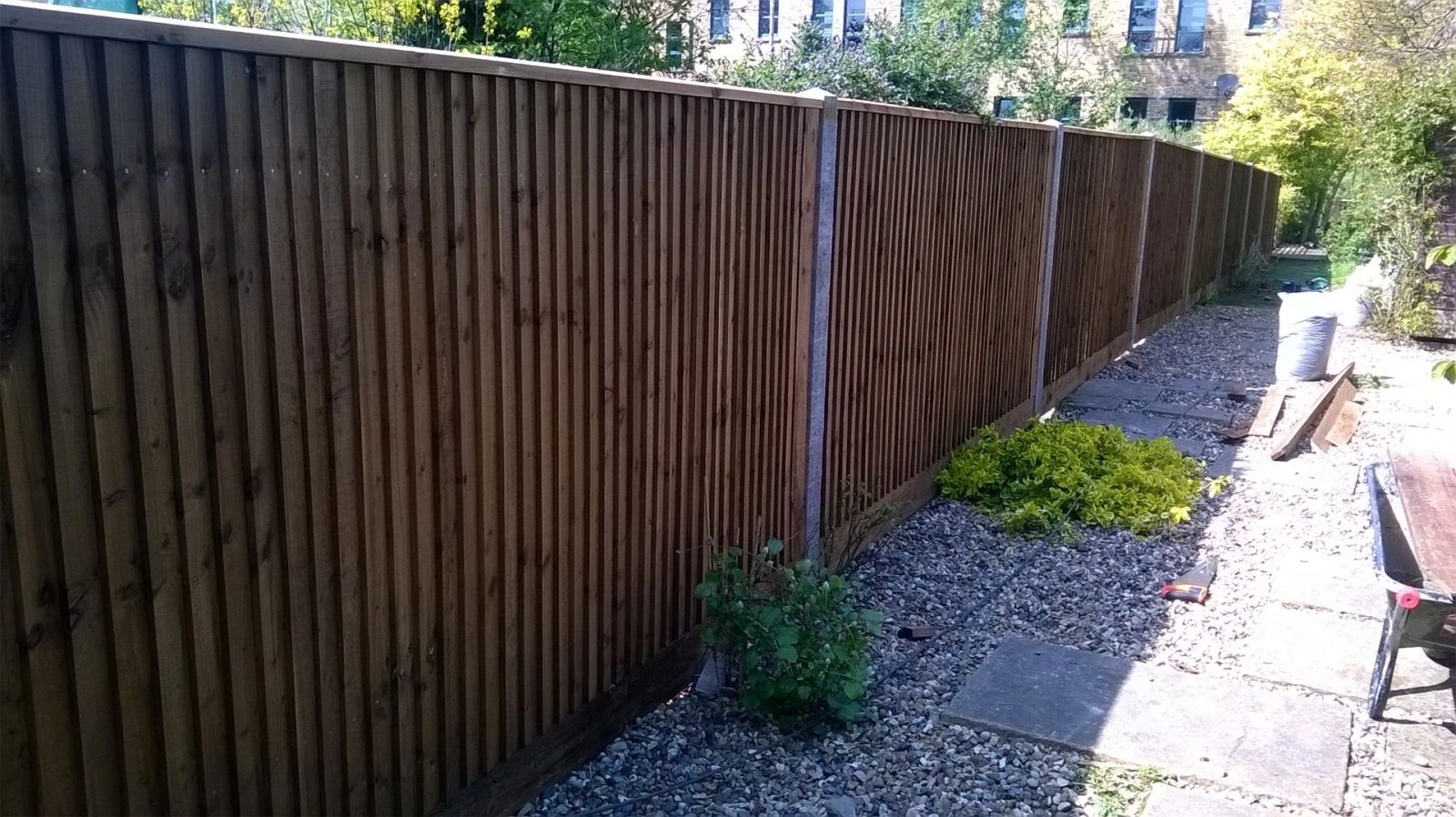
closeboard fence run installed by Capital Fencing in Hoddesdon (EN11)
Hoddesdon · EN11

School fencing across Hoddesdon — Broxbourne Borough

We approach school and nursery fencing in Hoddesdon from the failure end backwards. Specifying decorative railings with climbable finials near a play area — trips a safeguarding audit every time — that's the single most common thing we're called back to fix, and it's the first thing our spec addresses. Roads such as Amwell Street and Pauls Lane are typical of the local layout. Hoddesdon Clock Tower is a useful local reference point. Hoddesdon's housing splits between the older High Street terraces, which have narrow rear access, and the more spacious Rye Park and Rye House estates further out.

We approach school and nursery fencing in Hoddesdon from the failure end backwards. Specifying decorative railings with climbable finials near a play area — trips a safeguarding audit every time — that's the single most common thing we're called back to fix, and it's the first thing our spec addresses. Roads such as Amwell Street and Pauls Lane are typical of the local layout. Hoddesdon Clock Tower is a useful local reference point. Hoddesdon's housing splits between the older High Street terraces, which have narrow rear access, and the more spacious Rye Park and Rye House estates further out.

Why this spec, for primary schools, nurseries and early-years settings

  • no horizontal rails at climbable heights — safeguarding-first geometry
  • hot-dip galvanised then powder-coated finishes carry a 25-year service life
  • welded rather than bolted joints so nothing works loose over a school year

Typical school and nursery fencing briefs in Hoddesdon

  • matched pedestrian and vehicle gates with mag-lock and DDA-compliant pedestrian access
  • bow-top mesh replacing tired timber around a nursery outdoor area
Default spec

How we build school and nursery fencing in Hoddesdon

1.2m or 1.8m bow-top or 358 weld-mesh, hot-dip galvanised then RAL powder-coated posts, self-closing gates with anti-finger-trap hinges. On Hoddesdon jobs we adjust for older fence runs in the old town often hide rotted posts under cement skirts — full removal is usually required.

Property mix locally: 1930s and 1950s semis, with Victorian cottages toward the Old Town. Typical gardens: mid-sized flat gardens; properties near Rye Park often have direct alley access. Postcodes we regularly service: EN11.

we install to BS 1722-14 for bow-top and BS 1722-10 for weld-mesh, provide safeguarding-relevant sign-off notes, and can attend outside term time only.

What goes wrong

Common failure modes on school and nursery fencing

  • specifying decorative railings with climbable finials near a play area — trips a safeguarding audit every time
  • under-sized gate posts on double vehicle gates — they drop within a year on daily use

School & Nursery Fencing FAQs — Hoddesdon

Do you supply RAMS and public-liability certificate ahead of works?

On school and nursery fencing jobs in Hoddesdon (EN11), our default answer is: 1.2m or 1.8m bow-top or 358 weld-mesh, hot-dip galvanised then RAL powder-coated posts, self-closing gates with anti-finger-trap hinges. We install to BS 1722-14 for bow-top and BS 1722-10 for weld-mesh, provide safeguarding-relevant sign-off notes, and can attend outside term time only.

Can the job be scheduled inside a half-term break?

Across Hoddesdon we spec around older fence runs in the old town often hide rotted posts under cement skirts — full removal is usually required, so on school and nursery fencing that usually means bow-top 1.2m for EYFS boundaries. For context: hot-dip galvanised then powder-coated finishes carry a 25-year service life. Installed to BS 1722 standards, with fitter details available on request.

Are your fitters DBS-checked?

Broxbourne Borough coverage means we can survey most EN11 addresses inside a week — primary schools, nurseries and early-years settings needing safeguarding-compliant boundaries. We install to BS 1722-14 for bow-top and BS 1722-10 for weld-mesh, provide safeguarding-relevant sign-off notes, and can attend outside term time only.

Do you install to BS 1722 for school fencing?

Practically: bow-top mesh replacing tired timber around a nursery outdoor area. That's the Hoddesdon version of this job, not a generic one. The honest trade-off is specifying decorative railings with climbable finials near a play area — trips a safeguarding audit every time — which is exactly what our default spec designs out.

What height should nursery outdoor fencing be?

On school and nursery fencing jobs in Hoddesdon (EN11), our default answer is: 1.2m or 1.8m bow-top or 358 weld-mesh, hot-dip galvanised then RAL powder-coated posts, self-closing gates with anti-finger-trap hinges. The honest trade-off is specifying decorative railings with climbable finials near a play area — trips a safeguarding audit every time — which is exactly what our default spec designs out.

Recent school & nursery fencing work
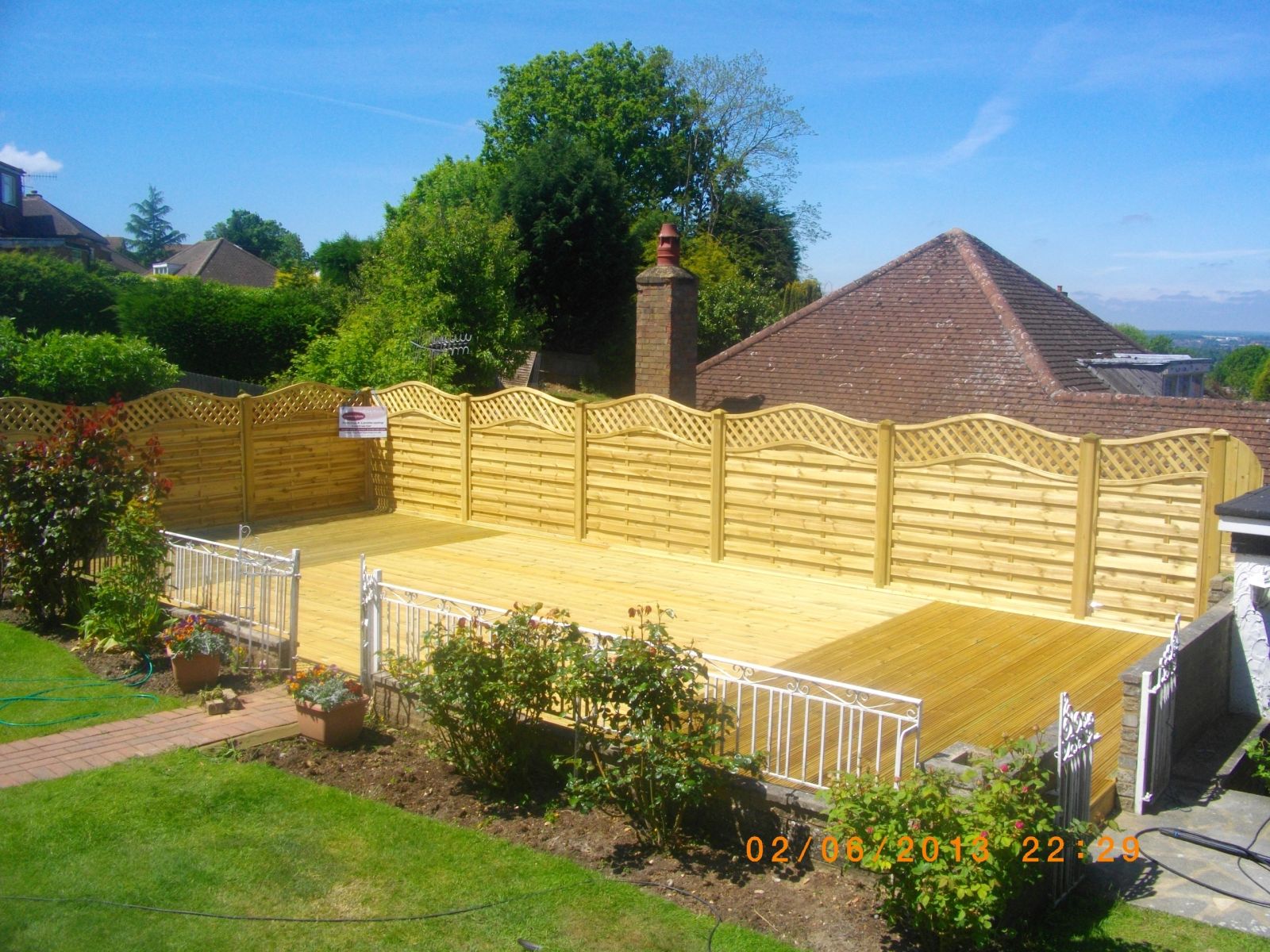
closeboard fence run installed by Capital Fencing in Hoddesdon (EN11)panel fence install installed by Capital Fencing in Hoddesdon (EN11)trellis-topped fence installed by Capital Fencing in Hoddesdon (EN11)bespoke decorative fence installed by Capital Fencing in Hoddesdon (EN11)

School & Nursery Fencing in Hoddesdon: the practical detail

Maintenance intervals for a security boundary

A security fence needs the same seasonal checks as any boundary — loose fixings, gate sag and corrosion on steel ironmongery are the things that quietly turn a secure line into a weak one over a couple of years.

Checking hinge and lock hardware regularly matters more here than on a standard fence, because that's the point most attempts actually target.

How a security job is sequenced

Work generally runs boundary-first — posts and the main line go in before gates, so gate openings are set against a fixed, already-concreted frame rather than guessed at in advance.

On a longer commercial perimeter the line is broken into manageable sections so part of the site can stay secure while another part is being worked on.

Matching a gate to an existing fence style

A replacement gate looks obviously mismatched if its board profile, height or capping detail doesn't follow the fence either side of it, even when the gate itself is well built.

We match board spacing, rail positions and capping profile to the existing run rather than fitting a stock gate design into a bespoke boundary.

Corner plots and highway sightlines

A boundary fronting a road used by vehicles is limited to 1m under permitted development, but corner plots have a second constraint: the highway authority's visibility splay, which can require even lower boundary treatment near a junction so drivers can see pedestrians and oncoming traffic.

These splays are measured as a triangle from a set point back along both roads and are sometimes fixed by a planning condition on the original build rather than by the general permitted development rules.

A solid fence built to the letter of the 1m rule can still be a highway safety problem on a tight corner, so it's worth checking the local plan or asking planning before finalising height on a corner boundary.

Orientation of expanded metal mesh in a security panel

Expanded metal mesh is formed by slitting and stretching a sheet of steel, leaving diamond-shaped apertures with a slightly raised strand pattern that gives it a rougher, harder-to-grip surface than a flat welded mesh.

The direction the diamonds run relative to the ground affects both appearance and rigidity, and panels are usually oriented with the long diamond axis vertical for a taller security screen to maximise stiffness against horizontal loading.

Decking substructures on clay

Timber decking built directly on shallow clay can move as the ground shrinks and swells seasonally, which shows up as a joist that's level in summer and slightly proud or dipped in winter.

Deeper post supports, or a raised deck design that isn't reliant on ground-bearing pads sitting in the active clay zone, avoid most of that seasonal movement.

Ventilation underneath the deck matters just as much as the foundation — a low, boxed-in deck with poor airflow traps moisture against the joists regardless of how well the posts are set.

Snow load and drifting against capping

Snow rarely loads a vertical fence face directly, but it drifts and settles along the top of a run, especially against capping or trellis toppers that catch and hold it rather than shedding it.

A sustained thaw-freeze cycle on wet capping timber is a common cause of splitting, since water trapped in the grain expands as it freezes and opens up hairline cracks that widen each winter.

A capping profile with a slight fall to shed water, rather than a flat top, reduces how much moisture sits there in the first place.

Maintaining ground sockets for gate drop bolts

A drop bolt socket set into the ground or a hardstanding surface collects grit, leaves and standing water over time, and a socket that isn't kept clear will stop the bolt seating fully, leaving a gate leaf that looks locked but isn't actually secured at that point.

Clearing and lightly lubricating the socket as part of routine maintenance is a small task that prevents a far more disruptive failure where a socket has to be dug out and reset after becoming completely blocked.

Deciding the scope of a part-run rebuild

A part-run rebuild replaces a defined stretch of bays back to sound posts at either end rather than patching individual failures within a longer run, which gives a cleaner, more consistent result where damage is clustered.

Setting the boundaries of a part-run rebuild means checking the posts just outside the visibly damaged section too, since a post that looks fine next to an obviously failed one can still be borderline and best included in the same piece of work.

Splash-back staining from adjacent paving

A fence running alongside a patio, path or driveway picks up rain splash-back off the hard surface, which carries fine grit and, on older paving, residual cement dust that leaves a pale tide-mark along the lowest boards.

This band of discolouration is separate from general weathering and won't fade with the rest of the timber, since it is a surface deposit rather than UV bleaching.

A gravel strip or planting border between paving and fence line reduces the splash distance, and a periodic wash-down of just the lower boards keeps the tide-mark from building up permanently.

Dealing with buried debris uncovered while digging out a repair footing

Old post stubs, broken glass, hardcore or builder's rubble from a previous era of the garden's use sometimes turn up when digging out a footing for repair, particularly on older plots that have been through several changes of use.

Where this happens, it's worth clearing enough of the obstruction to get a clean footing rather than working around it, and flagging anything unexpected — old drainage, buried cabling, unusually large rubble — to the client before continuing.

Why repaired sections sometimes weather differently

New timber fitted into an older run will weather at a different rate to the surrounding boards for the first year or two, simply because the existing timber has already taken its first few seasons of treatment and UV exposure.

This settles down over time and isn't a sign of a poor repair — we explain this at the point of quoting so it isn't a surprise later.

Hinge screw pull-out and through-bolting

Screws pulling out of a timber hinge post is one of the most common gate faults, usually caused by repeated leverage working the fixing loose in the grain over time rather than a single overload event.

Through-bolting the hinge with a coach bolt and washer plate on the far side of the post gives a mechanical fixing that doesn't rely on the timber's grip the way a screw does.

Boundary ownership when a fence needs repair

A failing fence is a common trigger for a dormant boundary dispute, since neither neighbour has had reason to check who's actually responsible until something needs fixing. Where ownership isn't clear from the deeds, we recommend confirming it and notifying the neighbour in writing before repair work starts.

On a shared rear boundary between terraced gardens this is worth doing even for a straightforward panel swap.

Community-wide hedgehog gap linking across multiple boundaries

A single hedgehog gap in one fence achieves little if the neighbouring boundaries along the same row of gardens remain solid, since the animal still can't move beyond the first connected garden.

Some local wildlife groups now coordinate gap positions across a terrace or street so that a continuous corridor is created through several gardens rather than isolated single gaps.

Where a client is enthusiastic about this, it's worth suggesting they mention it to neighbours early, since agreeing gap positions in advance avoids gaps that don't line up once each fence is finished.

Boundary rules in National Parks and AONBs

Properties within a National Park or an Area of Outstanding Natural Beauty can have reduced permitted development rights for boundary structures, reflecting the additional planning protection these areas carry.

Material and colour choices are often more tightly guided in these areas too, even where the height itself would otherwise be permitted.

The relevant National Park authority or council planning department is the right first point of contact for confirming what applies before ordering materials.

Preparing a weathered gate surface before refinishing

A timber gate that's greyed and roughened from UV and weather exposure needs its surface sanded back to sound wood before a new stain or paint is applied, since coating over a degraded surface fails much sooner than one applied to properly prepared timber.

Loose or flaking old paint in particular needs removing fully rather than painting over, as trapped moisture behind a failed coating accelerates rot underneath.

Powder coating and galvanising

Galvanising bonds a zinc coating to steel, usually by hot-dip, giving corrosion protection that works even if the surface is scratched because the surrounding zinc sacrifices itself to protect the exposed steel.

Powder coating is a decorative and additional protective layer baked onto the metal, giving a wide choice of colour and a harder finish than paint, but on its own over bare steel it doesn't offer the same self-healing protection as galvanising.

The durable combination for steel gates and railings is galvanising first, powder coating over the top, rather than powder coating alone, which is worth checking on a quote where both are mentioned separately.

Patching a section of mesh that has been cut or torn

A cut or torn section of chain-link or welded mesh is normally patched by weaving or wiring in a new panel of matching mesh gauge rather than trying to splice the damaged wires back together.

Matching wire gauge and mesh aperture matters for security fencing, since a patch in a coarser gauge than the surrounding mesh is both visibly obvious and a weaker point than the rest of the run.

Balustrade heights on raised decking

A raised deck with a drop of 600mm or more generally needs a balustrade for safety, with 900mm to 1100mm commonly used as the guide height depending on the drop and whether the household includes young children.

Baluster spacing should follow the same principle as fence gap safety — generally kept under 100mm — to avoid a child being able to squeeze through or get a head trapped between uprights.

Handrail fixings need to resist a lateral push load, not just support their own weight, so posts anchored into the deck frame itself rather than just screwed to a fascia board are the more reliable detail on any deck with a meaningful drop.

Narrow access and carrying materials by hand

Where there's no side access wide enough for a barrow, materials have to be hand-carried through the house or over a boundary, which changes both the time a job takes and the choice of components — shorter, lighter sections are far easier to move this way than long concrete gravel boards.

Protecting internal flooring and doorways during a through-house carry is worth agreeing before the first delivery arrives, since a scuffed hallway wall is one of the most common complaints on this kind of access.

On some terraces the only alternative is craning or lifting material over a roof or side wall, which needs its own access and safety plan rather than being treated as a simple manual carry.

Suspending a parking bay for a delivery

Where a residential street has marked parking bays, a resident or contractor may need to apply to the council to formally suspend a bay for the duration of a delivery or a working van.

Suspensions are usually charged per bay per day and typically need a few working days' notice, so they're worth arranging well ahead of a fencing or decking job rather than on the morning of delivery.

Parking in a suspended bay without paying the fee, or using a bay that hasn't been suspended at all, can result in a parking charge notice regardless of the reason for being there.

Whether the brief is bow-top mesh replacing tired timber around a nursery outdoor area or 1.8m weld-mesh on galvanised posts around a primary school MUGA, we quote it from a site visit, not a photo. Hoddesdon is inside our core working patch and most jobs are booked in inside a fortnight. Roads such as Burford Street and High Street are typical of the local layout. Hoddesdon Clock Tower is a useful local reference point. The town sits close to the River Lea and Spitalbrook, and the lower-lying streets nearest the water have a documented flood-risk history.

Get In Touch

Get My Free Quote — 24h Response

No callout fee · Free site visit · Friendly local team covering London & Hertfordshire.

Call us
07885907880
or 02036484746
Email
capital_fencing@yahoo.com
WhatsApp
Message us anytime
Area
London & Hertfordshire
Payment
Card payments accepted

Pay by debit or credit card, bank transfer or cash once the work and price are agreed. No deposit taken online.

Request a Free Quote

We'll get back to you within 24 hours.

Free Site Visit No Callout Fee
Call WhatsAppQuote