London & Hertfordshire Free Site Visit
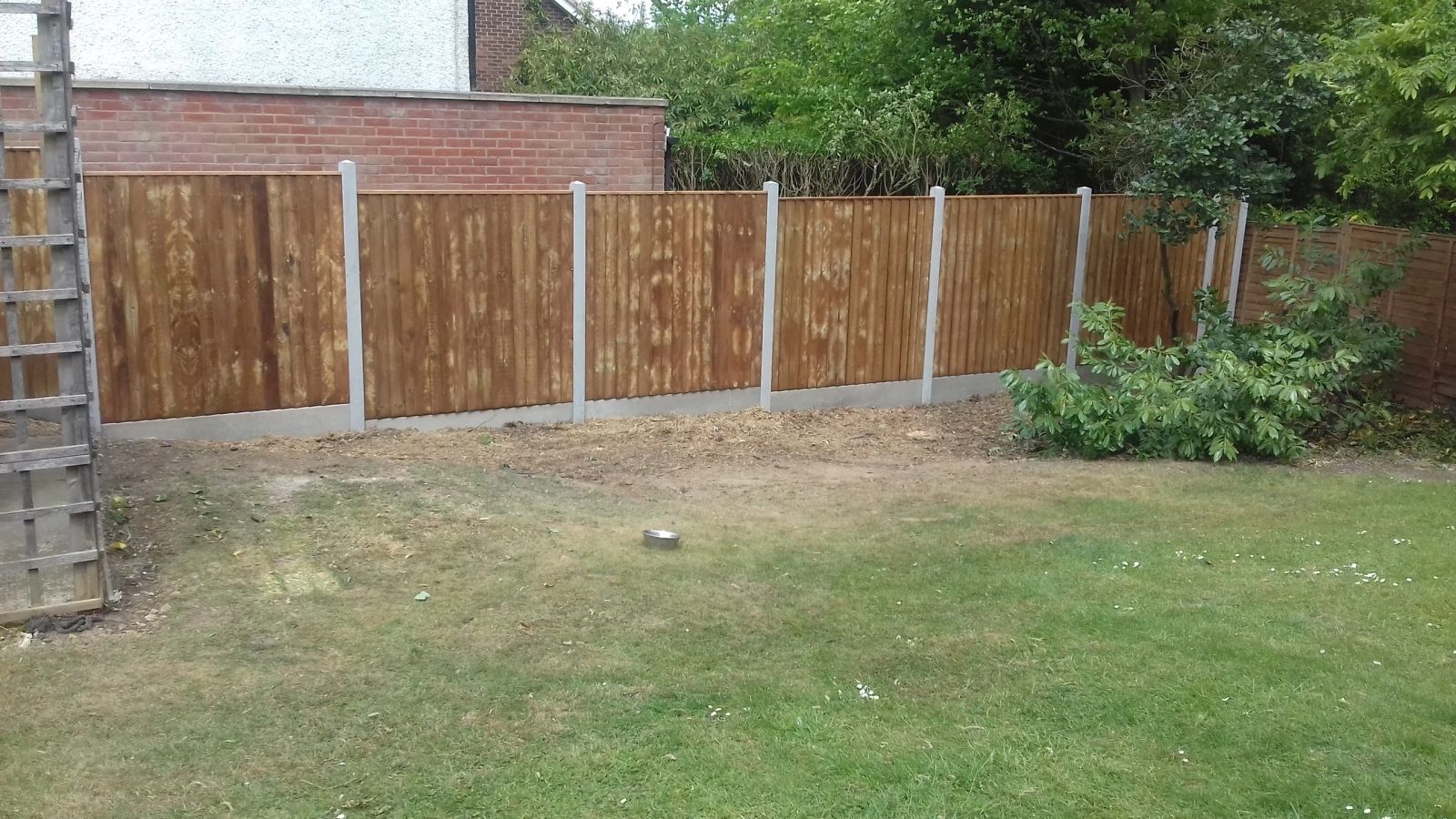
closeboard fence run installed by Capital Fencing in Potters Bar (EN6)
Potters Bar · EN6

Local dog-proof fencing specialist covering Potters Bar & barnet

If you're weighing dog-proof fencing for a property in Potters Bar, the first thing that matters is how the finish sits next to the neighbour's existing boundary — not the material choice. Once that's settled, closeboard with kicker plate is where most of our dog-proof fencing work in EN6 lands, with hit-and-miss with a buried mesh apron on the bottom rail as a considered alternative. Roads such as Southgate Road and The Walk are typical of the local layout. Oakmere Park is a useful local reference point. Post-war infill behind the main roads means several closes have narrow rear access for materials.

If you're weighing dog-proof fencing for a property in Potters Bar, the first thing that matters is how the finish sits next to the neighbour's existing boundary — not the material choice. Once that's settled, closeboard with kicker plate is where most of our dog-proof fencing work in EN6 lands, with hit-and-miss with a buried mesh apron on the bottom rail as a considered alternative. Roads such as Southgate Road and The Walk are typical of the local layout. Oakmere Park is a useful local reference point. Post-war infill behind the main roads means several closes have narrow rear access for materials.

What goes wrong

Common failure modes on dog-proof fencing

  • leaving standard 100mm gap between gate and paving — a determined terrier is through it in a week
  • using arris-rail closeboard without a bottom kicker — larger dogs push under the boards
Default spec

How we build dog-proof fencing in Potters Bar

1.8m closeboard, no gaps under 40mm, 150mm concrete kicker or 300mm buried mesh apron, closing gate with drop-bolt into a socket. On Potters Bar jobs we adjust for many gardens border the green belt — the brief usually needs sturdy stock-proof boundary work.

Property mix locally: 1930s semis, post-war detached homes around Cranborne Road, and infill developments near Little Heath. Typical gardens: generous rear gardens — often deep enough for decking plus a separate utility area. Postcodes we regularly service: EN6.

Why this spec, for dog owners

  • no gaps at ground level — the single most common escape point on standard fencing
  • hinges and drop-bolts sized so a dog leaning on the gate can't work it open
  • buried mesh apron stops digging without spoiling the finished look above ground

Typical dog-proof fencing briefs in Potters Bar

  • closeboard set into a shallow concrete kicker so a small breed can't dig underneath
  • 1.8m solid boundary with anti-climb top so a larger breed can't jump or scramble

Dog-Proof Fencing FAQs — Potters Bar

Can existing fencing be adapted rather than replaced?

On dog-proof fencing jobs in Potters Bar (EN6), our default answer is: 1.8m closeboard, no gaps under 40mm, 150mm concrete kicker or 300mm buried mesh apron, closing gate with drop-bolt into a socket. We'll walk you through no gaps at ground level — the single most common escape point on standard fencing on the site visit before you commit.

Are hit-and-miss fences OK for dog gardens?

Across Potters Bar we spec around many gardens border the green belt — the brief usually needs sturdy stock-proof boundary work, so on dog-proof fencing that usually means closeboard with kicker plate. We'll walk you through no gaps at ground level — the single most common escape point on standard fencing on the site visit before you commit.

Do you fit anti-climb toppers on residential boundaries?

Hertsmere Borough coverage means we can survey most EN6 addresses inside a week — dog owners needing a boundary a dog can't dig under, climb or push through. For context: hinges and drop-bolts sized so a dog leaning on the gate can't work it open. Measured, quoted and installed by the same small crew.

Is a buried mesh apron worth the extra cost?

Practically: closeboard set into a shallow concrete kicker so a small breed can't dig underneath. That's the Potters Bar version of this job, not a generic one. We'll walk you through no gaps at ground level — the single most common escape point on standard fencing on the site visit before you commit.

What height fence will stop a Labrador jumping?

On dog-proof fencing jobs in Potters Bar (EN6), our default answer is: 1.8m closeboard, no gaps under 40mm, 150mm concrete kicker or 300mm buried mesh apron, closing gate with drop-bolt into a socket. For context: hinges and drop-bolts sized so a dog leaning on the gate can't work it open. Measured, quoted and installed by the same small crew.

Recent dog-proof fencing work
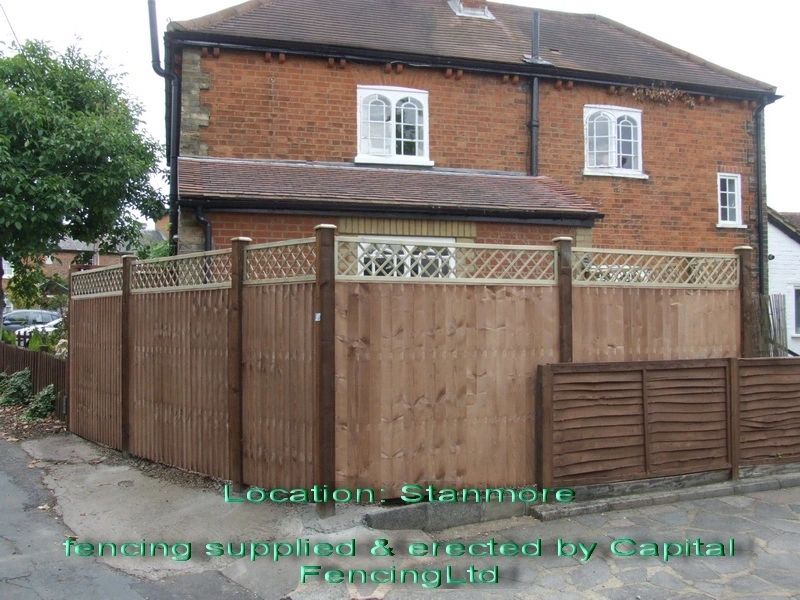
closeboard fence run installed by Capital Fencing in Potters Bar (EN6)panel fence install installed by Capital Fencing in Potters Bar (EN6)trellis-topped fence installed by Capital Fencing in Potters Bar (EN6)bespoke decorative fence installed by Capital Fencing in Potters Bar (EN6)

Before you book dog-proof fencing in Potters Bar

Gravity latch weight and pivot balance

A gravity latch relies on its own weight to drop the bar into the keep as the gate closes, so the pivot point and the latch's weight distribution both need to be correct for it to fall reliably rather than sticking mid-drop.

A latch that's been repainted heavily can gain enough extra weight or friction at the pivot to stop working properly, which is worth checking before assuming the mechanism itself has failed.

Sleeper edging and planters

Softwood landscape sleepers are pressure-treated to a ground-contact use class and are generally cheaper and more consistent in size than reclaimed hardwood railway sleepers, which vary in condition and may carry historic residues such as creosote unsuitable for areas near planting or seating.

Sleepers used for raised beds or low retaining edges are usually stacked and pinned with long timber screws or steel rebar driven through pre-drilled holes rather than simply stacked loose, since an unpinned stack can shift as the ground behind it settles.

Where a sleeper structure is also expected to retain a meaningful depth of soil rather than just edge a bed, it moves into proper retaining-wall territory with its own drainage and structural considerations.

Diagnosing which of the three usual causes applies

Almost every failing gate comes down to the hinge side, the frame or the ironmongery, and diagnosing which one it actually is before quoting avoids paying for a new gate that wasn't needed.

We check hinge fixings, frame square and latch alignment separately on site rather than assuming from how the gate looks.

Repairing a fence near a tree protected by a Tree Preservation Order

Digging a new post hole or footing close to a protected tree's root zone can be restricted even where the fence itself needs no permission, since the restriction is about protecting the tree's roots rather than the fence.

Where root heave from a nearby tree has caused the damage being repaired, it's worth checking whether the tree is protected before digging anywhere near it, since hand-digging around roots or repositioning the post slightly may be required instead of a standard footing.

Fixing classes for bolt-down base plates

Anchor fixings for base plates are classed by their approved use in cracked or uncracked concrete, and a fixing rated only for uncracked concrete can under-perform badly if used on an older slab that's already showing hairline cracking.

The manufacturer's technical data sheet gives pull-out and shear values for a specific concrete grade and thickness, and these figures are checked against the actual slab on site rather than assumed from a general spec sheet.

Trellis toppers for extra height and privacy

Adding a trellis topper to an existing or new fence is a common way to gain extra height for climbing plants or additional privacy without exceeding permitted development limits for a solid boundary.

Because trellis is inherently more open than solid panel, it doesn't usually count the same way toward the 2m height rule in every case, but it's still worth checking with the local authority since interpretations vary.

A trellis topper needs its own bracing where it's more than a token height, since a tall panel of trellis catching wind behaves more like a sail than most people expect.

Security at a garage flank wall boundary junction

A garage flank wall often forms part of the boundary line itself, and the gap between the end of the garage and the next boundary feature is a common blind spot that gets missed when a security upgrade focuses only on the open fence sections either side.

Where a flank wall is lower than the rest of the boundary's security height, an additional short fence run or topping across just that gap brings the whole line back up to a consistent standard.

Washing off mould before treatment

Black mould spotting, distinct from green algae, tends to appear on shaded timber with poor airflow behind it, such as a fence panel sitting close against dense shrub planting on one side.

A proprietary fungicidal wash left to dwell before rinsing removes far more of the surface growth than a plain water wash, which can spread spores across the surface rather than lifting them off.

Cutting back planting to restore airflow behind the affected section addresses the underlying cause; treating the timber alone without improving ventilation usually sees the mould return within a year.

Laminated engineered timber posts

Laminated posts are built up from several thinner timber sections glued face to face under pressure, which can even out natural defects like knots across the section and produce a straighter, more dimensionally stable post than a single sawn piece of the same size.

Because the lamination process distributes any given defect across a smaller proportion of the overall section, a laminated post is generally less likely to fail suddenly at a single knot or grain irregularity than solid sawn timber.

The adhesive bond line itself becomes a potential weak point if it's exposed to sustained moisture without an appropriate exterior-rated glue, so laminated posts intended for outdoor use need adhesives specifically rated for damp exposure rather than interior-grade bonding.

Protecting a shared alley during material delivery

A shared rear alley used by several households for bin access can't be blocked completely for a full day without agreement, so materials are often moved through in stages between other residents' access needs rather than left stacked across the full width.

Trailing cables, tools and offcuts left in a shared passage are a trip hazard for neighbours as well as the crew, so keeping the alley clear at the end of each working day matters even if the job isn't finished.

Any damage to the alley surface itself — cracked paving, a scraped wall corner from a wide panel — is worth flagging to the client immediately, since a shared area often has joint liability that's harder to unpick after the event.

Handling scope changes discovered once a repair is underway

A repair quoted from an initial inspection sometimes turns out larger once work starts — a post probed as sound at the surface but soft further down, or a neighbouring post found to be equally close to failure.

Agreeing a clear process for confirming any change in scope with the client before continuing, rather than proceeding on assumption, avoids disputes about what was and wasn't included in the original repair.

Wind loading on a solid gate face

A solid gate face catches far more wind than an open-bar design of the same size, which puts extra strain on the hinge side over time — this is worth factoring in when repairing or replacing a gate on an exposed frontage.

Bracing the frame diagonally helps a solid gate resist that racking force in a way a simple butt-jointed frame doesn't.

Wet rot versus dry rot fungi in fence timber

Wet rot fungi need sustained high moisture content to establish and spread, and are the more common cause of decay in buried or ground-contact fence posts that stay consistently damp.

Dry rot, despite the name, also needs moisture to establish initially but can then spread through drier surrounding material via root-like strands, making it more of a concern in enclosed, poorly ventilated timber structures than open-air fencing.

In practice, most fence post decay encountered on typical garden and boundary fencing is wet rot rather than dry rot, given the open, ventilated conditions most fencing timber sits in.

Skip permits on a public highway

A skip placed on a public road or pavement, rather than entirely on private land such as a driveway, generally needs a permit from the local council's highways department beforehand.

Permits usually specify how the skip must be lit and marked, particularly overnight, and there are often restrictions near junctions or on narrower streets.

Placing a skip on the highway without the required permit can result in a fine, so it's worth checking with the skip hire company or council directly rather than assuming it's not needed.

Dropped kerbs and boundary gate positions

A dropped kerb is authorised for a specific width and position, and a gate or fence opening that doesn't line up with it can create a technically unauthorised vehicle crossing over the footway.

Where a driveway gate is being repositioned or widened, it's worth checking whether the dropped kerb needs to be extended or moved to match, which is a separate application to the council's highways department.

Parking a vehicle over a kerb that hasn't been properly dropped, even briefly during works, can also draw attention from the local authority in some areas.

Headroom and finger-trap gaps on gates

A sliding gate leaves a running gap between the gate and its guide posts that can trap fingers if it isn't guarded, and a swing gate's hinge side needs enough clearance to close without shearing anything caught in it.

Guards or brush strips over the trap points are a small addition that matters more on a gate used by children or the public than on a compound gate few people approach closely.

Security fencing directly alongside a public footpath

A fence running hard against a public footpath needs anti-climb toppings avoided or set back for pedestrian safety, and any gate opening onto the footpath must not swing out into it, since an outward-opening gate on a shared path is both a trip hazard and often a rights-of-way issue.

Where the footpath is well used, sightlines along the path are kept open at any pinch point rather than allowed to be blocked entirely by a solid fence, partly for personal safety of path users after dark.

How ground type affects a repair

Clay ground that's shifted with the seasons is a common underlying cause of a post working loose even where storm damage gets the blame, so a repair on clay sometimes needs a deeper reset than the original installation used.

Where ground has settled unevenly across a run, we check whether that settlement is still ongoing before repairing, since fixing into ground that's still moving risks the same failure recurring.

Five-bar field gate hardware and repair

A five-bar field gate is built for spanning wide openings rather than security, with widely spaced horizontal bars and a diagonal brace, and its hardware is typically heavier gauge than a garden gate's to cope with livestock or vehicle contact.

Hanging and heel posts on this type carry more load per fixing than domestic posts, so repairs often focus on the post fixing itself rather than the gate frame.

Waste carrier duty of care for site waste

Anyone removing fencing, decking or building waste from a client's property in the course of business needs to be a registered waste carrier with the Environment Agency, and should be able to provide a waste transfer note showing where the material was taken.

Treated timber, in particular, is classed differently to plain untreated offcuts and generally can't simply go on a bonfire or into general household waste, since some older preservatives fall under hazardous waste rules.

Asking a contractor for their waste carrier registration number and a transfer note isn't excessive caution — the householder can be liable if waste is later found fly-tipped and traced back to the job.

Waste carrier duty of care for old fencing

Under the Environmental Protection Act 1990, anyone arranging removal of construction waste such as old fence panels and posts has a 'duty of care' to ensure it's handled by a registered waste carrier.

Asking to see a waste carrier's registration number, and requesting a waste transfer note for larger quantities, is a reasonable and legitimate request rather than an unusual one.

Householders can be held responsible if waste from their property is later found fly-tipped, even where they paid someone else to take it away, which is why checking credentials matters.

A survey checklist for ground conditions

A useful pre-quote ground check covers a short list of practical questions: what does a trial hole show in the first 300-450mm, is there any standing or seeping water, are there visible roots or a stump near the line, and does the ground rise or fall noticeably along the run.

It's also worth asking the client directly about anything not visible on the surface — a known soakaway, an old outbuilding, a buried oil tank or a recent extension — since owners often know details that a visual survey alone won't reveal.

Recording these findings against each section of the run, rather than a single note for the whole boundary, is what allows post depth and base type to be specified accurately rather than uniformly guessed.

On dog-proof fencing in Potters Bar you get the same crew from first site visit to hand-over. That's the whole model — small team, match-what-you-have spec, written quote before we start. Roads such as Hatfield Road and The Avenue are typical of the local layout. Potters Bar station is a useful local reference point. South Mimms services, at the M25/A1(M) interchange, lies on the edge of the town.

Get In Touch

Get My Free Quote — 24h Response

No callout fee · Free site visit · Friendly local team covering London & Hertfordshire.

Call us
07885907880
or 02036484746
Email
capital_fencing@yahoo.com
WhatsApp
Message us anytime
Area
London & Hertfordshire
Payment
Card payments accepted

Pay by debit or credit card, bank transfer or cash once the work and price are agreed. No deposit taken online.

Request a Free Quote

We'll get back to you within 24 hours.

Free Site Visit No Callout Fee
Call WhatsAppQuote