London & Hertfordshire Free Site Visit
bespoke wooden gate installed by Capital Fencing in Waltham Forest (E4)
Waltham Forest · E4 / E10 / E11 / E17

Driveway Double Gates, Waltham Forest: engineered-to-load spec for Victorian terraces across Walthamstow and Leyton

Capital Fencing installs driveway double gates across Waltham Forest and out toward hackney and haringey. What separates a driveway double gates job from a standard boundary is the detail: 3.0m opening hardwood double gates on ball-race hinges with drop bolt and top slide bolt. That's the work, not the marketing. Roads such as Chingford Mount Road and Forest Road are typical of the local layout. Lloyd Park is a useful local reference point. Waltham Forest runs from the tightly-terraced streets of Leyton in the south to the more spacious detached housing of Chingford in the north, close to Epping Forest.

Capital Fencing installs driveway double gates across Waltham Forest and out toward hackney and haringey. What separates a driveway double gates job from a standard boundary is the detail: 3.0m opening hardwood double gates on ball-race hinges with drop bolt and top slide bolt. That's the work, not the marketing. Roads such as Chingford Mount Road and Forest Road are typical of the local layout. Lloyd Park is a useful local reference point. Waltham Forest runs from the tightly-terraced streets of Leyton in the south to the more spacious detached housing of Chingford in the north, close to Epping Forest.

Why this spec, for homes with off-street parking wanting matched double vehicle gates, manual or automated

  • measured on site off the actual brick piers, not a builder's plan set
  • prepared for future automation even when you're not fitting it yet — cabling ducts under the drive, hinges rated for it
  • matched pedestrian gate carried in the same visit so alignment and finish are identical

Typical driveway double gates briefs in Waltham Forest

  • 4.0m composite-faced double gates prepared for underground automation
  • matched pedestrian gate alongside 3.6m double vehicle gates on a corner-plot driveway
Default spec

How we build driveway double gates in Waltham Forest

44mm framed, tongue-and-groove or composite infill, hot-dip galvanised or stainless ironmongery, sized to the actual masonry opening not the drawing. On Waltham Forest jobs we adjust for wind funnelled off the lea valley regularly takes out weak panel fences on the eastern boundaries.

Property mix locally: Victorian terraces across Walthamstow and Leyton, 1930s semis in Chingford, and post-war estates around Leyton. Typical gardens: mid-length rear gardens, several sloping toward the Lea Valley with heavy clay. Postcodes we regularly service: E4, E10, E11, E17.

What goes wrong

Common failure modes on driveway double gates

  • not levelling the closing point — one leaf drags on the drive within a year
  • under-sized posts or brickwork — automation loads pull them out of plumb inside a season

Driveway Double Gates FAQs — Waltham Forest

Do you fit into existing brick piers or install new?

On driveway double gates jobs in Waltham Forest (E4), our default answer is: 44mm framed, tongue-and-groove or composite infill, hot-dip galvanised or stainless ironmongery, sized to the actual masonry opening not the drawing. For context: prepared for future automation even when you're not fitting it yet — cabling ducts under the drive, hinges rated for it. Structural spans and post depths calculated, not guessed.

Can pedestrian and vehicle gates share the same finish and ironmongery?

Across Waltham Forest we spec around wind funnelled off the lea valley regularly takes out weak panel fences on the eastern boundaries, so on driveway double gates that usually means iroko hardwood on galvanised ironmongery. We'll walk you through measured on site off the actual brick piers, not a builder's plan set on the site visit before you commit.

What's the widest span before double gates need a wheel or cantilever?

Waltham Forest coverage means we can survey most E4 addresses inside a week — homes with off-street parking wanting matched double vehicle gates, manual or automated. We'll walk you through measured on site off the actual brick piers, not a builder's plan set on the site visit before you commit.

How do you stop a heavy gate dropping on the closing point?

Practically: 3.0m opening hardwood double gates on ball-race hinges with drop bolt and top slide bolt. That's the Waltham Forest version of this job, not a generic one. The honest trade-off is not levelling the closing point — one leaf drags on the drive within a year — which is exactly what our default spec designs out.

Can wooden driveway gates be automated later?

On driveway double gates jobs in Waltham Forest (E4), our default answer is: 44mm framed, tongue-and-groove or composite infill, hot-dip galvanised or stainless ironmongery, sized to the actual masonry opening not the drawing. For context: prepared for future automation even when you're not fitting it yet — cabling ducts under the drive, hinges rated for it. Structural spans and post depths calculated, not guessed.

Recent driveway double gates work
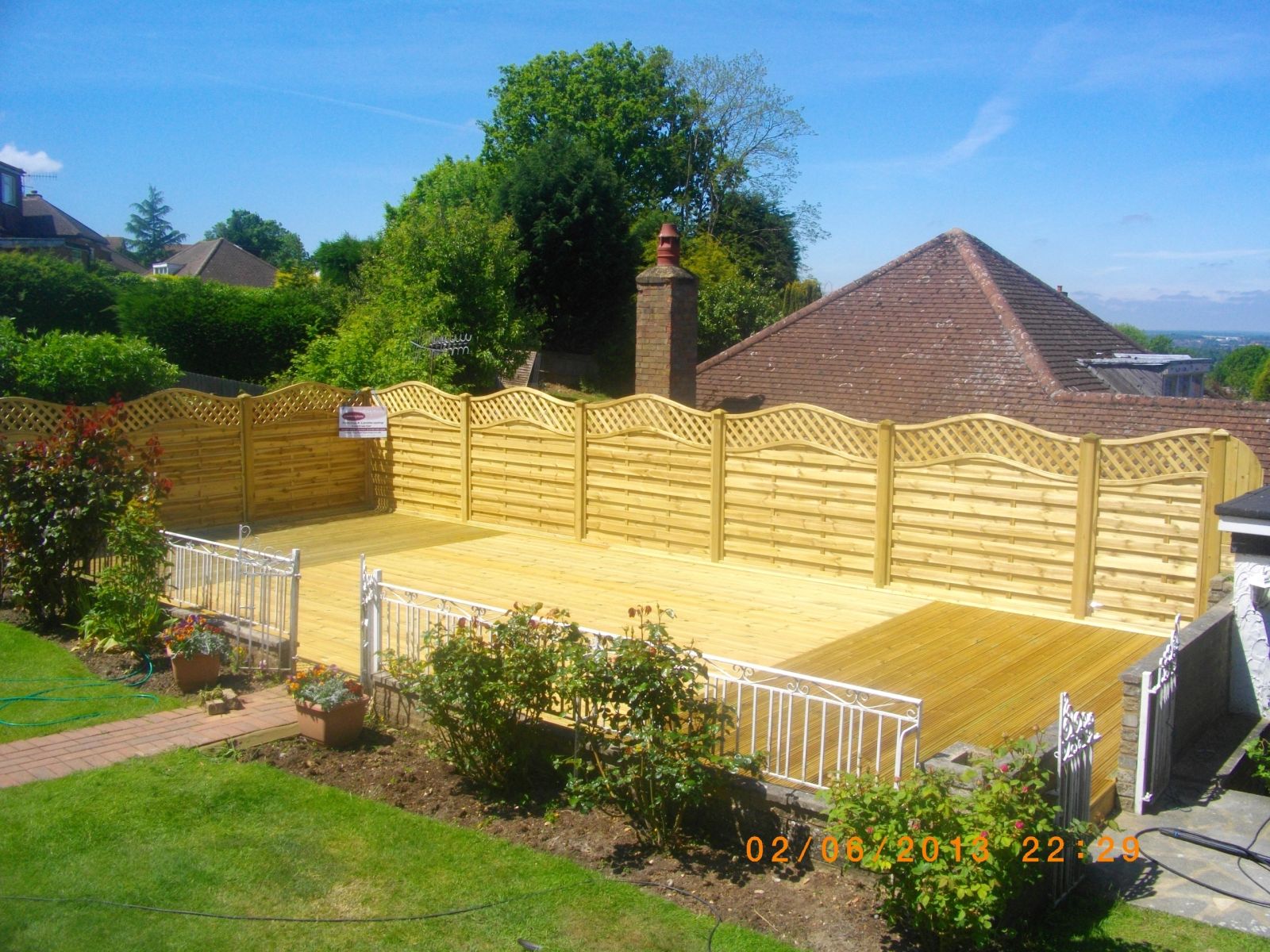
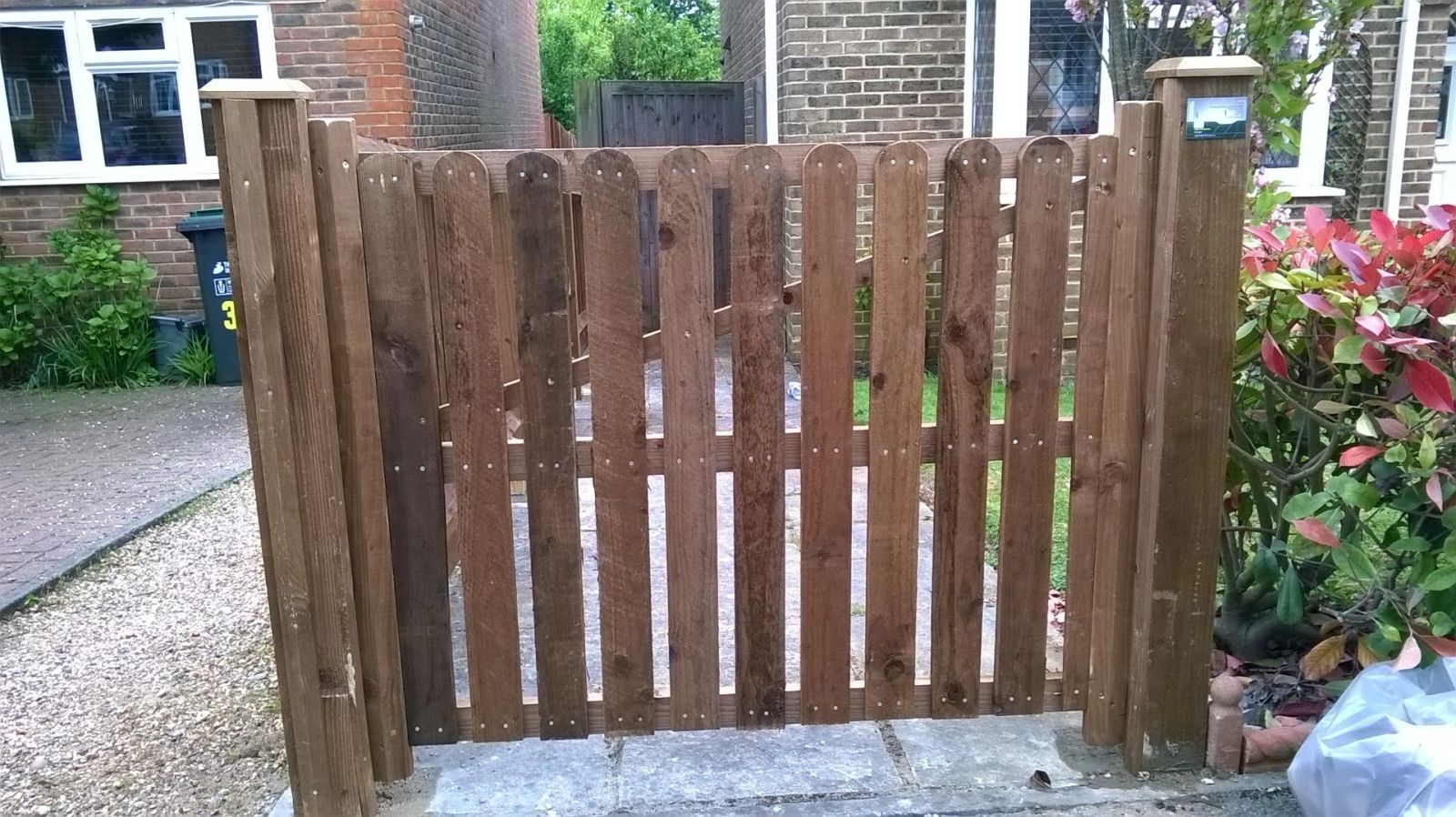
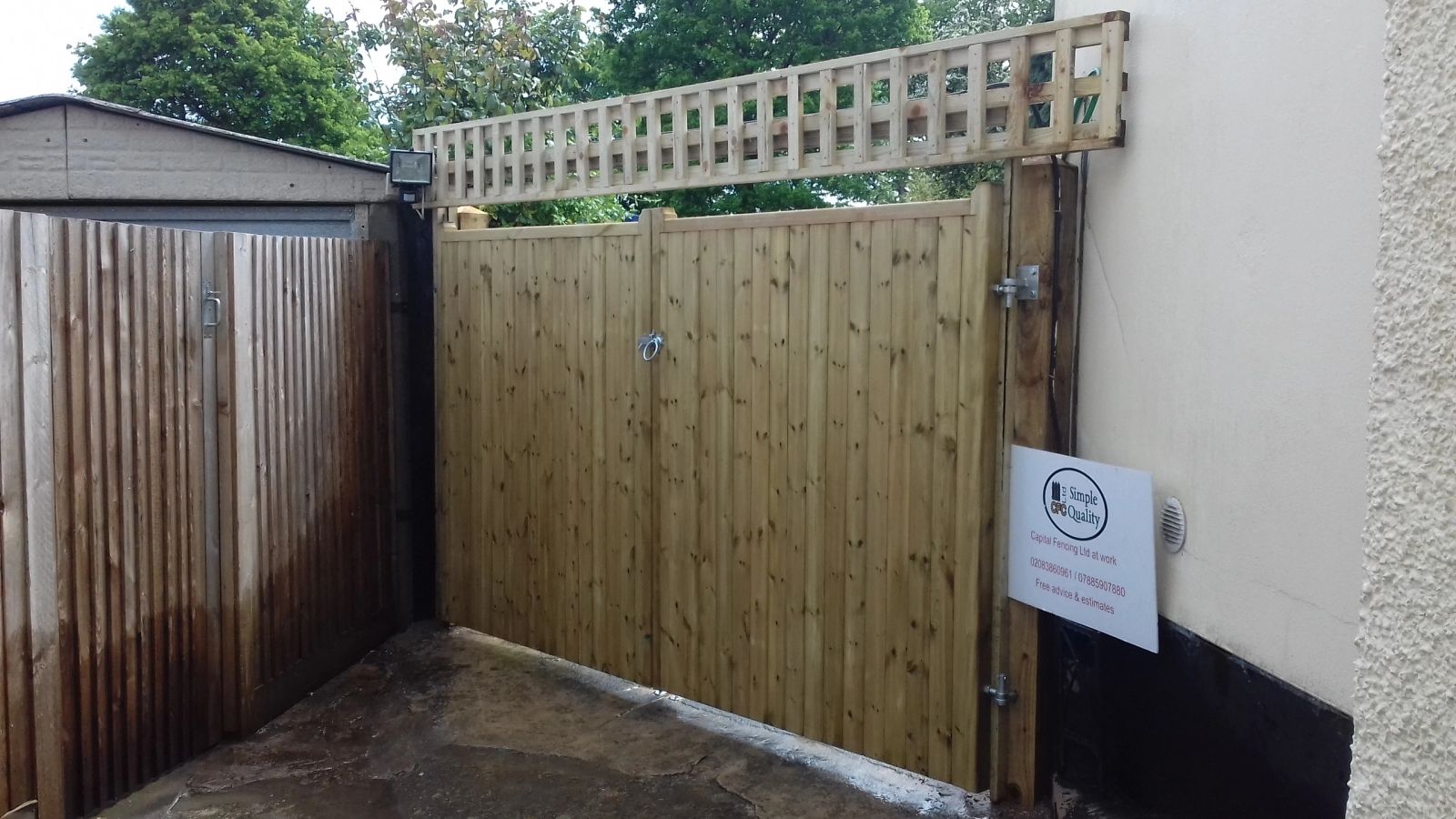
bespoke wooden gate installed by Capital Fencing in Waltham Forest (E4)double driveway gates installed by Capital Fencing in Waltham Forest (E4)hardwood side gate installed by Capital Fencing in Waltham Forest (E4)metal entrance gate installed by Capital Fencing in Waltham Forest (E4)

Driveway Double Gates in Waltham Forest: the practical detail

Noise and timing considerations on a repair

Cutting timber or breaking out old concrete can be noisy, and giving a neighbour advance notice of a repair on a shared boundary avoids unnecessary friction, particularly on a terraced row where several gardens sit close together.

Timing louder stages of a repair to reasonable hours is a simple courtesy that costs nothing and reduces complaints on tightly packed sites.

Side-return gates and narrow access

A gate across a narrow side return between two properties often has very little clearance either side, which limits hinge type and swing direction and can rule out a wide double gate in favour of a single leaf.

We measure the full return width and any obstructions along the swing arc before recommending a hinge position on this kind of opening.

Boundary fencing around church grounds

Church grounds often combine a public-facing boundary that needs to stay welcoming during opening hours with a requirement to secure the building and any lead roof or metalwork against theft outside those hours, which can mean a lower decorative railing at the frontage and a more solid, higher-security line around the building itself.

Listed building status is common on older churches, so railing style and any new fixing into existing stone or brick boundary walls usually needs consent before work starts.

Subdividing a garden and creating a new boundary

Splitting part of a garden off for a new dwelling, annexe, or sale to a neighbour creates a brand new legal boundary that needs to be properly defined and registered with the Land Registry, not just marked with a fence.

A fence alone doesn't create or confirm legal ownership of subdivided land — the conveyancing and registration is what actually establishes the new boundary in law.

Anyone considering this kind of garden subdivision should involve a solicitor for the legal transfer before, rather than after, any physical fence goes in to mark the new line.

Fencing near listed buildings

Listed building consent applies to works that affect the character of a listed building, and that can extend to boundary treatments within its curtilage even where the fence itself isn't old or notable.

In practice this usually means sticking to traditional materials and profiles — timber rather than metal panel systems, painted rather than stained finishes matching existing joinery — and checking with the conservation officer before ordering rather than after installation.

Unauthorised alterations near a listed building can require reversal at the owner's cost, so a five-minute enquiry call is cheap insurance against a much more expensive mistake.

Boundary fencing for HMOs and multi-occupancy buildings

Houses in multiple occupation often have higher footfall through shared external areas than a single-family home, which points toward more durable gate hardware and fencing specified for frequent use rather than the lighter fittings suited to a quiet family garden.

Bin and cycle storage for several households sharing one plot needs more space and more robust screening than a single-household equivalent, and is worth planning at the same time as any boundary work.

Landlords managing several such properties often prefer a single consistent spec across their portfolio, both for cost predictability and so that future repairs use readily available standard parts.

Drainage consents affecting boundary works

Altering ground levels, hardstanding or drainage patterns near a boundary can affect surface water flow onto a neighbour's land, and in some cases needs consent from the local authority or, for work near a watercourse, from the relevant drainage authority or the Environment Agency.

Diverting water so that it discharges onto next door's garden rather than soaking away on the original plot is a common and avoidable source of neighbour disputes, separate from any formal consent requirement.

Where boundary work is combined with a change in levels or new hard surfacing, it's worth checking whether the combined works trigger a drainage consent even if the fence itself wouldn't on its own.

Coordinating a dropped kerb with a new vehicle security gate

A new vehicle gate needs a dropped kerb or existing crossover in the right position before it's ordered, since a gate that opens onto a kerb face rather than a level crossover will scrape or jam on every use.

Where no dropped kerb exists, this is a highway authority matter separate from the fencing work itself and needs its own approval and lead time, which is worth flagging early so the gate installation isn't delayed waiting on it.

Safety standards for automated gates

Automated gates fall under machinery safety regulations, which means a force-limiting device or safety edge to stop the gate on contact with an obstruction, and photocells or other sensors to detect someone in the gate's path, aren't optional extras.

A risk assessment covering the specific installation — proximity to a public footpath, likely pedestrian use, manual override in a power cut — should be part of any automation job, not an afterthought once the gate's already built.

Annual servicing of the motor, safety sensors and mechanical stops keeps an automated gate compliant and catches wear before it becomes a safety issue rather than just an inconvenience.

Mews and courtyard properties

Mews and courtyard developments typically share a single vehicle access route and sometimes a communal boundary treatment around the whole courtyard rather than individual garden fences.

Because the courtyard is often cobbled or block-paved right up to the building line, there's frequently no soil to dig a conventional post hole into, and fixings need to go into a paved base plate or bolted shoe instead of a concreted post.

Any alteration to a shared courtyard boundary usually needs the agreement of the other mews owners, since the fence is commonly held in joint ownership rather than allocated to one property.

Hedge pressure on a fence line

An unmanaged hedge planted close to a boundary fence pushes against the panel or rail as it thickens, and that steady lateral pressure can bow a panel or rack a post over several seasons even without any storm involved.

Cutting the hedge back from the fence line at repair time reduces the chance of the same section failing again shortly after.

Relocating a builders' compound fence as a project phases

A builders' compound fence is often installed in stages as a construction project progresses, with the secure line moving inward as completed areas are handed over and outward again if the site boundary expands into an adjoining phase.

Because compound fencing is frequently relocated, panel systems with reusable feet or block-based supports are generally favoured over concreted posts, even though a concreted post gives a more permanent fixing where the boundary line is fixed for the whole project.

Use Class 4 versus Use Class 3 timber

The European use-class system grades timber by the exposure it's treated to withstand: Use Class 3 covers timber above ground but exposed to weather, such as capping or fascia boards, while Use Class 4 covers timber in ground contact or fresh water, such as posts.

A Use Class 4 post buried in soil needs a deeper, longer-lasting retention of preservative than a Use Class 3 rail bolted between two posts, because the ground contact zone stays damp for far longer than an exposed but well-drained horizontal timber.

Specifying the wrong class isn't always obvious at installation, since both can look identical when new, but it shows up years later as premature rot concentrated at ground level rather than along the whole length.

Play-safe detailing near a boundary

Where a fence runs alongside a play area, sharp pale tops, low horizontal rails that invite climbing, and gaps that could trap a limb are all avoided in favour of rounded caps and rail spacing that doesn't create a ladder.

This detailing sits alongside, rather than instead of, the security spec — a boundary can still be climb-resistant and impact-rated while removing the specific hazards that matter next to children.

Terraced housing and rear access

Victorian and Edwardian terraces were rarely built with side access, which means materials for a rear garden fence often have to go through the house, over a shared side return, or down a narrow rear alley shared with several other properties.

That access constraint changes the practical choice of materials — full concrete gravel boards and long panels are harder to move through a narrow hallway than shorter timber sections carried in and built up on site.

It's also why timing matters on these jobs: a delivery that blocks a shared alley for half a day needs agreeing with neighbours in advance, not discovering on the morning of the job.

Gate widths for cycle access

A side gate wide enough for a wheelbarrow isn't automatically wide enough for a cargo bike or a bike with panniers, which is worth checking against the actual bikes a household owns rather than a generic standard width.

Cycle storage tucked behind a side gate also needs a gate that can be propped open safely while wheeling a bike through, rather than one that swings shut under its own weight mid-manoeuvre.

Where cycle access is a genuine daily-use requirement, a slightly wider opening at quote stage is a cheap addition compared with widening an existing narrow gate later.

Boundary fencing between garden and agricultural land

Where a residential garden backs onto agricultural land, stock-proof fencing standards relevant to livestock containment may be a factor the adjoining farmer expects, separate from purely decorative garden fencing considerations.

Responsibility for maintaining this kind of boundary can be split differently to a typical suburban arrangement, sometimes reflecting historic agricultural tenancy agreements rather than standard residential conveyancing norms.

Checking with the adjoining landowner and the title documents together gives a fuller picture than assuming the same rules apply as between two ordinary garden neighbours.

Matching new post heights into an existing run

Replacing a single failed post partway along an established run means matching its height and the position of any mortices exactly to its neighbours, since posts that are even 20-30mm out throw the top line of the whole run visibly off level.

Where the ground has settled unevenly along the run since it was first built, matching height to the immediate neighbouring posts rather than to a theoretical original level usually gives a better visual result.

It's worth checking the existing posts' actual spacing before ordering a replacement panel, since older or imperial-measured runs sometimes used spacing that doesn't match a modern metric panel exactly.

Boundary near a railway or utility corridor

A boundary next to a railway or utility corridor may be governed by the operator's own standards as well as normal planning rules, and access for their maintenance staff sometimes has to be preserved even where the land is privately owned.

Any work close to a railway boundary generally needs the operator notified in advance, and specific fence types or heights may be mandated rather than left to the landowner's choice.

Mixing old and new timber colour on a repair

Freshly treated timber is noticeably lighter or greener than an older run that's already weathered, and that colour difference is temporary rather than a defect, evening out over the first year or two of UV exposure and weathering.

Where colour match matters immediately, a treatment or stain closer to the weathered tone can be applied to the new timber, though it won't be an exact match on day one.

Specification driven by an insurer's boundary requirements

Some commercial and high-value premises have boundary security requirements set by an insurance policy — a minimum fence height, mesh type or lock standard — that the fencing spec has to meet regardless of what would otherwise be chosen.

Where a specific requirement applies, it's worth getting it in writing from the policy documents before quoting, since fitting to a general standard when a stricter one is required can leave a gap the client didn't expect.

Repairing a spot damaged repeatedly by a dog

A dog that digs at the base of a fence or chews at exposed board edges tends to concentrate damage at one recurring spot rather than spreading it along the whole run, which makes a localised repair — a buried mesh skirt, a metal kick-plate — more effective than a general fence upgrade.

Addressing the underlying cause, such as blocking the specific gap the dog is trying to reach through, matters as much as the physical repair, since a repaired section without that change is often damaged again in the same place.

Driveway Double Gates across E4, E10, E11, E17 is a regular run for us. We'll quote honestly, tell you if driveway double gates isn't the right answer for your site, and book the job in within a week or two of a signed quote. structural spans and post depths calculated, not guessed. Roads such as Hoe Street and Forest Road are typical of the local layout. Lloyd Park is a useful local reference point. Chingford's plots back onto Epping Forest in places, where boundary changes near forest land need care.

Get In Touch

Get My Free Quote — 24h Response

No callout fee · Free site visit · Friendly local team covering London & Hertfordshire.

Call us
07885907880
or 02036484746
Email
capital_fencing@yahoo.com
WhatsApp
Message us anytime
Area
London & Hertfordshire
Payment
Card payments accepted

Pay by debit or credit card, bank transfer or cash once the work and price are agreed. No deposit taken online.

Request a Free Quote

We'll get back to you within 24 hours.

Free Site Visit No Callout Fee
Call WhatsAppQuote