London & Hertfordshire Free Site Visit
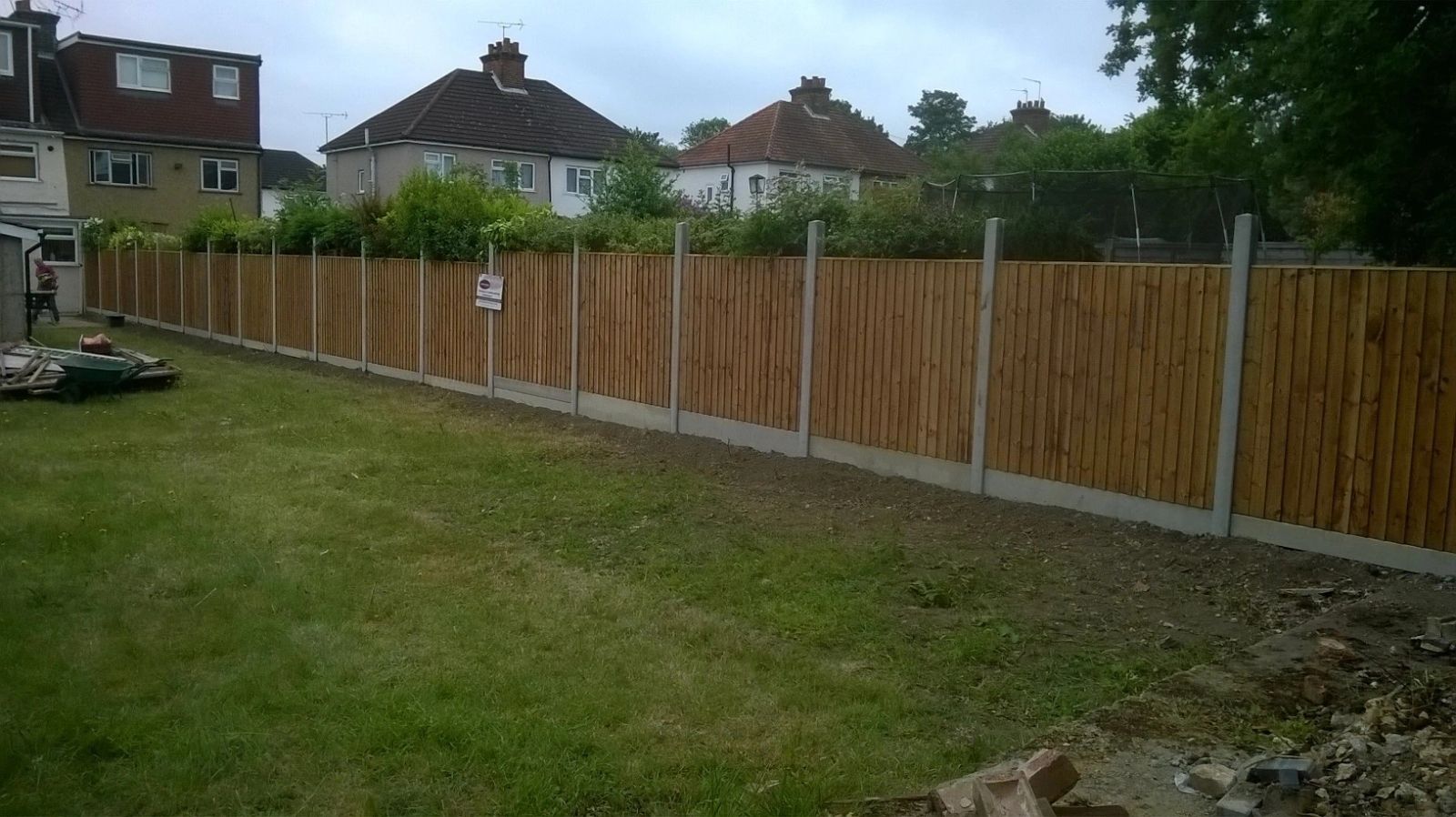
closeboard fence run installed by Capital Fencing in Camden (NW1)
Camden · NW1 / NW3 / NW5 / N7 / WC1

Landlord Fencing, Camden: portfolio-friendly spec for Georgian and Victorian townhouses in Primrose Hill and Hampstead

We approach landlord-grade fencing in Camden from the failure end backwards. Cheapest lap panels racking in wind because posts were shallow — we always concrete to 600mm minimum on landlord work — that's the single most common thing we're called back to fix, and it's the first thing our spec addresses. Roads such as Camden Road and Chetwynd Road are typical of the local layout. Parliament Hill Fields is a useful local reference point. Hampstead Heath borders the borough's northern edge, and several streets run close to the Heath or the Regent's Canal.

We approach landlord-grade fencing in Camden from the failure end backwards. Cheapest lap panels racking in wind because posts were shallow — we always concrete to 600mm minimum on landlord work — that's the single most common thing we're called back to fix, and it's the first thing our spec addresses. Roads such as Camden Road and Chetwynd Road are typical of the local layout. Parliament Hill Fields is a useful local reference point. Hampstead Heath borders the borough's northern edge, and several streets run close to the Heath or the Regent's Canal.

Why this spec, for buy-to-let owners and letting agents

  • individual boards or single panels can be swapped without touching the whole run
  • concrete posts and gravel boards keep the ground contact off the timber — that's where landlord fences usually fail
  • one crew, one price sheet across multiple properties — inventory-friendly for portfolio owners

Typical landlord-grade fencing briefs in Camden

  • cheapest defensible spec that will still stand up to the next storm and inventory
  • boundary run replaced between two tenancies inside a single working week
Default spec

How we build landlord-grade fencing in Camden

6ft closeboard on concrete posts with gravel boards, mid-rail capped, softwood side gate with padlock hasp. On Camden jobs we adjust for listed-building and conservation constraints across most postcodes — timber and painted profiles only at the front.

Property mix locally: Georgian and Victorian townhouses in Primrose Hill and Hampstead, plus dense terraces around Kentish Town and Gospel Oak. Typical gardens: small walled courtyards behind period houses; several conservation areas restrict visible materials. Postcodes we regularly service: NW1, NW3, NW5, N7, WC1.

we bill via one purchase order across a portfolio, provide before/after photos for the inventory clerk, and can be on and off site inside a tenancy void.

What goes wrong

Common failure modes on landlord-grade fencing

  • cheapest lap panels racking in wind because posts were shallow — we always concrete to 600mm minimum on landlord work
  • using bare softwood posts on ground contact — three winters and they're gone

Landlord Fencing FAQs — Camden

What's the cheapest defensible spec you'd stand behind for a rental?

On landlord-grade fencing jobs in Camden (NW1), our default answer is: 6ft closeboard on concrete posts with gravel boards, mid-rail capped, softwood side gate with padlock hasp. For context: concrete posts and gravel boards keep the ground contact off the timber — that's where landlord fences usually fail. One crew, one price sheet, before-and-after photos as standard.

Can you match existing fencing across neighbouring rental plots?

Across Camden we spec around listed-building and conservation constraints across most postcodes — timber and painted profiles only at the front, so on landlord-grade fencing that usually means pressure-treated closeboard on concrete posts. We bill via one purchase order across a portfolio, provide before/after photos for the inventory clerk, and can be on and off site inside a tenancy void.

Can you turn a rental boundary around between tenancies?

Camden coverage means we can survey most NW1 addresses inside a week — buy-to-let owners and letting agents needing durable boundaries between tenancies. The honest trade-off is cheapest lap panels racking in wind because posts were shallow — we always concrete to 600mm minimum on landlord work — which is exactly what our default spec designs out.

Do you invoice per property or per portfolio?

Practically: boundary run replaced between two tenancies inside a single working week. That's the Camden version of this job, not a generic one. The honest trade-off is cheapest lap panels racking in wind because posts were shallow — we always concrete to 600mm minimum on landlord work — which is exactly what our default spec designs out.

Do you handle the removal and skip for the old fence?

On landlord-grade fencing jobs in Camden (NW1), our default answer is: 6ft closeboard on concrete posts with gravel boards, mid-rail capped, softwood side gate with padlock hasp. We bill via one purchase order across a portfolio, provide before/after photos for the inventory clerk, and can be on and off site inside a tenancy void.

Recent landlord fencing work
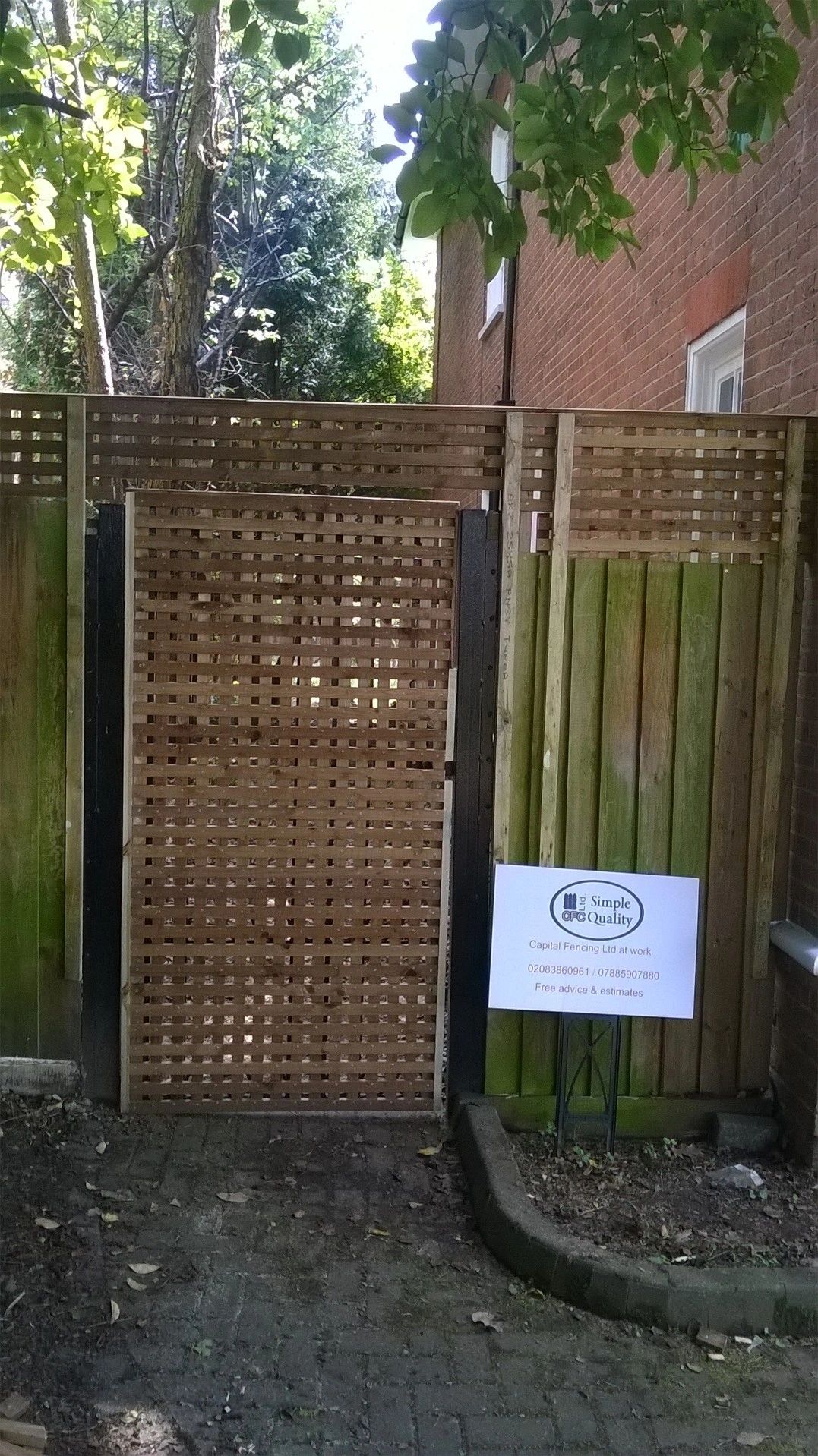
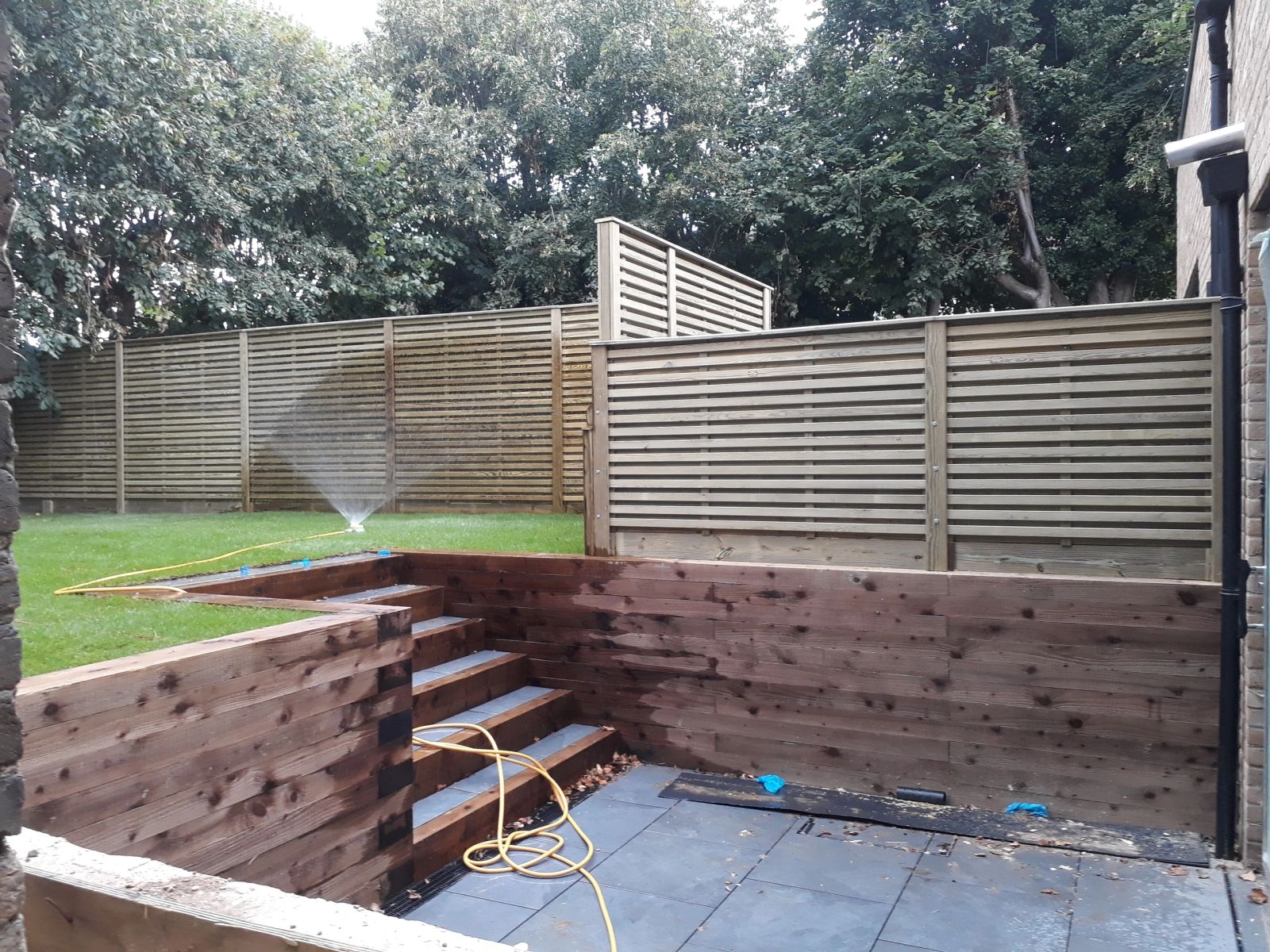
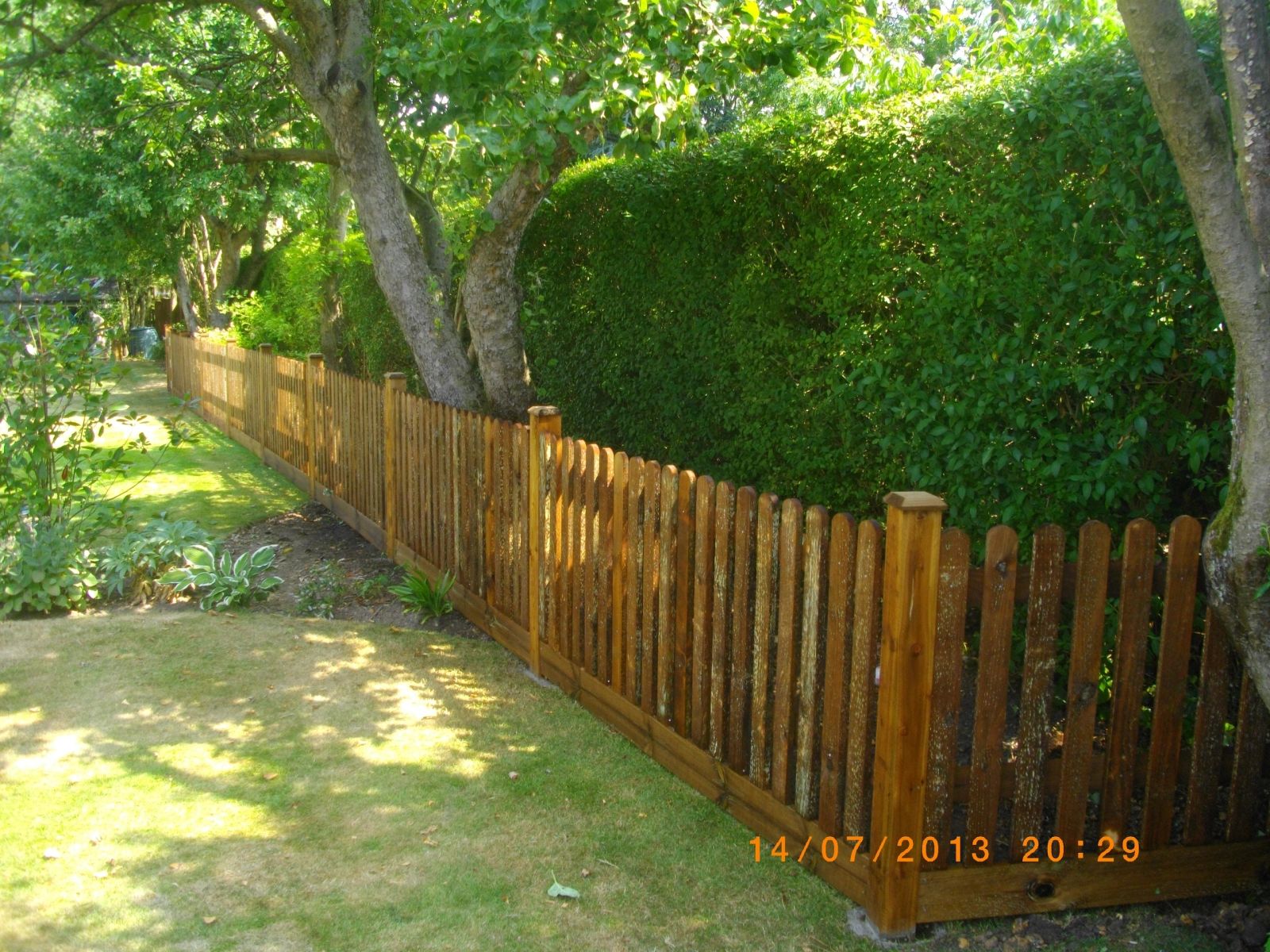
closeboard fence run installed by Capital Fencing in Camden (NW1)panel fence install installed by Capital Fencing in Camden (NW1)trellis-topped fence installed by Capital Fencing in Camden (NW1)bespoke decorative fence installed by Capital Fencing in Camden (NW1)

Before you book landlord fencing in Camden

Community-wide hedgehog gap linking across multiple boundaries

A single hedgehog gap in one fence achieves little if the neighbouring boundaries along the same row of gardens remain solid, since the animal still can't move beyond the first connected garden.

Some local wildlife groups now coordinate gap positions across a terrace or street so that a continuous corridor is created through several gardens rather than isolated single gaps.

Where a client is enthusiastic about this, it's worth suggesting they mention it to neighbours early, since agreeing gap positions in advance avoids gaps that don't line up once each fence is finished.

Boundary fencing between church grounds and an adjoining graveyard

Church grounds fencing often has to distinguish between an actively used graveyard area, where ground disturbance for post holes needs careful checking against known burial plots, and a wider grounds boundary where standard fixing methods apply without restriction.

A lychgate or similar traditional entrance feature is frequently retained as the visual and ceremonial entry point even where a plainer security fence is added around the rest of the boundary for practical reasons.

Screening bin storage without blocking access

A dedicated bin store or screening fence at the front of a property needs to balance neatness against practical access — bins still need to be wheeled out to the collection point on the correct day without catching on a narrow gate opening.

Local authority bin sizes vary, so it's worth checking actual collection bin dimensions before building a fixed screen enclosure that later turns out too small for a new bin type.

A slatted or louvred screen usually works better than solid panel for bin storage, since it hides the bins from view while still letting air circulate rather than trapping odour against a solid surface.

Diagnosing sag, frame rack or post lean

A gate that no longer closes properly can be dropping at the hinge corner, racking as a whole rectangle out of square, or simply following a hinge post that's leaning in the ground — each has a different fix and they're easy to mix up from the ground.

We check the post for plumb first, then check the frame diagonals against each other, and only then look at the hinges themselves, since treating a leaning post as a hinge fault wastes a repair visit.

Seasonal ground conditions affecting installation

Clay ground shrinks and cracks in a dry summer and swells again over winter, which can loosen a post fixed during one season and tightened again by movement in another — installation timing is factored into how deep and how set a post needs to be.

A frozen or waterlogged base isn't workable for concreting, so winter installations sometimes need a delayed pour or a temporary prop until ground conditions allow the footing to cure properly.

Distinguishing checking from structural splitting

Surface checking, fine drying cracks confined to the outer face of a timber section, is cosmetic and doesn't usually run deep enough to compromise a post or rail's strength.

A structural split runs further into or along the timber, sometimes right through a section, and can significantly reduce the effective load-bearing area at that point, particularly if it passes through a fixing or joint.

The practical test is depth and location: a shallow surface check away from any fixing is rarely a concern, while any split intersecting a bolt hole, mortice or bearing point is worth assessing before continued use.

Choosing rail section size for a security run

Rails on a palisade or railing run are sized in cross-section to the span between posts, not to the pale height alone, because a rail that's too slender for its span will visibly deflect under a leaning or pushing load.

A heavier box-section or channel rail is specified on wider bays or taller runs, and increasing bay width to save on posts only works if the rail section is upsized to match the extra span.

Thermally modified timber

Thermal modification heats timber to high temperatures in a low-oxygen environment, which alters its cell structure to reduce moisture absorption and improve decay resistance without adding any chemical preservative.

The process also darkens the timber throughout its thickness, which means a scratch or cut face shows a similar colour to the surface rather than exposing paler untreated wood underneath.

The heat treatment reduces the timber's flexural strength somewhat, so thermally modified timber is more commonly specified for cladding and decorative boarding than for load-bearing posts and rails.

Temporary hoarding during other building work

Where fencing or gate work runs alongside a wider building project — an extension, a loft conversion with scaffolding, or a full renovation — a temporary hoarding or site fence often needs to go up before the permanent boundary work can start.

Temporary fencing adjoining a public footpath or road has its own public safety considerations, including visibility for pedestrians and vehicles passing the site.

Sequencing matters here — installing the final boundary fence before other trades have finished moving materials through that access point often means damage that has to be repaired before the job can be signed off.

Security at a garage flank wall boundary junction

A garage flank wall often forms part of the boundary line itself, and the gap between the end of the garage and the next boundary feature is a common blind spot that gets missed when a security upgrade focuses only on the open fence sections either side.

Where a flank wall is lower than the rest of the boundary's security height, an additional short fence run or topping across just that gap brings the whole line back up to a consistent standard.

British Standards relevant to fencing

BS 1722 covers specifications for fences and gates across a range of types including chain link, wooden palisade, and estate fencing, setting out minimum post spacing, wire gauges and timber dimensions for each category.

These standards aren't legally mandatory on a private domestic job in the way building regulations are, but they're the reference point used in commercial specifications, school and public sector tenders, and by insurers assessing whether a boundary structure was reasonably built.

Where a job is speculatively described as 'to British Standard', it's worth confirming which specific part of BS 1722 is meant, since the standard covers a wide family of very different fence types.

Feather-edge board replacement

Individual feather-edge boards on a closeboard fence can be replaced one at a time without disturbing the rest of the run, since each board overlaps the next and is fixed independently to the arris rails.

Matching the taper and width of the existing boards matters more here than on a panel fence, since a mismatched board is visible immediately in a close-run overlap.

Letterbox and parcel provision in a secure gate

A fully secured pedestrian gate can leave deliveries with nowhere to leave post or parcels, so a secure gate-mounted letterbox or a parcel box positioned outside the locked line is worth planning at design stage.

Positioning it so it can be reached without opening the gate keeps the boundary genuinely closed while still allowing routine deliveries.

Specifying fencing for an exposed hilltop plot

Plots on high ground with little surrounding shelter, common on the higher parts of the Chilterns and similar ridgelines, combine strong wind loading with faster-drying but also faster-weathering timber due to constant air movement.

A specification for this kind of site usually combines shorter bay spacing, part-slatted or louvred infill to reduce wind load, and a slightly heavier post section than the same height fence would need in a sheltered valley garden a few miles away.

It's a case where two gardens in the same postcode can genuinely need different specifications purely because of local topography rather than anything about the boundary itself.

Letterplates fitted into gate doors

A letterplate is occasionally fitted into a solid garden or side gate door serving as a secondary entrance, and its position needs to clear internal ledges, braces or a deadlock case before cutting the opening.

Weather sealing around a letterplate in an exterior gate door matters more than on a covered porch door, since the opening faces the weather directly with no canopy above it.

Board orientation and grain direction

A board fixed with its bark side facing outward tends to cup away from the fixings as it dries, since the outer growth rings shrink tangentially more than the inner ones, pulling the board's edges outward.

Orienting the bark side inward on a fence board means any cupping pulls the edges toward the fixing rather than away from it, which keeps the board flatter and the fixings under less repeated strain.

This detail is easy to overlook when boards are cut from mixed stock without checking growth ring orientation, but it becomes visible within a season or two as boards from the same batch cup in opposite directions.

Checking an unstable adjacent structure before repairing the fence against it

Where a fence panel is fixed to or sits hard against a garden wall, shed or outbuilding that's itself showing signs of movement, repairing the fence without addressing the structure it depends on risks the same failure recurring.

This is worth flagging to a client as a separate issue rather than working around it silently, since a fence repair fixed to an unstable wall is only as reliable as that wall.

Preservative retention levels

Retention describes the quantity of preservative chemical actually held within the timber after treatment, usually expressed in kilograms per cubic metre, and is a more meaningful durability measure than the treatment process alone.

Higher retention is specified for higher-risk applications such as ground-contact posts than for above-ground rails, reflecting the greater and more sustained moisture exposure a buried timber faces.

Retention can only be verified by laboratory analysis of a sample core, so in practice specifiers rely on the treatment plant's use-class certification rather than visually inspecting the finished timber, since colour alone doesn't indicate how much preservative penetrated.

Visibility splays on corner plots and driveways

Corner plots and driveways onto a road often have a highway visibility splay — a triangular zone near the junction — where boundary height is restricted so drivers and pedestrians can see each other clearly.

These restrictions are usually lower than the standard 1m front-boundary limit and are enforced by the highway authority rather than just general planning policy, so it's worth checking with the council for any plot near a junction or driveway crossing a footway.

Open railings or low planting within a visibility splay are common solutions where some boundary definition is still wanted without blocking sightlines.

Repairing trellis toppers

A trellis topper is a lighter structure than the fence panel beneath it and is usually the first part of a run to fail in wind, since its open lattice catches gusts differently to a solid panel face.

Where the topper has failed but the panel below is sound, only the topper needs replacing, refitted to the same post caps or brackets as the original.

Matching an existing run

Extending or partially replacing a fence next to an existing run that's staying in place means matching post spacing, panel height, board profile and finish as closely as the existing materials allow.

Exact colour matching on stained or painted timber that's weathered for a few seasons is rarely possible with a fresh coat, so the realistic aim is a close, deliberate match rather than an invisible join.

Where the existing run uses a discontinued panel size or profile, the practical options are sourcing reclaimed stock, having a bespoke run made to match, or agreeing a visible but tidy transition point with the client upfront.

Movement joints in timber cladding

Timber cladding boards fixed edge to edge without any allowance for seasonal expansion can buckle or split as the boards swell in wet weather and have nowhere to expand into.

A small gap left between board ends, or a slightly loose fixing pattern that allows a board to expand slightly within its fixing slots, accommodates this movement without transferring stress into the board itself.

The required gap varies by species and board width, since wider boards and more moisture-reactive species move more in absolute terms than narrow boards of a stable species for the same change in humidity.

On landlord-grade fencing in Camden you get the same crew from first site visit to hand-over. That's the whole model — small team, portfolio-friendly spec, written quote before we start. Roads such as Prince of Wales Road and Malden Road are typical of the local layout. Regent's Canal towpath is a useful local reference point. Hampstead Heath borders the borough's northern edge, and several streets run close to the Heath or the Regent's Canal.

Get In Touch

Get My Free Quote — 24h Response

No callout fee · Free site visit · Friendly local team covering London & Hertfordshire.

Call us
07885907880
or 02036484746
Email
capital_fencing@yahoo.com
WhatsApp
Message us anytime
Area
London & Hertfordshire
Payment
Card payments accepted

Pay by debit or credit card, bank transfer or cash once the work and price are agreed. No deposit taken online.

Request a Free Quote

We'll get back to you within 24 hours.

Free Site Visit No Callout Fee
Call WhatsAppQuote