London & Hertfordshire Free Site Visit
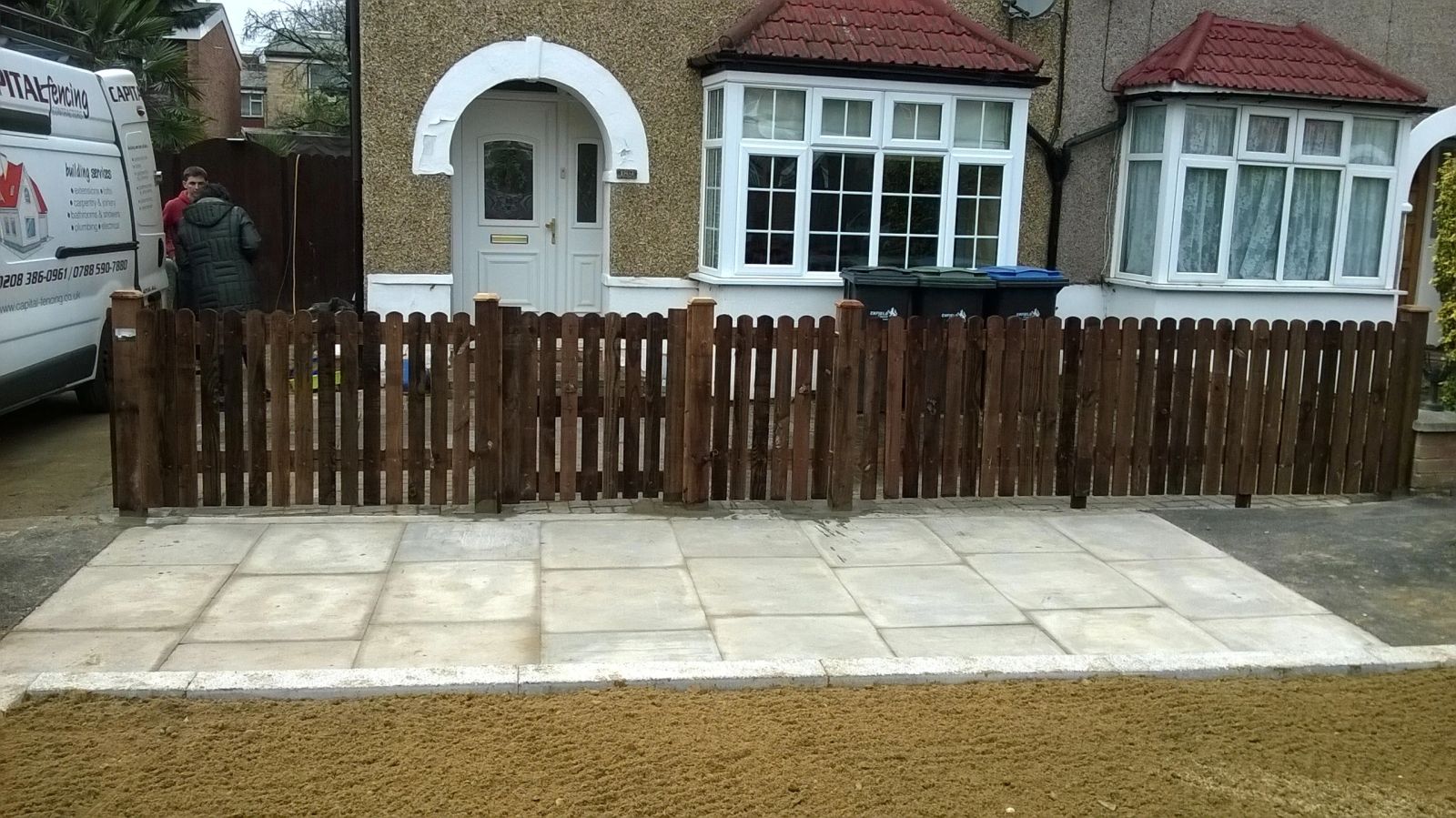
closeboard fence run installed by Capital Fencing in Letchworth Garden City (SG6)
Letchworth Garden City · SG6

Corner Plot Fencing in Letchworth Garden City (SG6)

Corner-plot fencing in Letchworth Garden City is one of our regular briefs — houses on a corner with two road-facing boundaries — visibility, privacy and highway sight-lines all in play. On the world's first garden city — arts and crafts cottages with generous, the failure mode we see most often is the one we design out first. Roads such as Pixmore Way and Hillshott are typical of the local layout. Broadway Cinema is a useful local reference point. Hillshott's Arts and Crafts terraces date from the town's earliest development phase.

Corner-plot fencing in Letchworth Garden City is one of our regular briefs — houses on a corner with two road-facing boundaries — visibility, privacy and highway sight-lines all in play. On the world's first garden city — arts and crafts cottages with generous, the failure mode we see most often is the one we design out first. Roads such as Pixmore Way and Hillshott are typical of the local layout. Broadway Cinema is a useful local reference point. Hillshott's Arts and Crafts terraces date from the town's earliest development phase.

Why this spec, for houses on a corner with two road-facing boundaries — visibility, privacy and highway sight-lines all in play

  • highway visibility standards handled properly — no council-notice rebuild six months in
  • clean junction between two boundary types instead of one tired fence run stopping at a wall
  • corner post carries loads from two directions — we upsize as standard, not as an add-on

Typical corner-plot fencing briefs in Letchworth Garden City

  • front-and-side boundary run around a corner plot keeping highway sight-line to 900mm at the junction
  • matched picket to the front, closeboard to the side, single point of change at the corner post
Default spec

How we build corner-plot fencing in Letchworth Garden City

front boundary 900mm painted picket or bar-and-rail on the visibility splay, side boundary 1.8m closeboard beyond the sight-line. On Letchworth Garden City jobs we adjust for letchworth heritage foundation design rules dictate fence styles, heights and finishes on most streets.

Property mix locally: the world's first garden city — Arts and Crafts cottages, planned terraces and consistent street trees. Typical gardens: generous, leafy plots — many gardens contain protected trees with TPOs. Postcodes we regularly service: SG6.

What goes wrong

Common failure modes on corner-plot fencing

  • carrying a full 1.8m closeboard all the way to the pavement corner — councils issue removal notices for exactly this
  • under-sizing the corner post so the whole two-sided run leans within a year

Corner Plot Fencing FAQs — Letchworth Garden City

How is the corner post different from a normal post?

On corner-plot fencing jobs in Letchworth Garden City (SG6), our default answer is: front boundary 900mm painted picket or bar-and-rail on the visibility splay, side boundary 1.8m closeboard beyond the sight-line. For context: clean junction between two boundary types instead of one tired fence run stopping at a wall. We handle the council conversation as part of the job, not as an after-thought.

Do I need council permission for a corner plot boundary?

Across Letchworth Garden City we spec around letchworth heritage foundation design rules dictate fence styles, heights and finishes on most streets, so on corner-plot fencing that usually means picket or bar-and-rail on the sight-line splay. The honest trade-off is carrying a full 1.8m closeboard all the way to the pavement corner — councils issue removal notices for exactly this — which is exactly what our default spec designs out.

How high can a front boundary be on a corner plot?

North Hertfordshire District coverage means we can survey most SG6 addresses inside a week — houses on a corner with two road-facing boundaries — visibility, privacy and highway sight-lines all in play. The honest trade-off is carrying a full 1.8m closeboard all the way to the pavement corner — councils issue removal notices for exactly this — which is exactly what our default spec designs out.

Where does the highway sight-line splay actually start?

Practically: front-and-side boundary run around a corner plot keeping highway sight-line to 900mm at the junction. That's the Letchworth Garden City version of this job, not a generic one. We'll walk you through highway visibility standards handled properly — no council-notice rebuild six months in on the site visit before you commit.

What happens if my corner boundary blocks a driver's view?

On corner-plot fencing jobs in Letchworth Garden City (SG6), our default answer is: front boundary 900mm painted picket or bar-and-rail on the visibility splay, side boundary 1.8m closeboard beyond the sight-line. We'll walk you through highway visibility standards handled properly — no council-notice rebuild six months in on the site visit before you commit.

Recent corner plot fencing work
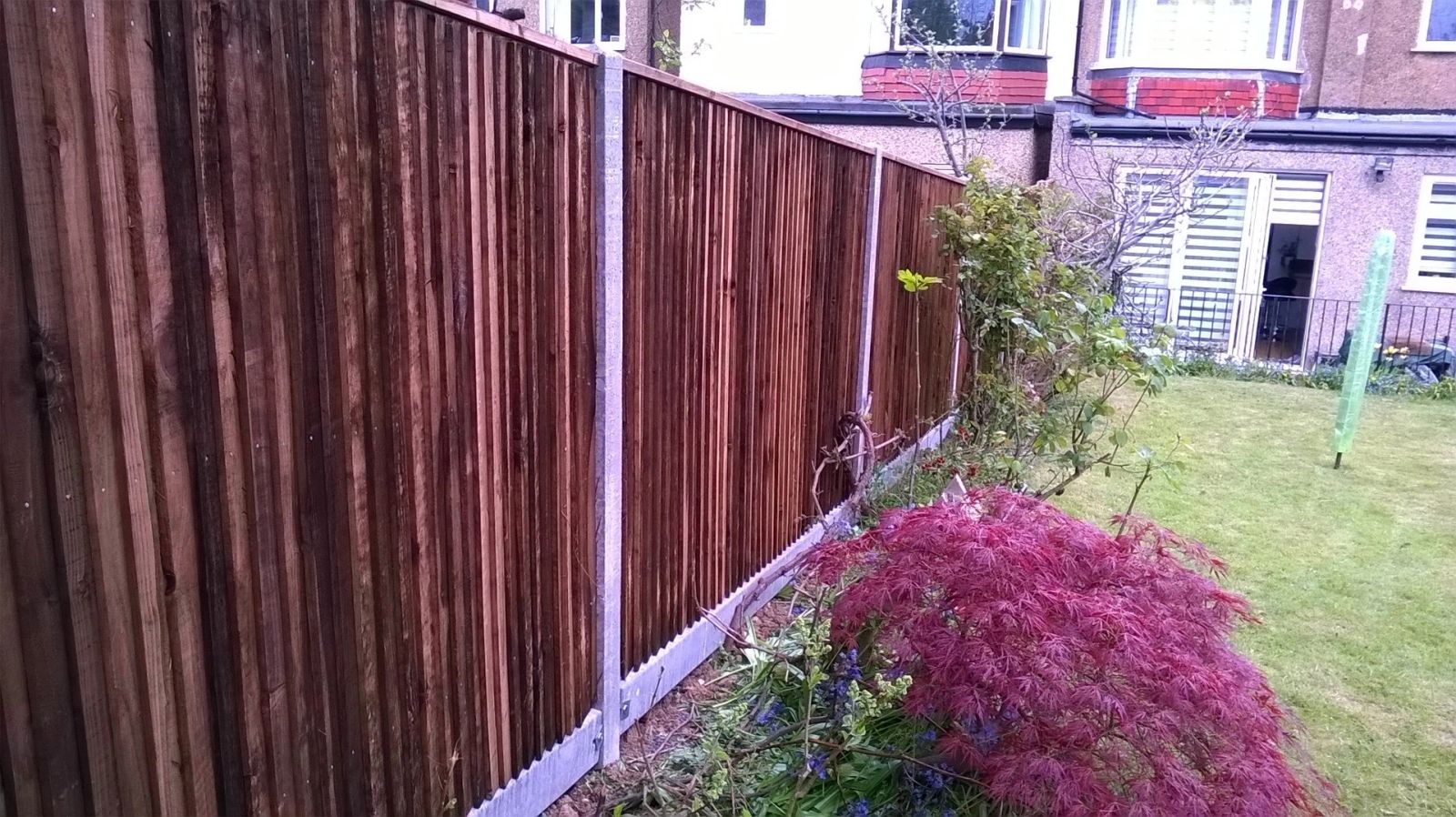
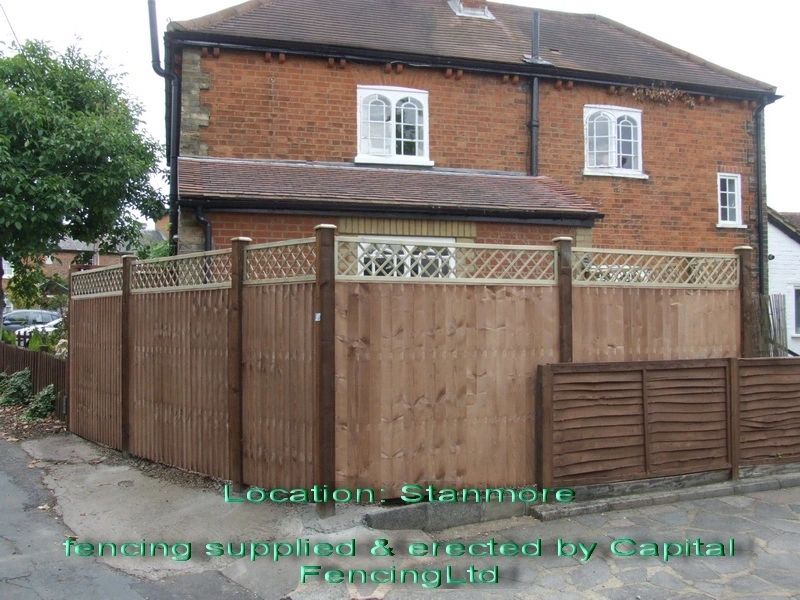
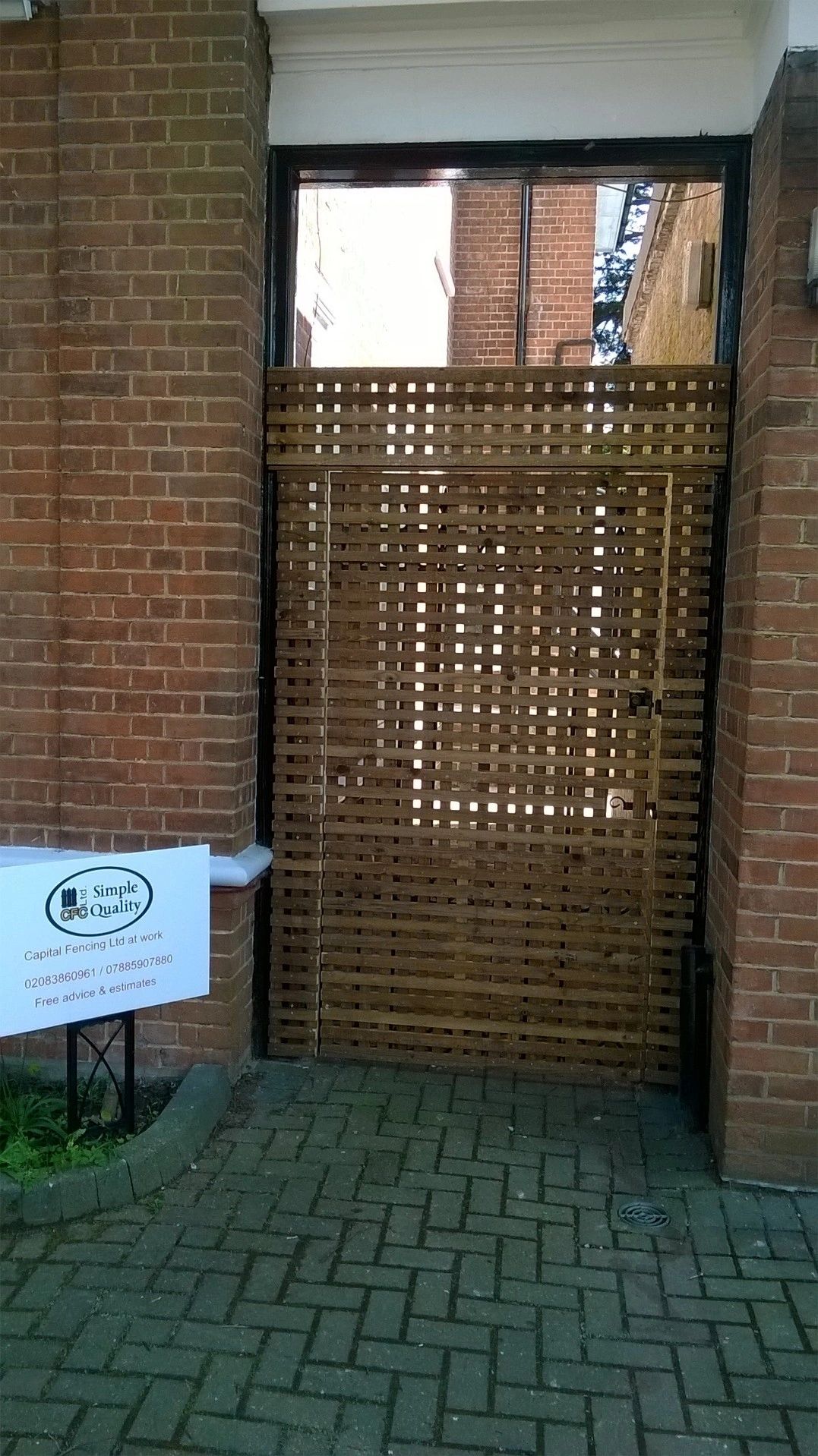
closeboard fence run installed by Capital Fencing in Letchworth Garden City (SG6)panel fence install installed by Capital Fencing in Letchworth Garden City (SG6)trellis-topped fence installed by Capital Fencing in Letchworth Garden City (SG6)bespoke decorative fence installed by Capital Fencing in Letchworth Garden City (SG6)

Site notes: corner plot fencing in SG6

Gate detailing on sites prone to flooding

A gate on a boundary that's prone to periodic flooding benefits from open rather than solid infill low down, allowing floodwater to pass through rather than build up against a solid face and load the frame or undermine the posts.

Post fixings on flood-prone ground also need to account for the ground becoming waterlogged and softer than normal during a flood event, not just its condition in dry weather.

Boundary fencing near a service riser or meter cupboard

A boundary fence positioned close to a gas, electric or water meter cupboard needs to leave clear access for the utility to read or maintain the meter without needing a key to the fence itself, which sometimes means a lockable inspection gate or a section that opens independently of the main line.

Utility providers generally have a minimum clearance requirement in front of a meter cupboard door, and a fence encroaching on that clearance can be flagged at inspection even if the rest of the boundary is compliant.

Matching a gate to an existing fence style

A replacement gate looks obviously mismatched if its board profile, height or capping detail doesn't follow the fence either side of it, even when the gate itself is well built.

We match board spacing, rail positions and capping profile to the existing run rather than fitting a stock gate design into a bespoke boundary.

Converted flats and shared bin storage

Houses converted into two or three flats often have a shared bin store or side passage boundary that wasn't part of the original single-dwelling fence layout, and responsibility for repair can be unclear where the freeholder retains the passage but individual flats use it daily.

A gate onto a shared bin store needs to be wide enough for wheelie bins to pass without lifting them over a threshold, and a self-closing latch is worth specifying so the gate isn't left open between collections.

Where flats were converted without formal division of the garden, it's worth clarifying in writing which flat is responsible for which section of boundary before starting any replacement work.

Timber versus metal post stiffness comparison

A steel or reinforced concrete post of comparable cross-sectional size is generally stiffer than an equivalent timber post, meaning it deflects less under the same wind load, though timber has the advantage of some flexibility that can absorb sudden impact loads without snapping.

Timber's stiffness also varies with moisture content and species in a way that steel's doesn't, meaning a timber post's real-world performance is less predictable across seasons than a steel post's largely temperature-independent behaviour.

Mixed systems using steel posts with timber panelling attempt to combine steel's structural predictability with timber's more traditional appearance, at the cost of managing the dissimilar-material fixing and corrosion issues that come with it.

Spigot connections between post and base

A spigot system lets a post be lifted clear of its ground socket for replacement without breaking out the surrounding concrete, which is useful where a vehicle strike or corrosion has damaged one post in an otherwise sound run.

The spigot itself needs to be a snug fit rather than a loose sleeve, because play at that joint under lateral load is what eventually works a socket wider and lets the post rock.

Keeping post positions clear of drainage gulleys and channels

A surface drainage channel or gulley running near the boundary needs to stay clear and functioning, so a post landing directly over or immediately beside one can block flow or make future clearing of the channel awkward.

Where the fence line has to cross a channel, spanning it with a slightly wider gap under the gravel board, rather than boxing the channel in completely, keeps it accessible for clearing leaves and debris.

It's worth running water through the channel before finishing the job, where practical, to confirm the new fence hasn't inadvertently altered how it drains.

A gate that swings and closes itself on a slope

A gate hung on ground that falls away from the latch post can swing open or shut under its own weight rather than staying where it's left, which is a nuisance rather than a fault in the hardware itself.

Fitting a hydraulic closer, a gravity latch set to hold at the correct point, or re-hanging with a slight counter-lean can correct the tendency without rebuilding the gate.

Getting pre-application planning advice for boundary work

Most local planning authorities offer a paid pre-application advice service, which can give a reasonably reliable steer on whether a specific boundary proposal needs formal permission before committing to it.

This is particularly useful for larger, taller, or unusually positioned boundary structures where the answer isn't obviously covered by the standard permitted development rules.

While it isn't free, the cost is generally modest compared with building something that later needs to be altered or removed following enforcement action.

Dealing with an encroaching fence line

An 'encroaching' fence is one built further onto a neighbouring property than the true boundary allows, sometimes discovered only when a new survey or sale brings the discrepancy to light.

Resolving this is usually a conversation first — checking the title plans together and agreeing a way forward — rather than an immediate confrontation, since older fences are often innocently mispositioned rather than deliberately encroaching.

Where agreement can't be reached informally, this becomes a legal boundary dispute best handled with professional advice rather than unilateral action by either side.

Garden levels raised by decking or patios

A raised deck or built-up patio on one side of a boundary can leave the finished surface level noticeably higher than the fence's original ground-level reference, sometimes reducing the effective fence height as seen from that side.

Where a neighbour raises their ground level after a fence is already installed, drainage that previously ran away from the fence can be redirected toward it, so it's worth checking finished levels on both sides before agreeing a new fence height or base detail.

A fence installed at the same time as a client's own raised patio should account for the new level from the outset, rather than being set to the pre-existing grade and later needing extension.

Surface preparation before re-coating

Re-coating over an existing failed or flaking finish without preparation traps whatever is underneath — old paint fragments, algae, or degraded stain — and the new coat fails at the same points within a season.

A light sand or wire-brush pass to remove loose material, followed by a full dry-out period, gives a fresh coat something sound to key into rather than a film sitting over compromised timber.

Timing matters as much as preparation: coating damp timber traps moisture under the new film and is one of the most common reasons a re-coat fails faster than the original application.

Reinstating turf strips damaged by tool storage

A pile of tools, offcuts or a mixing tray left in one spot on a lawn for several days can leave a yellowed, compacted patch even after the job is finished and everything is cleared away.

Moving stored items to a slightly different spot every day or two, where the site allows, spreads that pressure rather than concentrating it in a single dead patch that then needs separate attention to recover.

Where a genuinely fixed storage point is unavoidable, laying a board or matting underneath from the start protects the grass far more effectively than trying to revive a flattened patch afterwards.

Exposed plots and wind funnelling between buildings

Wind doesn't just hit a fence head-on — gaps between buildings, especially in newer estate layouts with narrow side passages, can funnel and accelerate wind locally well beyond the general forecast for the area.

A fence positioned at the end of such a gap can see significantly higher loading than an identical run a few metres away in the lee of a building.

Recognising these funnelling positions at quote stage, and specifying heavier posts or a part-open panel design there, is more reliable than treating an entire plot as uniformly exposed or sheltered.

Seasonal timing for fence repairs

Repairs undertaken in late autumn or winter often coincide with wetter ground and slower-curing concrete, which can extend how long a post takes to reach full strength before it should be loaded.

Where a repair isn't urgent, timing it for a drier period gives both the timber treatment and any concrete footing a better chance to cure properly before winter weather returns.

Striker plate and keep alignment

A latch that no longer catches is very often a striker or keep alignment problem rather than a broken latch, especially after a gate has dropped slightly or a post has moved seasonally.

Re-positioning the keep to match the gate's current resting position is usually quicker and cheaper than replacing the latch mechanism itself.

Strimmer damage at the fence-to-lawn edge

Repeated strimming right up against the base of gravel boards or post bases scars the timber surface and removes any protective coating exactly at the point most exposed to ground moisture.

A mowing strip of paving or gravel along the base of the fence line removes the need to strim that close, protecting both the timber finish and the lawn edge itself.

This is a small design addition worth suggesting on new installs, since the damage it prevents is otherwise mistaken for premature timber failure rather than a maintenance habit.

Weather delays and rescheduling honestly

Concrete won't cure properly in a hard frost, and post holes dug in heavy rain can collapse or fill with water before the post goes in, so a genuinely bad-weather day is a legitimate reason to reschedule rather than push through and risk a poor-quality fix.

Wind strong enough to make handling full panels unsafe is a similarly clear-cut reason to delay, particularly when working at height on taller gates or fence runs.

Being upfront about a weather delay as soon as it's known, rather than on the morning the crew was due, gives the client time to adjust their own plans around the new date.

Sports clubs

Sports club boundaries need to withstand impact from balls and players far more than an ornamental garden fence, which usually means heavier-gauge mesh or rebound-rated panel rather than standard closeboard along pitch-facing runs.

Ball-stop netting on posts set back from the fence line is a common addition where a pitch runs close to a public path or road, and post spacing for that netting is tighter than for a standard fence line.

Clubhouse car parks and pitch perimeters are also often used for match-day parking, so access for fencing work needs scheduling around the fixture calendar rather than assumed to be free every weekend.

Data protection basics for boundary CCTV

Domestic CCTV covering only a homeowner's own property is generally exempt from full UK GDPR obligations, but that exemption narrows considerably once cameras capture a neighbour's garden, shared paths, or public areas.

Where wider coverage is genuinely needed, clear signage and being able to explain why footage is captured helps if a neighbour raises a concern with the Information Commissioner's Office.

Positioning cameras to focus tightly on a homeowner's own boundary and property, rather than sweeping across a neighbour's space, is the simplest way to avoid this becoming an issue.

Repairing stock fencing pushed over or leaned on by animals

Fencing bordering land grazed by livestock takes a different kind of load to a garden boundary — sustained leaning and rubbing rather than occasional wind load — and posts along that kind of boundary often fail by gradually leaning outward rather than snapping.

Repair on this type of boundary is worth specifying with a stronger post spacing or additional strainer posts at intervals, since a repair matching a garden-fence specification often fails again quickly under the same ongoing pressure.

Building for flood-prone gardens

Gardens on a known flood plain or with a history of standing water after heavy rain benefit from fence bases designed to let water pass through rather than dam against a solid panel, which can otherwise add pressure to a fence line during a flood event.

Gravel boards set to allow some drainage, and hardware chosen to resist prolonged wet exposure, both reduce the aftermath clean-up and repair cycle that repeat flooding causes.

It's also worth checking the Environment Agency's flood risk mapping for a specific plot before finalising a spec, since risk varies a great deal even within the same postcode.

Corner Plot Fencing across SG6 is a regular run for us. We'll quote honestly, tell you if corner-plot fencing isn't the right answer for your site, and book the job in within a week or two of a signed quote. we handle the council conversation as part of the job, not as an after-thought. Roads such as Wilbury Road and Icknield Way are typical of the local layout. Letchworth Garden City station is a useful local reference point. Sollershott West and Nevells Road form part of the original 1903 masterplan and are subject to the Foundation's design guidance.

Get In Touch

Get My Free Quote — 24h Response

No callout fee · Free site visit · Friendly local team covering London & Hertfordshire.

Call us
07885907880
or 02036484746
Email
capital_fencing@yahoo.com
WhatsApp
Message us anytime
Area
London & Hertfordshire
Payment
Card payments accepted

Pay by debit or credit card, bank transfer or cash once the work and price are agreed. No deposit taken online.

Request a Free Quote

We'll get back to you within 24 hours.

Free Site Visit No Callout Fee
Call WhatsAppQuote