London & Hertfordshire Free Site Visit
closeboard fence run installed by Capital Fencing in Edgware (HA8)
Edgware · HA8

New-Build Garden Fencing, Edgware: match-what-you-have spec for 1930s semis built around the Tube extension

New-build boundary fencing in Edgware is one of our regular briefs — buyers on modern estates upgrading the developer's minimum-spec boundary after handover. On 1930s semis built around the tube extension with rectangular suburban gardens, the failure mode we see most often is the one we design out first. Roads such as High Street and Hale Lane are typical of the local layout. Canons Park is a useful local reference point. Canons Park, on the town's edge, was once part of the grounds of Canons House and retains covenants affecting some streets.

New-build boundary fencing in Edgware is one of our regular briefs — buyers on modern estates upgrading the developer's minimum-spec boundary after handover. On 1930s semis built around the tube extension with rectangular suburban gardens, the failure mode we see most often is the one we design out first. Roads such as High Street and Hale Lane are typical of the local layout. Canons Park is a useful local reference point. Canons Park, on the town's edge, was once part of the grounds of Canons House and retains covenants affecting some streets.

Default spec

How we build new-build boundary fencing in Edgware

6ft closeboard on concrete posts, 150mm gravel boards, mid-rail capped — a genuine 15-year replacement for the developer's 4-year panel. On Edgware jobs we adjust for side-return access on edgware semis is genuinely narrow — long panels often have to come up over the garage.

Property mix locally: 1930s semis built around the Tube extension, plus newer flats near the town centre. Typical gardens: rectangular suburban gardens, mostly flat, often with mature fruit trees. Postcodes we regularly service: HA8.

Why this spec, for buyers on modern estates upgrading the developer's minimum-spec boundary after handover

  • no more callouts every winter — the standard developer spec fails inside four years and we know exactly what fails
  • we work around plot-boundary pegs and drainage runs that new-build gardens hide badly
  • quotes broken down so you can see exactly where the money over the developer spec goes

Where new-build boundary fencing isn't the right answer

  • estates still inside a developer snagging period where the boundary is their liability to fix
  • estates with Section 106 covenants on boundary appearance — check the deeds first

Typical new-build boundary fencing briefs in Edgware

  • raising a shared boundary height with neighbour agreement, keeping to permitted development
  • replacing developer 4ft overlap panels with 6ft closeboard on concrete posts

New-Build Garden Fencing FAQs — Edgware

Do I need permission to raise a new-build boundary?

On new-build boundary fencing jobs in Edgware (HA8), our default answer is: 6ft closeboard on concrete posts, 150mm gravel boards, mid-rail capped — a genuine 15-year replacement for the developer's 4-year panel. We'll walk you through no more callouts every winter — the standard developer spec fails inside four years and we know exactly what fails on the site visit before you commit.

Do you handle the neighbour conversation on a shared boundary?

Across Edgware we spec around side-return access on edgware semis is genuinely narrow — long panels often have to come up over the garage, so on new-build boundary fencing that usually means 6ft closeboard on concrete posts. We'll walk you through no more callouts every winter — the standard developer spec fails inside four years and we know exactly what fails on the site visit before you commit.

Can you match my neighbour's post colour and spacing?

Barnet coverage means we can survey most HA8 addresses inside a week — buyers on modern estates upgrading the developer's minimum-spec boundary after handover. The honest trade-off is putting new closeboard on the existing developer posts — those are the part that failed first, not the panels — which is exactly what our default spec designs out.

Can new panels be fitted to existing developer posts?

Practically: replacing developer 4ft overlap panels with 6ft closeboard on concrete posts. That's the Edgware version of this job, not a generic one. We'll walk you through no more callouts every winter — the standard developer spec fails inside four years and we know exactly what fails on the site visit before you commit.

What's the maximum height without planning on a new build?

On new-build boundary fencing jobs in Edgware (HA8), our default answer is: 6ft closeboard on concrete posts, 150mm gravel boards, mid-rail capped — a genuine 15-year replacement for the developer's 4-year panel. For context: we work around plot-boundary pegs and drainage runs that new-build gardens hide badly. Measured, quoted and installed by the same small crew.

Recent new-build garden fencing work
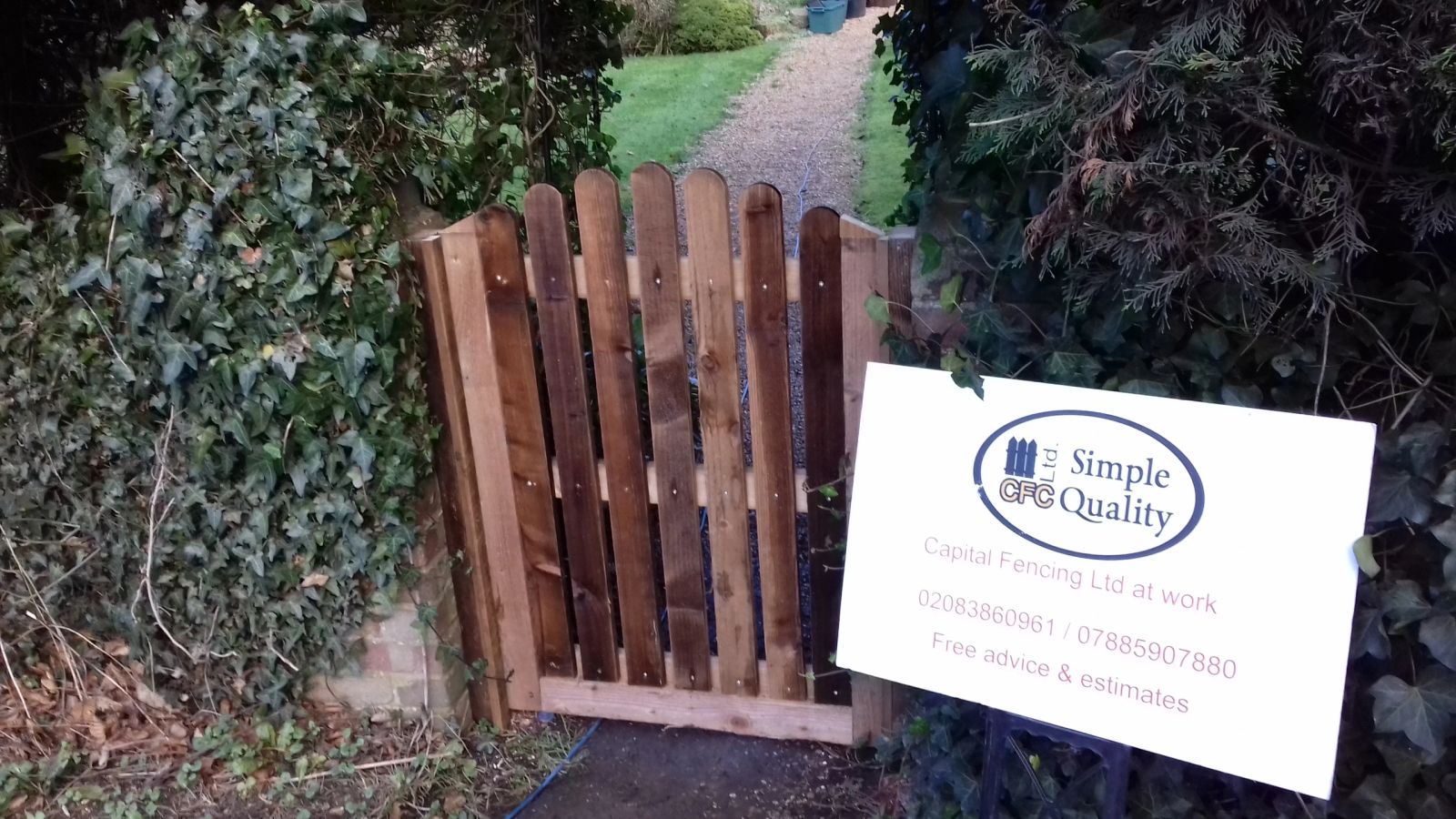
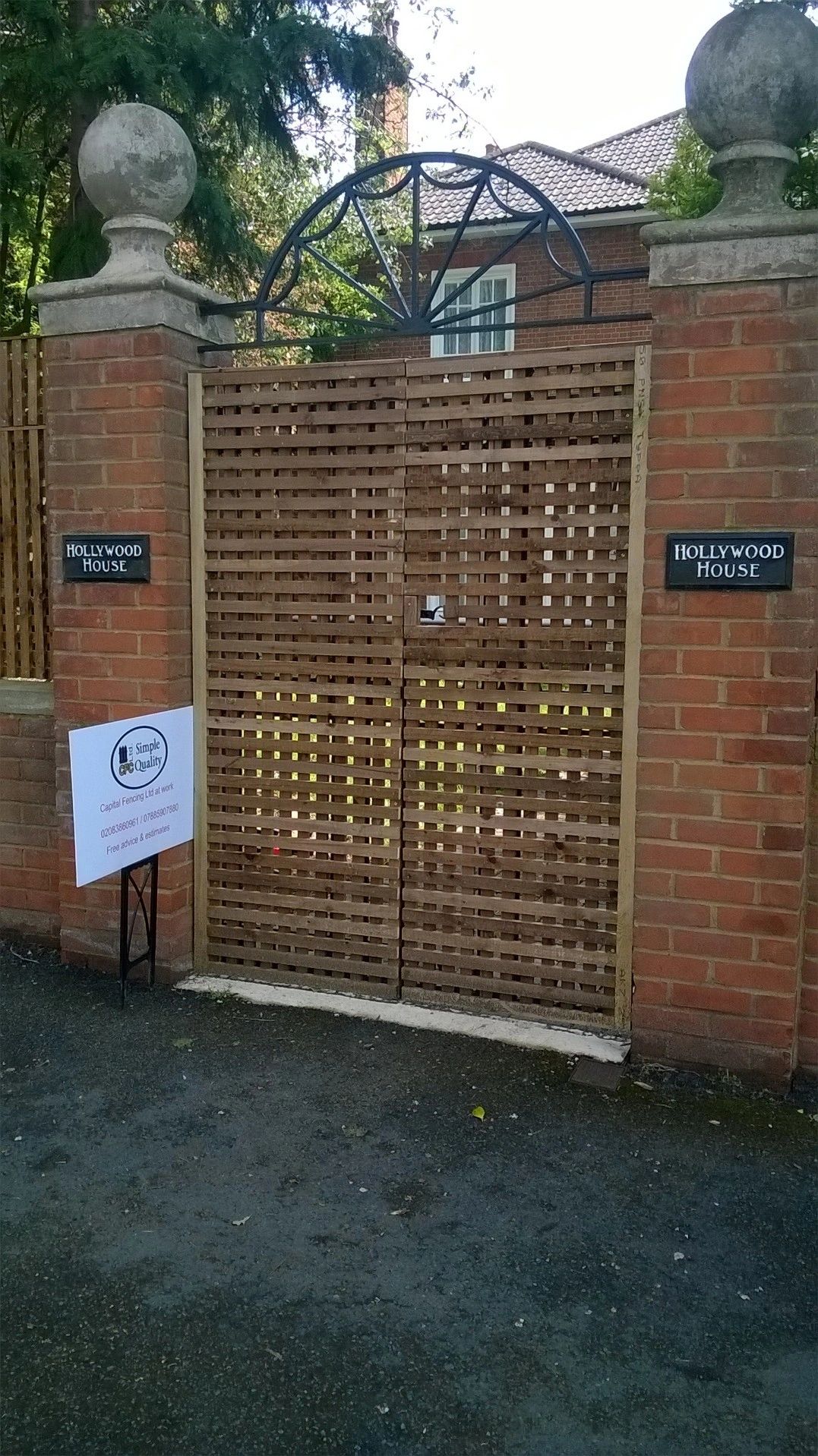
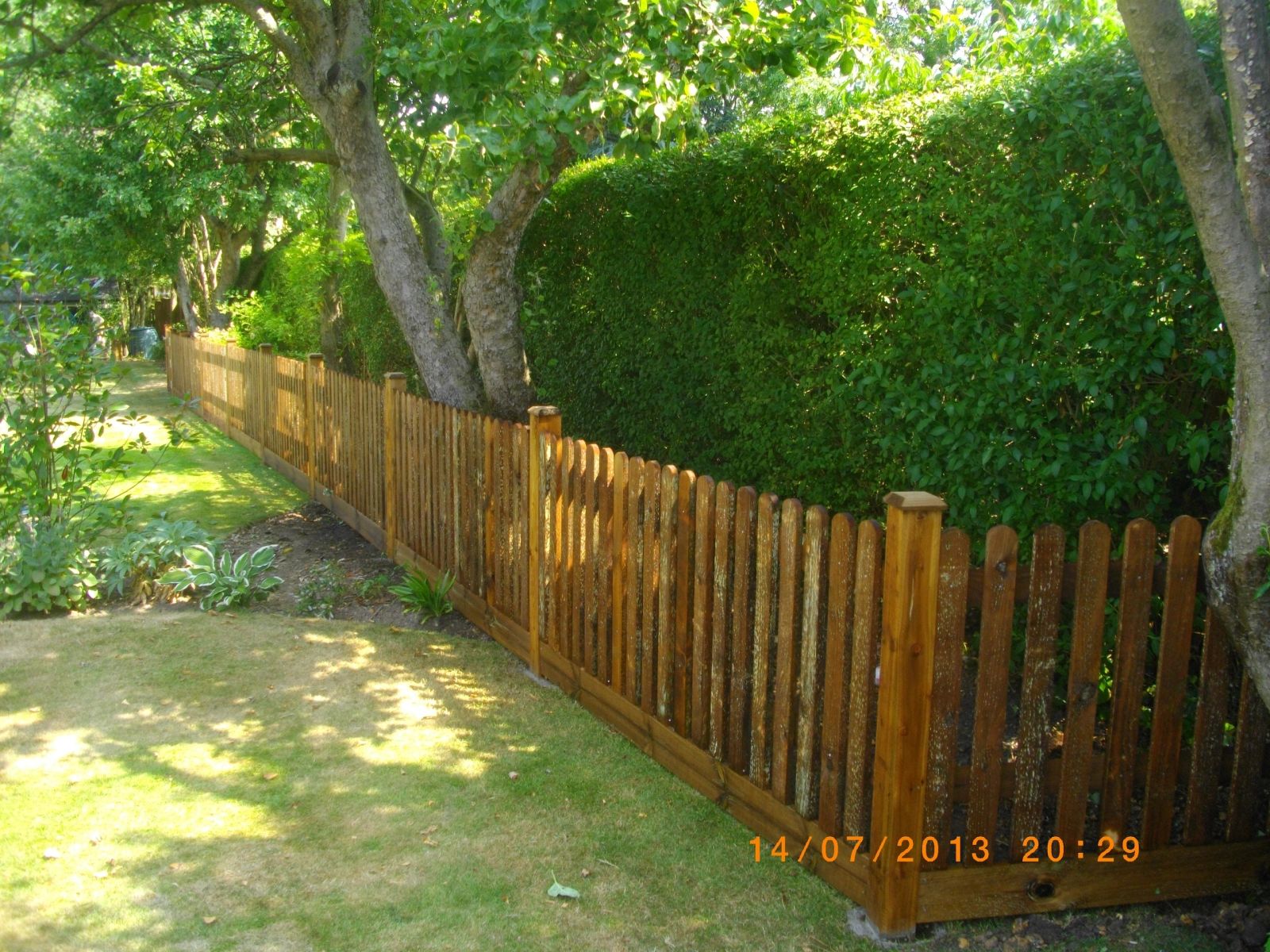
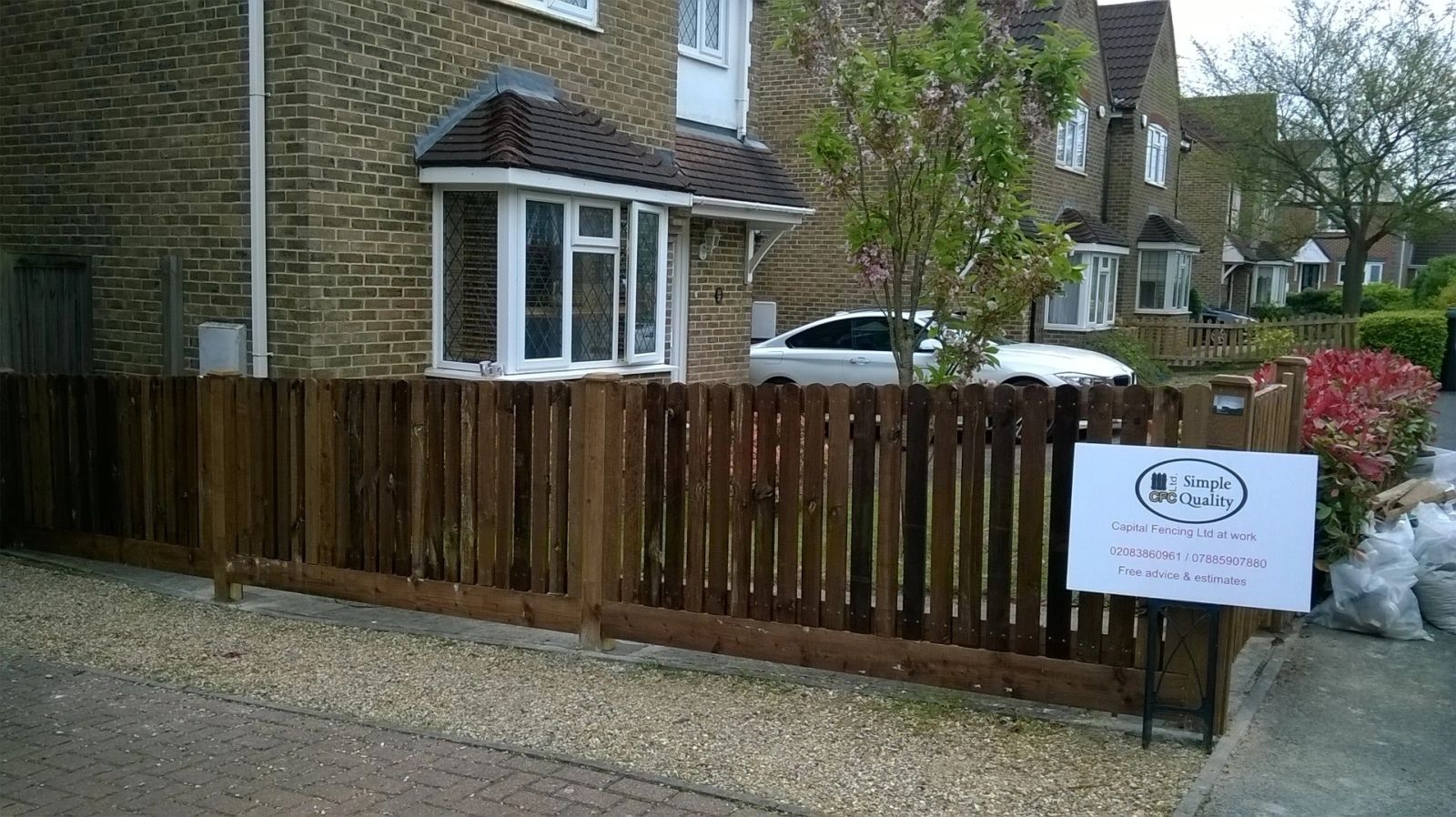
closeboard fence run installed by Capital Fencing in Edgware (HA8)panel fence install installed by Capital Fencing in Edgware (HA8)trellis-topped fence installed by Capital Fencing in Edgware (HA8)bespoke decorative fence installed by Capital Fencing in Edgware (HA8)

Local considerations across Edgware and mill hill

Maintenance intervals for a security boundary

A security fence needs the same seasonal checks as any boundary — loose fixings, gate sag and corrosion on steel ironmongery are the things that quietly turn a secure line into a weak one over a couple of years.

Checking hinge and lock hardware regularly matters more here than on a standard fence, because that's the point most attempts actually target.

Balancing tight mesh apertures against airflow around plant equipment

A tight-aperture high-security mesh gives strong resistance to climbing and reach-through, but wrapped closely around outdoor plant equipment such as chillers or generators it can restrict airflow needed for the equipment to run efficiently.

Setting the mesh enclosure at a slight distance from the equipment casing, or specifying a marginally larger aperture where the site's threat assessment allows it, keeps most of the security benefit while avoiding an airflow restriction that could affect equipment performance.

Routing deck lighting cable away from standing water

Low-voltage deck lighting cable run beneath boards needs to be kept clear of any point where water is likely to pool, since even low-voltage cable connectors degrade faster in permanently wet conditions than in the intermittent dampness the rest of the substructure sees.

Routing cable along the higher side of a deck's fall, rather than through the lowest point where water naturally collects, is a simple planning step that extends the life of an otherwise reliable lighting installation.

Any cable joints beneath a deck should use fully waterproof-rated connectors rather than standard household connectors, given the substructure environment is functionally outdoors and damp regardless of overall deck condition.

Handling older timber treated with preservatives no longer in use

Timber treated with older preservative formulations that have since been withdrawn or restricted can still be present in fences installed some years ago, and cutting or sanding that timber during a repair can release different residues than modern treated timber would.

Where a fence is old enough that its original treatment is uncertain, working with good ventilation, gloves and dust control, and disposing of offcuts as general waste rather than burning them, is the sensible default.

Post-support metal spikes and why they loosen

A drive-in metal spike relies entirely on ground compaction around the socket for stability, so any repeated wind loading or ground softening after heavy rain gradually works the socket wider and the post starts to rock.

Once a spike has loosened it rarely re-tightens on its own; the usual fix is a larger spike bedded in fresh concrete or a switch to a concreted timber post if the ground repeatedly won't hold a spike.

Historic boundary stones and markers

Older rural and some urban boundaries occasionally retain historic boundary stones, iron markers or other physical features predating modern title plans, sometimes referenced directly in old deeds.

These features can carry real evidential weight in establishing a long-accepted boundary line, particularly where later documents are vague or contradictory.

Where such a marker exists, it's worth photographing and noting its position before any fencing work potentially disturbs or removes it.

Carrying out a final walk-round check before calling a job complete

A final check along the full run — hinges swinging freely, caps seated, fixings tight, gravel boards sitting flush — catches small issues that are quick to fix on the day but awkward to revisit once tools and materials have left site.

Checking gate latches and bolts actually engage properly under normal use, not just that they look fitted, avoids a callback for something that would have taken moments to adjust while still on site.

A brief look at the surrounding area — cleared spoil, protected surfaces returned to their original state, tools accounted for — is as much a part of finishing the job properly as the fence itself.

Replacing broken trellis without disturbing the fence below

Trellis is usually fixed on top of a panel with its own separate posts or brackets, so a broken trellis section can normally be unbolted and replaced without touching the boundary fence it sits above.

Where the trellis has been nailed directly to the fence's own posts rather than fixed independently, a broken section is more likely to have taken the fence posts slightly out of plumb too, which is worth checking before assuming a simple like-for-like swap.

Drainage as a repeat cause of failure

Where a post has failed at the base, poor drainage around that specific spot is often the underlying reason rather than simple age — a low point that collects rainwater rots a post from the ground up years before the timber above shows any sign of it.

A repair that resets the post without addressing the drainage at that point risks the same failure recurring within a few seasons.

Repositioning a post slightly off its original line

Where an original post position has proven to be a recurring failure point — sitting in a wet hollow, or close to a tree root that keeps disturbing it — repositioning it a short distance along the run can solve a problem that repeated resets in the same spot haven't.

This needs agreement on the boundary line first if the shift is more than a token amount, since moving a post changes where the fence physically sits relative to the boundary rather than just repairing it in place.

Bracketing as a repair technique versus re-jointing

A galvanised steel bracket bridges a failed timber joint — rail to post, or post to base — without needing to cut fresh joinery into timber that may already be weakened, which makes it quicker and less invasive than re-jointing.

Bracketing is a good fit where the surrounding timber is still structurally sound but the original joint has failed; where the timber itself has degraded, a bracket bolted into softened wood won't hold regardless of how strong the bracket is.

End-grain sealing on cut timber

Any cut made on site — trimming a post to length or cutting a rail to fit — exposes end grain that draws in moisture far faster than the treated face of the timber, making it a common starting point for rot if left unsealed.

Sealing cut ends with an end-grain preservative at the time of cutting, not afterward, closes off that entry point before the timber is fixed in place.

Commercial and site boundary fencing

Commercial boundaries — industrial units, retail yards, small business premises — usually prioritise security and low maintenance over appearance, which points toward galvanised steel palisade, weldmesh or heavy-duty timber closeboard rather than decorative panel fencing.

Access control matters more here too: wide vehicle gates need clearances checked against delivery vehicle turning circles, not just car dimensions, and a site with out-of-hours deliveries may need lockable pedestrian access separate from the main gate.

Any work adjoining a public footpath or road also needs to think about temporary hoarding and public safety during installation, not just the finished boundary.

Planning material handling for single-access rear gardens

A rear garden with no side access at all means every post, panel and bag of aggregate has to go through the house, so protecting flooring and doorways along that route is as much a part of the job planning as the fencing itself.

Breaking deliveries into smaller loads that fit through internal doorways and turns avoids the alternative of discovering a full-length panel won't clear a hallway corner on the day.

Where the volume of material makes carrying through the house impractical, a temporary lift or chute over a side wall, arranged and agreed with the client in advance, is sometimes the more efficient option despite the extra setup time.

Repairing a fence near a tree protected by a Tree Preservation Order

Digging a new post hole or footing close to a protected tree's root zone can be restricted even where the fence itself needs no permission, since the restriction is about protecting the tree's roots rather than the fence.

Where root heave from a nearby tree has caused the damage being repaired, it's worth checking whether the tree is protected before digging anywhere near it, since hand-digging around roots or repositioning the post slightly may be required instead of a standard footing.

Framed, ledged and braced gate frames

A framed, ledged and braced gate combines a proper mortice-and-tenon perimeter frame with ledges and a diagonal brace behind the boarding, giving more racking resistance than a simple ledged-and-braced gate that has no frame at all.

This construction costs more to build than a basic ledged gate but holds its shape for longer, which matters on a wider or more exposed opening.

Arris rail mortice joint wear

A traditional arris-rail panel fence uses a triangular-section rail slotted into a mortice cut through the post, and repeated wind loading can gradually enlarge that mortice, letting the rail rock and eventually loosen the whole panel.

A mortice cut slightly oversized from the start, or one that's been enlarged by rot before a replacement rail is fitted, is a common weak point that arris-rail brackets were largely developed to bypass.

Galvanised metal arris-rail brackets, fixed to the face of the post rather than through it, avoid weakening the post with a mortice at all and are now the more common detail on new panel fencing.

Tall fences, shading and neighbour relations

A tall boundary fence can significantly shade a neighbouring garden depending on orientation, and while there's no general legal right to a set amount of sunlight in a garden, an unusually tall or dark structure close to a shared boundary is a common source of neighbour friction.

Slatted, louvred or partially open designs let some light and air through while still giving privacy, which is often a reasonable middle ground where a fully solid fence would cause a shading complaint.

Discussing height and design with an affected neighbour before building, even where there's no legal requirement to, tends to avoid a dispute that a technically-compliant fence wouldn't otherwise resolve.

Checking a drop bolt for bend before replacement

A drop bolt that no longer locates in its ground socket is often bent slightly from repeated contact rather than broken, and a bent bolt can sometimes be straightened rather than replaced if the bend is caught early.

Leaving a bent bolt in use accelerates wear on the socket edges as it forces its way in at an angle each time, which turns a simple bolt problem into a socket replacement too.

Weld mesh and chain link

Weld mesh panels are a rigid grid of welded steel wire, usually galvanised and often polyester-coated, and they hold their shape under impact far better than chain link, which is why they're common on boundaries needing a firmer physical barrier.

Chain link is a diamond-pattern woven wire fixed to line wires and posts rather than a rigid panel, which makes it cheaper and easier to tension over long or uneven runs but more prone to sagging or distorting under repeated pressure.

Neither offers meaningful privacy on its own, so both are frequently paired with hedging or slatted infill where visual screening is also wanted alongside the containment.

Equestrian and paddock fencing basics

Post-and-rail is the standard equestrian boundary because it's forgiving on impact — a horse pushing against it is less likely to be injured than against wire or a rigid panel, and any wire used alongside timber rails needs to be clearly visible, not fine-gauge stock wire that a horse can't see.

Field gate widths for equestrian use are wider than a domestic garden gate, usually at least 3.6m, to allow a horse to be led through without crowding the gateposts.

Paddock fence lines also need checking for toxic hedge or tree species growing along the boundary, since horses can reach through post-and-rail in a way they can't through a solid fence.

Hitting services when digging for a repair

A post-hole repair dug in the same spot as the original footing carries less risk of hitting a buried service than a hole dug in new ground, but any repair that shifts a post position even slightly should be checked against known service runs first.

Cable and pipe locations aren't always where drawings suggest, particularly on an older property, so digging with care near the first sign of resistance is standard practice.

On new-build boundary fencing in Edgware you get the same crew from first site visit to hand-over. That's the whole model — small team, match-what-you-have spec, written quote before we start. Roads such as Station Road and Edgwarebury Lane are typical of the local layout. Edgware bus station is a useful local reference point. The A5, running through the town, follows the route of the Roman Watling Street.

Get In Touch

Get My Free Quote — 24h Response

No callout fee · Free site visit · Friendly local team covering London & Hertfordshire.

Call us
07885907880
or 02036484746
Email
capital_fencing@yahoo.com
WhatsApp
Message us anytime
Area
London & Hertfordshire
Payment
Card payments accepted

Pay by debit or credit card, bank transfer or cash once the work and price are agreed. No deposit taken online.

Request a Free Quote

We'll get back to you within 24 hours.

Free Site Visit No Callout Fee
Call WhatsAppQuote