London & Hertfordshire Free Site Visit
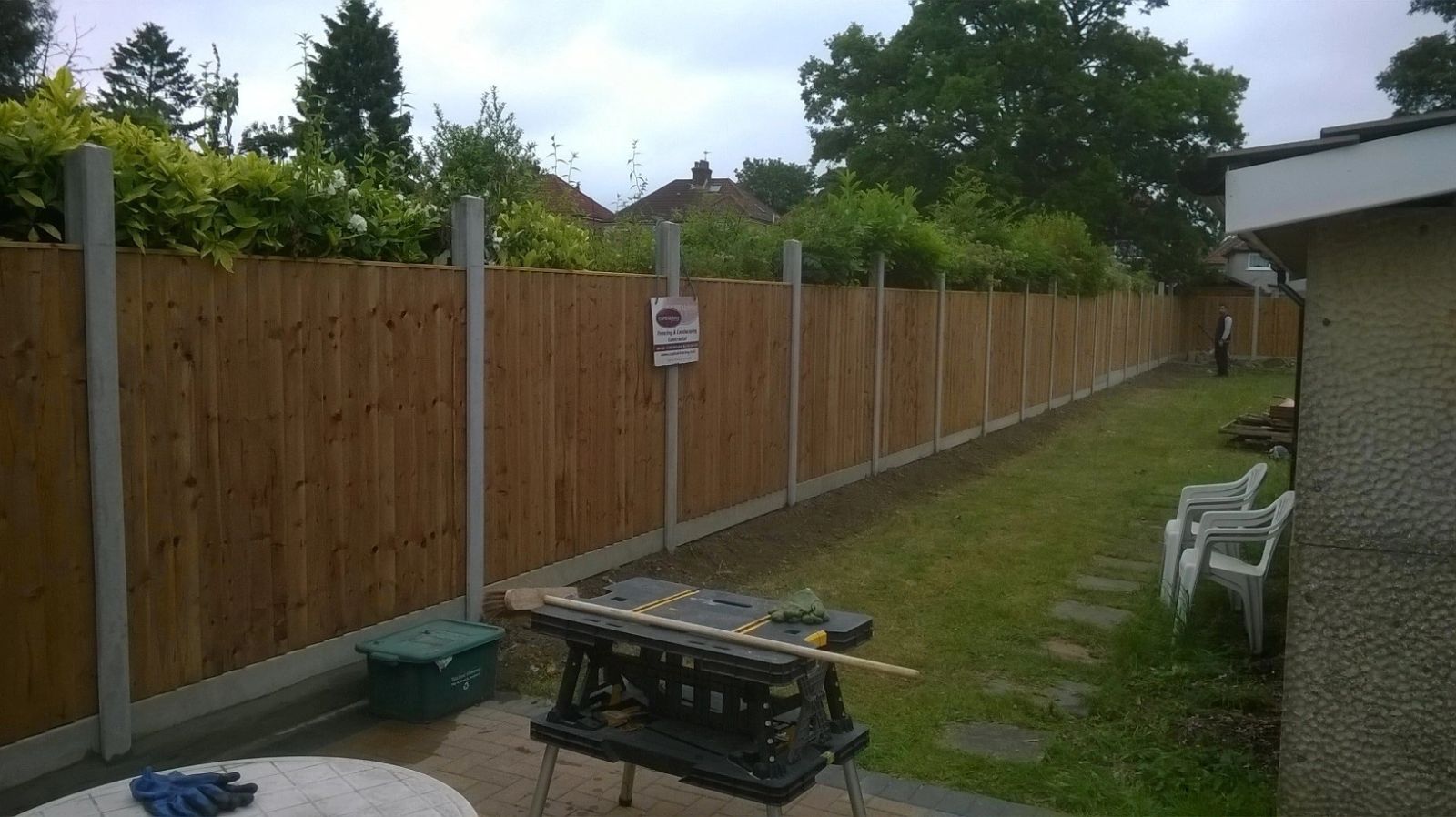
closeboard fence run installed by Capital Fencing in Finchley (N3)
Finchley · N3 / N12

New-Build Garden Fencing in Finchley — Built for how the finish sits next to the neighbour's existing boundary

New-build boundary fencing in Finchley is one of our regular briefs — buyers on modern estates upgrading the developer's minimum-spec boundary after handover. On edwardian terraces in church end with mid to large gardens; mature trees and London clay are the recurring constraints, the failure mode we see most often is the one we design out first. Roads such as Squires Lane and Fallow Court Avenue are typical of the local layout. Victoria Park (Finchley) is a useful local reference point. Fallow Court Avenue and Squires Lane share a back-alley layout with a pedestrian corridor running between the plots.

New-build boundary fencing in Finchley is one of our regular briefs — buyers on modern estates upgrading the developer's minimum-spec boundary after handover. On edwardian terraces in church end with mid to large gardens; mature trees and London clay are the recurring constraints, the failure mode we see most often is the one we design out first. Roads such as Squires Lane and Fallow Court Avenue are typical of the local layout. Victoria Park (Finchley) is a useful local reference point. Fallow Court Avenue and Squires Lane share a back-alley layout with a pedestrian corridor running between the plots.

Typical new-build boundary fencing briefs in Finchley

  • raising a shared boundary height with neighbour agreement, keeping to permitted development
  • replacing developer 4ft overlap panels with 6ft closeboard on concrete posts

Why this spec, for buyers on modern estates upgrading the developer's minimum-spec boundary after handover

  • no more callouts every winter — the standard developer spec fails inside four years and we know exactly what fails
  • we work around plot-boundary pegs and drainage runs that new-build gardens hide badly
  • quotes broken down so you can see exactly where the money over the developer spec goes
Default spec

How we build new-build boundary fencing in Finchley

6ft closeboard on concrete posts, 150mm gravel boards, mid-rail capped — a genuine 15-year replacement for the developer's 4-year panel. On Finchley jobs we adjust for tree-root activity in clay soil regularly lifts old fence runs — full re-set is the typical brief.

Property mix locally: Edwardian terraces in Church End, large semis around Hampstead Garden Suburb borders, and 1930s housing in Woodside Park. Typical gardens: mid to large gardens; mature trees and London clay are the recurring constraints. Postcodes we regularly service: N3, N12.

Where new-build boundary fencing isn't the right answer

  • estates still inside a developer snagging period where the boundary is their liability to fix
  • estates with Section 106 covenants on boundary appearance — check the deeds first

New-Build Garden Fencing FAQs — Finchley

Do I need permission to raise a new-build boundary?

On new-build boundary fencing jobs in Finchley (N3), our default answer is: 6ft closeboard on concrete posts, 150mm gravel boards, mid-rail capped — a genuine 15-year replacement for the developer's 4-year panel. We'll walk you through no more callouts every winter — the standard developer spec fails inside four years and we know exactly what fails on the site visit before you commit.

Can I replace the developer's fence in the first two years?

Across Finchley we spec around tree-root activity in clay soil regularly lifts old fence runs — full re-set is the typical brief, so on new-build boundary fencing that usually means 6ft closeboard on concrete posts. We'll walk you through no more callouts every winter — the standard developer spec fails inside four years and we know exactly what fails on the site visit before you commit.

Can you match my neighbour's post colour and spacing?

Barnet coverage means we can survey most N3 addresses inside a week — buyers on modern estates upgrading the developer's minimum-spec boundary after handover. We'll walk you through no more callouts every winter — the standard developer spec fails inside four years and we know exactly what fails on the site visit before you commit.

Why do developer fences fail so quickly?

Practically: replacing developer 4ft overlap panels with 6ft closeboard on concrete posts. That's the Finchley version of this job, not a generic one. For context: we work around plot-boundary pegs and drainage runs that new-build gardens hide badly. Measured, quoted and installed by the same small crew.

Do you handle the neighbour conversation on a shared boundary?

On new-build boundary fencing jobs in Finchley (N3), our default answer is: 6ft closeboard on concrete posts, 150mm gravel boards, mid-rail capped — a genuine 15-year replacement for the developer's 4-year panel. For context: we work around plot-boundary pegs and drainage runs that new-build gardens hide badly. Measured, quoted and installed by the same small crew.

Recent new-build garden fencing work
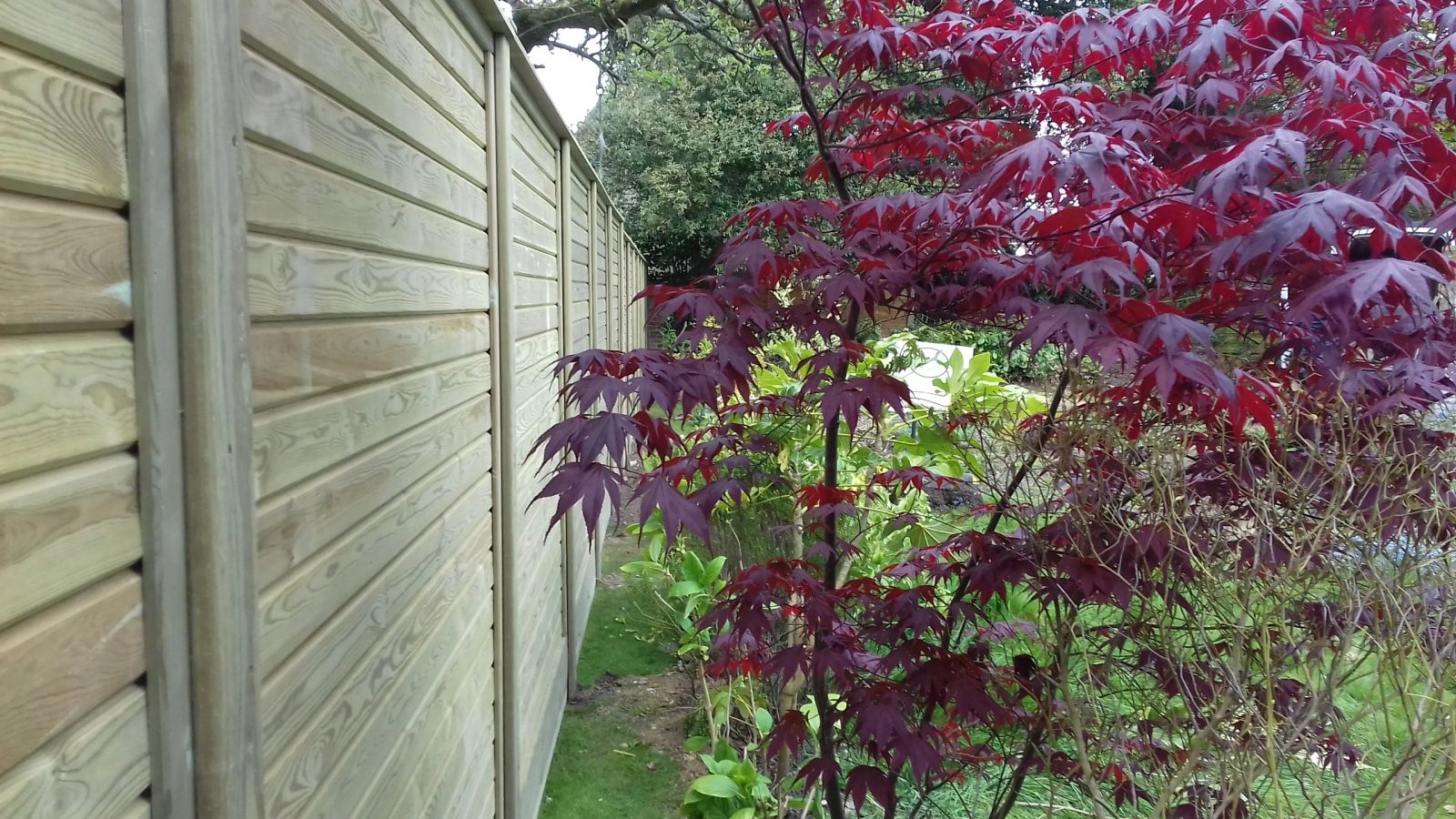
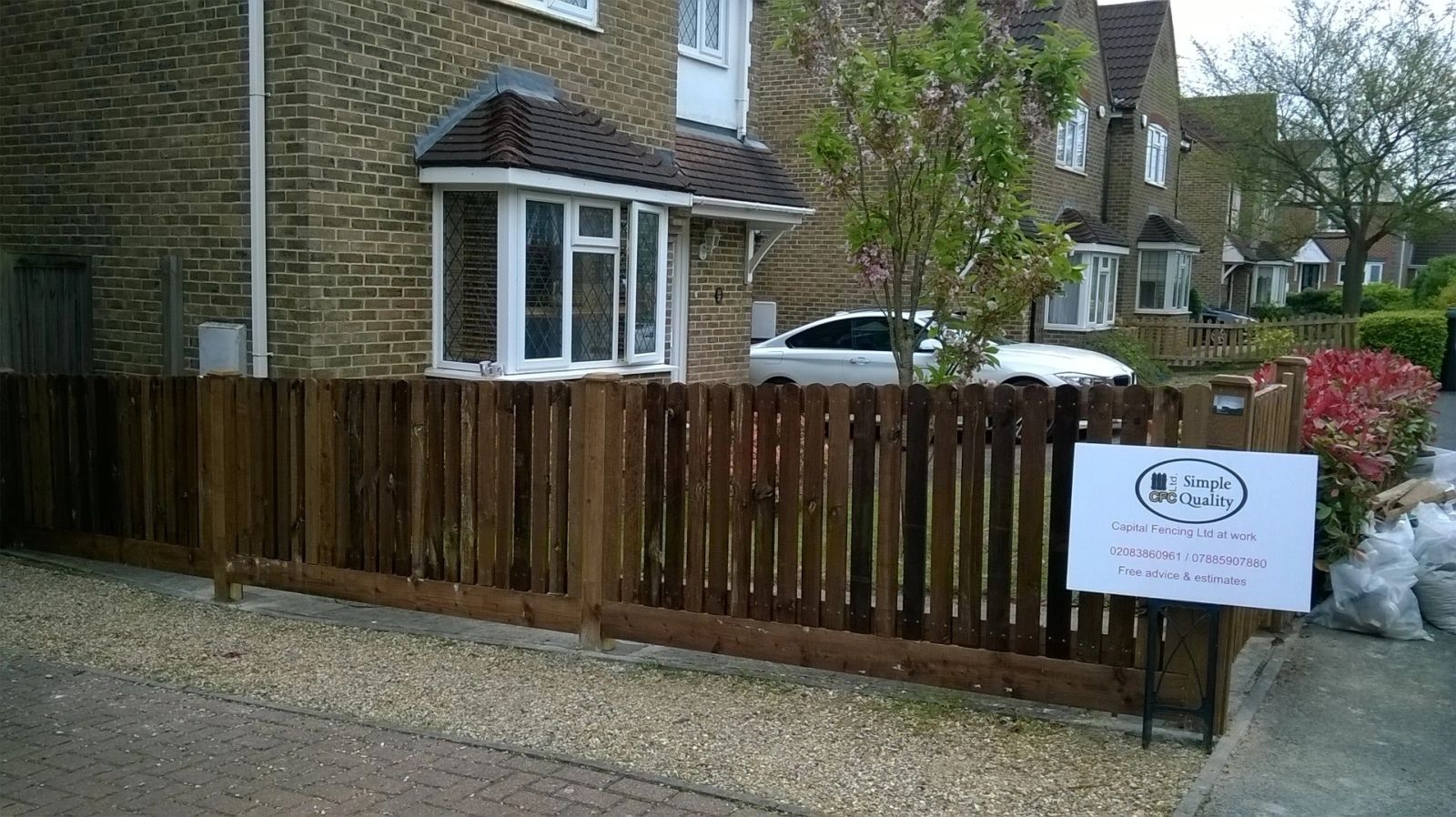
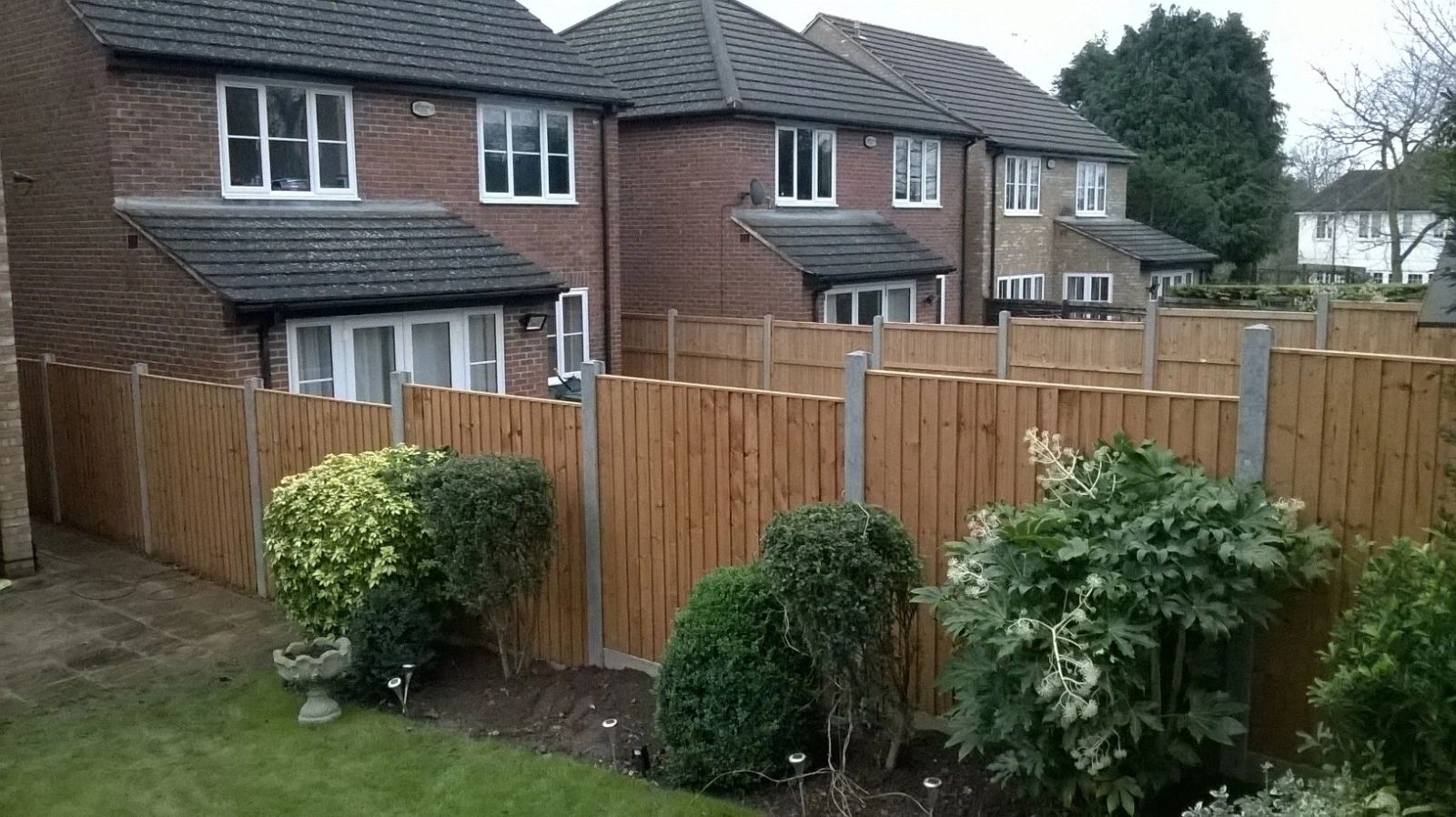
closeboard fence run installed by Capital Fencing in Finchley (N3)panel fence install installed by Capital Fencing in Finchley (N3)trellis-topped fence installed by Capital Fencing in Finchley (N3)bespoke decorative fence installed by Capital Fencing in Finchley (N3)

New-Build Garden Fencing in Finchley: the practical detail

Ground movement and gate frame problems

Ground movement under a gate post — from clay shrinkage in dry summers or waterlogging in wet winters — is a common cause of a gate that suddenly starts sticking or dropping after years of working fine.

We check whether the post itself has moved before assuming the fault is in the hinges or the gate face.

Access through a house for a rear repair

Where a rear garden has no side access, materials and tools sometimes have to be carried through the house itself, which needs agreeing with the client in advance and protecting flooring and doorways along the route.

This is more common on terraced properties than detached ones, and it's worth factoring into how a repair is scheduled and priced.

Parking and material handling on site

Fencing, gates and decking all involve moving bulky, heavy material — concrete posts, gravel boards, decking joists — from a van to the working area, and how far that has to be carried has a real effect on labour time.

On streets with permit parking, no off-street loading bay, or restricted delivery hours, we plan the drop-off around those restrictions rather than assuming a van can sit outside all day.

Where a plot has a driveway or side gate wide enough for a barrow run, that alone can shave a meaningful amount of time off a job compared with hand-carrying everything round the front.

Perimeter security at a GP surgery or health centre

A GP surgery boundary balances public accessibility during opening hours against protecting drug storage, equipment and the building itself outside them, so a low decorative frontage often gives way to a more solid, higher fence around plant areas, bin stores and rear access at the same site.

Step-free, wide gate openings are needed anywhere patients using wheelchairs or mobility aids pass through the boundary, which can constrain gate hardware choices compared with a purely commercial yard.

The typical sequence for installing a fence run

A well-run fencing job generally sets out the full line first, digs and concretes every post before fixing anything else, and only starts hanging panels, rails or boards once every post has had time to cure.

Fixing panels to posts before the concrete has cured risks knocking a post out of true, which is why rushing straight from digging into panel-fitting on the same visit is usually avoided on anything beyond a very small repair.

Working this way also means any post that turns out to be misaligned is caught and corrected before panels are cut to fit it, rather than after, when correcting the post means undoing finished work.

Removing an old boundary before the new one goes in

Old fencing, damaged palisade or rusted mesh is cleared and taken off site as part of the job rather than left for the client to deal with, and any concrete post stumps are broken out where the new line needs a fresh, sound base rather than being built around old debris.

Where a section is genuinely sound we'll say so and reuse it rather than clearing it needlessly.

Lubrication scheduling for security gate hinges

A heavy security gate hinge under constant use benefits from a scheduled lubrication check rather than waiting until it starts to squeak or bind, since a dry hinge accelerates wear on the pin and bush faster than the load alone would cause.

A grease appropriate to outdoor exposure is used rather than a light household oil, which washes out quickly in wet weather and leaves the hinge running dry again within a short period.

Choosing between razor wire and barbed tape toppings

Barbed tape has a flat steel strip with stamped barbed edges wound into a coil, giving a denser and more visually aggressive deterrent than traditional twisted barbed wire, which is now used less often on new commercial work.

Both carry a real injury risk and are generally reserved for boundaries without public pedestrian access, since a topping that could injure a passer-by on a footpath side raises liability concerns a lower-risk topping avoids.

Delivery access and material drop-off

Fencing materials are heavy and awkward rather than especially bulky individually, but a full job's worth of posts, panels and gravel boards still needs a genuine drop-off point close to the work area rather than a kerbside stack carried the full plot length.

On restricted streets, agreeing a specific delivery slot with the supplier avoids a lorry blocking a road during school run or peak hours, which is often the point neighbours complain about a job rather than the noise of the work itself.

Where a driveway can take a small vehicle, checking headroom and turning space in advance saves a delivery being refused on the day and materials having to be hand-carried instead.

Checking an unstable adjacent structure before repairing the fence against it

Where a fence panel is fixed to or sits hard against a garden wall, shed or outbuilding that's itself showing signs of movement, repairing the fence without addressing the structure it depends on risks the same failure recurring.

This is worth flagging to a client as a separate issue rather than working around it silently, since a fence repair fixed to an unstable wall is only as reliable as that wall.

Mixing old and new timber colour on a repair

Freshly treated timber is noticeably lighter or greener than an older run that's already weathered, and that colour difference is temporary rather than a defect, evening out over the first year or two of UV exposure and weathering.

Where colour match matters immediately, a treatment or stain closer to the weathered tone can be applied to the new timber, though it won't be an exact match on day one.

Fencing compared with a boundary wall

A masonry boundary wall generally costs more and takes longer to build than an equivalent length of timber fencing, but needs far less routine maintenance over its lifetime and can outlast several generations of fence replacement.

Walls also carry their own structural considerations — foundation depth, movement joints on longer runs, and retaining requirements on a sloping plot — that a fence largely avoids.

Mixing the two, a low wall topped with railings or a timber panel, is a common way to get some of a wall's permanence and kerb appeal without the full cost of a wall along an entire boundary.

Step riser heights on a raised deck

Steps down from a raised deck work best with consistent riser heights throughout the flight, since an irregular step height is a common trip hazard, particularly where the top or bottom step differs slightly from the others.

Building regulations guidance for steps in a domestic setting generally favours risers in the range of roughly 150-170mm with adequate going (tread depth), though garden steps have more flexibility than an internal staircase.

Where a deck sits at a height that doesn't divide evenly into consistent risers, it's better to adjust the deck height slightly at the design stage than to build one oddly-sized step to make up the difference.

Straightening a leaning run

A run that's leaning uniformly along several bays usually points to a common cause — waterlogged ground, wind loading from one direction, or an original footing depth that was too shallow — rather than a fault with any single post.

Straightening involves resetting posts along the affected bays rather than pulling the fence back into line at the top, since forcing the panels straight without addressing the post bases just reintroduces the lean.

Fixing a fence run to an existing masonry wall

Tying a timber fence into an existing brick or block wall usually means fixing a timber post or batten flat to the wall face with masonry bolts or heavy-duty frame fixings rather than digging a post hole hard against the footing.

The wall's own condition matters before any fixing goes in — loose pointing, spalled brick faces or a wall already leaning shouldn't be relied on to carry lateral load from a fence panel.

Where the wall belongs to a neighbour or is shared, fixing into it without agreement can be a boundary matter in its own right, separate from the fencing work itself.

Repairing a post damaged by a worn drop bolt receiver

A drop bolt on a double gate is driven into a socket set in the ground or in an adjoining post, and repeated slamming or a poorly aligned bolt can gradually damage the timber or crack the concrete around that socket.

Repair usually involves a new or repositioned socket set into sound material rather than simply refitting the same worn receiver, since a loose socket lets the bolt rattle and wear further even after the immediate damage is patched.

Culverted watercourses running beneath a boundary

Some older boundaries have a small watercourse culverted — enclosed in a pipe — beneath them, often unnoticed until groundworks reveal it or a drainage problem develops.

Ordinary watercourses, even culverted ones, can carry maintenance obligations and sometimes require consent from the local authority or Environment Agency before altering anything above or around them.

Where an old map or local knowledge suggests a watercourse might run beneath a boundary, checking with the council's land drainage team before digging is a sensible precaution.

Checking for adjacent drainage runs before excavating

A land drain or perimeter drainage run laid to keep a garden from waterlogging is easy to miss during a routine dig, since it's often shallower and less obviously marked than a mains service.

Digging through one doesn't usually cause an immediate problem visible on the day, but it can quietly reintroduce a waterlogging issue the drain was originally installed to solve, sometimes not noticed until the following wet season.

Where a garden has a known history of standing water that was previously addressed with drainage work, it's worth asking the client what's down there before digging rather than finding out by breaking through a pipe.

Dealing with an encroaching fence line

An 'encroaching' fence is one built further onto a neighbouring property than the true boundary allows, sometimes discovered only when a new survey or sale brings the discrepancy to light.

Resolving this is usually a conversation first — checking the title plans together and agreeing a way forward — rather than an immediate confrontation, since older fences are often innocently mispositioned rather than deliberately encroaching.

Where agreement can't be reached informally, this becomes a legal boundary dispute best handled with professional advice rather than unilateral action by either side.

Boundary work near underpinning or subsidence repairs

A property that's had underpinning or subsidence repair work sometimes has ground disturbance extending into the garden near the boundary, which can affect where a new fence line can safely be dug without disturbing settled ground.

Where underpinning is recent, it's worth checking with whoever carried out the structural work before digging post holes nearby, since the settlement process can continue for some time after the visible repair is finished.

Cracking in an existing boundary wall running close to a subsidence-affected building is sometimes an early symptom worth reporting rather than just repairing cosmetically.

Capping and end-grain protection

End grain absorbs moisture far faster than the face of a timber board, so an uncapped top rail or exposed post top takes in water long before the rest of the gate shows any sign of decay.

Fitting a capping strip or weathered top cut sheds water away from that end grain and noticeably extends the life of an otherwise sound gate.

How a restrictive covenant is actually enforced

A restrictive covenant on a title is enforced privately by whoever holds its benefit — often a neighbour, a management company, or occasionally the original developer — rather than by the council.

This means a fence can be entirely lawful under planning rules and still breach a private covenant, with enforcement coming through a civil claim rather than council action.

Checking who benefits from a known covenant, and whether they're likely to object, is worth doing before assuming a technically 'planning-compliant' fence is automatically fine.

New-Build Garden Fencing across N3, N12 is a regular run for us. We'll quote honestly, tell you if new-build boundary fencing isn't the right answer for your site, and book the job in within a week or two of a signed quote. measured, quoted and installed by the same small crew. Roads such as Long Lane and Nether Street are typical of the local layout. Church End library is a useful local reference point. The Church End Conservation Area covers much of the historic centre around Avenue House.

Get In Touch

Get My Free Quote — 24h Response

No callout fee · Free site visit · Friendly local team covering London & Hertfordshire.

Call us
07885907880
or 02036484746
Email
capital_fencing@yahoo.com
WhatsApp
Message us anytime
Area
London & Hertfordshire
Payment
Card payments accepted

Pay by debit or credit card, bank transfer or cash once the work and price are agreed. No deposit taken online.

Request a Free Quote

We'll get back to you within 24 hours.

Free Site Visit No Callout Fee
Call WhatsAppQuote