London & Hertfordshire Free Site Visit
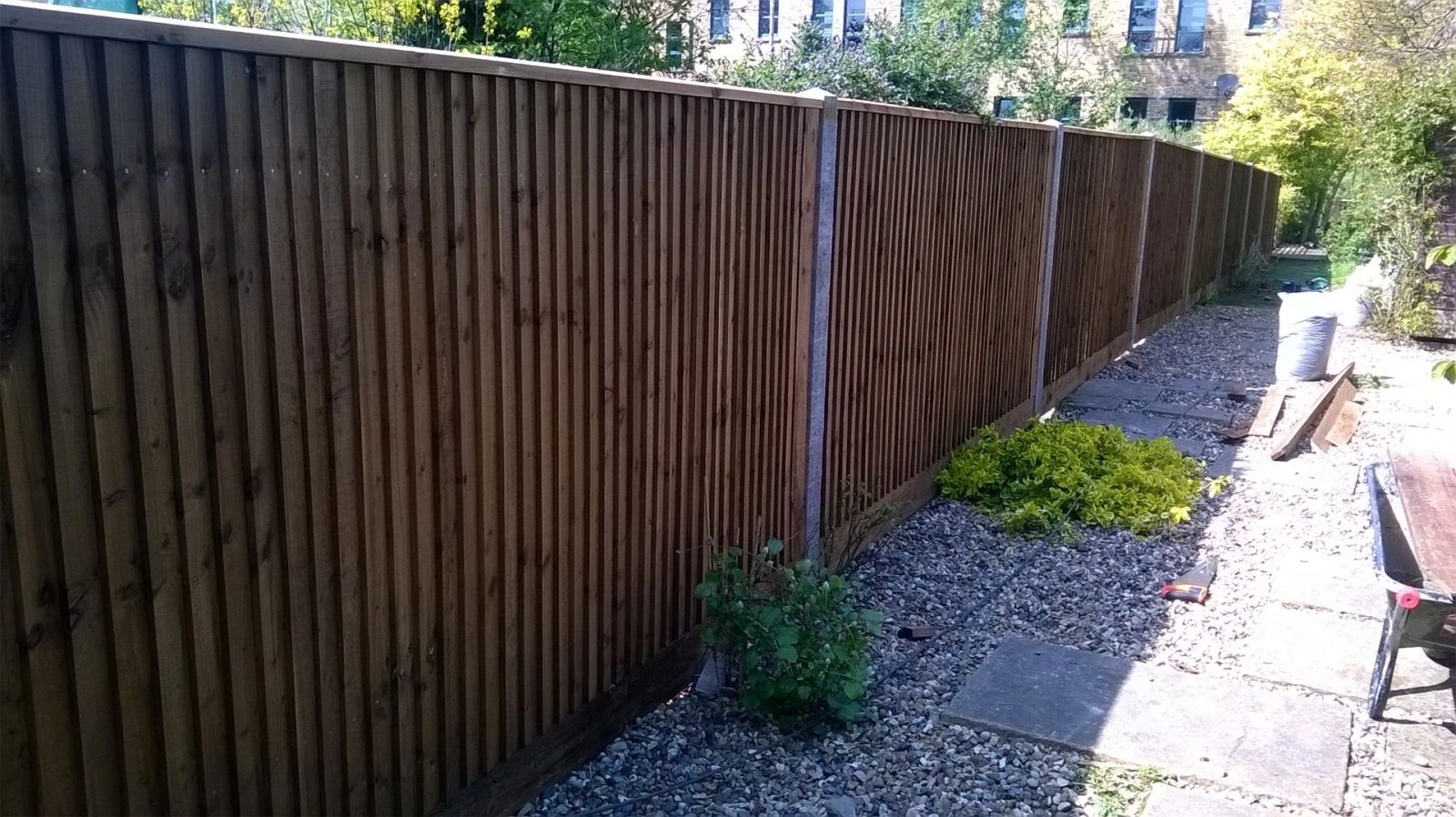
closeboard fence run installed by Capital Fencing in Hoddesdon (EN11)
Hoddesdon · EN11

New-Build Garden Fencing in Hoddesdon (EN11)

New-Build Garden Fencing in Hoddesdon is a specific brief for us — buyers on modern estates upgrading the developer's minimum-spec boundary after handover. The default local answer isn't a stock catalogue drop: it's 6ft closeboard on concrete posts, 150mm gravel boards, mid-rail capped — a genuine 15-year replacement for the developer's 4-year panel. On Hoddesdon sites we also spec around older fence runs in the old town often hide rotted posts under cement skirts — full removal is usually required, which is where a lot of new-build boundary fencing jobs quietly fail two years in. Roads such as High Street and Cock Lane are typical of the local layout. Barclay Park bandstand is a useful local reference point. Broxbourne Council maintains tree protection orders across much of Essex Road and Middlefield Road.

New-Build Garden Fencing in Hoddesdon is a specific brief for us — buyers on modern estates upgrading the developer's minimum-spec boundary after handover. The default local answer isn't a stock catalogue drop: it's 6ft closeboard on concrete posts, 150mm gravel boards, mid-rail capped — a genuine 15-year replacement for the developer's 4-year panel. On Hoddesdon sites we also spec around older fence runs in the old town often hide rotted posts under cement skirts — full removal is usually required, which is where a lot of new-build boundary fencing jobs quietly fail two years in. Roads such as High Street and Cock Lane are typical of the local layout. Barclay Park bandstand is a useful local reference point. Broxbourne Council maintains tree protection orders across much of Essex Road and Middlefield Road.

Typical new-build boundary fencing briefs in Hoddesdon

  • adding trellis and gravel boards to lengthen the life of an otherwise usable developer fence
  • raising a shared boundary height with neighbour agreement, keeping to permitted development

Why this spec, for buyers on modern estates upgrading the developer's minimum-spec boundary after handover

  • no more callouts every winter — the standard developer spec fails inside four years and we know exactly what fails
  • we work around plot-boundary pegs and drainage runs that new-build gardens hide badly
  • quotes broken down so you can see exactly where the money over the developer spec goes
Default spec

How we build new-build boundary fencing in Hoddesdon

6ft closeboard on concrete posts, 150mm gravel boards, mid-rail capped — a genuine 15-year replacement for the developer's 4-year panel. On Hoddesdon jobs we adjust for older fence runs in the old town often hide rotted posts under cement skirts — full removal is usually required.

Property mix locally: 1930s and 1950s semis, with Victorian cottages toward the Old Town. Typical gardens: mid-sized flat gardens; properties near Rye Park often have direct alley access. Postcodes we regularly service: EN11.

Where new-build boundary fencing isn't the right answer

  • estates still inside a developer snagging period where the boundary is their liability to fix
  • estates with Section 106 covenants on boundary appearance — check the deeds first

New-Build Garden Fencing FAQs — Hoddesdon

Do I need permission to raise a new-build boundary?

On new-build boundary fencing jobs in Hoddesdon (EN11), our default answer is: 6ft closeboard on concrete posts, 150mm gravel boards, mid-rail capped — a genuine 15-year replacement for the developer's 4-year panel. The honest trade-off is putting new closeboard on the existing developer posts — those are the part that failed first, not the panels — which is exactly what our default spec designs out.

What's the maximum height without planning on a new build?

Across Hoddesdon we spec around older fence runs in the old town often hide rotted posts under cement skirts — full removal is usually required, so on new-build boundary fencing that usually means 6ft closeboard on concrete posts. We'll walk you through no more callouts every winter — the standard developer spec fails inside four years and we know exactly what fails on the site visit before you commit.

Can you match my neighbour's post colour and spacing?

Broxbourne Borough coverage means we can survey most EN11 addresses inside a week — buyers on modern estates upgrading the developer's minimum-spec boundary after handover. For context: we work around plot-boundary pegs and drainage runs that new-build gardens hide badly. Measured, quoted and installed by the same small crew.

Can I replace the developer's fence in the first two years?

Practically: replacing developer 4ft overlap panels with 6ft closeboard on concrete posts. That's the Hoddesdon version of this job, not a generic one. The honest trade-off is putting new closeboard on the existing developer posts — those are the part that failed first, not the panels — which is exactly what our default spec designs out.

Do you handle the neighbour conversation on a shared boundary?

On new-build boundary fencing jobs in Hoddesdon (EN11), our default answer is: 6ft closeboard on concrete posts, 150mm gravel boards, mid-rail capped — a genuine 15-year replacement for the developer's 4-year panel. For context: we work around plot-boundary pegs and drainage runs that new-build gardens hide badly. Measured, quoted and installed by the same small crew.

Recent new-build garden fencing work
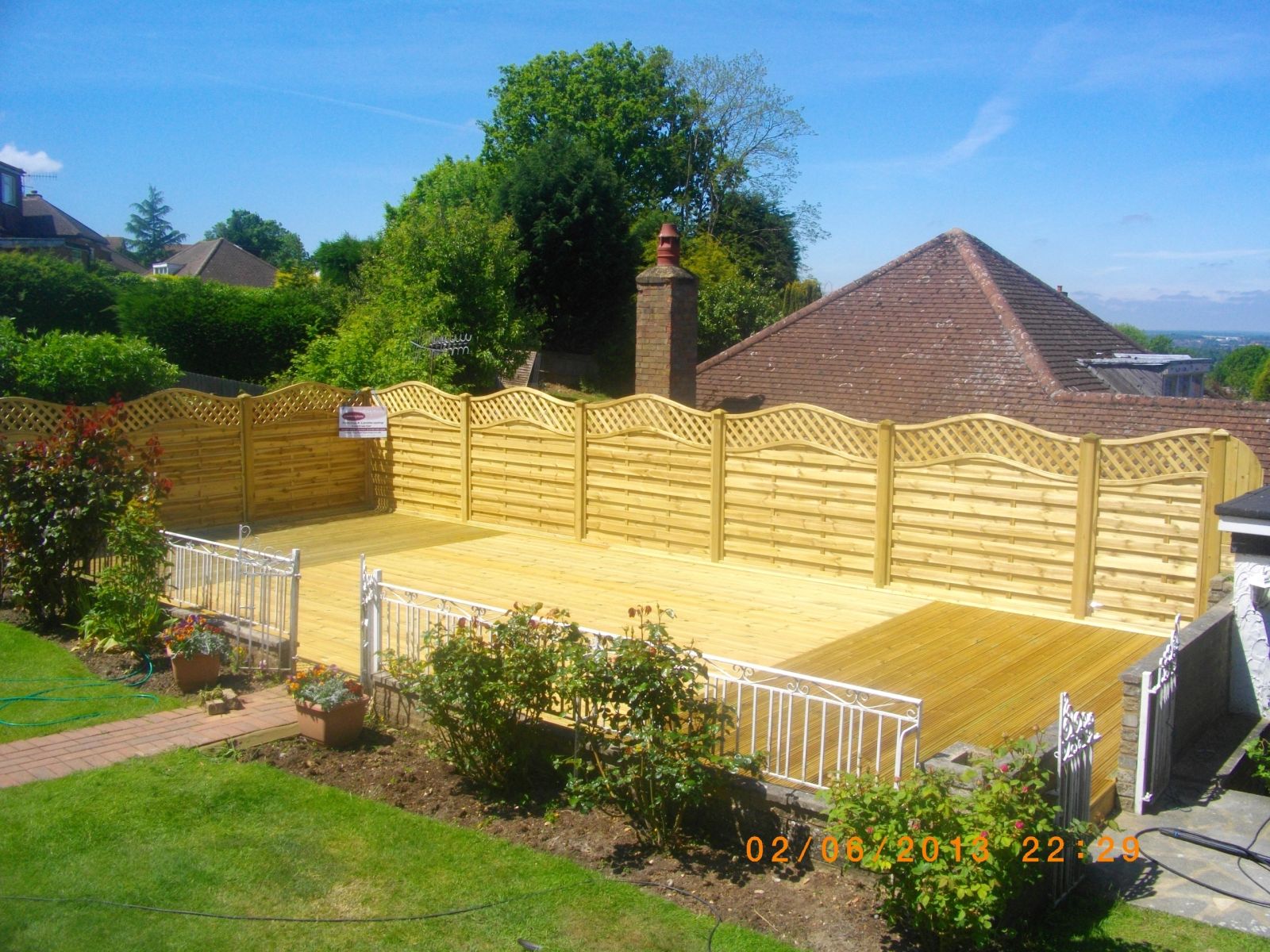
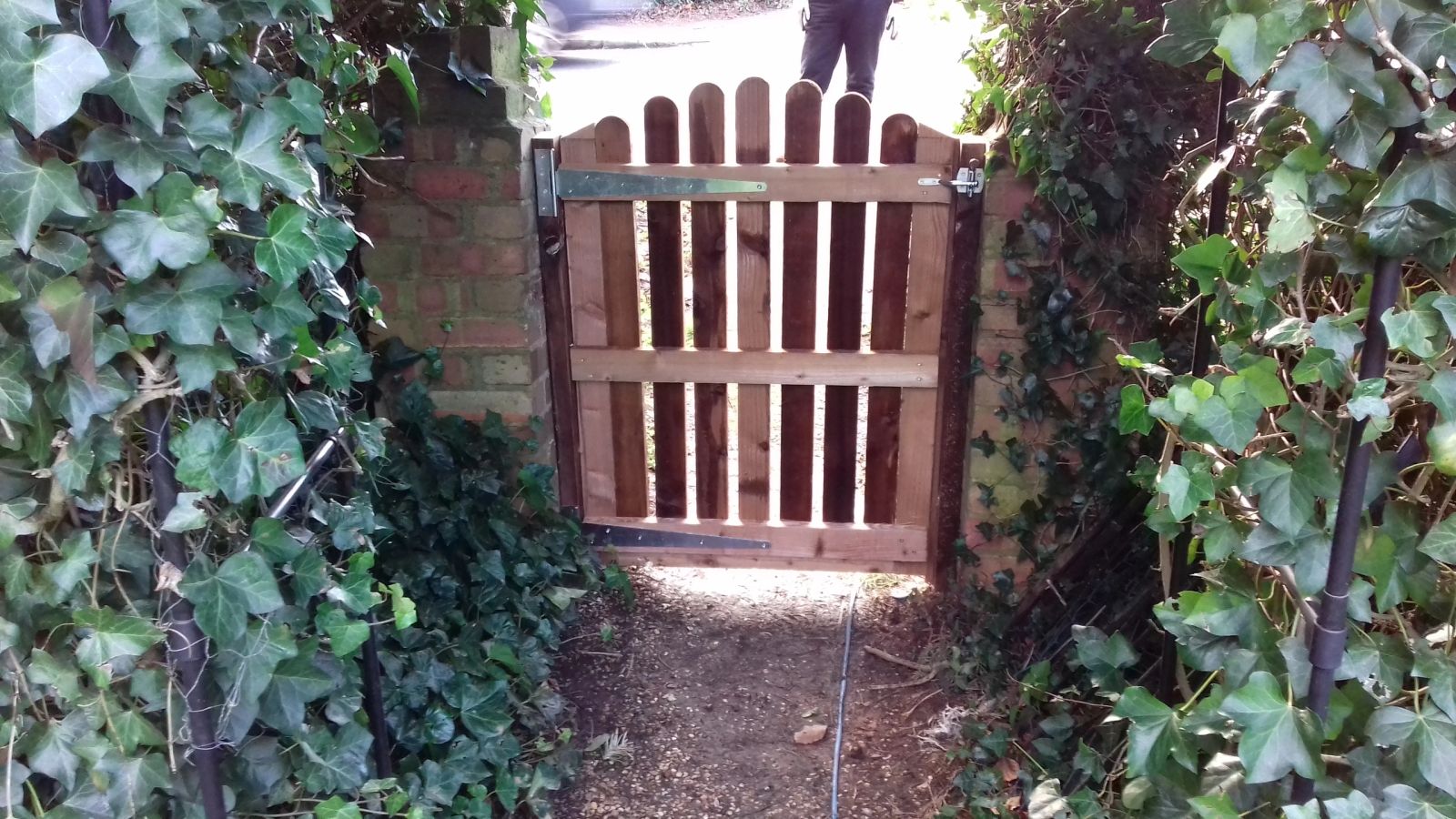
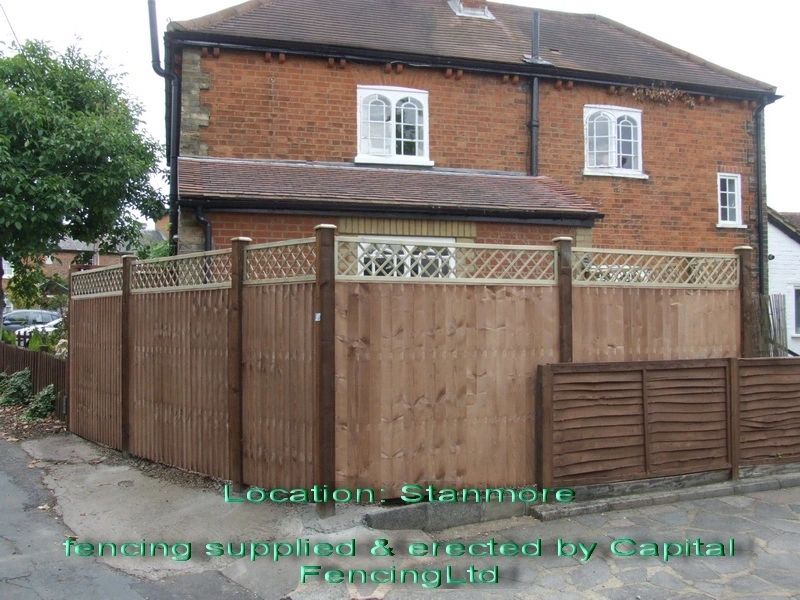
closeboard fence run installed by Capital Fencing in Hoddesdon (EN11)panel fence install installed by Capital Fencing in Hoddesdon (EN11)trellis-topped fence installed by Capital Fencing in Hoddesdon (EN11)bespoke decorative fence installed by Capital Fencing in Hoddesdon (EN11)

Site notes: new-build garden fencing in EN11

Access constraints on a repair job

A repair to a single post or panel deep in a rear garden with no side access still needs materials and tools carried through rather than dropped at the boundary, which is worth factoring into the timeline on a tight terraced plot.

On a multi-property repair — several gardens sharing a rear boundary — coordinating access across neighbours can be the more awkward part of the job than the repair itself.

Stainless fixings near a road

Fixings on a gate close to a public road pick up more airborne grit, salt spray in winter and general moisture than one set back in a garden, which accelerates corrosion on standard galvanised screws and bolts.

Stainless steel fixings cost more but resist this environment noticeably better, and are worth specifying on any roadside gate repair.

Deliveries and access control interfaces

A gate that's also the main delivery route needs wider clearances and a more robust hinge and closer than a purely pedestrian gate, because it will be opened and knocked far more often.

Where an intercom or access-control system is fitted, the fencing contractor coordinates gate width and swing with the installer of that system rather than fixing the gate first and adapting the electronics afterwards.

Height and visibility rules for gates

A driveway or front gate is subject to the same permitted development height limits as a boundary fence, and a gate near a junction or a shared driveway has additional visibility requirements to keep sightlines clear for road users.

We check these before recommending a taller or more solid replacement gate, not just when repairing an existing one.

The highway 1m rule in practice

The 1m permitted development limit applies to any boundary that fronts a highway used by vehicular traffic, which in practice includes most adopted roads and many unadopted estate roads that carry regular car use, not just classified A and B roads.

A footpath-only right of way at the front of a plot doesn't trigger the lower limit on its own, but councils interpret 'used by vehicles' broadly, so a shared driveway serving several houses usually counts.

Where it's unclear, checking with the local planning authority before building is cheaper than a retrospective application after a 1.8m fence goes up on what turns out to be a vehicular frontage.

Ledged-and-braced gate construction

A ledged-and-braced gate is built from vertical boards fixed to horizontal ledges with a diagonal brace between them, rather than a mortice-jointed frame, which makes it cheaper to build but more dependent on the brace alone to resist racking.

Repairs on this type usually focus on the brace and its fixings rather than joints, since there's no mortice-and-tenon corner to come loose.

Diagnosing sag, frame rack or post lean

A gate that no longer closes properly can be dropping at the hinge corner, racking as a whole rectangle out of square, or simply following a hinge post that's leaning in the ground — each has a different fix and they're easy to mix up from the ground.

We check the post for plumb first, then check the frame diagonals against each other, and only then look at the hinges themselves, since treating a leaning post as a hinge fault wastes a repair visit.

Sequencing a multi-day install

A typical multi-day fence installation runs old fence removal and waste clearance first, then post setting with time for concrete to go off, then panels, gravel boards and capping once posts are firm enough to take a load.

Rushing panels onto posts before the concrete has cured enough — particularly in cold weather when curing slows down — is a common cause of a fence leaning within its first few weeks.

On a longer run it often makes sense to work in sections so part of the boundary is never left fully open overnight, rather than removing the entire old fence before any new posts are in.

Diagnosing which of the three usual causes applies

Almost every failing gate comes down to the hinge side, the frame or the ironmongery, and diagnosing which one it actually is before quoting avoids paying for a new gate that wasn't needed.

We check hinge fixings, frame square and latch alignment separately on site rather than assuming from how the gate looks.

EV charging cables and boundary fence gates

Where an electric vehicle charge point is fitted near a boundary, cable routing sometimes needs to cross under or through a gate or fence gap, which is worth considering at the design stage rather than retrofitting a channel later.

Trailing a charging cable across a public footway to reach a car isn't permitted in most areas without specific council-approved cable channel provision, which is a separate matter from the fence itself.

Checking the council's position on any cable crossing a footway, alongside the fence and gate design, avoids two separate problems being discovered one after the other.

Checking mesh tension across seasonal temperature changes

Steel mesh infill expands and contracts slightly with temperature across the year, and a mesh tensioned tight in cold winter conditions can develop a visible sag by the height of summer if the original tensioning didn't allow for that movement.

A seasonal tension check, particularly after the first full year following installation, catches this early and allows a simple re-tensioning before a sagging mesh starts to create a usable foothold or gap at the base.

Scribing a gravel board to uneven ground

Ground level rarely runs perfectly straight between two posts, so a gravel board cut square often leaves a gap under one end and digs into the ground at the other unless it's scribed to follow the actual contour.

Scribing means holding the board in position, marking the ground profile onto its face, and cutting along that line so the board's bottom edge follows the undulation rather than an assumed flat datum.

On concrete gravel boards this isn't possible after casting, so uneven ground either needs the board bedded on a shaped mortar bed or a timber board used instead where the ground profile is particularly irregular.

Repair versus replace decision criteria

The decision between repairing and replacing usually comes down to what proportion of a run is affected and how sound the unaffected timber is — a single failed post on an otherwise good run favours a repair, while widespread rot along several bays tips toward replacement.

Age of the existing timber matters too, since a repair fitted into a fence already near the end of its working life may only buy a season or two before further failures appear elsewhere.

Protecting known cable and pipe runs during digging

Where a service run is known — marked by the utility company, visible from a meter or duct cover, or noted on a site plan — a physical marker or hand-dug trial pit at that point before general digging starts confirms its exact depth and route.

Once a service is located, leaving a visible marker such as a cane or spray line on the surface stops it being forgotten by whoever digs the next hole along the run, particularly on a multi-day job with different people digging on different days.

Ducted services are generally easier to work around than direct-buried cables since the duct itself gives some protection, but the duct can still be damaged by an auger or breaker if its depth isn't confirmed first.

Allotments and community gardens

Allotment sites are typically let by the local authority or an allotment association under a tenancy agreement that sets rules on plot boundary fencing, often restricting height and material to keep sightlines open across the site.

Individual plot fencing usually needs to stop short of shared paths and communal water points, and materials have to be carried in by hand or barrow since most allotment sites don't allow vehicle access beyond a car park at the entrance.

Community garden boundaries also often need a design that keeps the plot secure from casual access out of hours while remaining welcoming during open sessions, which is a different brief from a private garden fence.

Wrought iron versus mild steel gate repairs

Genuine wrought iron on older gates is more corrosion-resistant and easier to work hot than the mild steel used on most modern fabricated gates, but original wrought iron sections are harder to source for a like-for-like weld repair.

We identify which material an older metal gate is actually made from before quoting a repair, since the repair method differs between the two.

Using a post level clamp for solo plumb-checking

A post level that clips onto two adjacent faces of a post at once lets one person check plumb in both directions simultaneously without needing a second pair of hands to hold a separate level against each face.

This is particularly useful when bracing a post alone, since the clamp stays attached and visible while adjustments are made, rather than needing to remove and reposition a standard spirit level after every small correction.

It's worth checking the clamp itself is seated flat against the post with no debris or splinters holding it proud, since a level that isn't sitting flush will give a false reading regardless of how carefully the post is actually adjusted.

Post-mix density versus site-mixed concrete

Fast-setting bagged post-mix concrete is formulated to set rapidly with minimal water, but the resulting cured density and long-term strength are generally lower than a properly proportioned and compacted site-mixed concrete of the same nominal grade.

For a typical garden fence post carrying modest lateral load, post-mix's faster setting and convenience usually outweighs the modest strength difference, but for a heavily loaded gate post or long fence run, site-mixed concrete is sometimes specified for the added margin.

Both approaches depend on adequate hole diameter and depth relative to the post's exposed height, since undersized footings undermine either concrete type equally regardless of which mix is used.

Mortice-and-tenon versus halving joints

A mortice-and-tenon frame joint has more glued and pegged surface area than a halving joint, which is simply two timbers notched and lapped over each other, so it resists racking better but is harder to repair once it's failed.

We identify which joint type a frame uses before quoting a repair, since a halving joint can often be re-fixed with new screws and adhesive where a failed mortice needs the whole corner remade.

Replacing a post without dismantling the whole run

A single post can often be replaced by supporting the panels either side on temporary props, cutting the old post out at ground level, and fitting the new post into a fresh footing without lifting the neighbouring panels out.

This depends on the panel fixing type — nailed panels are harder to free without damage than panels held with clips or brackets, which come apart more cleanly.

Concrete spurs as a lifetime-extension repair

Where a timber post has rotted at ground level but the panels and the rest of the run remain sound, bolting a concrete spur alongside the rotten section rather than replacing the whole post is a common and effective partial repair.

The spur takes over the structural role at ground level while the timber above the rot line, which is usually still sound, continues to carry the panel fixings.

This repair only works while enough sound timber remains above the rotten section to bolt through; once rot has progressed too far up the post, spurring no longer gives a reliable fix and full post replacement is the honest answer.

Timber stain versus paint breathability

A translucent or semi-transparent stain generally remains vapour-permeable, allowing moisture that gets into the timber to escape back out again as the wood dries, which reduces the risk of trapped moisture driving rot.

Solid, opaque paint films are often less permeable, and a paint film that cracks or is breached can trap moisture behind it against the timber, sometimes accelerating localised decay compared with an unpainted equivalent.

Modern microporous exterior paints aim to combine paint's fuller colour coverage with a degree of vapour permeability, narrowing but not eliminating this trade-off between appearance and moisture management.

New-Build Garden Fencing across EN11 is a regular run for us. We'll quote honestly, tell you if new-build boundary fencing isn't the right answer for your site, and book the job in within a week or two of a signed quote. measured, quoted and installed by the same small crew. Roads such as Cock Lane and Amwell Street are typical of the local layout. Rye House is a useful local reference point. The A10 dual carriageway runs along the eastern edge of the town, bringing traffic noise to the gardens nearest it.

Get In Touch

Get My Free Quote — 24h Response

No callout fee · Free site visit · Friendly local team covering London & Hertfordshire.

Call us
07885907880
or 02036484746
Email
capital_fencing@yahoo.com
WhatsApp
Message us anytime
Area
London & Hertfordshire
Payment
Card payments accepted

Pay by debit or credit card, bank transfer or cash once the work and price are agreed. No deposit taken online.

Request a Free Quote

We'll get back to you within 24 hours.

Free Site Visit No Callout Fee
Call WhatsAppQuote